The Best Lawn Mowers
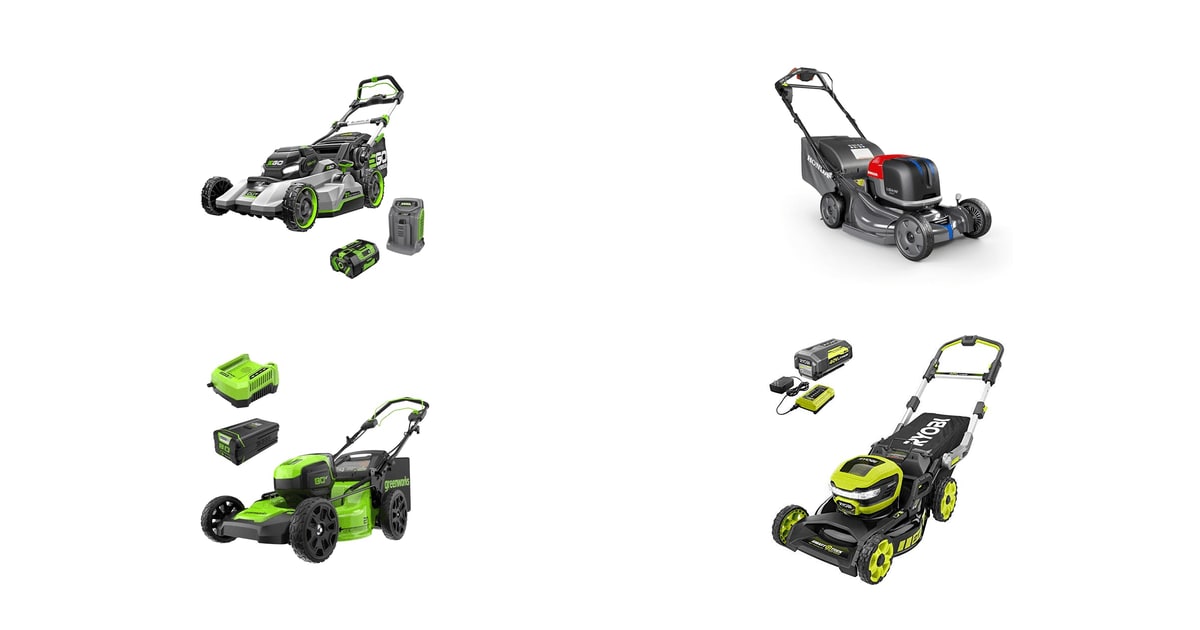
Mowing is a chore you repeat 25 or 30 times a season, so small annoyances compound fast. A mower that starts on the first try, cuts evenly, and doesn't leave your arms buzzing changes how you feel about Saturday morning. Deck width decides how many passes you walk. Self-propel decides whether the hill in the backyard is a workout or a stroll. And the power source decides whether you keep gas cans in the garage or just snap in a battery and go.
Here's the honest part: nothing in this category does everything. Battery mowers run out of charge before your grass runs out, so a full half acre of thick, damp turf can mean swapping packs mid-mow. Gas mowers keep going, but they're loud, and they want oil, filters, and plugs every season. The EPA estimates that an hour behind a conventional gas mower puts out roughly the pollution of driving a car 300 miles. Every choice here trades something away.
So start with your lot, then pick the machine. Under half an acre, a modern 56- or 80-volt mower does what a gas mower does, quietly, with nothing to winterize. Above that, you want a wider deck or a second battery in the bag. If you mow thick, shaggy grass, torque and cut quality outrank everything else. We think that the EGO POWER+ LM2135SP is the best lawn mower for most people, and that the Greenworks 80V 21-inch self-propelled mower is the one to buy if you want a steel deck and a little more grunt.
Everything we recommend

Gas-level power without the gas, for most quarter-acre yards

A steel deck and more voltage, with less runtime per pack

The finest cut and real dealer support, if you can pay for it
At a glance
| Product | Battery Runtime | Weight | Price | |
|---|---|---|---|---|
| EGO POWER+ 21" Cordless Electric Lawn MowerTop pick | 60 min | 55.3 lbs | $749 |
| Honda HRX-BE 21-Inch Walk Behind Battery PoweredUpgrade pick | 45 min | 99 lbs | $999On sale |
| Greenworks 80V 21" Brushless CordlessRunner-up | 45 min | 64.15 lbs | $699.99 |
 | RYOBI RY40LM10-Y 21 in. 40-Volt Brushless Lithium-IonAlso in lineup | — | 79 lbs | $699.95 |
How we picked
Power in thick grass. We compared torque ratings and motor specs against published bench tests, since a mower that bogs down in tall June grass isn't saving you anything. Anything we recommend had to clear the bar set by a 160cc gas engine.
Runtime per charge. We looked at manufacturer runtime claims alongside owner reports of what actually happens in tall, damp grass. A mower needed to handle a quarter acre on one pack without drama, and ideally more.
Traction on slopes. Rear-wheel drive holds a hill far better than front-wheel drive, especially once a full bag shifts weight to the back. We favored rear drive and variable speed control over fixed-speed systems.
Cut, mulch, and bag. We wanted 3-in-1 decks, fine mulching, and bags big enough that you're not emptying them every other pass. Cut-quality rankings from independent lab testing carried real weight here.
Everyday convenience. Single-lever height adjustment, vertical storage, and push-button starting sound minor on a spec sheet and matter every single week. We also checked that each mower has an operator-presence control that stops the blade when you let go.
Top pick
Gas-level power without the gas, for most quarter-acre yards
EGO POWER+ 21" Cordless Electric Lawn Mower
The EGO LM2135SP is a 21-inch self-propelled battery mower rated at 7.0 ft-lbs of cutting torque, with up to an hour of runtime on its 7.5Ah pack. It's light, quiet, and easy to steer, which makes it the mower most people will actually enjoy pushing around.
$749fromAmazonFor a quarter- to half-acre yard, this is the one to buy. EGO rates the motor at 7.0 ft-lbs of cutting torque, and Popular Mechanics engineers found the 56V brushless motor matched a 160cc gas engine in standardized thick-grass tests. Published multi-season testing had it finishing a half-acre mow on a single charge with capacity left over. For most suburban lots, that settles the gas question.
The self-propel system is what owners keep coming back to. You press your palm against the bar and it moves; a dial under your fingertips sets speed anywhere from 0.9 to 3.1 mph. There's no clutch bail to squeeze for 40 straight minutes. Older owners and people recovering from injuries consistently report that it's the difference between mowing their own lawn and paying someone else to.
The Select Cut system stacks an upper blade over an interchangeable lower one, and EGO includes three lowers: mulching, high-lift bagging, and an extended-runtime blade. Swapping takes a minute with a wrench. If you mulch all summer and only bag when the leaves drop, you can match the blade to the job instead of splitting the difference. Eight heights, from 1 to 4 inches, move on one lever.
At 55.3 pounds it's far lighter than the gas mowers it replaces, and it folds to stand on end so it eats less garage floor. There's no oil to change, no filter, no spring tune-up, and no pull cord to fight in April. You charge a battery, press a button, and mow. That's the whole ritual.
Flaws but not dealbreakers
The deck is polymer, not steel. It won't rust and it keeps the weight down, but if you routinely clip tree roots, curbs, or the odd buried brick, steel takes that abuse better over the years.
The 60-minute runtime figure assumes a light load. Owners mowing tall or damp grass in self-propel mode report the battery draining well short of that, so a big or overgrown lot really wants a second pack. Bagging and mulching are both good; the side-discharge chute is the weak spot, and owners who'd rather throw clippings than bag them find it underwhelming.
Runner-up
A steel deck and more voltage, with less runtime per pack
Greenworks 80V 21" Brushless Cordless
The Greenworks 80V is a 21-inch self-propelled mower with a steel deck, rear-wheel drive, and a brushless motor that senses thick grass and adds power on its own. Pick it if you'd rather have metal under you and extra headroom in tall grass than maximum runtime.
$699.99fromAmazonGrass is never uniform. You'll hit a patch by the downspout that's twice as tall as everything around it, and that's where SmartCut earns its keep. The motor senses the load, ramps up, then settles back down to save charge. You don't slow your pace or take a half-width pass to get through it, which is the kind of thing you notice only when a mower stops doing it.
The steel deck is the reason to choose this over the EGO. Polymer is lighter and never rusts, but steel shrugs off the stump you forgot was there. Greenworks pairs it with rear-wheel drive and variable speed, and that combination matters more than it sounds. As the bag fills, weight shifts backward and front-wheel drive starts spinning on a slope. Rear drive keeps pulling you uphill.
Noise is the quiet win of every battery mower, and this one has the numbers behind it. Good Housekeeping's lab measured 80V mowers at 74 to 76 dB, against 85 to 94 dB for gas equivalents — roughly half as loud to your ear. You can mow at eight on a Saturday without a neighbor's blinds twitching, and skip the hearing protection.
The rest is well-sorted. A single lever sets seven cutting heights, and the 3-in-1 deck mulches, rear-bags, or side-discharges without attachments. It stores vertically, which frees up a surprising amount of garage. And the 80V platform covers 75-plus tools, so if you add a trimmer or blower later, your batteries carry over and you can buy the bare tool.
Flaws but not dealbreakers
Runtime is the trade you're making. Greenworks rates the included 4.0Ah pack at up to 45 minutes under good conditions, so a thick or damp half acre will probably want a second battery. At 64 pounds it's heavier than the EGO too, though the self-propel hides most of that on flat ground.
A number of owners report that the battery release lever takes a hard, deliberate push before the pack lets go — annoying, not a dealbreaker. More concerning, a minority describe units that stopped starting reliably inside the first year. It's a pattern worth knowing before you commit to the platform.
Upgrade pickOn sale
The finest cut and real dealer support, if you can pay for it
Honda HRX-BE 21-Inch Walk Behind Battery Powered
Honda's HRX-BE puts the company's Versamow cutting system on a battery drivetrain: twin blades with four cutting surfaces, a lever that splits clippings between bag and mulch, and two battery bays. It's heavy and it costs the most here, but nothing else cuts this finely.
$999fromAmazonList priceNobody matches Honda on cut quality. Consumer Reports has ranked the HRX series first for evenness of cut and handling among walk-behind gas mowers across five or more consecutive test cycles. The HRX-BE carries the same twin-blade MicroCut system — four cutting surfaces instead of two — so clippings come out finer and pack down tighter. Honda fits 2.2 bushels of them into the bag before you empty it.
The Clip Director is the feature you'd miss most going back. A lever on the deck sets how much of the clipping goes into the bag and how much gets chopped back into the lawn. Feed most of it back in June, bag everything in leaf season, shred leaves in November — all without swapping blades or bolting on an attachment. It takes about three seconds.
Two battery bays matter more than the spec line suggests. One 12Ah pack is rated for about 45 minutes, or roughly a third of an acre; add a second and you can cover close to three quarters of an acre without pausing. The e-Select drive adjusts from 0 to 4 mph with a button, so you set your walking pace once and the mower matches it.
The service network is the real upgrade. Most battery mowers are backed by a phone number and a parts backorder. Honda dealers stock parts and handle warranty work nationwide, which counts for a lot on a machine you expect to keep for a decade. Longtime Honda gas owners moving off pull starts, often because shoulders don't cooperate anymore, treat this as the natural successor.
Flaws but not dealbreakers
It weighs 99 pounds, nearly double the EGO. The drive does the pushing, but you'll feel every one of those pounds loading it into a truck bed or wrestling it through a narrow side gate. Height adjustment uses two levers instead of one, a small step back from the single-lever systems elsewhere in this guide.
Early owner reports include a few units with factory assembly problems — a height-adjustment lever installed wrong, blade-engagement parts breaking — and at least one long wait for parts on a warranty repair. The dealer network is the fix, but any brand's first-generation drivetrain carries some risk. Only one battery comes in the box, despite the two bays.
Who this is for
This guide is for homeowners mowing roughly a quarter to half an acre who want one good walk-behind mower to keep for years. If you're replacing a tired gas mower, this is a good moment to switch: battery walk-behinds now account for over 35% of U.S. unit sales, up from under 10% a few years back, according to the Outdoor Power Equipment Institute. The platforms are mature, the torque is there, and you stop storing fuel.
If you mow more than an acre, or you're maintaining rough, uneven ground, look at a riding mower or a 30-inch wide deck instead — none of these picks are the fastest way through that much grass. We're not covering riders, robot mowers, or reel mowers here, and we don't cover replacement blades, filters, or wheel kits. If you're on a small flat lot under a quarter acre and you're happy with what you own, there's no urgency to replace it.
How we picked
We built the shortlist around six things. Power: enough torque to keep blade speed up in tall, damp grass, judged against the 160cc gas benchmark. Runtime: a full quarter acre on one battery, with published claims sanity-checked against what owners report. Traction: rear-wheel drive and variable speed, because front drive loses its grip on a hill as soon as the bag fills. Cut quality: fine mulching, a bag that holds enough to matter, and strong marks in independent cut-evenness testing. Convenience: single-lever height adjustment, vertical storage, push-button start. Safety: a working blade brake and operator-presence control, which the CPSC's injury numbers make hard to treat as optional.
The competition
This is what our research surfaced within this lineup, not a survey of every mower for sale. Plenty of good machines from Toro, Craftsman, and Husqvarna aren't here simply because they weren't part of the set we looked at.
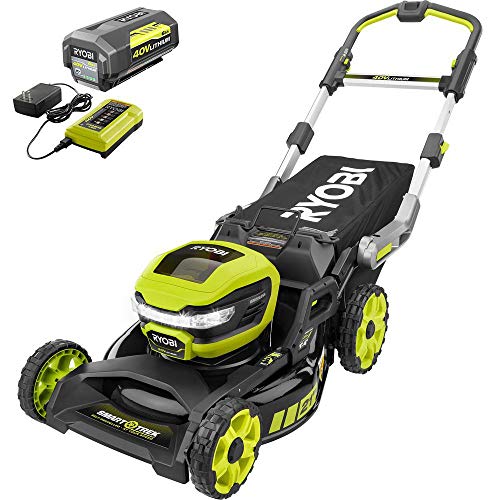
The RYOBI RY40LM10-Y 21 in. 40-Volt Brushless Lithium-Ion ($699.95) — The Ryobi RY40LM10-Y is a 21-inch, 40V brushless self-propelled mower with Smart Trek, and on paper it's an easy call if you already own Ryobi 40V batteries — that platform spans an enormous number of tools, and cross-compatibility saves real money. Owner feedback on this listing is where it comes apart. The recurring theme is the drive system: plastic parts and switches in the handle failing, and having to press down on the bar to engage the assist at all. Some owners are genuinely happy with the battery life and how it chews through long grass. If you're already deep into Ryobi 40V and you mow a flat third of an acre, it can still make sense. Everyone else should step up to the EGO or Greenworks.
Care and maintenance
A battery mower shrinks your maintenance list to two things: the blade and the deck. Sharpen or swap blades at least once a season, since a dull blade tears grass instead of slicing it and leaves brown, ragged tips behind. Scrape the underside when clippings cake up — owners who let buildup go for a few seasons report an uneven cut that a good scraping fixes. Store batteries indoors rather than in a freezing garage or a July attic, and park them near half charge over winter instead of dead or full. If you go gas instead, budget an oil change, an air filter, and a spark plug every year. Whatever you buy, confirm the blade stops fast when you release the bar.
Questions we get
What's the best lawn mower for a quarter-acre yard?
The EGO POWER+ LM2135SP, for most people. A quarter acre sits comfortably inside its runtime, even in thick grass, and the 21-inch deck keeps the pass count reasonable. If you'd rather have a steel deck, the Greenworks 80V does the same job.
Are battery mowers really as powerful as gas?
For yards under half an acre, yes. Popular Mechanics engineers measured EGO's 56V brushless motor as equivalent to a 160cc gas engine in thick-grass testing, and EGO rates the mower at 7.0 ft-lbs of cutting torque. The gap that remains isn't power — it's runtime. Gas runs until you stop pouring in fuel.
How long does an EGO battery mower run on one charge?
EGO claims up to 60 minutes with the included 56V 7.5Ah battery, and published multi-season testing had the LM2135SP finish a half-acre mow with charge to spare. Expect less than the claim in tall or wet grass, especially with self-propel running the whole time. Owners with half-acre lots often keep a second pack on the charger.
What's the best self-propelled mower for hills?
Look for rear-wheel drive with variable speed, which all three of our picks have. Front-wheel drive loses traction going uphill as soon as the bag fills and shifts weight backward. The Greenworks 80V and the Honda HRX-BE both hold a slope well, and the Honda's extra weight actually helps it dig in.
How wide a deck do I need?
Bob Vila's lawn care experts suggest at least a 21-inch deck for yards over 5,000 square feet, and 30 inches or more once you pass 15,000, to finish inside an hour. The difference is significant: Forbes Home found a 30-inch deck cut a half-acre mow from 52 minutes down to 31. All three picks here use 21-inch decks, which suits most suburban lots.
Is a battery mower cheaper to own than gas over five years?
Usually, yes. Once you add up fuel, oil, filters, spark plugs, and the occasional tune-up, gas costs more to keep running than a battery mower does, even accounting for an eventual replacement pack. Batteries do fade — owners a season and a half in report holding roughly 85% of original capacity — but that's gradual, not a cliff.
Why you should trust us
For this guide:
- We read the manufacturer specifications for every mower here and compared torque ratings, deck materials, runtime claims, drive systems, and height-adjustment designs side by side.
- We went through published reviews and lab measurements from outlets including Consumer Reports, Popular Mechanics, Good Housekeeping, and Forbes Home, plus EPA and Outdoor Power Equipment Institute data on emissions and buying trends.
- We read owner feedback on each listing to surface the patterns spec sheets hide, like stiff battery release levers, drive-system failures, and how runtime holds up in tall grass.
- We read owner reviews on every listing, weighted toward the critical ones, because that is where the recurring failures show up.
- We have a systematic way of automatically fetching the latest prices, so the numbers on this page stay current.
- This is a research-focused guide, so the team may not own every product listed — though we often do own the top winners, which gives us extra context for the recommendations.
- We don't accept free products, and the retailer commission never changes which product we recommend.
Sources
Best Lawn Mowers of 2026 — Wirecutter (NYT), Wirecutter
Best Lawn Mowers 2026 — Consumer Reports, Consumer Reports
Best Robot Lawn Mowers 2026 — Tom's Guide, Tom's Guide
Best Battery Lawn Mowers — Outdoor Power Equipment Institute (OPEI), OPEI
Lawn Mower Reviews & Ratings 2026 — Good Housekeeping, Good Housekeeping
Best Lawn Mowers 2026 — Forbes Home, Forbes Home
Electric Lawn Mower Comparison Tests — Popular Mechanics, Popular Mechanics
Best Lawn Mowers for Large Yards — Bob Vila, Bob Vila
Lawn Mower Safety Statistics — U.S. Consumer Product Safety Commission (CPSC), CPSC
Best Gas Lawn Mowers 2026 — This Old House, This Old House
Amazon product listings and owner reviews for all 4 products
Manufacturer specification pages for each product
Some passages in this guide may be paraphrased with AI help. Prices are refreshed automatically.
More like this.
Continue exploring lifestyle reviews and recommendations.

The Best Robot Lawn Mowers
A robot mower changes the chore, not just the tool. Instead of one sweaty hour every Saturday, a small machine shaves a couple of millimeters off your…

The Best Lawn Mowers
Mowing is a chore you repeat 25 or 30 times a season, so the small annoyances matter more than the spec sheet. How hard is it to start? Can you get up the…

The Best Lawn Mowers
You'll push a mower across your yard 25 or 30 times a year, so the small annoyances matter more than any spec. The handle that won't fold flat enough to…

The Best Cordless Lawn Mowers
A cordless mower asks almost nothing of you. You pull the safety key, squeeze the bail, and it goes - no primer bulb, no pull cord, no stale fuel to drain…

The Best Hose-End Sprayers for Lawn Fertilizer
Liquid fertilizer is the fastest way to green up a lawn, and a hose-end sprayer is what makes it practical. You screw it onto the hose, pour concentrate…

The Best Zero-Turn Mower Accessories and Attachments
A zero-turn mower is a big purchase, and most of them ship set up for one job: throwing clippings out the side. The accessories that matter change what…