The Best Lawn Mowers
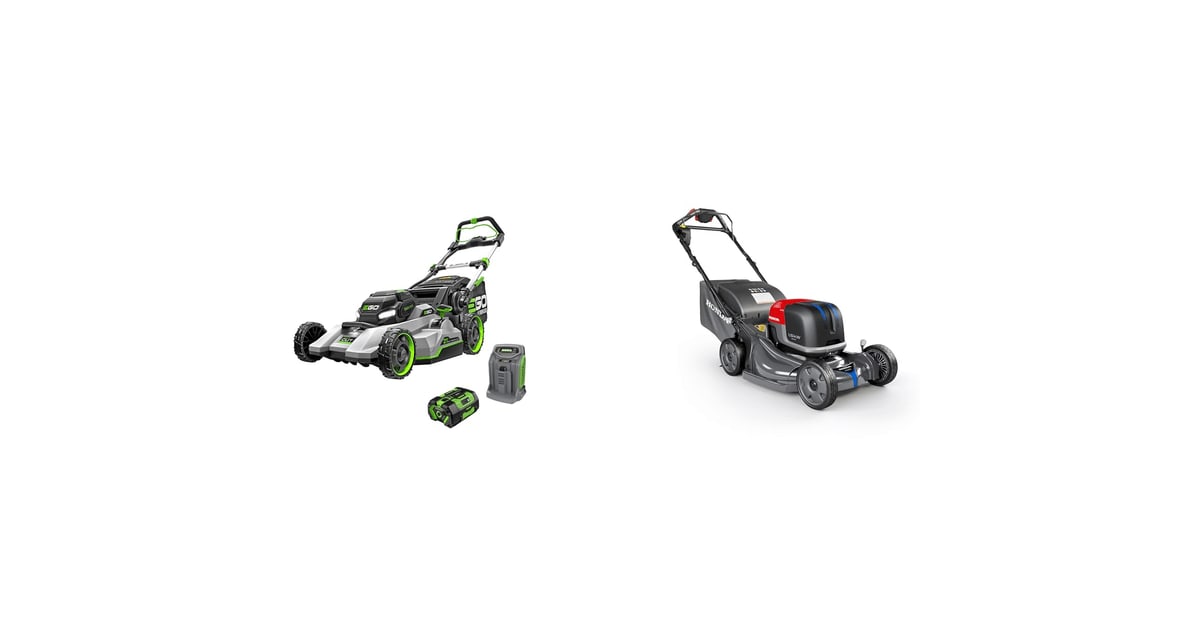
Mowing is a chore you repeat 25 or 30 times a season, so the small annoyances matter more than the spec sheet. How hard is it to start? Can you get up the slope by the driveway without your shoulders burning? Does it throw wet clumps when the grass gets ahead of you? A mower that cuts beautifully but stores badly, starts badly, or wakes the whole street at 7 a.m. is a mower you'll quietly come to resent.
No mower here does everything. Battery models have closed most of the gap with gas — published head-to-head testing has put a good 56V mower alongside 160cc gas engines in dense, overgrown grass — but runtime is finite, and tall wet grass drains a pack fast. Gas runs as long as you keep pouring. It's also loud and dirty: gas mowers typically run 85 to 95 decibels against 70 to 78 for battery, and an hour of mowing can emit the volatile organic compounds of a long highway drive.
Yard size decides most of this for you. Under about a half acre, a 21-inch self-propelled battery mower is the easy answer: no fuel cans, no pull cord, no spring carburetor drama. Push past that and you'll start wanting a second battery, a wider deck, or something you can sit on. Slopes change the math too, since self-propel matters far more on a hill than on a flat lot. We think that the EGO Power+ LM2135SP is the best lawn mower for most people, and that the Honda HRX-BE is the one to buy if you mow closer to an acre and want a dealer network behind you.
Everything we recommend

Gas-level cutting power without the gas, for most yards

More cut quality and real dealer support, for real money

A solid 80V self-propelled deck, batteries not included
At a glance
| Product | Runtime | Voltage | Price | |
|---|---|---|---|---|
| EGO POWER+ 21" Cordless Electric Lawn MowerTop pick | 60 Min | 56V | $749 |
| Honda HRX-BE 21-Inch Walk Behind Battery PoweredRunner-up | 45 Min | — | $999On sale |
| Greenworks Pro 21-Inch 80V Self-Propelled Cordless LawnBudget pick | — | 80V | $859.99 |
How we picked
Cutting power. We looked for torque or engine-displacement figures backed by published head-to-head testing, not just marketing claims. A mower had to handle thick, slightly overgrown grass without bogging, because that's the week that actually tests it.
Runtime and refills. For cordless mowers we compared battery voltage and amp-hours against the manufacturer's stated coverage in acres. We favored models that finish a half acre on one charge or accept a second pack.
Drive and slopes. Self-propel matters far more on hills and on yards over a quarter acre. We weighted variable-speed drive systems and read owner feedback specifically for complaints about lag or weak propulsion.
Cut versatility. Mulching, bagging, and side discharge shouldn't require a trip to the parts counter. We preferred 3-in-1 and 4-in-1 decks with a usable cutting-height range and simple adjustment.
Living with it. Storage footprint, weight, noise, and parts availability decide whether you still like a mower in year five. Spec sheets covered the first three; owner feedback and dealer networks covered the last.
Top pick
Gas-level cutting power without the gas, for most yards
EGO POWER+ 21" Cordless Electric Lawn Mower
The LM2135SP is a 21-inch self-propelled battery mower that runs up to 60 minutes on its included 7.5Ah pack, or roughly a half acre in one session. It's light, it's quiet, and its swappable lower blades let you set it up for mulching, bagging, or longer runtime.
$749fromAmazonFor a typical suburban lot, this is all the mower you need. EGO rates it at 7.0 ft-lbs of cutting torque, and in Popular Mechanics' head-to-head testing the LM2135SP matched or beat several 160cc gas mowers in dense, overgrown grass. That's the part that used to be the catch with battery mowers. It isn't anymore, at least not at this size of yard.
It weighs about 55 pounds, which you feel every time you turn it at the end of a row or wrestle it around a flower bed. Owners who've moved over from gas mention this more than anything else — older buyers and smaller-framed buyers in particular say it's the first mower they can maneuver comfortably. The Touch Drive self-propel engages with palm pressure and dials from 0.9 to 3.1 mph, so you set the pace instead of chasing it.
The Select Cut blade system is more useful than it sounds. You get a mulching lower blade, a high-lift bagging blade, and an extended-runtime blade, plus the upper blade, and you swap the lower one to suit the day. Mulching in June, high-lift when the growth is heavy and you want the bag full and tidy, extended-runtime when you just want to finish the yard on one charge. Eight cutting heights cover 1 to 4 inches.
Then there's everything you stop doing. No oil changes, no air filter, no fuel stabilizer, no carburetor to gum up over winter. At 70-something decibels you can mow early without an apology to the neighbors. And the 56V packs run EGO's blowers, trimmers, and chainsaws, so the next tool you buy costs less because you already own the expensive part.
Flaws but not dealbreakers
Runtime claims assume reasonable conditions. Run the self-propel constantly through tall, thick, or damp grass and you'll cut well short of an hour — owners are consistent about that. If your lot is near a half acre, plan on a second battery rather than hoping.
Side discharge is the weak spot. It mulches and bags well, but owners who prefer to blow clippings to the side find the chute underwhelming. And the deck is composite rather than steel, which is fine for durability but means caked grass underneath goes unnoticed until your cut quality drops. Scrape it.
Runner-upOn sale
More cut quality and real dealer support, for real money
Honda HRX-BE 21-Inch Walk Behind Battery Powered
Honda's HRX-BE brings the company's 4-in-1 Versamow deck and twin-blade MicroCut system to a battery platform, with an e-Select drive adjustable from 0 to 4 mph. It's the pick if you want the finest mulch, two battery bays, and a nationwide service network.
$999fromAmazonList priceHonda's walk-behind gas mowers have sat at the top of Consumer Reports' category for years, largely on mulching quality and handling, and the deck design carries over here. The twin-blade MicroCut system uses four cutting surfaces, so clippings get chopped finer and pack tighter in the 2.2-bushel bag. If you bag, you empty less often. If you mulch, the clippings disappear into the lawn instead of sitting on top of it.
Versamow is the reason to want this mower. You mulch, bag, discharge, and shred leaves with no attachments to hunt down in the garage — a Clip Director lever splits how much material goes to the bag versus back into the turf. That's genuinely handy in autumn, when you want leaves shredded and grass bagged in the same pass. Most mowers make you choose one job per session.
It comes with a 12Ah pack rated for about 45 minutes, or roughly 0.37 acre, and there are two battery bays. Add a second pack, sold separately, and you're at nearly three-quarters of an acre without stopping. Owners who moved over from a decade-old Honda gas mower report the runtime rating is conservative in normal grass. Seven cutting heights span 0.75 to 4 inches via dual levers.
Support is the quiet argument. Honda sells this through the same nationwide dealer and parts network that backs its gas engines, which is unusual in battery outdoor equipment — plenty of cordless mowers are effectively unrepairable once something structural breaks. If you plan to keep a mower for a decade, that matters more than any spec.
Flaws but not dealbreakers
It weighs 99 pounds, nearly twice the EGO. The e-Select drive does the work on flat ground, but you'll notice the heft loading it into a truck bed or steering it around tight landscaping.
It's the most expensive mower here by a wide margin, and the second battery is an extra purchase on top. Owner reports also include occasional quality-control misses out of the box — one buyer found the wheel height lever installed wrong from the factory, and another waited weeks on warranty parts. The dealer network is the reason those stories end well, but they're worth knowing about.
Budget pick
A solid 80V self-propelled deck, batteries not included
Greenworks Pro 21-Inch 80V Self-Propelled Cordless Lawn
The Greenworks Pro MO80L00 is a 21-inch self-propelled mower sold tool-only, so it costs far less up front if you already own 80V Greenworks packs. It stores upright, it's competent on flat and gently rolling lawns, and it undercuts every other mower here.
$859.99fromAmazonThe catch is right in the name: tool-only. There's no battery and no charger in the box, so this makes sense if you're already on the Greenworks Pro 80V platform or you're buying a pack separately with eyes open. Do that math first, because with a battery and charger added, the price advantage narrows considerably.
On an ordinary flat lawn, it does the job without fuss. The 80V motor has enough torque for regular weekly cutting, and owners who've run one for several seasons describe it as a workhorse — one reported five years of outdoor storage in rain and snow before it finally quit. It stores upright, which matters if your garage is already holding bikes, a snowblower, and a kayak.
It's the lightest-commitment way into cordless mowing for a small or mid-sized yard. If you have a quarter acre that's mostly flat, you don't need 60 minutes of runtime or a four-surface mulching deck. You need something that starts instantly, cuts cleanly, and lives in a corner. This does all three.
Flaws but not dealbreakers
The self-propel is the common complaint. Owners describe it as underpowered, with a noticeable delay between squeezing the bar and the wheels responding. On a real hill you'll be pushing.
It also struggles in thick, lush growth. More than one owner with dense Bermuda reports bogging down and leaving clumps rather than mulching cleanly. Sharpening the blade recovers a lot of that, and it's worth doing yearly on any mower, but this one is less forgiving than the EGO when the grass gets away from you.
Who this is for
This guide is for homeowners with roughly a quarter acre to an acre who are replacing a tired push mower and deciding whether to stay with gas or go cordless. If your yard is a courtyard or a strip of grass by the sidewalk, any of these is more mower than you need, and a corded or small-deck model will serve you better. If you're mowing several acres or anything commercial, you want a riding mower or a zero-turn, and neither is covered here.
One scope note, stated plainly: this guide covers walk-behind mowers. We looked at riding and robotic options too, but the listings our research surfaced in those categories turned out to be accessories and replacement parts rather than the machines themselves, so we've set them aside rather than write about products we can't point you to. Everything we recommend below is a complete mower — with the caveat that the Greenworks is sold without a battery.
How we picked
We built the shortlist from manufacturer specifications, published testing, and recurring themes in owner feedback, and judged every mower against the same five things. Cutting power: enough torque to get through thick or slightly overgrown grass without bogging or clumping. Runtime: for cordless models, a battery that covers a real yard on one charge, with a second bay or a spare pack as the fallback. Drive: variable-speed self-propel that actually helps on a slope, not a token assist with a half-second delay. Versatility: mulching, bagging, and discharge built into the deck rather than sold as attachments, plus a cutting-height range wide enough for both spring and midsummer. Living with it: weight, noise, storage footprint, and whether you can still get parts years from now.
The competition
This is what our research surfaced, not a census of the market. We started with a wider shortlist that included premium gas walk-behinds, a lawn tractor for one- to two-acre lots, and two robot mowers, but in each of those cases the listings we could confirm were accessories, maintenance kits, or replacement parts rather than the machines themselves. Those appear at the bottom of this guide as excluded listings. Everything that qualified as an actual mower ended up as a pick above.
Care and maintenance
Sharpen the blade at least once a season, and more often if you mow sandy soil or hit the occasional stick. A dull blade tears grass instead of cutting it, which browns the tips and makes the motor work harder — several owners of these mowers found that a sharpening cured what looked like a dying battery. Scrape the underside of the deck when clippings cake up, especially on composite decks where you won't notice the buildup until the cut goes uneven. Store batteries indoors and somewhere temperate rather than in a July garage. If you run gas, drain or stabilize the fuel before winter. And leave the clippings on the lawn when you can: grasscycling returns nitrogen, phosphorus, and potassium to the soil and can cut your fertilizer needs by up to 25%.
Questions we get
Are battery lawn mowers as powerful as gas mowers now?
For yards up to about three-quarters of an acre, effectively yes. Published head-to-head testing has put the EGO LM2135SP alongside 160cc gas mowers in dense, overgrown grass, and battery models have grown from roughly a tenth of US walk-behind sales to more than a third. Gas still wins on raw output and unlimited runtime for large, rough, or commercial properties.
How long does a battery mower run on one charge?
Figure 45 to 60 minutes for the mowers here — the EGO is rated up to 60 minutes on its 7.5Ah pack, the Honda up to 45 minutes on its 12Ah pack, or about 0.37 acre. Those numbers assume normal conditions. Tall, wet, or thick grass with the self-propel running the whole time can cut them meaningfully, so buy a second battery if your yard is at the edge of the rating.
What's the best mower for a small yard under a quarter acre?
Almost anything here is enough, so shop on convenience instead of power. A cordless 21-inch mower starts instantly, needs no fuel, and stores upright in a corner. If you want to spend as little as possible and already own compatible batteries, the tool-only Greenworks is the obvious route.
What should I look for if my yard is hilly?
Self-propel, and specifically self-propel with enough grunt to pull the mower's own weight uphill. Variable speed helps you match your pace instead of fighting the machine. The EGO's Touch Drive and Honda's e-Select drive both get good marks from owners on slopes; the Greenworks' propulsion is the weak point of that mower and owners describe it as sluggish.
Is it better to mulch or bag clippings?
Mulch, most of the time. Clippings break down and return nitrogen, phosphorus, and potassium to the soil, which can reduce your fertilizer needs by up to 25%. Bag when the grass got away from you and the clumps would smother the lawn, or when you're clearing leaves and disease.
How often should I sharpen the blade?
Once a season is the baseline for a typical suburban lawn, and twice if you mow often or your soil is sandy. The tell is the lawn itself: ragged, whitish-brown grass tips a day after mowing mean the blade is tearing rather than slicing. On battery mowers a dull blade also drains the pack faster, which people often mistake for a failing battery.
Which of these is quietest for early-morning mowing?
All three, since they're all battery-powered. Gas mowers typically run 85 to 95 decibels while battery mowers average 70 to 78 — about a 15-decibel gap, which the human ear perceives as roughly half as loud. That's usually the difference between mowing at 7 a.m. and waiting until 10.
Why you should trust us
For this guide:
- We read manufacturer specifications for every mower in this guide and compared them against published testing and ratings from Consumer Reports, Popular Mechanics, and Wirecutter.
- We went through owner feedback for each model looking for repeated themes — runtime shortfalls, weak propulsion, quality-control misses — rather than isolated complaints.
- We also consulted University of Minnesota Extension material on grasscycling and EPA estimates on small-engine emissions to check the claims we make about mulching and noise.
- We read owner reviews on every listing, weighted toward the critical ones, because that is where the recurring failures show up.
- We have a systematic way of automatically fetching the latest prices, so the numbers on this page stay current.
- This is a research-focused guide, so the team may not own every product listed — though we often do own the top winners, which gives us extra context for the recommendations.
- We don't accept free products, and the retailer commission never changes which product we recommend.
Sources
Best Lawn Mowers — Wirecutter / New York Times, Wirecutter
Lawn Mower Ratings & Reliability — Consumer Reports, Consumer Reports
Best Lawn Mowers of 2026 — Good Housekeeping, Good Housekeeping
Best Lawn Mowers — Popular Mechanics, Popular Mechanics
Best Lawn Mowers of 2026 — Reviewed (USA Today), Reviewed / USA Today
Best Battery-Powered Lawn Mowers — This Old House, This Old House
Best Robot Lawn Mowers — Bob Vila, Bob Vila
Husqvarna Automower 450X Official Specifications, Husqvarna
EGO Power+ LM2135SP Official Specifications, EGO Power+
Robotic Lawn Mower Market Size & Forecast 2025–2030 — Grand View Research, Grand View Research
Grasscycling: Let Clippings Feed Your Lawn — University of Minnesota Extension, University of Minnesota Extension
Small Engine Emissions — U.S. Environmental Protection Agency, U.S. EPA
Amazon product listings and owner reviews for all 3 products
Manufacturer specification pages for each product
Some passages in this guide may be paraphrased with AI help. Prices are refreshed automatically.
More like this.
Continue exploring lifestyle reviews and recommendations.

The Best Robot Lawn Mowers
A robot mower changes the chore, not just the tool. Instead of one sweaty hour every Saturday, a small machine shaves a couple of millimeters off your…

The Best Lawn Mowers
You'll push a mower across your yard 25 or 30 times a year, so the small annoyances matter more than any spec. The handle that won't fold flat enough to…

The Best Lawn Mowers
Mowing is a chore you repeat 25 or 30 times a season, so small annoyances compound fast. A mower that starts on the first try, cuts evenly, and doesn't…

The Best Cordless Lawn Mowers
A cordless mower asks almost nothing of you. You pull the safety key, squeeze the bail, and it goes - no primer bulb, no pull cord, no stale fuel to drain…

The Best Zero-Turn Mower Accessories and Attachments
A zero-turn mower is a big purchase, and most of them ship set up for one job: throwing clippings out the side. The accessories that matter change what…

The Best Hose-End Sprayers for Lawn Fertilizer
Liquid fertilizer is the fastest way to green up a lawn, and a hose-end sprayer is what makes it practical. You screw it onto the hose, pour concentrate…