The Best Gifts for Reptile Keepers
Reptile keeping is a hobby of small daily adjustments. Your friend checks a basking temperature, mists a tank before work, swaps a bulb on a schedule they've written on a calendar. Most of that work happens with cheap gear that came bundled in a starter kit, and most of it could be better. That's what makes this an unusually good category to shop in. The upgrades that matter are specific, they're things keepers rarely buy for themselves, and they get used every single day.
Here's the catch, and it's a real one. Reptile gear is species-specific in ways that aren't obvious from the outside. A UVB bulb sized for a bearded dragon can be wrong for a crested gecko. A tall arboreal terrarium is useless for a snake that wants floor space. Lots of this stuff also has a mixed reliability record — misters clog, LED strips fail, bulbs die early. So the safest gifts here are the ones that work regardless of what's in the tank.
Reptile ownership in the US has grown to an estimated 9.4 million households, and the gear market has grown with it, which means there's more to choose from and more junk to wade through. We leaned on the stuff that solves a problem keepers actually complain about. Our favorite gift here is the BN-LINK Reptile Thermostat, and the Exo Terra Digital Combination Thermometer/Hygrometer is the safe choice when you're less sure of their setup.
Everything we recommend

Works with almost any heat source, for almost any species
For the keeper still eyeballing their heat mat temperature
$18.99 from Amazon
Small, cheap, and something every keeper needs two of
For the new keeper who's guessing at humidity
$30.95 from Amazon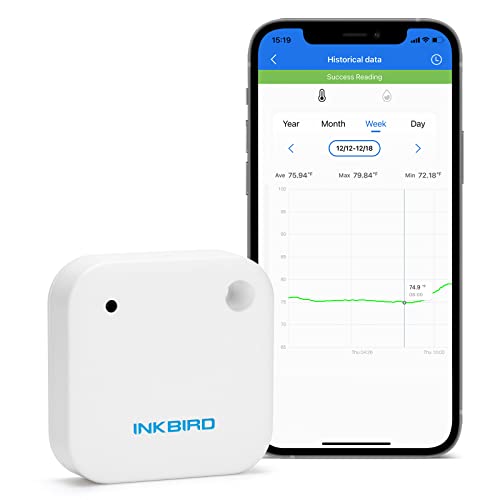
Puts every enclosure's numbers on their phone
For the keeper who checks the tank three times before bed
$19.99 from Amazon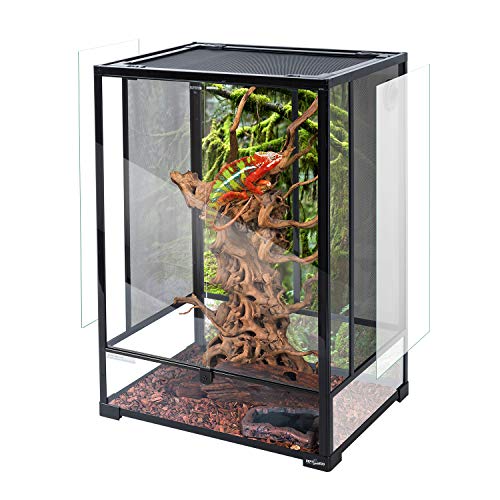
A real adult enclosure, if you know what they keep
For the keeper whose crested gecko outgrew its starter tank
$208.99 from Amazon
Buys back 15 minutes a day for a tropical keeper
For the chameleon owner who mists by hand before work
$59.99 from Amazon
For the gecko or chameleon keeper who's read up on Ferguson Zones
$109.99 from Amazon
For the chameleon keeper who wants an all-screen cage
$181.71 from AmazonHow we picked
Works across species. We favored gifts that don't require knowing whether the recipient keeps a snake, a gecko or a dragon. Thermostats and monitors clear that bar; enclosures and species-tuned bulbs don't, so we flagged those as gifts for givers who know the setup.
Solves a daily annoyance. We looked for products that replace a repetitive chore or a piece of guesswork keepers complain about in community discussions — hand-misting, dial gauges, unregulated heat mats.
Reliability in owner feedback. We read owner feedback for failure patterns rather than overall sentiment, weighing how often units die early and whether the manufacturer replaces them. Categories with high failure rates got demoted, not dropped.
Vet-aligned husbandry. Metabolic Bone Disease from inadequate UVB and calcium metabolism is still the top preventable illness in captive reptiles per veterinary herpetologists at ARAV, so lighting and heat control carried extra weight over decorative gear.
Unwraps well. We noted which items arrive as a giftable box versus a flat-packed pallet of glass, and said so plainly, because that changes how you give it.
Our favorite gift
Works with almost any heat source, for almost any species
BN-LINK Reptile Thermostat Temperature Controller
For the keeper still eyeballing their heat mat temperature
A plug-in thermostat that holds a heat mat or heat lamp at whatever temperature the animal needs, with a probe you tuck into the tank. It's the one upgrade that works no matter what species your person keeps.
$18.99fromAmazonA thermostat is the closest thing this hobby has to a universal gift. Bearded dragons, leopard geckos, ball pythons, crested geckos and corn snakes make up more than 70% of pet reptiles in North America, and every one of them needs controlled heat. You don't have to know which one your friend has. You don't have to know the enclosure size. You just have to know they use a heat mat or a heat lamp, and they do.
The setup is three buttons. Set a target temperature between 40 and 108°F, plug the heat source into the outlet, drop the probe where the animal sits. Owners routinely describe getting it running in a few minutes without reading much. That matters for a gift, because the worst outcome is a box that sits unopened for a month while your person waits for a free weekend.
It's ETL listed and rated to 1000 watts, which is far more than any single reptile heat mat draws. The cord is about four feet and the probe cable runs nearly five, so it reaches from an outlet to the back of a tank on a shelf. There's a hanging tab and a lit display, which sounds trivial until you're checking a snake room at night.
The other thing in its favor: it's not just for reptiles. The same unit runs seed germination mats, brooders and home brewing setups. If your person also keeps chickens or starts tomatoes indoors — and a surprising number of reptile people do — it earns its keep twice.
Flaws but not dealbreakers
This is an on/off thermostat, not a proportional one. It cuts power when the target is hit and restores it when the temperature drops, so the actual temperature swings a little around the setpoint. Serious ball python keepers generally prefer proportional or pulse thermostats for that reason, and some will tell you so. For most animals and most beginners, it's still a large step up from no thermostat at all.
Reliability isn't perfect. A slice of owners report units that read inaccurately or fail early, though the manufacturer appears to replace them without much fuss. If you're giving this, hang onto the order details so your person can make a claim without hunting.
BN-LINK backs it with a 30-day return window and a 12-month replacement warranty.
Best stocking stuffer
Small, cheap, and something every keeper needs two of
Exo Terra Digital Combination Thermometer/Hygrometer
For the new keeper who's guessing at humidity
A digital thermometer and hygrometer with a probe on a cord, so readings come from inside the enclosure instead of the room. It's the accessory experienced keepers tell beginners to buy first, and it fits in a card envelope.
$30.95fromAmazonAnalog dial gauges — the round stick-on kind that come in starter kits — are notoriously vague. Digital readouts with a wired probe are the standard replacement, and this is the one that shows up most often in beginner advice threads. Crested gecko and hermit crab owners report it reacts quickly after a misting, which is exactly when you want to know what the tank is doing.
The real argument for this as a gift is quantity. One reading tells you almost nothing. Keepers want a warm-side number and a cool-side number, and the average keeper has 2.7 animals, so a couple of these across enclosures is genuinely useful. Two or three of them wrapped together makes a better present than one of anything else at this size.
Exo Terra is a mainstream brand carried by Petco, PetSmart and Amazon, which matters more than brand snobbery would suggest. If it arrives dead or your person wants a second, it's easy to find. The unit itself is tiny — under two inches across — with a suction cup for the probe.
Flaws but not dealbreakers
It's slow to settle. Owners consistently note the temperature reading takes a while to stabilize after you move it, and a few find it reads a degree or two off compared with other meters. For tracking a stable enclosure that's fine. For spot-checking a basking surface, a keeper really wants an infrared temp gun instead.
The battery compartment is fiddly, and the coin cell it uses is easy to install wrong. Occasional buyers get a unit that won't power on at all.
Best for beginners
Puts every enclosure's numbers on their phone
Inkbird Wireless Thermometer Humidity and Temperature Monitor
For the keeper who checks the tank three times before bed
A Bluetooth temperature and humidity sensor that logs readings and graphs them in an app. It turns anxious tank-checking into a chart your person can scroll through from the couch.
$19.99fromAmazonNew keepers worry. Constantly. They wonder whether the humidity dipped overnight, whether the basking spot spiked while they were at work, whether the cool end is actually cool. This sensor answers all of that after the fact — it stores up to 30,000 data points on the device and pushes graphs to a phone app, with calibration and high/low alarm settings.
Once you can see a week of data, husbandry stops being guesswork. Owners who keep several animals describe using the exported graphs to spot patterns they'd never have caught by glancing at a gauge — a heater cycling too aggressively, a room that swings when the house HVAC kicks on. Advanced keepers use the same data for seasonal cycling and brumation prep.
It's built to survive a humid vivarium. The housing is IPX4 water-resistant, and there's a magnet in the back so it sticks to a screen top's metal frame without adhesive. Keepers with tropical setups report units running for a couple of years in high-humidity cages without failing.
Range is about 98 feet with a clear line of sight, which covers a normal house. If your person eventually wants alerts while they're away, Inkbird sells gateway hubs that this sensor pairs with — a natural follow-up gift you can point at later.
Flaws but not dealbreakers
The alarms only fire when the phone is in Bluetooth range and the app is running. It isn't a remote emergency alert system, and nobody should treat it as one. That's the single most common source of disappointment among owners.
It eats batteries. Several people report a set lasting under a month at frequent sampling intervals, and switching to rechargeables is the usual fix. Bluetooth pairing is also occasionally flaky — a handful of buyers had units drop off after a few days.
Best splurge
A real adult enclosure, if you know what they keep
REPTI ZOO 24" x 18" x 36"
For the keeper whose crested gecko outgrew its starter tank
A 24-by-18-by-36-inch glass terrarium with front-opening doors, a mesh top and switchable glass or screen side panels. It's the upgrade a keeper stuck with a starter tank has been quietly wanting.
$208.99fromAmazonAlmost everyone starts small. A juvenile crested gecko or chameleon goes into a 12-by-12-by-18 enclosure, grows up, and then stays there because a proper adult tank is a purchase people keep putting off. That's the gap this fills. At 67 gallons and three feet tall, it's a genuine adult arboreal home, and owners upgrading rescues and adoptees describe animals becoming visibly more active and eating more consistently after the move.
The front doors are the feature keepers care about. Reaching in from the side rather than looming overhead is less stressful for the animal, and the doors open separately with a lock that stops escapes. The mesh top lets UVB and infrared through, which is required if your person runs proper lighting.
It's built for the bioactive crowd. The base is watertight and leak-tested, and the bottom frame is raised to clear a substrate heater — both things you need if you're layering drainage media, soil, live plants and isopods. Bioactive setups have gone from niche to the dominant style among advanced keepers, and cheap tanks with leaky seams are the usual obstacle.
You can swap the side panels between glass and screen. Desert species need airflow; tropical species need humidity retention. One tank, either configuration, and your person can change their mind later without buying a second enclosure.
Flaws but not dealbreakers
This is the riskiest gift in the guide, purely because of fit. A three-foot-tall arboreal enclosure is right for crested geckos, chameleons and day geckos, and wrong for a ball python or a leopard gecko that wants floor space. Don't buy it unless you know what's in the tank.
It ships flat and needs assembly. Most owners find it manageable alone, but the instructions are thin and you're handling large glass panels. Dented mesh tops on arrival are a recurring complaint, and a few units arrive with damage from shipping.
It's heavy, it's big, and it does not unwrap gracefully. If the moment matters, wrap a printed photo and let the box arrive separately.
Most personal
Buys back 15 minutes a day for a tropical keeper
REPTI ZOO 800ml Portable Mister Fogger for
For the chameleon owner who mists by hand before work
A programmable mister with an 800ml tank and two adjustable nozzles that runs on a timer. For anyone keeping a tropical species, it removes the most tedious chore in their day.
$59.99fromAmazonHand-misting is the task tropical keepers grumble about most. It has to happen on a schedule whether or not you're home, and community data suggests automating it saves roughly 15 to 20 minutes per enclosure per day. That's the kind of gift that says you paid attention to what someone actually does, which is why it lands as personal rather than generic.
The timer is flexible in a way bigger systems often aren't. Spray durations start around four seconds, which suits small enclosures where a longer burst would soak everything. There's a memory function that restarts on the previous schedule after a power blip. Owners running 12-by-12-by-12 vivariums with moss and isopods say it's one of the few misters that goes short enough.
It's small and it mounts outside the tank, so it doesn't eat interior space. The pump is a diaphragm type and runs quietly — worth something if the enclosure lives in a bedroom. Top-fill refilling means no wrestling a reservoir out from behind furniture.
Give this one with a caveat attached. Tell your person to measure the tubing carefully before assembling, because the fittings lock permanently once seated. Owners who take their time report no leaks; owners who rush report exactly the problem you'd expect.
Flaws but not dealbreakers
Durability is the weak point. A meaningful share of owners report nozzles clogging or failing after a few months, and some describe the reservoir not sealing properly. The manufacturer does send replacements under a one-year warranty, but that's a hassle you're handing to the recipient.
The 800ml tank is small for a large or very humid enclosure. Someone running frequent long cycles will refill it often. It's best matched to one modest tank, not a rack of them.
Owners report a one-year warranty with the manufacturer replacing failed units.
Who this is for
This guide is for people shopping for a reptile keeper, not for keepers shopping for themselves — though a hobbyist looking to upgrade will find the same reasoning useful. It covers the two situations that come up most: you know the person keeps reptiles but not what kind, or you know exactly what's in the tank and want something specific. The first situation points you at thermostats and monitors. The second opens up enclosures, misters and lighting.
We've stuck to husbandry hardware — the equipment that controls heat, humidity, light and space. We've left out decor, feeders, live plants, substrate and anything that requires knowing an animal's exact measurements. If your person is a brand-new keeper who just brought home their first animal, the monitoring and heat-control picks are the safest and most immediately useful. If they've kept reptiles for years and own three or more enclosures, lean toward the multi-tank monitoring and the enclosure upgrade instead of another gadget they probably already own.
How we picked
Species-agnostic: we prioritized gifts that work whether the animal is a ball python or a crested gecko, since most givers don't know the difference. Daily usefulness: each pick removes a chore or a piece of guesswork rather than sitting decoratively in a tank. Reliability: we read owner feedback for failure patterns and warranty behavior, and we say plainly where a product has a shaky record. Vet-aligned husbandry: heat control and UVB matter more than anything else, because Metabolic Bone Disease from poor lighting is still the top preventable illness in captive reptiles. Giftability: we noted which things arrive as a wrappable box and which arrive as a flat-packed crate you'll need to explain.
Other gifts for reptile keepers worth considering
If you want to give the upgrade experienced keepers rate highest: The Arcadia LumenIZE ProT5 Reptile Light Fixture Kit ($109.99) — Upgrading UVB lighting is the single most-cited improvement keepers wish they'd made sooner, and T5 HO tubes put out up to four times the UV of an equivalent T8 at the same distance. This Arcadia kit is a 13-inch, 8-watt 7% tube tuned for shade-dwelling species — geckos, skinks, arboreal setups — with app-controlled dawn-to-dusk dimming. Arcadia's own data has ProT5 tubes holding above 80% output at twelve months, where many competitors fall under 60%. Two warnings, though. The 7% strength is specific: a bearded dragon needs a much stronger lamp, so this is only right if you know the species. And owner feedback on this smart version includes a real cluster of bulbs dying within the first month or two. The fixture and app draw praise; the tubes are the weak link. Buy it for someone who'll happily file a warranty claim, not someone who'll shrug and put it in a closet.
More good gifts
These are the products our research surfaced alongside the picks, not a survey of everything sold. Each one suits a particular recipient, so it's worth reading for the match rather than the ranking.
The Zoo Med ReptiBreeze LED Deluxe Open Air ($181.71) — Zoo Med's ReptiBreeze LED Deluxe is a 16-by-16-by-30-inch aluminum screen habitat with an integrated LED strip, aimed squarely at veiled and panther chameleons and other species that need constant airflow. Zoo Med is a heritage brand with broad veterinary familiarity, and owners consistently say assembly takes under an hour solo. The screen is nylon and fairly delicate, though, so it's a poor match for a heavy climber, and several owners report the acrylic door warping the frame or the LED strip failing within months. If your recipient keeps chameleons and specifically wants screen over glass, this is their cage — just consider the plain non-LED version instead, since the lighting is the part that gives out.
Giving reptile gear well
A little context makes these gifts land better. If you don't know what species your person keeps, ask someone who does — a partner, a roommate, a sibling — before buying anything species-specific like a bulb or a tall enclosure. For anything electrical, save the order confirmation and pass it along in the card, because warranty claims on reptile gear are common enough that it's a real kindness. Bulbs and misters have finite lives, so pairing hardware with a note about when to replace it helps. And if you're giving a large enclosure, don't try to wrap it. Print a photo, wrap that, and let the freight box show up on its own schedule.
Questions we get
What gifts are safe to give a reptile keeper without knowing their species?
Thermostats and temperature-humidity monitors. Every reptile needs controlled heat and most need humidity tracked, so those work whether the animal is a corn snake or a chameleon. Enclosures, UVB bulbs and misters all depend on species, so save those for when you know. If in doubt, the BN-LINK thermostat or the Exo Terra meter is the safe call.
What's the difference between T5 and T8 UVB bulbs?
T5 HO tubes are thinner and higher output — comparative photobiological testing by Frances M. Baines found up to four times the UV of an equivalent T8 at the same distance. Coil UVB bulbs, still sold widely in pet stores, are worse again. If your person is running a coil or a T8, a T5 kit is a meaningful upgrade, but the strength has to match their species.
Are smart thermostats and Bluetooth sensors worth it?
For anyone with more than one enclosure, yes. The average keeper owns about 2.7 animals, and checking three tanks by walking to each one gets old fast. The logging is the real benefit — seeing a week of temperature and humidity data catches problems a spot-check misses. Just know that Bluetooth sensors alert only when your phone is in range.
What do reptile keepers need that they don't already have?
Usually a proper thermostat, a second monitor for the cool end of the tank, and better UVB than whatever came with their starter kit. Keepers spend on the animal and the decor and skimp on the control gear, because it's invisible. That's exactly why it makes a good gift — it's the stuff they know they should replace and keep not replacing.
Is a misting system a good gift for a chameleon owner?
It's one of the better ones, since chameleons need frequent misting and doing it by hand ties someone to a schedule. Community estimates put the time saved at 15 to 20 minutes a day per enclosure. The tradeoff is reliability — misters clog and fail more often than other reptile gear. Give it with the receipt and the warranty info attached.
What do you get someone who just got their first reptile?
Start with a thermostat and a good digital thermometer-hygrometer, because starter kits almost never include decent versions of either. Both are cheap enough to give together, and they're what stops beginner mistakes before they become vet visits. Skip the enclosure upgrade for now — a new keeper is still learning what their animal needs from a space.
Why you should trust us
For this guide:
- We read manufacturer specifications and listing details for every product here, alongside published husbandry guidance from veterinary and herpetological sources including the Ferguson Zone framework and ARAV conference findings.
- We compared owner feedback across each listing for recurring failure patterns — early bulb burnout, nozzle clogging, LED strips giving out — rather than overall sentiment.
- We did not handle, install or run any of this equipment ourselves.
- We read owner reviews on every listing, weighted toward the critical ones, because that is where the recurring failures show up.
- We have a systematic way of automatically fetching the latest prices, so the numbers on this page stay current.
- This is a research-focused guide, so the team may not own every product listed — though we often do own the top winners, which gives us extra context for the recommendations.
- We don't accept free products, and the retailer commission never changes which product we recommend.
Sources
Ferguson Zones & UVB Lighting for Reptiles — Frances M. Baines, BVetMed, VetMFHom, MRCVS, UVGuide.co.uk (Veterinary Research)
Reptile Lighting — Arcadia Reptile Product Testing & Output Data, Arcadia Reptile (Manufacturer)
Best Reptile Thermostats — Reptile.Guide 2025 Review, Reptile.Guide
Reptile Terrarium Buying Guide — Chewy Editorial 2025, Chewy
Best Reptile Humidifiers & Misters — The Spruce Pets 2025, The Spruce Pets
Reptile Lighting Guide: UVB, Heat & Visible Light Requirements — Reptiles Magazine, Reptiles Magazine
BIAZA Reptile & Amphibian Working Group — Lighting & UV Best Practice Guidelines, British and Irish Association of Zoos and Aquariums (BIAZA)
r/reptiles — Gift Megathread & Community Equipment Recommendations (2025), Reddit r/reptiles Community
Inkbird IBS-TH2 Temperature & Humidity Sensor — Amazon Verified Ratings, Amazon (Verified Reviews Aggregate)
Bioactive Vivarium Setup Guide — Toadally Awesome / Josh's Frogs Resource Library, Josh's Frogs
Govee H7060 Reptile Thermostat Review — Reptile Advisor, Reptile Advisor
Amazon product listings and owner reviews for all 7 products
Manufacturer specification pages for each product
Some passages in this guide may be paraphrased with AI help. Prices are refreshed automatically.
More like this.
Continue exploring pet reviews and recommendations.

The Best Large Hamster Cages
A hamster cage isn't furniture. It's the entire world your animal lives in, and two things matter more than everything else combined: how much…

The Best Quiet Aquarium Air Pumps
An air pump is one of the few pieces of aquarium gear you hear all day. It sits outside the tank, humming away in a living room or a foot from your…

The Best Dog Life Jackets
Most dogs can swim a little. Almost none can swim for long. A life jacket buys you time - time to turn the boat around, time to reach the ladder, time to…

The Best Dry Dog Food
Feeding a dog is the chore you do twice a day, every day, for a decade or more. The bag you pick shapes your dog's stools, their coat, their energy at the…

The Best Orthopedic Dog Beds for Large Breeds
A big dog spends most of the day lying down. Senior large breeds sleep 16 to 18 hours a day, which means the surface under them is doing more work than…

The Best Pet GPS Trackers and Smart Collars
Most dogs never need a tracker until the one afternoon they do. A gate gets left open, a thunderstorm hits, a squirrel wins. In that moment you don't want…