The Best Gua Sha Tools
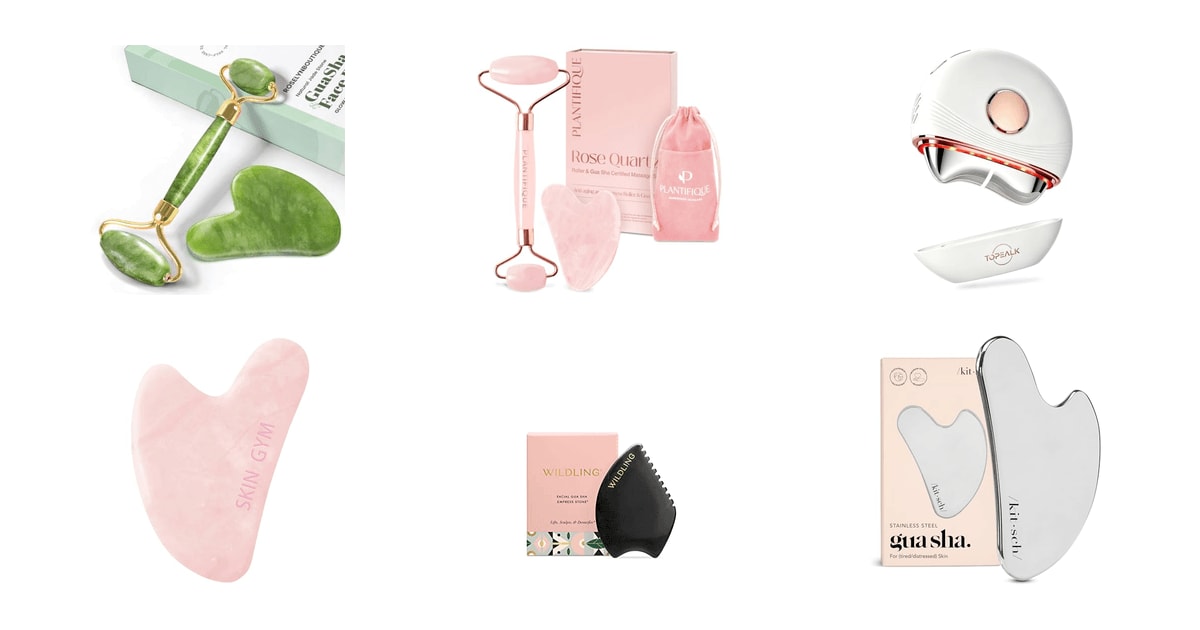
A gua sha tool is a smooth-edged stone or metal paddle you glide across your face, usually over a few drops of oil. Most people reach for one in the morning, when a night of sleep has left the face puffy and the jawline soft. Five minutes of slow upward strokes moves fluid toward the lymph nodes at your neck, and skin looks tighter and more awake. It's a cheap, low-risk habit. The tool itself is simple, which is exactly why the differences between them are easy to miss.
Here's the honest part: no gua sha tool changes your bone structure, and nothing it does is permanent. Dermatologists who've weighed in describe the effect as temporary — better circulation, less fluid, a face that looks less swollen for a few hours. Skip a week and you're back where you started. Technique also matters more than the stone. Hold the tool nearly flat, keep the pressure light, and always work over oil. Do that with the plainest jade paddle and you'll beat sloppy strokes with the fanciest one.
So the real question isn't which stone is magic. It's which shape fits your face, how easily it cleans, and whether you'll actually pick it up tomorrow. Multi-edge tools reach the brow and under-eye without much fiddling. Metal chills harder and rinses clean. A combo set gives a beginner a reason to keep going. We think that the Wildling Empress Stone is the best gua sha tool for most people, and that the Skin Gym Rose Quartz Sculpty Heart is the one to buy if you want a simpler shape for cheeks and jaw.
Everything we recommend

The most precisely shaped stone, if you'll use it daily

Wide, even strokes on cheeks and jaw, less reach up top

Ice rolling plus a jade paddle, aimed at morning puffiness

Non-porous metal that holds cold far longer than stone
At a glance
| Product | Stone Material | Shape / Edge Profile | Price | |
|---|---|---|---|---|
| WILDLING Empress Stone Gua Sha Facial StoneTop pick | Bian Stone | — | $69 |
| Lanfixilly 2Pcs Stainless Steel Gua ShaAlso great | — | Heart-Shaped | $6.99 |
 | Face Roller & Gua Sha Facial ToolsAlso in lineup | Xiuyan Jade | — | $3.99 |
 | RelaxaX Ceramic Gua Sha Facial Tools LymphaticAlso in lineup | Ceramic | — | $9.99 |
 | Rena Chris Gua Sha Facial Tools: JadeAlso consider | Jade Stone | — | $3.99 |
 | Gua Sha Facial Tools with Eye RollerAlso consider | — | Eye Roller | $7.99 |
| SKIN GYM Rose Quartz Sculpty Heart GuaRunner-up | Rose Quartz | Heart-Shaped | $27.20On sale |
| BAIMEI IcyMe Ice Roller for Face andBudget pick | Jade Stone | — | $7.99 |
How we picked
Edge polish. Published testing panels put edge smoothness ahead of every other feature for people with sensitive skin or rosacea. We favored tools described as mirror-polished, cool-touch or specifically non-dragging, and treated rough or chipped edges as disqualifying.
Shape and reach. We looked at how many facial zones a tool can actually handle — jaw, cheek, brow, under-eye, neck. Tools with several purpose-shaped edges, or a second piece in the box, scored higher than a single flat paddle.
Material and cold. We compared spec sheets on what each tool is made of and how long it holds a chill, since cold is doing much of the visible de-puffing work. Steel claims the longest retention; stone gets a head start by feeling cool at room temperature.
Cleaning and durability. Porous stone needs careful drying and a protective pouch; steel and ceramic don't. We also weighted breakage, because owner feedback across stone tools is full of chips from a single drop.
Help for beginners. Technique is the thing that decides whether gua sha works for you, so an included booklet, illustrated card or video library counts. Tools that ship with nothing lose points at every level.
Top pick
The most precisely shaped stone, if you'll use it daily
WILDLING Empress Stone Gua Sha Facial Stone
The Empress Stone is carved from bian stone and shaped so each edge handles a different part of your face — jaw, cheekbone, brow, neck. If you're already doing gua sha most mornings, it's the tool that asks the least of your technique.
$69fromAmazonEvery edge on this stone has a job. The concave curve cups the jawline, the tapered tip works the brow and orbital bone, and the broad side sweeps the cheek and down the neck. Wildling patented the shape and developed it alongside licensed practitioners, and you notice it in how little you reposition. With a flat single-edge paddle you're forever turning the stone in your hand. Here you just move.
The weight does the pressing for you. Bian stone is dense, so the tool carries real heft for its size. That matters more than it sounds. Light tools tempt you to push, and pushing is how people end up red and sore. This one glides under its own mass, which keeps your pressure honest and keeps your hand from cramping halfway through.
Bian stone is the rare part here. It's a sedimentary rock from Sibin county in China, credited with more than 30 trace minerals and used in Chinese medicine for a very long time. Whether the mineral story moves you or not, the material is genuinely different to hold. It's warmer than quartz, denser than jade, and it doesn't feel slick the way a polished roller does.
Editors and practitioners keep landing on this one. Harper's Bazaar named it one of the two tools U.S. practitioners recommend most, and it's had a Good Morning America segment. That isn't proof it works better on your face. But in a category full of anonymous stones of uncertain origin, a brand that names its material and stands behind the shape counts for something.
Flaws but not dealbreakers
It's the most expensive tool here, and it's built for people who already have a routine. The edges only earn their keep once you know which one goes where. If you've never done gua sha, you'll get most of the same de-puffing from a plain jade paddle while you learn. Build the habit first, then upgrade when a single edge starts to feel limiting.
Bian stone breaks. Wildling says so right on the listing, and every stone tool shares the problem: one meeting with a tile floor or a granite counter ends it. Owners of natural-stone tools routinely report chips from a single drop. Keep it in a pouch, don't use it standing over a hard sink, and skip harsh soap and hot-then-cold water, which can micro-fracture the surface.
There isn't much owner feedback to lean on yet. The listing has a thin buyer history, so you're trusting the brand's claims and editorial coverage rather than a long trail of people describing how it held up. For a piece of polished stone that's a smaller risk than it would be for a gadget with a motor. Still, it's worth knowing before you commit.
Runner-upOn sale
Wide, even strokes on cheeks and jaw, less reach up top
SKIN GYM Rose Quartz Sculpty Heart Gua
Skin Gym's heart-shaped rose quartz has two curved lobes for the cheeks and a pointed base for the jawline. Get it if you want a real stone tool with a broad, forgiving surface and you don't need to work around your brow bone.
$27.20fromAmazonList priceThe wide surface makes drainage strokes easy to get right. Byrdie's editors found that broader, flatter tools spread pressure more evenly than narrow-edged ones, which is exactly what you want along the cheek and down the neck. Beginners tend to bear down with a thin edge. The heart's lobes won't really let you dig in, so your strokes stay long and light.
The point does real work on the jaw. Tuck the base under your jawbone and pull out toward your ear, and you get a defined line without switching tools. It also sits well on the masseter, the chewing muscle that tightens if you clench at night. A few slow passes there loosen things the way foam rolling loosens a tight calf.
Rose quartz runs cool on its own. You don't have to chill it for it to feel cold on skin, which is most of why people like stone in the morning. Cool skin tightens, puffiness drops, and the effect holds long enough to get you through getting dressed. Park it on a cold windowsill or in the fridge and it gets colder still.
The polish is what makes it safe for touchy skin. Good Housekeeping's panel found edge smoothness mattered more than any other feature for people with sensitive skin or rosacea. This one's edges are rounded and slick enough to slide over oil instead of catching. If your face flushes easily, that's the thing to care about.
Flaws but not dealbreakers
It's a one-shape tool, and parts of your face want another. The heart is too broad for the orbital bone, the inner brow and the sides of your nose. You'll either skip those spots or press a corner in awkwardly. If under-eye puffiness is your main complaint, something with a small ball end or a fine tip will serve you better.
Nothing in the box teaches you how to use it. For a tool at this level that's a real gap, because technique is the whole game. Plan on learning the 15-to-30-degree angle somewhere else before your first session. Otherwise you'll drag instead of glide, and dragging is what leaves skin irritated.
Budget pick
Ice rolling plus a jade paddle, aimed at morning puffiness
BAIMEI IcyMe Ice Roller for Face and
This set pairs a freezable ice roller with a jade gua sha paddle. Roll first to knock down overnight swelling, then sculpt with the stone — a complete morning routine, and a low-risk way to find out whether the habit sticks.
$7.99fromAmazonThe cold does most of the work on a puffy morning. Freeze the roller for about half an hour and it stays cold through roughly an hour of use, per the brand. Rolled slowly from the center of your face outward, it takes the swelling out of your eyes faster than a room-temperature stone will. If you wake up looking like you slept face-down, start here.
The jade paddle covers the sculpting half. It's a standard curved gua sha shape, meant for upward strokes along the cheek and out along the jaw. Nothing about it is clever. But the basic motion — flat angle, light pressure, always toward the ear — is the same one you'd use with a stone costing many times more, and the motion is what produces the result.
Two steps in order beat one step done twice. Cold first, then glide: the roller constricts and calms, the stone moves fluid toward the lymph nodes at your neck. Harper's Bazaar editors note that routines hitting both circulation and drainage show the most visible short-term change. You get both in one box, which is unusual for a set this cheap.
Flaws but not dealbreakers
The jade varies from unit to unit. The brand says so outright — color may vary. Owners of budget stone tools often mention receiving a paler or blotchier stone than the photo showed. It won't change how the thing works. But if you're buying it as a gift, know that what arrives may not match the listing image.
The roller can't sculpt, and the stone is basic. The ice roller is a de-puffing device, full stop; it doesn't lift or define anything. And the gua sha piece has one simple edge, so the brow, under-eye and nose are all awkward. This set gets you started. It doesn't get you far.
Also great
Non-porous metal that holds cold far longer than stone
Lanfixilly 2Pcs Stainless Steel Gua Sha
Two mirror-polished steel tools: a heart for cheeks and forehead, a detailer for the jaw, under-eyes and neck bands. Steel absorbs nothing, wipes clean in seconds, and stays cold much longer than stone does.
$6.99fromAmazonSteel is the easy answer to the hygiene problem. Natural stone is porous. Oil, serum and skin cells work into the surface, and unless you clean it carefully after every session you're putting that back on your face. Steel absorbs nothing. Soap and water, or an alcohol wipe, and it's genuinely clean. If you break out easily, that alone is reason enough to go metal.
It stays cold long enough to finish the job. Lanfixilly claims three times the cold retention of stone. Thirty seconds in the freezer, or a minute under a cold tap, and you get a properly chilled pass over your eyes and cheeks. A stone warms to skin temperature partway through, which is exactly when the de-puffing effect quits on you.
Two shapes cover the whole face. The heart handles the broad zones — forehead, cheeks, the flat of the jaw. The detailer gets into the narrow ones: under the eyes, along the neck bands, up the side of the nose. That's the multi-zone coverage a single-edge stone can't give you, split across two tools instead of engineered into one.
The set is put together properly. You get a leather pouch, a cleaning cloth and an illustrated guide, and that guide matters more than it sounds if you're new. Storage keeps the polish from getting scratched, and a scratched edge is what tugs at skin. The instructions get your angle right on day one instead of week three.
Flaws but not dealbreakers
Metal feels clinical, and for some people that's the whole objection. Part of why gua sha stuck is that it feels like a ritual — a heavy stone, five quiet minutes. Steel feels like an instrument. It works just as well, but if you're buying this as a small daily pleasure rather than a chore, the stone tools here scratch that itch better.
Cold this aggressive isn't for every face. If your skin flushes, straight-from-the-freezer metal can leave you red for a while; run it under cool water instead. And mirror polish shows every fingerprint and water spot, so it looks grubby fast unless you dry it with the cloth each time.
Who this is for
Buy one of these if you want a five-minute morning routine that makes a puffy face look less puffy, and you're willing to do it most days. Gua sha rewards consistency and punishes impatience. If you're new, get a cheap stone or a combo set, learn the flat angle and the light pressure, and see whether you still care in a month. If you already have the habit and you're bumping into what a single edge can do, that's when a multi-edge stone starts to make sense.
This guide covers hand-held facial tools only — stones, metal paddles and the rollers packaged with them. It doesn't cover microcurrent devices, LED masks, heated wands or anything with a battery, and it doesn't cover the firmer body gua sha that's meant to raise petechiae on a back or a thigh. If you have active acne, eczema, a sunburn, rosacea in flare, or you take blood thinners, talk to a dermatologist before you start scraping anything across your face.
How we picked
We built the shortlist from listing specs, published roundups and the themes running through owner feedback, then judged every tool on the same five things. Edge polish: the surface has to glide over oil without catching, since testing panels tie smoothness directly to comfort on sensitive skin. Shape and reach: we counted how many zones a tool covers — jaw, cheek, brow, under-eye, neck — and rewarded purpose-shaped edges over one flat paddle. Material and cold: how long the thing stays chilled, because cold is doing much of the visible work. Cleaning and durability: porous stone needs drying and a pouch, steel doesn't, and stone chips when dropped. Help for beginners: a booklet or illustrated guide, because technique decides your results more than the tool does.
Other gua sha tools worth considering
If you want a jade stone that teaches you the technique: The Rena Chris Gua Sha Facial Tools: Jade ($3.99) — Rena Chris ships a single smooth jade paddle with an instruction booklet, a cleaning cloth and a library of technique videos on its store page. That matters, because most people who quit gua sha quit inside the first couple of weeks after dragging their skin around and deciding it doesn't work. The stone itself is a plain cool-touch curve — one edge, no clever contours, so the brow and under-eye are out of reach. But it glides well, it's kind to sensitive skin, and it's a legitimate stone rather than dyed glass. It's the pick if you want to learn on real jade and you don't mind a tool you'll eventually outgrow.
If under-eye bags are your main problem: The Gua Sha Facial Tools with Eye Roller ($7.99) — This stainless tool puts a ball-end roller on the tail of a normal gua sha edge, which solves the one thing flat paddles are bad at. The orbital bone is the most delicate real estate on your face, and a broad edge either skips it or presses in where it shouldn't. A small ball rolls the ridge under your eye and doubles as an acupressure point. Steel means you can leave it in the fridge and use it straight away. The trade-off is that neither half is ideal: the gua sha edge is shorter than a dedicated paddle, the roller is small, and the silver finish collects fingerprints. Buy it for the eye area, not as your only tool.
The competition
These are the tools that came up in our research alongside the picks — not a survey of everything for sale. Gua sha is a category with hundreds of near-identical stones under unfamiliar brand names, and most of them differ only in packaging. The two below are genuinely different from the picks, and each lost for a specific reason rather than for being bad.
The RelaxaX Ceramic Gua Sha Facial Tools Lymphatic ($9.99) — RelaxaX makes a fired-ceramic tool with eight different working surfaces — curved, C-shaped, wavy, raised, rounded — designed for the whole body, not just the face. On a shoulder, a calf or a tight lower back, that variety is genuinely useful, and fired ceramic is non-porous and easy to wipe down. It lost on facial precision. The tool is big and flat enough that the under-eye and brow are effectively off-limits, and it's the least comfortable option here for the delicate work that most people actually want gua sha for. Ceramic also cracks if you drop it, and the listing's claims about burning fat and clearing cellulite go well past what any massage tool can do on its own. Worth a look if your practice runs below the neck.
The Face Roller & Gua Sha Facial Tools ($3.99) — TOPhld's set pairs a Xiuyan jade roller with a matching gua sha paddle, and it's the least you can spend on real stone here. The roller is pleasant for tension and circulation, the stone does the standard jaw sweep, and the gift box is nicer than it needs to be. It lost to the BAIMEI set, which does the same job with a roller you can freeze — cold is the part that actually shifts morning puffiness, and a room-temperature jade roller doesn't deliver it. Xiuyan jade is also softer than nephrite, so it chips more readily, and nothing in the box tells you how to use either piece. It's a fine gift and a fine first stone. It just isn't the better of the two starter sets.
Care and cleaning
Wash stone tools with mild soap and lukewarm water after every session, then dry them completely with a soft cloth. Facial oil sinks into porous stone, and oil that sits there goes rancid against your skin. Skip alcohol wipes and skip sudden temperature swings — a cold stone dropped into hot water can micro-fracture over time. Steel is easier: soap, water, or an alcohol wipe, and it's done. Store everything in the pouch it came with, or in a lined box, because a chipped edge is a sharp edge and sharp edges catch skin. Keep stone away from hard counters and tile floors while you're using it. Most breakage owners report comes from one careless moment at the sink, not from wear.
Questions we get
Which gua sha tool should a beginner start with?
Start cheap. The BAIMEI IcyMe set gives you a jade paddle and a freezable roller, which covers both halves of a morning routine, and the Rena Chris jade tool comes with a booklet and video tutorials that fix the biggest beginner problem. Learn the flat angle and the light pressure on one of those. Move up to a multi-edge stone like the Wildling only once you've been doing it long enough to feel what a single edge can't reach.
Does gua sha really sculpt your jawline?
It temporarily improves how your jaw and cheeks look by moving fluid and boosting circulation, and the effect fades. Dermatologist Rachel Nazarian has described it as a temporary improvement that needs consistent use to hold. The reliable win is morning de-puffing — the swelling that builds overnight comes down noticeably. Any firmness change is gradual and shows up over months of daily practice, not in a week.
Jade, rose quartz, bian stone or steel — does the material matter?
Less than the shape and your technique, but the differences are real. Jade is the traditional choice and stays cool; rose quartz behaves much the same. Bian stone is denser and rarer, credited with a long list of trace minerals, and it's what the Wildling uses. Steel is the practical option: non-porous, easy to sanitize, and it holds cold roughly three times longer than stone.
How often should you use one?
Daily is the standard recommendation, ideally in the morning when overnight puffiness is at its worst. Three to five minutes over facial oil is plenty. Consistency over weeks beats an occasional long session by a wide margin. Going over the same area more than once a day adds nothing and can leave skin tender.
Do you need oil, or can you use it on dry skin?
Always use oil, serum or moisturizer. On dry skin the tool drags instead of gliding, which stretches tissue and can damage capillaries over time. A few drops are enough to create the slip you need. Both the Lanfixilly steel set and the RelaxaX ceramic tool specifically call for oil or lotion in their instructions.
Can gua sha bruise you or break capillaries?
Done properly on the face, it shouldn't. Hold the tool at roughly 15 to 30 degrees — nearly flat — and use light gliding pressure, not the firm scraping used on the body, which is meant to raise marks. If you see redness, soreness or bruising, your angle is too steep, your pressure is too heavy, or your tool's edge isn't polished well enough. Good Housekeeping's panel found smooth edges cut discomfort significantly for people with sensitive skin.
Why you should trust us
For this guide:
- We read published gua sha roundups and panel findings from Allure, Byrdie, Good Housekeeping and Harper's Bazaar, along with dermatologist commentary on what lymphatic drainage can and can't do.
- We compared manufacturer specifications for every tool here — material, shape count, cold retention claims and what ships in the box.
- We read through owner feedback for each listing to find the failure modes people actually run into, like chipped stone, color that doesn't match the photo, and finishes that show every fingerprint.
- We read owner reviews on every listing, weighted toward the critical ones, because that is where the recurring failures show up.
- We have a systematic way of automatically fetching the latest prices, so the numbers on this page stay current.
- This is a research-focused guide, so the team may not own every product listed — though we often do own the top winners, which gives us extra context for the recommendations.
- We don't accept free products, and the retailer commission never changes which product we recommend.
Sources
Best Gua Sha Tools, Tested by Beauty Editors, Allure
The Best Gua Sha Tools of 2026, Byrdie
Best Gua Sha Tools, Tested, Good Housekeeping
Best Gua Sha Tools 2026, Harper's Bazaar
Gua Sha Facial: Benefits, Technique, and Side Effects, Healthline
Amazon product listings and owner reviews for all 8 products
Manufacturer specification pages for each product
Some passages in this guide may be paraphrased with AI help. Prices are refreshed automatically.
More like this.
Continue exploring beauty reviews and recommendations.

The Best Gua Sha Tools
A gua sha tool is a piece of polished stone you drag across your face, and that's about it. There's no motor, no charging cable, nothing to break except…

The Best Curling Wands and Hair Styling Tools
Curling your own hair is mostly a fight against three things: time, burns, and curls that fall out by lunch. A good styling tool heats up before you've…

The Best Oscillating Multi-Tools
An oscillating multi-tool is the thing you reach for when nothing else fits. It undercuts door casings so laminate slides underneath. It chews grout out…

The Best Tool Backpacks
A tool backpack solves a problem a tote never will: it puts both your hands free on a ladder. That matters when you're climbing into an attic in July, or…

The Best Rolling Tool Chests
A rolling tool chest earns its keep in the boring moments. You reach for a 10 mm socket with greasy hands, pull the drawer, and it either glides or it…

The Best Magnetic Pickup Tools
A dropped bolt is a small problem that eats an afternoon. It ricochets off the alternator, slips into a seam you can't see, and suddenly you're pulling a…