The Best Gua Sha Tools of 2026
A gua sha tool is a piece of polished stone you drag across your face, and that's about it. There's no motor, no charging cable, nothing to break except the stone itself. What separates a good one from a bad one is narrower than you'd think: how smooth the edges are, how the curves match your jaw and cheekbone, and how it sits in your hand for five minutes at 6 a.m. Get those right and you'll actually use it. Get them wrong and it becomes drawer decoration.
Here's the honest part. No stone is going to restructure your face. A 2022 study in the Journal of Cosmetic Dermatology found daily five-minute facial massage raised measured skin elasticity by about 7.8% over eight weeks — real, but modest, and it took two months of showing up. Research in Complementary Therapies in Clinical Practice similarly points to improved microcirculation and less self-reported puffiness after four weeks of daily use. Depuffing is what most people notice. Permanent contouring isn't on the table.
One more thing worth knowing before you buy: almost every stone tool here will break if you drop it on tile, and owners of every brand say so. That's the category, not a defect. We think that the Rena Chris Rose Quartz Gua Sha is the best gua sha tool for most people, and that the Wildling Empress Stone is the one to buy if you want a bian stone tool with edges built around a real technique.
Everything we recommend

A well-polished stone that fits most faces and most hands

Real bian stone and edges designed around an actual technique

Two nephrite jade pieces, including a small one for tight spots

A thinner, wider rose quartz board with more reach per stroke
Prices as of Oct 22, 7:36 AM PT · Details
At a glance
| Product | Stone Material | Shape / Edge Profile | Price | |
|---|---|---|---|---|
| Rena Chris Gua Sha Facial Tools: RoseTop pick | Rose Quartz | — | $5.99 |
| WILDLING Empress Stone Gua Sha Facial StoneUpgrade pick | Bian Stone | — | $69 |
| Ditind Gua ShaBudget pick | Jade Stone | 2 Piece Set | $6.99 |
| Flagest Rose Quartz Gua Sha Facial ToolAlso great | Rose Quartz | — | $5.99 |
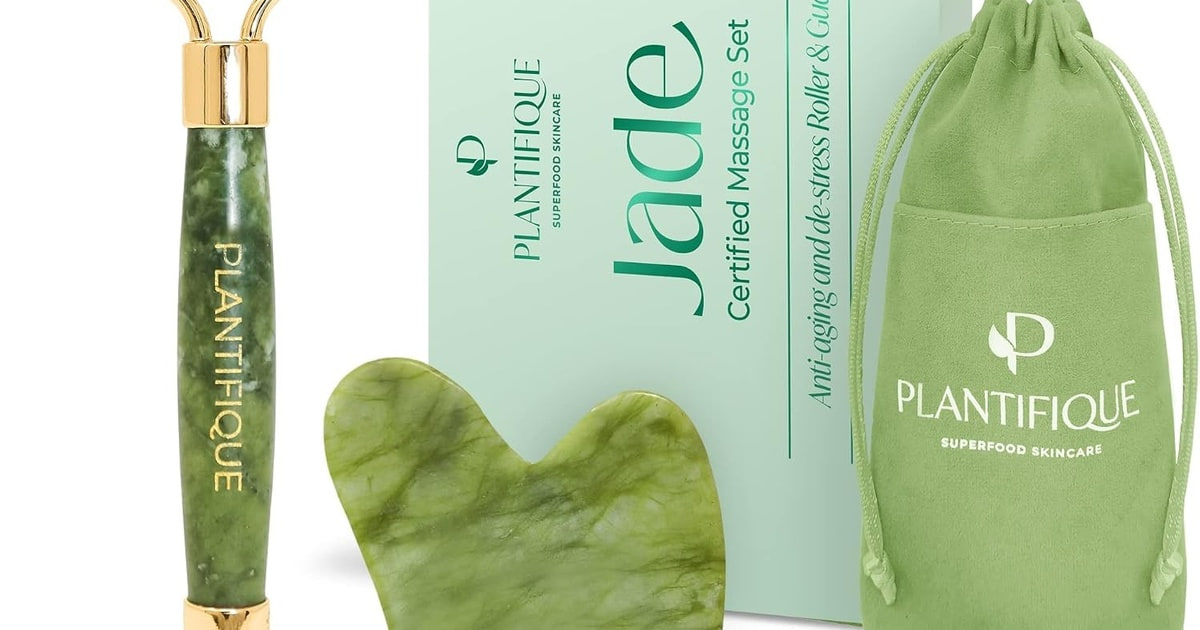
 | PLANTIFIQUE Gua Sha Facial ToolsAlso consider | Jade | 6.5x2.5x0.5 in | $9.99On sale |
 | SKIN GYM Rose Quartz Heart Gua ShaAlso in lineup | Rose Quartz | Heart shape | $27.20 |
 | DAROMA Gua Sha ElectricAlso in lineup | — | — | $29.97 |
Prices as of Oct 22, 7:36 AM PT · Details
How we picked
Surface and edge polish. Rough spots and micro-chips are the main cause of skin tugging, so we weighted owner feedback about finish quality heavily. Any tool with a pattern of reports about jagged edges or gritty surfaces lost ground fast.
Stone authenticity. We compared each listing's material claims against what the GIA and TCM literature say about real nephrite, rose quartz and bian stone. Vague material language without a stated origin counted against a product.
Edge variety and shape. Comb, flat, notched and curved edges each serve a different part of the face, so we looked for shapes that actually match facial contours. We also checked that the complexity suited the intended user rather than just looking impressive.
Weight and hand feel. A tool you hold at your temple for five minutes daily needs to be light enough not to tire your arm. We compared listed weights and read owner comments about hand fatigue and grip.
Guidance for beginners. Published expert guidance stresses that angle and pressure matter more than the stone itself, so we favored tools that ship with a printed manual or link to real tutorials. Nothing about correct technique is obvious from the shape alone.
Top pick
A well-polished stone that fits most faces and most hands
Rena Chris Gua Sha Facial Tools: Rose
The Rena Chris is a rose quartz tool with a kidney-shaped body, a notched edge for the jaw, and a curved side for cheeks and neck. It ships with an instruction manual and a cleaning cloth, which matters more than it sounds if you've never done this before.
$5.99fromAmazonPrices as of Oct 22, 7:36 AM PT · Details
Polish is the whole game, and this one gets it right. Rough spots and micro-chips are what cause tugging, and tugging is what irritates skin. Owners of this tool consistently describe the surface as smooth and the edges as non-catching, even after months of daily use. That's the single most common failure point in cheap stone tools, and it's the thing you can't fix once you've bought it.
The shape is conventional on purpose. You get a shallow notch that straddles the jawline, a long gentle curve for the cheek and neck, and a rounded end small enough for under the eye. Nothing here demands that you learn a system first. If you've watched one tutorial, you already know what to do with every edge on this stone.
Rose quartz stays cool to the touch, and it holds that cool for the length of a short session. Stick it in the fridge overnight and the depuffing effect gets noticeably stronger — cooling the vessels before you start is a standard trick, and this stone takes to it well. In a warm bathroom, a cold stone on puffy under-eyes in the morning is most of why people keep the habit.
It's also light. Just under two ounces, which sounds trivial until you're holding your arm up at your temple for the fifth minute. Heavier stones are nice for body work but tiring on the face. If you're doing this daily rather than occasionally, the lighter tool is the one you'll still be using in three months.
Flaws but not dealbreakers
It's smaller than some competing tools, and a few longtime owners who replaced an older, longer version found the newer stone noticeably narrower at the kidney curve. If you have a broad face or you want to work your shoulders and back with the same tool, you'll want something with more surface.
Rose quartz is a natural stone, so color and veining vary from unit to unit. And like every stone here, it will chip or split if it lands on a hard sink. Treat it as glassware.
Upgrade pick
Real bian stone and edges designed around an actual technique
WILDLING Empress Stone Gua Sha Facial Stone
Wildling's Empress Stone is carved from bian stone, the material traditional gua sha originally used, and its patented shape gives you distinct edges for the jaw, brow, cheek and neck. It's the most expensive tool here and the one with the steepest learning curve.
$69fromAmazonPrices as of Oct 22, 7:36 AM PT · Details
Bian stone comes from Sibin County in Shandong Province, and it's the material with the longest actual history in this practice. Peer-reviewed TCM literature notes it emits far-infrared radiation in the 8–14 micrometer range, which traditional practice associates with improved local circulation. Whether that specific mechanism moves the needle for you is debatable. What isn't debatable is that it's the authentic material, and it's frequently counterfeited elsewhere.
The edges are the reason to pay up, not the stone. Each side of the Empress Stone is architected for a different plane of the face rather than being one generic curve repeated. That's genuinely useful once you know the sequence — but it also means you need to learn the sequence. Wildling publishes tutorials, and owners routinely say they watched a few videos before the tool clicked. Budget an evening.
Refinery29 editors ran an eight-week trial with the Empress Stone in which seven of eight participants reported visible improvement in jawline definition and less morning under-eye puffiness by week four. That's a small, self-reported panel, so hold it loosely. But it lines up with what the broader research says about consistent daily use, and it's more scrutiny than most tools in this category get.
It's the heaviest stone in this guide, and that cuts both ways. On the neck, shoulders and along the jaw, the extra mass does the work for you and you barely have to press. Around the eyes it's more than you need. Several owners use it well beyond the face for tension in the traps and scalp, which is a fair way to justify the cost.
Flaws but not dealbreakers
Wildling puts it on the listing in bold: this stone is fragile when dropped. Owners confirm it — a short fall onto a bathroom counter can end it. For the most expensive tool here, that's a real risk you're accepting.
Some longtime owners who bought a replacement felt the newer stone came in lighter than the one they'd had for a year, and preferred the older heft. Natural stone varies, but it's worth knowing that the experience isn't perfectly consistent unit to unit.
You're also paying a lot for a piece of rock. If you want the depuffing and don't care about material provenance or a structured technique, the Rena Chris does the everyday job for a fraction of it.
Budget pick
Two nephrite jade pieces, including a small one for tight spots
Ditind Gua Sha
The Ditind set gives you a full-size jade board plus a smaller second piece for trigger points and hard-to-reach areas. It costs a fraction of the premium tools and owners report the polish is genuinely smooth, which is the part budget stones usually get wrong.
$6.99fromAmazonPrices as of Oct 22, 7:36 AM PT · Details
You get two tools, and the small one earns its place. The full-size board handles cheeks, jaw and neck the way any decent stone does. The little one reaches the sides of the nose, the space in front of the ear, and knots in the hands and feet that a big board just slides over. Most single-piece tools leave those spots untouched, and you notice.
Nephrite jade behaves differently from rose quartz in the hand. The GIA notes that authentic nephrite sits roughly 5–8°F below ambient room temperature on contact — a thermal property that dyed serpentine and synthetic simulants don't reproduce. In practice it means the stone feels cold immediately, without needing the fridge, which is the single nicest thing about jade over quartz.
This is also the tool a lot of people buy for the body. Owners use it on knees, calves and shoulders as much as the face, and the listing is built around that dual purpose. If you're coming to gua sha from muscle tension rather than skincare, the two-piece set is the more sensible starting point than a delicate facial stone.
The polish holds up. The most common complaint about inexpensive jade is rough edges and micro-chips, and buyers who returned other budget stones for exactly that reason report this one arrived properly finished. That's the threshold that matters at this price, and it clears it.
Flaws but not dealbreakers
It's fragile, and owners are blunt about it. More than one has broken a piece on a short fall to the floor. If you're clumsy or you use it standing over a hard counter, plan accordingly.
Don't expect fast visible change. Some owners a couple of weeks in report no difference they can see — which tracks with the research, where the measurable effects show up at four to eight weeks of daily use.
Also great
A thinner, wider rose quartz board with more reach per stroke
Flagest Rose Quartz Gua Sha Facial Tool
The Flagest is a rose quartz tool cut noticeably thinner and wider than most, so each stroke covers more ground on the cheek and neck. It ships in a pouch and comes in several colors, which makes it the easy pick when you're buying a few as gifts.
$5.99fromAmazonPrices as of Oct 22, 7:36 AM PT · Details
At about three inches long and a fifth of an inch thick, this is a flatter board than the Rena Chris. That geometry gives you a longer contact line along the cheekbone and down the side of the neck, so you cover the same territory in fewer passes. If you find yourself impatient with five-minute routines, fewer strokes helps.
The edges are rounded rather than sharp, and that's deliberate. Owners repeatedly note that it glides without catching, including people with reactive skin who've had trouble with more aggressive tools. A blunter edge does less at the jawline than a proper notch. But it's the safer choice if you tend to press harder than you should.
It also works well beyond the face — wrists, shoulders, the tops of the feet. Owners doing lymphatic work on the body report it handles those larger flat surfaces comfortably, which is where the extra width pays off. And it holds cool the way rose quartz does, so the fridge trick works here too.
Practical detail: it comes with a pouch, which is more useful than it sounds. A loose stone in a bathroom drawer is a stone that eventually gets chipped by whatever's next to it. The pouch is also why this one travels well.
Flaws but not dealbreakers
The thinness that helps on flat planes works against you around the eyes and along the jawbone, where a thicker, more contoured tool grips better. If jawline work is your main goal, look at the notched designs instead.
Buying multiple colors at once gets confusing — the boxes don't make it obvious which stone is inside, which several gift-buyers have run into. Open and label them before you wrap.
Who this is for
Buy one if you want a cheap, repeatable way to look less puffy in the morning, or if you carry tension in your jaw and temples and want something to work it out with. The evidence supports modest, real benefits — better microcirculation, less self-reported puffiness, a small measured gain in skin elasticity over about two months. If you'll do five minutes most days, you'll get something out of it. If you'll do it twice and forget, skip it. Consistency is doing the heavy lifting here, not the stone.
Skip it, at least for now, if you have active cystic acne, broken capillaries, or rosacea that's flaring. Board-certified dermatologist Dr. Shereene Idriss advises against dragging a tool over any of those, since the motion can spread bacteria mechanically and set off post-inflammatory hyperpigmentation. This guide covers handheld facial gua sha stones — not jade rollers, not microcurrent devices, and not the heated electric massagers that borrow the name. And no tool here will restructure bone or permanently slim a jawline, whatever the videos suggest.
How we picked
We started from the failure modes that actually ruin these tools and worked backward. Polish: the surface has to be free of rough patches and chips, because those are what tug at skin and cause micro-tears — owner reports of jagged edges were disqualifying. Material: we checked stated stone types against what the GIA and TCM literature describe for real nephrite, rose quartz and bian stone, and discounted listings that stayed vague about origin. Shape: comb, flat, notched and curved edges each do a different job, so we wanted contours that match a face rather than a generic slab. Weight: light enough for five minutes of daily overhead work, heavy enough to do some of the pressing for you. Guidance: since angle and pressure matter more than the stone, we favored tools that come with a real manual or credible tutorials.
Other gua sha tools of 2026 worth considering
If you want a jade tool with a warranty behind it: The PLANTIFIQUE Gua Sha Facial Tools — The Plantifique is a jade board in the standard kidney shape, sold with a detailed guide and — unusually for this category — a one-year warranty that owners say the company honors quickly when a stone arrives damaged. That backstop matters when the product is breakable by nature. The catch is consistency: while most buyers describe it as smooth and well finished, there's a thin but real stream of complaints about rough surfaces and chipped edges out of the box. That's exactly the flaw that makes a gua sha unusable, so inspect it the day it arrives while the warranty window is wide open.
The competition
This is what our research surfaced on Amazon, not a survey of everything sold. Plenty of well-regarded tools — including several sold mainly through Sephora, Ulta or brand sites — aren't here because they weren't in the lineup we could confirm. The two below came close enough to consider and then lost to a pick for specific reasons.
The SKIN GYM Rose Quartz Heart Gua Sha — Skin Gym's Rose Quartz Heart is the prettiest tool in the group, and the heart shape gives you a broad flat face plus a pointed tip for the jaw. It's a real rose quartz stone from an established brand, and people who love it use it twice a day. But the breakage reports are worse than the category norm — owners describe it splitting after a fall of just a few inches, and more than one has gone through multiple stones. Several units also arrived cracked or in opened packaging. For a tool priced above our top pick, that's a hard combination to recommend around. Buy it if the shape is what you want and you have a soft place to set it down.
The DAROMA Gua Sha Electric — The Daroma is an electric device shaped like a gua sha stone, with constant-temperature heating around 107°F, a cooling mode, vibration and red light. It's a legitimately different experience — owners who find cold stones unpleasant say the warmth is what finally made the routine stick, and the heat does help serums absorb. It's in the competition rather than the picks because it's a powered gadget, not a stone tool, and it carries a gadget's failure modes: some owners report the charger dying or the unit quitting within weeks, and short battery life per charge. If you want warmth and don't mind the risk of electronics, it's worth a look. If you want the simplicity of a stone that can't stop working, it isn't.
How to use and care for a gua sha tool
Never use one on dry skin. Good Housekeeping Beauty Lab found that applying a facial oil first cut measured skin friction by more than 60% versus dry application, which directly reduces redness and barrier damage. Any facial oil or a slippery serum works; use enough that the stone glides rather than drags. Licensed acupuncturist Sandra Lanshin Chiu recommends holding the tool at roughly 15 degrees to the skin — flatter than most people instinctively do. Steeper angles bruise the small capillaries under the surface. Use light pressure and short upward, outward strokes, about five minutes a day. Wash the stone with mild soap and warm water afterward, dry it fully, and store it somewhere it can't slide onto tile. A refrigerated stone depuffs noticeably better in the morning.
Questions we get
What's the difference between jade and rose quartz gua sha?
Mostly density and how cold they feel. Authentic nephrite jade sits about 5–8°F below room temperature on contact, per the GIA, so it feels cool right out of the drawer. Rose quartz starts closer to room temperature but holds cold well once you chill it. Neither material has an effect on your skin that the other doesn't — pick the one that feels better in your hand.
How often should I use it?
Five minutes a day, with light pressure, beats a long aggressive session once a week. The studies that found measurable effects — better microcirculation at four weeks, about 7.8% more skin elasticity at eight weeks — all relied on daily use. Missing days is fine. Making it a habit is the part that matters.
Can gua sha actually slim my jawline?
It can reduce fluid retention along the jaw, which makes the edge look sharper, especially in the morning. Refinery29's eight-week panel with the Wildling stone had seven of eight participants reporting visible jawline improvement by week four. But that's depuffing, not bone or fat reduction, and it fades if you stop. Treat it as a temporary sharpening, not a permanent change.
Is gua sha safe if I have acne or rosacea?
Not over the affected areas. Dr. Shereene Idriss advises never dragging a tool across active cystic acne, broken capillaries or a rosacea flare, because the motion can spread bacteria and trigger post-inflammatory hyperpigmentation. You can still work the neck and unaffected zones. If your skin is generally reactive, use a blunt-edged tool, plenty of oil, and very light pressure.
Is bian stone worth paying more for than rose quartz?
It's the historically authentic material, and it's what the oldest TCM tools were made from. If provenance matters to you, or you want a heavier stone with edges designed around a specific technique, the upgrade makes sense. For plain morning depuffing, a well-polished rose quartz tool does the same job. Bian stone is also widely counterfeited, so buy it from a brand that stands behind the sourcing.
How is this different from a jade roller?
A roller glides over the surface with even, gentle pressure and is easier to use badly without consequence. A gua sha stone has edges that let you follow the jawbone, hook under the cheekbone, and work a specific line — more effective, but it needs correct angle and pressure. Rollers are more forgiving. Stones do more when you use them right.
Why you should trust us
For this guide:
- We read the published research on facial massage, including studies in the Journal of Cosmetic Dermatology and Complementary Therapies in Clinical Practice, alongside expert guidance from licensed acupuncturist Sandra Lanshin Chiu and dermatologist Dr. Shereene Idriss.
- We compared each product's listing specifications and stated stone material against what the Gemological Institute of America and TCM literature describe for authentic nephrite, rose quartz and bian stone.
- We read through owner feedback for every tool here, looking for recurring themes about edge polish, breakage and whether people kept using the tool months later.
- We read owner reviews on every listing, weighted toward the critical ones, because that is where the recurring failures show up.
- We have a systematic way of automatically fetching the latest prices, so the numbers on this page stay current.
- This is a research-focused guide, so the team may not own every product listed — though we often do own the top winners, which gives us extra context for the recommendations.
- We don't accept free products, and the retailer commission never changes which product we recommend.
Sources
Best Gua Sha Tools, Tested by Byrdie Editors, Byrdie
The Best Gua Sha Stones, According to Dermatologists and Estheticians, Allure
Best Gua Sha Tools Tested by the Good Housekeeping Beauty Lab, Good Housekeeping
Do Gua Sha Facial Tools Actually Work? Dermatologists Weigh In, Cosmopolitan
The Best Gua Sha Tools of 2026, Vetted by Our Beauty Team, InStyle
Gua Sha Benefits for Your Face: What the Science Actually Says, Healthline
Best Gua Sha Tools, Ranked by Shape Editors, Shape
The Best Gua Sha Tools — Vogue Beauty, Vogue
Gua Sha for the Face: Technique, Benefits, and Risks, WebMD
Jade: Meanings, Properties, and Identification — Gemological Institute of America, Gemological Institute of America (GIA)
Gua Sha Tools Market Size, Share & Trends Analysis Report 2025–2030, Grand View Research
The Technique Behind Facial Gua Sha — Lanshin Expert Library, Lanshin (Sandra Lanshin Chiu, L.Ac.)
Amazon product listings and owner reviews for all 7 products
Manufacturer specification pages for each product
Some passages in this guide may be paraphrased with AI help.
Product prices and availability are accurate as of the date/time indicated and are subject to change. Any price and availability information displayed on Amazon.com at the time of purchase will apply to the purchase of this product.
More like this.
Continue exploring beauty reviews and recommendations.

The Best Gua Sha Tools
A gua sha tool is just a smooth stone or piece of metal you drag across your face, usually over a few drops of oil. Most people reach for one in the…

The Best Curling Wands and Hair Styling Tools
Curling your own hair is mostly a fight against three things: time, burns, and curls that fall out by lunch. A good styling tool heats up before you've…

The Best Victorinox Knives and Tools
Most people don't need a block full of forged German steel. You need one chef's knife that's genuinely sharp, a small blade you'll actually have on you,…

The Best Magnetic Pickup Tools
A dropped bolt is a small problem that eats an afternoon. It ricochets off the alternator, slips into a seam you can't see, and suddenly you're pulling a…

The Best Tool Backpacks
A tool backpack solves a problem a tote never will: it puts both your hands free on a ladder. That matters when you're climbing into an attic in July, or…

The Best Rolling Tool Chests
A rolling tool chest earns its keep in the boring moments. You reach for a 10 mm socket with greasy hands, pull the drawer, and it either glides or it…