The Best Victorinox Knives and Tools
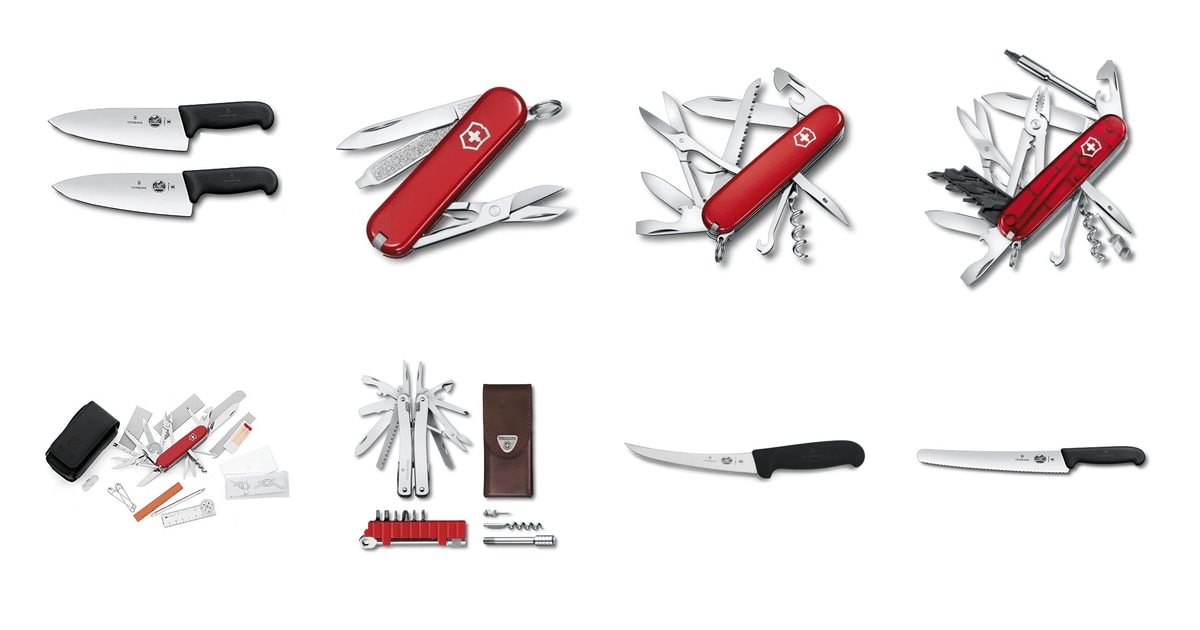
Most people don't need a block full of forged German steel. You need one chef's knife that's genuinely sharp, a small blade you'll actually have on you, and maybe a tool that handles the loose screw, the zip tie and the wine bottle. Victorinox has built its name on exactly that: light, plain, Swiss-made things that work. The kitchen knives show up on restaurant prep lines. The pocket knives ride around in pockets for decades. Nothing here is fancy, and that's the appeal.
No Victorinox tool is the best-in-class version of anything, though. The kitchen knives are stamped rather than forged, so they feel thin and light, with none of the satisfying heft you get from pricier brands. Most of the folding knives are slip-joints, which means the blades don't lock, and the published comparisons we read put them behind Leatherman-style pliers tools for prying and hard wire cutting. The steel takes a keen edge but gives it up sooner than hard Japanese steel. You're trading refinement for usefulness.
So think about how you'll actually use it. A knife that lives on your cutting board should be light, grippy and easy to bring back on a stone. A knife that lives on your keychain should be small enough that you stop noticing it's there. A tool that lives in a truck or a tool bag can be heavy, because you're not carrying it around all day. We think that the Fibrox Pro 8-Inch Chef's Knife is the best Victorinox knife for most people, and that the Classic SD is the one to buy if you just want something genuinely useful on your keyring.
Everything we recommend

Light, sharp and plain-looking, which is exactly the point

Small enough to forget, useful enough to keep replacing

Real pliers and a lock, if your work is rougher

More tools than a keychain knife, still pocket-sized
At a glance
| Product | Blade Length | Functions | Price | |
|---|---|---|---|---|
| Victorinox Fibrox Pro Chef's KnifeTop pick | 8 in | — | $98 |
| Victorinox Classic SD Swiss Army KnifeBudget pick | 2.3 in | 7 Functions | $23.85 |
| Victorinox Huntsman Swiss Army KnifeAlso great | 3.6 in | 15 Functions | $43.99 |
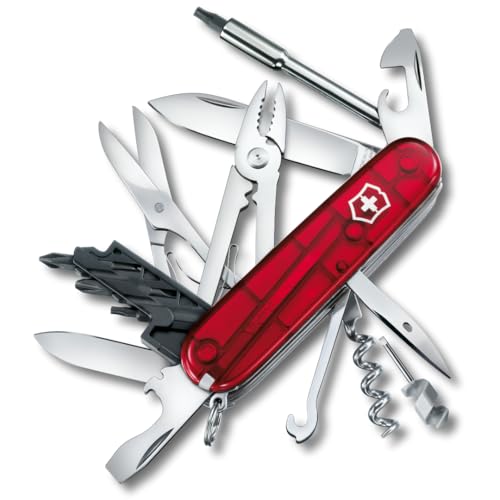 | Victorinox CyberTool M 32 Function Swiss ArmyAlso consider | 3.6 in | 32 Functions | $100.48On sale |
 | Victorinox SwissChamp SOS Kit 1.8810U0 Swiss ArmyAlso in lineup | — | 47 Functions | $249.95On sale |
| Victorinox Swiss Tool Spirit X Plus RatchetUpgrade pick | 4.1 in | 36 Functions | $219.99 |
 | Victorinox Victorinox swiss army cutlery fibrox proAlso consider | 5.5 in | — | $32.38On sale |
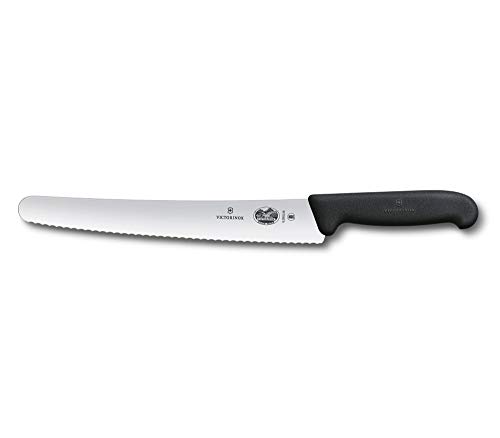 | Victorinox Fibrox 10.25-Inch Bread Knife with SerratedAlso consider | 10.3 in | — | $64.38 |
How we picked
Edge and steel. We leaned on published testing from America's Test Kitchen, Cook's Illustrated and Serious Eats, plus Victorinox's own blade specs. A knife had to arrive keen and come back to sharp with ordinary honing, not a workshop full of stones.
Grip when wet. We compared handle materials across the lineup — Fibrox on the kitchen knives, Cellidor on the folders, steel on the Swiss Tool. Wet hands are when a knife gets dangerous, so grip mattered more to us than looks.
Tools you'll use. Function counts sell pocket knives, but we weighted the tools people actually reach for — scissors, saw, bit driver, pliers — over the ones that pad the number on the box.
Weight and carry. We compared closed lengths and weights from spec sheets, because a tool you leave at home does nothing. Anything under a few ounces can live on a keyring or in a pocket; heavier tools need a pouch or a bag.
Warranty and support. Victorinox states a lifetime guarantee against defects in materials and workmanship across these lines. We favored models common enough that replacing or servicing one is easy.
Top pick
Light, sharp and plain-looking, which is exactly the point
Victorinox Fibrox Pro Chef's Knife
This is the knife America's Test Kitchen keeps recommending over blades that cost several times as much. It's light, it arrives very sharp, and the rubbery handle stays put when your hands are slick with raw chicken. This listing sends you two of them.
$98fromAmazonIt out-cuts knives that cost several times as much. America's Test Kitchen and Cook's Illustrated have named it a top pick or Best Buy in repeated head-to-head comparisons against far pricier knives, and they've kept doing it across more than a decade of retests. The blade is laser-tested and ground to a narrow angle, which is a big part of why it slices through tomato skin instead of squashing the tomato.
Pick it up and the first thing you notice is what isn't there. No bolster, no thick spine, no weight. It runs about 6.4 ounces, where comparable German forged knives sit around 8 to 9, and Serious Eats notes that the lighter blade cuts fatigue on long prep sessions. If you're dicing onions for a big pot of chili on a Sunday, your forearm will notice by the third onion.
The Fibrox handle is the other reason it stays in the rotation. It's textured plastic, it isn't pretty, and it doesn't turn slippery when you're breaking down a chicken. It meets NSF standards for commercial kitchens, which is why these turn up in restaurant prep lines everywhere, and it's dishwasher safe if you're the kind of cook who refuses to hand-wash anything.
The edge holds up better than a knife this plain has any right to. Cook's Illustrated found it kept a usable edge through about three weeks of daily home cooking before it wanted honing. That's normal-person maintenance: a few passes on a rod when it starts sliding off a tomato, a proper sharpening a couple of times a year. The steel is soft enough to bring back easily, which matters more day to day than raw hardness.
Flaws but not dealbreakers
It feels cheap, because in some ways it is. The blade is stamped rather than forged, the handle is molded plastic, and there's no bolster to stop your fingers if your grip slides forward. Nobody's going to compliment it on your counter. If half the pleasure of cooking is owning nice objects, this knife will let you down every time you open the drawer.
Two other things worth knowing. This listing is a two-knife set, so if you only want one chef's knife, you're buying a spare — great as a gift or for a second cook in the house, less great if your drawer is already full. And the softer steel dulls faster than a hard Japanese blade, even if it also comes back faster on a stone.
Victorinox backs its knives with a lifetime guarantee against defects in materials and workmanship.
Budget pick
Small enough to forget, useful enough to keep replacing
Victorinox Classic SD Swiss Army Knife
Seven tools in something about the size of a house key: a small blade, scissors, a nail file, a screwdriver, tweezers, a toothpick and a key ring. It weighs roughly three quarters of an ounce, so it vanishes on a keyring. You'll use the scissors constantly.
$23.85fromAmazonThe scissors are the real reason to own one. A loose thread on a sleeve, a hospital bracelet, the plastic tag on a new shirt, a snack bag that won't tear straight — that's the job, and it comes up more than you'd guess. Owners who've carried the same one for years describe the same small rescues over and over. The blade is properly sharp for its size, and the nail file doubles as a tiny flathead.
It's small enough that you never decide to leave it behind. That's the whole trick with everyday carry. It's about 2.3 inches long and roughly 21 grams, which on a loaded keyring is nothing at all. Bigger knives get better at everything except being carried, and the sharpest knife in your drawer cuts exactly nothing. This one just sits there until the day you need it.
It's also the entry point to the whole Victorinox lineup and one of the best-selling pocket knives in the world, which has practical upsides. The design has barely changed in generations, so it's easy to replace and easy to service. It comes in a pile of colors — red is the classic, but a bright one is far easier to spot at the bottom of a bag. And it's a painless gift for someone who'd never buy one for themselves.
Flaws but not dealbreakers
The size cuts both ways. If you have big hands, the blade and the scissors are fiddly, and owners with larger fingers say it's harder to work with than it looks in photos. The blade opens packages and letters. It won't cut rope or carve anything.
It doesn't lock, either, so it can fold shut if you push it sideways under load — keep it to light cutting. And because it's tiny and lives on a keyring, it's the Victorinox people lose most: at airport security, at a friend's house, or somewhere in between. Most owners just buy another one.
Victorinox covers its Swiss Army Knives with a lifetime guarantee against defects in materials and workmanship.
Upgrade pick
Real pliers and a lock, if your work is rougher
Victorinox Swiss Tool Spirit X Plus Ratchet
This is Victorinox's answer to a Leatherman: steel scales, needle-nose pliers, a hard-wire cutter, a ratchet with an extension bar, and 36 functions that lock open. It's the heaviest thing in this guide, and it rides in a leather belt pouch rather than a pocket.
$219.99fromAmazonThe lock is the reason to step up. A slip-joint pocket knife is fine for boxes and twine. Lean on one while cutting rope under tension and it can close on your fingers. Published comparisons rate locking pliers tools like this one as the durable choice for hard use — cutting wire, prying, anything where you put your weight behind the tool. If your day involves both fine work and rough work, this is the one to carry.
The pliers are the other half of the argument. Needle-nose jaws, a cutter for soft wire and a separate notch for hard wire cover most of what would otherwise send you back to the truck: pulling a staple, twisting a lead, gripping a rounded-off nut. There's a ratchet and an extension bar too, which turns the bit driver into something you can actually put torque behind.
It's built like something you hand down. The scales are steel instead of plastic, the finish shrugs off scuffs, and owners coming over from Leatherman tools consistently call it slimmer, better finished, and easier to draw from its leather pouch. OutdoorGearLab's reviewers still give small slip-joint knives the edge for getting at a little blade one-handed, so don't buy this to open mail.
Think about where it'll live, because that decides whether you like it. On a belt or in a tool bag, the weight is irrelevant and the capability is real. In the front pocket of your jeans, it's a brick. If you want one tool for both the job site and a night out, this isn't it — but nothing that cuts hard wire ever is.
Flaws but not dealbreakers
The ratchet and bit driver take some learning. Owner feedback keeps landing on the same point: the socket is awkward on very small fasteners, and the bits can push out of position until you get the knack. For fine electronics work, the CyberTool below is the better fit.
It's also the most expensive tool here, and the blade and scissors are no better than the ones on a plain Swiss Army Knife. You're paying for the pliers, the lock and the build quality. If you don't do that kind of work, you'll carry weight you never use.
Also great
More tools than a keychain knife, still pocket-sized
Victorinox Huntsman Swiss Army Knife
Fifteen functions in a 3.6-inch body, including a wood saw and scissors that both pull their weight. It's the model Wirecutter keeps pointing outdoorsy people toward, and it lands between a keychain knife that can't do much and a pliers tool you won't bother carrying.
$43.99fromAmazonThe wood saw is the part people underestimate. It's small, but it goes through a wrist-thick branch far faster than any folding blade will, which matters when you're clearing a tent spot or making kindling. Add the scissors, the reamer and sewing awl, the multipurpose hook, the wire stripper and both blades, and you've covered most of a weekend outdoors without packing a tool roll.
It's the most tool you can carry without noticing it. At roughly 3.4 ounces and 3.6 inches closed, it drops into a jacket pocket or a pack lid and stays there. Step up from here and you gain functions but also thickness, and a thick knife starts to feel like a rock in your jeans. This is where most people stop, and it's no accident that it's one of the two best-selling Swiss Army Knives.
The Cellidor scales and Swiss-made fit and finish are what owners mention first when they open one. New knives are stiff — the springs are strong, and the blades take real thumbnail effort for the first week or two before they loosen up. The better signal is what happens later: people who lose one tend to buy the same model again rather than shop around.
Flaws but not dealbreakers
There's no lock and no one-handed opening. You need two hands and a fingernail to get the main blade out, and the blade can fold if you twist it hard in a cut. Treat it as a knife for cutting, not for prying.
The tools are small by definition. The saw handles branches, not firewood. The scissors handle thread and tape, not cardboard. The screwdriver suits battery covers and eyeglass hinges, not cabinet hardware. Local knife laws also vary more than people expect, even for non-locking blades this size, so check yours before you carry it every day.
Victorinox covers it with a lifetime guarantee against defects in materials and workmanship.
Who this is for
This guide is for you if you want a working tool rather than a trophy. That's the home cook who'd rather have a razor-sharp stamped knife than a heavy forged one, the camper who wants a saw and scissors in a jacket pocket, the IT person who's tired of hunting for a Phillips bit, and the gift shopper who wants something Swiss-made that the recipient will still have in ten years. If you cook a lot and own nothing good, the chef's knife is the single best change you can make.
It's probably not for you if you want hard Japanese steel that stays scary-sharp for months, a forged German knife with real heft, or a one-handed tactical folder with a thumb stud and a pocket clip — Victorinox doesn't really play in those lanes. We've stuck to Victorinox knives and multi-tools sold as complete tools here: kitchen cutlery, Swiss Army Knives and pliers tools. Watches, luggage, sharpeners and accessory bit sets are out of scope.
How we picked
Edge and steel: we read published testing from America's Test Kitchen, Cook's Illustrated and Serious Eats alongside Victorinox's specs, and looked for blades that arrive keen and sharpen back easily. Grip when wet: we compared Fibrox, Cellidor and steel scales, because slippery hands are when knives bite. Tools you'll use: we weighted scissors, saws, bit drivers and pliers over functions that only pad the count. Weight and carry: we read closed lengths and weights off spec sheets, since a tool you leave at home is worth nothing. Warranty and support: Victorinox states a lifetime guarantee against defects in materials and workmanship, and we favored models that are easy to replace or service.
Other victorinox knives and tools worth considering
If you fix computers, consoles and gadgets: The Victorinox CyberTool M 32 Function Swiss Army ($100.48) — The CyberTool M packs 32 functions around a fold-out bit case, so the drivers you need for a PC case, a router bracket or a chair that's gone wobbly are already on you. There's a bit wrench, a 4 mm holder for the bits and a 5 mm female hex sized for the thumbscrews on D-SUB connectors, plus pliers, wire strippers and a crimper. Wirecutter has flagged this bit-driver approach as a gap that Leatherman and Gerber don't fill as directly. What you give up is thickness — it's chunky in a front pocket — and the pliers are small next to the Swiss Tool's.
If you break down chicken or trim your own meat: The Victorinox Victorinox swiss army cutlery fibrox pro ($32.38) — This 6-inch curved boning knife does the job the chef's knife struggles with: getting close to bone, under silverskin, and around a joint. The blade is semi-stiff rather than fully flexible, which is what you want for beef and pork trimming — it takes a delicate angle without wandering, though a dedicated fillet knife flexes more for delicate fish. Same Fibrox handle, same NSF certification, same lifetime guarantee against defects. Owners warn that packaging varies by seller, and some units arrive in plain commercial boxes marked for trade sale rather than retail, so buy from a seller you trust if the box matters to you.
If you bake bread or buy crusty loaves: The Victorinox Fibrox 10.25-Inch Bread Knife with Serrated ($64.38) — A 10.25-inch serrated blade saws through a hard sourdough crust without crushing the crumb underneath, and the extra length lets you cut a whole boule in one stroke instead of three ragged ones. Owners who bake regularly consistently rank it against German bread knives that cost considerably more. Two caveats. The handle is the Swiss Classic textured design rather than the chunkier Fibrox Pro grip, and a few owners find its shape odd in the hand. And serrated edges aren't home-sharpenable in any practical way, so when it finally dulls you're sending it out or replacing it.
More from Victorinox
This is what our research surfaced from Victorinox's range, not the whole catalog. The company makes dozens of Swiss Army Knife configurations, and plenty of them differ by one tool and a color. Here's the other model we looked at, and the shopper it suits.
The Victorinox SwissChamp SOS Kit 1.8810U0 Swiss Army ($249.95) — The SwissChamp is the maximalist's Swiss Army Knife — Popular Mechanics rates it among the most feature-dense pocket tools going, with a magnifier, pliers, a wood chisel, a hacksaw, a ballpoint pen and a fish scaler layered into one body. This SOS version bundles it in a leather case with a compass, a safety pin and adhesive plasters, and the whole kit adds up to 47 listed functions. It suits two people: the gift shopper who wants the impressive one, and anyone stocking a glovebox, a boat or a pack with something that covers every small emergency. It's too thick to be a pocket knife, and coverage of this particular kit is thin compared with the mainstream models, so buy it for what it is rather than as an everyday carry.
Is Victorinox worth it?
Victorinox's reputation rests on being unglamorous and right. The Fibrox Pro chef's knife has been a test-kitchen favorite at America's Test Kitchen and Cook's Illustrated through more than a decade of head-to-head comparisons against knives costing several times as much, and the Fibrox handles meet NSF standards for commercial kitchens, which is why you see them on professional prep lines. The Swiss Army Knives are made in Switzerland, and the company states a lifetime guarantee against defects in materials and workmanship — one of the strongest promises in cutlery, though it covers manufacturing faults, not a dull blade or a lost knife. Set against German and Japanese cutlery, Victorinox gives up heft, finish and edge retention while matching or beating both on cutting for the money. Set against Leatherman and Gerber, it's slimmer and more elegant, with a bit-driver niche the others don't cover as directly, but the traditional slip-joints don't lock and aren't the tools for prying.
Not set on Victorinox?
If you're open to any brand, this one covers forged German and hard Japanese knives alongside the budget stamped picks. our full chef's knife guide →
Zwilling is the classic German alternative if you want heavier, forged knives with a bolster and are willing to pay for them. our Zwilling guide →
Care and sharpening
Keep the kitchen knives sharp and keep everything else dry. The Fibrox handles are NSF-certified and dishwasher safe, but a quick hand-wash and towel-dry is kinder to the edge and takes ten seconds. Hone the chef's knife on a rod when it starts sliding off tomato skin — Cook's Illustrated found roughly three weeks of daily home cooking between honings — and put it on a stone or a pull-through sharpener a couple of times a year. The serrated bread knife needs almost nothing until it needs a professional. For the folding knives, rinse the pivots after anything sticky, dry them completely, and work in a drop of light oil so the springs stay smooth. Wood-scaled Swiss Army Knives should never go near a dishwasher, because the scales warp.
Questions we get
What's the best Victorinox chef's knife for a home cook?
The Fibrox Pro 8-inch is the one to get, and it isn't close. America's Test Kitchen and Cook's Illustrated have named it a top pick or Best Buy in repeated head-to-head comparisons against much pricier knives. Eight inches handles almost everything a home kitchen throws at it; go to 10 inches only if you regularly break down big roasts.
Is the Fibrox Pro really as good as an expensive German knife?
For cutting, yes — that's exactly what the repeated test wins are about. What you don't get is the feel: no forged heft, no bolster, no thick spine, and a molded plastic handle instead of riveted wood or composite. The steel is also a little softer, so it dulls sooner but sharpens back faster. If performance per effort is what you care about, it's an easy call.
What's the difference between the Classic SD and the Huntsman?
Size and ambition. The Classic SD is a 2.3-inch keychain knife with seven functions, built around a small blade and scissors, and it weighs almost nothing. The Huntsman is 3.6 inches closed with 15 functions, including a wood saw, larger scissors and a bigger main blade. Carry the Classic SD daily; carry the Huntsman when you're going outside.
Can I take a Swiss Army Knife on a plane?
Only sometimes, and we wouldn't bet a knife on it. Current guidance cited by Popular Mechanics allows blades under about 2.36 inches in carry-on, which covers compact models like the Classic SD, while larger locking blades aren't permitted. Rules differ by country and screeners have discretion. Put it in your checked bag and you'll never have the conversation.
Which Victorinox Swiss Army Knife has the most tools?
The SwissChamp, which Popular Mechanics calls one of the most feature-dense pocket tools available. The SOS Kit version adds a leather case, a compass and first-aid extras on top. Just be honest about the trade-off: past the Huntsman, every added tool makes the knife thicker, and thick knives get left in a drawer.
Victorinox or Leatherman for hard use?
If hard use means pliers work, wire cutting and prying, you want a locking pliers-based tool, and Victorinox's version is the Swiss Tool Spirit X Plus. Published comparisons rate that whole class above traditional slip-joint Swiss Army Knives for rough tasks. Owners moving from Leatherman tools tend to praise the Swiss Tool's slimmer profile and finish, though its ratchet and bit socket take some getting used to.
Why you should trust us
For this guide:
- We read published reviews and testing write-ups from America's Test Kitchen, Cook's Illustrated, Serious Eats, Wirecutter, Popular Mechanics and OutdoorGearLab alongside Victorinox's own specifications.
- We compared function counts, closed lengths, blade lengths, handle materials and stated weights across every model in this guide.
- We read through owner feedback for recurring themes, including the fiddliness of the Classic SD's small tools, the learning curve on the Swiss Tool's ratchet, and packaging that varies by seller on the kitchen knives.
- We read owner reviews on every listing, weighted toward the critical ones, because that is where the recurring failures show up.
- We have a systematic way of automatically fetching the latest prices, so the numbers on this page stay current.
- This is a research-focused guide, so the team may not own every product listed — though we often do own the top winners, which gives us extra context for the recommendations.
- We don't accept free products, and the retailer commission never changes which product we recommend.
Sources
Best Chef's Knives 2026 - America's Test Kitchen / Cook's Illustrated, America's Test Kitchen
The Best Chef's Knife - Wirecutter, Wirecutter
We Tested the Best Kitchen Knives - Serious Eats, Serious Eats
Victorinox Fibrox Pro 8-Inch Chef's Knife - Official Product Page, Victorinox
Victorinox Swiss Army Knives - Official Collection, Victorinox
The Best Multi-Tool - Wirecutter, Wirecutter
Best Swiss Army Knives, Tested and Reviewed - Popular Mechanics, Popular Mechanics
Best EDC Pocket Knives 2026 - OutdoorGearLab, OutdoorGearLab
Victorinox Warranty Information, Victorinox
Best Multi-Tools for Tech and IT Work - Wirecutter, Wirecutter
Victorinox vs. Wüsthof vs. Henckels: Chef's Knife Comparison, Cook's Illustrated
Best Bread Knives, Tested - Serious Eats, Serious Eats
Amazon product listings and owner reviews for all 8 products
Manufacturer specification pages for each product
Some passages in this guide may be paraphrased with AI help. Prices are refreshed automatically.
More like this.
Continue exploring appliances reviews and recommendations.

The Best Chef's Knives
A chef's knife is the tool you reach for more than any other. It dices the onion, halves the squash, breaks down the chicken, and slices the sandwich you…

The Best Knife Sharpeners and Honing Tools
A sharp knife does the work so your hands don't. It glides through tomato skin instead of skidding off it, and it takes most of the fight out of a…

The Best OXO Kitchen Tools
Most kitchen tools fail in the same boring way. The handle gets slick when your hands are wet, the joint between head and grip traps a week's worth of…

The Best Oscillating Multi-Tools
An oscillating multi-tool is the thing you reach for when nothing else fits. It undercuts door casings so laminate slides underneath. It chews grout out…

The Best Truck Bed Tool Boxes
A truck bed is a rough place to keep tools. Everything slides around, gets rained on, and sits in plain view at every red light. A crossbed tool box fixes…

The Best Rolling Tool Chests
A rolling tool chest earns its keep in the boring moments. You reach for a 10 mm socket with greasy hands, pull the drawer, and it either glides or it…