The Best Chef's Knives
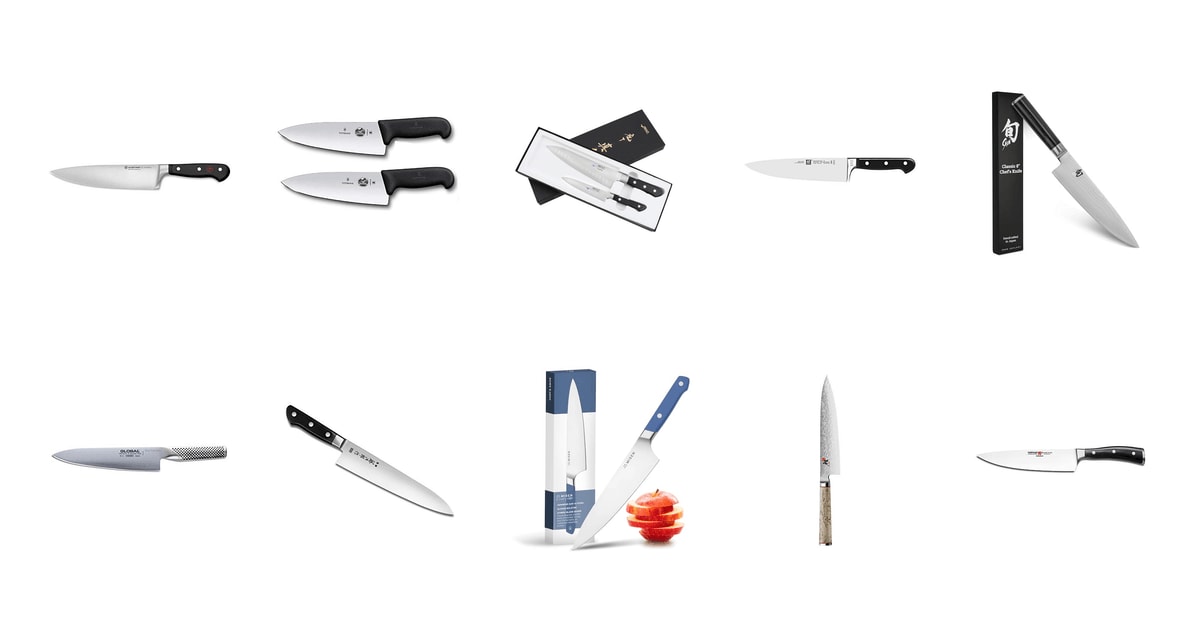
A chef's knife is the tool you reach for more than any other. It dices the onion, halves the squash, breaks down the chicken, and slices the sandwich you make at eleven at night. When it's sharp and it fits your hand, prep stops feeling like a chore. When it's dull or badly balanced, you push harder, you slip more, and you quietly start avoiding recipes that ask for a lot of chopping. One good knife handles most of the cutting in a home kitchen, which is why it's worth getting right.
Here's the part nobody advertises: no knife stays sharp on its own. Every blade here dulls. The harder Japanese steels that hold an edge longest are also the ones that chip when you clip a bone or set them down on a stone counter. Softer German steel forgives that but needs a honing rod more often. Nothing on the market escapes the trade-off, and nothing survives a dishwasher for long. Buying well is the easy part. Keeping the edge is the real commitment.
So think about how you cook before you think about steel. If you rock through herbs and wrestle winter squash, you want weight and durability. If you push-cut vegetables and like a blade that feels quick, you want something thinner. We think that the WÜSTHOF Classic 8-inch Chef's Knife is the best chef's knife for most people, and that the MAC Professional 2-piece starter set is the one to buy if you want a thinner Japanese-style blade and a paring knife alongside it.
Everything we recommend
Heavier and more forgiving, and it does everything well

A thinner Japanese blade that's still easy to live with

Two sharp, no-fuss knives if you'd rather not spend much

A thinner, sharper edge, if you'll take care of it
At a glance
| Product | Blade Length | Steel Type | Price | |
|---|---|---|---|---|
| WÜSTHOF Classic 8" Chef's KnifeTop pick | 8 in | — | $170 |
| Victorinox Fibrox Pro Chef's KnifeBudget pick | 8 in | — | $90.37 |
| MAC Knife Professional series 2-piece starter knifeRunner-up | 8 in | Sub-Zero Tempered Alloy | $225 |
 | ZWILLING J.A. Henckels Twin Pro S 8-inchAlso in lineup | 8 in | — | $179.95 |
| Shun Classic 8" Chef's KnifeUpgrade pick | 8 in | VG-MAX Steel | $140.14On sale |
 | Global G-2-8" Chef's Knife with Custom EngravingAlso consider | 8 in | — | $149.95 |
 | Tojiro DP Gyutou - 9.4"Also consider | 9.4 in | Stain-Resistant Steel | $179 |
 | Misen 8" Chef KnifeAlso consider | 8 in | AUS-10 Stainless Steel | $79.20 |
 | Miyabi Birchwood SG2 Japanese Chef's KnifeAlso in lineup | 8 in | SG2 Powder Steel | $299.95On sale |
 | WÜSTHOF Classic IKON 8" Chef's KnifeAlso consider | 8 in | — | $200 |
 | DALSTRONG Hybrid Cleaver & 8" Chef KnifeAlso in lineup | 8 in | AUS-10V Super Steel | $159 |
How we picked
Steel and edge retention. We compared published specs for alloy, hardness and edge angle, then checked those numbers against what review outlets and owners report about how long an edge actually survives real cooking. A knife had to hold up through weeks of normal home prep with nothing more than honing.
Weight and balance. We looked at listed weights and blade geometry next to owner feedback about hand fatigue and grip security. To be recommended broadly, a knife had to work in both a pinch grip and a handle grip without creating pressure points.
Durability and forgiveness. We weighted what happens when things go wrong: bone contact, a hard board, an impatient wash. Blades that owners report chipping could still earn a spot, but only with that risk stated plainly.
Sharpening at home. We favored knives you can maintain yourself with a rod and a basic stone, or that come with a manufacturer sharpening service. A half bolster, which lets you sharpen the full edge instead of leaving a stub at the heel, counted in a knife's favor.
Long-term ownership. We read through owner feedback stretching back years, looking for handles that loosen, finishes that discolor and edges that eventually stop taking a sharpen. Knives with a long, boring track record beat knives with a great first impression.
Top pick
Heavier and more forgiving, and it does everything well
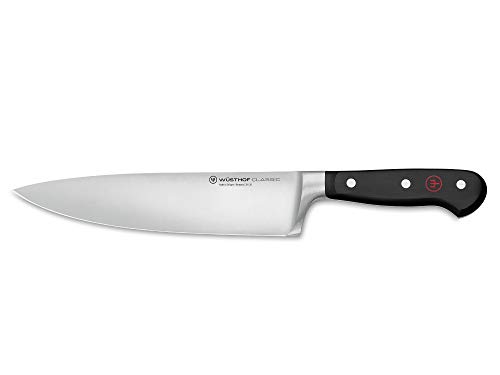
WÜSTHOF Classic 8" Chef's Knife
The Wüsthof Classic is a forged German knife that handles minced garlic and a whole butternut squash without complaint. It's the blade culinary schools put in beginners' hands, and it stays useful long after you stop being one.
$170fromAmazonThis is the knife that does everything adequately and nothing badly. The blade is forged from a single block of high-carbon stainless steel and tempered to 58 HRC, which puts it in the softer, tougher half of the market. You get a full bolster, a full tang and triple rivets. None of that is exotic. It's the layout that has worked in professional kitchens for generations, built in Solingen to a standard Wüsthof has held for seven family generations.
Pick it up and the weight sits right at the bolster. At 8.5 ounces it's heavier than most of the Japanese blades here, and that weight does real work — it drops through a carrot instead of wedging in it. Owners who cook most nights of the week describe it as the knife they stop noticing, which is about the highest compliment a tool gets.
It's forgiving, and that matters more than raw sharpness for most people. German steel at this hardness won't chip when you clip a chicken bone or drag the edge across a seam in your board. When it dulls, a few passes on a honing rod bring it back, and a basic whetstone or a sharpening service handles the rest. You don't have to learn Japanese sharpening angles to keep it working.
The synthetic handle is the unglamorous reason these last. It doesn't fade, crack, swell or hold onto garlic smell the way cheap wood does, and owners with knives a decade old report the handles still look and feel right. If you're buying one knife and you'd rather not think about it again for a very long time, this is the safest choice on the list.
Flaws but not dealbreakers
It's heavy. If you're coming from a light Japanese blade, or you have small hands, 8.5 ounces adds up over a long prep session. The edge also isn't as keen out of the box as the Shun or the MAC, because it's ground at a wider angle — paper-thin tomato slices take a bit more attention. And it costs several times what our budget pick does, in a category where that budget pick cuts nearly as well.
Hand wash it and dry it right away. Owners who leave it wet report spotting on the blade, and detergent plus rack tines is how good edges die.
Runner-up
A thinner Japanese blade that's still easy to live with
MAC Knife Professional series 2-piece starter knife
This set pairs the MTH-80 — a thin, dimpled 8-inch chef's knife handcrafted in Seki, Japan — with a 5-inch paring knife. It's the hybrid choice: lighter and sharper than a German knife, but not so hard that one careless cut ruins it.
$225fromAmazonThe MTH-80 splits the difference between the two traditions. It's thinner than the Wüsthof, so it slides through a potato instead of splitting it, but the steel isn't run so hard that bone contact ends your evening. MAC stamps a thin blank and then tapers the blade from spine to edge, which is why it wedges so little in dense stuff like carrots, celery root and beets.
The dimples aren't decoration. The scallops along the blade face break the suction that makes cucumber rounds and potato slices cling, so food drops onto the board instead of stacking up on the side of the knife. If you prep in volume — a sheet pan of vegetables, a big batch of pickles — you'll notice your rhythm stays smooth instead of stopping every few cuts to wipe the blade.
The half bolster is the quiet feature worth paying for. Because it doesn't wrap the whole heel, you can sharpen the full length of the edge, right to the back. Full-bolster knives slowly develop a stub back there after years of sharpening. This one won't. Owners several months in report a few passes on a ceramic rod are still all it needs.
You also get a paring knife, and that really is the second knife most kitchens need — hulling strawberries, coring apples, peeling a knob of ginger. Buying the pair asks more of you up front than a single chef's knife. But it's a complete starter kit rather than a block full of blades you'll open the drawer past for years.
Flaws but not dealbreakers
It's a Japanese-style blade, so treat it like one. Keep it away from frozen food, chicken joints, and glass or stone boards, and hand wash and dry it immediately. Sharpening it properly means working at a shallower angle than a German knife wants, or handing it to someone who will.
The Pakkawood handle is comfortable and completely plain. If part of what you want from a nice knife is an object you enjoy looking at, this isn't that knife.
Budget pick
Two sharp, no-fuss knives if you'd rather not spend much
Victorinox Fibrox Pro Chef's Knife
The Victorinox Fibrox Pro is the stamped, Swiss-made workhorse culinary schools buy by the crate, and this listing includes two of them. They cut nearly as well as knives costing several times more, and you won't wince when one lands in the sink.
$90.37fromAmazonNothing else here gets you this much cutting for this little. The Fibrox is stamped rather than forged, so it's lighter and thinner than the Wüsthof and skips the bolster entirely. That sounds like a compromise, and it is one — but the edge is ground to a consistent, fairly acute angle, it arrives sharp, and it takes a new edge easily. Two of them cost a fraction of one mid-range knife.
The handle is the real reason cooks keep buying these. Fibrox is textured plastic that stays grippy with wet hands, oily hands or gloves, and its shape suits a wide range of hand sizes. If you've had a wooden handle go slick halfway through breaking down a chicken, you'll get it right away. Owners with arthritis or weak grip strength single this handle out more than anything else.
Two knives is more useful than it sounds. Keep one freshly sharpened for tomatoes, herbs and anything you want cut cleanly, and let the other take the abuse — squash, sweet potatoes, the box the groceries came in. It's also the sane gift for someone setting up a first kitchen, because there's nothing to baby and nothing to mourn if it goes missing.
Flaws but not dealbreakers
The steel is soft, so the edge fades faster than any Japanese blade here. Honing keeps it going day to day, but you'll be sharpening it more often than the others. It also feels cheap in the hand — light, plasticky, no heft where a bolster would be — and some cooks read that as flimsy. It isn't flimsy. It just isn't satisfying.
Not every Victorinox knife is made in Switzerland; some production is contracted out. Owners who care about that check the listing details before buying, and you should too.
Upgrade pickOn sale
A thinner, sharper edge, if you'll take care of it
Shun Classic 8" Chef's Knife
The Shun Classic is a handcrafted Japanese knife with a VG-MAX core, 68 layers of Damascus cladding and a 16-degree edge. It slices with almost no downward pressure, and in exchange it asks you to never once be careless with it.
$140.14fromAmazonList priceThe first cut tells you what the money bought. A ripe tomato opens under the blade's own weight, and onions come apart in layers thin enough to see through. That's what a 16-degree edge on hard steel does — it bites instead of pressing. Cooks who move over from German knives often say they can't comfortably go back, and owner feedback is full of exactly that.
The D-shaped Pakkawood handle is smaller and lighter than a German one, and it drops into a pinch grip almost by itself. The whole knife weighs well under half a pound. If you do a lot of fine work — julienned herbs, fish, garlic sliced thin enough to melt — that lightness is the point, not a concession.
The Damascus cladding is doing structural work, not just looking good. Those 68 folded layers wrap a thin, hard VG-MAX core and add torsional stiffness, which keeps the blade from flexing sideways under load. On a blade this thin, lateral flex is exactly what turns a keen edge into a chipped one. The flowing pattern on the side is a byproduct.
Shun sharpens its knives free for as long as you own them, which is rare at any level. If the thought of learning whetstone angles is what's holding you back, that service is a real safety net — you send it in, it comes back the way it started. Over a decade of ownership, that's worth more than most premium brands offer.
Flaws but not dealbreakers
This edge chips. Hit a chicken bone, a partly frozen roast, or a glass or stone board and you'll take damage a German knife would have shrugged off. Owners do report chips, sometimes surprisingly early. It also can't be revived with a pull-through sharpener, since those are ground for wider Western angles and will chew up the edge.
The light weight cuts both ways. Cooks with large hands or a heavy chopping style often find the handle small and the blade too delicate to lean on with confidence. And it's the most expensive of our picks by a clear margin, for an advantage that only shows up if your technique and your cutting board are up to it.
Who this is for
Buy one of these if your current knife is a hand-me-down, a block-set filler, or something you've never sharpened. The jump from a dull mystery blade to any knife here is bigger than the jump between our picks, and you'll feel it the first time you dice an onion. If you already own a decent knife that fits your hand and you keep it sharp, you probably don't need a new knife — you need a whetstone and twenty minutes.
This guide covers 8-inch Western-style chef's knives plus one longer Japanese gyutou, which is the size range that handles most home cooking. It doesn't cover santokus, bread knives, boning knives or block sets. If you want to build out a kit, add a paring knife and a serrated bread knife later, once you know what your chef's knife can't do for you.
How we picked
Steel: we compared alloys, hardness ratings and edge angles on paper, then checked those claims against what published reviews and long-term owners say about how quickly an edge fades. Balance: listed weights and blade geometry told us part of the story, and owner reports about wrist fatigue and grip security told us the rest. Durability: we gave weight to how a blade behaves when it meets a bone, a hard board or a rushed wash, since that's what actually kills knives. Sharpening: we favored blades you can maintain at home with a rod and a stone, or that come with a factory sharpening service. Longevity: handles that loosen or discolor, and edges that stop taking a sharpen, disqualified a knife no matter how well it cut on day one.
Other chef's knives worth considering
If you want the Wüsthof with a more comfortable handle: The WÜSTHOF Classic IKON 8" Chef's Knife ($200) — The Classic IKON is the same Solingen steel at the same 58 HRC, with a double bolster and a contoured black handle instead of the traditional triple-riveted one. The payoff is real if you spend an hour at a time at the board: the handle cradles the palm more evenly, and the balance is arguably the best of any Wüsthof here. It's also laser-sharpened for a keener out-of-box edge. You pay more than the Classic for what amounts to ergonomics and looks, and the double bolster adds weight to a knife that was already heavy.
If you're stepping up from a starter knife: The Misen 8" Chef Knife ($79.20) — Misen's chef's knife uses AUS-10 steel around 60 HRC in a hybrid shape — enough belly to rock through herbs, thin enough to push-cut cleanly. It sits neatly between the Victorinox and the MAC, and owners several years in report it needs sharpening only a couple of times a year. The sloped bolster and POM handle are comfortable for long prep. Edge retention trails the VG-10 and SG2 blades here, and at least one owner notes it will spot if you leave it wet, so dry it. The blue handle is bold, which you'll either enjoy or won't.
If you want a longer Japanese blade for big batches: The Tojiro DP Gyutou - 9.4" ($179) — The Tojiro DP gyutou puts a VG-10 core at about 60 HRC behind stainless cladding, and it's the blade knife forums have quietly recommended for ages. At 9.4 inches it's noticeably longer than a standard chef's knife, which is a real advantage if you break down large proteins or prep for a crowd, and a nuisance on a small board in a small kitchen. The composite handle is functional and nothing more, and owners mention the blade finish can feel rough against the hand. For pure steel quality relative to what you spend, it's hard to beat.
If you want the lightest knife here: The Global G-2-8" Chef's Knife with Custom Engraving ($149.95) — The Global G-2 is forged as one piece of stainless steel, blade and handle together, so there's no joint to loosen or wood to swell — the failure mode that eventually gets most knives simply doesn't exist here. At around 5.5 ounces it's the featherweight of this group, which suits smaller hands and long prep sessions, and owners describe it staying sharp for months. The all-metal handle is divisive: the dimpled texture works for most people, but some find it slick when wet, and there's less heft to drive through dense squash. This listing also offers engraving, so it makes a good gift.
The competition
These are the knives our research kept surfacing alongside the picks, not a survey of everything on the market. Each one is genuinely good at something. None of them beat a pick at the thing most home cooks need, and in a couple of cases they're aimed at a different cook entirely.
The ZWILLING J.A. Henckels Twin Pro S 8-inch ($179.95) — The ZWILLING Twin Pro S is a close peer of the Wüsthof Classic: German high-carbon no-stain steel, Sigma-forged from a single piece so the metal is dense and uniform, with a curved bolster that lets you use the full heel without shifting your grip. Owners who've walked away from chippy Japanese knives tend to like it a lot. It loses to the Wüsthof mostly on track record and availability — this listing runs thin, and a few owners mention the finish discoloring after repeated washing and one arriving with a slightly bent tip. The custom engraving makes it a strong gift if that's what you're after.
The Miyabi Birchwood SG2 Japanese Chef's Knife ($299.95) — The Miyabi Birchwood SG2 is the most capable blade in this lineup and the least suitable for most people. SG2 micro-carbide powder steel at 63 HRC holds an edge longer than anything else here, the 100-layer flower Damascus is genuinely beautiful, and the Karelian birch handle is figured differently on every knife. It's also the most expensive by a wide margin, brittle enough that lateral stress or a hard impact will chip it, and hand-honed to a 9.5-to-12-degree edge that needs whetstone skill to restore. If you already sharpen your own knives and know exactly why you want this, buy it. Otherwise the Shun gives you most of the experience with a sharpening service behind it.
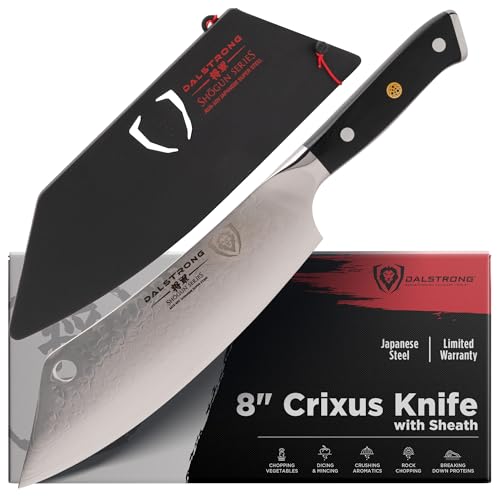
The DALSTRONG Hybrid Cleaver & 8" Chef Knife ($159) — The DALSTRONG Crixus is a cleaver-chef hybrid, and it's not really competing with the rest of this list. AUS-10V steel at 62-plus HRC under 67 layers of Damascus cladding, hand-finished to a very acute angle, with a tall blade and a front-heavy balance that lets you drop through pork shoulder and chicken like a cleaver while still slicing cleanly. It comes with a sheath. That weight up front is tiring for a pile of delicate vegetable work, and the extra blade height costs you some agility. If you cook a lot of meat or run a smoker, it's a legitimately fun tool — just buy it as a second knife, not your only one.
Care and sharpening
The routine takes fifteen seconds and doubles the useful life of any knife here. Rinse it right after use, wipe it with a damp cloth, dry it fully, and store it flat in a block or on a magnetic strip — never loose in a drawer where the edge bangs into everything. Skip the dishwasher, even with the Victorinox, which technically survives it. Detergent is caustic enough to dull edge geometry, the heat works on handles, and rack tines chip fine edges. Hone the German knives on a rod every few uses to straighten the edge, and sharpen on a stone or through a service when honing no longer holds a session. The Japanese blades want a shallower angle, so use a whetstone or send them out. And use wood or plastic boards. Glass and stone will ruin any of these.
Questions we get
What's the difference between a German and a Japanese chef's knife?
German knives like the Wüsthof and Zwilling use softer steel around 56 to 58 HRC, with thicker blades and more curved bellies built for rocking cuts. They tolerate mistakes and sharpen easily at home. Japanese knives like the Shun, Tojiro and Miyabi run 60 HRC and up, with thinner blades and more acute edges that cut better and stay sharp longer but chip under lateral force. The MAC and the Misen are deliberate hybrids for people who want some of both.
What size chef's knife should I buy?
An 8-inch blade is the right answer for almost everyone — long enough for a big cabbage or a whole chicken, short enough to stay controllable. If you have small hands or a small kitchen, a 6-inch is worth considering. If you regularly break down large cuts or cook for a crowd, the 9.4-inch Tojiro in this guide gives you real extra reach, though it feels unwieldy on a small board.
How often should I sharpen my knife?
Honing and sharpening are different jobs. Honing realigns the existing edge and takes thirty seconds on a rod; do it every few uses on a German knife. Sharpening removes metal to create a new edge, and most home cooks need it once or twice a year, or whenever honing stops holding an edge through a full cooking session. Softer German steel dulls faster but is far easier to sharpen yourself.
Should I buy a set or a single chef's knife?
Start with one good chef's knife. Block sets usually bundle two useful knives with six you'll never pull out, and the money goes into the block. The MAC set here is the sensible exception, since it adds a paring knife — the one blade a chef's knife genuinely can't replace. Add a serrated bread knife after that, and stop.
Can any of these go in the dishwasher?
The Victorinox is the only one built for it, and even that one lasts longer and cuts better if you wash it by hand. Every Japanese knife here needs hand washing, no exceptions. Detergent erodes the edge, heat works on the handle, and the rack chips fine steel. Rinse, wipe, dry, put it away.
Which knife works best for small hands?
The Global G-2 is the usual recommendation, since the all-steel construction keeps it around 5.5 ounces and the slim oval handle doesn't force your grip. The Victorinox handle also suits a wide range of hand sizes and stays secure when wet. If a full-size blade feels like too much, both Wüsthof and Shun make 6-inch versions of the same lines with identical steel.
Why you should trust us
For this guide:
- We read the full specifications and manufacturer descriptions for every knife here, comparing steel alloys, hardness ratings, blade lengths, edge angles and bolster designs side by side.
- We cross-referenced long-standing recommendations from major cooking publications against the themes that repeat in owner feedback: chipped edges, handle comfort, finish discoloration and how long an edge lasts between sharpenings.
- We did not cut anything with these knives ourselves, so every claim here traces back to a published specification, a review, or what owners consistently report.
- We read owner reviews on every listing, weighted toward the critical ones, because that is where the recurring failures show up.
- We have a systematic way of automatically fetching the latest prices, so the numbers on this page stay current.
- This is a research-focused guide, so the team may not own every product listed — though we often do own the top winners, which gives us extra context for the recommendations.
- We don't accept free products, and the retailer commission never changes which product we recommend.
Sources
The Best Chef's Knives — Wirecutter/NYT, Wirecutter
The Best Chef's Knives We've Tested — Serious Eats, Serious Eats
Best Chef's Knives 2026 — America's Test Kitchen, America's Test Kitchen
Chef's Knife Buying Guide — Cook's Illustrated, Cook's Illustrated
Best Chef's Knives Reviewed — Good Housekeeping, Good Housekeeping
Amazon product listings and owner reviews for all 11 products
Manufacturer specification pages for each product
Some passages in this guide may be paraphrased with AI help. Prices are refreshed automatically.
More like this.
Continue exploring appliances reviews and recommendations.

The Best Gifts for Home Chefs
The person you're shopping for probably already owns a decent pan and a wooden spoon. What they don't own is the thing that quietly fixes a problem…

The Best Victorinox Knives and Tools
Most people don't need a block full of forged German steel. You need one chef's knife that's genuinely sharp, a small blade you'll actually have on you,…

The Best Zwilling Knives and Kitchen Tools
Your chef's knife does more work than anything else in the kitchen. You grab it to dice an onion for weeknight chili, break down a chicken, and chop…

The Best Cookbooks for Home Chefs
A cookbook earns its place on your counter, or it doesn't earn anything. The good ones get splattered, dog-eared and reopened every week. The bad ones…

The Best Gerber Knives and Multitools
A knife or multitool earns its place by being there when you need it. That's the whole job. The pliers that pull a splinter out of a palm, the driver that…

The Best Zojirushi Kitchen Products
Zojirushi shows up in a lot of kitchens for the same reason: the stuff just keeps working. A rice cooker that runs four nights a week for a decade. A mug…