The Best Cookbooks for Home Chefs
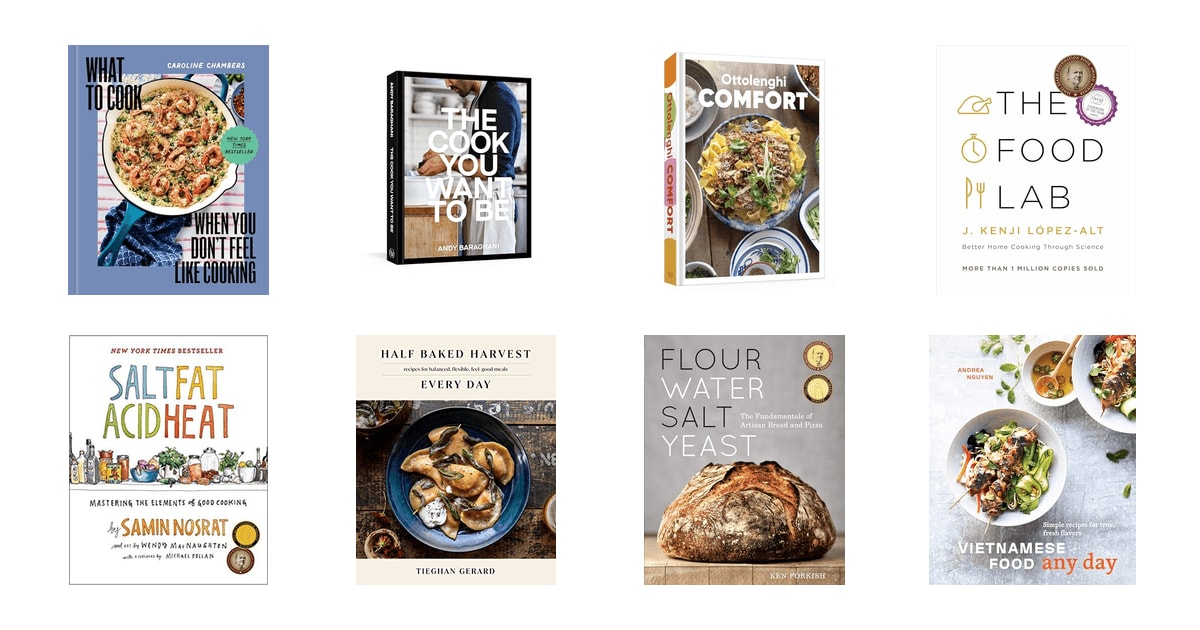
A cookbook earns its place on your counter, or it doesn't earn anything. The good ones get splattered, dog-eared and reopened every week. The bad ones look lovely on a shelf and stay there. What separates them isn't the photography or the author's name on the spine. It's whether the recipes work the first time, whether you can buy the ingredients on a normal grocery run, and whether the book leaves you a slightly better cook than it found you.
Here's the honest part: no cookbook can make you cook. Most people buy one, make three recipes and drift away. Awards help, but they don't guarantee fit. A prize-winning book aimed at weekend projects is useless if you're cooking at 7 p.m. with a hungry kid on your hip. And nearly every book here has at least one recipe that wants something your store doesn't stock. Buy for the cooking you actually do, not the cooking you picture yourself doing.
So think about your Tuesday. If you've got the basics down and want to cook more ambitiously, one kind of book helps. If you're wiped out and staring into a half-empty fridge, a completely different one does. Neither is better; they're answers to different questions. We think that Ottolenghi Comfort is the best cookbook for most home cooks, and that What to Cook When You Don't Feel Like Cooking is the one to buy if most of your dinners happen on empty.
Everything we recommend

Big, bold flavor you can actually pull off on a weeknight

Dinner on the nights you have nothing left to give

Pretty, flexible food that gets a family fed

A long read that changes how you cook everything else

The first book to hand someone who's never really cooked
At a glance
| Product | Format | Weight | Price | |
|---|---|---|---|---|
| Ottolenghi Comfort: A CookbookTop pick | — | 3.0 lbs | $17.64On sale |
| The Food Lab: Better Home Cooking ThroughUpgrade pick | Illustrated | — | $27.04On sale |
| What to Cook When You Don't FeelRunner-up | — | 2.38 lbs | $18.67On sale |
| [Samin Nosrat]-[SaltAlso great | Hardcover | — | $99.99 |
| Half Baked Harvest Every Day: Recipes forBudget pick | Illustrated | 2.72 lbs | $14.73On sale |
 | Flour Water Salt Yeast: The Fundamentals ofAlso consider | Illustrated | — | $17.18On sale |
 | The Cook You Want to Be: EverydayAlso in lineup | — | 3.15 lbs | $19.99On sale |
 | Vietnamese Food Any Day: Simple Recipes forAlso consider | — | 1.95 lbs | $13.29On sale |
How we picked
Recipe reliability. We leaned toward books that came out of serious test kitchens or had a long public track record of recipes working as written. Published reviews and reader feedback flag unreliable books fast.
Ingredient accessibility. A book that wants ten specialty items per recipe gets used twice, then shelved. We favored titles you can cook from after a normal supermarket run.
Technique depth. The best books explain why a step works, not just what to do. We looked for that, while accepting that a pure weeknight book has different priorities.
Everyday usability. Index quality, layout and how the book behaves on a crowded counter all matter more than they sound. Reader feedback is unusually blunt about books that won't stay open.
Outside recognition. James Beard and IACP awards are judged by working chefs and writers, not sales rank. We treated them as a strong signal, not a substitute for fit.
Top pickOn sale
Big, bold flavor you can actually pull off on a weeknight
Ottolenghi Comfort: A Cookbook
This is Yotam Ottolenghi's most approachable book, and it's the one we'd hand to a confident home cook who wants dinner to taste like more than dinner. The recipes lean on spice, acid and texture rather than technique you don't have, and most need nothing beyond a sheet pan and a hot oven.
$17.64fromAmazonList priceIt's the rare ambitious cookbook you'll actually cook from twice. Ottolenghi built his name on layered, unexpected flavor, and earlier books like Plenty could feel like a project. Comfort keeps the flavor and drops the friction. Spiced lamb and eggplant tray bakes, tahini-roasted carrots — these are one-hour dishes with a short active window. You get the payoff without clearing your whole evening.
The recipes are written to work, not to impress. Ingredient explanations are clear, quantities are specific, and the headnotes tell you what the dish is supposed to taste like. That last part matters more than people expect. When you know you're chasing brightness and a little heat, you can adjust as you go instead of following steps blindly and hoping.
It covers both your Tuesday and your Saturday. Plenty of books pick a lane. This one has weeknight tray bakes sitting next to dishes you'd happily put in front of eight people. If you own one book that has to stretch from a solo dinner to a birthday, this is a strong candidate. You won't need a second book for company.
It's the best pick for a mixed household. Ottolenghi's approach doesn't treat meat as the main source of flavor, so the vegetable dishes stand on their own. If someone at your table doesn't eat meat and someone else complains when dinner is meatless, this book quietly solves the argument. Nothing here reads as a compromise dish.
Flaws but not dealbreakers
Some ingredient lists will send you hunting. Not every recipe, but enough. A few call for spices, pastes or preserved things that a standard supermarket doesn't carry, which means an online order or a trip across town. Once you've stocked a handful of them they get reused, so the pain is front-loaded. Still, plan your first few recipes around what you can find.
It assumes you can already handle a knife and a hot pan. There's no chapter teaching you how to hold a chef's knife or when a pan is ready. If you're genuinely new, you'll spend more time stressed than cooking. Start with Salt, Fat, Acid, Heat, get comfortable, then come back to this one.
It's a big, heavy hardcover. At roughly three pounds and nearly eleven inches tall, it hogs counter space and doesn't love staying open at the page you need. A cheap book stand fixes it. Worth knowing if your kitchen is small.
Runner-upOn sale
Dinner on the nights you have nothing left to give
What to Cook When You Don't Feel
Caroline Chambers wrote this for tired people with half-empty fridges and a thirty-minute window, and it shows in every recipe. Ingredient lists are short, prep is minimal, and each dish comes with explicit swaps so a missing item never derails the whole plan.
$18.67fromAmazonList priceIt treats your exhaustion as the design brief, not a problem to overcome. Most weeknight cookbooks are regular cookbooks with a timer slapped on the cover. This one starts from the actual situation: it's late, you're done, and you don't want to think. The recipes are short, forgiving and built to be made while you're only half paying attention.
The ingredient swaps are the whole trick. Every recipe tells you what to use instead. Out of shallots, use onion. No cream, use whatever dairy you've got. That sounds small until you're standing at the fridge at seven o'clock realizing you're missing one thing. With this book you keep cooking instead of ordering delivery.
Short lists mean you'll cook from it on repeat. Nothing kills a cookbook faster than a fourteen-item shopping list. Recipes here stay lean and pantry-forward, so you can cook four or five nights a week without a special trip. That's the real test of a weeknight book, and this is the one that passes it most consistently.
It's a good gift for someone who says they can't cook. Nothing in it is intimidating. The recipes assume no equipment you don't own and no technique you haven't seen. For a first apartment, a new parent or anyone whose cooking confidence took a hit, this lands better than a serious reference book would.
Flaws but not dealbreakers
It tells you what to do, not why it works. You'll get dinner on the table, but you won't come away with much transferable skill. If you want to understand heat, salt and timing well enough to improvise, this isn't that book. Pair it with a principles book if you want both.
The photography is plainer than its shelf-mates. Images are fine and functional, not aspirational. If you're the kind of cook who gets motivated by a gorgeous photo, this book won't do much for you. Half Baked Harvest Every Day is the better choice there.
Budget pickOn sale
Pretty, flexible food that gets a family fed
Half Baked Harvest Every Day: Recipes for
Tieghan Gerard's everyday book pairs genuinely gorgeous photography with recipes that flex to whatever's in your fridge. It's aimed at family dinners and casual entertaining, with built-in lighter swaps that don't gut the flavor, and it costs a fraction of the big reference books here.
$14.73fromAmazonList priceThe photos will actually get you cooking. That sounds like a shallow reason to buy a cookbook. It isn't. Owners of this book consistently come back to it, and the styling is a big part of why — you see the dish, you want it, you make it. A book you open is worth more than a better book you don't.
The recipes bend without breaking. Most dishes come with a lighter option or a swap built in, so you can push things healthier on a Tuesday and richer on a Friday. Nothing collapses if you change the protein or skip the cream. That flexibility is why it works for households where everyone wants something slightly different.
It's built for feeding a crowd without a production. The flavors are broadly likable rather than challenging, which is exactly what you want when you've got six people coming over and no interest in explaining what sumac is. Plenty of dishes reheat well too, so leftovers become lunch instead of a science experiment.
You get a lot of book for very little. This is a premium-feeling hardcover with real photography at the low end of this lineup, and it holds up next to titles costing several times more. If you're building a shelf from scratch and don't want to spend much, start here.
Flaws but not dealbreakers
Some recipes stretch the meaning of everyday. A handful run longer than the title implies, with a component or two you make separately. Read the whole recipe before you commit on a weeknight. Cooked on a Sunday, they're fine.
Technique explanation is thin. This is a results-first book. It tells you the steps and trusts you to follow them, with little about why the order matters. If a recipe goes sideways, you won't find much here to help you diagnose it.
Upgrade pickOn sale
A long read that changes how you cook everything else
The Food Lab: Better Home Cooking Through
J. Kenji López-Alt's food-science tome runs 958 pages and won both the James Beard Award for General Cooking and IACP Cookbook of the Year. It explains why techniques work, which means it improves recipes it doesn't even contain.
$27.04fromAmazonList priceIt teaches reasoning instead of rules. The premise is that if you understand what's happening to the food, you never have to memorize anything. What an egg does at one temperature versus another. Why dry-brining a steak beats wet-brining it. Once you've read a few of those chapters, you start making better calls on recipes from every other book you own.
The credentials here are as strong as cookbooks get. Both a James Beard Award and IACP Cookbook of the Year, judged by working chefs and food writers rather than sales figures. It also came out of years of controlled recipe development at Serious Eats, which is about as close to an industrial test kitchen as home cooking gets.
The coverage is enormous. Burgers, eggs, pasta, steaks, soups, vegetables — 958 pages of it. Treat it as a reference you grow into rather than a book you read cover to cover. Most people dip into the chapter they need, and the book keeps paying out for years.
It's the book to buy alongside a principles book, not instead of one. Salt, Fat, Acid, Heat gets you thinking like a cook. This one gives you the mechanics underneath. Together they cover most of what a self-taught cook needs, which is why so many people who own one end up buying the other.
Flaws but not dealbreakers
It's dense and text-heavy, which makes it awkward mid-cook. Recipes are buried in explanation, so flipping to one with wet hands while a pan heats is genuinely annoying. Read it on the couch, then cook. Don't expect a quick-reference layout.
The cuisine scope skews heavily American. Coverage of Asian, Middle Eastern and Latin cooking is limited. If your weekly rotation is mostly international, the science still transfers, but you'll want a cuisine-specific book beside it.
It's physically huge. Over six pounds and close to eleven inches tall. It doesn't fit comfortably on a crowded counter, and it's not the book you take to a friend's kitchen. This is a real commitment of shelf space, money and reading time.
Also great
The first book to hand someone who's never really cooked
[Samin Nosrat]-[Salt
Samin Nosrat's James Beard Award winner teaches four elements — salt, fat, acid and heat — instead of handing you a pile of recipes. Wendy MacNaughton's 150 illustrations turn abstract ideas like acid balance into something you can picture and remember.
$99.99fromAmazonIt builds judgment, which is what beginners are actually missing. Following a recipe is easy. Knowing your soup needs a squeeze of lemon rather than more salt is the hard part. Nosrat organizes everything around four levers you can pull, so you learn to taste a dish and know what's wrong with it.
The illustrations do real teaching work. The 150 drawings and infographics aren't decoration. They map out how fats behave, how acid brightens, how heat changes texture — the kind of thing that's hard to hold in your head from a paragraph. If you learn visually, this is the cookbook that finally clicks.
What it teaches applies to every cuisine you'll ever cook. The four principles don't care whether you're making a Vietnamese dressing or a pot roast. That's why it's the best single first purchase: the skills carry into every other book on this list rather than staying trapped in one style.
It's aged extremely well. A decade on, it's still the book cooking teachers hand new students, and the James Beard Award reflects a professional consensus that hasn't wobbled. If you're buying one book for someone who's nervous in a kitchen, this remains the safest choice.
Flaws but not dealbreakers
There are fewer standalone recipes than you might expect. This is a framework first and a recipe collection second. If you want a book to pull dinner from on Wednesday, it'll disappoint you. Pair it with something recipe-driven.
This particular listing comes from a third-party seller rather than the publisher's standard one. That means edition, condition and packaging can vary, and it's usually sold well above what major booksellers charge for the same hardcover. Check the seller details and compare before you commit.
Who this is for
This guide is for people who cook at home and want a book that changes something — how confident you feel, how fast dinner happens, how good it tastes. If you already own eight cookbooks and use two, buying a ninth won't help; cook from the two you like instead. And if you've never made a full meal from scratch, skip the ambitious stuff and start with a principles book. Ambition without basics just leads to a shelf full of guilt.
We're covering general home-cooking books here: everyday collections, technique references, one weeknight specialist and one baking manual. We're not covering diet-specific books, single-appliance books, restaurant chef showpieces or regional encyclopedias, all of which deserve their own guide. Our advice is to build a small stack rather than a library — one book that teaches principles, one reference, and one matched to what you actually cook most weeks. Two books used deeply beat ten browsed.
How we picked
We judged these books the way you'd judge them after a month in your kitchen. Recipe reliability: does the dish come out right the first time, and does the book come from a place with a real editing and testing process? Ingredient accessibility: can you shop for it at your normal store, or does every recipe demand a special order? Technique depth: does it explain why a step matters, so you get better rather than just fed? Everyday usability: index, layout, photography and whether the thing stays open on a counter. Outside recognition: James Beard and IACP wins are judged by professionals on reliability, authenticity and writing, so we weighted them — but a great book you won't cook from is still the wrong book for you.
Other cookbooks for home chefs worth considering
If you want one cuisine done really well: The Vietnamese Food Any Day: Simple Recipes for ($13.29) — Andrea Nguyen's IACP Cookbook Award winner solves the thing that actually stops people from cooking Vietnamese food at home, which is the shopping. Pho broth, bánh mì fillings, fresh spring rolls — she builds them from ingredients you can find at a regular supermarket without flattening the flavor. Nguyen is the leading English-language authority on this cuisine, so you're not getting a watered-down version. What you give up is breadth. It's Vietnamese food and nothing else, so it works as a second or third book rather than your only one. It's also the smallest and lightest book here, which makes it easy to keep on the counter.
If you want to bake real bread: The Flour Water Salt Yeast: The Fundamentals of ($17.18) — Ken Forkish spent years as a professional baker before writing this, and it reads like it. Flour Water Salt Yeast scales bakery methods — autolyse, levain builds, overnight cold ferments — down to a home oven and a Dutch oven, with hydration percentages and timings specific enough that the loaves come out consistent. It opens with a simple same-day white loaf to teach you what good dough feels like, then works up through poolish loaves, sourdough and Neapolitan pizza. The catch is real: you'll need a Dutch oven and a kitchen scale, and most of the good recipes want an overnight rise. If you want a loaf in ninety minutes, look elsewhere.
The competition
These are the books our research kept surfacing, not a survey of everything in print. Cookbook publishing is enormous, and plenty of good titles simply didn't come up often enough in reviews, awards lists or reader discussion to compare fairly. A book landing here isn't a warning — it just lost to a pick on fit, scope or how often people report actually cooking from it.
The The Cook You Want to Be: Everyday ($19.99) — The Cook You Want to Be is Andy Baraghani's debut, and it was named a best book of its year by Epicurious, Bon Appétit and Food52 at the same time, which is a rare sweep. His Bon Appétit test-kitchen background shows in the reliability, and the book is genuinely good at explaining flavor decisions: when to add acid, how to build textural contrast, why toasting spices changes a dish. It lost to Ottolenghi Comfort mainly on range. The recipe count is more modest than the big references, and the cuisine scope is eclectic rather than deep in any one direction. Choose it anyway if you're an intermediate cook who's already internalized the basics and wants to sharpen your palate rather than expand your recipe file. It's also the natural next book for someone who's finished with Salt, Fat, Acid, Heat and wants to see those principles applied.
Getting more out of the books you buy
Cookbooks are kitchen tools, so treat them like tools. Crack the spine and let the book lie flat — a pristine cookbook is usually an unused one. A cheap acrylic stand keeps pages upright and out of the splatter zone, and it's the single best few dollars you can spend on your shelf. Read a recipe all the way through before you start, including the headnote, so you're not discovering a two-hour marinade at six o'clock. Flag the ones that worked with sticky tabs and write on the page when you change something. Cook a recipe twice before deciding whether you like it; the second attempt is almost always the better one. And keep the stack small enough that you know what's in it.
Questions we get
What's the best cookbook for someone just learning to cook?
Salt, Fat, Acid, Heat. Instead of handing you two hundred recipes, it teaches four things that govern every dish you'll ever make: how to salt, what fat does, how acid brightens, and how heat transforms food. That builds intuition you keep, rather than a recipe you follow once. One caution — this listing comes from a third-party seller, so compare the edition and condition against major booksellers before buying.
Which cookbooks teach you to cook rather than just handing you recipes?
Three here do. Salt, Fat, Acid, Heat teaches the four foundational elements, The Food Lab explains the science behind specific techniques, and The Cook You Want to Be focuses on flavor judgment. Start with Salt, Fat, Acid, Heat if you're new, add The Food Lab when you want technical depth, and pick up Baraghani's book once you're confident enough to improvise.
Is The Food Lab worth it if you already own Salt, Fat, Acid, Heat?
Yes, and they overlap less than you'd think. Nosrat's book is a narrative, visual framework that tells you what matters and why at a conceptual level. The Food Lab gives you the mechanics underneath, plus reliable recipes for American comfort-food staples. Own one to think like a cook and the other to cook with precision.
What's the best bread book if I've never baked before?
Flour Water Salt Yeast. It starts with a simple same-day white loaf specifically to teach you what properly developed dough feels like, before it gets anywhere near sourdough. From there the progression is unusually well organized: poolish loaves, levain country bread, then pizza dough. Budget for a Dutch oven and a kitchen scale, because both are genuinely required.
Which of these are best for a household where not everyone eats meat?
Ottolenghi Comfort is the strongest choice. Ottolenghi builds flavor from spice, acid and texture rather than meat, so the vegetable dishes satisfy people who'd normally ask where the protein is. Half Baked Harvest Every Day also has solid vegetarian options with swaps built in. Neither book is exclusively vegetarian, which is exactly why they work for mixed tables.
Do awards actually mean a cookbook is better?
They're the best outside signal available, but they're not a guarantee of fit. James Beard and IACP awards are judged by working chefs, food writers and educators on recipe reliability, cultural authenticity and editorial quality — not sales volume or follower counts. On this list, The Food Lab, Salt, Fat, Acid, Heat and Vietnamese Food Any Day carry at least one. An award still can't tell you whether a book matches the way you cook.
Why you should trust us
For this guide:
- We read published reviews, best-of-year lists from major food media, and the criteria behind the James Beard and IACP cookbook awards to see which titles professionals keep recommending.
- We compared publisher information for each book — page counts, formats, dimensions and stated scope — to understand what each one actually covers and how it behaves in a kitchen.
- We weighed recurring themes in reader feedback, paying attention to which books people report cooking from repeatedly and which ones get shelved after a few recipes.
- We read owner reviews on every listing, weighted toward the critical ones, because that is where the recurring failures show up.
- We have a systematic way of automatically fetching the latest prices, so the numbers on this page stay current.
- This is a research-focused guide, so the team may not own every product listed — though we often do own the top winners, which gives us extra context for the recommendations.
- We don't accept free products, and the retailer commission never changes which product we recommend.
Sources
Best Cookbooks of 2024 — Epicurious Editors' Picks, Epicurious
The Best Cookbooks of the Year — Bon Appétit, Bon Appétit
The Best Cookbooks We've Ever Read — Food52, Food52
Best Cookbooks for Home Cooks — The Kitchn, The Kitchn
Serious Eats Cookbook Reviews and Recommendations, Serious Eats
Amazon product listings and owner reviews for all 8 products
Manufacturer specification pages for each product
Some passages in this guide may be paraphrased with AI help. Prices are refreshed automatically.
More like this.
Continue exploring lifestyle reviews and recommendations.

The Best Chef's Knives
A chef's knife is the tool you reach for more than any other. It dices the onion, halves the squash, breaks down the chicken, and slices the sandwich you…

The Best Gifts for Home Chefs
The person you're shopping for probably already owns a decent pan and a wooden spoon. What they don't own is the thing that quietly fixes a problem…

The Best Children's Cookbooks for Ages 9 to 12
A kid at this age can do real cooking. Nine- to twelve-year-olds can handle a knife with supervision, read a recipe start to finish, and use a stovetop…

The Best Cookbooks for Kids and Beginner Cooks
A kids' cookbook has one job: get a child cooking something they're proud of, without you hovering over every step. The good ones explain why you fold…

The Best Cookbooks for Beginner Home Cooks
A first cookbook has one job: get you cooking dinner without panic. That sounds simple, but most cookbooks aren't built for someone who has never sweated…

The Best Vegetarian and Plant-Based Cookbooks
A cookbook only earns its shelf space if you actually cook from it. The plant-based ones live or die on a single question: do the recipes taste good…