The Best Zwilling Knives and Kitchen Tools
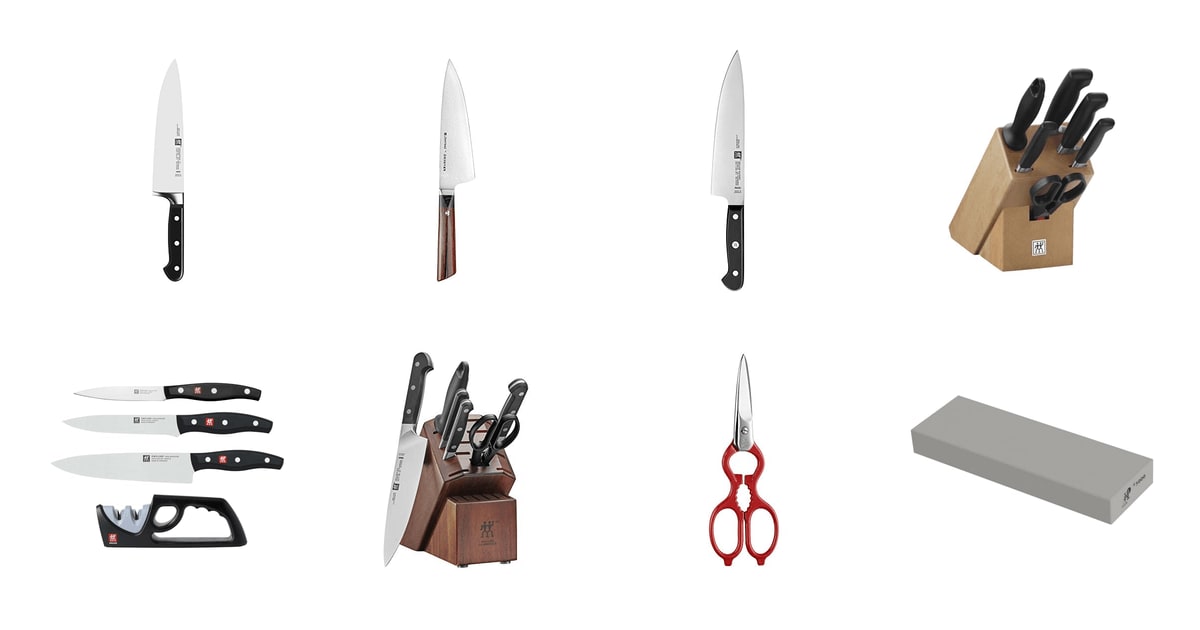
Your chef's knife does more work than anything else in the kitchen. You grab it to dice an onion for weeknight chili, break down a chicken, and chop parsley you'd rather not bruise. What separates a knife you love from one you tolerate is mostly weight, balance and how long the edge holds up. Zwilling has been making cutlery in its own German factories for close to three centuries, and the twin logo is one of the oldest trademarks still in use. That history buys you consistency more than magic.
No knife here stays sharp on its own. Every one of these blades dulls with use, and the sharper 15-degree grind Zwilling puts on most of its Western lines needs a sharpener set to that angle, not the 20-degree jig built for older German knives. Block sets are the other honest caveat. They almost always work out cheaper per knife, but only if you actually use the bread knife and the prep knife instead of letting them sit in the slots for years.
Most people don't need a full block. One excellent chef's knife, a paring knife you already own, and a pair of shears will handle nearly everything you cook. So we focused on which single Zwilling blade earns a spot on your counter, then on the sets and tools worth adding around it. We think that the ZWILLING Professional S 8-inch Chef's Knife is the best Zwilling knife for most people, and that the ZWILLING Gourmet 8-inch Chef's Knife is the one to buy if you want the same German steel in a plainer package.
Everything we recommend

The forged German workhorse most kitchens should start with

Nearly the same steel and grind, in a plainer package
A thinner, sharper Japanese edge, if you'll maintain it

The whole forged lineup at once, block and shears included
How we picked
Blade construction. We favored forged, full-tang blades made from a single piece of steel, because they balance better and survive decades of sharpening. Stamped knives earned a place only where light weight was the point.
Edge and hardness. We compared manufacturer specs on hardness and grind angle across Zwilling's lines, looking for blades ice-hardened to around 57 Rockwell and ground to 15 degrees per side. America's Test Kitchen rates edge retention and ease of sharpening among the top factors separating good chef's knives from bad ones.
Handle and balance. We read published reviews and owner feedback for comments on hand fatigue, grip security with wet hands, and whether the balance point sits near the bolster. The Spruce Eats found Zwilling knives generally lighter in hand than comparable Wüsthof models.
What's in the set. For block sets, we counted how many included pieces a typical home cook actually uses. A set only saves you anything if the bread knife and prep knife leave the block.
Upkeep and support. We looked for blades that work with a standard 15-degree sharpener and for coverage that outlasts the knife. Zwilling's lifetime warranty against manufacturing defects applies across these lines.
Top pick
The forged German workhorse most kitchens should start with
ZWILLING Professional S 8-inch Razor-Sharp German Chef's
The Professional S is the classic forged German chef's knife, with a full tang, a full bolster and a blade ground sharper than older German blades. It's heavier than a Japanese knife, and that heft does a lot of the work for you on winter squash and dense root vegetables.
$97.53fromAmazonThis is the knife we'd hand a friend who cooks most nights. It's forged from a single piece of Zwilling's high-carbon no-stain steel, so the blade, bolster and tang are one continuous piece. You feel that in the balance. The weight sits right at your pinch grip instead of pulling toward the tip, which matters when you're twenty minutes into prepping a big pot of soup and your wrist starts to notice.
Zwilling grinds this blade to 15 degrees per side, sharper than the 20-degree edge that traditional German knives have carried for decades. The practical result is that it bites into tomato skin and onion paper without you leaning on it. The listing puts the steel at 57 on the Rockwell scale after the FRIODUR ice-hardening process, which is the sweet spot most cutlery makers aim for: hard enough to hold an edge, soft enough that the tip won't chip if you knock it.
Published knife testing keeps landing in the same place. Wirecutter has repeatedly named the Zwilling Pro family a top alternative to its main chef's-knife recommendation, citing balance and out-of-the-box edge retention. Serious Eats found this line held a noticeably sharper edge through long vegetable prep than stamped blades in the same range. Owner feedback echoes it, with a common theme being that the knife arrives genuinely sharp and needs no honing before first use.
The full bolster is the part you'll either love or grumble about. It gives you a solid finger stop and makes the knife feel safe when your hands are slick from raw chicken. It also adds weight up front. If you learned to cook on a light stamped knife, expect a week of adjustment before the extra mass starts feeling like an advantage rather than a chore.
Flaws but not dealbreakers
That full bolster runs all the way to the heel, which means the last stretch of edge never touches a pull-through sharpener or a stone. Over years of sharpening, you can end up with a small unsharpened notch near the handle. It's a maintenance annoyance, not a defect, and a shop that does knife work can grind the bolster back if it ever bothers you enough.
It's also on the heavy side for a modern chef's knife, and the polymer handle is functional rather than beautiful. And while the listing says dishwasher safe, that's a durability claim, not advice. Detergent and the rattle of a crowded rack dull edges and wear handles faster than a sink and a towel ever will.
Zwilling backs its knives with a lifetime warranty against manufacturing defects.
Budget pick
Nearly the same steel and grind, in a plainer package
ZWILLING J.A. Henckels ZWILLING Gourmet 8" Chefs
The Gourmet uses the same ice-hardened German steel and the same 15-degree edge as our top pick, forged from one piece with a full tang. If you want one very good knife and you'd rather not spend up for the Pro badge, buy this one and put the difference toward a cutting board.
$79.95fromAmazonThe spec sheet on this knife reads almost identically to the Professional S: SIGMAFORGE construction from a single piece of high-carbon no-stain steel, the FRIODUR ice-hardened blade, 57 Rockwell, a laser-controlled 15-degree edge, and a three-rivet handle bonded to a full tang. You're getting the fundamentals that make a German knife worth owning, minus the flagship line's refinements.
For most home cooks, that trade is easy. The Good Housekeeping Institute has placed the Gourmet line among the top performers in its budget knife testing for holding a sharp edge through repeated use. Owners who've replaced decade-old knives with this one describe it the same way: sharp out of the box, well balanced, and easy to bring back with a steel. That's the whole job description for a chef's knife.
It's the knife to buy if you're outfitting a first real kitchen or replacing a starter set that came free with a block. You get a blade you can hone for years rather than one you'll replace. And because the grind matches the rest of Zwilling's Western lines, anything you buy later to sharpen it will work on your whole drawer.
Flaws but not dealbreakers
You give up the fit and finish of the Pro line. The handle is plainer, and a few owners mention that the corners along the spine feel sharp against the index finger when you pinch the blade. Sanding them lightly is a common fix, but you shouldn't have to.
It also lacks the curved bolster geometry of the newer Pro knives, so if you like to rock-chop with your knuckles low on the blade, the Pro is more comfortable. This one is a good knife rather than a special one.
Zwilling backs its knives with a lifetime warranty against manufacturing defects.
Upgrade pick
A thinner, sharper Japanese edge, if you'll maintain it
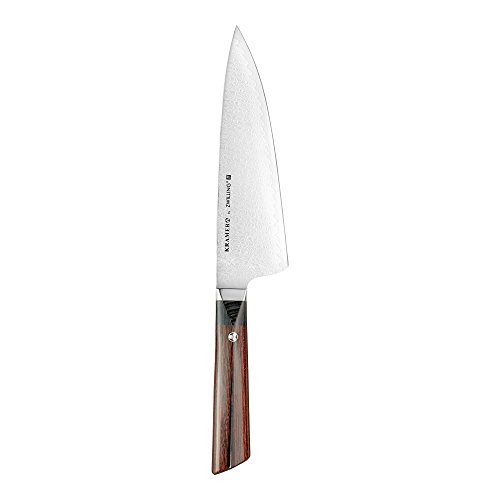
KRAMER by ZWILLING Meiji 8-inch Chef's Knife
The Meiji is handcrafted in Seki, Japan, to Bob Kramer's specifications, with an FC61 fine carbide steel blade and a mirror-polished etched ladder pattern. It slices thinner and finer than the German lines, and it asks for more care from you in return.
$249.95fromAmazonBob Kramer is one of a handful of American master bladesmiths, and this collaboration brings his geometry to a production knife made in Japan's cutlery town. The blade uses FC61 fine carbide steel with Zwilling's FRIODURx2 ice-hardening, aimed at edge retention and corrosion resistance in a thinner profile than a German knife can hold. The difference shows up on delicate work: fish, shallots sliced into translucent rings, tomatoes you don't want to crush.
Buy this only if sharpness is something you actually notice. Plenty of skilled cooks are happier with a heavier German blade, and there's no shame in that. But if you've ever been frustrated that your knife wedges through a butternut squash instead of parting it, a thinner edge is the fix. Owners who've moved to this from premium German knives consistently describe it as the sharper of the two.
The handle is the quiet reason people keep this on the counter. It pairs a Western-style grip with Japanese proportions, and owner feedback singles it out as unusually comfortable for long prep. The balance sits close to the bolster, so the knife feels lighter in motion than its size suggests. It's a pleasure to use, which is most of what a splurge knife has to deliver.
Flaws but not dealbreakers
It's the most expensive knife in this guide by a wide margin, and some owners feel the etched ladder Damascus pattern is cosmetic rather than functional. It is: the pattern is decorative etching, not a structural feature. If you want performance per dollar rather than an object you enjoy looking at, the Professional S gets you most of the cutting for far less.
A thinner, harder edge is also less forgiving. Keep it away from bones, frozen food and glass or stone boards, and don't put it in a dishwasher. If you're the kind of cook who leaves knives in the sink overnight, this isn't the knife for you yet.
Zwilling backs its knives with a lifetime warranty against manufacturing defects.
Also great
The whole forged lineup at once, block and shears included
ZWILLING J.A. Henckels 7-pc ZWILLING Pro Knife
This block set covers the four knives most home cooks reach for, plus kitchen shears, a sharpening steel and a block with extra slots for steak knives. Every blade is forged from one piece of steel, with the curved Pro bolster that lets you choke up onto the blade.
$369.95fromAmazonYou get a 4-inch paring knife, a 5.5-inch prep knife, an 8-inch chef's knife, an 8-inch bread knife, shears, a sharpening steel and the block itself. That's the honest working set for a home kitchen. The bread knife handles crusty loaves and tomatoes, the prep knife covers everything between paring and chopping, and the steel keeps all of it aligned between real sharpenings.
A set makes sense when you'll use most of it. Food & Wine's knife-set testing found block sets typically cost less per piece than buying the same knives one at a time, and that's true here. The catch is the word most. If you know you'll only ever reach for the chef's knife, skip the block and buy our top pick alone.
The Pro line's curved bolster is the real upgrade over older Zwilling designs. It sweeps back instead of running straight to the heel, so you can pinch the blade properly and sharpen the full edge without fighting a wall of steel. If you already sharpen your own knives, that detail alone is worth the step up from the Four Star block.
The block has six extra slots for steak knives, which is either useful planning or wasted counter space depending on how you entertain. Either way, it's a full-size block. Measure the corner where it'll live before you commit.
Flaws but not dealbreakers
Several owners note that the block's slots are cut at mixed angles, so the knives sit at slightly odd attitudes. It's a cosmetic gripe more than a functional one, but it's the most consistent complaint about this set.
It's also a lot of money at once, and you're paying for a block and a steel you may already own. Buying the chef's knife first and adding pieces as you find gaps is the slower, smarter path if you're not furnishing a kitchen from scratch.
Zwilling backs its knives with a lifetime warranty against manufacturing defects.
Who this is for
This guide is for you if you've decided on Zwilling and want to know which one to buy. That covers a lot of shoppers: people upgrading from a big-box starter set, registry buyers who want a name that lasts, and cooks who want German steel without paying for the top line. If you're still choosing between brands, start with a broader chef's-knife comparison instead, because the differences between good German knives are smaller than the difference between any of them and a dull one.
We stuck to knives, sets and the tools you use to maintain and complement them. Zwilling's cookware, thermometers and food-storage lines are outside the scope here. And if you already own one sharp chef's knife you like, you probably don't need a block set at all. Buy shears, buy a sharpener, and spend the rest on a board that won't wreck your edge.
How we picked
We weighed each knife against the things that actually change how it feels in your hand. Construction: forged, full-tang blades made from one piece of steel win over stamped ones except where light weight is the goal. Edge: we compared hardness and grind specs, favoring ice-hardened steel around 57 Rockwell with a 15-degree edge per side. Handle: we read published reviews and owner feedback for hand fatigue, grip security and balance during long prep. Set value: a block only earns its price if you'll use most of what's in it. Upkeep: the knife has to work with a standard sharpener, and the warranty has to outlast the blade.
Other zwilling knives and kitchen tools worth considering
If you want one tool that earns its drawer space: The ZWILLING Kitchen Shears ($95) — These shears do more than cut. The blades are forged and ice-hardened, they're micro-serrated so they don't need sharpening, and the handles work as a bottle opener, screw-cap gripper and jar-lid lifter. You'll use them for spatchcocking a chicken, snipping herbs and opening the packaging on everything else. Serious Eats has pointed to take-apart shear designs as far easier to sanitize than fixed-pivot pairs, which matters the first time you cut raw poultry with them. Owner feedback skews toward longevity, with people replacing decades-old pairs with the same model. They're smaller than some kitchen shears, so if you have big hands, expect a snug grip.
If you want a light set to start with: The ZWILLING Twin Signature 4-Piece Razor-Sharp German Knife ($149.99) — The Twin Signature set uses precision-stamped blades rather than forged ones, which makes each knife noticeably lighter. Reviewed has tied that lower weight to less hand fatigue during long prep sessions, and plenty of owners specifically want a light knife. You still get German stainless steel, FRIODUR ice-hardening, a full tang and the triple-rivet handle. What you give up is the heft that helps a forged blade drop through a sweet potato, and the balance that comes from a thick bolster. It's the right pick for a first apartment, a second kitchen or anyone who finds a Professional S tiring. A few owners find the handles slippery when wet.
If you want to sharpen by hand: The Zwilling J.A. Henckels 34536-005 Miyabi "Toishi Pro ($148.25) — This is a #5000-grit Miyabi finishing whetstone made in Japan, and it's a specialist's tool rather than a starter sharpener. At that grit you're polishing an edge that's already been shaped on a coarser stone, not repairing a dull one. Pair it with a lower grit and you can put a genuinely fine edge on the Kramer Meiji, which is where a stone like this pays off. It works on steel blades of all types, but not on ceramic or serrated edges. If you've never used a stone, a guided sharpener set to 15 degrees will serve you better and cost you less frustration.
More from ZWILLING
Here's the rest of what our research surfaced from Zwilling's catalog. It isn't the brand's full lineup, and a knife landing here doesn't mean it's a bad buy — it means a different shopper is the better fit for it.
The ZWILLING J.A. Henckels Four Star 7-Piece Block ($314.90) — The Four Star block set is the long-running classic, and it suits the cook who wants a traditional seven-piece block with a one-piece molded handle rather than a riveted one. You get a 200mm chef's knife, a 200mm bread knife, a 130mm utility knife, a 100mm paring knife and a 210mm sharpening steel in a block. The seamless handle has no rivets or crevices, which some people prefer for cleaning. Choose it over the Pro set if you like the smoother handle shape and don't care about the Pro line's curved bolster, which is easier to sharpen against over the long run.
Is ZWILLING worth it?
Zwilling has been making knives in company-owned German factories for close to three hundred years, and its twin-blade mark is one of the oldest registered trademarks still in use. That longevity shows up in the catalog as consistency rather than novelty: the same ice-hardened FRIODUR steel, the same 15-degree grind, and the same full-tang forged construction repeat across price tiers, so a budget Zwilling and a flagship Zwilling sharpen the same way. Independent testing backs the core lines up — Wirecutter has repeatedly cited the Pro family as a top chef's-knife alternative, and Serious Eats found it held a sharper edge through extended prep than comparable stamped blades. The brand covers its knives with a lifetime warranty against manufacturing defects, which is more than most budget cutlery makers offer. Against Wüsthof, its closest rival, Zwilling knives tend to run lighter in hand. Neither is better; one will suit your grip more than the other.
Not set on ZWILLING?
It compares the best chef's knives across brands, including Japanese and lighter stamped options, if you're not committed to German steel. our full chef's knife guide →
It covers block and starter sets from a range of makers, which is worth reading before you commit to a full block from any single brand. our knife set guide →
It covers the peelers, shears and prep gear that fill in around a good knife, usually for a lot less money. our OXO kitchen tools guide →
Care and sharpening
Hand-wash and dry these knives, even the ones marked dishwasher safe. Detergent is abrasive, and knives banging around a rack lose their edge fast. Hone before or after every few uses with a steel — that just straightens the edge, it doesn't remove metal. Cook's Illustrated recommends a real sharpening, which does remove metal, only every six to twelve months under normal home use. When you do sharpen, match Zwilling's 15-degree edge per side. A sharpener jigged for 20 degrees will fight your blade and eventually reshape it into something duller. Cut on wood or plastic, never glass, stone or a countertop. And store knives in a block, on a magnetic strip or in blade guards rather than loose in a drawer.
Questions we get
Is Zwilling as good as Wüsthof?
Yes, and the choice comes down to feel rather than quality. Both forge full-tang knives from German stainless steel and grind them to a sharper modern angle than older German blades. The Spruce Eats found Zwilling knives generally lighter in hand than comparable Wüsthof models, which some cooks prefer for long prep sessions. Hold both if you can, and buy the one your hand likes.
What's the difference between Zwilling Pro and Four Star knives?
Both are forged, full-tang German knives with ice-hardened blades. The Pro line uses a curved bolster that sweeps back from the heel, so you can pinch the blade and sharpen the entire edge. Four Star uses a traditional seamless one-piece handle with a fuller bolster. Pro is the better long-term choice if you sharpen your own knives; Four Star is the more comfortable grip for some hands.
Are Zwilling knives dishwasher safe?
Several models are labeled dishwasher safe, including the Professional S and the Gourmet. That's a statement about what the steel and handle can survive, not a recommendation. Hot detergent dulls edges and degrades handle bonding over time, and blades knock against racks. Wash by hand and dry immediately, and your knives will stay sharper for years longer.
What angle should I sharpen my Zwilling knife?
Most of Zwilling's Western-style lines are ground to 15 degrees per side, not the 20 degrees used on many classic German knives. Use a sharpener, guided system or stone jig set to 15 degrees. If you run a 20-degree sharpener over a 15-degree edge, you'll grind away the fine tip of the bevel and end up with a blunter knife that takes several sessions to recover.
Is the Kramer Meiji worth the extra cost?
Only if you'll notice and maintain a thinner edge. It's built in Seki, Japan, from fine carbide steel to Bob Kramer's specifications, and it slices more finely than the German lines. But it's less forgiving of bones, frozen food and hard boards. If you mostly chop onions and carrots on a weeknight, the Professional S does that job just as happily.
What's the best Zwilling set for a beginner?
The Twin Signature set is the easiest starting point. Its stamped blades are lighter and less intimidating, and the three or four included knives cover most of what home cooking asks for. If you'd rather buy one good knife than a set, get the Gourmet 8-inch chef's knife and add a paring knife later.
Why you should trust us
For this guide:
- We read published knife testing and buying guidance from Wirecutter, Serious Eats, America's Test Kitchen, Cook's Illustrated, Food & Wine, Good Housekeeping Institute, Reviewed and The Spruce Eats.
- We compared Zwilling's own specifications across these lines for blade construction, steel hardness, grind angle and warranty coverage.
- We read through owner feedback for recurring themes about balance, handle comfort, edge retention and long-term durability.
- We read owner reviews on every listing, weighted toward the critical ones, because that is where the recurring failures show up.
- We have a systematic way of automatically fetching the latest prices, so the numbers on this page stay current.
- This is a research-focused guide, so the team may not own every product listed — though we often do own the top winners, which gives us extra context for the recommendations.
- We don't accept free products, and the retailer commission never changes which product we recommend.
Sources
The Best Chef's Knives, Tested by Professional Cooks - Wirecutter, Wirecutter (NYT)
Zwilling Pro 8-Inch Chef's Knife Review, Serious Eats
The Best Chef's Knives of 2026, Tested, America's Test Kitchen
Zwilling J.A. Henckels: Official Blade Technology and FRIODUR Ice-Hardening Process, Zwilling J.A. Henckels (Manufacturer)
Zwilling Kramer Meiji Collection Overview, Zwilling J.A. Henckels (Manufacturer)
We Tested Dozens of Knife Sets—Here Are the Best Ones, Food & Wine
The Best Kitchen Shears for Every Task, Serious Eats
How to Sharpen and Maintain Your Kitchen Knives, Cook's Illustrated
Best Budget Chef's Knives Tested, Good Housekeeping Institute
Zwilling vs. Wüsthof: Which German Knife Brand Is Better?, The Spruce Eats
Best Knife Sets of 2026, Tested by Editors, Reviewed (USA Today)
Zwilling Company History: 290+ Years of Cutlery Craftsmanship, Zwilling J.A. Henckels (Manufacturer)
Amazon product listings and owner reviews for all 8 products
Manufacturer specification pages for each product
Some passages in this guide may be paraphrased with AI help. Prices are refreshed automatically.
More like this.
Continue exploring appliances reviews and recommendations.

The Best Coffee Makers
Your coffee maker is the appliance you use most and think about least. It runs every single morning, usually before you're awake enough to troubleshoot…

The Best Smokeless Indoor Electric Grills
Indoor electric grills solve a specific problem: you want a seared burger in February, or you live somewhere a propane tank isn't allowed on the balcony.…

The Best Sous Vide Machines
Sous vide takes the guesswork out of dinner. You drop a sealed bag into a water bath, set a number, and the machine holds that number for hours. A chicken…

The Best Robot Vacuum Mop Combos
A robot vacuum mop combo earns its keep in the boring middle of the week. You're not deep-cleaning. You're dealing with cereal under the high chair, dog…

The Best Espresso Machines for Home Baristas
Good espresso at home comes down to three things happening at once: water at the right temperature, pressure that holds steady through the shot, and…

The Best Woks for High-Heat Cooking
A wok does one thing no skillet can: it gets brutally hot and stays hot while you keep the food moving. That's how green beans blister at the edges and…