The Best Knife Sharpeners and Honing Tools
A sharp knife does the work so your hands don't. It glides through tomato skin instead of skidding off it, and it takes most of the fight out of a butternut squash. Dull knives are also the ones that slip and cut you, because you're pushing harder to make them bite. Yet most of us let a chef's knife go blunt for years and then blame the knife. A sharpener fixes that in a few minutes a month, and a good one outlasts several sets of knives.
Here's the catch: every sharpener trades something away. Anything that makes a knife sharp takes steel off it, so the fast, no-skill tools are also the ones that eat your blades. The careful systems ask for patience and a practice knife before they beat the dull edge you started with. And nothing here is forgiving with thin, hard Japanese steel if you're heavy-handed — that kind of edge chips rather than bends. Match the tool to your knives and your temperament, not to the number of stages on the box.
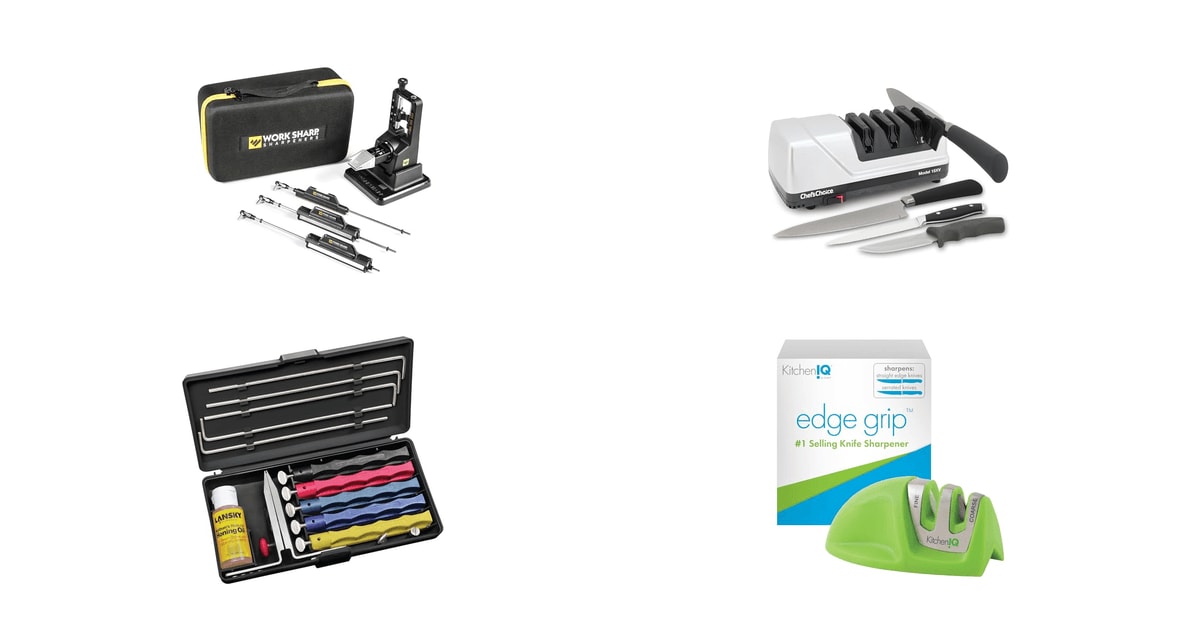
We read manufacturer specifications, published reviews from kitchen and knife publications, and a lot of owner feedback, paying attention to what people say after a few months rather than on day one. We weighed angle control, abrasive quality, how steady each tool sits on a counter, and how much metal it removes. We think that the Work Sharp Precision Adjust Elite is the best knife sharpener for most people, and that the Chef'sChoice 15XV EdgeSelect is the one to buy if you want a motorized machine that asks nothing of your technique.
Everything we recommend

Precise, repeatable angles for almost any knife you own

Slower and messier, but it teaches you real technique

A tiny pull-through that asks nothing of your technique
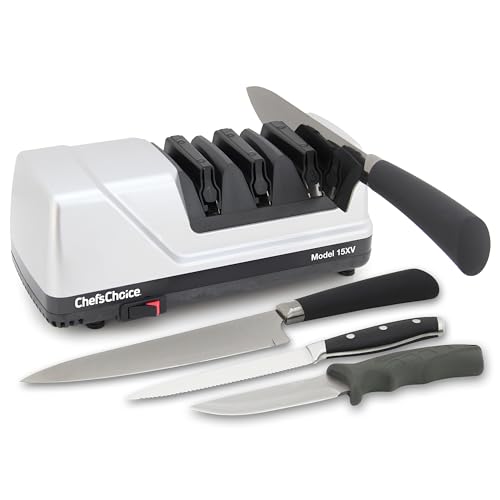
A motorized machine that regrinds German steel to a keener angle

It doesn't sharpen — it keeps a good edge going longer
At a glance
| Product | Stages/Grits | Power Type | Price | |
|---|---|---|---|---|
| Work Sharp Precision Adjust Elite Knife SharpenerTop pick | 7 Abrasives | — | $129.95 |
| Chef’sChoice 15XV EdgeSelect Professional Electric Knife SharpenerUpgrade pick | 3-Stage | Electric | $165.99 |
| Lansky Deluxe Knife Sharpening System: 5-Stone CeramicRunner-up | 5-Stone | — | $47.74 |
| KitchenIQ 50881 - Edge Grip 2-Stage KnifeBudget pick | 2-Stage | — | $9.99 |
| Wusthof Classic IKON Honing SteelAlso great | — | — | $200 |
How we picked
Angle control. We favored tools that either hold a repeatable angle for you or let you set the one your knives were ground to. Fixed-angle pull-throughs had to earn their place on convenience alone, since they regrind whatever you feed them to their own geometry.
Abrasive quality. Specifications told us what each tool cuts with — diamond, ceramic, carbide or plain steel — and published reviews told us what edge each material leaves behind. Diamond and ceramic systems that offer a real grit progression ranked above single-stage scrapers.
Steel removed. Every sharpener trades metal for sharpness, so we noted which ones are safe for regular use and which should come out a few times a year. Anything aggressive had to be clearly labeled as such rather than sold as a daily tool.
Stability and safety. A sharpener that slides while you're pulling a blade through it is a hazard. We looked for suction bases, non-slip feet, counter-grip designs and finger guards, and we read owner feedback for reports of clamps or bases that shift under pressure.
What owners say later. Day-one impressions are easy for any sharpener to earn, so we weighted feedback describing how the edge held up weeks in, and recurring complaints about clamp flex, edge retention or a steep learning curve counted against a product.
Top pick
Precise, repeatable angles for almost any knife you own
Work Sharp Precision Adjust Elite Knife Sharpener
A guided sharpener with an adjustable angle stop, seven abrasive grades and a case that holds all of it. It puts a 15-degree Japanese edge and a 20-degree German one on the same hardware, and it's one of the few guided systems that handles serrated blades too.
$129.95fromAmazonAngle consistency is the whole problem, and this is what solves it. Freehand stone work takes years to get right, and most of us round an edge over instead of refining it. Here you clamp the knife, set the rod anywhere from 15 to 30 degrees, and every stroke lands on the same bevel. Set it to 15 for a Japanese gyuto, 20 for a German chef's knife. You don't have to guess, and you don't need years of muscle memory.
The abrasive lineup is more complete than you'd expect from something this small. Diamond plates run from coarse through fine, then a ceramic stage refines the bevel and a leather strop polishes it. The coarse grits reprofile a chipped edge; the fine end takes a working knife to where it parts paper cleanly. Owners who moved here from pull-through sharpeners describe the jump in edge quality as the reason they stopped using anything else.
It's a manual tool, so plan on sitting down with it. A neglected knife takes real minutes, not seconds, and you'll swap rods a few times along the way. Everything packs back into a hard case that fits in a cabinet, which matters more than it sounds — a sharpener you have to unbury is a sharpener you don't use. The base stays planted on the counter while you work.
If your knives come from more than one tradition, this is the safest thing in the guide. A carbide pull-through has one angle and one level of aggression, and neither is kind to hard Japanese steel. This lets you dial in whatever bevel the maker intended and choose how much metal you take off. Work Sharp also builds in serrated support, which almost nothing else here does properly.
Flaws but not dealbreakers
There's a learning curve, and owners are blunt about it: read the instructions and watch the videos before you touch a knife you care about. Your first blade or two are practice. Several owners also mention a little flex in the blade clamp, so if you lean into the stroke the angle drifts slightly — exactly what you bought a guided system to avoid. A light touch fixes it.
The abrasives are consumables. They last a long time in a home kitchen, but eventually you're buying replacements, which a plain steel rod never asks of you. This is also slow next to a motorized sharpener. If you want an edge back in a minute, buy the machine instead.
Work Sharp backs the Precision Adjust Elite with a three-year warranty.
Runner-up
Slower and messier, but it teaches you real technique
Lansky Deluxe Knife Sharpening System: 5-Stone Ceramic
A clamp, five color-coded stones running from extra-coarse to extra-fine ceramic, honing oil and a molded case. You set the clamp angle, then draw each stone along the edge in sequence, which is slower than anything motorized but builds skill that transfers to freehand stones.
$47.74fromAmazonThink of this as sharpening school with training wheels. The clamp holds the blade at a set angle while you do the actual stroking, so you feel what the stone is doing without having to hold the angle yourself. Owners who call themselves hopeless at freehand sharpening report getting genuinely keen edges within a session or two. That's the appeal — you learn something, and you don't have to ruin three knives learning it.
The five-grit progression is what makes it more than a gadget. Extra-coarse exists for a chipped or badly rounded edge, the middle grits rebuild the bevel, and the extra-fine ceramic polishes it. That's a full workflow, not two slots to pull a knife through. Owners who add a leather strop and compound at the end say the results get noticeably better again, which tells you how much headroom the system has.
It isn't just for kitchen knives. The clamp handles hunting knives and folders as well as it handles a paring knife, so it's the pick if you keep a blade in your pocket and another on the counter. Everything stows in the case, oil included, which makes it easy to keep in a garage or take along. Nothing needs power, so you can work anywhere.
Flaws but not dealbreakers
It's slow. A badly neglected blade can take most of an hour to work through all five stones, and then you're wiping oil off stones and steel. The clamp also fights you on long chef's knives and very thin blades — you'll end up repositioning the knife partway down the edge, which is fiddly and reintroduces some of the inconsistency you were trying to avoid.
Some longtime owners feel the kit's build quality has slipped compared with older versions. Many also recommend the version that includes a stand, since anchoring the system to something solid makes the stroke steadier. One small thing worth doing yourself: mark which guide rod belongs with which stone, because the kit doesn't.
Budget pick
A tiny pull-through that asks nothing of your technique
KitchenIQ 50881 - Edge Grip 2-Stage Knife
A palm-sized two-slot sharpener with a carbide V for dull edges and a ceramic rod for touch-ups. The patented edge grip hooks over the lip of your counter so the tip of a long knife clears the surface instead of dragging across it.
$9.99fromAmazonFor a drawer of ordinary stainless knives, this is all the sharpener you need. A few light pulls through the carbide slot brings a blade that was sliding off tomato skin back to cutting. Then the ceramic slot handles upkeep. There's no angle to set, no clamp and nothing to learn — you pull the knife toward you and you're finished before the water boils.
The edge grip is a smarter idea than it looks. Hook it over the counter and a long blade clears the surface, so you're not scoring the countertop or blunting the tip you just sharpened. The rubber base and soft handle keep it steady with one hand, which matters with a tool this light. It stores flat in a utensil drawer.
It costs a fraction of what the other tools here do, and that combination — tiny, cheap to replace, zero skill required — is why it's the right buy for a first apartment, a rental kitchen or a second set of knives you don't fuss over. Owners repeat one piece of advice constantly: use a light touch. Pressing hard is what wrecks edges in any pull-through.
Flaws but not dealbreakers
The edge doesn't last. Owners consistently report that a knife feels great for a few days and then fades, which is what a carbide scraper gives you — a fast, rough edge carrying more micro-serration than a properly ground bevel. Expect to touch up often, and expect the coarse slot to take real metal each time you use it.
Keep it away from your good knives. Carbide can chip hard Japanese steel, and the preset angle is built for Western blades, so a 15-degree edge just gets reground to something blunter. Save the coarse slot for genuinely dull knives and use the ceramic side for everything else.
Upgrade pick
A motorized machine that regrinds German steel to a keener angle
Chef’sChoice 15XV EdgeSelect Professional Electric Knife Sharpener
A three-stage electric sharpener with diamond abrasives in the first two stages and a flexible stropping stage to finish. It converts a standard 20-degree Western edge to a 15-degree one, which is a permanent change to the geometry of your knife.
$165.99fromAmazonNothing else here changes a knife this much for this little effort. Spring guides hold the angle for you, so all you do is draw the blade through each stage in order. Chef'sChoice puts a first sharpening at roughly a minute and later touch-ups at about ten seconds. If sharpening feels like a chore you'll keep postponing, a machine that fast is worth the counter space it takes.
The 15-degree conversion is the real feature. German knives leave the factory around 20 degrees per side, and grinding them thinner means they cut with less force behind them. Owners with a drawer of stalled kitchen knives describe this as the thing that finally made all of them usable again, including the cheap ones they'd stopped reaching for.
It handles serrated blades too, which most of the tools here won't touch. And unlike the manual systems, your technique doesn't change the outcome — the fiftieth pass is the same as the first. That consistency is the whole argument for buying a machine rather than learning a skill.
It's the most expensive option in this guide, and the case for it is time. If you own a lot of knives and hand-sharpening sounds like a Saturday you'd rather spend elsewhere, this turns that Saturday into a few minutes at the counter. The more knives in your block, the better that trade looks.
Flaws but not dealbreakers
It removes a lot of metal. Run every knife through it monthly and you'll visibly thin your blades over a few years. Most guidance points to a handful of full sharpenings a year at most, with gentler maintenance in between, so this is a restoration tool rather than a weekly habit.
It's also wrong for thin, hard Japanese knives, where motorized abrasion can chip the edge, and the conversion runs one way — going back to 20 degrees means paying someone to reprofile the blade. The machine is big and heavy, so it needs dedicated counter or cabinet space. Owners note the first knife or two teach you how light your grip should be, and some report making a blade worse before they got the feel of it.
Also great
It doesn't sharpen — it keeps a good edge going longer
Wusthof Classic IKON Honing Steel
A ten-inch high-carbon steel rod with a contoured, triple-riveted handle, made in Solingen. It doesn't sharpen anything. It straightens the edge your knife already has, which is what keeps a freshly sharpened blade cutting for weeks instead of days.
$200fromAmazonHoning and sharpening are different jobs, and most home cooks only ever do one of them. Cutting rolls the very edge of a blade out of line. A steel pushes it back. Spend half a minute on it before you start cooking and a knife that felt tired feels fresh again, without taking off meaningful metal. Skip it and even a perfectly sharpened knife goes soft within a week or two of real use.
Ten inches is the right length for a home kitchen. It clears a standard chef's knife with room to spare, and the guard at the base keeps your hand out of the way if a stroke goes wide. The contoured handle holds securely with wet or greasy fingers, which is exactly when you're reaching for it mid-prep.
This is a Solingen-made tool built to outlast the knives you use it on. There's nothing to break, no abrasive to replace and no maintenance beyond a wipe. If you already own a Wüsthof or Henckels block, this is the piece the set either leaves out or skimps on, and swapping it in lifts how every knife you own cuts.
Flaws but not dealbreakers
It costs several times what a plain honing steel does, and a basic rod does most of the same work. You're paying for fit, finish and a handle that matches a Classic IKON block. That's a fine thing to want. It just isn't performance.
It also asks something of you. You have to hold roughly the knife's own angle, and a sloppy stroke either does nothing or slightly rounds the edge. It's the wrong tool for Japanese knives, which want a fine ceramic rod instead of hard steel. And it can't rescue a dull or chipped blade — that's a sharpener's job, not a steel's.
Who this is for
This guide is for home cooks who own kitchen knives and want them to cut. If your chef's knife is squashing tomatoes instead of slicing them, you need a sharpener, and one of these will fix it this week. If your knives were sharpened recently and just feel a little tired, you need a honing steel instead, and buying a sharpener will only take metal off blades that don't need it. Knowing which problem you have saves you money and steel.
We stuck to tools a home cook can use on a countertop: guided rod and clamp systems, an electric machine, a pull-through and a honing steel. We didn't get into freehand water stones, powered belt sharpeners or dedicated serration tools, all of which are worth exploring once you're comfortable holding an angle yourself. If you own thin, hard Japanese knives exclusively, treat the carbide and motorized options here as off-limits and go with the adjustable guided system set to 15 degrees.
How we picked
We compared specifications, published reviews and owner feedback on a handful of things that actually change how a knife cuts. Angle control: the tool should hold a repeatable bevel, ideally the one your knives were ground to, rather than imposing its own. Abrasive quality: diamond and ceramic with a real grit progression beat a single carbide slot, which cuts fast but leaves a coarse edge. Steel removed: aggressive tools belong in the rotation a few times a year, not weekly. Stability and safety: suction bases, counter grips and finger guards matter when you're drawing a blade toward yourself. What owners say later: we weighted feedback from weeks in over first impressions, since almost every sharpener impresses on day one.
The competition
This is what our research surfaced, not a census of the market. Each of these tools represents a different approach — adjustable guided rod, clamp-and-stone kit, electric machine, pull-through and honing steel — and each earned a place because it answers a question the others don't. What you won't find here are freehand water stones, powered belt sharpeners or serration-specific tools. Those are all worth a look once you're comfortable holding an angle by hand, but none of them is the right first purchase for a kitchen.
Care and technique
Two habits do most of the work. Hone before you cook rather than after the knife has already gone dull, and sharpen only when honing stops bringing the edge back — a handful of times a year suits most kitchens. Use a light touch with everything here. Pressing hard is the single most common way people make an edge worse, and it's the mistake owners of every tool in this guide keep flagging. Keep stones clean, since loaded grit stops cutting and starts burnishing, and use the oil the Lansky kit includes. Wash and dry knives by hand instead of letting them knock around a dishwasher rack. And know your steel: hard Japanese blades want gentle abrasives and a ceramic rod, while German steel tolerates nearly anything.
Questions we get
What's the difference between a knife sharpener and a honing rod?
A sharpener removes metal to cut a fresh bevel, which is what a genuinely dull or chipped knife needs. A honing rod removes almost nothing — it straightens the microscopic edge that folds over as you cut. You need both: sharpen a few times a year, hone weekly or before every serious cooking session.
How often should I sharpen my kitchen knives?
Two to four times a year covers most home kitchens. Harder Japanese steel holds an edge longer and may need it only once or twice a year if you hone regularly. Softer German and Western steel dulls faster, so quarterly is reasonable with weekly use. Honing is the thing you should do far more often.
Can I use a honing steel on Japanese knives?
Not a standard steel rod. Japanese blades are harder and more brittle, and the sideways pressure of a steel rod can chip the edge instead of straightening it. Use a fine ceramic honing rod for those knives. If you own both kinds, it's worth keeping one of each rather than compromising with a single tool.
Are electric knife sharpeners bad for knives?
They're not bad, but they're aggressive. An electric sharpener takes off more metal per session than a guided system, so used monthly it will thin your blades noticeably over the years. Used a few times a year on Western steel, something like the Chef'sChoice 15XV is perfectly safe. Keep thin, hard Japanese knives away from it.
What angle should I sharpen my knives at?
Follow whatever the maker intended. German and Western chef's knives are usually ground around 20 degrees per side, and Japanese knives around 15, with traditional single-bevel blades sharpened on one side only. Most brands publish their recommended angle, so check before you start. An adjustable guided system like the Work Sharp lets you match any of them without guessing.
What should a first-time sharpener buy?
If you want a tool you'll keep for years, the Work Sharp Precision Adjust Elite is the one — the guide removes the hardest part, and owners report getting good results by the second or third knife. If you just want working knives with no learning curve at all, the KitchenIQ does that for very little. Freehand water stones are a poor starting point; the technique takes months to become reliable.
Why you should trust us
For this guide:
- We read the manufacturer specifications and listing details for every sharpener here, including abrasive types, angle ranges and warranty terms.
- We compared published reviews from kitchen and knife publications on how each category of sharpener behaves, and we read through owner feedback looking for the complaints that repeat rather than the one-off ones.
- We did not sharpen anything ourselves; every claim above comes from specifications, published reviews or what owners consistently report.
- We read owner reviews on every listing, weighted toward the critical ones, because that is where the recurring failures show up.
- We have a systematic way of automatically fetching the latest prices, so the numbers on this page stay current.
- This is a research-focused guide, so the team may not own every product listed — though we often do own the top winners, which gives us extra context for the recommendations.
- We don't accept free products, and the retailer commission never changes which product we recommend.
Sources
The Best Knife Sharpeners, Tested and Reviewed, Wirecutter (NYT)
The Best Knife Sharpeners, Serious Eats
Best Knife Sharpeners, America's Test Kitchen
Knife Sharpeners Buying Guide, Consumer Reports
Best Knife Sharpeners 2026, Good Housekeeping
Best Knife Sharpeners, Food & Wine
How to Sharpen a Knife, Bon Appétit
Whetstone vs. Electric Knife Sharpener, Blade HQ
Amazon product listings and owner reviews for all 5 products
Manufacturer specification pages for each product
Some passages in this guide may be paraphrased with AI help. Prices are refreshed automatically.
More like this.
Continue exploring appliances reviews and recommendations.

The Best Knife Sharpeners
A dull knife is the most annoying tool in your kitchen, and the most dangerous one. It slides off a tomato skin instead of biting in. It crushes basil…

The Best Knife Sets
You touch your knives every time you cook. They're the difference between prep that moves and prep that drags. A sharp chef's knife walks through an onion…

The Best Kitchen Knife Sets
A sharp knife changes how cooking feels. You stop sawing at tomatoes, you stop crushing herbs into a bruised green paste, and dinner prep gets faster and…

The Best OXO Kitchen Tools
Most kitchen tools fail in the same boring way. The handle gets slick when your hands are wet, the joint between head and grip traps a week's worth of…

The Best Victorinox Knives and Tools
Most people don't need a block full of forged German steel. You need one chef's knife that's genuinely sharp, a small blade you'll actually have on you,…

The Best Cocktail Shaker Sets
A cocktail shaker is the one bar tool you can't fake. It chills, it dilutes, and it aerates all at once, and a shake that leaks down your wrist ruins the…