The Best Cocktail Shaker Sets
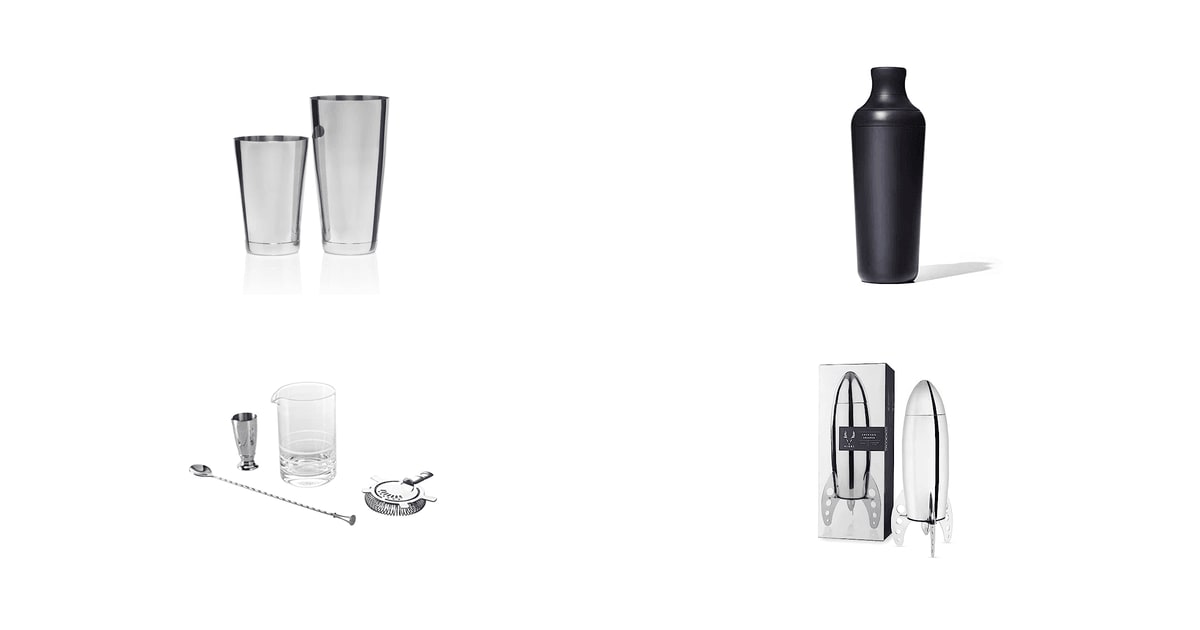
A cocktail shaker is the one bar tool you can't fake. It chills, it dilutes, and it aerates all at once, and a shake that leaks down your wrist ruins the drink before it reaches the glass. For most people the real question isn't which brand, it's which format. A two-piece Boston shaker is what bartenders reach for. A three-piece cobbler has a strainer built into the lid, so you can make a Daiquiri the night it arrives without buying anything else.
Here's the honest part: no shaker in this category is fussy in exactly the way you'd hope. Cobbler caps stick after a hard, cold shake because the metal contracts around the strainer body, and that happens at every price. Boston tins seal so well that separating them takes a confident strike against the heel of your palm, which feels wrong the first few times. Stainless steel also isn't magically rustproof. Owners across brands report spotting and etching when tins soak overnight or ride the dishwasher for years.
We looked at published reviews, manufacturer specs and a lot of owner feedback to sort out which of these actually earn a spot on your counter. Format matters more than finish, and set completeness matters more than either if you're starting from an empty shelf. We think that the Barfly Matte Black shaker tins are the best cocktail shaker set for most people, and that the OXO Good Grips Plastic Cocktail Shaker is the one to buy if you want zero learning curve on your first drink.
Everything we recommend
Professional tins that don't show every fingerprint

Nothing to learn, and the strainer's already built in

Everything for stirred drinks, minus the shaker itself

A conversation piece that actually mixes a decent drink

The bar-standard tins, if you'll dry them by hand
At a glance
| Product | Capacity | Material | Price | |
|---|---|---|---|---|
| Cocktail Kingdom Koriko® Weighted Shaking TinRunner-up | 18oz/28oz Set | Stainless Steel | $26.98 |
| OXO Good Grips Plastic Cocktail Shaker- 20Budget pick | 20 oz | Plastic | $13.99 |
| Crafthouse by Fortessa Professional Barware/Bar Tools byUpgrade pick | — | — | $120 |
| Viski Rocket Cocktail Shaker with Strainer BarAlso great | 24oz | Stainless Steel | $37.99 |
| Barfly Shaker Cocktail TinTop pick | 18oz/28oz Set | Stainless Steel | $47.40 |
How we picked
Format and technique. We separated two-piece Boston tins from three-piece cobblers early, because the choice drives everything else you'll need to buy. A set only made the list if it was clearly the best version of its format rather than a compromise between the two.
Seal and leaks. Owner feedback across hundreds of reviews made leaking the single loudest complaint in this category. We favored sets with gaskets or a proven friction seal, and we flagged any shaker where owners report having to shake carefully to avoid dribbles.
Material and corrosion. We looked for 18/8 or 18/10 stainless as a floor, and heavier gauge over thin. Then we read owner reports for rust and pitting, since spec sheets never mention what happens after a year in a real kitchen.
What's in the box. A shaker alone isn't a bar. We tracked which sets include a strainer, jigger, spoon or mixing glass, and factored in what a beginner would still have to buy before making a first drink.
Capacity. Anything under 18 ounces struggles with two drinks plus ice. We preferred sets that let you shake two or three servings at once, since that's when a shaker stops being a chore.
Top pick
Professional tins that don't show every fingerprint
Barfly Shaker Cocktail Tin
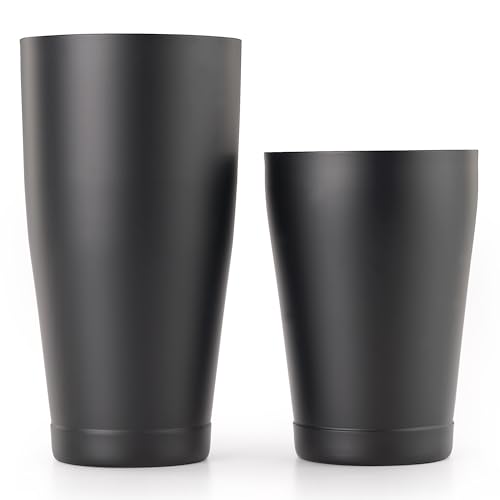
A weighted 18-ounce and 28-ounce tin set in matte black PVD, the same two-piece format working bars use. It seals hard, holds enough for two or three drinks, and owner feedback on durability is the most consistent of anything here.
$47.40fromAmazonThis is the format you'll still be using in ten years. Two tins, no threads, no gaskets, nothing to wear out. You fill the small tin, press it into the large one at a slight angle, and friction does the rest. Owners describe the seal as leak-free even when they're shaking hard, and there's no cap to lose or lid to warp. When you're done, one strike on the rim pops it open.
The 18-ounce and 28-ounce pairing is the standard sizing, and the large tin is why it matters to you. You can shake two full drinks at once without liquid climbing to the rim. If you're making a round of Margaritas for four, that's two shakes instead of four. A 20-ounce cobbler technically fits two servings, but you're being careful about it the whole time.
Barfly weights the base of each tin, which sounds like marketing until you set one down mid-pour on a crowded counter. The low center of gravity keeps it upright. Owners who've bought a second and third set mention that heft specifically, along with the seamless interior that doesn't trap citrus pulp in a crease you can't reach with a sponge.
The matte black finish is more than a look. PVD coating bonds to the steel rather than sitting on top of it like paint or powder coat, so it doesn't chip into your drink. Practically, it hides fingerprints through a whole evening of handling. Polished stainless shows every touch, and if your tins live on an open shelf, that's the difference between wiping them down constantly and not thinking about it.
Flaws but not dealbreakers
There's no strainer in the box. A Boston shaker pours through a separate Hawthorne strainer you rest across the large tin, so budget for one before your first cocktail or the tins are just very nice cups. That's true of every two-piece set, but it's a real gap if you're starting with nothing.
The seal can be stubborn. Several owners mention struggling to break the tins apart after a long, cold shake before they found the right spot to strike. It's a five-minute skill, not a defect, but the first few attempts are awkward. And a few report that soaking the tins overnight left rust spotting around the etched branding, so wash and dry them rather than letting them sit in the sink.
Budget pick
Nothing to learn, and the strainer's already built in
OXO Good Grips Plastic Cocktail Shaker- 20
A 20-ounce plastic cobbler with two silicone gaskets, a measured jigger cap and a strainer in the neck. You can make a proper drink the moment it's out of the box, and the whole thing goes in the dishwasher.
$13.99fromAmazonIf you've never shaken a cocktail, start here. The lid has a jigger with measurement markings, the neck has a strainer, and the body holds 20 ounces. That's a shaker, a jigger and a strainer for the price of one item. You don't have to know what a Hawthorne strainer is, and you don't have to learn a striking technique before your first Daiquiri.
The two silicone gaskets are the part that matters most day to day. Cobbler shakers leak at the seams when the fit is loose, and OXO seals both joints. Owners who came from cheaper shakers that dribbled down their arms say this one doesn't. The textured grip points stay secure when the outside is slick with condensation, which is exactly when a metal shaker wants to escape your hand.
Plastic is quieter than steel, which sounds trivial until you're making drinks at eleven at night in an apartment with thin walls. It's also lighter and it won't dent when you drop it. A few owners run these in a restaurant setting for exactly those reasons. And because it's dishwasher-safe single-wall construction, cleanup is a rinse and a rack, not a careful handwash.
Twenty ounces is a little more headroom than the traditional 18-ounce cobbler. Two drinks fit comfortably with ice. If you're regularly making four at a time, you'll want the bigger Boston tins instead, but for a couple mixing a Sidecar apiece on a Friday, this is the right size.
Flaws but not dealbreakers
It's plastic, and it looks like it. Some buyers order it assuming stainless and are disappointed when it arrives, so go in knowing what you're getting. It won't earn a spot on a display shelf next to your bottles, and it won't last the way steel does.
The cap sticks after a hard, cold shake. That's true of every cobbler, but you'll meet it here. Warm water over the cap for ten or fifteen seconds fixes it. The built-in strainer holes are also coarser than a dedicated Hawthorne, so small ice shards and bits of mint get through more than you'd like on a drink with fresh herbs.
Upgrade pick
Everything for stirred drinks, minus the shaker itself
Crafthouse by Fortessa Professional Barware/Bar Tools by
A four-piece kit designed by bartender Charles Joly: a Tritan crystal mixing glass, a long stainless bar spoon, a jigger and a Hawthorne strainer. It's the set to buy if you want to make a proper Negroni, not just a shaken drink.
$120fromAmazonStirred cocktails need a mixing glass, and nothing else here gives you one. A Negroni, a Manhattan, a Martini — shaking those breaks the texture and clouds the drink. You want a wide glass, a long spoon and a smooth rotation. This is the only option in the lineup that covers that side of the craft, and if spirit-forward drinks are where you're headed, it's the honest starting point.
The details read like a working bartender's, not a product manager's. The jigger markings are etched into the 18/10 steel rather than printed, so they won't wear off. The Hawthorne strainer has bent tabs that keep it from closing the gate against the tin rim mid-pour. The bar spoon runs over twelve inches, long enough to reach the bottom of a full mixing glass without dunking your knuckles.
Buying these separately gets expensive and mismatched. A good mixing glass, a decent strainer and a weighted jigger from quality brands add up quickly, and they won't look like a set. Everything here shares one finish, which matters if your bar tools live in the open. The single lone owner review notes the metal and etched glass feel like quality, which is thin evidence, so we're weighting the spec sheet and Joly's track record here.
Pair it with the Barfly tins and you have a complete bar. That's the combination we'd actually recommend to someone who's serious: two-piece tins for shaken drinks, this kit for everything stirred, and one Hawthorne strainer covering both.
Flaws but not dealbreakers
This is not a shaker set. The four pieces are a mixing glass, spoon, jigger and strainer — there's no shaking tin in the box. If you buy it expecting to make a Daiquiri, you'll be stuck, so plan on it as a companion purchase rather than a standalone.
It's the most expensive thing here by a wide margin, and the mixing glass is Tritan crystal, meaning it's the one piece that can break. It's also barely reviewed, so there's very little owner feedback on how it holds up over years of use compared with the tins.
Also great
A conversation piece that actually mixes a decent drink
Viski Rocket Cocktail Shaker with Strainer Bar
A 24-ounce brushed stainless cobbler shaped like a 1950s rocket, with a stand, a built-in strainer and a cap. It's the one people ask about when they walk past your bar, and it works well enough that it's not just decoration.
$37.99fromAmazonSome bar tools get put away and some get left out. This one gets left out. The tapered rocket silhouette with its little stand reads as deliberate rather than novelty, and owner feedback is full of people who bought it as a gift or a shelf piece and then found themselves actually using it. If your bar is somewhere guests can see, that counts for something.
It's more than a shape. The body is heavy-gauge brushed stainless, and the interior has no awkward lip or ledge, which means you get all the liquid out instead of leaving a quarter-ounce behind every pour. Owners making margaritas regularly say the drinks come out cold and the shaker cleans up easily. The brushed finish also hides fingerprints better than mirror-polished steel.
At 24 ounces it holds more than a standard cobbler, so two drinks with plenty of ice isn't a stretch. The built-in strainer means you don't need anything else to start. If you want a cobbler but the plastic OXO feels too utilitarian for your kitchen, this is the version that looks the part.
Flaws but not dealbreakers
There's no gasket at the neck. Owners are clear about this: you have to shake it deliberately and keep it vertical or you'll get dribbles down the side. It's manageable, and most people who mention it say it's worth the extra care, but it's a real limitation compared with the sealed OXO.
It's hand wash only, per the manufacturer, so it won't fit into a run-the-dishwasher routine. And the cobbler cap can stick after a cold shake like every other cobbler here. The silhouette is also polarizing enough that a few owners note it reads as more than a rocket depending on the angle, which may or may not be a selling point for you.
Runner-up
The bar-standard tins, if you'll dry them by hand
Cocktail Kingdom Koriko® Weighted Shaking Tin
Cocktail Kingdom's house-brand weighted tins in the industry-standard 18-ounce and 28-ounce pairing. They perform like our top pick and carry more name recognition behind a bar, but corrosion complaints from owners keep them out of the top spot.
$26.98fromAmazonFunctionally these match our top pick almost exactly. Same weighted base, same two-piece format, same 18-ounce and 28-ounce sizing that high-volume bars have used for decades. Koriko is Cocktail Kingdom's original house line, and if you've watched a bartender work, you've probably watched them work with these. The polished interior is smooth, so ice and liquid move freely and the pour comes off the tin edge cleanly.
The weighted base earns its keep on a cluttered counter. When you set the large tin down to reach for a bottle, it stays put instead of tipping when your sleeve catches it. Owners who host regularly describe batching craft cocktails for a room full of people without incident, which is the use case these tins were built for.
So why not first? Rust. A minority of owners report the tins developing rust after a few months, including people who followed the dishwasher-safe guidance on the listing, and at least one describes getting no help from the brand. It's not the majority experience, and most buyers are happy. But it's a specific, repeated failure mode, and the Barfly tins don't attract the same complaint at far higher review volume.
Flaws but not dealbreakers
The corrosion reports are the main thing. If you buy these, hand wash them with mild soap, dry them immediately, and don't leave them soaking overnight. That advice applies to the Barfly tins too, but here it's less optional.
Like any Boston shaker, there's no strainer, jigger, mixing glass or spoon included. You're buying two pieces of metal. That's the correct purchase for someone building a bar piece by piece and the wrong one for someone who wants to make a drink tonight.
Who this is for
This guide is for anyone setting up a home bar for the first time, or upgrading from whatever shaker came in a gift basket. If you make a drink or two on weekends, almost anything here will serve you, and you should pick on format and looks. If you host — six people, three rounds, a counter that's already crowded — the capacity and seal differences start to matter a lot, and the two-piece tins pull ahead.
You should skip all of this if you mostly drink stirred spirits or beer, or if you already own tins you're happy with. Shakers don't really wear out. We're covering shaking and stirring tools only, so muddlers, peelers, ice molds and glassware are out of scope, and we haven't included French or Parisian shakers because none appeared in this lineup. Note too that one pick here is a stirring kit without a shaker in it, which we call out where it comes up.
How we picked
Format: we treated the Boston-versus-cobbler decision as the first fork, and judged each set against the best of its own kind rather than against the other. Seal: leaking is the complaint owners raise most, so gaskets and a proven friction fit counted heavily, and any shaker needing a careful vertical shake got flagged. Material: 18/8 or 18/10 stainless was the floor, heavier gauge was better, and we read owner reports for rust that no spec sheet mentions. Completeness: we counted what's actually in the box — strainer, jigger, spoon, mixing glass — and what you'd still need to buy. Capacity: anything that can't handle two drinks plus ice without crowding the rim lost ground, since that's the moment a shaker either helps you or slows you down.
The competition
This is what our research turned up in this lineup, not a survey of every shaker on the market. Plenty of good sets exist that aren't here, and a few well-known formats — French tins, glass-and-metal Bostons — didn't appear at all. Everything we looked at ended up earning a pick, which is unusual, so the honest framing is that this is a small field of genuinely capable options rather than a pile with obvious losers in it.
Care and opening a stuck shaker
Hand wash everything here in warm soapy water and dry it right away. That's the single habit that prevents the rust owners report, and it takes under a minute per piece. Don't leave tins soaking in the sink overnight, and skip detergents with bleach or heavy chlorination even on dishwasher-safe steel. If your Boston tins lock together after a cold shake, don't twist or pry — you'll deform the rims permanently. Hold the large tin and strike the side of the small one sharply with the heel of your palm, right where the two rims meet. Rotating the small tin slightly before you strike helps. For a stuck cobbler cap, run warm water over just the cap for ten or fifteen seconds so the metal expands, then twist.
Questions we get
What's the difference between a Boston shaker and a cobbler shaker?
A Boston shaker is two metal tins, usually 18 and 28 ounces, that lock together by friction when you press them at a slight angle. It's the professional standard: faster, more durable, and better for batches, but you need a separate Hawthorne strainer and a bit of technique. A cobbler is a three-piece shaker with a strainer built into the cap, so it works out of the box with no learning curve. The trade-off is that cobbler caps stick after a cold shake and their strainer holes are coarser.
Which one should an absolute beginner buy?
The OXO Good Grips cobbler. The strainer and a measured jigger cap are built in, so you don't need anything else, and the gaskets keep it from leaking while you're still figuring out how hard to shake. It's also dishwasher-safe, which lowers the barrier to making a second drink. If you're willing to spend half an hour learning the seal-and-strike, the Barfly tins will serve you longer.
Why does my cobbler cap get stuck after shaking?
Thermal contraction. Shaking with ice cools the metal, which shrinks slightly and tightens the fit between the cap and the strainer body. The harder and longer you shake, the worse it gets. Run warm tap water over the cap for ten or fifteen seconds, then grip and twist — and try not to overfill, since ice pressing up against the cap makes the vacuum effect worse.
What size shaker do I need for two drinks?
An 18-ounce cobbler or a standard 18-and-28-ounce Boston set both handle two servings fine. A single cocktail is roughly 3 to 5 ounces of liquid before dilution, so 18 ounces leaves room for two drinks plus ice. If you regularly make three or four at once, the 28-ounce large tin is worth having — one shake instead of two.
Do I need a separate strainer if my cobbler has one built in?
Not for most drinks. A dedicated Hawthorne strainer gives you finer control, though: its coil catches more ice shards and herb fragments than the fixed holes in a cobbler cap. If you're working with fresh citrus, muddled mint or egg white, adding a fine-mesh strainer on top of the Hawthorne — double-straining — makes a visible difference in the glass.
Are cocktail shakers dishwasher-safe?
It depends on the model. The OXO is explicitly rated for the dishwasher, and Barfly says its stainless products can go in while recommending hand washing. The Viski is hand wash only per its manufacturer. Even where machine washing is allowed, repeated high heat and harsh detergent dull finishes over time, and owner rust reports across brands make hand washing the safer default.
Why you should trust us
For this guide:
- We compared manufacturer specifications and feature lists for every shaker in this lineup, focusing on material grade, capacity and what each set actually includes.
- We read published reviews and buying guides covering Boston and cobbler formats to understand where each design succeeds and fails.
- We reviewed owner feedback across all five listings, looking for repeated failure modes — leaks, stuck caps, rust — rather than one-off complaints.
- We read owner reviews on every listing, weighted toward the critical ones, because that is where the recurring failures show up.
- We have a systematic way of automatically fetching the latest prices, so the numbers on this page stay current.
- This is a research-focused guide, so the team may not own every product listed — though we often do own the top winners, which gives us extra context for the recommendations.
- We don't accept free products, and the retailer commission never changes which product we recommend.
Sources
The Best Cocktail Shakers of 2026 — Serious Eats, Serious Eats
Best Cocktail Shakers, Tested and Reviewed — Food & Wine, Food & Wine
The Best Cocktail Shakers for Home Bartenders — Wirecutter, Wirecutter / New York Times
Best Cocktail Shaker Sets — The Spruce Eats, The Spruce Eats
Cocktail Shaker Buying Guide — Williams Sonoma, Williams Sonoma
How to Choose a Cocktail Shaker — Cocktail Kingdom Blog, Cocktail Kingdom
Home Bartending 101: Essential Bar Tools — Difford's Guide, Difford's Guide
The Science of Shaking Cocktails — Jeffrey Morgenthaler, Jeffrey Morgenthaler
Amazon product listings and owner reviews for all 5 products
Manufacturer specification pages for each product
Some passages in this guide may be paraphrased with AI help. Prices are refreshed automatically.
More like this.
Continue exploring appliances reviews and recommendations.

The Best Blenders for Smoothies and Protein Shakes
A blender for smoothies has one job, and it's a harder job than it looks. Frozen mango, a fistful of kale, a scoop of whey and some oat milk all resist a…

The Best Cocktail Smoker Kits
Smoked cocktails are a parlor trick that happens to taste good. You set a few wood chips on fire, trap the smoke over a glass of bourbon, and the drink…

The Best Silicone Kitchen Utensil Sets
You touch these tools more than almost anything else in your kitchen. A turner that flexes just enough to slide under a fried egg, a spoon that won't…

The Best Knife Sets
You touch your knives every time you cook. They're the difference between prep that moves and prep that drags. A sharp chef's knife walks through an onion…

The Best Fondue Sets
Fondue is one of the few dinners that's also the entertainment. You melt a pot of cheese, put it in the middle of the table, and everyone stops looking at…

The Best Cookware Sets
Cookware is the rare kitchen purchase you touch every single day. A good set heats evenly, so your onions brown instead of scorching in one spot while…