The Best Heated Cat Beds for Outdoor Winter Use
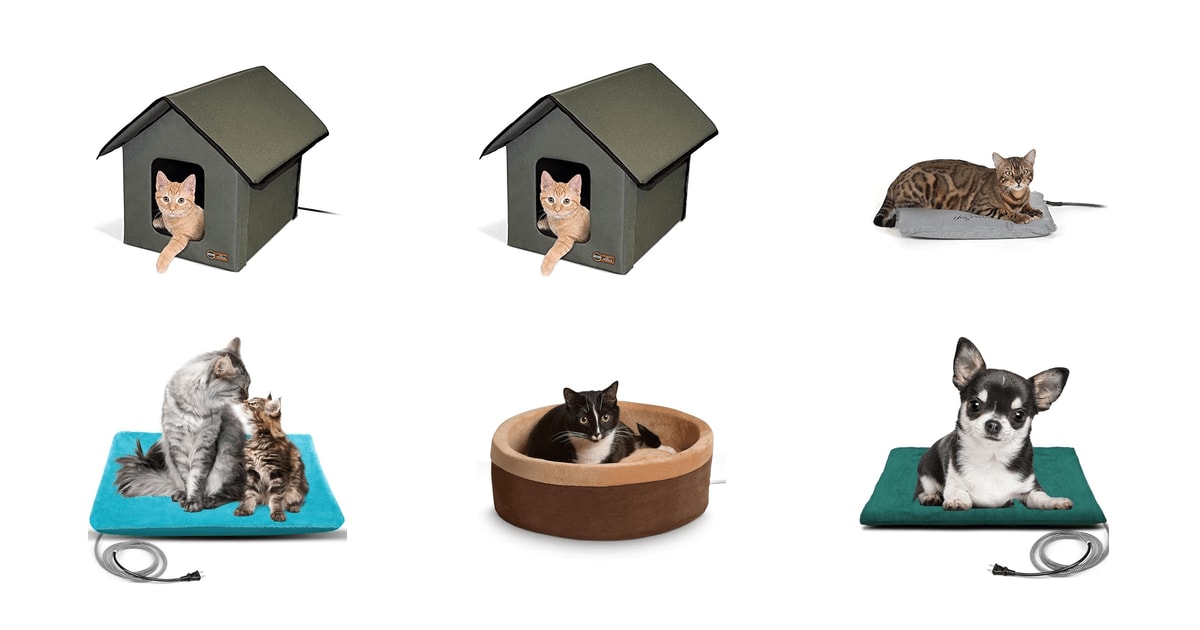
When the temperature drops below freezing, an outdoor cat's night gets genuinely dangerous. Veterinary guidance puts hypothermia risk on the table once ambient temperatures fall under about 45°F, and lean barn cats and community cats have the least body fat to spare. A heated bed changes the math. It gives a cat a warm surface to curl on, and in an insulated shelter it can hold interior temperatures well above the outside air. If you feed cats you don't bring inside, this is the single most useful thing you can add to a feeding station.
Here's the honest part: nothing in this category is a furnace. These pads warm to roughly a cat's body temperature, not to a room-heating level, and the good ones only warm up when a cat is actually lying on them. That trips people up constantly — owners plug a pad in, touch it, feel almost nothing, and assume it's broken. It usually isn't. And no open pad, at any wattage, holds heat well in wind. Without walls around it, most of that warmth goes straight into the air.
The other catch is adoption. Cats decide on their own schedule whether a new shelter is safe, and owners report waits ranging from a couple of days to several months before a wary feral moves in. We think that the K&H Heated Outdoor Cat House is the best heated cat bed for outdoor winter use for most people, and that the PETNF Outdoor Heated Pet Bed is the one to buy if you're warming several stations and want to supply your own shelter.
Everything we recommend

A warm floor and four walls, in one box

Steel-sleeved cord and real warmth, for a fraction of the cost

The pad to slide into a shelter you already own

A tiny heater for a cat that sleeps in the mudroom
At a glance
| Product | Wattage | Bed Size | Price | |
|---|---|---|---|---|
| K&H Pet Products Heated Outdoor Cat HouseTop pick | 20W | 19x22x17in | $89.98 |
 | K&H Pet Products Outdoor Cat House forAlso consider | — | 19x22x17in | $64.95 |
| K&H Pet Products Lectro-Soft Orthopedic Outdoor HeatedAlso great | 20W | 14x18in | $52.98 |
 | PETNF Outdoor Pet Heating Pad - WaterproofAlso consider | — | 28x16in | $59.99 |
| K&H Pet Products Thermo-Kitty Bed Heated CatAlso great | 4W | 20in Round | $70.98 |
| PETNF Outdoor Heated Pet Bed with WaterproofBudget pick | 30W | 19.7x11.8in | $38.99 |
How we picked
Safety certification. We treated MET Listed or UL certification as a hard requirement, since these products stay plugged in outdoors and unattended for months. Every product we considered documents a recognized certification for its heating element.
Thermostat behavior. We compared spec sheets to separate pet-activated heaters from always-on designs, because that difference drives both running cost and overheating risk. Owner feedback also told us which pads run hotter or cooler than their listed range.
Cord protection. We looked for a factory steel sleeve on the cord, since chewing is the most commonly reported electrical hazard in feral and barn settings. Owners of the pads that have one bring it up unprompted.
Enclosure and weatherproofing. We favored designs with waterproof shells and, for exposed placements, real walls, because published shelter guidance and owner reports agree that open pads lose most of their heat to wind.
Cleaning and size. We checked whether covers come off for machine washing and whether interior dimensions actually fit a large cat or two cats together, using listing measurements and owner photos described in reviews.
Top pick
A warm floor and four walls, in one box
K&H Pet Products Heated Outdoor Cat House
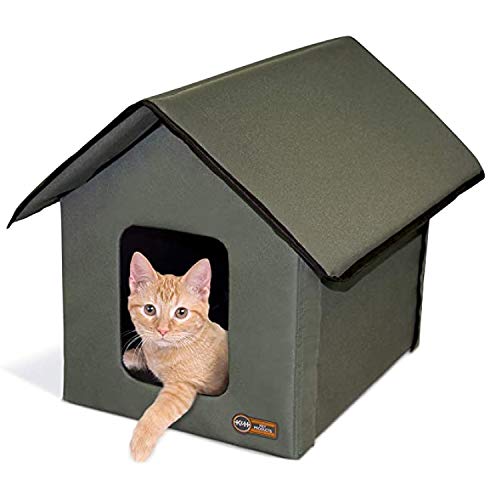
This is a full insulated shelter with a 20-watt Safety Listed heated pad already inside. Two exits mean a bossy cat can't corner a timid one, and the weather-resistant shell shrugs off the rain and snow that ruin an open pad.
$89.98fromAmazonWalls are what make the heat count. An open pad bleeds warmth into moving air. This house solves that by wrapping the heater in an insulated, weather-resistant shell, so the warm floor actually stays warm around the cat. K&H rates the included 20-watt pad to keep cats warm even in sub-zero conditions, which is the strongest cold claim in this lineup. Owners in genuinely harsh winters report cats staying dry and using the house through rain, snow and ice.
The two 6" x 8" doorways matter more than they sound. With one entrance, a dominant cat can park in it and trap a smaller cat inside — a real problem in colonies, and a real injury risk. Two openings give every cat a way out. Each has a removable clear flap that blocks wind while still letting cats see through. If your cats are new to shelters, you can pull the flaps for the first week and add them once the house is being used.
At 19" x 22" x 17", it fits one big cat comfortably or two average ones curled together. That's not just a space note. Cats sharing a shelter warm it substantially above the outside air with body heat alone, which takes load off the pad. Some owners report far more than two cats piling in on the coldest nights.
The pad behaves in a way that worries first-time buyers. It emits only a trace of heat when nobody's on it, then warms fully under a cat. Touch it on an empty morning and you'll swear it's dead. Owners who check it right after a cat leaves consistently describe it as noticeably hot, which is the system working as designed.
Flaws but not dealbreakers
The insulation is thinner than the marketing implies. Several owners in cold regions describe the walls as canvas over a rigid board — good at blocking wind and water, not a thick thermal layer. In deep cold you're relying mostly on the pad and the cat's own heat, so plan on elevating the house off cold concrete or soil and putting its back to the wind.
The cord doesn't have a steel chew guard, which is worth knowing if you're placing this in a feral or barn setting where cats gnaw at things. Route it out of easy reach. And this is the most expensive option here by a wide margin, so outfitting five stations with it gets painful fast.
One more thing owners flag: a warm, dark, enclosed box outdoors is attractive to more than cats. A few report finding insects nesting in it. Pull the pad and air the house out periodically rather than leaving it sealed all season.
K&H does not state a warranty term in the listing information available to us.
Budget pick
Steel-sleeved cord and real warmth, for a fraction of the cost
PETNF Outdoor Heated Pet Bed with Waterproof
This pad costs a small share of what the enclosed house does, so you can warm several feeding stations for the price of one. The steel-encased chew guard on the cord is unusual protection at this level, and it's the reason we'd trust it around ferals.
$38.99fromAmazonIf you're managing more than one or two stations, this is the practical answer. Drop it into a tote shelter or an existing cat house and you have a warm floor for a fraction of what an enclosed unit costs. TNR volunteers report exactly this setup working through long, brutal winters, with cats pushing the straw aside so they can lie directly on the mat.
The cord protection is the real reason to pick it. Nearly five feet of the cord is wrapped in a steel chew guard. Cats that don't trust people chew on things, and a chewed cord outdoors is the failure that starts fires. Even owners who otherwise complained about this pad singled out the cord sleeve as excellent. Most pads in this range give you nothing.
The surface is nicer than the price suggests — soft crystal velvet over thick insulating cotton, with a washable flannel-and-velvet cover included. That texture matters for adoption. A wary cat that finds a soft, warm spot settles in faster than one facing a slick plastic mat. The pad is rated IP67 waterproof, so a splash or blown snow isn't a problem.
It runs on an auto thermal system aimed at roughly 100–108°F, with no controller and no switch. Plug it in and it works. There's no calibration to get wrong and nothing for weather to break.
Flaws but not dealbreakers
It runs whether or not a cat is on it, so it costs more to operate than the pet-activated K&H pads. Across a winter and several stations that adds up, though it's still modest.
Owner reports on heat output split in two directions, which is the clearest warning sign here. Some say the pad barely warms up out of the box; at least one measured it running far hotter than advertised and pulled it from a nest box. Check yours indoors before you commit it to a shelter, and put a folded towel between the pad and the cat if it feels too warm.
It's a bare pad. Left in the open, wind takes most of the benefit with it, so budget for a tote or house to put it in.
Also great
The pad to slide into a shelter you already own
K&H Pet Products Lectro-Soft Orthopedic Outdoor Heated
This one heats only when a cat lies on it, so it costs almost nothing to run and won't cook an empty bed. The orthopedic foam base and steel-wrapped cord make it the pad we'd put in a barn or an insulated tote for an older cat.
$52.98fromAmazonThis is the upgrade pad for a shelter you already have. It's flexible, waterproof, and thin enough to lie flat inside a cat house, a tote or a wooden box. Owners describe using it exactly that way — pads tucked into insulated totes on decks and porches for cats that won't come indoors. If you own the unheated K&H house, this is the piece that completes it.
The thermostat is the difference between this and a plain mat. It warms the surface toward your cat's body temperature only while the cat is on it. So it costs very little to run, and there's no hot empty bed sitting out in a barn all night. One owner describes a well-insulated box holding 57°F inside while it was 34°F out.
The orthopedic foam base is a genuine reason to choose this for an older cat. Cats with stiff joints seek out warmth and press into it, and firm foam spreads that pressure better than a thin mat over concrete. The included fleece cover comes off and goes in the wash, which you'll want after a season of mud and shed fur.
It's MET Labs certified as a complete product, not just assembled from listed parts, and the cord is steel-wrapped for about five and a half feet. For something that stays plugged in unattended in a barn all winter, that's the specification that should decide the purchase.
Flaws but not dealbreakers
The small size is 18" x 14", which is snug for a big cat and too small for two. Owners who bought one for a specific cat report a second cat claiming it instead — if you have more than one, size up or buy a second.
K&H says outright it's not for pets that chew, and the pad body isn't armored the way the cord is. In a colony where a cat has already destroyed something, favor the enclosed house.
Left out in the open it loses most of its advantage. Treat it as a component of a shelter, not a shelter.
K&H does not state a warranty term in the listing information available to us.
Also great
A tiny heater for a cat that sleeps in the mudroom
K&H Pet Products Thermo-Kitty Bed Heated Cat
The 4-watt pet-activated heater sips power and warms only when your cat settles in. Six-inch foam walls make a cocoon that anxious and arthritic cats gravitate toward, and the whole cover goes in the washing machine.
$70.98fromAmazonPlenty of "outdoor" cats aren't really outdoors. They come and go through a cat door and sleep in a mudroom, a garage, or a screened porch — cold, but out of the wind and rain. That's this bed's job, and it's very good at it. Owners repeatedly describe cats claiming it within minutes and refusing to leave it all winter.
The 4-watt heater costs almost nothing to run. It's the lowest-draw option here by a wide margin, and it only kicks in when your cat is in the bed. Leave it plugged in from November through March and you'll barely notice it on a bill. The heater also pulls out, so the same bed works in July.
The 6-inch foam walls do more than look cozy. They cut drafts at cat level and give a nervous cat sides to press against. Owners of senior and arthritic cats mention them seeking this bed out specifically, and several people describe buying more of them years after the first.
Washability is the quiet advantage. Pull the heater, run the whole cover through a cycle, and put it back. Most outdoor pads in this category only let you wipe them down, and a bed that lives near a cat door gets dirty fast.
Flaws but not dealbreakers
Four watts won't carry a cat through a hard, exposed night. This is a bed for protected spaces, not a shelter for a cat sleeping in the open when it's in the single digits. If that's your situation, buy the heated house instead.
It also isn't built for direct rain or snow. Keep it under a real roof.
The 20" round shape suits cats that curl. A large cat that likes to stretch out full length will hang over the wall, and two cats sharing it is a squeeze — though owners report them doing it anyway.
K&H does not state a warranty term in the listing information available to us.
Who this is for
This guide is for anyone responsible for a cat that sleeps outside in winter: colony caretakers, barn cat owners, and people whose indoor-outdoor cat has decided the porch is home. It's also for you if your cat is old or arthritic and seeks out warm spots. If your cat sleeps indoors in a heated house, you don't need any of this — a plain bed near a radiator does the same job for free.
We cover heated shelters and outdoor-rated heating pads only. We don't cover unheated shelters as a primary recommendation, indoor-only heated beds, self-warming reflective mats with no electrical element, or microwavable heat discs. And nothing here replaces bringing a sick, very young or very old cat inside when the weather turns severe.
How we picked
We started from what actually goes wrong with these products outdoors. Safety certification: MET Listed or UL certification was a hard filter, because these things run unattended for months in the rain. Thermostat behavior: pet-activated heaters cost less to run and can't cook an empty bed, so we noted which designs warm only under a cat and which hold a preset temperature. Cord protection: a steel chew sleeve matters enormously if ferals are involved, and we gave weight to the products that include one. Enclosure: open pads lose most of their heat to wind, so anything meant for exposed placement needed real insulated walls and a waterproof shell. Fit and cleaning: interior space had to suit a large cat or two average ones, and covers had to come off for a wash, because outdoor bedding gets filthy.
Other heated cat beds for outdoor winter use worth considering
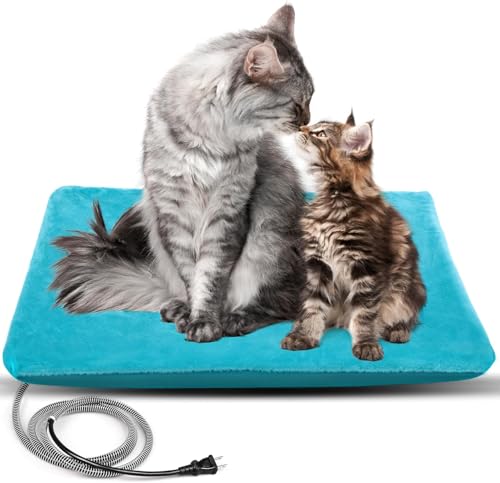
If you want the largest pad and the strictest safety build: The PETNF Outdoor Pet Heating Pad - Waterproof ($59.99) — This PETNF pad is the biggest surface here at 28" x 16", roomy enough for a large cat, two smaller cats, or a small dog sharing the space. The construction is the selling point: seven protective layers around UL-certified heating wire, a V-0 flame retardant rating, and an overheat sensor as a hardware backstop. Owners describe it as warm without getting too hot, and note it holds up in real cat shelters. What you give up is the thermostatic savings of the K&H pads — it holds a preset range whether or not a cat is on it, so it draws more power over a season — and it costs more than our budget pick while still needing a shelter around it. If fire safety is the thing keeping you up at night, this is the pad to buy.
If you already own a heating pad, or your winters are mild: The K&H Pet Products Outdoor Cat House for ($64.95) — This is our top pick minus the heater — the same weather-resistant insulated shell, the same two 6" x 8" exits with clear flaps, the same tool-free assembly, and a removable floor pad that cushions but doesn't warm. Buy it if you live somewhere that rarely drops below freezing, or if you want to pair a K&H shelter with a pad you choose yourself. Owners report cats piling in well past the two-cat rating and houses lasting years on a covered deck. The catch is the obvious one: it's cushioning, not heat. Below freezing it needs a pad inside, and at least one owner noted the house goes cold quickly once the cat leaves. Some caretakers also find it holds up better in a barn or garage than fully exposed to the weather.
The competition
This is what our research surfaced, not a census of the category. Heated outdoor pet products turn over quickly and plenty of listings never clear the safety bar we set, so treat this as the shortlist of certified options worth comparing rather than the whole market.
Setup and placement notes
Two free changes do more for warmth than any spec on the box. Get the shelter up off cold concrete or bare soil — a couple of bricks or scrap lumber under it stops heat draining into the ground. Then cover the entrance with a flap so wind isn't blowing straight through. Point the doorway away from prevailing wind and, if you can, tuck the shelter against a building wall on the sheltered side. Line it with straw, never hay, because hay holds moisture and molds. Keep the cord connection elevated and out of standing water. Expect patience: cats often need days to settle in, and wary ferals can take much longer. Putting bedding that already smells like them inside, and siting the shelter near an established feeding spot, speeds things up. Don't hover nearby while they decide.
Questions we get
How cold is too cold for an outdoor cat?
Veterinary guidance puts hypothermia onset at a core temperature below 100°F, against a normal range of about 101–102.5°F. Sustained exposure below roughly 45°F starts creating real risk, and lean feral cats without fat reserves get there faster than a well-fed house cat. The ASPCA recommends insulated, heated shelter once temperatures hit freezing, with short-haired and elderly cats flagged as most vulnerable.
Why doesn't my heated bed feel warm?
This is the most common complaint in the whole category, and it's usually not a fault. Pet-activated heaters like the K&H models emit only a trace of heat when the bed is empty and warm fully once a cat's weight and body heat trigger the sensor. Check it right after your cat gets up rather than on an empty bed. Always-on pads like the PETNF models should feel warm regardless, so if one of those stays cold, test it indoors and return it.
Can I leave one plugged in all winter without supervision?
Yes, provided it carries MET Listed or UL certification and has thermostatic control or an overheat sensor. Every product here is designed for continuous outdoor use with those protections in place. Never do it with an uncertified mat. Check the cord for chew damage every few weeks, especially at feral stations.
What wattage do I actually need?
For a draft-protected space like a mudroom or covered porch, 4 watts is plenty. For an exposed outdoor shelter in genuine cold, you want 20 watts. Going above about 25 watts adds running cost without much extra benefit in a cat-sized box. Enclosure matters more than wattage: 4 watts inside insulated walls beats 20 watts on an open pad in the wind.
How do I stop feral cats from chewing the cord?
Buy a product with a factory steel sleeve — the PETNF Outdoor Heated Pet Bed and the K&H Lectro-Soft both have one. If yours doesn't, run the exposed cord through flexible metal conduit and staple it to a wall or post so a cat can't drag it loose. Keep the plug connection elevated and out of reach.
Will feral cats actually use a heated shelter?
Most will, but on their own timeline. Some cats move in within a couple of days; owners also report waiting months for a suspicious cat to try one, and occasionally one never does. Put familiar-smelling bedding inside and place the shelter near a spot the cat already uses. Then stay away from it while the cat makes up its mind.
Why you should trust us
For this guide:
- We read the manufacturer specifications and safety certifications for every product here, comparing wattage, thermostat type, cord protection and stated cold-weather ratings side by side.
- We read through owner feedback for each listing, looking for repeated failure modes — pads that run cold or hot, insulation that underperforms, and how long cats took to accept a new shelter.
- We compared those findings against published shelter guidance from animal welfare organizations on entrance flaps, ground elevation, straw bedding and multi-exit designs for colonies.
- We read owner reviews on every listing, weighted toward the critical ones, because that is where the recurring failures show up.
- We have a systematic way of automatically fetching the latest prices, so the numbers on this page stay current.
- This is a research-focused guide, so the team may not own every product listed — though we often do own the top winners, which gives us extra context for the recommendations.
- We don't accept free products, and the retailer commission never changes which product we recommend.
Sources
Best Heated Cat Beds (2026) — The Spruce Pets, The Spruce Pets
Winter Care for Outdoor Cats — Alley Cat Allies, Alley Cat Allies
Cold Weather Safety Tips for Pets — ASPCA, ASPCA
Hypothermia in Cats — VCA Animal Hospitals, VCA Animal Hospitals
Caring for Outdoor Cat Colonies in Winter — Best Friends Animal Society, Best Friends Animal Society
Amazon product listings and owner reviews for all 6 products
Manufacturer specification pages for each product
Some passages in this guide may be paraphrased with AI help. Prices are refreshed automatically.
More like this.
Continue exploring pet reviews and recommendations.

The Best Heated Pet Beds
Pets lose heat faster than we do, and the ones who feel it most usually can't tell you. Senior dogs with stiff hips. Short-haired cats who spend all…

The Best Heated Water Bowls for Outdoor Pets
When the temperature drops below freezing, an ordinary water bowl turns into a hockey puck in a couple of hours. A heated bowl fixes that with a…

The Best Winter Car Accessories for Snow and Ice Removal
Winter mornings punish the unprepared. You walk out to a windshield glazed in a quarter inch of ice, and whatever you grab from the trunk decides whether…

The Best Boot Trays for a Winter Entryway
A boot tray does one job, and it does it at the exact spot where winter gets into your house. Wet boots come off at the door, the snow melts, and the salt…

The Best Chicken Coop Heaters and Heated Waterers
Winter in a backyard coop isn't really about temperature. It's about water. A laying hen drinks close to a pint a day, and when her waterer turns into a…

The Best Squirrel-Proof Bird Feeders
Squirrels aren't casual about this. A gray squirrel can jump roughly ten feet sideways, walk down a metal pole head first, and empty a tube feeder in an…