The Best Heated Water Bowls for Outdoor Pets
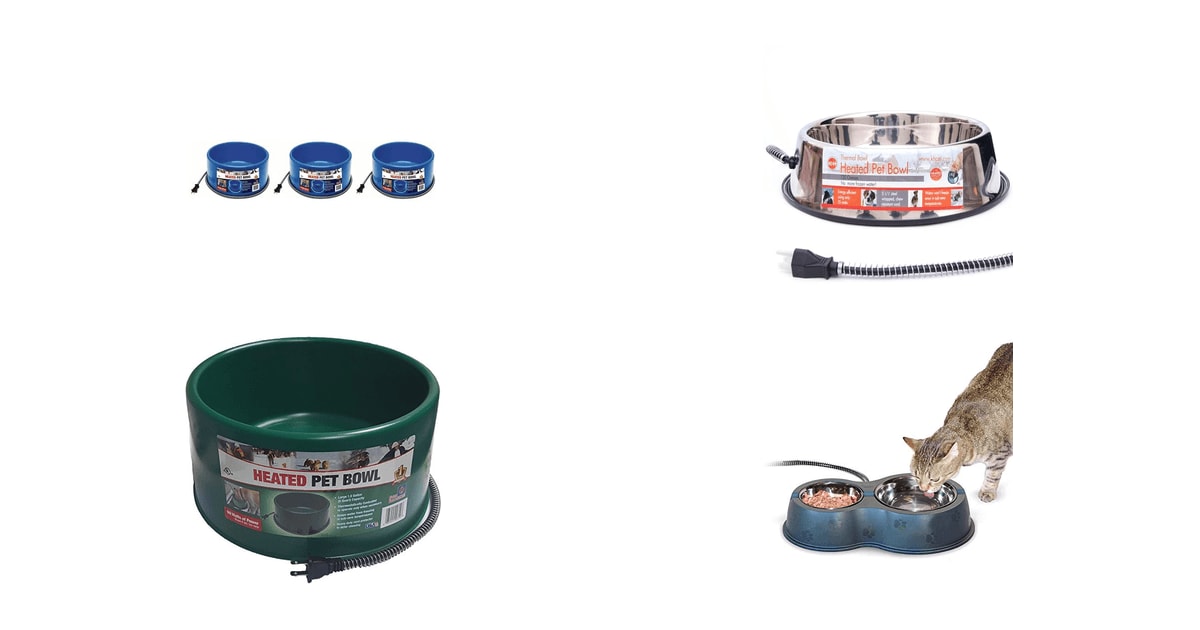
When the temperature drops below freezing, an ordinary water bowl turns into a hockey puck in a couple of hours. A heated bowl fixes that with a thermostat and a low-wattage element buried in the base. It doesn't warm the water. It just keeps it liquid, cycling on when the water gets close to freezing and staying off the rest of the time. If you keep a dog in a kennel run, feed barn cats, or leave water on the porch for a colony, that's the difference between a chore every two hours and a bowl you top off once a day.
No heated bowl is a set-and-forget appliance. These are simple electric heaters sitting outdoors in wet weather, and they fail — sometimes in the second or third winter, sometimes in the first. Owners across every brand here report the same thing: a bowl that worked one winter won't heat the next, and there's nothing inside to fix. You'll also be running a cord outside, which means a covered outlet, a plan for chewers, and a bowl that isn't sitting in a puddle.
The good news is that this is a simple category. There are basically two designs — a big plastic dish with an element in the base, and a stainless bowl with sealed electronics — and both work the same way. What separates them is capacity, how easy the bowl is to clean, and whether the cord survives a dog. We think that the Farm Innovators 60-Watt Heated Pet Water Bowl is the best heated water bowl for outdoor pets for most people, and that the K&H Thermal Bowl is the one to buy if your dog has already destroyed a plastic one.
Everything we recommend

A gallon and a half of thawed water, in plain plastic

Stainless and easy to clean, with a spottier track record

Two small bowls for cats, with food that won't freeze either
At a glance
| Product | Capacity | Wattage | Price | |
|---|---|---|---|---|
 | Farm Innovators 60 Watt Premium Plastic HeatedAlso in lineup | 1.5 Gallon | 60 Watt | $79.51On sale |
| Thermal Bowl Heated Pet BowlRunner-up | 120 oz | — | $50.22 |
| Farm Innovators Heated Dog Cat Goat PetTop pick | 1.5 Gallon | 60 Watt | $39.95 |
| K&H Pet Products Thermo-Kitty Café Stainless/Black 12Also great | 12oz + 24oz | 30 Watt | $53.99 |
How we picked
Stays liquid. We leaned on owner feedback about hard freezes rather than the wattage printed on the box, because a bowl that stalls at 25 degrees is useless. Any listing with a pattern of frozen-water reports got a much harder look.
Cord and chew protection. Spec sheets tell you which bowls use a rigid chew guard and which use wrapped sleeving. Outdoors the cord is the most common point of failure, so we treated it as a primary spec rather than a footnote.
Capacity for the animal. We compared stated volumes against how often owners say they're refilling. A gallon and a half covers multiple dogs or a colony; twelve ounces is a cat station and nothing more.
Cleaning and refilling. Removable, dishwasher-safe dishes beat molded plastic you have to unplug and carry to a sink. Owner reports about algae and raccoon-fouled water made that trade-off obvious.
Electrical safety. We favored products whose spec sheets list independent lab certification. These are heaters sitting in water outdoors, so third-party testing isn't a nicety.
Top pick
A gallon and a half of thawed water, in plain plastic
Farm Innovators Heated Dog Cat Goat Pet
This 60-watt bowl holds a gallon and a half, which is enough for two big dogs or a yard full of barn cats, and the thermostat only kicks on when the water gets cold. The plastic looks basic, but the anti-chew cord sleeve and the heavy base are the parts that matter outdoors.
$39.95fromAmazonCapacity is the whole point of this bowl. A gallon and a half means you aren't walking out with a pitcher twice a day. Owners with two huskies, farm dogs, or a rotating cast of feral cats say they fill it and leave it. The wide, shallow shape helps too. A deep bucket skins over at the rim first, but this one heats a broad surface all at once.
The cord is the part people underestimate. Every heated bowl lives or dies by it, and this one runs through a rigid anti-chew protector that a bored dog can't get a molar around. When the weather warms up, the cord wraps and tucks under the base, so the bowl stores flat in a shed instead of tangling with the rest of your yard gear.
The thermostat does the right thing, which is mostly nothing. It reads the water and runs the element only as the temperature approaches freezing. On a mild day the bowl sits idle. That matters if you're on an outdoor circuit that's already carrying a heat lamp, and it's why owners leave these plugged in from first frost to spring thaw without thinking about them.
It's also the bowl people keep buying again. Farm Innovators has sold this shape for years, it's made in the USA, and the owner feedback skews heavily toward the boring outcome you want: it sits still, it doesn't tip, the water stays liquid. That's a lower bar than it sounds. Plenty of heated bowls can't clear it.
Flaws but not dealbreakers
The heaters die. A steady minority of owners describe a bowl that worked through one winter and then wouldn't heat the next, and a few report one quitting partway through its first season. Nothing inside is user-serviceable, so when the element goes, the bowl is trash. Buy it expecting a few good winters rather than a decade.
It's plastic, and it looks it. You can't run it through the dishwasher, slime builds up in the bottom in milder weather, and the surface scratches enough to hold grime. A scrub brush every week or two is part of the deal.
Runner-up
Stainless and easy to clean, with a spottier track record
Thermal Bowl Heated Pet Bowl
K&H's stainless bowl holds 120 ounces, wipes clean in seconds, and puts its electronics inside a sealed base with an abrasion-resistant cord. Get it if plastic hasn't survived your dog, though the owner reports on reliability are more mixed than we'd like to see.
$50.22fromAmazonStainless is the real upgrade here. Plastic holds onto slobber film and algae; steel doesn't, and you can take a scouring pad to it without wrecking the finish. The dish is a wide 13 inches across and about three and a half inches deep, so a big dog can drink without shoving it around, and it weighs enough to stay put on a windy porch.
The electronics are sealed inside the bowl rather than bolted underneath it. That's the design detail that keeps a heated bowl alive outdoors. Water that sloshes over the side runs down the outside instead of finding a seam. The cord is wrapped in abrasion-resistant sleeving and runs about five and a half feet, and the unit is tested and certified by an independent lab to exceed US and Canadian electrical safety standards.
It's smaller than it sounds. 120 ounces is a bit under a gallon, so if you're watering several dogs or a cat colony, you'll refill this more often than the Farm Innovators bowl. For one dog on a covered patio that's a non-issue, since you're rinsing and refilling once a day anyway.
Flaws but not dealbreakers
Reliability is the question mark. The owner feedback on this bowl is thin, and a real chunk of it describes units that showed up broken or left water frozen solid on a night that wasn't even especially cold. That's a rough failure mode, because you find out at six in the morning when your dog has nothing to drink. Plug it in and watch it on the first hard freeze instead of assuming.
The cord has abrasion-resistant sleeving, but it isn't the rigid chew-stopper sleeve you get on the Farm Innovators bowls. Owners with rough dogs report it holding up without a scratch, so it's clearly tough. Still, if you've already lost a cord to a puppy, run this one through conduit.
Also great
Two small bowls for cats, with food that won't freeze either
K&H Pet Products Thermo-Kitty Café Stainless/Black 12
This is a heated double station for cats: a 12-ounce bowl for water, a 24-ounce bowl for food, both stainless and both dishwasher safe. At 30 watts it draws about half what the big dog bowls here do, and the lift-out dishes make daily cleanup painless.
$53.99fromAmazonIf you feed cats outside, food freezes before water does. Wet food turns into a brick within an hour on a cold night, and a cat that shows up at midnight finds nothing it can eat. This is the only bowl here that handles both at once, which is why it's the default for people running a feral colony or looking after a porch cat.
The removable stainless dishes are the reason to choose this over a one-piece bowl. Older heated bowls make you unplug the whole thing and haul it to a sink. These lift right out. You dump them, run them through the dishwasher, and drop them back into the heated base. If raccoons visit your porch and foul the water — and they will — that's a two-minute job rather than a project.
Owners in genuinely brutal places report the water staying liquid winter after winter, through blizzards and well below zero. The base is thermostatically controlled at 30 watts, so it cycles instead of running flat out, and the sealed casing and wrapped cord are the same construction K&H uses on its bigger bowls. K&H does recommend tucking it into a sheltered spot.
The capacity tells you exactly who this is for. Twelve ounces of water disappears fast if more than a couple of animals drink from it, and a large dog would empty it in one go and then step on it. Treat it as a cat station or a small-dog station. If you need volume, one of the gallon-and-a-half bowls is the better choice.
Flaws but not dealbreakers
The food side runs warm, and that cuts both ways. Owners report wet food left overnight getting cooked down and dried at the edges. Others in very cold places wish it ran warmer still, because food can crust over on top even while the water stays perfectly fine. Put out what your cats will actually finish, and scrape the dish in the morning.
It wants shelter. K&H says to keep it out of wind, snow and rain, and that isn't boilerplate — an exposed unit in a driving storm is fighting the weather with 30 watts. A covered porch, a lean-to, or an outdoor cat house makes the difference.
Who this is for
Buy one of these if an animal spends hours outside in freezing weather — a dog in a kennel run, barn cats, a feral colony, goats or poultry sharing a yard. If your pets come in at night and drink from a bowl in the kitchen, you don't need one. And a heated bowl isn't a substitute for shelter. It keeps water drinkable, and that's all it does.
We're covering plug-in bowls here, so you'll need a working outdoor outlet within a few feet, ideally GFCI-protected and under cover. We're not covering heated buckets that hang on a fence, submersible stock tank heaters, or insulated bowls with no element at all. If you're watering horses or filling a hundred-gallon trough, you want a tank heater instead.
How we picked
Freeze performance: the bowl has to keep water liquid on the coldest night of the year, and owner reports of ice are disqualifying. Cord protection: rigid chew guards and abrasion-resistant sleeving matter more outdoors than anything else on the spec sheet. Capacity: we matched stated volume to real refill habits, from a twelve-ounce cat dish up to a gallon and a half for multiple dogs. Cleaning: removable, dishwasher-safe stainless beats molded plastic you have to unplug and carry inside. Safety: we favored bowls with independent lab certification, because these are heaters sitting in water in the weather.
The competition
This is a small category, and what follows is what our research surfaced rather than a survey of everything on the market. Heated bowls turn up under a dozen private labels, and a lot of them are the same molded plastic dish with a different sticker on the bottom.
The Farm Innovators 60 Watt Premium Plastic Heated ($79.51) — The Farm Innovators 60-Watt Premium Heated Pet Water Bowl three-pack is our top pick sold in triplicate — the same 1.5-gallon plastic dish, the same thermostat, the same chew-stopper cord sleeve, just three of them in blue. If you're watering a kennel, a barn and a porch, buying them together is simpler than ordering one at a time, and a spare on the shelf is a genuine hedge against the failure rate these bowls have. For one dog and one feeding station, though, you'd end up with two bowls you don't need, and there's no owner feedback on this particular listing to confirm the multi-pack arrives in the same shape the single does.
Care and cold-weather setup
Run the cord to a covered, GFCI-protected outlet, and skip indoor extension cords entirely. If you need reach, use an outdoor-rated cord and keep the connection off the ground and out of standing water. Set the bowl on something flat — a paver or a scrap of plywood beats dirt that turns to mud. Check that the water is liquid on the first hard freeze rather than assuming, because these fail quietly between seasons. Scrub the bowl weekly; algae grows faster in a heated bowl than a cold one, even in winter. When the weather warms, unplug it, dry it completely, wrap the cord and store it indoors. Leaving one out through the summer shortens its life.
Questions we get
Do heated water bowls use a lot of electricity?
Not much. These run between 30 and 60 watts, and the thermostat means they only draw power as the water approaches freezing. On a mild day the element may barely come on at all. Over a full winter they use far less than a heat lamp or a stock tank heater.
Will the water actually be warm?
No, and it shouldn't be. A heated bowl is designed to hold water just above freezing, not to heat it. If you dip a hand in on a cold day, it'll feel cold. That's normal, and it's exactly why the power draw stays low.
What if my dog chews the cord?
No cord is chew-proof, but some are far better than others. The Farm Innovators bowls use a rigid chew-stopper sleeve, while the K&H bowls use abrasion-resistant wrapping. If you have a determined chewer, run the cord through PVC or metal flex conduit and plug into a GFCI outlet. That's what owners of persistent chewers generally end up doing.
Can I leave it plugged in all winter?
Yes — that's how they're meant to work. The thermostat cycles the element on and off by itself, so there's no reason to unplug between cold snaps. Do unplug and store it once the freezing weather ends, though. Sitting outside through sun and rain is what kills a lot of these.
Can I use one for goats or chickens?
Yes, within reason. The 1.5-gallon bowls are commonly used for goats, farm dogs and poultry, and Farm Innovators lists those animals on the bowl itself. Keep the cord well out of reach of beaks and hooves. Make sure the bowl is heavy enough, or anchored, so it doesn't get tipped and emptied.
How long should one of these last?
Plan on a few winters, not a decade. Across every brand here, the most common owner complaint is a bowl that heats one season and then doesn't the next, with no way to repair it. Storing it dry in the off-season helps. If an animal depends on it, keeping a spare on hand isn't a bad idea.
Why you should trust us
For this guide:
- We read the manufacturer specifications and listing details for every heated bowl here, comparing wattage, capacity, cord construction and safety certification.
- We went through owner feedback across all four listings, paying particular attention to reports of heaters failing between winters and of water freezing despite the element running.
- We compared these bowls against the wider category of heated buckets and stock tank heaters to work out what this guide should and shouldn't cover.
- We read owner reviews on every listing, weighted toward the critical ones, because that is where the recurring failures show up.
- We have a systematic way of automatically fetching the latest prices, so the numbers on this page stay current.
- This is a research-focused guide, so the team may not own every product listed — though we often do own the top winners, which gives us extra context for the recommendations.
- We don't accept free products, and the retailer commission never changes which product we recommend.
Sources
Cold Weather Safety Tips for Pet Owners — ASPCA, ASPCA
Keeping Dogs Hydrated in Winter — American Kennel Club, American Kennel Club
Cold Weather Pet Tips — American Veterinary Medical Association, AVMA
Feral and Community Cat Cold-Weather Resources — Alley Cat Allies, Alley Cat Allies
K&H Pet Products Heated Outdoor Bowl Product Line, K&H Pet Products
Farm Innovators Heated Pet Products, Farm Innovators
Residential Electricity Prices — U.S. Energy Information Administration, U.S. Energy Information Administration
Best Heated Pet Bowls Review — The Spruce Pets, The Spruce Pets
NSF International Household Germ Study — Pet Bowls Ranking, NSF International
Best Heated Dog Bowls — PetMD, PetMD
Amazon product listings and owner reviews for all 4 products
Manufacturer specification pages for each product
Some passages in this guide may be paraphrased with AI help. Prices are refreshed automatically.
More like this.
Continue exploring pet reviews and recommendations.

The Best Heated Cat Beds for Outdoor Winter Use
When the temperature drops below freezing, an outdoor cat's night gets genuinely dangerous. Veterinary guidance puts hypothermia risk on the table once…

The Best Heated Pet Beds
Pets lose heat faster than we do, and the ones who feel it most usually can't tell you. Senior dogs with stiff hips. Short-haired cats who spend all…

The Best Pet Water Fountains
Most cats don't drink enough. They descend from desert animals, and they're wired to treat still water as suspect, which is why yours will walk past a…

The Best Slow Feeder Dog Bowls
If your dog inhales a meal in twenty seconds, you already know the sound: a frantic clatter, then silence, then maybe a puddle on the rug. Fast eating…

The Best Elevated Dog Bowls and Feeding Stations
Feeding a dog is a floor-level job, and for plenty of dogs that's fine. But if your dog is tall, stiff in the shoulders, or simply old, dropping the head…

The Best Stainless Steel Mixing Bowl Sets
A mixing bowl is the thing you grab before you've decided what you're making. You crack eggs in it, toss a salad in it, let dough rise in it, then wash it…