The Best Indoor and Countertop Composters
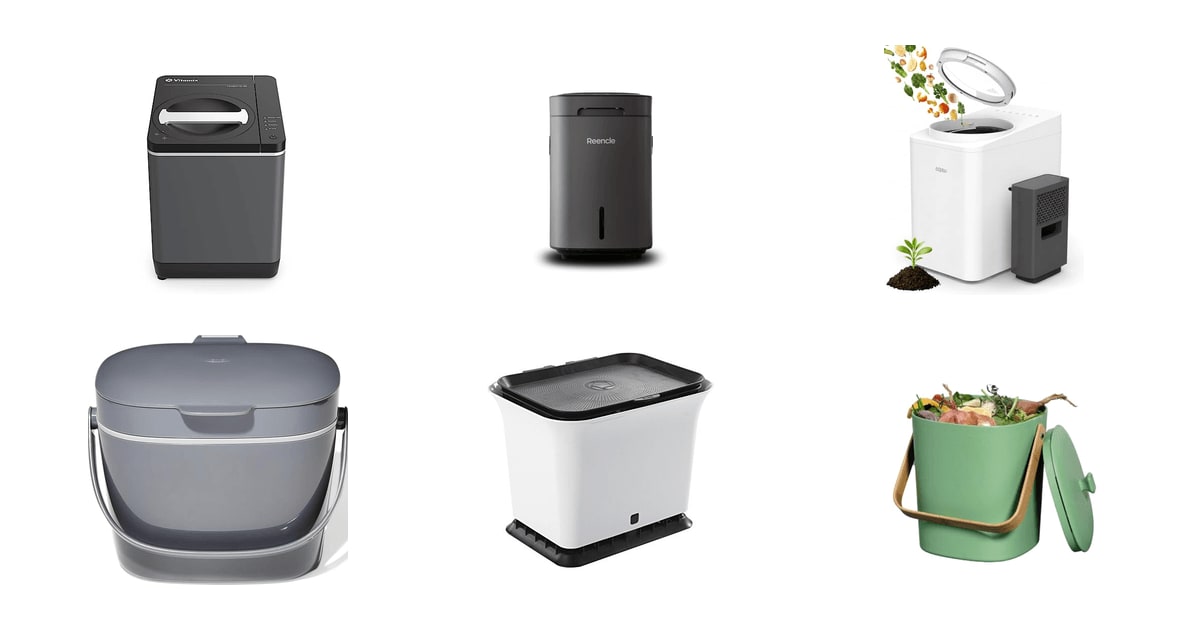
A kitchen composter solves a small, daily annoyance: the coffee grounds, onion skins and half-eaten banana that sit in your trash can getting riper by the hour. If you have a yard and a pile, you already have a system. If you live in an apartment, or your city runs a scrap-collection program, or you just don't want to walk out in the rain in February, an indoor composter gives those scraps somewhere to go. Some of these machines dry and grind waste in a few hours. Others are buckets that hold it until you can move it along.
Here's the honest part. No countertop appliance makes finished garden compost, no matter what the box says. Electric units dehydrate and grind your scraps into a dry, granular material that still needs weeks in soil or a pile before plants can really use it. Consumer Reports warns that this output should stay at 10–20% of soil by volume, since more risks nitrogen burn on roots. Passive bins don't compost at all — they're collection vessels. Odor is the most common complaint owners raise, and filters need swapping every couple of months.
The waste itself is worth diverting. The EPA estimates food scraps and yard waste make up more than 30% of what goes into U.S. landfills, roughly 80 million tons a year. We think that the Reencle Prime is the best indoor composter for most people, and that the Vitamix FC-50 is the one to buy if you'd rather run a fast batch cycle than keep a live microbe colony going on your floor.
Everything we recommend

Always on, always ready — no waiting for a cycle to finish

A fast, simple batch cycle from a name you already trust

A well-made bucket that gets scraps off the counter and out the door

The only method here that takes meat, fish and dairy
At a glance
| Product | Capacity | Noise Level | Price | |
|---|---|---|---|---|
| Vitamix FC-50 - Convenient Home Food ProcessorRunner-up | 2.5L | Whisper-Quiet | $399.99 |
| Reencle Prime Electric Composter - 14L KitchenTop pick | 14L | 28 dB | $479 |
 | JollyOne Odorless Electric Kitchen Composter 4.5LAlso consider | 4.5L | ≤45dB | $218.49On sale |
| OXO Good Grips Easy-Clean Compost BinBudget pick | 1.75 Gal/6.62L | — | $24On sale |
 | Full Circle Fresh Air Odor-Free Kitchen CompostAlso consider | 1.5 Gallon | — | $29.99 |
 | Bamboozle Countertop Compost Bin KitchenAlso in lineup | 1 Gallon | — | $49.99 |
| All Seasons Indoor Composter Starter Kit -Also great | 5 Gal x2 | — | $129.95On sale |
How we picked
Processing method. We separated electric dehydrators, live-microbe units, bokashi fermentation and passive collection bins, because they solve different problems. A guide that ranks them on one scale misleads people, so we picked a best option in each lane.
Odor in real kitchens. Odor is the single most-cited complaint across owner feedback, especially for non-electric bins. We weighted sealing design, filter type and the volume of smell-related reports heavily, and we treated any unit with widespread odor complaints as disqualified for small apartments.
Capacity and throughput. We compared stated working volume and, for electric units, daily processing rate against what a household of four actually generates. Batch machines with small buckets and multi-hour cycles get frustrating fast for heavy cooks.
Honest output. We checked manufacturer claims against published lab findings and extension research on what these machines actually produce. Consumer Reports' 10–20% soil-blending guidance shaped how we describe every electric unit's output.
Running costs. Filters, bran, pods and electricity add up over years. We looked at published energy figures — CNET measured the FC-50 at 500 watts and roughly 0.5–1.0 kWh per cycle — and at how often consumables need replacing.
Top pick
Always on, always ready — no waiting for a cycle to finish
Reencle Prime Electric Composter - 14L Kitchen
The Reencle Prime runs continuously with a live microbe colony, so you can drop scraps in whenever you cook instead of waiting on a batch. It handles up to 2.2 pounds of food waste a day and stays quiet enough for an open-plan apartment.
$479fromAmazonThe continuous model is the real advantage here. Batch composters make you wait. You load them, start a cycle, and then your scraps pile up on the counter for the next four to sixteen hours. The Reencle is always running, so dinner prep goes straight in. Bob Vila's review panel found it processes up to 2.2 pounds a day without downtime, the fastest throughput in the group they looked at. For a household that cooks most nights, that difference shows up daily.
It works differently from the dehydrators, too. Instead of heating and grinding scraps dry, the Reencle keeps a colony of microbes alive in a warm, aerated chamber and lets them break the food down. The output is closer to actual compost than the dried grounds a FoodCycler produces. It still wants time in soil before you plant into it, but you're starting further along.
Noise matters more than people expect from an appliance that never turns off. Reencle rates the unit at as low as 28 dB, and owners consistently describe it as quieter than they anticipated — quieter, several note, than electric composters they owned before. That's the difference between a machine you keep in the kitchen and one you exile to the garage.
The motion-sensor lid sounds like a gimmick and isn't. Your hands are usually full of wet scraps when you need it open. The unit ships with a carbon filter, a microbe starter pack and a shovel, so there's nothing else to buy before you start. At about 18 inches tall and 20 pounds, it's floor furniture more than counter furniture — plan for that.
Flaws but not dealbreakers
It smells a little. Owners report a faint scent when the lid opens, and for some, a low-level smell all the time. That makes sense — living microbes digesting food produce a scent, and a carbon filter can only do so much. Most people find it mild and describe it as earthy rather than rotten. But if you're sensitive to smells, or your kitchen is one room, take the reports seriously.
You're maintaining a colony, not running an appliance. The microbes need feeding, they don't like sudden cold, and if you go away for two weeks the ecosystem suffers. It's also the largest and heaviest unit here, and the tall shape means it doesn't slide under an upper cabinet.
The capacity is fixed at 14 liters of working volume, and it can only digest so fast. Dump a whole Thanksgiving prep session in at once and you'll overwhelm it.
Runner-up
A fast, simple batch cycle from a name you already trust
Vitamix FC-50 - Convenient Home Food Processor
The Vitamix FC-50 dries and grinds a bucket of scraps into dry, granular soil amendment in a few hours, with a sealed carbon-filter lid that keeps the process quiet and largely smell-free. It's the low-maintenance choice for people who don't want to babysit microbes.
$399.99fromAmazonThis is the machine to get if you want an appliance, not a pet. There's a removable bucket, a lid and one button. You fill the bucket over a day or two, lock it in, press start, and come back to a fraction of the original volume in dry grounds. Nothing to feed, nothing to keep warm, nothing that dies if you travel. CNET confirms it runs at 500 watts and uses roughly 0.5–1.0 kWh per cycle — pennies at typical U.S. rates.
Odor control is where it beats the Reencle outright. Because the FC-50 works by drying rather than fermenting, there's no live culture producing a smell between cycles. The sealed carbon-filter lid handles what the process gives off. Owners routinely run it overnight and report nothing noticeable in the morning. If you've been nervous about putting a composter in a small apartment, this is the safer bet.
The portable bucket design is smarter than it sounds. You keep the bucket by your cutting board where scraps actually happen, then carry it to the base unit — which can live in a pantry or laundry room instead of eating counter space. Owners with limited counters call this out repeatedly.
One practical note: several owners bought it specifically as a winter solution. If you're in a cold climate where the outdoor pile is frozen half the year, the FC-50 handles kitchen scraps through the off-season and gives you dry material to fold into the pile come spring.
Flaws but not dealbreakers
The 2.5-liter bucket is small. A family that cooks from scratch will fill it in a day, and a cycle takes hours, so you'll either run it constantly or keep a second collection container going. Longer-term owners also flag real limits on what it handles — fibrous stuff, large pits and bones don't grind well, and stringy material can wrap the blade.
The output isn't compost. It's dried, ground food, and it needs curing before plants benefit. If you were expecting to scoop it straight into a pot, adjust your expectations. It's also one of the more expensive units here for what is, functionally, a dehydrator with a grinder.
Budget pickOn sale
A well-made bucket that gets scraps off the counter and out the door
OXO Good Grips Easy-Clean Compost Bin
The OXO Easy-Clean Compost Bin is a 1.75-gallon collection vessel with a lid that stays open when you need it and a smooth interior that rinses clean. It doesn't compost anything, and for a lot of people, it doesn't need to.
$24fromAmazonList priceMost people asking about indoor composters don't actually need an appliance. If your city collects scraps, or you have a pile in the yard, or you drop off at a farmers market, all you need is something to hold three days of coffee grounds without stinking or attracting flies. That's this. Wirecutter named it their top passive countertop pick after comparing six bins over six months, singling out the lid mechanism as the most functional one-handed opening in the group.
The lid design is the whole product. It stays open while you're chopping, so you're not tapping a foot pedal or setting down a wet knife to lift it. It closes soft. And it's removable, which matters when you're dumping a full bin or scrubbing it out. Small things, but they're the things that determine whether a bin gets used or shoved in a cabinet.
OXO built it to be cleaned, which is where cheap bins fail. The interior is smooth with no ridges to trap wet coffee grounds, and the whole thing comes apart. The design also tucks compostable bag edges inside so you're not looking at a plastic ruffle on your counter. Owners with years of use report it still looks fine.
At 1.75 gallons it's genuinely sized for a busy kitchen — enough for a few days for most households, small enough to sit beside the sink without dominating. The lid lets some air through by design, which cuts anaerobic smell and, per OXO, reduces pest problems.
Flaws but not dealbreakers
There's no charcoal filter, and some owners wish there were. The lid vents rather than seals, which trades a bit of odor containment for less swampy build-up inside. In practice, that means emptying every two or three days rather than letting it ride for a week — longer than that and you'll notice, especially in a warm kitchen.
It's a bucket. It won't reduce your waste volume, produce anything for your garden, or spare you the trip outside. If you have no outdoor access and no municipal program, this doesn't solve your problem.
Also greatOn sale
The only method here that takes meat, fish and dairy
All Seasons Indoor Composter Starter Kit -
The All Seasons bokashi kit ferments scraps with bran in two sealed 5-gallon buckets, which lets you compost the proteins and fats every other system rejects. You also get liquid fertilizer from the spigot as a byproduct.
$129.95fromAmazonList priceIf you want to compost meat, fish, bones and cheese, bokashi is your only real option. Electric dehydrators struggle with fats and bones, and passive bins turn foul fast with animal products. Bokashi doesn't rot the food — it pickles it. Inoculated bran drives an anaerobic fermentation that preserves the material while breaking it down chemically. University of Florida IFAS Extension research puts the resulting pH at roughly 3.5 to 4.0, acidic enough to keep putrefaction from starting.
The two-bucket setup is the point of buying the kit rather than a single bin. Fermentation takes about two weeks after a bucket is full, so with one bucket you'd be stuck. Here you fill the first, seal it to ferment, and start the second. Owners describe this rotation as the thing that makes bokashi practical rather than a hobby.
You get a bonus output most systems don't produce. The spigot drains off leachate — usually called compost tea — that you dilute and pour on plants. Owners who garden report getting a steady supply and rate it highly as a liquid feed. It also needs draining every few days, so it's a task, not a freebie.
The buried end-state is genuinely tidy. Fermented pre-compost goes into a trench, a planter or an outdoor pile, and the IFAS research indicates it integrates fully into surrounding soil within two to four weeks without odor. That's fast, and it happens without electricity, filters or a motor.
Flaws but not dealbreakers
The output isn't finished, and you need somewhere to bury it. That's the catch for apartment dwellers — bokashi pre-compost is acidic, smells strongly of pickles when you open the bucket, and can't go on a houseplant directly. Without a garden bed, a trench or a friend with a yard, you're stuck holding fermented food.
The seal is everything, and owners' experiences split on this. When the lid is tight, reports are consistently odor-free. When it isn't, or when someone under-applies bran, results turn bad quickly — a minority describe smells, mold and pests. This method rewards following instructions more than any other option here.
You'll keep buying bran. The kit includes 5 pounds, which goes faster than new users expect, and it's an ongoing cost with no substitute.
Who this is for
Buy one of these if food scraps are a daily nuisance and you don't have an easy way to deal with them. That's most apartment renters, anyone in a city with strict scrap-separation rules, gardeners who want free soil amendment, and households in cold climates where the outdoor pile freezes for months. If you cook most nights and have kids, the volume argument alone probably justifies an electric unit. If you already have a working outdoor pile ten steps from your back door, a simple collection bin is all you need.
This guide covers indoor and countertop systems only: electric processors, bokashi fermentation kits and passive collection bins. It doesn't cover outdoor tumblers, worm bins or municipal drop-off services. And we want to be clear about the limit of the whole category — no machine here produces garden-ready compost on its own. Electric units give you a dried amendment that needs weeks of curing, bokashi gives you pre-compost that needs burying, and passive bins give you a tidy way to carry scraps somewhere else. If you want finished compost with no outdoor step at all, that product doesn't exist yet.
How we picked
We built the shortlist around what actually determines whether one of these gets used or abandoned. Method: electric dehydration, live-microbe digestion, bokashi fermentation and passive collection do genuinely different jobs, so we chose a winner in each rather than forcing a single ranking. Odor: it's the most common owner complaint by a wide margin, so sealing, filter design and the pattern of smell reports carried the most weight. Capacity and speed: we checked stated volume and daily throughput against what a family of four generates, since a small bucket plus a long cycle means scraps on the counter. Output: we compared marketing claims to published lab findings and extension research, and treated "real compost" claims skeptically. Running cost: filters, bran and kilowatt-hours are forever, so we tracked replacement intervals and published energy figures.
Other indoor and countertop composters worth considering
If you want a bigger batch bucket than the Vitamix offers: The JollyOne Odorless Electric Kitchen Composter 4.5L ($218.49) — The JollyOne holds 4.5 liters — nearly double the FC-50's bucket — and its maker pitches it as a full day's scraps for four to six people. It runs five modes, including an auto cycle that adjusts between roughly four and eight hours, and a store mode that holds waste quietly for 12 or 24 hours before processing. Early owners describe it as quiet and effective, and it's rated at 45 dB or under. Two things give us pause: the review base is still thin, so long-term durability is unproven, and owners who've used premium units note the output comes out coarser than a Lomi or FoodCycler produces. If capacity matters more to you than a track record, it's worth a look.
If you want the smallest, lightest collection bin: The Full Circle Fresh Air Odor-Free Kitchen Compost ($29.99) — The Full Circle Fresh Air holds 1.5 gallons and weighs almost nothing, with a push-button lid and a vented design that lets air move through to cut odor and discourage fruit flies. It ships with five compostable bags, so you can start the day it arrives, and it's built from recycled plastic and partially recycled steel. Compared with the OXO, it's a bit smaller and the lid mechanism is less satisfying to use one-handed. But it's dishwasher-friendly, it takes up less counter, and it costs meaningfully less. For a one- or two-person kitchen, or an office break room, it's plenty.
The competition
This is what our research surfaced, not a census of the category. Plenty of indoor composters exist that we didn't have listing data for, and new electric units arrive constantly — Grand View Research pegs the electric food waste composter market at a 6.8% compound annual growth rate through 2030, which means the shelf will keep changing. The product below didn't earn a pick, but it isn't disqualified either.
The Bamboozle Countertop Compost Bin Kitchen ($49.99) — The Bamboozle Countertop Compost Bin has the best story of any passive bin here. It's molded from a plant-based bamboo-fiber composite the company calls Astrik, it's dishwasher safe, and Reviewed confirmed it's free of BPA and phthalates and is itself industrially compostable at end of life — a rarity in this category. The hemp-based lid filters last about two months. The problem is durability. The handful of owners who've reported back describe a lid that broke on a single drop, a handle that works loose despite tightening, and a gap where the lid doesn't seat fully — which let insects in. That's a small sample and may not represent the norm. Still, when the OXO exists and gets years of trouble-free reports, we can't recommend this one first. Choose it if end-of-life compostability and the color options genuinely matter to you, and treat it gently.
Care and maintenance
Whatever you buy, the filter is the part you'll forget. Carbon filters in passive bins and electric units alike need replacing every two to three months, and a spent filter is the usual culprit when a previously fine composter starts smelling. Set a recurring reminder. Rinse passive bins every time you empty them, since dried coffee grounds and onion skin build a film that holds odor even after the bin looks clean. For electric units, wipe the bucket and check the blade or paddle for wrapped fibrous material — celery strings and corn husks are the usual offenders. With bokashi, keep the lid clamped tight between additions and drain the spigot every few days so liquid doesn't pool. And with any electric composter, remember the output isn't finished: cure it in a pile or bed, and blend it into soil at 10 to 20 percent by volume, not more.
Questions we get
Do electric composters actually make real compost?
Not on their own. Dehydrator-style units like the Vitamix FC-50 heat, dry and grind your scraps into a dry, granular material — it's food waste reduced in volume, not finished compost. It still needs two to four weeks curing in a pile or soil before plants can use the nutrients. Live-microbe units like the Reencle get closer to true compost, but even that output benefits from time in the ground.
What's the best indoor composter for meat and dairy?
Bokashi, and it's not close. The All Seasons kit is the only system here that handles meat, fish, bones, cheese and oily leftovers, because it ferments rather than rots. The bran drops the material's pH to roughly 3.5–4.0, which stops the putrefaction that makes animal products unbearable in a normal bin. The trade-off is that you need somewhere outdoors to bury the fermented result.
Do indoor composters smell?
Some do, mildly. Sealed dehydrator units like the FC-50 are the most reliably odor-free, since nothing is actively decomposing between cycles. Live-microbe composters like the Reencle produce a faint earthy smell that owners notice most when the lid opens, and bokashi buckets smell distinctly of pickles when you open them. Passive bins are fine for two or three days and get funky after that.
How much electricity does an electric composter use?
Less than you'd guess. CNET confirms the Vitamix FC-50 draws 500 watts and uses roughly 0.5 to 1.0 kWh per cycle, which at average U.S. rates works out to pennies. Continuous units like the Reencle draw a small load around the clock rather than spiking during a cycle. Either way, electricity is a minor line item next to replacement filters.
What do I do with the output if I don't have a garden?
You have a few options, but this is the honest weak point of electric composters for apartment dwellers. Dried grounds can go into houseplant potting soil at 10 to 20 percent by volume, no more, or into a community garden bed or a neighbor's pile. Some cities accept it in municipal organics collection. If none of those work for you, a passive collection bin plus a drop-off program is a more sensible setup.
How big a composter do I need for a family of four?
For an electric unit, look for at least a day's worth of capacity so you're not running cycles constantly. The Reencle handles up to 2.2 pounds of food waste daily on a continuous basis, which covers most families comfortably. The FC-50's 2.5-liter bucket is tighter and often means daily cycles. For passive collection, 1.5 to 2 gallons emptied every two or three days is the right ballpark.
Why you should trust us
For this guide:
- We read published findings from Good Housekeeping, CNET, Bob Vila, Wirecutter, The Spruce, Treehugger and Reviewed alongside each manufacturer's specifications, and flagged where marketing language and lab findings disagreed.
- We consulted Consumer Reports guidance and University of Florida IFAS Extension research to describe what these machines actually produce and how that output should be used in soil.
- We reviewed patterns in owner feedback across all seven listings, paying particular attention to recurring complaints about odor, lid seals and long-term durability.
- We read owner reviews on every listing, weighted toward the critical ones, because that is where the recurring failures show up.
- We have a systematic way of automatically fetching the latest prices, so the numbers on this page stay current.
- This is a research-focused guide, so the team may not own every product listed — though we often do own the top winners, which gives us extra context for the recommendations.
- We don't accept free products, and the retailer commission never changes which product we recommend.
Sources
The Best Compost Bins of 2025 — Wirecutter, The New York Times, Wirecutter
Lomi Electric Composter Review — Good Housekeeping, Good Housekeeping
Vitamix FoodCycler FC-50 Review — CNET, CNET
Best Electric Kitchen Composters, Tested — Bob Vila, Bob Vila
Mill Kitchen Composter Review — The Spruce, The Spruce
Indoor Composting Methods Compared — EPA Food Recovery Resources, U.S. Environmental Protection Agency
Bokashi Composting Guide — University of Florida IFAS Extension, University of Florida IFAS Extension
Bamboozle Countertop Compost Bin Review — Reviewed (USA Today), Reviewed / USA Today
Electric Composters: Are They Worth It? — Consumer Reports, Consumer Reports
Home Composting Carbon Footprint Analysis — ReFED Food Waste Report, ReFED
Lomi vs. FoodCycler Head-to-Head — Treehugger, Treehugger
Amazon product listings and owner reviews for all 7 products
Manufacturer specification pages for each product
Some passages in this guide may be paraphrased with AI help. Prices are refreshed automatically.
More like this.
Continue exploring appliances reviews and recommendations.

The Best Compost Tumblers
Composting in a tumbler is mostly about friction - how much of it stands between you and the act of throwing a banana peel outside. A sealed drum on a…

The Best Countertop Nugget Ice Makers
Nugget ice is the soft, chewy pellet ice you get at a drive-through soda counter, and once you've had it at home, regular cubes feel like a downgrade.…

The Best Countertop Dishwashers
A countertop dishwasher solves a specific problem: you have dishes, you have a sink, and you have no room for a real dishwasher. These units sit next to…

The Best Countertop Toaster Ovens
Most of the time, a toaster oven isn't cooking dinner. It's reheating two slices of pizza, browning a tray of frozen nuggets, or making toast while the…

The Best Countertop Stainless Steel Microwaves
A microwave is the appliance you touch every single day and think about almost never - until it dies. Then you discover how much of your routine runs…

The Best Countertop Microwave Ovens
A countertop microwave is the appliance you touch most and think about least. You reheat last night's chili, soften butter, steam a bag of green beans,…