The Best Nano Reef Tanks
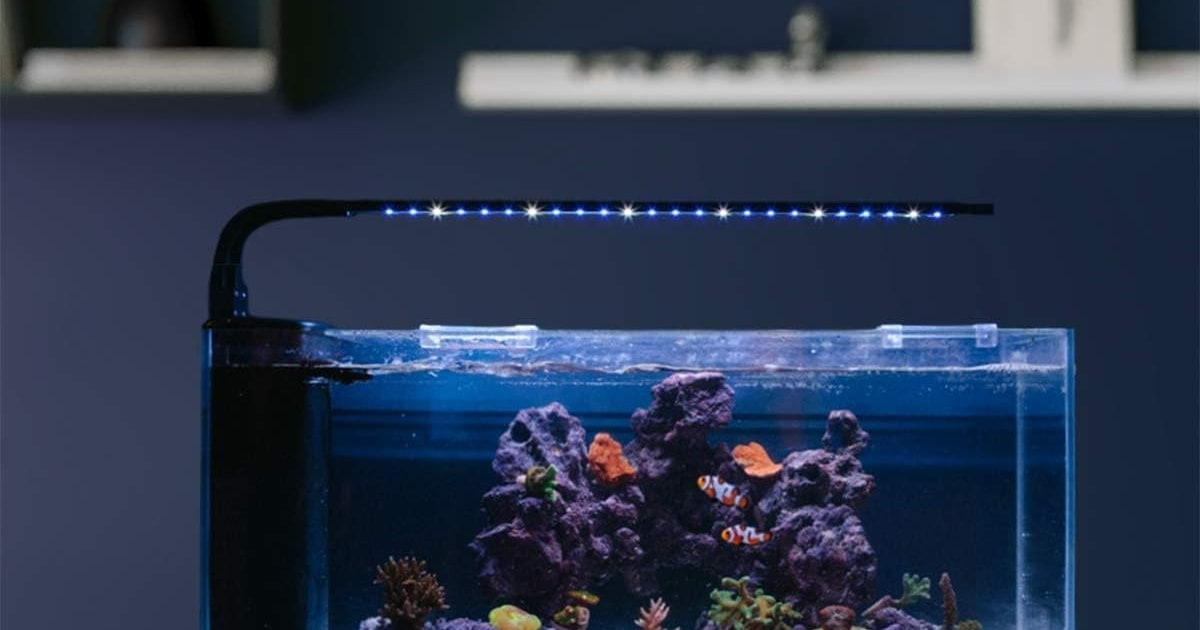
A nano reef sits on a countertop and asks for attention every few days. The water volume is small, so everything you do to it lands hard. Add a fish, and nitrate climbs. Skip a top-off over a long weekend, and salinity creeps up. That's the trade you make for a coral tank that fits in an apartment. The tank itself decides how much of that you'll fight. Good glass, a real filtration chamber and a quiet pump are the difference between a hobby and a chore.
No tank fixes the physics. Small water volumes swing in temperature and salinity within hours, and Bulk Reef Supply's setup guides note that a failed heater does real damage in a nano long before it would in a big system. Stock lighting is the other soft spot. Melev's Reef puts entry-level all-in-one LEDs in a range that suits mushrooms and zoanthids but falls short of what SPS corals want. So budget for an auto top-off, and expect to upgrade the light if you fall for stony corals.
Most of what's sold as a nano reef is an all-in-one: the filtration hides in a rear chamber, the pump sits back there too, and you skip the plumbing entirely. That's the format we focused on. We weighed glass quality, rear-chamber room for a heater and media, pump noise, and whether you can still buy parts a year from now. We think that the Coralife LED BioCube 32 is the best nano reef tank for most people, and that the Innovative Marine NUVO Fusion Pro 2 10 Gallon is the one to buy if you want low-iron glass in a desk-sized footprint.
Everything we recommend

More water to hide your mistakes, and parts you can find

Clearer glass and a controllable pump, in a much smaller box
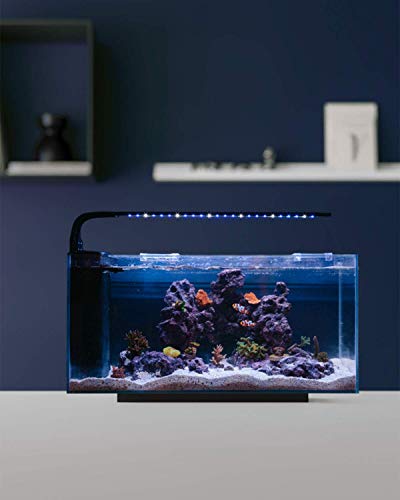
A peninsula you can see through from both sides
Prices as of Oct 25, 6:48 AM PT · Details
At a glance
| Product | Volume | Stock light | Price | |
|---|---|---|---|---|
| Coralife LED BioCube Aquarium Fish Tank KitTop pick | 32 gallons | — | $709.90 |
| Innovative Marine Nuvo Fusion Pro 2 SeriesRunner-up | 10 gallons | — | $256.80 |
| JBJ Rimless Desktop 10 gallon Flat PanelAlso great | 10 gallons | 9W Lyra LED | $217.95 |
Prices as of Oct 25, 6:48 AM PT · Details
How we picked
Water volume. We favored the volume that holds parameters steady, because Bulk Reef Supply's guides note that tanks under 20 gallons can swing several degrees in temperature within hours of a heater failure. Bigger nano means more time to catch a problem.
Filtration chamber. We looked at how much usable room the rear chamber leaves for a heater, media and eventually a small skimmer, using manufacturer specs alongside the modification threads hobbyists post on Reef2Reef.
Glass and framing. Low-iron rimless glass reads noticeably clearer than standard soda-lime, per Waterbox's own material notes, so we treated it as a real advantage rather than a cosmetic one.
Stock lighting. Melev's Reef pegs entry-level all-in-one LEDs as adequate for softies and LPS but short of what SPS needs. We asked whether the included light matches the corals a buyer is actually likely to keep.
Parts and support. We checked how easy replacement pumps, media and baffle kits are to find, since some of these tanks have a deep bench of third-party parts and others have almost nothing.
Top pick
More water to hide your mistakes, and parts you can find
Coralife LED BioCube Aquarium Fish Tank Kit
This is the all-in-one most reef keepers start with, and the bundle arrives with the stand, the LED hood, the pump and a filtration chamber built into the back panel. Thirty-two gallons is a lot of forgiveness for a first saltwater tank.
$709.90fromAmazonPrices as of Oct 25, 6:48 AM PT · Details
The extra water is the feature. Everything hard about nano reefs comes from small volume, and this tank pushes back on all of it. Temperature drifts slower. A messy feeding doesn't spike nitrate overnight. You can keep a pair of clowns and a small goby without crowding them. If you're coming from freshwater and learning salinity, alkalinity and dosing all at once, that margin is worth more than any single piece of gear.
The filtration chamber is built into the back panel, so there's no sump under the stand and nothing to glue. Coralife includes the submersible return pump, dual intakes and an adjustable return nozzle. Swapping media means lifting the back lid and pulling a basket out. That's the whole routine on a normal week, and it's why this shape of tank took over the category.
Parts are the quiet reason to buy this one. Marine Depot's listings show why the BioCube keeps its following: third-party replacement pumps, sump baffle kits and light mounts are sold specifically for this tank. That matters more than it sounds. Pumps die. Baffles crack. On an obscure tank you're emailing a manufacturer and waiting. Here you order a drop-in part. The listing also notes compatibility with existing BioCube accessories, so older add-ons carry over.
The bundle includes the stand, which is less boring than it sounds. A filled 32-gallon tank with rock and sand weighs several hundred pounds, and most furniture isn't built for that, or for the salt water that inevitably gets on it. This one has a tinted acrylic door, a shelf for test kits and salt, and cutouts to route cords out the back so the whole thing doesn't look like a workbench.
Flaws but not dealbreakers
The stock LED hood is the weak link. It'll grow mushrooms, zoanthids and most LPS just fine, but owners who drift toward Acropora almost always end up buying a separate fixture and a mount, which adds a purchase you probably didn't plan for.
Thirty-two gallons is also stretching the definition of nano. It needs real floor space, and water changes are heavier to carry than a single bucket. The rounded front corners look modern but bend the view a little when you look in from the side, and the framed hood is not what you want if you've been admiring rimless aquascape photos.
Runner-up
Clearer glass and a controllable pump, in a much smaller box
Innovative Marine Nuvo Fusion Pro 2 Series
Innovative Marine builds this like a scaled-down reef system: low-iron glass with polished edges, an acrylic overflow wall, a filter sock, a stocked media basket and a DC return pump you can dial down. It fits on a desk. You'll need to buy the light yourself.
$256.80fromAmazonPrices as of Oct 25, 6:48 AM PT · Details
Look at a standard aquarium edge-on and you'll see a faint green tint in the glass. Low-iron glass doesn't do that, and this tank uses it on a 6mm panel with beveled, polished edges and no plastic frame. Waterbox built its whole reputation on the same material. Pale corals and white sand look the way they do in photos instead of faintly aquarium-colored.
The rear chamber is a real one. There's an acrylic overflow wall, a removable 200-micron filter sock, and a media basket that ships with mechanical floss, carbon and GFO already in it. A mesh screen lid keeps jumpy fish where they belong, and a leveling mat and magnetic glass cleaner come in the box. For a tank this size, that's a surprisingly complete list of things you'd otherwise buy one at a time.
The return pump is what earns this the runner-up spot. It's a DC MightyJet with a controller, so you can throttle flow instead of living with whatever the tank shipped with. That's rare at this size. Fixed pumps in small tanks tend to either blast the sand bed or hum. Turning flow down at night and up while you feed is a small luxury you'll notice every day.
Nano-Reef.com regulars keep recommending this size for desk and office builds, and the reason is footprint. It takes up less than two square feet. That's a bookshelf, a credenza, the corner of a desk. If you're in an apartment or a dorm and the tank has to justify its space against everything else in the room, this is the shape that wins.
Flaws but not dealbreakers
There's no light. None at all. You're buying a fixture and a mount separately, and on a tank this small that choice matters more than it looks, because a cheap light over good glass wastes the glass.
Ten gallons is where the stability problem gets serious. Evaporation changes salinity measurably in a day or two, so an auto top-off stops being optional. Marine Depot's guidance for tanks under 20 gallons is a weekly water change of ten to twenty percent, and you'll want to actually do it. This tank rewards a routine and punishes a week away without a sitter.
Also great
A peninsula you can see through from both sides
JBJ Rimless Desktop 10 gallon Flat Panel
This one is built to be looked at from more than one angle: a low, wide rimless peninsula with a 9-watt Lyra LED and a clip-on filter instead of a rear chamber. It's the tank to buy if you want a room divider rather than a box against a wall.
$217.95fromAmazonPrices as of Oct 25, 6:48 AM PT · Details
The shape is the whole argument. A peninsula is long and shallow, open on three sides, and meant to sit on a counter or a divider instead of against a wall. You get an aquascape people can walk around. Most all-in-one nanos are cubes designed for one viewing angle, with a wall behind them to hide the equipment. If your tank is going in the middle of a room, that's a different problem, and this solves it.
Rimless means no black plastic bracing across the top edge, which is most of why the aquascaping crowd pays more for tanks like this. The water surface is right there, unbroken. It also makes the tank easier to work in, because nothing gets in the way of your hands or a scraper. Brightness on the Lyra fixture is adjustable, so you're not stuck at a single output all day.
Filtration is a clip-on bio-filter rather than a built-in rear sump, and that's the trade for the open peninsula shape. It works, and replacement media cartridges are sold for it. But it hangs on the tank where you can see it, and it doesn't give you the hidden chamber space that a BioCube or a Fusion uses to swallow a heater, a bag of carbon and eventually a small skimmer.
Flaws but not dealbreakers
The 9-watt Lyra is a two-color fixture, and it's modest for coral. Softies and low-light LPS will do fine under it. Anything more demanding needs a different light, and the open rimless top means you'll be shopping for a mount too.
Owner feedback here is more mixed than on the other two picks, with recurring complaints aimed at the clip-on filter and the light rather than the glass. It's also the least flexible of the three if your plans change. Ten gallons of shallow water in a peninsula shape doesn't leave much room to add equipment, and there's no rear chamber to hide any of it in.
Who this is for
Buy a nano reef if you want coral and you don't have the room, or the budget, for a four-foot system with a sump underneath it. These tanks work well for a first saltwater build, an apartment, a dorm or an office, and for experienced reefers scaling down. You should know going in that small means demanding. Weekly water changes, a heater you trust and an auto top-off are the price of admission, not upgrades you get to postpone.
Skip the category if you travel often and have nobody to top off the tank, or if your goal is a dense SPS garden under a serious light. Skip it too if you want a lot of fish, because a nano holds a couple of small ones, not a community. This guide covers all-in-one nano reef tanks, the format where filtration lives in a rear chamber or a clip-on unit. It doesn't cover bare glass boxes, sumped systems, or the lights, pumps and filter media that go with them.
How we picked
Volume: we favored the water volume that forgives a mistake, because small tanks swing fast and give you almost no warning. Filtration: we looked for a rear chamber with real room for a heater, media and later a skimmer, not a token compartment. Glass: low-iron rimless glass costs more and looks clearly better, so we counted it rather than dismissing it as cosmetic. Lighting: we asked whether the included fixture matches the corals a buyer is likely to keep, since published guidance puts most stock all-in-one LEDs at soft-coral and LPS levels. Parts: we favored tanks whose pumps, baffles and media you can still replace years from now.
The competition
This is what the research surfaced, not a census of the market. Several well-regarded nano systems come up constantly in hobbyist discussion, but the listings we could confirm for them turned out to be replacement parts and accessories rather than the tanks themselves, so they aren't written up here. Among the complete aquariums we could verify, all three earned a pick. None of them was weak enough to land in this section, though each one asks something different of you.
Care and maintenance
Nano reefs run on routine. Marine Depot's guidance for tanks under 20 gallons is a weekly water change of ten to twenty percent, roughly double what a large system needs, because nutrients concentrate fast in a small volume. Mix your salt water ahead of time and let it come up to temperature before it goes in. Get an auto top-off. Evaporation raises salinity in a small tank faster than you'd guess, and a float switch with a jug of RO water solves that permanently. Rinse or swap mechanical media weekly, since a clogged sock or floss pad quietly turns into a nitrate source. Wipe the glass before it needs scraping. And keep a spare heater in a drawer, because that's the failure that kills a nano.
Questions we get
What counts as a nano reef tank?
The hobby generally uses nano for anything under about 30 gallons, and pico for tanks under five. The tanks here run from ten to 32 gallons, which covers most of that range. The practical line isn't the number, though. It's whether the volume is small enough that a heater failure or a skipped top-off shows up within hours.
What's the best nano reef tank for a beginner?
The Coralife LED BioCube 32, mostly because of its size. More water means slower swings in temperature, salinity and nitrate, which buys you time to notice a problem and fix it before anything dies. It also arrives with the light, pump, filtration chamber and stand, so there's less to get wrong on the shopping list.
Do nano reef tanks need a sump?
No, and that's the point of the all-in-one format. Filtration lives in a chamber behind the display or in a clip-on unit, so there's no plumbing, no overflow to drill and no cabinet full of gear. You do give up space. A rear chamber holds a heater and media comfortably, but not a full skimmer and reactor setup without some modification.
Can you keep SPS corals in a nano reef?
Yes, but usually not under the light that came in the box. Melev's Reef puts stock all-in-one LEDs at output that suits soft corals and LPS and falls short for SPS. Plan on a separate fixture if Acropora is the goal, plus stable alkalinity, which is harder to hold in a small volume than most people expect.
Does a nano reef need a protein skimmer?
Not necessarily. On tanks under about 20 gallons, consistent weekly water changes do most of what a skimmer would, and plenty of nano keepers never add one. If you do want one, measure the rear chamber first. Space is tight in every tank this size, and nano skimmers are sized for specific chambers rather than sold as one-size-fits-all.
How often do you need to change the water?
Weekly, at ten to twenty percent, is what Marine Depot recommends for tanks under 20 gallons. That's about twice the frequency a 75-gallon reef needs, because nutrients build up faster in less water. It isn't much of a chore at this scale, since a few gallons is one bucket. It's also the single habit that keeps a small tank stable.
Why you should trust us
For this guide:
- We read manufacturer specifications for each tank alongside published guidance from Bulk Reef Supply, Marine Depot, Melev's Reef and Reef Builders on nano stability, lighting output and maintenance schedules.
- We compared the listed filtration chambers, pumps, glass construction and included equipment side by side, and weighed recurring themes in owner feedback about noise, light output and parts availability.
- We read owner reviews on every listing, weighted toward the critical ones, because that is where the recurring failures show up.
- We have a systematic way of automatically fetching the latest prices, so the numbers on this page stay current.
- This is a research-focused guide, so the team may not own every product listed — though we often do own the top winners, which gives us extra context for the recommendations.
- We don't accept free products, and the retailer commission never changes which product we recommend.
Sources
Fluval Evo 13.5 Marine Nano Aquarium — Specifications, Fluval (Manufacturer)
Coralife Biocube LED Aquarium Kit — Product Specs, Coralife (Manufacturer)
Innovative Marine NUVO Fusion Pro Series, Innovative Marine (Manufacturer)
Red Sea MAX NANO Complete Reef System, Red Sea (Manufacturer)
Waterbox Reef 10 Rimless Aquarium, Waterbox Aquariums (Manufacturer)
Best Nano Reef Tank Build Threads & Reviews, Reef2Reef Forum Community
Nano-Reef.com Tank of the Month Archives, Nano-Reef.com Community
Reef Builders — AIO Aquarium Reviews and News, Reef Builders
Bulk Reef Supply — Nano Tank Setup Guides, Bulk Reef Supply (BRS)
Marine Depot Learning Center — Choosing a Nano Reef Aquarium, Marine Depot
Melev's Reef — Nano Tank Equipment Guides, Melev's Reef
Saltwater Aquarium Blog — Nano Reef Tank Comparisons, Saltwater Aquarium Blog
Amazon product listings and owner reviews for all 3 products
Manufacturer specification pages for each product
Some passages in this guide may be paraphrased with AI help.
Product prices and availability are accurate as of the date/time indicated and are subject to change. Any price and availability information displayed on Amazon.com at the time of purchase will apply to the purchase of this product.
More like this.
Continue exploring pet reviews and recommendations.

The Best Betta Fish Tanks
A betta is sold as the easy pet, the one that lives in a vase on a windowsill. It isn't. A betta is a tropical fish that wants warm, stable water, a place…

The Best Aquarium Filters for Freshwater Tanks
A freshwater filter is the one piece of equipment in your tank that never gets a break. It runs every hour of every day, pushing water through foam and…

The Best Fish Tank Starter Kits for Beginners
A fish tank is the rare pet that asks for a little work every week instead of a lot every day. But the equipment you start with decides how pleasant that…

The Best Smart Propane Tank Level Monitors
Propane always runs out at the worst moment. The burgers are half done, or the camper's furnace quits overnight, or the water heater goes cold on a…

The Best Septic Tank Treatments
If you're on a septic system, the tank in your yard is doing a job the city does for everyone else. Solids settle, bacteria digest what they can, and the…

The Best Flea and Tick Prevention for Dogs
Fleas and ticks aren't a summer problem anymore. Flea pupae can sit dormant in your carpet for months, then hatch when a warm foot walks past. Deer ticks…