The Best Pet Air Purifiers
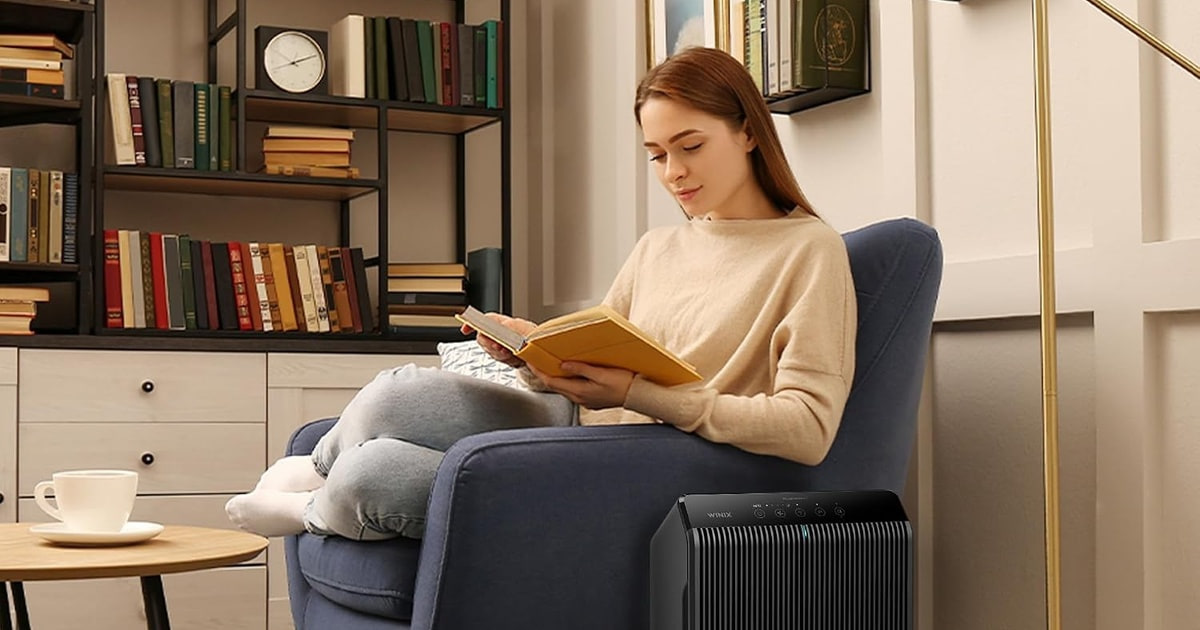
Live with a shedding dog or a couple of cats and you stop noticing the smell. Guests notice. Hair drifts into corners, dander settles on the couch, and the litter box announces itself from the next room. A good air purifier runs quietly in the background and takes the edge off all three. It won't replace vacuuming. But it pulls the floating stuff out of the air before it lands, and that's most of what makes a pet home smell like one.
Here's what no purifier does well. None of them stop shedding, and none can clean a smell coming off a rug or a dirty litter pan. Cat allergen in particular sticks around for months on soft surfaces, so filtration only helps with what's airborne. The certification most brands advertise, AHAM's clean air delivery rate, covers smoke, dust and pollen. It has no pet dander or odor score at all. So the coverage number on the box tells you about particles, not about how your hallway smells.
Two things separate a purifier that helps from one that just hums. First, a real activated carbon layer: published lab comparisons found that units without one showed no measurable drop in pet odor, no matter how good the HEPA filter was. Second, honest sizing, because an undersized unit runs flat out all day and eats filters. We looked hardest at coverage claims, carbon, pre-filters and long-term filter costs. We think that the Coway Airmega Mighty2 is the best pet air purifier for most people, and that the Winix 5510 is the one to buy if you want app control and a washable odor filter.
Everything we recommend

Big-room cleaning and real odor control, if you have the space

App control and a washable odor filter, in a taller cabinet

Real carbon filtration for one small room, and not much more

Fine particle capture for a big room, with no carbon layer
Prices as of Oct 25, 6:48 AM PT · Details
At a glance
| Product | Room coverage | Odor filter | Price | |
|---|---|---|---|---|
| COWAY Airmega Mighty2 Air PurifierTop pick | 1,800 sq ft | Active Carbon Max2 | $269.99 |
| WINIX 5510 Air PurifierRunner-up | 1,882 sq ft | Deodorization carbon | $179.99 |
| Shark Clean Sense Air Purifier MaxAlso great | 1,200 sq ft | — | $299.99 |
 | Molekule Air Purifier Mini+ for Rooms UpAlso in lineup | 250 sq ft | — | Check price |
| GermGuardian HEPA Air Purifier - Large RoomBudget pick | 743 sq ft | Activated carbon | $80.74 |
Prices as of Oct 25, 6:48 AM PT · Details
How we picked
Dedicated carbon layer. Published lab comparisons found that purifiers without a separate activated carbon stage showed no measurable drop in pet odor, however strong their particle filtration. We treated carbon as a requirement, not a bonus.
Honest room sizing. We compared AHAM-certified coverage against the one-air-change-per-hour figures brands print on the box. An undersized unit runs flat out all day and chews through filters.
Pre-filter for hair. A washable mesh pre-filter is the difference between a HEPA filter that reaches its rated life and one that clogs early. Recurring owner feedback about hair buildup pushed this up our list.
Filter cost over time. We read replacement schedules in manufacturer documentation, since consumables over two or three years often outrun what the purifier itself cost.
Noise on low. We looked at published sound figures and at owner comments about running a unit overnight. A purifier you switch off at bedtime isn't doing anything.
Top pick
Big-room cleaning and real odor control, if you have the space
COWAY Airmega Mighty2 Air Purifier
The Mighty2 moves a lot of air for its size, and its combined HEPA and activated carbon filter goes after dander and litter box smell in the same pass. It's rated to clean 900 square feet in half an hour, which covers most open living rooms where the dog actually sleeps.
$269.99fromAmazonPrices as of Oct 25, 6:48 AM PT · Details
This is the one that handles a whole living room, not just the corner it sits in. Coway rates the Mighty2 at 240 for smoke, 242 for dust and 249 for pollen on the clean air delivery scale, and those numbers sit near the top of what a plug-in home unit does. In practice that means you can run it on a low, quiet speed most of the day and still turn the air over often enough to keep hair from settling.
The filter stack matters more than the fan, though. A washable mesh pre-filter catches hair and big fluff first, and that's the part that clogs an expensive HEPA filter and shortens its life. Behind it sits one cartridge that combines HEPA media with activated carbon, so particles and odor molecules get handled together. Pull the pre-filter out every couple of weeks, rinse it, and the main filter lasts closer to its rated life.
The maintenance display is the quiet reason we'd pick this over a cheaper unit. It shows remaining life as a percentage for the pre-filter and the main filter separately, so you stop guessing. Owners of purifiers without one tend to replace filters early, which wastes money, or run them long past useful, which is how a purifier starts smelling worse than the room it's cleaning.
It's also easy to live with. The laser sensor reads particles in three size bands and shows a number plus a color, so you can watch it react when the cat gets the zoomies on the rug. Smart mode drops the fan when the air is clean, and the light dims when the room goes dark. Owners consistently describe it as quiet enough to sleep beside on the lower speeds.
Flaws but not dealbreakers
It's a big appliance. At roughly 18 inches tall and 17 wide, with the weight to match, this isn't something you tuck behind a nightstand, and it needs clear space around the intake to work as rated. In a small bedroom it's overkill, and it looks it.
The coverage headline needs reading carefully too. The 1,800-square-foot figure is one full air change in an hour, which isn't the same as keeping a space that size consistently clean. If you're chasing litter box odor, size to the 30-minute number instead. And the main filter is a single combined cartridge, so when the carbon gives out you replace the HEPA media along with it whether it needs it or not.
Runner-up
App control and a washable odor filter, in a taller cabinet
WINIX 5510 Air Purifier
The 5510 is the app-connected update to a purifier that's been a pet owner staple for a long time. It pairs a deodorizing carbon filter with a washable mesh pre-filter, and it's AHAM Verifide at 392 square feet, which is a realistic number rather than a marketing one.
$179.99fromAmazonPrices as of Oct 25, 6:48 AM PT · Details
Start with the number Winix leads with, because it's the useful one. AHAM Verifide at 392 square feet is a certified figure for real cleaning, not a single-air-change estimate. The 1,882-square-foot claim is the one-hour, one-change math every brand now prints. If your living room and kitchen open into each other, that 392 figure is what tells you this unit is enough.
The carbon filter is the part that earns its place in a pet home. Winix builds a dedicated deodorization layer rather than a thin carbon-dusted sheet, aimed at the ammonia note off a litter box and the sour smell that gets into a dog bed. Reviewers of the previous generation singled out that carbon stage as the reason litter box odor dropped off noticeably within about an hour.
The pre-filter is washable fine mesh, which matters more than it sounds if you own a shedding breed. Hair mats onto a pre-filter fast, airflow drops, and the unit compensates by running harder. Rinse the mesh in the sink once or twice a month and you keep the fan quiet, cut the noise you'd otherwise learn to ignore, and push out the day you have to buy a new HEPA filter.
Auto mode is the feature you'll actually use. A built-in particle sensor nudges the fan up when someone brushes the dog or opens a window onto a busy street, then backs off. The app adds scheduling and remote control, so the purifier can spin up before you get home instead of running at full tilt all day while nobody's there.
Flaws but not dealbreakers
It's tall. At just over 25 inches it reads as furniture, and the charcoal finish is less discreet than a white box in a bright room.
Winix's claim that the HEPA filter captures particles as small as 0.01 microns is doing marketing work. The meaningful, standardized figure is the 99.97 percent at 0.3 microns that defines true HEPA, and that's already smaller than most pet dander. Treat the smaller number as a bonus, not a reason to pay more. Replacements also add up over a few years, and unlike the pre-filter, the carbon and HEPA stages are consumable.
Budget pick
Real carbon filtration for one small room, and not much more
GermGuardian HEPA Air Purifier - Large Room
This slim tower is the least demanding way to get true HEPA and a carbon layer into a litter box room or a small bedroom. It's rated for a single air change per hour in about 743 square feet, but the honest working number is a good deal smaller than that.
$80.74fromAmazonPrices as of Oct 25, 6:48 AM PT · Details
Put this in the spare room where the litter box lives and it does the job you bought it for. The 22-inch tower is under seven inches wide, so it slots between a dresser and a wall without anyone tripping over it. GermGuardian rates it to filter a 153-square-foot bedroom about every 12 and a half minutes, which is meaningful turnover for a space that size.
It has the two things that actually matter and skips the rest. A HEPA filter rated at 99.97 percent capture, and a separate activated carbon layer for cooking and pet smells. Published lab comparisons keep landing on the same point: without that carbon stage, odor intensity doesn't measurably drop, however good the particle filtration is. Plenty of pricier purifiers still ship without one.
The UV-C lamp is the part to stay neutral about. GermGuardian makes it optional, so you can run the unit with it off. Independent long-term evidence for added odor or pathogen reduction from a small built-in UV lamp is thin next to what's known about HEPA and carbon. The purifier is Zero Ozone Verified and CARB certified, so it isn't adding anything to your air. Just don't buy it for the lamp.
Flaws but not dealbreakers
The coverage claim oversells it. The 743-square-foot figure is one air change per hour, and published reviews put its AHAM-certified room size at roughly 167 square feet. That's a bedroom, a home office or a litter box closet. In an open-plan living room with two dogs, it'll run on high constantly and still lose.
It's also a plainer machine than the picks above. There's no air quality sensor and no auto mode, so it runs at whatever speed you set, and there's no app. Filters are proprietary and need replacing on a schedule you have to remember yourself.
Also great
Fine particle capture for a big room, with no carbon layer
Shark Clean Sense Air Purifier Max
Shark's tower is built around fan power and very fine particle capture, and it covers up to 1,200 square feet at one air change per hour. If your problem is hair and dander drifting through a big open room rather than litter box smell, it's a strong choice.
$299.99fromAmazonPrices as of Oct 25, 6:48 AM PT · Details
The filtration spec here is unusually aggressive. Shark rates its sealed anti-allergen filter at 99.98 percent capture of particles between 0.1 and 0.2 microns, a tighter band than the 0.3-micron threshold that defines true HEPA. Dander fragments and the fine dust that carries them fall well inside that range. If allergies are the reason you're shopping, that's the number to look at.
The sealed design is the quiet advantage. A purifier performs only as well as its worst leak, and air that sneaks past the edge of a filter never gets cleaned. Shark's Nanoseal construction is aimed at exactly that gap. Pair it with a fast fan across four speeds and you turn over a large living room quickly, which is what you want when the dog shakes off by the back door.
You can see it work, which sounds like a gimmick but changes how you use it. The display shows a live particle percentage, so you'll notice it climb when you brush the cat and fall again over the next twenty minutes. Owners like the dimmable lights and the quiet low speed for bedrooms. At about 22 inches tall and under 11 wide, it stands in a corner without eating floor space.
Flaws but not dealbreakers
The gap is odor. Shark's listing describes particle capture in detail and says nothing about a dedicated activated carbon layer, and that's the stage that handles ammonia from a litter pan or the smell in a dog's bedding. For a home where the complaint is hair and sneezing, that's fine. For a small apartment with a litter box, it's the wrong tool, and either carbon-equipped pick will do more.
The 1,200-square-foot rating is the one-air-change-per-hour number again, so treat it as an outer limit rather than a target room. Shark's purifier line is also newer and less broadly reviewed than Coway's or Winix's, so there's less long-run owner feedback about how it holds up.
Who this is for
Buy one now if you live with a shedder, if someone in the house has pet allergies or asthma, or if a litter box shares space with your living area. Apartment dwellers see the clearest benefit, because there's nowhere for the smell to go. If your real complaint is hair on the floor rather than anything in the air, a good vacuum will do more for you than any purifier, and that's where the money should go first.
This guide covers plug-in home purifiers sized for a room or an open living area. It doesn't cover whole-house HVAC filters, ozone generators, which we'd keep away from pets entirely, or desk-size units too small to matter in a real room. We don't rank replacement filters as products either, though what they cost over time is part of how we ranked these.
How we picked
Carbon: a dedicated activated carbon stage, because HEPA media alone doesn't touch odor. Sizing: AHAM-certified coverage checked against the one-air-change-per-hour number brands advertise, so you don't end up with a unit that runs flat out all day. Pre-filter: washable mesh that catches hair before it reaches the HEPA media, since that's what clogs first in a pet home. Filter cost: replacement schedules from manufacturer documentation, because consumables can outrun the purifier's own cost over a few years. Noise: published sound figures and owner comments about sleeping in the same room, since a purifier you turn off at night does nothing at all.
The competition
This is what our research surfaced in the pet purifier aisle, not a map of everything on the market. Brands rotate model numbers constantly, and a unit that reviewed well two generations back often has a successor with a different filter inside. If a model you're weighing isn't here, check two things before anything else: whether it has a dedicated carbon stage, and whether the pre-filter is washable.
The Molekule Air Purifier Mini+ for Rooms Up — The Molekule Air Mini+ takes a different approach. Instead of only trapping pollutants, its catalytic filter is designed to break volatile compounds and odor molecules down. It's cleared by the FDA for medical use, it monitors air quality and adjusts itself, and the app tracks history over time. Two things keep it out of our picks. It covers 250 square feet, which is one bedroom or a studio, and it's the most expensive unit here by a wide margin. There's also less independent long-term data on catalytic purifiers than on the HEPA-plus-carbon combination. If you want that technology in a nursery or a home office and the running cost doesn't bother you, it's a reasonable buy.
Filter care and running costs
Two habits make a pet purifier last. Rinse or vacuum the pre-filter every couple of weeks, because that's where hair mats first, and a clogged pre-filter makes the fan work harder for less air. Let it dry all the way before it goes back in. Keep the unit clear of curtains and furniture too, since the intake needs open space to hit its rated airflow. Then budget for filters as part of the purchase rather than a surprise later. Over two or three years, replacements often cost more than the purifier did. Carbon wears out faster than HEPA media, so if odor creeps back before the filter light comes on, the carbon is usually why.
Questions we get
Do air purifiers actually help with pet odor?
Yes, but only if the unit has an activated carbon stage. HEPA media traps particles and does essentially nothing to a smell, and published lab comparisons found no measurable odor reduction in units without carbon. A purifier also can't fix a source, so a dirty litter pan or an unwashed dog bed will keep refilling the room faster than any filter empties it.
Is HEPA or activated carbon more important for pet smell?
Carbon, without much argument. Odor molecules are gases, and a HEPA filter is a mechanical sieve for solid particles. You want both, since HEPA is what handles dander and the fine dust that carries allergens. But if a purifier's spec sheet is silent about carbon, cross it off for odor duty.
What size air purifier do I need for a home with two dogs?
Size to the room you spend time in, not the whole house. Look for the AHAM-certified square footage or the 30-minute coverage figure rather than the big number on the front of the box, which usually assumes one air change per hour. For an open living and kitchen space, something in the range of the Coway Mighty2 or the Winix 5510 is the right class.
Can an air purifier remove cat litter box smell?
It can knock it down noticeably, and a carbon filter is doing that work. Reviewers of Winix's previous generation reported litter box ammonia dropping off within about an hour in a closed room. Put the purifier in the same room as the box, keep it running rather than switching it on when guests arrive, and scoop daily anyway.
How often should I replace the filter in a pet air purifier?
Most manufacturers put carbon and HEPA stages on a six-to-twelve-month schedule, and pet homes tend to land at the shorter end. Washable pre-filters are different: rinse those every couple of weeks and they last the life of the machine. If odor returns before the indicator says anything, the carbon is spent even though the HEPA media may still be fine.
Are UV-C air purifiers safe with pets in the room?
The lamp sits sealed inside the housing, so neither you nor your cat is exposed to the light. The units here are also Zero Ozone Verified or CARB certified, which is the safety point worth checking. Independent long-term evidence that a small built-in lamp adds much on top of HEPA and carbon is thin, so treat it as a side feature rather than a reason to buy.
Why you should trust us
For this guide:
- We read manufacturer spec sheets and AHAM coverage ratings for every purifier here, and checked filtration claims against the 0.3-micron HEPA standard the EPA describes.
- We compared published lab reviews of these models and their previous generations, focusing on clean air delivery rates and on whether a dedicated carbon stage was present.
- We read owner feedback for recurring themes about noise on low, pre-filter clogging from pet hair, and what replacement filters cost over a few years.
- We read owner reviews on every listing, weighted toward the critical ones, because that is where the recurring failures show up.
- We have a systematic way of automatically fetching the latest prices, so the numbers on this page stay current.
- This is a research-focused guide, so the team may not own every product listed — though we often do own the top winners, which gives us extra context for the recommendations.
- We don't accept free products, and the retailer commission never changes which product we recommend.
Sources
Best Air Purifiers for Pet Owners 2026 - Wirecutter, Wirecutter
Air Purifier CADR and Room Size Test Results - Consumer Reports, Consumer Reports
Coway Airmega 200M Review - RTINGS.com, RTINGS.com
Honeywell HPA300 Review - RTINGS.com, RTINGS.com
Levoit Core P350 Review - RTINGS.com, RTINGS.com
Blueair Blue Pure 211+ Auto Review - RTINGS.com, RTINGS.com
How HEPA Filters Work - EPA Indoor Air Quality Guidance, U.S. EPA
Pet Allergens and Indoor Air Quality Research, Asthma and Allergy Foundation of America
Winix 5500-2 Review and Odor Performance Testing, Tom's Guide
Molekule Air Pro PECO Technology Review, PCMag
Do Air Purifiers Really Help With Pet Odor? Lab Testing Roundup, Good Housekeeping Institute
AHAM Verifide CADR Certification Program, Association of Home Appliance Manufacturers
Amazon product listings and owner reviews for all 5 products
Manufacturer specification pages for each product
Some passages in this guide may be paraphrased with AI help.
Product prices and availability are accurate as of the date/time indicated and are subject to change. Any price and availability information displayed on Amazon.com at the time of purchase will apply to the purchase of this product.
More like this.
Continue exploring pet reviews and recommendations.

The Best Air Purifiers for Allergies
Allergy season doesn't stop at your front door. Pollen rides in on your clothes, dust mites live in the mattress, and a cat sheds protein-carrying dander…

The Best Quiet Aquarium Air Pumps
An air pump is one of the few pieces of aquarium gear you hear all day. It sits outside the tank, humming away in a living room or a foot from your…

The Best Cooling Pet Beds
Dogs don't sweat the way you do. They pant, and they hunt for the coolest surface in the house - tile by the back door, the gap under your bed, the shady…

The Best Heated Pet Beds
Pets lose heat faster than we do, and the ones who feel it most usually can't tell you. Senior dogs with stiff hips. Short-haired cats who spend all…

The Best Calming Treats and Supplements for Anxious Pets
Anxiety in pets rarely looks dramatic. It's the dog who paces by the door for three hours after you leave, or the cat who licks a bald patch into her…

The Best Pet GPS Trackers
A tracker earns its keep in the ten minutes after a door gets left open. That's the whole pitch. You want to open an app and see a dot moving down the…