The Best Air Purifiers for Allergies
Allergy season doesn't stop at your front door. Pollen rides in on your clothes, dust mites live in the mattress, and a cat sheds protein-carrying dander into every room it walks through. You spend most of your hours indoors, breathing air that's often dirtier than what's outside. A good air purifier won't cure any of that. But it can pull the airborne share out of a room while you sleep, and overnight is where most people notice the difference first.
Here's what no purifier does. It can't touch the allergens sitting in your carpet, your bedding, or the couch cushions until somebody stirs them back into the air. It won't fix a mold problem at the source, and it won't do much if you only switch it on after your eyes start itching. Coverage claims are optimistic too. Most assume a gentler air-change rate than allergy sufferers actually want, so plan on sizing up rather than buying exactly to your room.
So buy for the room you'll actually run it in, then leave it running. Aim for a unit rated for roughly double your square footage, vacuum the pre-filter every few weeks, and remember that replacement filters add up over the years you own the thing. We think that the Coway AP-1512HH Mighty is the best air purifier for allergies for most people, and that the WINIX 5510 is the one to buy if you're covering a large open room.
Everything we recommend
Reliable four-stage filtration that mostly runs itself

Big-room coverage, once you switch the ionizer off

Plain, proven filtration with filters you can find anywhere

Finer filtration than anything else here, if you need it
Quiet enough to sleep through, and it hangs on the wall
At a glance
| Product | Room Coverage | Particle Size | Price | |
|---|---|---|---|---|
| Coway AP-1512HH Mighty Air Purifier with TrueTop pick | 1,748 sq ft | 0.3 micron | $202.12On sale |
 | LEVOIT Genuine Core 300-P Replacement FilterAlso in lineup | — | 0.3 micron | $25.99On sale |
| WINIX 5510 Air PurifierRunner-up | 1,882 sq ft | 0.01 micron | $179.99 |
 | BLUEAIR Genuine Pre-Filter Blue Pure 211i MaxAlso in lineup | — | — | $12.99 |
 | Coway Airmega 400/400S Air Purifier Replacement FilterAlso in lineup | — | 0.3 micron | $94.31On sale |
 | Dyson Purifier Hot+Cool Formaldehyde™ HP09Also in lineup | — | — | $829 |
| IQAir HealthPro Plus XE Air Purifier -Upgrade pick | 1,125 sq ft | 0.003 micron | $1,199.99 |
| Rabbit AirAlso great | 815 sq ft | — | $629.95 |
 | Alen Air Purifier BreatheSmart 75i HEPA withAlso consider | 2,800 sq ft | 0.1 micron | $799 |
| Honeywell HPA300 HEPA Air PurifierBudget pick | 465 sq ft | — | $234.95 |
 | Austin Air HealthMate Plus Air PurifierAlso consider | 1,500 sq ft | — | $895 |
 | Molekule Air Purifier Mini+ - Purifies RoomsAlso in lineup | 250 sq ft | — | $359.99 |
How we picked
Verified HEPA grade. We looked for units specifying true HEPA capture — 99.97% at 0.3 microns — or better, and dropped anything relying on "HEPA-type" or "HEPA-style" language. Those terms carry no certification requirement, so nothing verifies what they capture.
Coverage and air changes. We compared published CADR figures and coverage claims against the four-air-changes-per-hour target allergy sufferers need, favoring units with AHAM-verified numbers over manufacturer estimates. Anything that only reached that threshold in a closet-sized room came off the list.
Noise at night. Published reviews and owner feedback both point to the same failure: a purifier that's loud on medium gets turned off before morning. We weighted quiet low-speed operation heavily for any unit meant for a bedroom.
Filter cost over time. We compared stated filter lifespans and replacement cycles across models, since running costs over several years often exceed what the unit itself costs. Wide retail availability of filters counted in a model's favor.
Ozone and ionizers. Where a unit includes an ionizer or plasma technology, we checked that it can be switched off, because allergy and asthma organizations advise sensitive patients to avoid ozone-producing features entirely.
Top pickOn sale
Reliable four-stage filtration that mostly runs itself
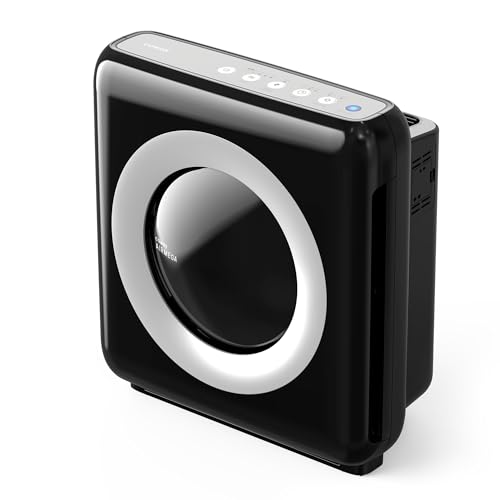
Coway AP-1512HH Mighty Air Purifier with True
The Coway AP-1512HH Mighty pairs true HEPA filtration with a sensor that ramps the fan when the air gets dirty. It's compact enough for a bedroom, quiet enough to leave on, and it doesn't ask you to think about it once it's plugged in.
$202.12fromAmazonList priceThe auto mode is the reason to buy this one. A pollution sensor watches the room and raises fan speed when particle levels climb — when pollen counts spike, when the dog flops down beside it, when someone's cooking. You don't have to notice a problem to get more filtration. That matters, because the most common way people undermine a purifier is by leaving it on low and forgetting about it.
Four stages, sequenced so the expensive one lasts longer. A washable pre-filter grabs hair and coarse dust first. A deodorization layer handles odors and VOCs. Then air reaches the true HEPA filter, which captures 99.97% of particles at 0.3 microns — the range that covers pollen, pet dander, dust mite debris and mold spores. Keeping the big stuff off the HEPA element is what stretches its life through a full year of running.
Eco Mode saves you money on a machine you'll run constantly. When the sensor reads clean air for a stretch, the fan powers down instead of pushing clean air through a clean room. It kicks back up the moment particles rise. If you're running a purifier around the clock, and for allergies you should be, that trimmed power draw adds up over a year without leaving you unprotected.
It fits where you need it. At roughly 17 by 18 by 10 inches and about 12 pounds, this fits on a nightstand-height surface or in a corner without dominating the room. Coway rates it for spaces up to 1,748 square feet in an hour, which in practice means it's comfortably oversized for a bedroom — exactly what you want if you're chasing four air changes per hour rather than the gentler figure most coverage claims assume.
Flaws but not dealbreakers
There's no app and no Wi-Fi. Everything happens on the physical control panel. You can't check air quality from the office or set a schedule from your phone, and if you've built the rest of your house around a smart home hub, this one stays outside it. For most people that's a shrug. If remote monitoring is the point, look at the WINIX or the Rabbit Air instead.
The Bipolar Device is an ionizer, and asthma patients should switch it off. It adds a small ionic assist ahead of the HEPA layer, but any ionizing technology can produce trace ozone, and ozone irritates asthmatic airways. The HEPA and carbon stages do the real work on their own. Turn the ionizer off and you lose nothing that matters for allergen capture.
Filters are an annual expense you shouldn't ignore. The HEPA and carbon elements need replacing about once a year, and over several years the running cost can rival what you paid up front. Vacuuming the washable pre-filter every couple of weeks helps, but it doesn't eliminate the cycle. Factor the filters in before you compare this against anything else here.
Runner-up
Big-room coverage, once you switch the ionizer off
WINIX 5510 Air Purifier
The WINIX 5510 is the newer version of the well-liked 5500-2, now with app control. Its AHAM-verified CADR of 392 covers a genuinely large room, and the heavy-duty carbon filter handles pet and cooking odors better than most purifiers at this size.
$179.99fromAmazonThe performance numbers here are verified, not estimated. AHAM certification uses a standardized protocol, so a CADR rating carries the same meaning across brands. Winix lists 392 square feet verified, with coverage up to 1,881 square feet in an hour. That's rare in a category where most coverage claims come straight from the manufacturer with no outside check. If you want to compare apples to apples, start with the units that publish verified figures.
The carbon filter is built for households that smell like households. Standard activated carbon saturates fast against persistent pet-waste ammonia and cooking smoke. Winix uses a denser deodorization carbon that keeps working on those loads longer. If you have a litter box, a dog bed, or a kitchen that sees a lot of frying, this is the pick that addresses odor and airborne dander at the same time.
App support is the upgrade over the old model. You can check air quality and change speeds from your phone, and — usefully — switch off the PlasmaWave ionizer remotely. The onboard smart sensor still runs auto mode on its own, adjusting fan speed to real-time readings. So the app is a convenience layer on top of a purifier that works fine untouched, not a crutch it depends on.
It handles a whole living room, which is where allergens actually accumulate. Most people put a purifier in the bedroom and stop there. But if you spend evenings in a 400-square-foot living room with a cat on the couch, that room needs real airflow. The 5510 clears 470 square feet in about 15 minutes, which gets you to a therapeutic air-change rate in a space where smaller units just hum along.
Flaws but not dealbreakers
PlasmaWave produces trace ozone, and you should turn it off. Winix says the levels sit inside EPA limits, but the American Lung Association and the AAAAI both advise asthma and severe allergy patients to skip ozone-producing technology entirely. Disable it from the panel button or the app. HEPA and carbon still capture everything you bought this for.
It's a tall, wide box. At more than two feet high and about 16 inches across, this doesn't tuck onto a nightstand. In a small bedroom it'll be the most visible object in the room. If floor space is tight, the Rabbit Air mounts on a wall and the Coway takes up considerably less of your corner.
Budget pick
Plain, proven filtration with filters you can find anywhere
Honeywell HPA300 HEPA Air Purifier
The Honeywell HPA300 skips the sensors and the app and just moves a lot of air through a true HEPA filter. It circulates a 465-square-foot room 4.8 times an hour, which clears the air-change threshold that actually matters for allergy relief.
$234.95fromAmazonIt hits the air-change rate allergy sufferers need without any math. Honeywell rates it at 4.8 turnovers per hour in a 465-square-foot room. Four is the number worth aiming for, and most units only get there if you buy well above your room size. This one clears the bar as listed, which makes it an easy fit for a large bedroom or a modest living room.
Replacement filters are everywhere. You'll find them at Walmart, Target and Costco, not just through one brand's website. That sounds mundane until the week your filter light comes on and a proprietary part is backordered. With this one, you drive ten minutes and you're done. For a machine that only works if you actually maintain it, easy resupply is worth real money.
Three speeds plus Turbo Clean covers the practical range. Run it low overnight, then hit Turbo after you vacuum, after the dog comes in from a muddy yard, or on a high-pollen afternoon when the windows have been open. There's no sensor deciding for you, but the controls are obvious and there's nothing to configure. It also carries the ENERGY STAR label, which helps when it's running all day.
Nothing here is likely to break. No sensor to drift, no Wi-Fi module to lose its connection, no app that gets abandoned in two years. It's a fan, a pre-filter, a carbon layer and a HEPA element in a plastic box. For a lot of allergy households, that simplicity is the feature.
Flaws but not dealbreakers
There's no air quality sensor, so it never adapts. Whatever speed you set is the speed it runs at until you change it. That means you're either wasting energy on high all day or under-filtering on low during a pollen spike. The Coway and the WINIX both handle this for you.
It covers less area than its size suggests. At 17 pounds and roughly 22 inches wide, it takes up as much room as units rated for far larger spaces. And on Turbo it's audible enough that light sleepers will reach for the lower setting, which is exactly when you want the airflow.
The design is purely functional. White plastic, a plain control panel, no attempt at looking like furniture. If it's going in a living room you care about the look of, the Rabbit Air or the Dyson will bother you less.
Upgrade pick
Finer filtration than anything else here, if you need it
IQAir HealthPro Plus XE Air Purifier -
The IQAir HealthPro Plus XE filters down to 0.003 microns — far below the standard HEPA threshold. It's the one to buy when someone in the house has severe asthma, a compromised immune system, or a bad reaction to wildfire smoke.
$1,199.99fromAmazonHyperHEPA catches what standard HEPA lets through. True HEPA certifies 99.97% capture at 0.3 microns, and that covers pollen, pet dander, dust mite debris and mold spores completely. IQAir specifies 99.995% down to 0.003 microns. The gap matters for ultrafine combustion particles from wildfire smoke, traffic exhaust and cooking, which run smaller than the standard threshold and pass through ordinary HEPA media more readily.
It's built for a home where air quality is a medical issue, not a comfort issue. If you're managing COPD, going through chemotherapy, or living with a child whose asthma sends you to urgent care, the calculus changes. Swiss-made, independently tested, and used in clinical settings, this is the unit that holds up when the stakes are higher than a stuffy nose in April.
The redesigned fan makes 24/7 operation practical. IQAir rates the XE generation's fan system at up to three times the energy efficiency of the previous one, with no loss of airflow. For a purifier meant to never turn off, that's the difference between a sensible utility bill and an annoying one. Three smart modes also adjust filtration by sensor reading, which extends filter life on top of the power savings.
The AirVisual app shows you indoor and outdoor conditions together. You see room particle counts alongside the local outdoor index. That's genuinely useful during pollen season or a smoke event, because it tells you whether opening a window will help or hurt. Most purifier apps only show you what's happening inside the room, which is half the picture.
Flaws but not dealbreakers
It's the most expensive unit here by a wide margin, and the filters match. Replacement media is priced in proportion to the machine. Unless someone in the house has a genuine medical need for sub-micron filtration, the Coway or the WINIX will manage your seasonal allergies for a small fraction of what this costs to own.
At 35 pounds and 28 inches tall, it stays where you put it. This isn't a purifier you carry from the bedroom to the office. Pick its room carefully, and know that delivery requires a signature — it's not getting left on the porch.
Also great
Quiet enough to sleep through, and it hangs on the wall
Rabbit Air
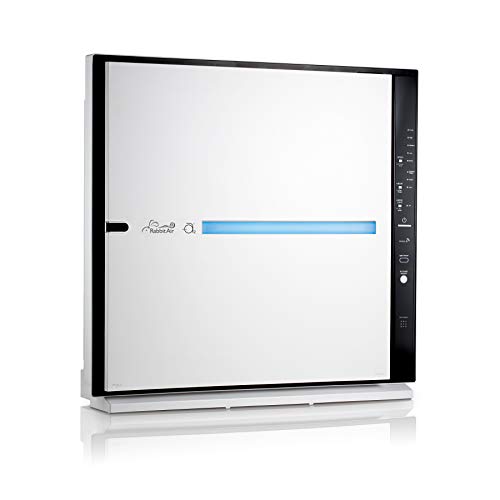
The Rabbit Air MinusA2 SPA-780N is nearly silent on its lowest setting and mounts flat against a wall, so it claims no floor space at all. Its six-stage filtration includes a customized filter aimed at cat and dog allergens.
$629.95fromAmazonNoise is the reason bedroom purifiers get switched off, and this one solves it. A purifier you can't sleep through is a purifier that doesn't run during the hours that matter most — the stretch between midnight and dawn, face-down in bedding, windows closed. The MinusA2 is close to inaudible on low. That's what makes genuinely continuous overnight use realistic for light sleepers and for a nursery.
Wall mounting is unusual and more useful than it sounds. Hung on the wall, it takes zero floor space and sits where the intake and exhaust circulate air across the room rather than into the back of a dresser. In a small bedroom or a nursery already crowded with furniture, that's often the difference between owning a purifier and having nowhere to put one.
Six stages, including one aimed specifically at pet allergens. Pre-filter, medium filter, a BioGS HEPA layer, the Pet Allergy customized filter, activated carbon and an ion generator. The BioGS media is treated to reduce the viability of bacteria and mold spores caught on its surface, so a loaded filter is less likely to become its own problem. The pet filter targets the airborne proteins that drive cat and dog reactions.
App control fits how you'd actually use it. Once it's on the wall, you're not walking over to press buttons. The Rabbit Air app handles scheduling, speed and air quality checks from wherever you are, which is what a mounted unit needs to stay convenient rather than becoming a fixture you ignore.
Flaws but not dealbreakers
Coverage is modest for what it costs. Rated for about 815 square feet, it covers far less ground than several less expensive units here. You're paying for silence, the wall mount and the six-stage filter set — worth it for a bedroom, hard to justify for a great room.
Mounting takes some effort. It's about 19 pounds going onto a wall, so you'll need to find studs and spend part of an afternoon on it. Not difficult, but it's not a plug-it-in-and-walk-away setup either.
The negative ion generator should be off for asthma patients. Same reasoning as every ionizer here: any ozone byproduct is worth avoiding if airways are already reactive. The filtration stages work fully without it.
Who this is for
Buy one of these if you sneeze your way through spring, if a pet triggers symptoms you can't otherwise manage, or if asthma wakes someone in your house at night. The gains are real but bounded: purifiers work on airborne particles, so they help most in a closed room where you spend hours — a bedroom first, then wherever the pets live. If your trigger is something embedded in carpet or bedding, a purifier only catches what gets stirred loose. Wash the bedding too.
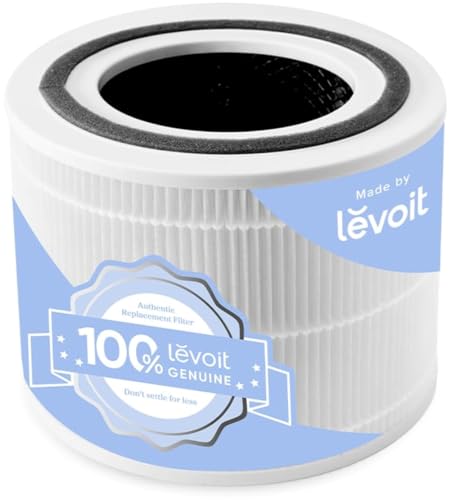
Skip it if you're hoping to fix a mold problem, because filtering spores out of the air does nothing about a colony growing behind the drywall. Handle the source and the humidity first. This guide covers plug-in room purifiers for allergy and asthma households, not whole-home HVAC filtration, dehumidifiers or air quality monitors. We've also left out replacement filters and pre-filters that showed up in the lineup; those are consumables for specific machines, not something to choose between.
How we picked
HEPA grade: We required verified true HEPA capture at 0.3 microns and discounted "HEPA-type" claims, which no certification body stands behind. Coverage: We compared published CADR and coverage figures against the four-air-changes-per-hour benchmark that matters for allergy relief, preferring AHAM-verified numbers to manufacturer estimates. Noise: Published reviews and owner feedback agree that a loud purifier gets switched off, so quiet low-speed running carried real weight for bedroom units. Filter economics: We compared stated filter lifespans and how easy replacements are to find, since running costs can outgrow the purchase over a few years. Ozone: Any ionizer or plasma feature had to be something you can turn off, per the guidance allergy and asthma organizations give sensitive patients.
Other air purifiers for allergies worth considering
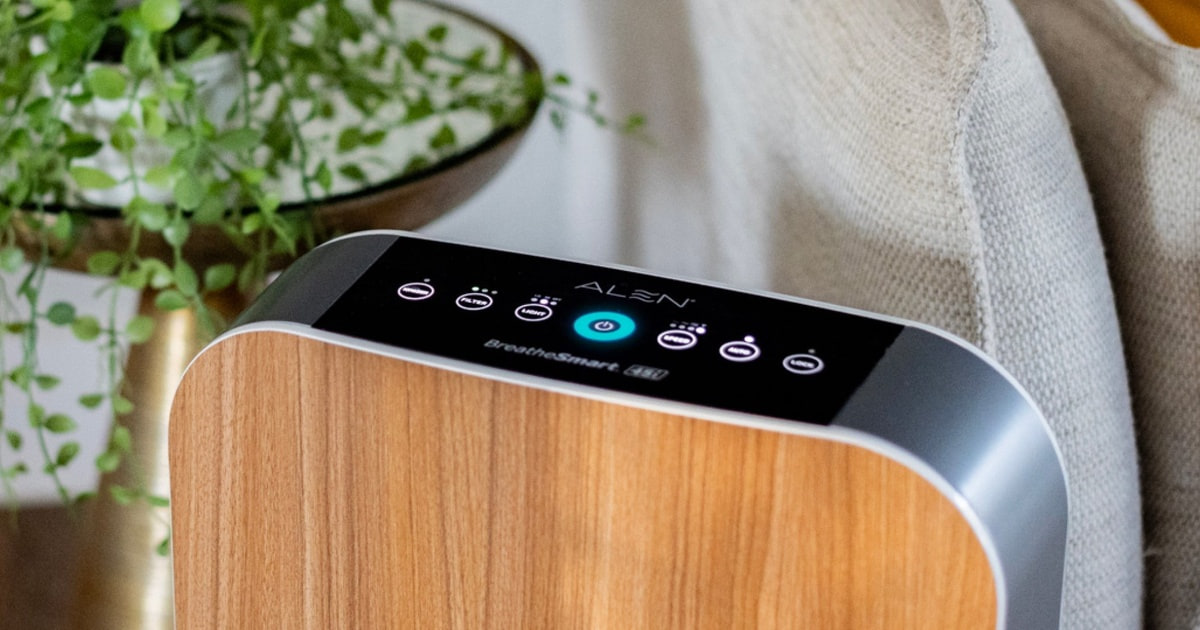
If you want one purifier for an open-plan kitchen and living room: The Alen Air Purifier BreatheSmart 75i HEPA with ($799) — The Alen BreatheSmart 75i is rated for up to 2,800 square feet, which is the scale you need when the kitchen, dining area and living room share one air volume. Cooking aerosols and grease drift straight into the couch, and its Fresh filter pairs activated carbon with medical-grade HEPA media rated to 0.1 micron to handle both the smells and the particles. A SmartSensor adjusts fan speed with color-coded feedback, and Alen points to a SleepScore Labs study on its quiet pink-noise output. What you give up is portability — it's 27 pounds and 27 inches tall — and the Fresh filter leans toward odor control, so a household focused purely on pollen may want the Pure variant instead.
If you hate replacing filters: The Austin Air HealthMate Plus Air Purifier ($895) — The Austin Air HealthMate Plus is rated for a five-year filter life, against roughly one year for nearly everything else here. It gets there with far more filter media — a much larger HEPA surface plus a heavy pre-filter stage that keeps coarse particles off it. The carbon-and-zeolite blend also goes after ammonia, formaldehyde and pesticide compounds that plain activated carbon handles poorly, which matters near farmland or a busy road. It covers up to 1,500 square feet. The trade-offs: it costs a lot up front, weighs 47 pounds, has no sensor, app or auto mode, and looks like a piece of industrial equipment, because that's essentially what it is.
The competition
These are the other purifiers our research surfaced, not a survey of everything on the market. Each one is a capable machine that lost out to a pick for a specific reason, and in the right household either could still be the right buy.
The Dyson Purifier Hot+Cool Formaldehyde™ HP09 ($829) — The Dyson Purifier Hot+Cool Formaldehyde HP09 is three appliances in one: purifier, space heater and bladeless fan. Its HEPA H13 and activated carbon stages exceed the standard HEPA specification, and a permanent catalytic filter breaks down formaldehyde continuously rather than trapping it, so that one element never needs replacing. The Dyson app is the best in this guide — it breaks out PM0.1, PM2.5, PM10, VOCs, NO2, humidity and temperature, with historical graphs you can use to line up bad symptom days against air quality events. It lost on cost. It's among the most expensive units here, the HEPA and carbon filters still need an annual swap, and the jet airflow is clearly audible at higher speeds. The case for it rests on consolidation: if you'd otherwise buy a heater and a tower fan too, the math works. Purely as an allergy purifier, it's a luxury.
The Molekule Air Purifier Mini+ - Purifies Rooms ($359.99) — The Molekule Air Mini+ is FDA-cleared as a Class II medical device, which sets it apart in a category full of wellness marketing. Its PECO technology is designed to destroy viruses and bacteria rather than simply trap them, and it monitors PM2.5 continuously, ramping the fan automatically when levels spike. At 7 pounds and 12 inches tall it's quiet and easy to place in a nursery or a home office. Two things kept it out of the picks: 250 square feet is the smallest coverage area here, and it's expensive for that footprint. PECO also works differently from mechanical HEPA, and some allergy patients would rather have the verified capture mechanism they can point to on a spec sheet. If the FDA clearance is what you're after, though, nothing else here offers it.
Filters and upkeep
Most true HEPA filters need replacing about once a year under continuous use, sooner if you've got several pets, construction next door, or heavy urban particulate. The single habit that saves you the most money is cleaning the pre-filter. Vacuum or wash it every two to four weeks — models like the Coway and the Blueair-style fabric pre-filters are built for it — and you keep hair and coarse dust from clogging the expensive HEPA layer early. Watch the filter indicator light rather than guessing, and buy genuine filters where the unit's algorithm depends on them. One exception worth noting: the Austin Air is rated for five years, so its maintenance rhythm looks nothing like the rest of this list. Whatever you own, run it continuously. Allergens settle and get kicked back up all day, and a purifier switched on only when you're already sneezing is treating a symptom instead of preventing one.
Questions we get
What HEPA rating do I actually need for allergy relief?
True HEPA is the floor. It captures 99.97% of particles at 0.3 microns, which covers pollen at 10 to 100 microns, pet dander at 2.5 to 10, and dust mite debris at 0.5 to 10 — the things that actually set you off. Don't accept "HEPA-type" or "HEPA-style," because no certification body stands behind those words. For severe asthma or a compromised immune system, the IQAir's HyperHEPA extends certified capture to 0.003 microns, which reaches ultrafine smoke and combustion particles that standard HEPA can let through.
How big an air purifier do I need for my room?
Buy for roughly double your room's square footage. Coverage claims are usually calculated at two air changes per hour, but allergy relief starts around four, so a 300-square-foot bedroom really wants a unit rated for 500 to 600. Sizing up has a second benefit: the bigger unit hits your target on a lower fan speed, so it's quieter and its filter loads more slowly. When you're torn between two sizes, take the larger one.
Do air purifiers help with pet allergies?
Yes, noticeably. The proteins that trigger cat and dog allergies ride on particles between 2.5 and 10 microns, comfortably inside true HEPA's range. A correctly sized purifier running continuously in the rooms your pet uses can cut airborne allergen levels substantially within the first hour. The catch is in "continuously" and "correctly sized" — an undersized unit you switch on when symptoms start won't do much. A carbon layer also handles the odor side, which filtration alone doesn't touch.
Is it safe to run a purifier all day and night?
Yes, and you should. These units are built for continuous operation, and running one only when you feel symptoms is reactive rather than preventive. Most bedroom-sized HEPA purifiers draw somewhere between 20 and 60 watts at medium speed, roughly what a light bulb uses. Look for ENERGY STAR certification and an auto mode if the electricity bill worries you — the Coway's Eco Mode and the WINIX's sensor both cut power draw when the air reads clean.
Do air purifiers help with asthma too?
They do, with one firm caveat. HEPA filtration reduces the main airborne asthma triggers — pollen, dander, dust mite debris, mold spores and fine particulate — and clinical research links bedroom HEPA use to fewer nighttime symptoms. But asthma patients should avoid ozone-producing technology entirely, including ionizers, ozone generators and PlasmaWave. Ozone is a documented airway irritant even at levels marketed as safe. Switch those features off. Your filtration works at full strength without them.
Can a purifier get rid of mold?
It can catch mold spores in the air, since they run from 2 to 100 microns and sit well within HEPA's range. What it can't do is stop them being produced. A colony on a bathroom wall, in a basement, or inside your HVAC keeps releasing spores until somebody physically removes it. Treat the source, keep indoor humidity under 50% so new growth can't establish, and use the purifier for what's already airborne.
Why you should trust us
For this guide:
- We read manufacturer specification sheets and published reviews for every purifier here, comparing certified filtration grades, AHAM-verified CADR figures where they exist, and stated coverage claims against the air-change rate allergy sufferers actually need.
- We reviewed owner feedback themes across these models for the problems that show up after months of ownership — noise on higher speeds, filter replacement cycles, and how much floor space these units really take.
- We followed guidance from the American Lung Association and the AAAAI on ozone-producing features when judging which units are appropriate for asthma households.
- We read owner reviews on every listing, weighted toward the critical ones, because that is where the recurring failures show up.
- We have a systematic way of automatically fetching the latest prices, so the numbers on this page stay current.
- This is a research-focused guide, so the team may not own every product listed — though we often do own the top winners, which gives us extra context for the recommendations.
- We don't accept free products, and the retailer commission never changes which product we recommend.
Sources
Best Air Purifiers of 2026 — Wirecutter, Wirecutter
Best Air Purifiers for Allergies — Consumer Reports, Consumer Reports
Air Cleaners and Air Filters in the Home — EPA, U.S. Environmental Protection Agency
Allergy & Asthma Network — Air Purifier Guide, Allergy & Asthma Network
AHAM Verified CADR Ratings Database, AHAM (Association of Home Appliance Manufacturers)
Amazon product listings and owner reviews for all 12 products
Manufacturer specification pages for each product
Some passages in this guide may be paraphrased with AI help. Prices are refreshed automatically.
More like this.
Continue exploring appliances reviews and recommendations.

The Best Pet Air Purifiers
Live with a shedding dog or a couple of cats and you stop noticing the smell. Guests notice. Hair drifts into corners, dander settles on the couch, and…

The Best Air Fryers
An air fryer is really just a small, very fast convection oven, and that's exactly why it's useful. It gets to temperature in a couple of minutes instead…

The Best Toaster Oven Air Fryers
A toaster oven air fryer earns its counter space by replacing three things at once: the toaster, the little baking oven, and the basket fryer you'd…

The Best Portable Air Conditioners for Small Spaces
A portable air conditioner is what you buy when a window unit isn't an option. Maybe your lease forbids anything hanging outside. Maybe your windows slide…

The Best Window Air Conditioners
A window air conditioner is the difference between sleeping through a July night and lying awake on top of the covers. If you rent, or if your house has…

The Best Cold Air Intakes
A cold air intake is usually the first thing people bolt onto a truck or a commuter car, and it's easy to see why. It trades the factory airbox for a…