The Best Portable Air Compressors for Your Garage
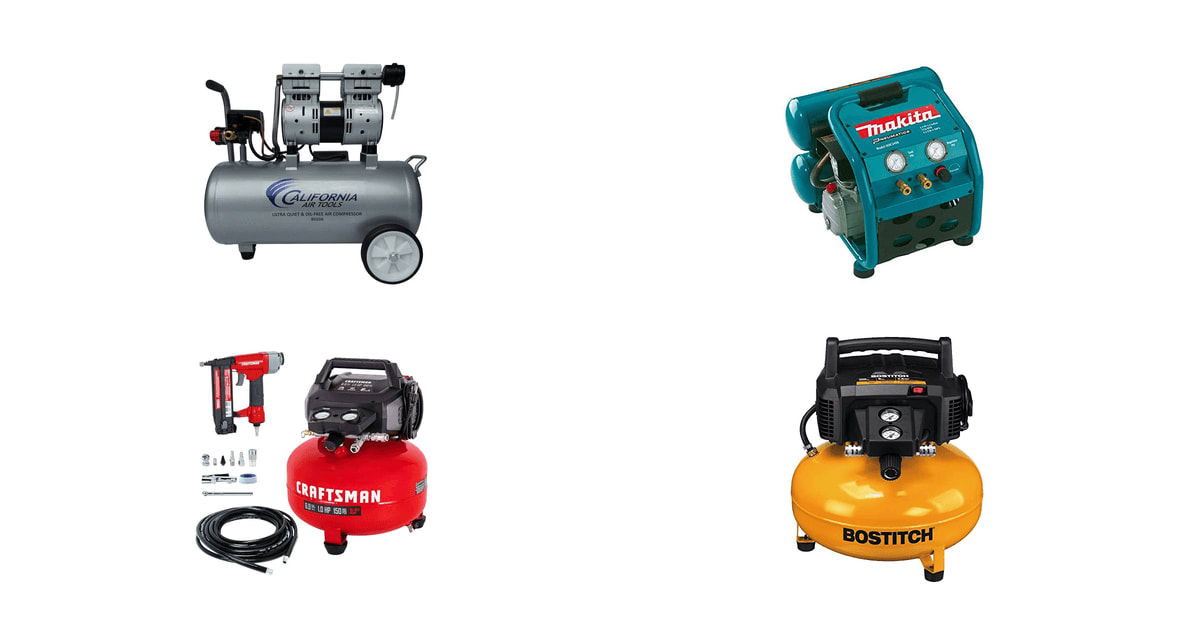
An air compressor is one of those tools you buy for one job and then use for a hundred you never planned on. Topping off tires before a road trip. Blowing sawdust off a workbench. Firing a hundred brad nails into trim without stopping to swap a battery. The spec that decides whether yours can do all that is CFM at 90 PSI — not horsepower, not tank size. Match that one number to the tools you already own, and the rest comes down to noise, weight, and how long the pump holds up.
Here's the honest part. No portable compressor runs a big air tool continuously. A 1/2-inch impact wrench pulls 4 to 5 CFM at 90 PSI, which is at or above what most 6-gallon pancakes make, so the motor kicks on again and again during a brake job. A dual-action orbital sander wants 8 to 15 CFM — more than any portable unit can feed. If body work or full-panel painting is the goal, you need a stationary compressor, and no amount of shopping around that fact will help.
So buy for the work you'll actually do most weeks. Nailers, staplers, blow guns, tire chucks and short bursts from an impact wrench are what these machines are built around, and a 6-gallon tank covers all of it without eating your floor space. Noise matters more than people expect, especially if the garage shares a wall with the house. We think that the Bostitch BTFP02012 is the best portable air compressor for most garages, and that the California Air Tools 8010A is the one to buy if your shop sits under a bedroom.
Everything we recommend

Covers most garage jobs quietly enough, if you skip the big tools

The whole starter setup in one box, with no frills elsewhere

Much more air and a much longer life, if you give up portability

Conversation-quiet, but slower to fill and capped at 120 PSI
At a glance
| Product | Tank Size | CFM @ 90 PSI | Price | |
|---|---|---|---|---|
| California Air Tools 8010A 1.0 HP UltraAlso great | 8 Gallon | — | $249.99On sale |
| Makita MAC2400 2.5 HP* Big Bore™ AirUpgrade pick | One Size | 4.2 CFM | $434 |
| CRAFTSMAN 6 Gallon Pancake Air CompressorBudget pick | 6 Gallon | 2.6 SCFM | $279.99 |
| Bostitch Stanley Btfp02012 6 Gallon Pancake CompressorTop pick | 6 Gallon | 2.6 CFM | $222.31 |
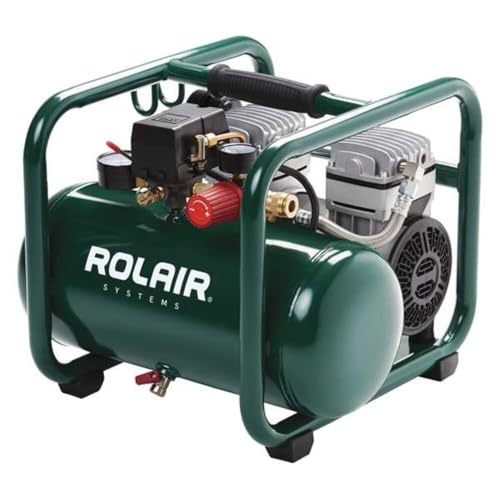 | Rolair JC10 Plus 2.5 Gal Electric AirAlso in lineup | 2.3 gal | 2.35 CFM | $365 |
How we picked
Air delivery. We compared published CFM at 90 PSI for every unit against the documented demands of common garage tools. Anything below roughly 2 CFM at 90 PSI couldn't keep a nailer fed without constant cycling, so it didn't make the cut.
Tank and pressure. We looked for a tank between 6 and 8 gallons and a maximum pressure of at least 120 PSI, since that combination covers nearly every residential garage task. Bigger tanks buy longer runs but cost you floor space and weight.
Noise. Manufacturer noise ratings across this category span roughly 60 to 90 decibels, and OSHA calls for hearing protection above 85 over an eight-hour day. We favored units that published a rating and stayed at or below 80.
Pump longevity. Published service-life figures put oil-lubricated pumps at 2,000 to 5,000-plus hours and oil-free pumps at 500 to 2,000. We picked at least one of each so daily users and weekend users both have a sensible option.
Cold starting. Owner feedback in this category keeps returning to compressors that won't spin up in an unheated garage. We weighted cold-start motor design and thermal overload protection heavily for anyone in a cold climate.
Top pick
Covers most garage jobs quietly enough, if you skip the big tools
Bostitch Stanley Btfp02012 6 Gallon Pancake Compressor
This 6-gallon pancake makes 2.6 CFM at 90 PSI, which is enough for brad nailers, framing nailers, blow guns and tires. At 80 decibels and 33 pounds it's quieter and lighter than most compressors in its class, and two couplers let a helper work alongside you.
$222.31fromAmazonFor the work most garages actually see, 2.6 CFM at 90 PSI is the number that matters. A finish nailer sips 0.3 to 0.5 CFM under intermittent use, and a brad nailer is about the same. Blow guns and tire chucks barely register at all. That means this thing runs your trim gun, your stapler and your inflator all afternoon without the motor ever sounding like it's working hard.
Cold garages are where cheap compressors go to die. Owners of budget units regularly describe motors that groan, hum and refuse to spin on a January morning. Bostitch builds this one around an easy-start electric motor meant for cold weather, and reliable starting in an unheated space is the thing owners bring up most often. If your garage isn't heated, that's worth more than an extra half a CFM.
Two quick couplers sit on the front, fed by a high-flow regulator. That sounds minor until you're hanging baseboard with someone and neither of you wants to keep swapping hoses. You can also leave a tire chuck on one port and a nailer on the other and stop fiddling with fittings altogether. It's the kind of small convenience you notice every single time you use the tool.
At 80 decibels it isn't quiet, but it sits noticeably below the pack. Most portable compressors land somewhere around 85 to 90. OSHA calls for hearing protection above 85 decibels across an eight-hour day, so you'll still want plugs for a long session in a closed garage. For a quick round of tire top-offs, though, you won't clear the house.
Flaws but not dealbreakers
The oil-free pump is the real trade-off. It needs no maintenance, which is genuinely nice, but oil-free pumps typically last 500 to 2,000 hours against 2,000 to 5,000 or more for an oil-lubricated one. If you're pulling air several times a week for years, you'll wear this one out well before something like the Makita.
It also can't feed a big tool continuously. A 1/2-inch impact wrench wants 4 to 5 CFM at 90 PSI, so expect the motor to cycle over and over during suspension work. It'll break lug nuts loose fine. It just won't keep up if you're working through all four corners without a break.
Budget pick
The whole starter setup in one box, with no frills elsewhere
CRAFTSMAN 6 Gallon Pancake Air Compressor
You get a 6-gallon oil-free pancake rated at 2.6 SCFM at 90 PSI and 150 max PSI, plus an 18-gauge brad nailer, a 25-foot hose and a 10-piece accessory kit. For a first compressor, that's the entire setup with no second shopping trip.
$279.99fromAmazonThe frustrating part of buying your first compressor isn't the compressor. It's discovering that you also need a hose, a coupler, a blow gun, a tire chuck, some Teflon tape and a tool to actually use the air with. This kit hands you all of it at once, including an 18-gauge brad nailer, so you can go from box to first nail the same afternoon.
On paper it lands within a rounding error of our top pick. Same 2.6 SCFM at 90 PSI, same 6-gallon tank, 150 PSI max, and an oil-free motor that needs nothing from you. It weighs about 31 pounds, so it's easy to carry out to the driveway. For nailing, stapling, inflating and blowing off a workbench, you're not giving up meaningful capability here.
Dual 1/4-inch couplers and dual gauges come standard, which is the same setup that makes our top pick pleasant to live with. Run a nailer and leave an inflator connected. Or hand the second hose to whoever's helping with the trim. The gauges let you see tank pressure and regulated pressure at a glance, which matters more than it sounds like when you're dialing a nailer down for soft molding.
The included brad nailer is a genuinely useful tool, not a throwaway. Eighteen-gauge brads are what you want for door casing, shoe molding, cabinet face frames and small furniture repairs — the holes are small enough that a dab of filler hides them. If cabinetry or trim is why you're buying a compressor at all, this bundle covers the whole job.
Flaws but not dealbreakers
The 150 PSI ceiling is a touch lower than the highest-pressure pancakes, and stored pressure is stored air. In practice that means slightly fewer nails per fill and a motor that restarts a little sooner. It's a small difference, not a reason to pass.
The oil-free pump carries the same longevity limits as our top pick, and the bundled nailer is strictly light duty — 18-gauge brads won't hang a deck or frame a wall. If you need a framing nailer, budget for one separately.
CRAFTSMAN backs the kit with a one-year warranty.
Upgrade pick
Much more air and a much longer life, if you give up portability
Makita MAC2400 2.5 HP* Big Bore™ Air
The MAC2400 makes 4.2 CFM at 90 PSI from a cast-iron Big Bore pump, roughly 60% more air than a standard oil-free pancake. It costs more and it's a chore to move, but it's the one unit here that stays ahead of sustained impact wrench work.
$434fromAmazonThis is the only compressor here that keeps pace with a serious air tool. A 1/2-inch impact wrench pulls 4 to 5 CFM at 90 PSI, and the MAC2400 delivers 4.2. That's the difference between a motor that runs constantly while you fight a rusted caliper bolt and one that catches up between fasteners. If you do your own brake and suspension work, this is the upgrade that actually changes your afternoon.
Oil-lubricated pumps run cooler and wear more slowly, and the numbers aren't subtle: 2,000 to 5,000-plus hours of service against 500 to 2,000 for a typical oil-free pump. Makita pairs that with a cast-iron cylinder and a low-speed 4-pole motor, which is the classic recipe for a compressor that outlives its owner's interest in the hobby. If you're running air most days, this is the smarter long game.
Low amp draw at startup is a quiet win in older houses. Garage circuits are often shared with the laundry or half the basement, and a hard-starting compressor is the thing that trips the breaker every time. Makita designed this motor to pull less current when it kicks on, and owners who run it on ordinary 15-amp garage outlets rarely complain about nuisance trips.
The roll cage isn't decoration either. It wraps the pump and controls so the unit can ride in a truck bed, get knocked into by a shop vac, or take a tool dropped on it without bending a copper line. Contractors buy this one because it survives job sites. In a garage, that same build just means nothing gets snapped off when you shove it against the wall.
Flaws but not dealbreakers
Portable is a stretch. The cast-iron pump, steel tank and roll cage add real weight, and there's no wheel kit, so moving it means lifting it. Most owners pick a corner and leave it there.
Oil is maintenance you can't skip. You'll need to check the level before long sessions and change it on schedule, and you can't just lay the unit on its side in the trunk. Miss the oil and you throw away the longevity that justified buying it.
Even 4.2 CFM isn't enough for a dual-action sander, which wants 8 to 15 CFM at 90 PSI. If you were hoping to sand body panels, this still isn't the machine.
Also greatOn sale
Conversation-quiet, but slower to fill and capped at 120 PSI
California Air Tools 8010A 1.0 HP Ultra
The 8010A runs at 60 decibels, about as loud as two people talking, while most portables sit between 85 and 90. An 8-gallon aluminum tank and a wheel kit keep it easy to move at 37 pounds, and the oil-free dual-piston pump is rated past 3,000 hours.
$249.99fromAmazonList priceSixty decibels changes how and when you use a compressor. Most portables land at 85 to 90, and your ear reads that 25 to 30 decibel gap as roughly four times louder. In practice, you can run this one while a kid naps upstairs, while someone's on a call in the next room, or at seven on a Saturday morning without your neighbor learning your name. That's the whole pitch, and it delivers.
The quiet comes from a motor that spins at just 1,680 RPM instead of racing. Slower motors make less noise and wear more slowly, which is why California Air Tools rates the oil-free dual-piston pump for more than 3,000 hours — well past the usual oil-free range. You still never change oil, never check a sight glass, never worry about tipping it over in the back of the car.
An 8-gallon aluminum tank buys you more air per fill than the 6-gallon pancakes, and aluminum keeps the whole thing to about 37 pounds. It fills from empty in around 165 seconds and recovers from 90 to 120 PSI in about 60. The wheel kit matters more than you'd guess, because this is a taller unit than a pancake and rolling beats carrying.
This is the compressor for an attached garage, a basement shop or a shared workspace. If noise is what's kept you from buying a compressor at all — or what makes you avoid using the one you have — that constraint disappears here. Everything else on this list asks you to think about who's home first.
Flaws but not dealbreakers
It moves the least air of our picks: 2.2 CFM at 90 PSI, against 2.6 for the pancakes and 4.2 for the Makita. Nailers and inflators are fine. An impact wrench will keep the motor running almost continuously.
The 120 PSI maximum is the real limitation. Less stored pressure means fewer nails between motor cycles, and some tools spec a higher supply pressure than this can give. It's also physically bigger and taller than a pancake, which is worth measuring against your shelf before you buy.
Who this is for
This guide is for anyone outfitting a home garage or small shop: weekend DIYers topping off tires and running a nailer, hobbyist mechanics doing their own brakes and oil changes, woodworkers shooting brads and staples, and first-time buyers replacing a compressor that finally quit. If you move between a shop and job sites, the picks here travel fine, though the Makita asks for a helper and a tailgate.
It's not for you if the plan is automotive paint or body work. A dual-action sander needs 8 to 15 CFM at 90 PSI and a full-panel HVLP job wants 6 to 9 CFM at the gun, which puts both beyond every portable unit made. Touch-ups and small panels are doable with a high-CFM portable, but a full respray means a stationary two-stage compressor. We also left out sandblasting setups, tiny 12-volt tire inflators and shop-mounted stationary units — those are different tools with different rules.
How we picked
We built the shortlist around five things. Air delivery: CFM at 90 PSI is the spec that decides which tools you can actually run, so we checked it against the published demands of nailers, impact wrenches and spray guns rather than trusting horsepower claims. Tank and pressure: 6 to 8 gallons and at least 120 PSI covers almost every garage job without hogging the floor. Noise: ratings in this category range from 60 to 90 decibels, and we favored anything at or below 80. Pump longevity: oil-lubricated for daily use, oil-free for weekends, both represented. Cold starting: unheated garages kill compressors, so cold-rated motors and thermal overload protection carried real weight.
The competition
This is what our research surfaced in the portable compressor category, not a survey of everything on the market. Searches for garage compressors also drag in drain machines and cordless tools that share a brand name, and we've set those aside below. The unit here is a legitimate compressor that simply lost out to a pick on air delivery.
The Rolair JC10 Plus 2.5 Gal Electric Air ($365) — The Rolair JC10 Plus is a small, tough machine: a 2.5-gallon tank, a cast aluminum cylinder, an oil-less pump turning at 1,725 RPM, and 2.35 CFM at 90 PSI. Contractors like it because it shrugs off being thrown in a truck bed week after week. But it moves less air than any of our 6-gallon pancakes while weighing more at about 43 pounds, and the small tank means the motor cycles noticeably more often on longer runs. If you mostly shoot trim and want something built to be abused, it's still a reasonable buy.
Care and maintenance
Drain the tank after every session. Compressed air wrings water out of the atmosphere, and that water pools in the bottom of the tank where it quietly eats steel from the inside out. Open the petcock, let it hiss, close it — ten seconds, and it's the single biggest factor in how long your compressor lives. If you went with the Makita, check the oil level before long jobs and change it on the schedule in the manual, because that's the whole reason its pump outlasts an oil-free one. Coil the hose instead of kinking it, and keep the intake filter clear of sawdust. In an unheated garage, letting the unit warm up indoors before a cold-morning job saves the motor a lot of strain.
Questions we get
What size air compressor do I need for a home garage?
A 6-gallon pancake handles roughly 90% of typical garage work: nailers, staplers, blow guns, tire inflation and short bursts from an impact wrench. Step up to 8 gallons or more only if you're running tools continuously. Tank size matters less than CFM at 90 PSI, so check that spec on your tools first.
What CFM do I need to run a 1/2-inch impact wrench?
A standard 1/2-inch impact wrench pulls 4 to 5 CFM at 90 PSI, which is at or above what most 6-gallon pancakes deliver. You can still break lug nuts loose with a 2.6 CFM unit, but the motor will cycle constantly during longer jobs. For sustained fastener work, the Makita MAC2400's 4.2 CFM is the realistic floor.
What's the quietest portable air compressor for an attached garage?
The California Air Tools 8010A is rated at 60 decibels, roughly the volume of normal conversation, against the 85 to 90 decibels most portables produce. Your ear perceives that gap as about four times quieter. In an attached garage or a basement shop, it's the difference between working whenever you want and waiting until the house is empty.
What's the difference between oil-free and oil-lubricated compressors?
Oil-free pumps need no maintenance at all, but they typically last 500 to 2,000 hours. Oil-lubricated pumps run cooler, last 2,000 to 5,000-plus hours, and recover faster — but you have to check and change the oil and keep the unit upright. Weekend users are better served by oil-free; anyone running air several times a week should go oil-lubricated.
Can a 6-gallon pancake compressor run an HVLP spray gun?
For touch-ups and small pieces, sometimes. Automotive HVLP guns generally want 6 to 9 CFM at 20 to 30 PSI inlet pressure, which is more than any pancake here sustains. You can spray a cabinet door or a small panel by working in short passes and letting the tank recover, but a full quarter panel or a whole car needs a stationary compressor.
How long do portable air compressors last with regular garage use?
Published service-life figures put oil-free pumps at 500 to 2,000 hours and oil-lubricated pumps at 2,000 to 5,000 or more. For a weekend DIYer, even the low end is many years. The fastest way to cut that short is running an undersized compressor that short-cycles constantly, so match CFM to your tools before you buy.
Why you should trust us
For this guide:
- We compared manufacturer specification sheets for every compressor here, focusing on CFM at 90 PSI, maximum pressure, noise ratings, pump type and weight.
- We read published buying guides and tool-review coverage on how compressor output lines up against the real air demands of nailers, impact wrenches, sanders and spray guns.
- We looked for recurring themes in owner feedback, particularly cold-weather starting, pump longevity and how loud these machines feel in an attached garage.
- We read owner reviews on every listing, weighted toward the critical ones, because that is where the recurring failures show up.
- We have a systematic way of automatically fetching the latest prices, so the numbers on this page stay current.
- This is a research-focused guide, so the team may not own every product listed — though we often do own the top winners, which gives us extra context for the recommendations.
- We don't accept free products, and the retailer commission never changes which product we recommend.
Sources
Best Air Compressors of 2026 — Wirecutter, Wirecutter
Best Portable Air Compressors, Tested — Popular Mechanics, Popular Mechanics
Air Compressor Buying Guide — Consumer Reports, Consumer Reports
Best Portable Air Compressors — Family Handyman, Family Handyman
Best Air Compressors for the Garage — Bob Vila, Bob Vila
Best Portable Air Compressors — Pro Tool Reviews, Pro Tool Reviews
DEWALT DWFP55126 Official Specifications, DEWALT
Makita MAC2400 Product Page — Makita USA, Makita
California Air Tools 8010 Specifications, California Air Tools
How to Choose an Air Compressor — This Old House, This Old House
OSHA Occupational Noise Exposure Standard 1910.95, OSHA
Air Compressor Buying Guide — The Home Depot, The Home Depot
Amazon product listings and owner reviews for all 5 products
Manufacturer specification pages for each product
Some passages in this guide may be paraphrased with AI help. Prices are refreshed automatically.
More like this.
Continue exploring electronics reviews and recommendations.

The Best Portable Air Conditioners for Small Spaces
A portable air conditioner is what you buy when a window unit isn't an option. Maybe your lease forbids anything hanging outside. Maybe your windows slide…

The Best Cold Air Intakes
A cold air intake is usually the first thing people bolt onto a truck or a commuter car, and it's easy to see why. It trades the factory airbox for a…

The Best Car Air Fresheners and Odor Eliminators
Your car is a small, sealed box that sits in the sun. Whatever happens in it stays in it - the gym bag, the spilled coffee, the wet dog, the fries that…

The Best Mechanic Tool Sets for Your Home Garage
The first time a socket doesn't fit, you learn what a tool set is really for. Most home garage work is unglamorous - an oil change, a set of brake pads, a…

The Best Air Fryers
An air fryer is really just a small, very fast convection oven, and that's exactly why it's useful. It gets to temperature in a couple of minutes instead…

The Best Air Purifiers for Allergies
Allergy season doesn't stop at your front door. Pollen rides in on your clothes, dust mites live in the mattress, and a cat sheds protein-carrying dander…