The Best Portable Blood Pressure Monitors
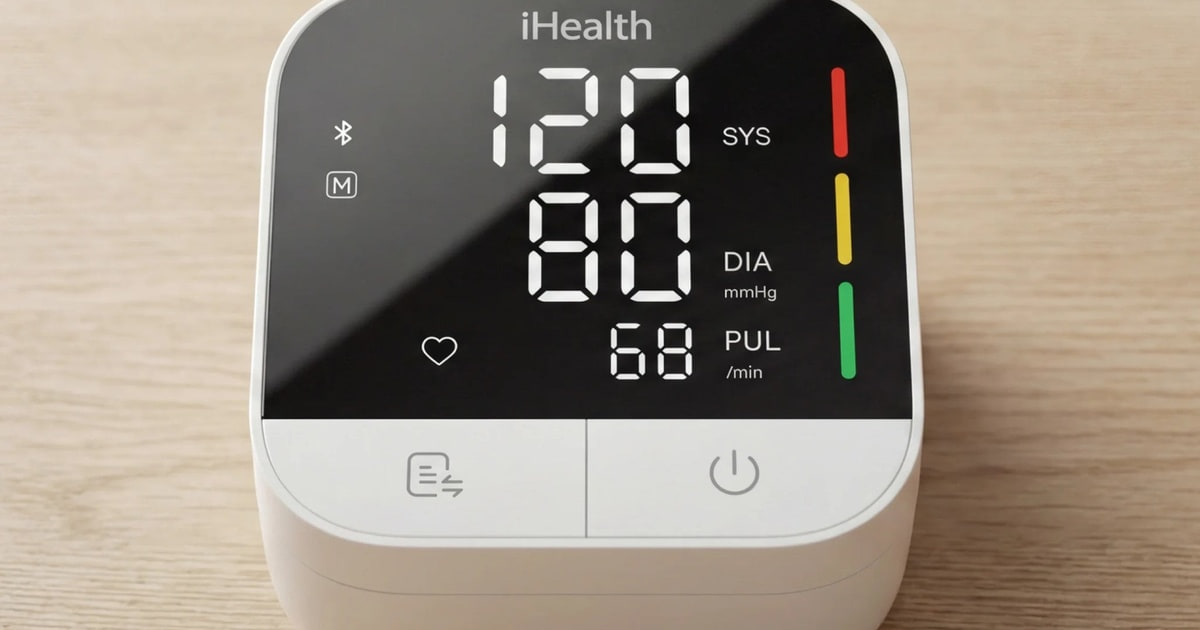
If your doctor has asked you to track your blood pressure at home, the box on your nightstand matters more than you'd think. A reading taken with the wrong cuff, wrapped in the wrong spot, can be off by enough to change a medication decision. The good monitors make correct technique easy. They wrap cleanly, inflate gently, show a number you can read without your glasses, and keep a log you can hand to your doctor. That's the whole job. Everything else is convenience.
Here's the honest part: none of these replaces a clinic. Every one gives you an estimate, and a single reading tells you almost nothing. Your numbers swing with coffee, stress, posture, even the conversation you just had. Cuff fit is the biggest variable of them all, and a cuff that's too narrow for your arm reads high — sometimes by a clinically meaningful margin. Wrist units are fussier still. So take two or three readings per session, and judge the trend rather than the moment.
We sorted this lineup by the things that actually move a number: clinical validation, cuff range, how forgiving a device is about small movements, and whether your log reaches your doctor without a fight. Connectivity matters less than the marketing suggests, though it does beat a paper notebook. We think that the OMRON Platinum is the best portable blood pressure monitor for most people, and that the OMRON Gold is the one to buy if only one person in your household is measuring.
Everything we recommend
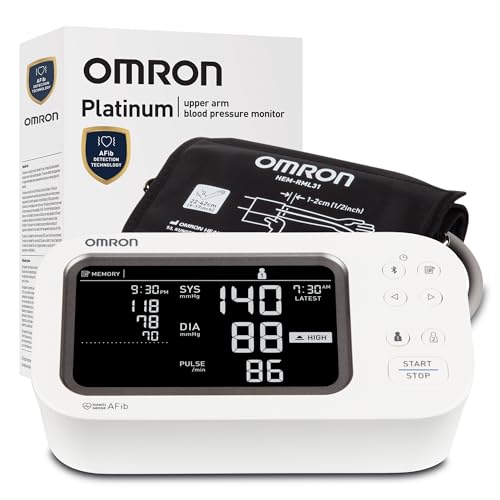
AFib screening and dual-user memory for serious daily tracking
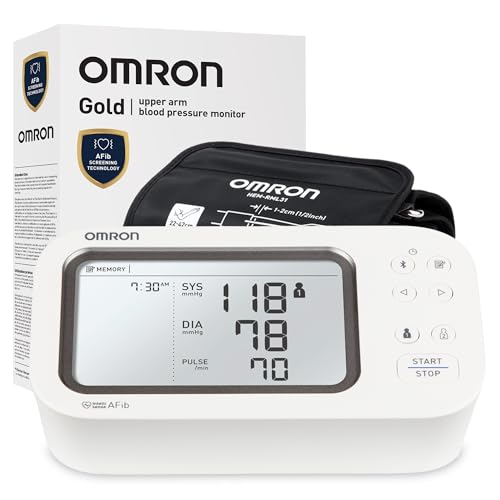
Nearly the same monitoring, if only one person is measuring

Sensors that catch your setup mistakes, without the fuss

Readings that upload themselves, if you'll pay for the ease
At a glance
| Product | Cuff Size | Memory | Price | |
|---|---|---|---|---|
| OMRON Platinum Blood Pressure Monitor for HomeTop pick | 9"-17" | — | $97.19 |
| Withings BPM Connect - Digital Blood PressureAlso great | — | — | $98.36On sale |
 | OMRON Evolv Wireless Blood Pressure Monitor forAlso consider | 9"-17" | 100 Readings | $69.95On sale |
 | iHealth Neo Wireless Blood Pressure MonitorAlso in lineup | — | — | $39.97On sale |
| OMRON Gold Blood Pressure Monitor for HomeRunner-up | 9"-17" | — | $84.24 |
| iHealth Track Pro Upper Arm Blood PressureBudget pick | 8.7"-16.5" | 120 Readings | $32.39On sale |
 | A&D Medical Wrist Blood Pressure Monitor forAlso in lineup | 5.3"-8.5" (wrist) | 60 Readings | $48.63 |
 | Beurer BM55 Blood Pressure MachineAlso consider | 22-42cm | 120 x2 Users | $37 |
How we picked
Clinical validation. We prioritized monitors described as clinically validated to recognized protocols rather than only FDA cleared, because clearance means a device can be sold, not that it reads accurately. Where a maker doesn't claim validation, we treated the device as a spot-check tool at best.
Cuff fit and range. We compared published cuff circumference ranges against typical adult arm sizes, since a cuff that's too narrow inflates the systolic reading. Anything that couldn't cover roughly 22 to 42 cm without a separate purchase lost ground.
Rhythm screening. We gave weight to monitors that check for atrial fibrillation or irregular heartbeats on every reading, not on demand. Published guidance and owner feedback both point to this as the feature people use once a doctor raises it.
Display and one-button use. We favored large, backlit or color-coded displays and true single-button operation, because owner feedback across this category is dominated by complaints about dim screens and confusing menus. A monitor nobody can read is a monitor nobody uses.
Getting data out. We looked at how each app stores and exports readings, and whether syncing needs your attention. Unlimited storage and a shareable report mattered more to us than the number of readings a device holds on board.
Top pick
AFib screening and dual-user memory for serious daily tracking
OMRON Platinum Blood Pressure Monitor for Home
The Platinum is a validated upper-arm monitor that screens for atrial fibrillation on every reading and keeps separate logs for two people. If you're measuring twice a day and handing the numbers to a cardiologist, it makes that routine about as painless as it gets.
$97.19fromAmazonValidation is the whole ballgame, and this one clears it. The American Heart Association points to clinically validated upper-arm monitors as the standard for home use, and by published counts most cuffs sold online never make that list. Omron says its Advanced Accuracy algorithm is built to tolerate small arm movements, which is where cheap monitors fall apart. Omron is also the brand most often cited as doctor and pharmacist recommended, and published reviews have long put its upper-arm line first.
AFib screening runs on every reading, not as a separate mode you have to remember. The Platinum checks for unusual heart rhythms each time the cuff inflates and flags them for you. That's the point: irregular rhythms come and go, so a device that only looks when you ask it will miss them. If your doctor has mentioned atrial fibrillation, or you have a cardiac history, this is the feature worth paying for.
Two people can share it without scrambling the log. The Platinum stores 100 readings each for two users, so you and your partner aren't averaging each other's numbers. Owners of single-user monitors regularly run into exactly that mess. The High Morning Average Indicator adds a second layer: it watches for the early-morning spikes that doctors associate with higher cardiovascular risk, which a stack of undifferentiated readings would bury.
It arrives ready to go, which sounds trivial until you're missing an adapter. The box includes the wide-range D-ring cuff for arms 9 to 17 inches, an AC adapter, a storage case, the manual and four AA batteries. The D-ring wrap is easier to get tight one-handed than a plain sleeve. Owners of similar Omron cuffs consistently mention that the wrap is the part they stop thinking about after a week.
Getting the data to your doctor is a two-tap job. Readings go over Bluetooth to the free Omron Connect app, which stores them without a cap and pushes them into Apple Health or Google Fit. From there you can generate a report to bring to an appointment. If your physician adjusts medication based on multi-week logs, that export is the feature you'll use most.
Flaws but not dealbreakers
There's no Wi-Fi, so your phone has to do the syncing. Readings sit on the device until you open the app within Bluetooth range. That's fine if your phone lives in your pocket, and annoying if it doesn't. If you want numbers to land in the cloud without you touching anything, the Withings below is the monitor that does it.
It's a nightstand device, not a travel one. The case runs about seven and a half inches long and weighs a bit over a pound with the cuff, and it runs on AA batteries rather than a rechargeable pack. You'll want spares in a drawer. For a suitcase, the wire-free Evolv or a wrist unit packs far better.
Runner-up
Nearly the same monitoring, if only one person is measuring
OMRON Gold Blood Pressure Monitor for Home
The Gold gives you the same AFib screening and morning-spike flag as our top pick, in the same case, with one log instead of two. Readings sync over Bluetooth to Omron Connect, which stores them without a limit and hands them off to Apple Health or Google Fit.
$84.24fromAmazonYou give up the second user, not the clinical features. The Gold screens for atrial fibrillation on every reading and carries the same High Morning Average Indicator as the Platinum. For one person tracking hypertension, that's the substance of what you're buying. If nobody else in your house needs a log, the Gold does the same work for less.
Unlimited cloud storage suits a long log better than fixed device memory. Omron Connect keeps every reading you sync, so a year of twice-daily measurements doesn't roll off the end. That matters if your doctor wants to see a season's worth of numbers rather than the last few weeks. Apple Health and Google Fit compatibility means the data can also live wherever you already track your health.
The cuff is the same wide-range D-ring, and it's the reason to buy Omron. It fits arms 9 to 17 inches and wraps snug without a second pair of hands. Cuff fit is the single largest source of error in home readings, so a cuff that spans most adult arms and stays put is doing more for your accuracy than any app feature.
It's the simplest upgrade path from a drugstore monitor. One button starts a reading, the case holds the cuff, and four AA batteries come in the box. You don't have to engage with the app at all for the device to work. But the moment your doctor asks for a log, it's already there waiting.
Flaws but not dealbreakers
One-user memory means couples will fight over it. Two people sharing this monitor will end up with a blended log, which is worse than useless when a doctor is reading trends. If both of you measure, spend the extra on the Platinum.
No AC adapter is included, and there's no Wi-Fi. The Platinum ships with a wall adapter; the Gold's box lists the monitor, cuff, case, manual and batteries. You'll be buying AAs. And like every Omron here, it needs your phone nearby to move readings anywhere.
Budget pickOn sale
Sensors that catch your setup mistakes, without the fuss
iHealth Track Pro Upper Arm Blood Pressure
The Track Pro is an inexpensive upper-arm monitor with sensors that check your cuff wrap and whether you're holding still before it inflates. Add a big color-coded LED display and a cuff that fits arms up to 42 cm, and it's the easiest pick for someone who won't use an app.
$32.39fromAmazonList priceIt attacks the error that actually ruins home readings: bad setup. Built-in sensors watch for body movement and check whether the cuff is wrapped correctly before inflation starts, and they also flag irregular heartbeats. Monitors costing considerably more skip that step entirely and just give you a number. If you're buying this for a parent who measures alone, that quality check is worth more than Bluetooth.
The display is the best argument for it. A wide-angle LED screen stays readable off-axis, and red, yellow and green indicators tell you where the number falls without any interpretation. Owners of dim LCD monitors regularly complain about squinting at a screen from an armchair. This one you can read from across the nightstand, at night, without your glasses.
The cuff range is unusually generous for the money. It fits upper arms from 8.7 to 16.5 inches — 22 to 42 cm — which covers larger arms that force people into a separate cuff purchase with other brands. Since a cuff that's too narrow inflates your systolic reading, buying one that genuinely fits your arm is the simplest accuracy upgrade you can make.
Power and storage are flexible enough for travel. It runs on three AA batteries or a USB-C cable, so you can leave the batteries home and use the same charger as your phone. It holds 120 readings on the device itself, and the free iHealth MyVitals app takes unlimited readings if you want charts and a shareable report.
Flaws but not dealbreakers
The app is a bonus, not the point. MyVitals works, but it isn't as polished as Omron Connect or Withings Health Mate, and owners of iHealth devices report the occasional pairing hiccup. Treat this as a standalone monitor that happens to sync.
There's no dedicated AFib screening. The sensors flag an irregular heartbeat, which is a simpler check than the atrial fibrillation detection on the two Omron picks. If a doctor has raised AFib with you, that difference matters and this isn't your monitor.
The Track Pro comes with a 12-month warranty.
Also greatOn sale
Readings that upload themselves, if you'll pay for the ease
Withings BPM Connect - Digital Blood Pressure
The BPM Connect is a slim, rechargeable cuff that pushes every reading to the Health Mate app over Wi-Fi, with no phone in the loop. Color-coded feedback shows up right on the case, so you know where you stand before you look anything up.
$98.36fromAmazonList priceWi-Fi sync is the one thing no Omron here matches. Take a reading and it uploads on its own, whether or not your phone is nearby or the app is open. That sounds minor until you've skipped syncing for three weeks and shown up to an appointment with an empty log. Passive collection removes the step people actually forget.
The device tells you what the number means. Color-coded feedback appears on the display case itself — you get an at-a-glance sense of the reading before you open anything. For someone who doesn't want to interpret two numbers twice a day, that's a real reduction in mental load.
The battery situation is the most civilized in this guide. It recharges, and Withings says a full charge lasts about six months, with a battery indicator in the app. No AA hunting, no dead monitor on a Sunday morning. It weighs under a pound and is shaped like a fat baton, so it drops into a carry-on without a case.
It's FDA cleared and FSA/HSA eligible. If you have a health account with money to spend, that eligibility takes some of the sting out of a premium price. You can also email reports to your provider straight from the app, which is the workflow most physicians actually want.
Flaws but not dealbreakers
It's the most expensive monitor in this guide, and it doesn't screen for AFib. You're paying for connectivity, not for extra clinical capability. If arrhythmia screening is on your list, the Omron picks cost less and do more.
There's no dual-user setup, and one export is iOS-only. Two people sharing it will blend their logs. Withings also lists provider emailing as an iOS feature, so Android users get a slightly thinner experience for the same money.
Who this is for
This guide is for anyone whose doctor has asked them to measure at home — newly diagnosed with hypertension, adjusting a medication, or trying to sort out whether a high office reading is really white-coat nerves. It's also for the caregiver buying a monitor for a parent who won't touch a smartphone. If you just want a rough number once in a while, almost any validated upper-arm cuff here will do, and you can stop reading after the budget pick.
It's not for clinical use, and it's not a guide to ambulatory monitors, finger devices or smartwatches. No smartwatch on sale gives a clinically validated blood pressure number, and the American Heart Association doesn't endorse wrist or finger monitors as a primary tool for managing hypertension. We cover one wrist model for people who genuinely can't use an upper-arm cuff. If you're managing a diagnosis, buy an upper-arm monitor and treat everything else as a supplement.
How we picked
Validation: we favored monitors whose makers claim clinical validation to recognized protocols, since FDA clearance alone only means a device can legally be sold. Cuff fit: we checked published circumference ranges against real adult arms, because a narrow cuff reads high and that error can change a prescription. Rhythm screening: monitors that check for atrial fibrillation or irregular heartbeats on every reading scored higher than ones that don't look at all. Readability: big backlit or color-coded displays and genuine one-button operation, because that's what owner feedback keeps coming back to. Data handling: unlimited app storage, a report you can hand to a doctor, and as few manual steps as possible between the cuff and the cloud.
Other portable blood pressure monitors worth considering
If you want a monitor with no tube at all: The OMRON Evolv Wireless Blood Pressure Monitor for ($69.95) — The OMRON Evolv Wireless is one piece — the electronics live in the cuff, so there's nothing to untangle in a hotel drawer. It weighs about half a pound, fits arms 9 to 17 inches, holds 100 readings, and syncs to Omron Connect over Bluetooth with the same Advanced Accuracy claim as our picks. For frequent travelers it's the most pleasant thing here to pack and use. What you give up is real, though: irregular heartbeat detection instead of full AFib screening, no dual-user memory, and a price that lands uncomfortably close to monitors that do more.
If you'd rather never involve a phone: The Beurer BM55 Blood Pressure Machine ($37) — The Beurer BM55 is the most capable monitor here that makes no attempt to talk to anything. A patented resting indicator confirms your arm is positioned right before it measures, which addresses the same setup problem our budget pick attacks with sensors. The XL backlit display and color-coded risk indicator are easy on older eyes, the arrhythmia alarm beeps if your pulse looks irregular, and it stores 120 readings across two users with morning and evening averaging built in. The cuff covers 22 to 42 cm and a case comes with it. There's no Bluetooth, no app and no AFib screening — that's the trade.
The competition
This is what our research surfaced, not a census of the category. Blood pressure monitors fill a crowded shelf, and plenty of validated cuffs never came up. The two below are worth knowing about because each does one thing the picks don't, even though neither wins outright.
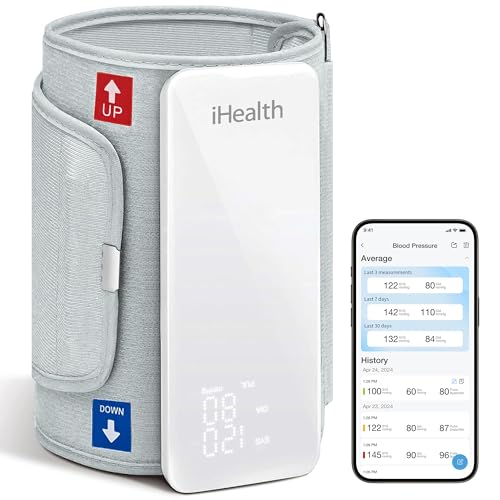
The iHealth Neo Wireless Blood Pressure Monitor ($39.97) — The iHealth Neo Wireless is the slimmest upper-arm monitor here — genuinely thin enough to disappear into a laptop bag — and iHealth says it's clinically validated with no calibration needed. A 950 mAh rechargeable battery gets about 130 measurements per charge, gentle inflation makes the squeeze less unpleasant, and a reading takes 30 to 60 seconds. The MyVitals app exports to CSV, XLS or PDF, which is handy if you like your own spreadsheets. It lost to the Track Pro because it costs more without adding rhythm screening or setup sensors, and lost to the Omron picks on feature depth. Buy it if portability and clean data export are what you care about most.
The A&D Medical Wrist Blood Pressure Monitor for ($48.63) — The A&D Medical UB-525 is a wrist monitor, and that's both its appeal and its problem. It's tiny, works with one button, stores 60 readings, shows oversized digits on a clear LCD, and fits wrists from 5.3 to 8.5 inches. But wrist devices are far more sensitive to position than upper-arm cuffs, and this one has no posture sensor to keep you honest — published comparisons find wrist units without position guidance trail upper-arm cuffs against a clinical reference. The companion app only takes manually entered readings. Choose it if an upper-arm cuff physically doesn't work for you, or as a travel spot-check next to a proper home monitor. Don't manage a diagnosis with it.
Cuff fit and technique
Fit comes first. Measure your upper arm at the midpoint between shoulder and elbow before you order, then check that number against the cuff range. A cuff that's too narrow can push your systolic reading up by a wide margin, and that's exactly the error that gets someone medicated who didn't need it. Wrap it so the bottom edge sits about an inch above your elbow crease, snug enough to slide two fingers underneath, with the tube running down the inside of your arm. Sit with your back supported, feet flat, arm resting at heart height. Skip caffeine, exercise and cigarettes for half an hour beforehand, and don't talk during the reading. Take two or three measurements a minute apart and average them.
Questions we get
Are wrist blood pressure monitors as accurate as upper-arm ones?
In everyday home use, no. Published comparisons find properly fitted upper-arm cuffs land within a few mmHg of a clinical reference far more consistently than wrist units without posture guidance. Research does suggest wrist monitors with position indicators can close much of that gap, but only when you hold correct posture every single time. The American Heart Association doesn't recommend wrist monitors as a primary tool for managing hypertension.
What does 'clinically validated' actually mean?
It means the device was independently tested against a reference sphygmomanometer in a peer-reviewed trial following an established protocol, and it measured within accepted accuracy limits. FDA clearance is a different thing — it means the device can legally be sold, not that it reads accurately. Published counts suggest most monitors sold online have never been validated. You can look up a specific model on ValidateBP.org, a joint AMA and AHA project, before you buy.
How do I know my cuff fits?
Measure your upper arm circumference at the midpoint between shoulder and elbow, then match it to the cuff range on the listing. Standard cuffs generally cover 22 to 32 cm and wide-range cuffs go to about 42 cm. A cuff roughly 20 percent too narrow can overestimate systolic pressure by around 10 mmHg. If your arm is bigger than 42 cm, contact the manufacturer about a larger cuff before ordering anything.
How often should I measure?
The American Heart Association suggests twice a day — morning before you eat or take medication, and evening before bed. Take two or three readings a minute apart each session and record the average. Doing this for at least seven days in a row gives your doctor something worth acting on. A single reading, especially a scary one, is mostly noise.
Can my smartwatch do this instead?
Not for anything clinical. No mainstream smartwatch offers a clinically validated blood pressure measurement, and the trend features that exist need calibration against a real cuff. Use a validated upper-arm monitor for anything a doctor will act on. Watch data is fine as a nudge, never as the basis for a medication decision.
Which of these work with Apple Health or Google Fit?
The OMRON Platinum, Gold and Evolv all sync to Apple Health and Google Fit through the Omron Connect app over Bluetooth. The Withings BPM Connect goes through Health Mate, which also connects to Apple Health, and it's the only one here that uploads over Wi-Fi without your phone. The iHealth models use the MyVitals app, which stores and exports readings but keeps a smaller ecosystem.
Why you should trust us
For this guide:
- We read published reviews and buying guides for this category, along with the American Heart Association's home-monitoring guidance and the validation criteria behind ValidateBP.org.
- We compared manufacturer specifications for all eight monitors side by side — cuff ranges, memory, power, rhythm screening and app behavior.
- We read through owner feedback themes for each model to see which flaws come up repeatedly, particularly around cuff wrap, display readability and app pairing.
- We read owner reviews on every listing, weighted toward the critical ones, because that is where the recurring failures show up.
- We have a systematic way of automatically fetching the latest prices, so the numbers on this page stay current.
- This is a research-focused guide, so the team may not own every product listed — though we often do own the top winners, which gives us extra context for the recommendations.
- We don't accept free products, and the retailer commission never changes which product we recommend.
Sources
Best Blood Pressure Monitors — Wirecutter / The New York Times, Wirecutter
Blood Pressure Monitor Ratings & Reviews — Consumer Reports, Consumer Reports
Monitoring Your Blood Pressure at Home — American Heart Association, American Heart Association
Validated Blood Pressure Measuring Devices — ValidateBP.org, ValidateBP.org (American Medical Association / AHA Initiative)
Clinical Accuracy of Wrist Blood Pressure Monitors: 2024 Meta-Analysis — Journal of Hypertension, Journal of Hypertension
Amazon product listings and owner reviews for all 8 products
Manufacturer specification pages for each product
Some passages in this guide may be paraphrased with AI help. Prices are refreshed automatically.
More like this.
Continue exploring health reviews and recommendations.

The Best Home Blood Pressure Monitors
We compared ten upper-arm monitors on reading consistency, cuff fit, everyday usability and data sharing for people tracking blood pressure at…

The Best Tire Pressure Monitoring Systems
Your tires are losing air right now. Nothing dramatic - just the ordinary seep of one to two pounds a month, according to the Tire Industry Association,…

The Best Portable USB-C Monitors
A second screen changes how a laptop feels. Spreadsheets stop hiding behind browser tabs, and a video call stops covering your notes. What makes a…

The Best Continuous Glucose Monitors and Sensor Covers
A continuous glucose monitor is a small sensor you wear on the back of your arm. It reads your glucose every few minutes and sends the number to your…

The Best Continuous Glucose Monitors and Sensor Covers
A continuous glucose monitor turns a number you used to get four times a day into a line you can watch. That changes how you eat, how you exercise, and…

The Best Fitness Trackers and Heart Rate Monitors
A fitness tracker only helps if you actually wear it. That sounds obvious, but it's the thing most people get wrong. The band that counts every calorie is…