The Best Rechargeable Heated Vests
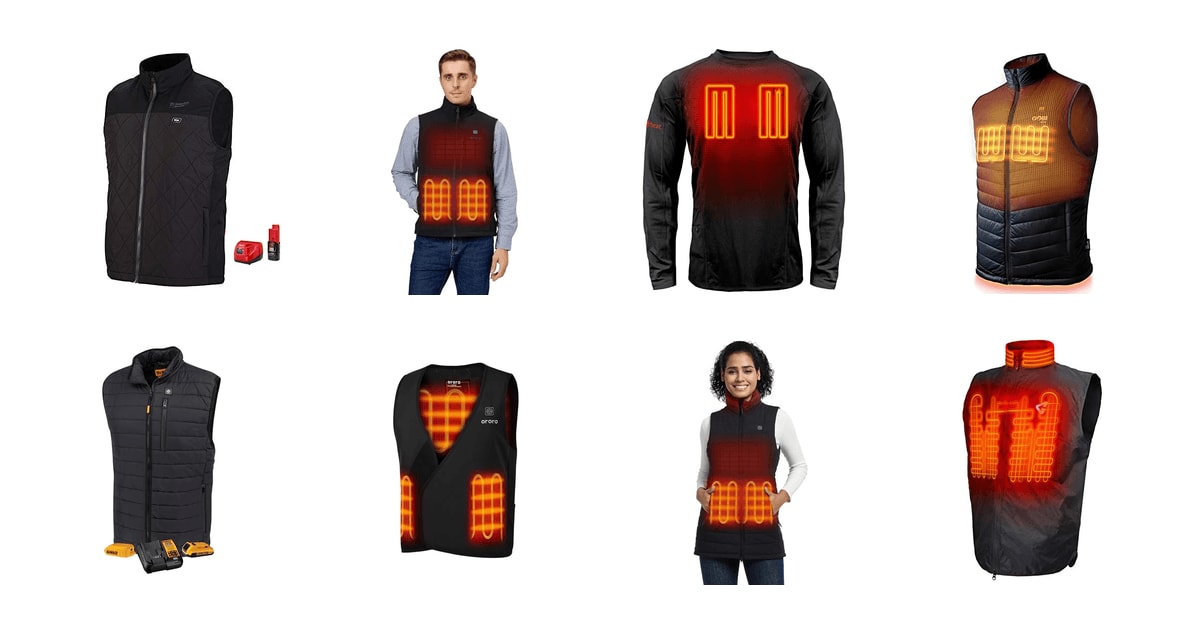
A heated vest earns its keep in the hours when you stop moving. Waiting on a sideline, sitting in a hunting blind, standing on a job site while someone else finishes a measurement — that's when passive layers stop working and a battery starts to matter. The good ones warm your lower back and core within a minute or two, run all day on the low setting, and disappear under a shell. The bad ones are a nylon vest with a lump in the pocket.
Here's the honest part: no heated vest solves your whole cold-weather problem. Battery life on the high setting is short across every brand and every voltage tier — plan on two to four hours, not the number printed on the box. Batteries are bulky, and owners report them digging into ribs, jabbing a kidney against a truck seat, or unplugging on their own. And your arms stay cold. A vest is a core-warmth device you wear under something else, not a replacement for a coat.
So pick for the way you'll actually use it. If you already own cordless tools, the matching vest is usually the smart buy. If you don't, a 7.4V consumer vest with the battery in the box gets you most of the way there for far less. We think that the ORORO Men's Heated Softshell Vest is the best rechargeable heated vest for most people, and that the Milwaukee M12 AXIS Heated Quilted Vest Kit is the one to buy if you already own M12 batteries and need heat on a job site.
Everything we recommend

Four zones, real wind protection, and no ecosystem to buy into

Fastest warm-up here, if you already own M12 batteries

Invisible warmth under a coat, with the longest potential runtime

A tailored, mid-thigh cut with a heated collar
At a glance
| Product | Heat Zones | Battery | Price | |
|---|---|---|---|---|
| MILWAUKEE'S Tool Men's X-Large M12 12-Volt Lithium-IonUpgrade pick | — | 12V 2.0Ah | $280 |
| ORORO Men's Heated Softshell VestTop pick | 4 Zones | 7.38V 4800mAh | $129.99 |
 | ActionHeat Heated Thermals for Men - UltraAlso consider | 3 Zones | — | $155 |
 | Gobi Heat Dune Heated Vest for MenAlso in lineup | 3 Zones | — | $94.50 |
 | DEWALT Cold Weather Men's Heated Puffer VestAlso consider | — | 20V | $187.99 |
| ORORO Adjustable Heated Liner Vest with BatteryBudget pick | 3 Zones | 7.38V 4800mAh | $89.99On sale |
| ORORO Women's Long Heated Puffer Vest withAlso great | 4 Zones | 7.38V 4800mAh | $159.99On sale |
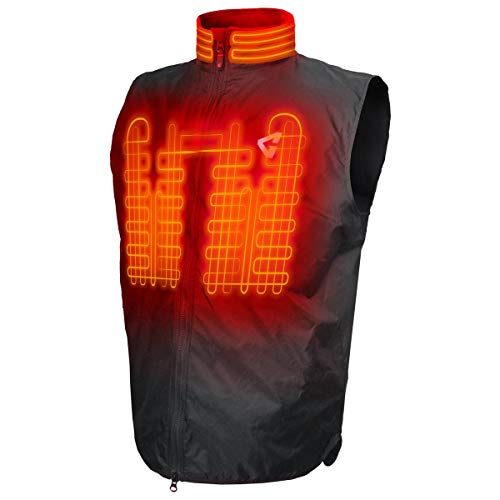 | Gerbing Heated Vest Liner - 12V MotorcycleAlso consider | — | 12V | $198.99 |
How we picked
Voltage tier. We sorted the field into 5V USB, 7.4V proprietary and 12V/20V tool-battery systems, because published reviews consistently find 7.4V vests hold heat better than 5V models in wind below about 20°F. We treated 7.4V as the floor for anything colder than a mild winter day.
Zone placement. We compared where each manufacturer puts its heating elements rather than counting them. Reviewers and owners both report that lower-back and mid-back coverage does more for perceived warmth than a higher zone count spread across the chest.
Battery and runtime. We read the rated capacity and runtime claims against what owners describe in practice, since every 'up to X hours' figure refers to the low setting. Vests where owners repeatedly report packs failing early got flagged in the write-ups.
Shell and wind. We looked at whether the shell can work as an outer layer or only as a liner. Softshell and quilted constructions handle wind differently, and that determines whether you need a jacket over the top.
Total cost of entry. We considered what you have to buy beyond the vest — a battery, a harness, a controller, a power bank. Products that need separate purchases to function at all were judged on the full system, not the garment alone.
Top pick
Four zones, real wind protection, and no ecosystem to buy into
ORORO Men's Heated Softshell Vest
A wind- and water-resistant softshell with four carbon-fiber heating zones and a 7.38V battery in the box. It works as an outer layer on a cold commute or a dog walk, and it layers under a coat when the weather turns serious.
$129.99fromAmazonFor most people, this is the vest that covers the most situations without asking anything extra of you. The battery comes in the box, so there's no tool platform to buy into and no power bank to remember. One button cycles low, medium and high, with a colored LED so you can see where you are. If you've never owned a heated vest and you're not sure which tier you need, start here.
Zone placement is the part that actually matters, and ORORO gets it right. Two zones sit at the hand pockets, one at the mid-back, one at the lower back. That lower-back element is the difference between feeling warm and just feeling like something is warm against your chest. Owners who bought it for dog walking, skiing and outdoor work consistently describe it as warm without restricting movement.
The softshell shell is what separates this from the liner-style vests. It cuts wind and sheds light rain, so you can wear it as your outer layer down to around freezing without a jacket over it. Below that, it slips under a hardshell without much bulk. Tall buyers report the length works for them, which is unusual in this category — check the size chart before you order.
Runtime is honest rather than heroic. The 7.38V 4800mAh pack is rated for up to eight hours, and that's the low setting. On high you should expect a couple of hours, which lines up with what owners describe. Charge it the night before you need it and run it on low with a bump to high when you stop moving.
Flaws but not dealbreakers
Battery complaints are the recurring theme in owner feedback. Some report the pack holding a charge for only about two hours in real use; a few report a unit that never heated at all out of the box. That's a quality-control spread, not a design flaw, but it's worth opening the box and testing the vest well before the cold weather you bought it for.
There's no collar zone here, which ORORO's women's puffer does have. If your neck and upper chest are where you feel cold first, that's a real gap. The charging cable is also proprietary rather than USB-C, so it's one more cable to keep track of and one more thing to replace if you lose it.
ORORO does not state a warranty term in this listing.
Upgrade pick
Fastest warm-up here, if you already own M12 batteries
MILWAUKEE'S Tool Men's X-Large M12 12-Volt Lithium-Ion
A quilted job-site vest that runs on Milwaukee's M12 platform and reaches operating temperature faster than anything else here. The kit includes a 2.0Ah battery and charger, so it works out of the box even if this is your first M12 product.
$280fromAmazonIf you already own M12 tools, the math is simple. Every battery on your charger is a spare for this vest, which means you're never rationing heat on a long day. Milwaukee rates the carbon-fiber elements to reach operating temperature in under 30 seconds, and published reviews put it at the fast end of the field. On a cold morning that's the difference between warmth now and warmth in five minutes.
The kit is a genuinely complete package, which is rarer than it sounds. Vest, 2.0Ah battery and charger all come in the box. A 2.0Ah pack is good for roughly three to four hours on high and six to eight on low, so a single battery covers most shifts and a second one covers all of them. Owners buying it for deer stands and outdoor work report it does the job.
The quilted shell reads as work gear rather than technical outerwear, which suits customer-facing trades. It's also warmer on its own than a thin liner. But it's a quilt, not a softshell, so wind gets through more than you'd like in the open. Wear it under your work coat when the wind picks up and it's excellent.
This is the most expensive kit here, and that only makes sense in context. If you own M12 tools, you're effectively paying for a vest. If you don't, you're paying for a vest plus a battery platform you'll never use again — and the ORORO softshell gets you comparable warmth for much less.
Flaws but not dealbreakers
The battery position is the loudest complaint from owners, and it's specific: the pack sits where it presses into your side. Heavy equipment operators and anyone who spends the day in a seat report it jabbing into their ribs or kidneys. If your work is mostly standing or walking, this may never bother you. If you sit for hours, it will.
Seller-side problems come up more than we'd like. Owners describe a dead charger and then a return process that made them pay return shipping, plus trouble getting invoices honored for promotional offers. Buy from a seller with a return policy you've actually read.
The quilted nylon shell is less wind-resistant than a softshell. In sustained gusts it wants a hardshell over the top, which adds a layer you may not have planned for.
Budget pickOn sale
Invisible warmth under a coat, with the longest potential runtime
ORORO Adjustable Heated Liner Vest with Battery
An ultralight 7.4V liner built to vanish under a jacket, suit coat or work shell. It runs on one included battery and accepts a second, which pushes low-setting runtime to a claimed 19 hours.
$89.99fromAmazonList priceThe pitch here is a good one: why buy a heated jacket and then wear a jacket over it? This liner is designed to be the layer you forget you're wearing. It adds almost no bulk under a windbreaker, a trench coat or a work shell, and owners who wear it under a suit coat for winter commuting describe exactly that. If you already own outerwear you like, this turns it into a heated version of itself without replacing anything.
Dual-battery support is the standout feature at this level. One 7.38V 4800mAh pack is included, and adding a second — sold separately — extends low-setting warmth to a claimed 19 hours, all managed through one control. For a long day outdoors with no outlet, that's the longest runtime of any consumer vest here. The power button vibrates, so you can change settings through your coat without unzipping.
Three zones sit at the belly and mid-back. That's fewer than the softshell, and the coverage is deliberately narrow — this warms your core, not your chest and collar. For a liner worn under insulation, that's the right trade. It's also adjustable at the waist, which helps it sit close enough to your body to actually transfer heat.
Flaws but not dealbreakers
Owner feedback on this one is the most mixed of any pick here, and the pattern is batteries. Several report a pack that charged once and then stopped, or a shipment arriving without the battery at all. Others describe about an hour on the highest setting rather than the rated figure. ORORO's support gets decent marks for sorting out replacements, but you should plan on testing yours immediately.
Coverage genuinely is thin at the front. Some owners describe it as warming the lower back well and the chest barely. And it is not a standalone garment — worn alone on a cold day, it's a thin nylon shell with a heater in it. If you want one thing you can throw on and walk out the door, get the softshell instead.
Also greatOn sale
A tailored, mid-thigh cut with a heated collar
ORORO Women's Long Heated Puffer Vest with
A women's puffer with mid-thigh coverage and four zones, including one at the stand-up collar. The tailored cut solves the sloppy-shoulder, short-waist problem that makes unisex heated vests frustrating to wear.
$159.99fromAmazonList priceFit is the whole argument for this vest. Most heated apparel is cut unisex, which means excess fabric at the shoulders and a hem that stops right where you want coverage. A vest that doesn't sit close to your body can't transfer heat well, so fit isn't a vanity issue here — it's a performance one. Owners consistently mention getting the fit right after a size swap, so read the chart and expect to size for how you'll layer.
The mid-thigh length is the other differentiator, and it matters most when you're standing still. Below-the-hip coverage keeps warmth in during a cold golf round, a sideline, or a long walk. A two-way front zipper and a center-back vent let you dump heat when you start moving, which a standard vest cut can't do.
The collar zone is the piece the men's softshell lacks. Warmth at the neck and upper chest is what people managing Raynaud's and similar circulation issues tend to notice most, and the four zones — two hand pockets, mid-back, collar — cover the places cold usually reaches first. The battery also charges a phone, which is a small thing until your phone dies in the cold.
Owners describe wearing it for whole winters and running it mostly on low after an initial blast on high, which tracks with the up-to-10-hour low-setting rating. It's the most expensive consumer vest here, and it earns that with the cut and the coverage rather than with more heat.
Flaws but not dealbreakers
Battery complaints show up here too — a handful of owners returned units that didn't hold a charge. Nothing in the feedback suggests a systemic problem, but it's the same advice as everywhere in this category: charge it, run it, and confirm it works while you can still return it.
The length costs you packability. This doesn't roll into a bag the way a standard vest does, and puffer insulation adds bulk if you wanted a slim profile under a coat. Several owners also find the glowing power button annoying in the dark.
Who this is for
Buy a heated vest if you spend more than an hour or two at a stretch in the cold without moving much: hunting, ice fishing, sideline watching, outdoor job sites, motorcycle touring, or a commute that involves standing on a platform. Active warmth lets you wear a slimmer, more mobile clothing system than passive insulation can manage at the same weight. If your cold exposure is a walk from the car to the store, extra layers are fine and cheaper.
This guide covers rechargeable torso-warming garments — vests and one heated base-layer shirt. We're not covering heated jackets with sleeves, heated socks or gloves, or battery-free insulated vests. If you have an implanted medical device or a condition that affects how you sense temperature, talk to your doctor before wearing heated apparel for long stretches.
How we picked
We built the shortlist around a handful of things that actually change how a vest performs. Voltage: we treated 7.4V as the minimum for cold below about 20°F, with 5V USB models reserved for milder weather. Zone placement: lower-back and mid-back coverage beats a higher zone count spread thin. Runtime: every rated figure describes the low setting, so we read manufacturer claims against what owners report on high. Shell: softshell and quilted constructions can work as outer layers, while liners can't. Total cost of entry: we counted the battery, harness or controller you have to buy separately before the vest works at all.
Other rechargeable heated vests worth considering
If you already own DeWalt 20V MAX tools: The DEWALT Cold Weather Men's Heated Puffer Vest ($187.99) — This is the same logic as the Milwaukee, pointed at the other big cordless platform. The kit ships with a 20V battery so it works out of the box, and a 2Ah pack gets you around two and a half hours on high or eight on low — competitive with any consumer 7.4V vest. Published reviews put its warm-up at roughly 25 seconds, and owners in genuinely brutal cold report staying toasty under a coat. What you give up is comfort with the battery: several owners find the 20V pack too bulky in the pocket and report the connector unplugging itself when they move around, especially while driving. There's also no collar heat, and the front-mounted indicator light bothers some people at night.
If you ride and want heat that never runs out: The Gerbing Heated Vest Liner - 12V Motorcycle ($198.99) — The Gerbing liner wires into your motorcycle, snowmobile, ATV or boat electrical system, so runtime is limited only by how long the engine runs. Its Microwire elements spread heat across five zones — collar, two chest, two back — rather than concentrating it at discrete pads, which is why riders report it holding up at highway speeds where battery vests fade. Two catches, both significant. It doesn't work at all without a Gerbing 12V harness and a compatible temperature controller, both sold separately, and owners say the controller isn't optional — without it the vest runs uncomfortably hot. Installation defeated at least one buyer entirely. And it leashes you to the vehicle: every time you step away, you unplug.
If you'd rather use a power bank you already own: The ActionHeat Heated Thermals for Men - Ultra ($155) — This is a heated base-layer shirt, not a vest, and it runs on any 5V USB bank with a 2A output — no proprietary pack to lose or replace. That flexibility is the whole appeal, and owners who keep spare banks charged love it for hockey games, golf and cold-morning rides. A 6000mAh bank is included. The limits are real, though: 5V heat is meaningfully weaker than 7.4V in wind below 20°F, the high setting is rated for only about two hours, and several owners report the heating zones being smaller and more bunched up than the product images suggest. It sits under everything else you wear, so it's less flexible than a vest you can throw on and off.
The competition
This section covers the rest of the lineup we looked at — the products that came up in this research, not everything sold in the category. Heated apparel turns over quickly and small brands come and go, so treat this as a snapshot of a specific set of listings rather than a survey of the whole market.
The Gobi Heat Dune Heated Vest for Men ($94.50) — The Gobi Heat Dune is the least expensive 7.4V vest here, and on paper it's a strong pitch: three heat zones, a wind- and water-resistant shell, machine washable, and a claimed 10 hours on low. Owners who got a good one are genuinely enthusiastic, and one bought eight for the family. But the sizing is the risk — at least one owner describes a medium fitting like a garbage bag, with a waist and chest near 50 inches and arm openings loose enough to let cold air straight in. A heated vest that doesn't sit close to your body can't do its job. There's also very little owner feedback to draw on, and Dragon Heatwear has a thinner support track record than ORORO or the tool brands. If you find it in stock, it's a reasonable gamble for casual use in the 20 to 35°F range. Just order from somewhere with easy returns, and be prepared to swap sizes.
Care and battery habits
Every vest here is machine washable, but only with the electronics out. Unplug and remove the battery pack, cap the power port, and wash on a gentle cycle in cold water. Air dry or tumble on low — heat is what kills the connectors and the elements over time. The bigger thing is battery habits. Charge the pack fully before the first cold day and confirm the vest actually heats while you're still inside a return window, because failed-on-arrival batteries are the single most common owner complaint across brands. Don't store a battery dead through the off-season; top it up every couple of months. And run on low with an occasional bump to high rather than sitting on high, which both stretches the charge and keeps the vest from cooking you when you start moving.
Questions we get
How long does a heated vest battery actually last?
Far less on high than the box implies. Every 'up to X hours' figure describes the lowest setting, so expect roughly two to four hours on high, four to six on medium, and six to ten on low from a typical 7.4V pack. The ORORO liner with a second battery is rated up to 19 hours on low, and the Gerbing has no runtime limit while your vehicle is running. Owners routinely report less than the rated number, so buy a spare battery if you need a full day.
What voltage should I get — 5V, 7.4V or 12V?
For most people, 7.4V. Published reviews consistently find 7.4V vests hold sustained heat better than 5V USB models in wind below about 20°F. A 5V vest like the ActionHeat shirt is fine above roughly 30°F or as a supplement under other layers. The 12V and 20V tool-battery systems put out the most heat but only make financial sense if you already own the batteries.
Can I use Milwaukee or DeWalt tool batteries in any heated vest?
No — only in brand-matched garments. The Milwaukee AXIS takes M12 packs and the DeWalt vest takes 20V MAX packs, and neither will work in the other or in a consumer 7.4V vest like the ORORO models. That's the whole point of buying the matching vest: if you already own the batteries, you skip the largest part of the cost.
Can I run a heated vest off my phone's power bank?
Only if the vest is built for 5V USB power, which among these means the ActionHeat base layer. It needs a bank with at least 2A output, which most modern ones have. The 7.4V vests use proprietary packs and won't run from a USB bank at all — plugging one in simply does nothing. Check the required voltage before you buy any spare power source.
Are heated vests safe to wear all day?
Yes, for the vast majority of people. Carbon-fiber and Microwire elements don't need skin contact and run at surface temperatures within established safety limits, and quality vests carry CE, UL or RoHS marks. The practical constraint is battery life rather than safety. If you have an implanted device, reduced sensation, or a condition that affects temperature regulation, check with your doctor first.
Is a heated vest better than just wearing more layers?
For sustained cold and stationary activity, yes. Passive insulation only traps the heat you generate, so once you stop moving you need a lot of bulk to stay warm. A heated vest adds heat, which lets you stay warm in a slimmer, more mobile clothing system. For short errands above about 30°F, layers are simpler and cheaper.
Vest or heated jacket?
A vest under a waterproof shell beats a standalone heated jacket for most people. It splits the jobs cleanly — the vest handles core warmth, the shell handles wind and rain — and you can swap either piece as conditions change. Heated jackets add weight and cost and lock you into one outer layer. The exception is casual wear where you'd rather not think about layering at all.
Why you should trust us
For this guide:
- We read manufacturer specifications and listing details for all eight products, comparing voltage, battery capacity, zone placement and stated runtimes side by side.
- We reviewed published coverage of heated apparel from outdoor and tool-focused review outlets to understand how the voltage tiers differ in sustained cold.
- We read through owner feedback for each listing, looking for repeated failure modes — battery placement, early pack failures, sizing problems — rather than one-off complaints.
- We read owner reviews on every listing, weighted toward the critical ones, because that is where the recurring failures show up.
- We have a systematic way of automatically fetching the latest prices, so the numbers on this page stay current.
- This is a research-focused guide, so the team may not own every product listed — though we often do own the top winners, which gives us extra context for the recommendations.
- We don't accept free products, and the retailer commission never changes which product we recommend.
Sources
Amazon product listings and owner reviews for all 8 products
Manufacturer specification pages for each product
Some passages in this guide may be paraphrased with AI help. Prices are refreshed automatically.
More like this.
Continue exploring lifestyle reviews and recommendations.

The Best Rechargeable Hand Warmers
Cold hands ruin an otherwise good day outside. A rechargeable hand warmer is a small lithium battery wrapped in a metal or plastic shell that heats up on…

The Best Rechargeable LED Work Lights
Most of the time you need a work light, both of your hands are already busy. You're under a hood chasing a dropped bolt, or up in an attic splicing wire,…

The Best Dog Cooling Vests
Heat sneaks up on dogs. They can't sweat through their skin the way you do, so panting is most of what they've got, and panting stops working well once…

The Best Weighted Vests for Strength Training
A weighted vest is the rare piece of gear that makes workouts you already do harder without taking up floor space. Add 20 pounds to pull-ups and the bar…

The Best Dog Anxiety Calming Vests
Thunder rolls in around dinnertime, and your dog is already under the bed. Maybe it's fireworks, maybe it's the sound of a suitcase zipper, maybe it's the…

The Best Heated Work Gloves
Cold hands make you slow and careless. You fumble the bolt, you drop the shovel, you pull a glove off to work your phone and lose ten minutes of warmth…