The Best Heated Ski Glove Liners
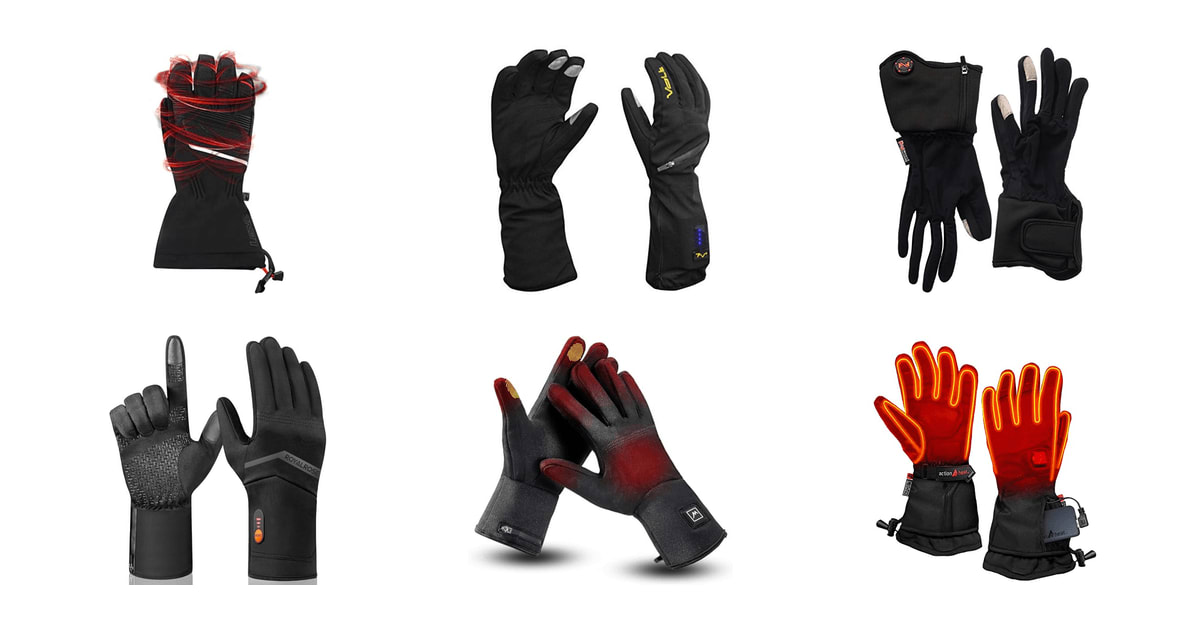
Cold fingers end ski days early. You can be dressed perfectly everywhere else and still be the person jamming both hands into a jacket pocket at the top of every lift. Heated liners fix that from the inside out. They're thin gloves with heating elements sewn along the fingers and across the back of the hand, powered by small batteries at the wrist, worn under the ski gloves you already own. You turn them on when the wind picks up and off when you're warm.
None of them are magic. Batteries are the hard limit — roughly two hours on high, closer to five or six on low, and cold air shortens both numbers. The heat is gentle warmth, not a furnace, so a liner won't rescue a glove that's too thin or already soaked. And these are electronics you flex thousands of times a day. Owner feedback across nearly every brand includes liners that quit after a season or two, almost always at a wire or a battery connector.
So buy for fit first. A liner that bunches inside your glove costs you grip on your poles and squeezes out the trapped air that was keeping you warm in the first place. Measure your hand, size up if you land between sizes, and try the pair inside your actual gloves before you commit a whole season to them. We think that the WEIVIOQ Heated Glove Liners are the best heated ski glove liners for most people, and that the Royalrose Heated Gloves Liners are the ones to buy if your hands run cold enough that you want more heat and more insulation than a slim liner gives you.
Everything we recommend

Thin enough to layer, warm enough to matter

More warmth and more padding, at the cost of bulk

The nicest construction here, if you'll buy the packs too

The most heat on tap, for genuinely brutal days
Phone control and a slim cut, with some durability doubts
At a glance
| Product | Voltage | Capacity | Price | |
|---|---|---|---|---|
| Lenz Heat Glove 6.0 Finger Cap forUpgrade pick | — | — | $374.96 |
| Volt Resistance 7V Insulated Heated Glove LinersAlso great | 7V | 2600mAh | $139.95 |
 | Mobile Warming MWG15M01-SM-BLK Unisex-Adult Heated 7.4v GlovesAlso consider | 7.4V | — | $125 |
| Royalrose Heated Gloves Liners for Men WomenRunner-up | 7.4V | 2500mAh | $99.99On sale |
| WEIVIOQ Heated Glove Liners for Men &Top pick | 7.4V | 2200mAh | $99.98 |
 | ActionHeat 5V Men's Premium Heated GlovesAlso in lineup | 5V | 3000mAh | $195 |
| SAVIOR HEAT Bluetooth Heated Glove Liners forBudget pick | 7.4V | 2200mAh | $109.99On sale |
How we picked
Fits under real gloves. Published ski glove testing points to liner thickness as the main compatibility constraint, with slim profiles preserving grip on poles and buckles. We favored stretch-shell liners over insulated ones and flagged any pair owners called bulky.
Heat at the fingertips. Field testing of heated liners consistently shows full-finger elements holding fingertip temperatures higher than palm-only or back-of-hand-only layouts. We only considered liners whose spec sheets put heat out to the ends of the fingers.
Honest battery numbers. We compared stated voltage, capacity and runtime against what owners actually describe getting on each setting. Anything that couldn't cover a morning on medium had to make up for it with spare packs in the box.
Controls and touchscreens. Adjusting heat shouldn't mean taking a glove off in the wind, so we looked at button placement, the number of settings, and app control. We also noted how many fingers carry conductive touchscreen material, since most liners only cover thumb and index.
Signs of durability. Heating elements fail at flex points and battery connectors, so we read owner feedback for repeated failure patterns rather than one-off complaints. Liners with a consistent story of dying mid-season didn't earn a pick.
Top pick
Thin enough to layer, warm enough to matter
WEIVIOQ Heated Glove Liners for Men &
These liners are thin enough to disappear inside a ski glove, and the heating element wraps the whole back of the hand and runs out along every finger. The 7.4-volt packs are rated up to about six hours, which covers a full lift-served day on the lower settings.
$99.98fromAmazonFit is the whole game with a liner, and this one gets it right. The shell is soft Lycra with a thin fleece interior, so it stretches over your hand instead of stacking a second glove inside the first. Owners keep mentioning that it doesn't feel clunky under other gloves and that finger movement stays natural. If your ski gloves already fit you snugly, this is the safest bet in the group.
Heat lands where you need it. The element covers the back of the hand and continues out along the fingers, which matters because fingertips go numb first. Published field testing of heated liners consistently favors full-finger coverage over palm-only or back-of-hand-only layouts for exactly that reason. WEIVIOQ describes the element as far-infrared fiber. What you'll notice is even warmth rather than a hot stripe across your knuckles.
The packs are 7.4 volts and 2200mAh, and the listing rates them at up to six hours on a full charge. Read that as the low setting. Plan on roughly half if you ride high all morning, which is how most people burn through a charge. A spare set of packs is the simple fix for a full day on the mountain, and they're sold separately.
Owner feedback skews warm. People with cold-sensitive hands, stiff joints and Raynaud's report real relief, and several describe wearing the liners alone for outdoor chores at around zero. That's a useful signal for skiing, where you'll have a shell glove on top doing the wind-blocking anyway. Three settings give you enough range to dial the heat down on a sunny groomer lap.
Flaws but not dealbreakers
The weak point is the wiring. More than one owner reports a battery connection failing on one glove after a few months of daily use, which leaves you with one warm hand and one cold one. That's a common story across this whole category, but it's worth knowing before you count on these for a season of long shifts outside.
They're not waterproof. The Lycra shell blocks a little wind and nothing else, so a soaked outer glove will get them wet. The touchscreen sensors sit on the thumb and index finger only, so checking a trail map means pulling off your outer glove and pecking at the screen with two fingers.
Runner-upOn sale
More warmth and more padding, at the cost of bulk
Royalrose Heated Gloves Liners for Men Women
Royalrose builds a thicker, better-insulated liner around a silicone-coated heating wire, with a windproof outer face and a soft velvet-style lining. It has far more owner feedback behind it than anything else here, much of it from people who bought it specifically for cold-sensitive hands.
$99.99fromAmazonList priceThis is the pair that people with circulation problems keep coming back to. The heating wire is coated in high-temperature silicone, so it stays flexible instead of stiffening into a wire you can feel, and it runs across the back of the hand and down the fingers. Owners with arthritis, nerve damage after surgery, and Raynaud's describe getting usable hands back — at home, on a bike, and on the hill.
The trade-off is bulk. Royalrose's own listing tells you to wear an outer glove over these, and owners repeatedly call them thicker than expected. Inside a roomy ski glove that's fine, and the extra material adds insulation of its own. Inside a fitted glove, it's the difference between gripping a pole naturally and fighting the liner every time you reach for a buckle.
The power system is the most honest one here. A 7.4-volt, 2500mAh cell drives three settings, and owners consistently describe four to six hours from a charge when they're not parked on high. The cells are FCC and CE certified, which is a low bar but not one every brand in this category clears. The packs sit in wrist pockets and stay out of the way of your glove cuff.
The outer face is windproof and sheds splashes, so these survive a fall in wet snow better than the thin stretch liners here. The inside is a brushed knit that wicks well enough to keep your hands from turning clammy on a hiking traverse. If you sweat on the way up and then freeze on the way down, that matters more than another watt of heat.
Flaws but not dealbreakers
Sizing is inconsistent. Plenty of owners land between sizes and find the fingers too long or the wrist too narrow, and fit is easily the most common reason people send these back. Measure your hand and follow the chart instead of ordering your usual glove size.
A handful of owners report moisture building up inside during low-effort use, and at least one liner stopped working after about six months. Touchscreen conductivity is limited to the thumb and index finger, and the conductive patches are PU rather than fabric, so they work but feel slick.
Upgrade pick
The nicest construction here, if you'll buy the packs too
Lenz Heat Glove 6.0 Finger Cap for
Lenz encloses each finger completely in its heating element and heats the back of the hand as well, inside a PrimaLoft-insulated, four-way-stretch shell with a Hipora membrane. This listing is the gloves only, so the lithium packs that power them are a separate purchase.
$374.96fromAmazonYou're paying for construction here, not just watts. The shell uses PrimaLoft insulation and a Hipora membrane, so it breathes and blocks wind on its own, and the four-way stretch fabric moves with your hand instead of resisting it. There's even a small patch on the thumb for wiping your goggles or glasses, which sounds like a gimmick until the first time you fog up on a traverse.
The element wraps each finger completely rather than running a single wire up the top. That means the underside of your fingers — the part actually curled around a pole grip, where you lose heat into the metal — gets warmed too. Add the back-of-hand coverage and it's the most thorough heat layout in this group on paper. The packs clip on with push buttons, so gloved hands can manage them.
If you already own Lenz heated socks, this is an easy call. Any Lenz lithium pack works with these gloves, so one charger and one spare set of packs cover both ends of your body. That's a real convenience on a multi-day trip, where the alternative is a bag of chargers with different plugs and a fight over the one free outlet in the room.
This is also the closest thing here to a glove you could wear on its own. With PrimaLoft in the shell it's warm unpowered, which makes it a reasonable choice for spring touring, resort days in mild cold, or driving to the hill. Skiers who want one layer instead of two will get more use out of it than out of a bare stretch liner.
Flaws but not dealbreakers
The batteries aren't included. This listing is gloves only, and without a pair of Lenz lithium packs you've bought a nice unheated glove. The packs are proprietary, so a generic USB battery from your drawer won't work and you're committed to the Lenz ecosystem for spares.
Owner feedback on this listing is thin and not all of it is kind — at least one buyer found the warmth weaker than a disposable hand warmer. Between the insulation and the full-finger element, this is also the thickest option in the guide. Treat it as a heated glove that can layer rather than a slim liner, and check it against your ski gloves before you rely on wearing both.
Also great
The most heat on tap, for genuinely brutal days
Volt Resistance 7V Insulated Heated Glove Liners
Volt runs a 7-volt system rather than the 5-volt setups common in this category, with a four-level controller to meter it out. Two batteries and a dual charger come in the box, which is unusual here and effectively doubles the length of your day.
$139.95fromAmazonVoltage is the entire reason to buy these. Volt's own specifications put 7-volt elements at roughly 40 percent more heat output than standard 5-volt designs, and a ski gear-test panel rated a Volt 7V liner the warmest battery-powered liner in its group. If you tour above treeline, run lifts, or work outside through a full shift in sub-zero wind chill, that headroom is the point of the purchase.
The coverage matches the ambition. Heat runs the entire length of each finger plus the palm and the back of the hand, so there's no cold patch where the element stops short. The nylon shell layers cleanly under an outer glove, a soft tricot lining moves heat toward your skin, and a waterproof breathable membrane keeps slush from soaking straight through.
Two batteries in the box changes how you plan the day. The included 7.4-volt, 2600mAh packs are rated somewhere between two and eight hours depending on the setting, so a fresh pair at lunch gets you to last chair even if you've been running high all morning. Most brands here sell spares separately, and buying a second set roughly doubles what you spend to get through a full day.
The four-level controller is more useful than the usual three. Cold mornings and warm afternoons don't need the same output, and the extra step lets you sit between comfortable and roasting instead of bouncing between them. The fingertips are touchscreen-compatible, so a quick check of the lift map doesn't mean baring your hand to the wind.
Flaws but not dealbreakers
Sizing runs small. Owners who normally wear a large report needing to go up a size, and returns over fit come up repeatedly in the feedback. Order these where returns are easy, and don't assume your usual glove size carries over.
Reliability is the real question mark. Owner reports include liners that heated well for a day or two and then refused to turn on again, and batteries that gave out far short of their rated runtime. Charge both packs and run them at home before your first trip, so a failure turns into a return instead of a cold day on the mountain.
Budget pickOn sale
Phone control and a slim cut, with some durability doubts
SAVIOR HEAT Bluetooth Heated Glove Liners for
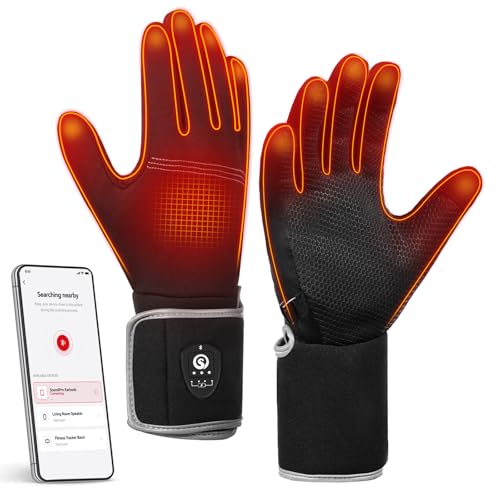
Savior's liner is thin, cut close, and pairs with a phone app, so you can change heat levels without pulling off an outer glove. Graphene elements cover the fingers and the back of the hand across three settings, spanning roughly 104 to 140 degrees.
$109.99fromAmazonList priceChanging a setting on most liners means digging for a button through a bulky shell glove, usually with your teeth involved. The app makes that a non-event. You can check battery percentage and drop from high to medium on the chairlift with your phone in one hand. There's a button on the glove as well, so a dead phone doesn't strand you on whatever setting you last picked.
These are the thinnest liners here. The fabric is a soft stretch knit with a non-slip palm, and it layers under a fitted ski glove without the sausage-finger effect. Some owners wear them alone for driving and commuting, which tells you how little bulk there is. If your gloves are already snug and you've had a liner that wouldn't fit, start with this one.
The graphene elements spread heat across the fingers and the back of the hand rather than concentrating it along a wire path, and the three levels top out around 140 degrees at the element. Runtime is rated at 2.5 to 6 hours on the 7.4-volt, 2200mAh packs. Expect the low end of that if you leave it on high, and the high end if you're mostly using heat as a backstop.
Flaws but not dealbreakers
Durability is the soft spot. Owners describe fabric wearing through, a glove that stopped taking a charge, and batteries that hold less than they'd like after a while. For a few weekends a season that's a fair risk to take. For daily use through a long winter, it isn't.
The heat is real but modest. Around 140 degrees at the element is warm, not hot, and a couple of owners found these underpowered for standing around outside in deep cold. Under a proper ski glove they're fine. Alone in a lift line at zero, they aren't enough.
Who this is for
Buy heated liners if your hands go numb no matter what gloves you wear — that includes anyone with Raynaud's, which the Arthritis Foundation estimates affects 5 to 10 percent of people, plus skiers with poor circulation, nerve damage, or a job that keeps them outside for a whole shift. They're also the right answer if you love a thin, dexterous glove and only lose the argument with the cold on the worst days. A liner lets you keep the glove you like and add heat when the wind turns.
Skip them if your hands are fine in a good insulated glove and you just want to be warmer at the margins — a warmer mitten costs less to own and never needs charging. This guide covers liners meant to be worn inside gloves you already own, so it isn't a guide to heated outer gloves, mittens, chemical warmers, or heated socks. And if you ski in a fitted glove with almost no room inside, measure before you buy anything here. The best liner in the world does nothing if it squeezes the insulation flat.
How we picked
We ranked these on the things that decide whether a liner gets worn twice. Fit: slim shells that layer inside a normal ski glove, since published testing points to thickness as the main compatibility limit. Heat coverage: elements that run out to the fingertips rather than warming only the palm or the back of the hand. Battery: stated voltage and capacity checked against the runtimes owners actually describe, with credit for spare packs in the box. Controls: enough settings to matter, a button you can find through a shell glove, and touchscreen material on as many fingers as possible. Durability: repeated owner reports of dead elements or failed connectors, which is where liners in this category almost always break.
Other heated ski glove liners worth considering
If you want the slimmest battery packs on your wrists: The Mobile Warming MWG15M01-SM-BLK Unisex-Adult Heated 7.4v Gloves ($125) — Mobile Warming designed this 7.4-volt liner around extra-slim packs, specifically so the weight at your wrist doesn't drag under a glove cuff. The cut is fitted for layering, the temperature button is built into the glove, and the fingertips work on a phone screen. It's a sensible pick if bulky wrist batteries are what killed your last pair. You give up battery capacity for that slimness, and an owner who used them for cold-weather work found them bulky enough in the fingers to get in the way of fiddly tasks — and got one season out of them before the heat quit.
The competition
This is what our research turned up among heated liners available on Amazon, not a full census of everything sold in the category. Brands here come and go quickly, and listings change hands, so treat this section as context for the picks rather than an exhaustive market survey.
The ActionHeat 5V Men's Premium Heated Gloves ($195) — The ActionHeat 5V Men's Premium Heated Gloves are well made and clearly specified — three settings rated at 150, 130 and 110 degrees for roughly two, three and five hours, Thinsulate insulation, and two 3000mAh batteries with a dual charger included. But this is a full glove with an extended gauntlet, not a liner, so you can't wear it under the ski gloves you already own. Owners also report heat pooling on the back of the hand near the battery, controls that stop holding a setting, and confusing men's and women's labeling on the same box. Consider it if you'd rather replace your ski gloves outright with one heated pair than layer two, and you ski in cold that stays closer to 25 degrees than to zero.
Care and charging
Pull the batteries out before the liners go anywhere near water — that's the single mistake that kills these. Most liners here are hand-wash only in cool water with mild soap. Don't wring them, since twisting is what breaks the element and the solder joints at the connector. Press the water out in a towel and air-dry them flat, away from radiators and boot dryers, because direct heat cooks the wiring and the adhesive. Store the packs around half charge in the off-season rather than full or empty, and top them up every couple of months. On the hill, keep spare packs in an inside pocket. Lithium cells lose capacity in the cold, so a pack that's been riding in your shell all morning gives you less than one that stayed warm against your chest.
Questions we get
Are heated ski glove liners worth it for skiing?
If your hands go numb in good gloves, yes — a liner is the difference between skiing all day and quitting at lunch. If your hands are already comfortable, a warmer glove is the simpler fix. The strongest case is for people with Raynaud's, poor circulation, or jobs that keep them outside for a full shift.
How long do heated glove liners last on one charge?
Roughly two hours on the highest setting and five to six on the lowest, and the cold shortens both. Most people get through a day by running medium or low and only reaching for high in wind. A second set of packs is the reliable way to cover a full day; only the Volt Resistance liner here includes two in the box.
Can I wear heated liners inside my existing ski gloves?
Usually, if the liner is slim and your gloves aren't skin-tight. Liners under about 3mm keep your grip on poles and buckles intact, while thicker insulated ones can squeeze out the air your glove relies on for warmth. Put the liner on and try your own gloves over it before the first trip — that's a five-minute check that saves a cold day.
Which heated liner is best for Raynaud's?
The Royalrose liner has by far the most feedback from people who bought it for cold-sensitive hands, and its silicone-coated wire heats the back of the hand and the fingers together. Look for full-finger coverage rather than palm-only heat, since Raynaud's attacks start at the fingertips. If your gloves are snug, the thinner WEIVIOQ liner gets warmth to the same places with less bulk.
Are 7-volt liners better than 5-volt for extreme cold?
They put out meaningfully more heat — Volt Resistance puts a 7-volt element at roughly 40 percent above a standard 5-volt design. That's worth having if you're touring, patrolling, or working through wind chill below zero. For resort days in ordinary winter cold, a 5-volt or 7.4-volt liner runs longer per charge and costs less to own.
Can I control heated liners from my phone?
Some of them. The Savior Heat liner pairs over Bluetooth, so you can change settings and check battery level without pulling a glove off. It also keeps a physical button, which matters when your phone dies in the cold. Every other liner here is button-only on the glove itself.
Why you should trust us
For this guide:
- We read manufacturer spec sheets for every liner here, comparing voltage, battery capacity, heating-element layout and stated runtime side by side.
- We drew on published testing and gear coverage from outdoor and ski publications on how liner thickness affects glove compatibility and how full-finger elements compare with palm-only designs.
- We read owner feedback across all of these listings, looking for repeated themes around sizing, element and connector failures, and real battery life rather than isolated complaints.
- We read owner reviews on every listing, weighted toward the critical ones, because that is where the recurring failures show up.
- We have a systematic way of automatically fetching the latest prices, so the numbers on this page stay current.
- This is a research-focused guide, so the team may not own every product listed — though we often do own the top winners, which gives us extra context for the recommendations.
- We don't accept free products, and the retailer commission never changes which product we recommend.
Sources
Best Heated Gloves of 2025–2026: Lab and Field Tested — OutdoorGearLab, OutdoorGearLab
Best Heated Ski Gloves 2025–2026 — Switchback Travel, Switchback Travel
Best Heated Ski Gloves and Liners — GearJunkie, GearJunkie
Best Ski Gloves 2025–2026 — SkiMag Gear Awards, SkiMag
Ski Gloves and Mittens Buying Guide — REI Expert Advice, REI
Lenz Heat Glove Technology and Battery System Overview — Lenz Products, Lenz Products
5V vs. 7V Heated Gloves: What's the Difference? — Volt Resistance Blog, Volt Resistance
Raynaud's Phenomenon: Overview and Cold-Weather Management — Arthritis Foundation, Arthritis Foundation
Heated Apparel Market Size, Share & Trends Analysis Report 2024–2030 — Grand View Research, Grand View Research
Best Ski Gloves and Mittens of 2026 — Powder Magazine, Powder Magazine
Gerbing G4 Heated Glove Liner: Full Specs and Care Instructions — Gerbing, Gerbing
Best Heated Work Gloves and Liners — Popular Mechanics, Popular Mechanics
Amazon product listings and owner reviews for all 7 products
Manufacturer specification pages for each product
Some passages in this guide may be paraphrased with AI help. Prices are refreshed automatically.
More like this.
Continue exploring lifestyle reviews and recommendations.

The Best Ski Touring Bindings
A touring binding is the one piece of gear you interact with every few minutes on a backcountry day. You step in at the trailhead, flip a heel lifter…

The Best Ski and Snowboard Helmets
A helmet earns its keep on ordinary days, not dramatic ones. You catch an edge on a flat traverse. Someone comes over a blind rollover behind you. Head…

The Best Gifts for Skiers and Snowboarders
Skiers and snowboarders are easy to shop for and easy to get wrong. They already own the big stuff, so the gifts that land are the ones that fix a small…

The Best Boot Dryers and Glove Dryers
Wet boots don't dry on their own, not really. Leave a soaked pair by the door and you'll get 12 to 24 hours of damp foam, a smell that settles into the…

The Best Shower Curtain Liners
A liner has one job: keep water in the tub and stay clean while it does. Most people don't think about it until the bottom edge turns pink and speckled.…

The Best Truck Bed Liners
A pickup bed is the only part of a truck you're allowed to abuse. Gravel gets dumped in it, toolboxes slide the length of it, and somebody's mountain bike…