The Best Boot Dryers and Glove Dryers
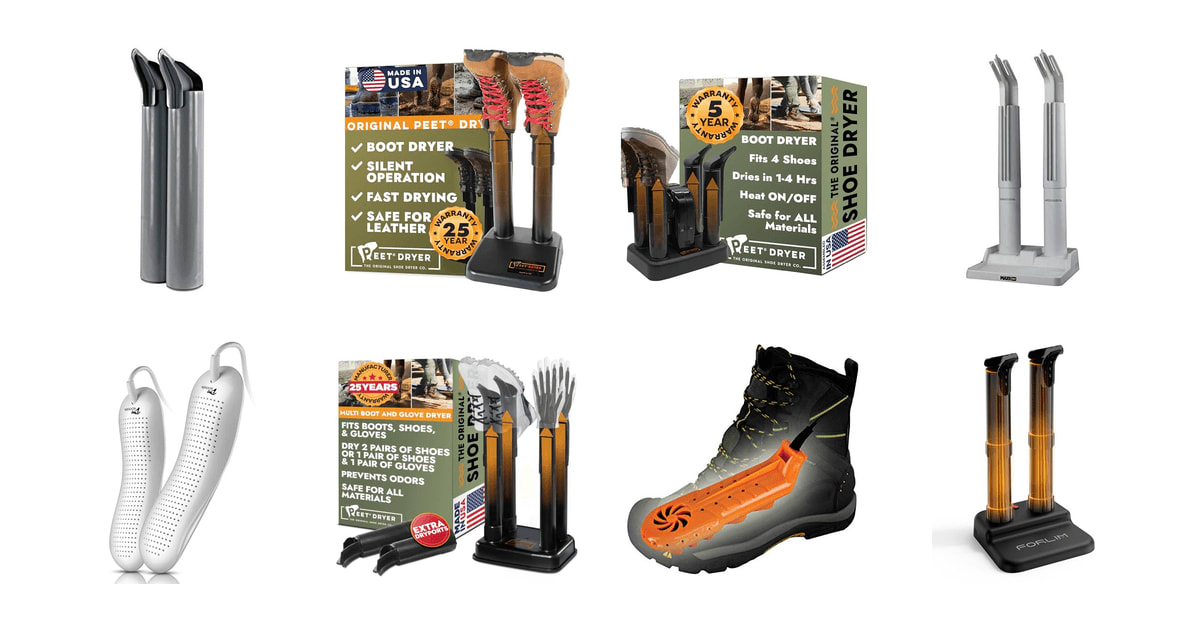
Wet boots don't dry on their own, not really. Leave a soaked pair by the door and you'll get 12 to 24 hours of damp foam, a smell that settles into the liner, and glue that slowly gives up. A boot dryer pushes gently warmed air where a fan across the room can't reach — down inside the toe box, into the insole, through the ankle padding. If you work outside, ski, hunt, or just have kids who come in from the snow twice a day, it's one of those cheap appliances that quietly saves expensive footwear.
Here's the honest part: nothing in this category is both fast and silent. Convection dryers have no fan and no motor, so they make zero noise and you can leave them running all night — but heavily soaked boots need something like 6 to 14 hours. Fan-driven models cut that to a few hours and you'll hear them from the next room. Most of these units also skip a timer and an on/off switch entirely, so you're unplugging them by hand. And ski boots are their own problem, since standard tubes often can't reach past the shell to the liner that's actually wet.
We think that the PEET The Original is the best boot dryer for most people, and that the PEET Multi is the one to buy if you need boots and gloves dry in the same overnight cycle.
Everything we recommend

Silent, safe on everything, and fine to leave plugged in

Boots and gloves in one overnight cycle, no juggling

Boots dry in hours instead of overnight, if you can stand the fan

Taller tubes and a drip tray, with a long warranty behind it
At a glance
| Product | Wattage | Weight | Price | |
|---|---|---|---|---|
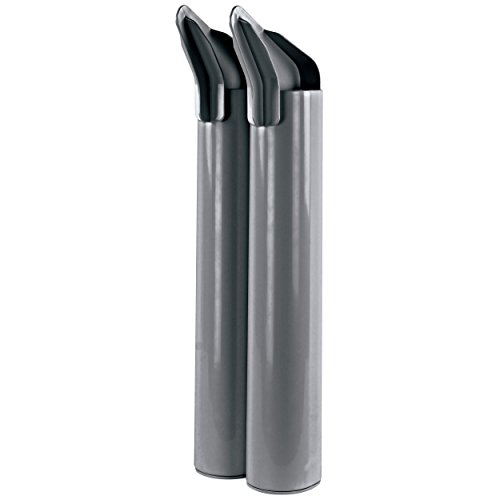 | DryGuy Force Dry DX Boot AccessoryAlso in lineup | — | 1.34 lbs | $28.99 |
| PEET The Original Portable Electric Boot &Top pick | 36W | 2.7 lbs | $49.99 |
| PEET Advantage Plus 2-Pair Electric Boot &Upgrade pick | 220W/36W | 5.25 lbs | $119.99 |
| MaxxDry Boot Dry Boot and Glove DryerRunner-up | 30W | 2.7 lbs | $75 |
 | KOODER Boot DryerAlso in lineup | — | 0.61 lbs | $17.99 |
| PEET Multi BootAlso great | 36W | 6.5 lbs | $129.99 |
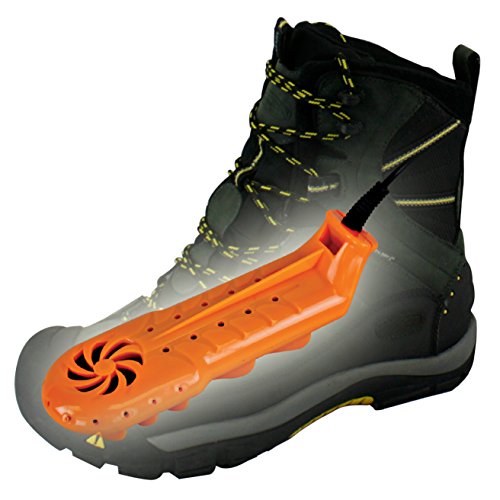 | DryGuy Travel Dry DX Boot Dryer andAlso consider | — | 0.472 lbs | $37.75On sale |
 | FORLIM Boot Dryer for Work BootsAlso consider | 36W | — | $28.49On sale |
How we picked
Silent or fast. We separated fanless convection dryers from fan-driven ones early, because the noise and speed trade-off decides most purchases. Anything meant for a bedroom had to have no motor at all.
Material safety. We looked for stated operating temperatures in the roughly 100–115°F range, which manufacturers of leather and waterproof-membrane footwear treat as the safe ceiling. Dryers without a published temperature or a temperature-control claim got less confidence.
Tube reach. Ski boots and tall work boots need tubes that clear the shell and reach the liner. We noted stated tube height and whether extensions exist, since an 11-inch tube in a ski boot mostly warms air.
Gloves and helmets. We checked whether a unit dries gloves out of the box, with a paid attachment, or not at all — that difference decides whether one dryer covers a whole household's gear.
Unattended safety. Because most of these have no timer, we weighted designs explicitly rated for continuous plugged-in use, and we treated fan models without auto shut-off as the ones to supervise.
Durability signals. We read owner feedback for repeat failure patterns — dead heating elements, units that stop turning on — and let recurring complaints outweigh a strong spec sheet.
Top pick
Silent, safe on everything, and fine to leave plugged in
PEET The Original Portable Electric Boot &
The Original PEET warms air in a base chamber and lets it rise through two tubes — no fan, no motor, no sound at all. It's rated for leather, rubber, neoprene, Gore-Tex and synthetics, and it's built to stay plugged in around the clock.
$49.99fromAmazonThe silence is the whole point. There's no fan, so there's nothing to hear. That means you can park it in a bedroom, a studio apartment, or a hallway outside a nursery and forget it exists. Owners routinely describe leaving it plugged in permanently, year after year, and treating it as furniture. If you've ever been kept awake by a shop fan running in the mudroom, this is the fix.
It draws about 36 watts — less than a lot of light bulbs. Running it every night through a full winter costs almost nothing, which matters because the intended use is exactly that: never turn it off. There's no switch, no timer, no controls. You plug it in, drop your boots on the tubes, and go to bed.
Gentle heat is the other half of the argument. Convection warmth stays well under the range where leather stiffens and adhesives let go, so it's safe on hiking boots with waterproof membranes, work boots, cleats, and kids' snow boots alike. Owners who wear the same pair of boots twelve hours a day report the same thing over and over: dry by morning, and the smell goes with the moisture.
It grows if you need it to. The same base takes optional Glove, Mitten and Helmet DryPort attachments, plus a 12-inch extension for tall boots. So a household that starts with boots can add glove drying later without buying a second machine. That modularity is the main reason we'd steer a first-time buyer here rather than to a cheaper one-trick unit.
Flaws but not dealbreakers
It's slow, and PEET doesn't pretend otherwise. Moderately damp boots come out dry after a night; genuinely soaked rain boots can want closer to twelve or thirteen hours. If you ski two days back to back and need boots ready by lunch, this isn't your dryer.
The standard tubes reach about 11 inches, which isn't enough for a ski boot shell — you need the 12-inch extension, sold separately, to get airflow down to the liner where the sweat actually is. Same story with knee-high hunting boots. Budget for the add-on if that's your use case.
There's also no on/off switch. That's by design, since the unit is meant to run continuously, but it does mean you're pulling the plug when you want it off.
PEET covers the Original with a 25-year warranty if you register within 10 days of purchase.
Also great
Boots and gloves in one overnight cycle, no juggling
PEET Multi Boot
The Multi is the only dryer here with glove ports built into the base instead of sold as an accessory. Boots go on the tubes, gloves go on the ports, and the whole kit is dry by morning — silently, and safe to leave running.
$129.99fromAmazonIf you ski, ride, or play hockey, gloves are the thing that never gets dry. They come off soaked, get stuffed in a bag, and go back on cold and damp the next morning. The Multi solves that by giving them their own ports right on the base, so drying gloves isn't a second purchase or a second night.
The four-position base is what makes it a family machine. You can load boots and gloves at once and skip the rotation entirely — no setting an alarm to swap the second pair on. Owners describe it as the end-of-day station: everything goes on when you walk in, everything comes off warm in the morning. Warm gloves at 7 a.m. are a bigger quality-of-life upgrade than they sound.
It runs on the same silent convection design as the Original, at roughly the same trivial power draw, and it's rated to stay plugged in continuously. Nothing spins, so there's nothing to wear out — several owners mention units still working after a decade and a half, scorched and grubby but functioning.
It also takes the optional Helmet DryPort and the 12-inch extension, so a motorcycle or ski household can build toward a single base that handles boots, gloves and a helmet. That's a genuinely tidier answer than three separate gadgets on the garage floor.
Flaws but not dealbreakers
It's the most expensive PEET in this guide, and you're paying largely for the built-in glove ports. If you only ever dry boots, the Original does that job identically for less.
The glove ports are sized for adult gloves. Owners with small kids report that children's mittens don't seat properly on them, which undercuts the family pitch a bit if your crew is young.
And it's still convection, so it's still an overnight machine. If you need a two-day turnaround on ski boots, look at the Advantage Plus instead.
PEET covers the Multi with a 25-year warranty if you register within 10 days of purchase.
Upgrade pick
Boots dry in hours instead of overnight, if you can stand the fan
PEET Advantage Plus 2-Pair Electric Boot &
The Advantage Plus adds a real fan to PEET's tube-and-chamber design, cutting most boots to a one-to-four-hour turnaround. A separate heat switch lets you drop to quiet fan-only mode when you've got time and delicate materials.
$119.99fromAmazonThe heat switch is the feature worth paying for. Fan plus heat at 220 watts is the fast setting for a soaked powder day. Fan-only at 36 watts is the quiet, gentle setting for trail runners or leather dress shoes when you can wait. Two dryers in one box, essentially, and you choose based on how wet the boots are and how much you care about the material.
Speed changes what the dryer is for. Overnight drying is a household routine; a one-to-four-hour cycle is a same-day rescue. If you work a shift, come home muddy, and go back out four hours later, this is the one that keeps up. Owners who wear boots to a job in wet weather describe exactly that pattern.
The base holds two pairs — four boots — so ski boots, work boots and ice skates can share a cycle. It's also ETL-listed and takes the same Glove and Helmet DryPort accessories as the rest of the PEET line, so you're not leaving the ecosystem to get speed.
We'd point out that this is the only pick here that runs anything mechanical. That's the trade. A motor gets you hours instead of a night, and it also gets you a part that can eventually fail.
Flaws but not dealbreakers
It makes noise. Not terrible noise, but enough that a bedroom or a shared wall is off the table with the fan running. Fan-only mode is quieter, not silent.
Reliability is the real caveat. Owner feedback on this model is noticeably more split than on PEET's fanless dryers, and the complaints cluster on units that simply stopped turning on after about a year. The passive models have nothing to break; this one does.
Glove and helmet ports are still sold separately, so the complete-kit version of this dryer costs meaningfully more than the base unit.
PEET covers the Advantage Plus with a 5-year warranty if you register within 10 days of purchase.
Runner-up
Taller tubes and a drip tray, with a long warranty behind it
MaxxDry Boot Dry Boot and Glove Dryer
MaxxDry's convection unit heats to roughly 105°F, handles boots up to 16 inches, and dries gloves without buying an attachment. A built-in drip tray catches the melt water that otherwise pools on your floor.
$75fromAmazonTwo specs separate this from the Original: it reaches boots up to 16 inches tall out of the box, and it dries gloves without an add-on. If you own knee-high rain boots or waders and don't want to shop for extensions, that's a simpler purchase.
The drip tray is a small thing that matters more than you'd expect. Snow packed into a boot tread doesn't evaporate — it melts and runs onto the floor. Anyone who's mopped a mudroom puddle under a dryer will appreciate having it caught. It's the sort of detail that shows up in gear that gets used in rental and lodge settings.
It runs at 30 watts with no moving parts, which puts it in the same silent, leave-it-on category as the PEET convection models. Fluted ports are meant to move air a bit more efficiently than smooth tubes. Owners consistently report soaked boots coming out dry the next morning and the smell going away with the water.
Roughly 105°F is a comfortable margin under the temperature where leather and waterproof membranes start to complain. For a dryer meant to run unattended, that low ceiling is a feature — it's the reason owners describe forgetting about it entirely.
Flaws but not dealbreakers
There's no switch and no timer. Every owner who mentions it says the same thing: you unplug it in the morning and plug it back in at night, which gets old.
It's slower than any fan model — plan on a full night for anything genuinely soaked. Several owners bought it not realizing there was no fan and were surprised by the pace.
It shows up in and out of stock more than the PEET units, so it's not always the easy click-and-buy option.
MaxxDry backs this dryer with a 30-year manufacturer's warranty.
Who this is for
Buy a boot dryer if footwear you depend on gets wet more than once a week: work boots, hiking boots, ski and snowboard boots, hunting boots, waders, kids' snow boots, soccer cleats. The value isn't just comfort, though warm dry boots on a January morning are a real pleasure. It's that moisture is what breaks footwear down — it grows the bacteria behind the smell, it compresses foam insulation, and it works on sole adhesives over a season. One winter of regular use is roughly where a dryer starts paying for itself in boots you didn't replace.
You can skip this if your shoes get damp a few times a year and you have a warm dry spot to leave them. This guide covers plug-in home dryers for footwear and gloves, ranging from a two-tube unit for one person up to a four-position family station. It doesn't cover heated drying cabinets, commercial multi-pair racks for lodges and fire stations, or shoe deodorizing gadgets that don't actually move warm air.
How we picked
Noise: anything you'd run in a bedroom had to be genuinely fanless, since a motor you can hear through a wall gets unplugged and stops being used. Heat: we looked for stated temperatures around 100–115°F, the range that dries a liner without stiffening leather or stressing a waterproof membrane. Reach: tube height decides whether a dryer works on ski boots and tall work boots, so we tracked stated heights and available extensions. Gloves: built-in ports beat a separate purchase, and a unit that can't dry gloves at all is a narrower buy. Unattended use: with timers rare in this category, we favored designs rated to stay plugged in around the clock. Durability: recurring owner reports of dead units carried more weight than any single feature.
Other boot dryers and glove dryers worth considering
If you want a dryer that runs off your car: The DryGuy Travel Dry DX Boot Dryer and ($37.75) — The DryGuy Travel Dry DX is the only unit here with an AC/DC adaptor, so it works from a wall outlet or a 12V socket. That's genuinely useful if you ski several resorts in a week, camp out of a truck, or want boots warming on the drive up. It's a hybrid design that reaches about 99°F, so it's gentler and slower than a full forced-air dryer, and it packs down small enough to live in a boot bag. Two things to know: it's not for gloves or socks, and owner reports of units failing partway through a season are common enough to take seriously. Buy it for the travel case, not as your only dryer.
If you want tall tubes on a small budget: The FORLIM Boot Dryer for Work Boots ($28.49) — The FORLIM's 18.9-inch tubes are its whole argument — that's taller than anything else here, which means it actually reaches down into knee-high work boots, rain boots and riding boots. It's fanless and silent at 36 watts, handles gloves, and it has a real power switch, which the PEET and MaxxDry units don't. What you give up is confidence. There's no accessory ecosystem, no long track record, and the owner feedback includes a meaningful number of units that arrived and never got warm. It's a reasonable bet if the tube height is what you need and you'll test it the week it arrives.
The competition
This is what our research turned up in the category, not a census of everything sold. We focused on units widely available to home buyers and skipped commercial drying racks and heated cabinets entirely. Here's what didn't make the cut and why.
The KOODER Boot Dryer ($17.99) — The KOODER is a pair of small heated inserts you drop into a shoe rather than a tube-style dryer, and it's the least expensive way into this category. It uses a PTC element with temperature control, it's tiny enough to pack, and a lot of owners are happy with it for sneakers, cleats and work boots — some even use it to pre-warm ski boots. But the heat is mild and slow, it won't do a soaked tall boot in a night, and reports of one element dying after a handful of uses come up often enough to notice. Fine as a first dryer or a travel spare; not the one for serious winter gear.
The DryGuy Force Dry DX Boot Accessory ($28.99) — The DryGuy Force Dry DX Boot Accessory is an add-on tube set, not a dryer. It plugs into an existing DryGuy Force Dry DX base to add a second pair of tall-boot positions, and owners of that base like it — especially hunters with tall boots, and people replacing a tube lost in a ski bag. It's useless on any other platform, and it's redundant if you only dry one pair at a time. Buy it only if you already own the base unit. If you don't, start with a standalone dryer from this guide.
Getting the most out of a boot dryer
Pull the insoles and loosen the laces before you load a boot — a tongue folded shut blocks most of the airflow. Knock the snow and mud off outside, because a dryer removes moisture, not dirt, and packed tread just melts onto your floor. For ski boots, the fastest route is taking the liner out and putting it on the tube directly; if your boots don't come apart easily, use a tube long enough to clear the shell and reach the liner. Keep the unit on a hard surface rather than carpet so warm air can get into the base. And if your dryer has no switch, get in the habit of unplugging it in the morning — not for safety on the convection models, but so you notice when something stops working.
Questions we get
What's the difference between a forced-air and a convection boot dryer?
A forced-air dryer uses a fan to push warmed air through the boot, which cuts drying to roughly one to four hours but makes noise. A convection dryer has no fan or motor at all — warm air rises through the tubes on its own, which is completely silent and gentler on materials but takes 6 to 14 hours for a soaked boot. Fan models are great for fast turnarounds; convection models are what you want running overnight in a bedroom.
How long does it take to dry soaked winter boots?
With a fan-and-heat model like the PEET Advantage Plus, most boots are ready in one to four hours. Silent convection dryers — the PEET Original, the PEET Multi, the MaxxDry and the FORLIM — need a full night, and genuinely saturated boots can want twelve hours or more. Air-drying with no dryer at all takes 12 to 24 hours and leaves the liner damp long enough for mold and bacteria to take hold.
Is it safe to leave a boot dryer running overnight?
Silent convection models are designed for it. PEET explicitly builds the Original and the Multi to stay plugged in around the clock, and the MaxxDry and FORLIM run at similarly low wattage with no moving parts. Fan models are a different story — if a forced-air dryer has no auto shut-off, don't leave it running unattended for hours.
Will a boot dryer damage Gore-Tex or leather?
Not at these temperatures. The convection dryers here operate in the rough range of 100 to 115°F, and the MaxxDry publishes about 105°F specifically. Leather starts drying out and cracking well above that, and waterproof membranes are rated far higher still. If you're drying premium leather or membrane footwear, a convection dryer or a fan-only setting is the conservative choice.
Can a boot dryer dry gloves and mittens too?
Some can. The PEET Multi has glove ports built into the base, and the MaxxDry dries gloves without an attachment. The PEET Original and Advantage Plus accept optional Glove and Mitten DryPorts sold separately, and the FORLIM handles gloves over the tubes. The DryGuy Travel Dry DX explicitly isn't for gloves or socks. One caveat: adult-sized ports often don't hold small children's mittens well.
Do boot dryers get rid of boot odor?
Mostly, yes — the smell comes from bacteria that need moisture, so drying the liner and insole thoroughly takes the odor with it. Owners of work boots worn twelve hours a day report this as the main benefit, ahead of the drying itself. For a pair that's already deeply funky, pull the insoles out and dry them separately, and give it a few consecutive nights before you judge the result.
Should I dry ski boot liners inside or outside the shell?
Outside is faster and more thorough, since the liner sits directly on the tube with nothing blocking airflow. But pulling liners every day can compress the foam over time, and some boots make removal a fight. If you're drying inside the shell, you need a tube long enough to pass through the shell opening down to the liner — PEET's 12-inch extension exists for exactly this.
Why you should trust us
For this guide:
- We compared manufacturer specifications across all eight units, focusing on wattage, stated operating temperature, tube height and glove compatibility.
- We read published coverage of convection versus forced-air drying and the temperature limits leather and waterproof-membrane footwear makers recommend.
- We reviewed owner feedback for each product, looking for repeated failure patterns and real-world drying times rather than one-off complaints.
- We read owner reviews on every listing, weighted toward the critical ones, because that is where the recurring failures show up.
- We have a systematic way of automatically fetching the latest prices, so the numbers on this page stay current.
- This is a research-focused guide, so the team may not own every product listed — though we often do own the top winners, which gives us extra context for the recommendations.
- We don't accept free products, and the retailer commission never changes which product we recommend.
Sources
Best Boot Dryers, Wirecutter
Best Boot Dryer Reviews, OutdoorGearLab
Best Boot and Glove Dryers for Ski Season, Ski Magazine
Best Boot Dryers for Hunters and Anglers, Outdoor Life
Boot Dryer Buying Guide, REI Co-op Expert Advice
Amazon product listings and owner reviews for all 8 products
Manufacturer specification pages for each product
Some passages in this guide may be paraphrased with AI help. Prices are refreshed automatically.
More like this.
Continue exploring home reviews and recommendations.

The Best Heated Ski Glove Liners
Cold fingers end ski days early. You can be dressed perfectly everywhere else and still be the person jamming both hands into a jacket pocket at the top…

The Best Boot Trays for a Winter Entryway
A boot tray does one job, and it does it at the exact spot where winter gets into your house. Wet boots come off at the door, the snow melts, and the salt…

The Best Waterproof Hiking Boots
Wet feet ruin a hike faster than a steep climb does. A creek crossing, an hour of rain, a morning of soaked grass - any of them will leave you squelching…

The Best Hiking Boots and Trail Shoes
Your feet do all the work on a hike, and the wrong shoe makes that obvious fast. A boot that pinches at mile two becomes a blister at mile five and a limp…

The Best Dog Snow Boots
Winter walks get complicated fast. Road salt and chemical deicers sit on every sidewalk and parking lot, and calcium chloride can burn an unprotected paw…

The Best Hiking Boots
A hiking boot has one job: get you back to the car with your feet intact. That sounds simple, but it's mostly about fit and friction. A boot that's a hair…