The Best Dog Snow Boots
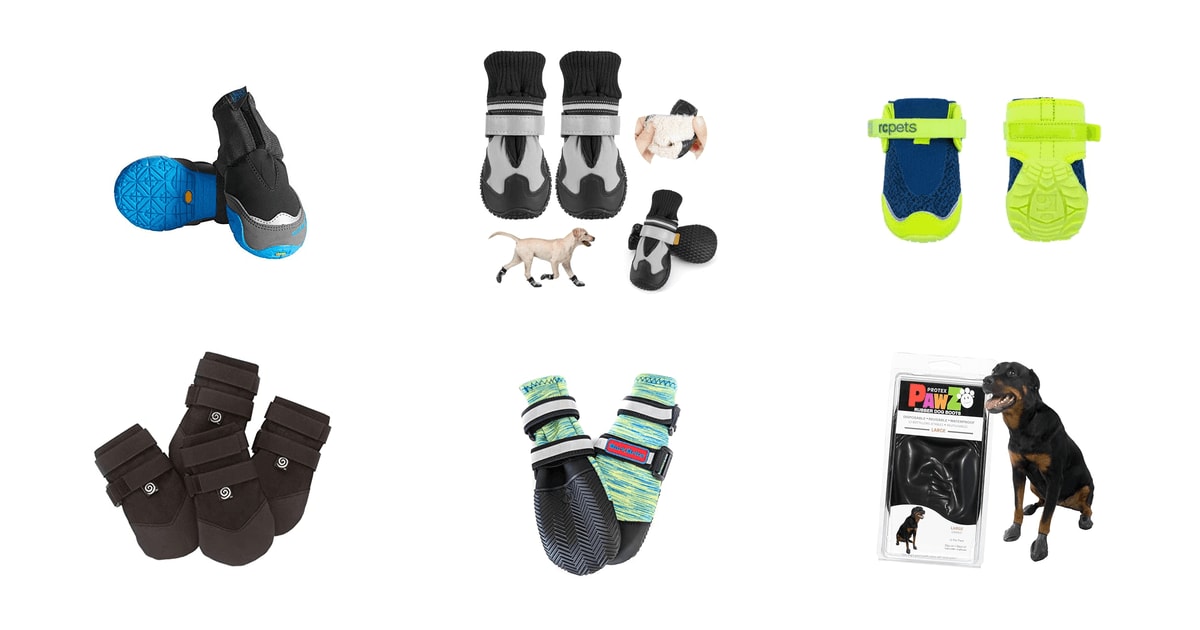
Winter walks get complicated fast. Road salt and chemical deicers sit on every sidewalk and parking lot, and calcium chloride can burn an unprotected paw within a couple of minutes of contact. Then there's the ice that balls up between the toes of a furry dog, the frostbite risk that starts once the temperature drops below freezing, and the salt residue your dog licks off at the door. Boots solve all of that at once. They're the reason your dog can still get a real walk in January.
Here's the honest part: no dog boot is perfect, and most of the frustration comes down to two things. Sizing is fussy — paws vary from front to back on the same dog, and a boot that's a hair too big will fly off in a snowbank. And almost every dog hates boots at first. You'll get the high-stepping cartoon walk for a week or two before your dog forgets they're on. Owners across every brand here report boots slipping off, and the ones with better closures just slip off less often.
We looked at insulation, sole grip, closure design, sizing range and how owners describe daily use over a full winter. We think that the Ruffwear Polar Trex is the best dog snow boot for most people, and that the QUMY Dog Shoes are the one to buy if you want solid winter protection without spending much.
Everything we recommend

The most secure, best-gripping boot for real winter walks
Solid winter protection without the premium price

Soft and flexible, for dogs who reject stiff boots

Good grip and 360-degree reflectivity for city sidewalks

Recycled-tire soles and a fit that holds on rough ground
At a glance
| Product | Outsole | Closure | Price | |
|---|---|---|---|---|
| RuffwearTop pick | Vibram Icetrek | Zippered Closure | $46.74 |
 | SlowTon Dog Boots for Winter Snow -Also consider | Natural Rubber | Elastic Sock Sleeve | $29.99 |
| RC Pets High TractionRunner-up | — | Velcro Strap | $103.50 |
| Ultra Paws Rugged Dog BootsUpgrade pick | Recycled Tires | Velcro Straps | $42.95 |
| All Weather Neoprene Paw Protector Dog BootsAlso great | Rubber Sole | Reflective Straps | $30.99 |
 | PawZ Rubber Dog Boots - Waterproof Non-SlipAlso consider | Natural Rubber | — | $21.49 |
| QUMY Dog Shoes for Hot PavementBudget pick | — | Reflective Straps | $28.99 |
How we picked
Ice traction. We compared outsole materials and tread patterns across spec sheets, weighting technical winter compounds like Vibram Icetrek over generic anti-slip rubber. Owner feedback about slipping on hardwood, driveways and packed snow helped separate the claims from the reality.
Closure security. Boots falling off mid-walk is the top reason people return them, so we favored double straps, elastic collars and gaiters over a single Velcro tab. We read owner reports specifically for how boots behaved over a full walk, not just at the door.
Warmth and water resistance. We looked for insulated or fleece-lined uppers and waterproof — not merely water-resistant — construction, and we noted where manufacturers make that distinction themselves. Boots without insulation had to earn their spot on protection and grip instead.
Sizing and fit range. We prioritized brands with clear measurement guidance, wide size ranges, and the option to mix sizes between front and rear paws. Published guidance and owner reports agree that fit determines whether a dog tolerates boots at all.
Ease of getting on. Split-seam and wide-opening designs cut fitting time roughly in half compared with pull-on boots, and faster fitting correlates with owners actually using them daily. We downgraded closures that owners consistently describe as a struggle.
Top pick
The most secure, best-gripping boot for real winter walks
Ruffwear
The Polar Trex pairs an insulated, waterproof softshell upper with a Vibram Icetrek outsole built for packed snow and sheer ice. It's sold in pairs, so you can mix sizes across front and rear paws — which is how you actually get boots to stay on.
$46.74fromAmazonThe outsole is the reason to buy these. Ruffwear uses a Vibram Icetrek rubber compound with a winter-specific lug pattern — the same class of outsole technology found in performance hiking footwear. Generic anti-slip rubber gets glassy on ice. This doesn't. If you walk a senior dog who's already slipping on the driveway, or you hike icy trails on weekends, that grip is worth more than anything else on the spec sheet.
Ruffwear sells these in pairs rather than sets of four, which sounds like an upsell until you measure your dog. Front paws are usually wider than rear paws. Buying two pairs in two sizes gets you a fit that actually holds, and fit is the single biggest predictor of whether boots stay on. It's more work up front. It's also the difference between four boots at the end of the walk and two.
The upper is an insulated waterproof softshell, so these do double duty — they block snowmelt and slush while trapping heat against the paw. A pullover stretch gaiter with a zippered closure seals the top against snow packing in. Owners in Colorado and Maine winters describe these as the only boots they buy anymore, and several mention layering a thin dog sock underneath for a snugger fit.
These aren't bombproof. Owners of dogs who drag a paw — from degenerative myelopathy, say — report wearing through the toe in about a month. And a high-energy dog blasting through deep powder can still shed one. But for the walking and hiking most people do, they hold up better than anything else here.
Flaws but not dealbreakers
The closure is genuinely fiddly. Between the zipper and the strap, and a boot profile that doesn't open very wide, getting these onto a wiggly dog takes practice — several owners call it the boot's worst trait. Sizing also runs small relative to Ruffwear's own guide, and more than one buyer measured carefully and still couldn't get them on. Order with a return in mind.
They're sold in pairs, not sets of four, so a full set costs twice what the listing price suggests. Worth knowing before you check out. These are also the most expensive boots in this guide by a wide margin.
Budget pick
Solid winter protection without the premium price
QUMY Dog Shoes for Hot Pavement
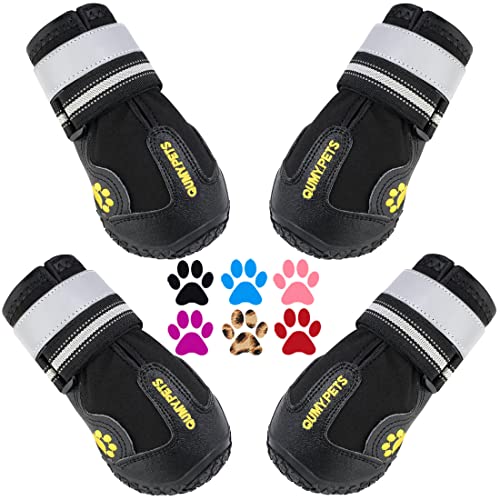
QUMY's boots use a wide split-seam opening and two adjustable reflective straps, which makes them far easier to put on than pull-over designs. The rugged sole grips well enough for sidewalks and packed snow, and they're hand-washable.
$28.99fromAmazonThe split-seam opening is the underrated feature here. The boot spreads wide open, you slide the paw in, and you're done. Split-seam designs cut fitting time roughly in half compared with pull-on boots, and that matters more than it sounds — the boots that get used are the ones you can put on in thirty seconds while a dog dances at the door.
Two reflective straps do two jobs. The double closure keeps boots on far better than a single strap, which is the leading reason people return dog boots in the first place. And the reflective material means a driver sees your dog's feet moving in the dark, which is most of what a winter walk is in the northern half of the country.
These have been bought in enormous numbers over many years, and the owner feedback splits along a predictable line. Owners who measured paw width carefully and cinched the ankle strap snug report boots that last multiple winters — a few describe getting five years out of a set. Owners who guessed at sizing report boots falling off in the yard. Measure the width. It's the whole game.
What you give up is insulation. There's no fleece lining, and the sole is a fabric-and-rubber build rather than a technical winter outsole. For a short-haired dog in deep cold, that's a real gap. For a dog with decent cold tolerance doing 20 or 30 minutes on salted sidewalks, it's plenty.
Flaws but not dealbreakers
Durability is inconsistent. Some owners get years; others report tearing after a hard winter of heavy snow use. If your dog is rough on gear, plan on replacing these more often than a premium boot.
A few owners note the strap can press the dewclaw against the leg on dogs with prominent dewclaws, causing rubbing over long walks. Check the fit around the ankle on the first outing rather than the first hour-long hike.
Also great
Soft and flexible, for dogs who reject stiff boots
All Weather Neoprene Paw Protector Dog Boots
Bark Brite's neoprene booties flex with the paw instead of fighting it, which is why dogs who refuse everything else often accept these. A 3.5-inch rear slit and two elastic reflective straps make them quick to get on.
$30.99fromAmazonSome dogs will not wear a structured boot. If you've already returned two pairs because your dog froze in place and refused to move, the soft neoprene here is the thing to try next. It conforms to the paw's natural shape and doesn't restrict how the toes splay, so the adjustment period tends to be shorter and less dramatic.
These are also the best pick in this guide for a paw that needs protecting rather than insulating. Owners repeatedly turn to them after a nail removal, a surgery or a hot spot, when the goal is keeping a dressing clean and dry rather than surviving a blizzard. The booties extend well past the sole, and the two elastic straps hold them in place well enough that you have to undo the Velcro to pull them off.
The size range runs generously wide — owners of a 130-pound Great Dane and a 160-pound Mastiff both report workable fits, which is unusual. Bark Brite is upfront that these are water-resistant, not waterproof, and that's the right way to read them: fine for slush and salt on a normal walk, not a boot for standing in wet snow for an hour.
Flaws but not dealbreakers
Traction is the weak point. The rubber sole has tread, but several owners describe grip on slick surfaces as close to nonexistent, which makes these a poor choice for an icy driveway or a dog who's already unsteady. If slipping is your main problem, buy the Ruffwear or the Ultra Paws instead.
Dogs with double dew claws are out of luck — the straps press on them. And these tend to slip slightly on front paws even when they don't come off entirely, so expect to adjust mid-walk.
Runner-up
Good grip and 360-degree reflectivity for city sidewalks
RC Pets High Traction
RC Pets' Apex boots pair a high-traction sole with reflective strips and a simple adjustable Velcro strap. The breathable fabric upper keeps paws from overheating, which matters if your dog wears boots on both ends of the season.
$103.50fromAmazonIf most of your winter walking happens on city streets after dark, the reflectivity here earns its place. Reflective strips work into the boot design rather than sitting on a single strap, so your dog stays visible from more angles at 6 a.m. and 6 p.m. — which is when the walk happens for most people between November and March.
The soles are built for grip across mixed surfaces, from a slick city sidewalk to a packed trail, and the single adjustable Velcro strap keeps things simple. One strap is less secure than two, so cinch it firmly and check it partway through a long walk. For a dog with a normal gait on cleared sidewalks, it holds fine.
The breathable upper is a deliberate trade. These vent heat rather than trapping it, which makes them comfortable across a wider range of conditions but less insulating in deep cold than a fleece-lined or softshell boot. RC Pets is a Canadian brand and builds these for durability against sharp ice, road grit and rough pavement.
Flaws but not dealbreakers
There's no meaningful insulation. These protect against salt, ice shards and abrasion, but they won't keep a short-haired dog's paws warm at single-digit temperatures the way an insulated boot will.
This is a newer listing with little accumulated owner feedback, so we can't point to long-run reports on how the strap and sole hold up over multiple winters. The single-strap closure is the part we'd watch.
Upgrade pick
Recycled-tire soles and a fit that holds on rough ground
Ultra Paws Rugged Dog Boots
Ultra Paws Rugged boots use thick soles made from recycled tires and a patented high-density foam collar that grips the leg when the Velcro straps are tightened. They're built for hiking, camping and abrasive terrain rather than a stroll around the block.
$42.95fromAmazonThe foam collar is what makes these stay on. Instead of relying on strap tension alone, a band of high-density foam compresses around the leg above the paw, spreading the hold across a wider area. Owners of labradoodles and border collies who lost boots from other brands describe these as the pair that finally stuck through a full winter walk.
The sole is thick recycled tire rubber, which is overkill for sidewalks and exactly right for rocky trails, cool decking and ice-covered ground with debris frozen into it. If your dog's nails wear down to the quick on rough surfaces, or you're doing real backcountry miles in winter, this is the construction to want.
Ultra Paws has been making boots for over 30 years, and they're widely used for service dogs, military dogs and mobility-impaired pets. That history shows up in the small stuff — a wide size range and clear guidance to measure paw width rather than guess by breed. The company notes the soles can feel stiff out of the box and recommends working the rubber with your hands until it loosens.
Flaws but not dealbreakers
They still come off some dogs. Owners of bassets and other breeds with unusual leg proportions report the boots sliding down even at the correct size, and pairing them with socks doesn't always fix it. The foam collar helps, but it isn't magic.
Amazon's listing doesn't include a sizing chart, so you'll need Ultra Paws' own chart to size correctly. Sizing is true once you find it. And these are working boots, not winter boots — there's no fleece lining, so they're about protection and traction rather than warmth.
Who this is for
Buy boots if you walk your dog on treated sidewalks, if your dog is small, short-haired, senior or a puppy, or if snow balls up painfully between the toes. Veterinary sources put frostbite risk in play below freezing, with paws among the most vulnerable spots, and small breeds, short-haired dogs and seniors feel cold stress at warmer temperatures than a double-coated husky does. The salt case is even stronger than the cold case — deicer residue on paws gets licked off after nearly every outing.
Skip boots if your dog is a large double-coated breed doing short outings on untreated ground, where paw wax is often enough. This guide covers boots for snow, ice and winter salt, so it doesn't cover summer-only pavement shoes, socks, or medical bandage covers. It also doesn't cover paw balms and waxes, which protect against salt but do nothing for traction or warmth.
How we picked
Traction: We weighted technical winter outsoles like Vibram Icetrek above generic anti-slip rubber, then checked owner reports about slipping on ice and hardwood. Closure: Double straps, elastic collars and gaiters beat a single Velcro tab, because boots coming off mid-walk is the number-one complaint across every brand. Warmth and waterproofing: Insulated or fleece-lined uppers with genuinely waterproof construction ranked above merely water-resistant fabric. Sizing: We favored wide size ranges, clear measurement guidance, and the ability to mix sizes between front and rear paws. Ease of use: Split-seam and wide-opening boots go on roughly twice as fast as pull-on styles, and the boots that go on fast are the ones that get used.
Other dog snow boots worth considering
If you want the simplest possible salt and slush barrier: The PawZ Rubber Dog Boots - Waterproof Non-Slip ($21.49) — PawZ are thin natural-rubber sleeves that pull over the paw like a balloon — no straps, no Velcro, nothing to adjust. They create a genuinely watertight seal, which makes them excellent for short urban outings on salted sidewalks and for keeping muddy paws off your floors. Because there's no strap to kick loose, they often stay on dogs who shed every other boot. But there's zero insulation and zero padding, so they're a barrier, not a winter boot. The manufacturer says each one lasts roughly one to three wears depending on the pavement. Over a season, buying 12-packs works out to about what a mid-range fabric boot costs. Size carefully — many owners find they run small.
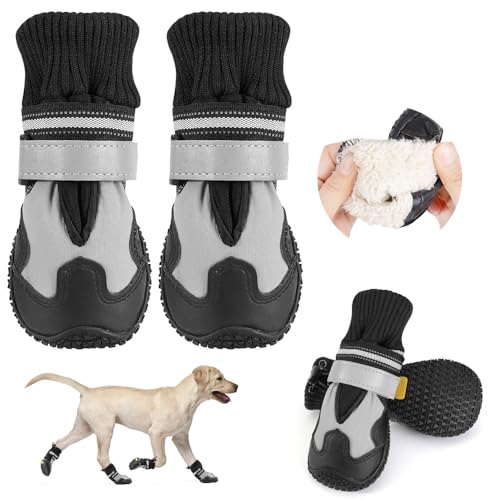
If you want fleece lining and a high, elasticized cuff: The SlowTon Dog Boots for Winter Snow - ($29.99) — SlowTon's winter boots line the interior with self-heating fluff and use an elastic sock sleeve with a drawstring plus a fastener strap, so they sit higher on the leg than most. That height helps on dogs with long legs and tiny feet, and it keeps snow from packing in at the top. Owners with Dobermans and Australian Shepherds report good fits and boots that stay put. The catch is the waterproofing: the listing calls the leather water-resistant and snowproof, but at least one owner found the fleece soaked through in a heavy storm. Treat these as warmth-first boots for dry cold and packed snow rather than wet slush.
The competition
This is what our research surfaced in the dog snow boot category — not a survey of everything on the market. A few boots here are still worth buying for the right dog, and none of them are bad; they just lost to a pick on traction, closure security or warmth.
Fit, sizing and getting your dog used to boots
Measure every paw, not just one. Have your dog stand with weight on the foot, trace around it, and measure the width at the widest point — width matters more than length for almost every brand. Front paws are usually wider than rear ones, which is why some brands sell in pairs so you can mix sizes. Then plan on a one to two week break-in. Put one boot on indoors, feed a treat, take it off. Build up to all four, then to short indoor sessions, then outside. The high-stepping march dogs do at first comes from unfamiliar feedback through the paw and typically settles within five to ten sessions. Rushing this is the main reason boots end up in a closet. Check the strap tension on the first walk, too — snug enough to hold, loose enough to slide a finger under.
Questions we get
Do dogs really need snow boots, or is it just a trend?
For plenty of dogs, boots are genuinely useful. The strongest case isn't cold — it's chemistry. Calcium chloride deicer can cause chemical burns on unprotected pads within a couple of minutes, and salt residue gets ingested when dogs lick their paws afterward. The AKC recommends boots or paw wax as the primary protection against road salt, which treats the large majority of US roadways and sidewalks in winter.
How do I measure my dog's paws for the right size?
Put your dog's weight on the paw, place it on paper, and trace around it. Measure the width at the widest point, since that's the dimension nearly every size chart uses. Measure all four paws — front and rear often differ on the same dog. Weight-based charts are a rough starting point at best, so always defer to the width measurement.
How do I get my dog to stop hating boots?
Go slowly and pair boots with something good. Start with one boot indoors, give a treat, then take it off after a few seconds. Work up to all four and then to short indoor sessions before you go outside. The exaggerated high-stepping walk comes from unfamiliar sensory feedback and usually resolves within five to ten sessions with positive reinforcement. Most dogs need one to two weeks.
Are PawZ boots worth it for winter?
They're worth it for salt and slush on short urban outings, not for cold. The thin rubber creates a watertight seal and grips well, but there's no insulation at all, so your dog's paws stay dry rather than warm. The manufacturer says each boot lasts about one to three wears. Buy them in 12-packs and pair them with a lined boot if you need real warmth.
Do huskies and other sled breeds need boots?
Often, yes — sled dogs wear booties in competition for a reason. Double-coated breeds handle ambient cold far better than small or short-haired dogs, but their pads still contact salt, sharp ice and frozen debris. Furry-footed breeds also collect painful ice balls between the toes, which is one of the most common reasons owners of huskies and setters buy boots in the first place.
Can boots that fit too tight hurt my dog?
They can. A boot cinched too tight restricts circulation, and straps that press on dewclaws cause rubbing and sores over a long walk — several owners report this on dogs with prominent dewclaws. You should be able to slide a finger under the strap. Check the paws after the first few outings for redness or hair loss, and loosen the closure if you see any.
What's the difference between snow boots and rain boots for dogs?
Rain boots prioritize a waterproof seal and are often thin and unlined, since the goal is keeping water out. Snow boots add insulation and a winter-specific outsole for grip on ice and packed snow. A rain boot will keep salt off your dog's pads but won't keep them warm, and it may skate on ice. If you deal with both, pick an insulated waterproof boot rather than trying to make a rain boot work.
Why you should trust us
For this guide:
- We compared manufacturer specifications, outsole materials and closure designs across every boot in this guide.
- We read published guidance from veterinary and canine organizations on frostbite risk, deicer chemical burns and which dogs are most vulnerable to cold.
- We reviewed recurring themes in owner feedback — especially reports about sizing accuracy, boots slipping off mid-walk and how long each boot lasts over a winter.
- We read owner reviews on every listing, weighted toward the critical ones, because that is where the recurring failures show up.
- We have a systematic way of automatically fetching the latest prices, so the numbers on this page stay current.
- This is a research-focused guide, so the team may not own every product listed — though we often do own the top winners, which gives us extra context for the recommendations.
- We don't accept free products, and the retailer commission never changes which product we recommend.
Sources
Dog Paw Care in Winter — American Kennel Club, American Kennel Club
Best Dog Boots — Wirecutter / NYT, Wirecutter
Ruffwear Polar Trex Product Specifications, Ruffwear
Winter Dog Walking Safety Tips — VCA Animal Hospitals, VCA Animal Hospitals
Hurtta Outback Boot Product Page, Hurtta
Pet Poison Helpline — Ice Melt & Rock Salt Toxicity, Pet Poison Helpline
Muttluks About Page & History, Muttluks
Winter Hazards for Pets — ASPCA, ASPCA
How to Measure Your Dog for Boots — Cesar's Way, Cesar's Way
PAWZ Dog Boots Product Overview, PAWZ
Best Dog Boots for Winter 2026 — Dog Food Advisor, Dog Food Advisor
Canine Cold Weather Research — Tufts University Cummings School, Tufts University Cummings School of Veterinary Medicine
Amazon product listings and owner reviews for all 7 products
Manufacturer specification pages for each product
Some passages in this guide may be paraphrased with AI help. Prices are refreshed automatically.
More like this.
Continue exploring pet reviews and recommendations.

The Best Hiking Boots and Trail Shoes
Your feet do all the work on a hike, and the wrong shoe makes that obvious fast. A boot that pinches at mile two becomes a blister at mile five and a limp…

The Best Waterproof Hiking Boots
Wet feet ruin a hike faster than a steep climb does. A creek crossing, an hour of rain, a morning of soaked grass - any of them will leave you squelching…

The Best Hiking Boots and Trail Running Shoes
Footwear is the one piece of hiking gear you feel with every single step. A boot that rubs at mile two can ruin a whole weekend, and a sole that slides…

The Best Boot Dryers and Glove Dryers
Wet boots don't dry on their own, not really. Leave a soaked pair by the door and you'll get 12 to 24 hours of damp foam, a smell that settles into the…

The Best Hiking Boots
A hiking boot has one job: get you back to the car with your feet intact. That sounds simple, but it's mostly about fit and friction. A boot that's a hair…

The Best Boot Trays for a Winter Entryway
A boot tray does one job, and it does it at the exact spot where winter gets into your house. Wet boots come off at the door, the snow melts, and the salt…