The Best Heated Work Gloves
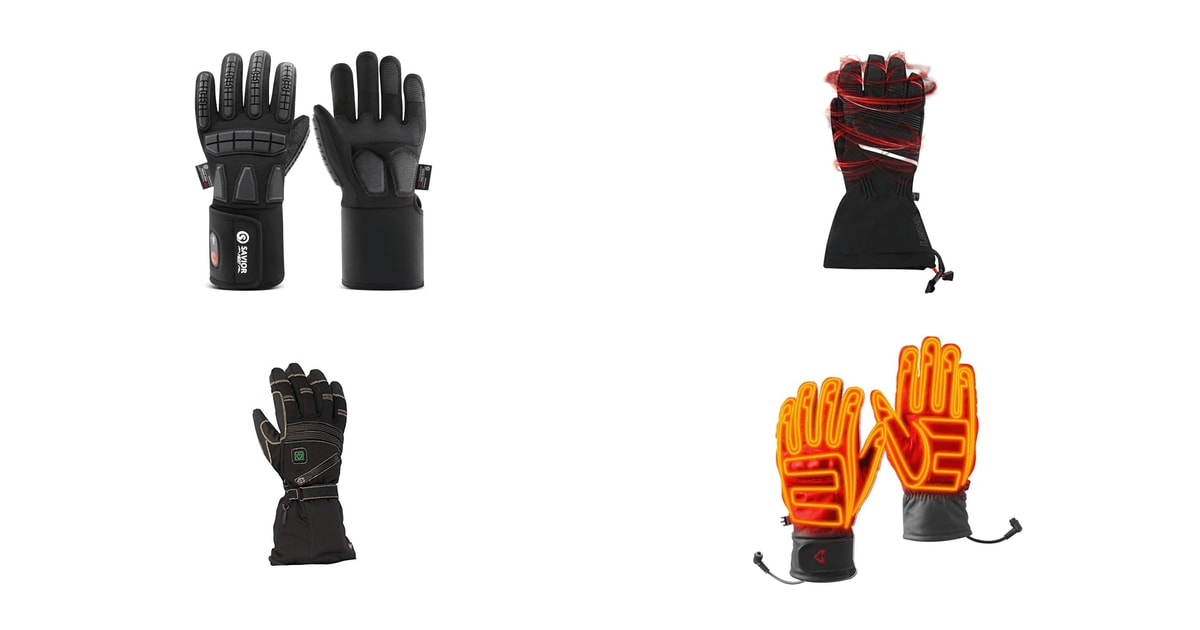
Cold hands make you slow and careless. You fumble the bolt, you drop the shovel, you pull a glove off to work your phone and lose ten minutes of warmth doing it. Heated gloves solve a narrow problem well: they put a low, steady warmth right where your fingers lose it fastest, so blood keeps moving instead of retreating to your core. If you shovel a driveway, ride a motorcycle in January, or spend a shift in a freezer, that's the difference between working and waiting to warm up.
Here's the honest part. No heated glove on the market runs hot like a space heater, and none of them run all day on high. The heat is meant to keep a warm hand warm, not to rescue one that's already numb. Battery life claims assume the low setting, so plan on a few hours at the level you'll actually use. Wiring adds bulk, which costs you dexterity. And every brand here has owners who report a dead finger circuit or a battery that quit sooner than expected.
So you're really choosing based on how you work: how cold it gets, how much finger feel you need, and whether you have a bike or a truck to power off. We think that the SAVIOR HEAT heated work gloves are the best heated work gloves for most people, and that the Volt Resistance Polar X is the one to buy if you spend long stretches in deep cold and want warmth over hand feel.
Everything we recommend

Warm hands and a work glove you can actually grip in

More heat, less finger feel, built for standing in the cold
The one to wire into a motorcycle, if sizing cooperates
At a glance
| Product | Voltage | Max Heat Temp | Price | |
|---|---|---|---|---|
| SAVIOR HEAT Heated Work Gloves for MenTop pick | 7.4V | 149°F | $139.99 |
 | Lenz Heat Glove 6.0 Finger Cap forAlso in lineup | — | — | $379.95 |
| Volt Resistance - Polar X 7V HeatedRunner-up | 7V | — | $199.95 |
| Gerbing Hero Heated Gloves - 12V MotorcycleAlso great | 12V | 135°F | $149.95 |
How we picked
Real heat, honestly stated. We compared published temperature ranges and heating-element coverage across every listing, favoring gloves that heat the fingertips rather than just the back of the hand. Owner feedback was the check on manufacturer claims, since almost every brand's numbers look good on paper.
Runtime you can plan around. We looked at stated battery voltage and capacity, and at whether the runtime figure assumes the lowest setting. A glove that runs nine hours on low and two on high is a different purchase than one that splits the difference.
Weather sealing. Wet gloves are cold gloves, so we required a named waterproof or water-resistant membrane rather than a vague claim. Owner reports of soaked hands in slush were disqualifying.
Grip and protection. For work use we prioritized reinforced palms and impact protection over the knuckles, since heating wires sit in exactly the places that take abrasion. Ski-glove construction went to the competition unless the glove had another clear strength.
Fit and returns risk. We weighted owner reports of sizing that doesn't match the chart heavily, because a heated glove that fits badly presses wire against skin. Patterns of wrong-size shipments counted against a product.
Top pick
Warm hands and a work glove you can actually grip in
SAVIOR HEAT Heated Work Gloves for Men
These are the rare heated gloves built like real work gloves, with a Kevlar-reinforced palm and knuckle armor over the heating wires. You get three heat levels, a waterproof membrane, and fingertips that work your phone without stripping a glove off.
$139.99fromAmazonMost heated gloves are ski gloves with wires in them. These aren't. The palm layers synthetic leather over PU with Kevlar reinforcement, and the back carries 3D PVC panels meant to take a knock. That matters if you're handling a shovel handle, a pry bar or a frozen tailgate latch. Owner feedback backs it up: people buy these for snow clearing and contracting work, not for standing around at a ski lift.
The heating runs on 7.4V batteries rated up to nine hours, with three levels between roughly 104 and 149 degrees. Read that range honestly. It's warm, not hot. Several owners say the same thing in different words — their hands stayed comfortable, but they wanted more punch. On low, you'll get most of a workday. On high in serious cold, expect a few hours and carry the charger.
3M Thinsulate does the insulating work, with a HIPORA membrane and windproof layer over it. That combination is the reason these stay usable in wet snow, which is where a lot of heated gloves fall apart — once the shell soaks through, the heat is fighting evaporation instead of warming you. Owners who clear driveways in slush report dry hands, and that's the harder test.
The touchscreen fingertips earn their keep more than you'd guess. Every time you peel a glove to answer a call, you dump the warmth you've been building for twenty minutes. Being able to swipe with the glove on keeps the system working. It's not a perfect substitute for a bare finger — you'll miss small targets — but for answering a call or checking a work order, it's fine.
Flaws but not dealbreakers
The heat is concentrated in the fingers and across the back of the hand, and the palm gets much less of it. If you're gripping cold steel for long stretches, you'll feel the palm go before the fingers do. One owner clearing snow noticed exactly this, and the thumb heating zone sat in an awkward spot for him. It's a common heated-glove layout, but worth knowing before you buy.
They're bulky. That's the trade for the armor and insulation, and it means fine work — threading a small nut, picking up a washer — takes longer than it would bare-handed. Owners describe them as clumsy for micro tasks and fine for everything else. If your day is mostly small parts, this is the wrong glove.
In genuinely brutal cold, the fingertip heat can lose the argument. At least one owner in a Chicago winter found the warmth couldn't keep up. These are strongest in the range where you're cold and getting colder, less so when the air is already trying to freeze you solid.
The listing does not state a warranty term for these gloves.
Runner-up
More heat, less finger feel, built for standing in the cold
Volt Resistance - Polar X 7V Heated
Volt Resistance builds the Polar X around a heating system that wraps the hand rather than tracing a few wires through it, in a waterproof nylon shell with fleece inside. It's the pick for long, static exposure rather than jobs that demand finger control.
$199.95fromAmazonThe design idea here is what Volt calls a zero-layer heat system — the heating sits directly against your hand instead of behind an insulation layer. In practice, that means you feel the warmth faster and more evenly than in a glove where the element is buried. Three settings let you dial it back once your hands come up to temperature, which is how you make a battery last.
These are aimed at cold you stand in, not cold you work through. The waterproof nylon shell and fleece lining are built for skiing, riding and long outdoor exposure. Owner feedback includes someone working a cold storage freezer at ten below who called them the right call. That's a punishing use case, and it's the profile these gloves suit — sustained cold, moderate hand demands.
The shell is nylon rather than leather, which keeps them lighter than the Gerbing and easier to move in when they're new. Leather gloves need breaking in and stiffen up when they get wet and dry again. Nylon skips that. If you want a glove that feels the same in November and March, this is the more predictable material.
Flaws but not dealbreakers
There's very little owner feedback on these, which is a real limitation. A handful of published impressions and one enthusiastic buyer isn't a track record, and heated gloves are a category where failures show up in year two, not week two. We're recommending them on construction and spec, and you should weigh that.
You give up the protection the SAVIOR HEAT gloves have. No knuckle armor, no Kevlar in the palm, no abrasion layer worth the name. Drag these across a concrete edge or a rusted bracket and you'll do damage. They're outdoor gloves that happen to work for light tasks, not work gloves.
Also great
The one to wire into a motorcycle, if sizing cooperates
Gerbing Hero Heated Gloves - 12V Motorcycle
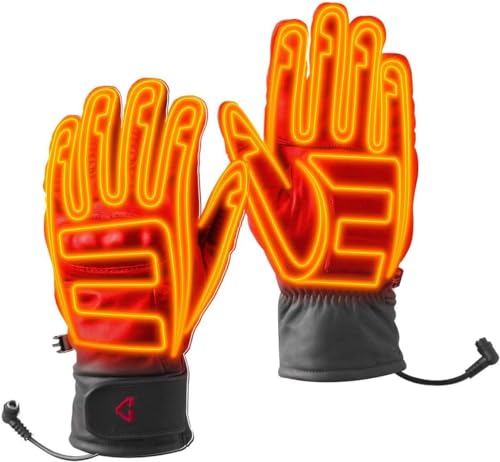
Gerbing's Hero gloves run on 12V, which means you can power them off a bike instead of a battery pack, and they're built from cowhide with TPU knuckle protection. Microwire heating runs all the way to the fingertips.
$149.95fromAmazonIf you commute on a motorcycle, running off the bike changes everything. Battery-powered gloves force you to ration heat across a ride. A 12V glove wired to the bike doesn't — you get full heat for as long as the engine runs. One owner describes commuting between New Jersey and New York City in single-digit temperatures on these, and that's the scenario the whole design serves.
The construction is the most serious here. Premium aniline cowhide, an AQUATEX water-resistant membrane, and high-impact TPU over the knuckles. Leather resists abrasion in a way nylon can't, which matters on a bike for obvious reasons. The microwire runs to the tip of every finger rather than stopping short, and max heat is rated at 135 degrees.
Leather also breaks in. These start stiff and loosen to your hand over a season, which is why riders tend to stay loyal to a pair once they've earned it. A motor officer in the Midwest reports relying on them down into the twenties on duty. That's a person who can't choose to go inside, which is the useful kind of endorsement.
Flaws but not dealbreakers
Sizing is the recurring complaint, and it's a bad one. Owners report ordering by the size chart and receiving something else entirely, or getting the correct size and finding the fingers too short to be comfortable. Short fingers in a heated glove aren't a minor annoyance — the wire ends up pressing where it shouldn't. Order from somewhere with an easy return path.
Durability reports are mixed. One owner found the leather splitting at the seams after a few weeks of normal use, which shouldn't happen on a leather glove at this level. Another reported the gloves running hot enough across the knuckles to cause a burn on the first day. Neither is universal, but both are serious enough that you should try them at low heat first and pay attention to hot spots.
The 12V design is a strength on a bike and a limitation everywhere else. Without a vehicle to plug into, you're buying a battery setup separately, and the whole value proposition softens. Shovelers and warehouse workers should look at the SAVIOR HEAT gloves instead.
Who this is for
Buy heated gloves if your hands are the thing that ends your time outside. Shoveling, snow blowing, riding, freezer work, winter site work, ice fishing, standing on a sideline — anywhere you're cold for hours and can't keep moving enough to stay warm. They're especially worth it if you have poor circulation or Raynaud's and regular insulation has never been enough. The heat isn't dramatic, but keeping hands above the point where they go stiff is most of the battle.
Skip them if your cold exposure is short, or if your work depends on fine finger control. A good insulated glove and a pocket of disposable warmers costs far less and won't die mid-shift. This guide covers battery-powered and vehicle-powered gloves for work and outdoor use. It doesn't cover heated mittens, heated glove liners meant to go under a shell, or the separate batteries and chargers those systems need.
How we picked
Heat coverage: we favored gloves whose elements reach the fingertips, not just the back of the hand, since that's where warmth is lost first. Runtime: we read stated voltage and capacity carefully, and assumed the advertised hours apply to the lowest setting. Weather sealing: a named waterproof or water-resistant membrane was required, because a soaked glove wastes every watt it has. Grip and protection: for work use, reinforced palms and knuckle armor mattered more than plushness. Fit: repeated owner reports of sizing that doesn't match the chart counted against a glove, since a tight heated glove presses wire into skin.
The competition
This is what the research surfaced in this category, not a survey of everything sold. Heated gloves come and go quickly, and plenty of brands sell near-identical gloves under different names. Here's the one product we looked at that didn't make the cut.
The Lenz Heat Glove 6.0 Finger Cap for ($379.95) — The Lenz Heat Glove 6.0 Finger Cap is the most interesting design here on paper. The heating element wraps the fingers completely and continues over the back of the hand, the PrimaLoft and Hipora construction is genuinely light and breathable, and there's a small spectacle-cleaning patch built in — a thoughtful touch if you wear glasses in the cold. The problem is that it ships as gloves only. The lithium packs that power it are sold separately, so the sticker you see isn't what you'll actually spend, and the batteries are a meaningful part of that. Owner feedback is thin and not encouraging, with at least one buyer reporting the gloves barely warmed at all. If you already own Lenz lithium packs from another product, these are worth a look, since they clip right on. Everyone else is better served by a glove that arrives ready to use.
Care and battery notes
Charge the batteries fully before the first cold snap and top them off every few weeks in storage, since lithium packs left flat all summer come back weaker. Never store the gloves with the batteries inside, and pull them before anything gets near water. Most heated gloves aren't machine washable; wipe the shell, spot-clean the palm, and let them air dry away from a radiator, because direct heat cooks the wiring insulation. Turn the gloves on before your hands get cold, not after — heating elements this size warm a warm hand well and struggle to rescue a numb one. If a finger stops heating, check the connector at the cuff first. That's the joint that works loose.
Questions we get
How long do heated gloves actually stay warm?
Plan on a few hours at the setting you'll really use, not the number on the box. Advertised runtimes almost always assume the lowest heat level, and cold weather itself shortens battery life. If you're out all day, buy a second set of batteries and swap at lunch.
Do they get hot enough for really extreme cold?
Usually not on their own. Most gloves here top out somewhere between 135 and 150 degrees at the element, which feels warm through insulation rather than hot. In deep cold, treat the heat as a supplement to good insulation and keep your core warm too, since your body pulls blood away from your hands when your torso gets cold.
Can I use my phone without taking them off?
With the SAVIOR HEAT gloves, yes — the fingertips are conductive and work for calls and simple taps. Precision suffers, so typing a long message is still frustrating. The other gloves here don't advertise touchscreen fingertips, so expect to pull a glove.
What's the difference between 7V and 12V gloves?
The 7V gloves run on their own rechargeable battery packs, which makes them self-contained and usable anywhere. The 12V gloves like the Gerbing are designed to wire into a vehicle, usually a motorcycle, so they can run at full heat indefinitely while the engine's going. Choose based on whether you'll have a power source.
Are heated gloves worth it if I have Raynaud's or poor circulation?
This is the use case where they make the most difference. Regular insulation only holds in the heat your hands produce, and if circulation is the problem, there isn't much to hold. An external heat source works around that. Start on low and keep the gloves on before your hands get cold rather than after.
Can I wash them?
Almost never in a machine. Remove the batteries, wipe the shell, spot-clean the palms, and air dry them away from direct heat. Machine agitation breaks the fine heating wires, and that damage isn't repairable.
Why you should trust us
For this guide:
- We compared manufacturer specifications across all four listings — heating voltage, stated temperature ranges, element coverage, membrane type and palm construction.
- We read published product information and owner feedback for each glove, weighting recurring themes like sizing accuracy, battery life and cold-weather performance over individual complaints.
- We did not use, wear or test any of these gloves; every claim here comes from specifications, published descriptions or reported owner experience.
- We read owner reviews on every listing, weighted toward the critical ones, because that is where the recurring failures show up.
- We have a systematic way of automatically fetching the latest prices, so the numbers on this page stay current.
- This is a research-focused guide, so the team may not own every product listed — though we often do own the top winners, which gives us extra context for the recommendations.
- We don't accept free products, and the retailer commission never changes which product we recommend.
Sources
Best Heated Gloves of 2026 — Popular Mechanics, Popular Mechanics
Best Heated Work Gloves — Bob Vila, Bob Vila
Milwaukee M12 Heated Gloves Hands-On Review — Pro Tool Reviews, Pro Tool Reviews
Best Heated Gloves Tested — This Old House, This Old House
Lenz Heat Glove 6.0 Finger Cap Review — Switchback Travel, Switchback Travel
Best Heated Gloves for Hunting and Outdoor Work — Field & Stream, Field & Stream
Best Heated Gloves — Outdoor Life, Outdoor Life
Best Heated Work Gloves — The Spruce, The Spruce
Gerbing's Heated Gloves — Official Specifications, Gerbing's Heated Clothing
Volt Resistance 7V Heated Work Gloves — Official Product Page, Volt Resistance
Lithium-Ion Battery Cycle Life — Battery University, Battery University
Cold Stress and Occupational Hand Injuries — OSHA Technical Manual, OSHA
Amazon product listings and owner reviews for all 4 products
Manufacturer specification pages for each product
Some passages in this guide may be paraphrased with AI help. Prices are refreshed automatically.
More like this.
Continue exploring lifestyle reviews and recommendations.

The Best Electric Heated Motorcycle Gloves
Your hands are the first thing to quit on a cold ride. They're out in the wind, wrapped around metal, doing all the precise work - clutch, brake,…

The Best Motorcycle Jackets And Gloves
Gear is the part of riding you notice every day, long before you ever need it. A jacket that's too warm stays on the hook, and gloves that pinch turn a…

The Best Workout Gloves and Lifting Grips
Your hands are the weak link in most lifts long before your back or legs are. Skin tears at the base of the fingers, calluses catch on knurling, and a bar…

The Best Boxing Gloves and Punching Bags for Home Training
Hitting a bag at home is one of the few workouts that doubles as stress relief. You don't need a gym membership or a training partner. But the gear…

The Best Insulated Lunch Bags for Work
A lunch bag has one job: keep your food at a safe temperature until you actually get to eat it. Everything else - pockets, straps, a clip that hooks onto…

The Best Wire Strippers and Crimpers for Automotive Work
Car wiring punishes sloppy work. Strip a wire with the wrong tool and you nick a few strands you'll never see again under heat shrink. Crimp a terminal…