The Best Reusable Water Bottles and Coffee Cups
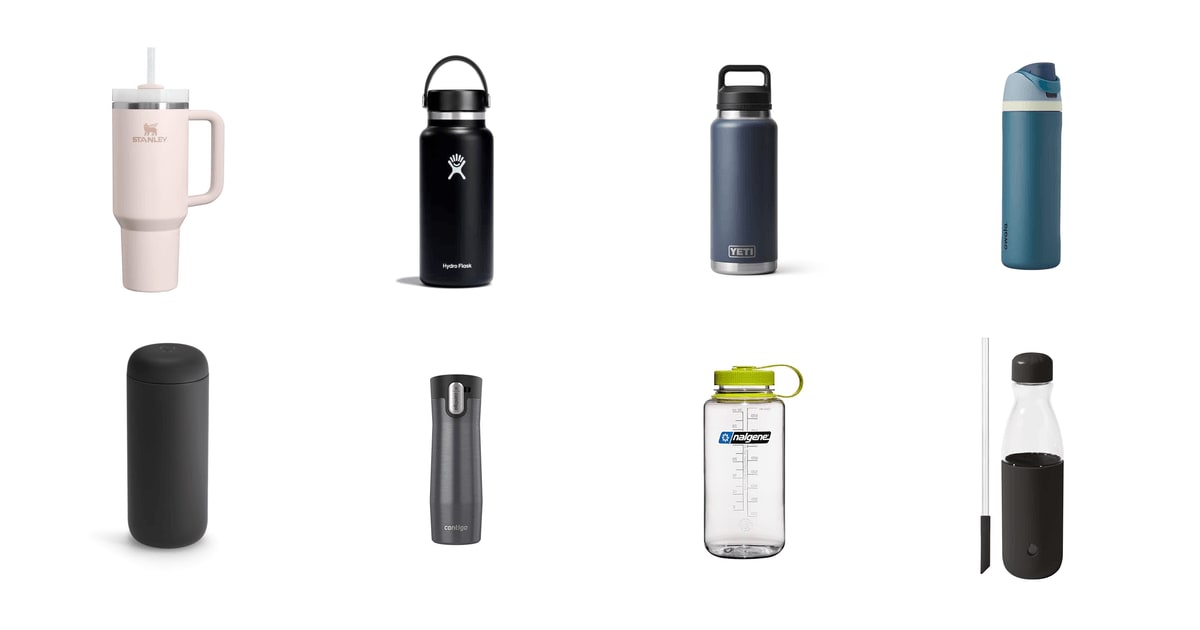
A reusable bottle only helps if you actually carry it. That comes down to small things: a lid you can open one-handed at a red light, a base that drops into your car's cup holder, a mouth wide enough to get a brush into. Insulation matters too, but only the vacuum kind — a double-wall bottle with no vacuum between the walls gives up its ice in about an hour. Get those details right and you'll stop buying flats of plastic bottles. Get them wrong and the thing lives in a cabinet.
No single bottle does all of it. Straw lids are lovely for iced water and terrible for coffee, because the open straw path vents heat. Big tumblers hold your whole day's water but won't fit most cup holders. And every lid with a moving part is a place for gunk to hide — owners across brands report that gaskets stiffen and start seeping after months of daily dishwasher cycles. Consumer Reports has also flagged lead at the base seam weld of some cheap unbranded steel bottles, which is a good reason to stick with names you know.
So we treated this as two jobs: a bottle for water you sip all day, and a mug for coffee you want hot at 10 a.m. We leaned on published lab testing, manufacturer specs and the themes that keep coming up in owner feedback. We think that the Owala FreeSip Stainless Steel Water Bottle is the best reusable water bottle for most people, and that the Hydro Flask Wide Mouth is the one to buy if you want longer ice retention and a bottle that shrugs off a rocky trail.
Everything we recommend
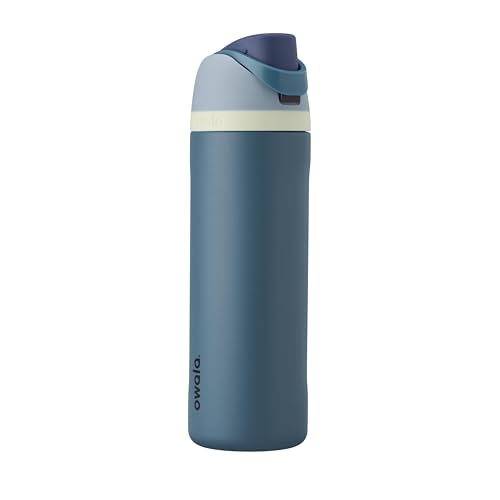
Light, leak-proof, and easy to drink from all day

Tougher and better insulated, if you don't mind the weight

Nearly indestructible, but it won't keep anything cold
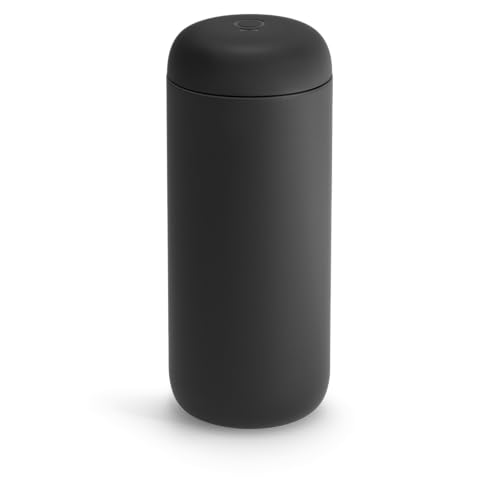
Great-tasting coffee in a mug you unscrew for every sip

One-handed, genuinely leak-proof, and hot all morning
At a glance
| Product | Capacity | Insulation Time | Price | |
|---|---|---|---|---|
 | STANLEY Quencher H2.0 Flow State TumblerAlso in lineup | 40 oz | — | $37.95On sale |
| Hydro Flask Water Bottle - Insulated StainlessRunner-up | 32 oz | 24h Cold/12h Hot | $38.90On sale |
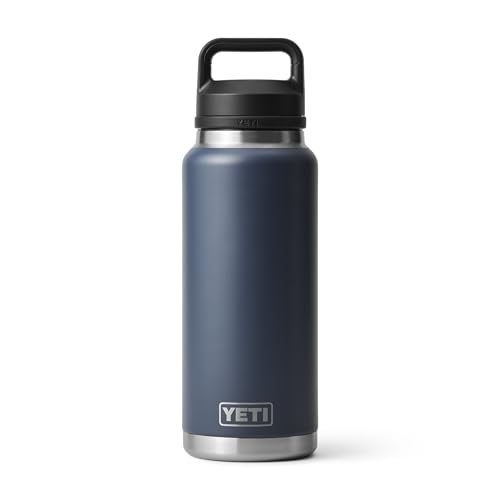 | YETI Rambler 36 oz BottleAlso consider | 36 oz | — | $50 |
| Owala FreeSip Stainless Steel Water Bottle 24Top pick | 24 oz | 24h Cold | $29.99 |
| Fellow Carter Move Ceramic Lined Travel CoffeeUpgrade pick | 16 oz | 12h Hot/24h Cold | $34.95 |
| Contigo AUTOSEAL West Loop Vacuum-Insulated Stainless SteelAlso great | 20 oz | 13h Hot/28h Cold | $20.99On sale |
| Nalgene Sustain 32 oz. Wide Mouth WaterBudget pick | 32 oz | — | $16.04On sale |
 | S'well Glass Original Water Bottle With StrawAlso consider | 18 oz | — | $39 |
How we picked
Real insulation. We only considered bottles with double-wall vacuum insulation, or plastic bottles honest enough not to claim any. Where independent lab numbers exist — OutdoorGearLab's ice-retention benchmarks, for instance — we weighted those over brand claims.
Lids that don't leak. A lid has to seal in a bag lying on its side, and it has to be openable with one hand if it's meant for a commute. We favored designs with published leak testing behind them and a locking mechanism you can feel engage.
Cleaning without dread. Wide mouths, removable gaskets and lids that come apart all extend a bottle's life. Owner feedback across brands points at the same failure mode: straws and hidden lid channels that go musty within months.
Materials and safety. We stuck to 18/8 stainless, borosilicate glass, or certified BPA/BPS/BPF-free Tritan from established brands, after Consumer Reports flagged lead at the base seam weld of some low-cost unbranded steel bottles.
Weight and fit. A bottle you leave at home is worthless, so we noted how much each one weighs full and whether the base clears a standard car cup holder. Bigger is not automatically better.
Top pick
Light, leak-proof, and easy to drink from all day
Owala FreeSip Stainless Steel Water Bottle 24
The FreeSip lid lets you sip through a built-in straw or tip the bottle back and chug from the same spout, so you don't swap lids for the gym and the desk. It's lighter than the steel tumblers people usually compare it to, and the push-button cover keeps the spout clean in a bag.
$29.99fromAmazonThe lid is the whole argument. Most bottles make you pick a personality: a straw for constant desk sipping, or a wide chug opening for after a run. The FreeSip spout does both through one opening. You sip upright through the internal straw, then tilt it back when you want volume. The push-to-open cover snaps shut over the spout, and the carry loop doubles as the lock, so it isn't going to pop open in your tote.
Weight is the underrated reason people keep reaching for this one. Real Simple's testing found the 24-ounce FreeSip weighs roughly 40% less than a 40-ounce Stanley Quencher while holding temperature comparably over a six-hour window. That gap shows up in your hand and your bag, not on a spec sheet. If you've ever hauled a full steel tumbler around a museum or a job site, you know the difference.
Owala rates the double-wall insulation for up to 24 hours cold, and owner feedback across years of use lines up with that for ice water. The opening is wide enough to drop in cubes and get a brush down, which matters more than it sounds — bottles with fold-in straws are the ones that go musty. The steel body doesn't pass along yesterday's iced tea either.
It's also the easiest of our picks to live with day to day. It's short enough to fit under most sink faucets, the button lid opens with your thumb, and the 24-ounce size means you refill a couple of times instead of lugging a half-gallon around. For most people, that's the right trade.
Flaws but not dealbreakers
Owala says plainly that this bottle is wider than a standard cup holder and may fit only oversized ones. If you commute by car and want the bottle riding in the console, measure first. That's a real strike against it as a road-trip bottle.
It's a cold-drink bottle. The straw path vents heat, so coffee and tea cool faster here than in a mug with a closable spout — buy one of our coffee picks for that. The straw and the gasket also need actual attention; hand-washing the lid, rather than running it through the dishwasher every night, is what keeps the seal from getting sloppy over the first year.
Runner-upOn sale
Tougher and better insulated, if you don't mind the weight
Hydro Flask Water Bottle - Insulated Stainless
Hydro Flask rates this 32-ounce bottle for 24 hours cold and 12 hours hot, and independent lab testing backs up the cold claim in impressive fashion. The wide mouth takes ice and a bottle brush, and the flexible strap handle makes a full bottle easy to carry one-handed.
$38.90fromAmazonList priceThe insulation is the standout. Hydro Flask's TempShield double-wall vacuum construction is rated for 24 hours cold and 12 hours hot, and OutdoorGearLab measured ice retention of 68 hours at a 70°F ambient temperature — longer than the Yeti Rambler it tested alongside. In practice that means a bottle filled with ice on Sunday night still has some on Tuesday. For a hot car or a long shift outdoors, nothing else here comes close.
The wide mouth is why hikers and gym-goers pick this over a straw bottle. You can shovel in ice cubes, drop in a scrub brush, and pour without glugging. There's no straw to grow a film inside, which is exactly the complaint owners of straw bottles keep raising. The Flex Cap seals tight when closed, so you can throw it in a pack on its side.
It's also the most adaptable bottle here. Hydro Flask sells a range of swappable lids in the same thread, so if you want a spout for drinking while driving or a straw for the desk, you change the top instead of buying another bottle. Owners routinely mention doing exactly that. The pro-grade steel doesn't hold onto flavors either, so coffee in the morning won't haunt your water in the afternoon.
One year of daily use turns this into a scuffed bottle, and that's fine. Hydro Flask backs it long-term, the powder coat adds grip when your hands are wet, and the flexible handle sits flat against your palm instead of digging in. It's heavier than the Owala and it costs more, but you're paying for insulation that genuinely leads the category.
Flaws but not dealbreakers
The powder coat isn't the toughest finish around. In Treehugger's durability comparison, Hydro Flask's coating showed visible scuffs after 80 drop cycles onto concrete, while Yeti's DuraCoat came through 200 cycles with no measurable paint loss. Cosmetic, but worth knowing if yours will be sliding around a truck bed.
A wide mouth pours fast, which is great for filling and less great for drinking while you walk or drive — you'll want the spout lid for that. And several owners note the flat interior bottom edge is a spot where residue hides, so give it a proper brush rather than a rinse.
Hydro Flask backs the bottle with a lifetime warranty.
Budget pickOn sale
Nearly indestructible, but it won't keep anything cold
Nalgene Sustain 32 oz. Wide Mouth Water
The Nalgene Sustain is a wide-mouth Tritan bottle that weighs almost nothing, survives being dropped down a scree slope, and costs a fraction of the steel bottles here. It's made with 50% certified recycled content and is free of BPA, BPS and phthalates.
$16.04fromAmazonList priceBuy this if weight and durability matter more than cold water. An empty Nalgene barely registers in a pack — it's a fraction of the weight of any insulated steel bottle, which is why it's been strapped to backpacks for decades. It handles anything from ice water to hot tea, rated from -40°F to 212°F, and it doesn't dent. It scratches and it fogs, and then it keeps working.
The sustainability story is real rather than marketing. Nalgene builds the Sustain line from Eastman's Tritan Renew, which contains 50% certified recycled content, and third-party lab testing verifies it as free of BPA, BPS, BPF and phthalates. If you're replacing single-use bottles, that's the point: Earth Day Network estimates one reusable bottle keeps about 156 disposables out of circulation per person, per year.
Cleaning is trivial. The mouth is wide enough to get your whole hand in, there's no straw and no complicated gasket stack, and it's top-rack dishwasher safe. The cap tethers to the neck so it doesn't roll under the car. For a kid's bottle, a camp bottle, or the one that lives in your gym bag, simple wins.
Flaws but not dealbreakers
There's no insulation at all. Fill it with ice water on a July morning and you'll have cool water by lunch and warm water by three, plus a sweaty exterior soaking whatever it's sitting next to. That's the trade for the price and the weight.
It's also bulky for its capacity — a 32-ounce Nalgene is a wide cylinder that won't go near a cup holder — and Tritan can pick up a faint whiff of whatever you left in it overnight. Sports drinks and coffee are the usual culprits. Wash it the same day and it's a non-issue.
Upgrade pick
Great-tasting coffee in a mug you unscrew for every sip
Fellow Carter Move Ceramic Lined Travel Coffee
The Carter Move is lined with ceramic instead of bare steel, so your coffee tastes like coffee and not like a spoon. The lid twists off completely to drink, which is the trade you make for a genuinely leak-proof seal and a thin, glass-like drinking rim.
$34.95fromAmazonThe ceramic lining is what you're paying for. Bare stainless can leave a metallic edge on light-roast coffee and hold onto oils from whatever you drank yesterday. The Carter Move's ceramic-coated interior sidesteps both, and owner feedback from people who switch between coffee and tea is unusually consistent on this point. If you buy good beans, this is the mug that respects them.
The drinking experience is the other half. The tapered lip is thin — Fellow modeled it on a wine glass — so it sits on your mouth like real ceramic rather than a rolled steel edge. Double-wall stainless keeps drinks hot up to 12 hours and cold up to 24, and the removable splash guard keeps things from sloshing over a pothole once the lid is off.
It travels well for a mug with no drinking spout. A quick twist locks the lid, and it seals well enough to lie sideways in a bag. The silhouette is slim enough for most car cup holders and most bag pockets. Good Housekeeping Institute testing of the Carter Everywhere, its close sibling, held coffee above 140°F for four and a half hours — the longest of the mugs in that group.
Fellow's mug is the most expensive way to carry 16 ounces of coffee here, and it's the one that looks best sitting on a desk. If you'd otherwise buy a café drink twice a day, it earns its place quickly.
Flaws but not dealbreakers
You have to unscrew the lid to drink, every time. Owners who drive raise this a lot: there's no one-handed sip, and an off lid means an open mug in a moving car. The splash guard helps, but if your commute is stop-and-go, the Contigo is the safer choice.
The ceramic coating also asks for care. Skip the abrasive scrubbers, hand-wash it, and don't bang the interior with a metal spoon. At 16 ounces it's a modest pour, too — a large drip coffee with room for milk just fits.
Also greatOn sale
One-handed, genuinely leak-proof, and hot all morning
Contigo AUTOSEAL West Loop Vacuum-Insulated Stainless Steel
The AUTOSEAL lid stays shut until you press the button, so it can't leak while it rattles around in your bag. Contigo rates it for 13 hours hot and 28 hours cold, and it's built to fit under a single-serve brewer and into a car cup holder.
$20.99fromAmazonList priceThis is the mug to buy if you drive. You hold it, press with your thumb, sip, and it reseals itself the moment you let go — no twisting, no flipping a tab, no second hand off the wheel. Wirecutter's travel mug torture test found the AUTOSEAL lid survived a 45-minute bag-toss simulation with no leakage, the only budget mug in that group to manage it.
The insulation holds up its end. THERMALOCK vacuum insulation is rated for 13 hours hot and 28 hours cold, which is well past what a morning commute asks of it. Pour coffee at seven and it's still uncomfortably hot at ten. The 20-ounce body slides under most single-serve brewers, so you can skip the middle mug entirely.
Contigo also thought about the parts that get gross. The Easy-Clean lid comes apart and goes on the top rack of the dishwasher, which is not a given on push-button lids — that mechanism is exactly where mold hides in cheaper mugs. There's even a hook inside the lid for a tea bag string, which is a small thing you'll appreciate on day three.
It costs a fraction of the Fellow and it's a fraction as pretty. But it does the actual job of a commuter mug — hot, sealed, one-handed — better than anything else here.
Flaws but not dealbreakers
The steel interior gives coffee a faintly metallic edge next to the Carter Move's ceramic, and it holds onto oils if you let it sit. Rinse it the same day.
The body is hand-wash only; only the lid goes in the dishwasher. And the lid has more moving pieces than a simple screw cap, so you do need to take it apart regularly. Owners who don't are the ones who end up with a musty mug.
Who this is for
This guide is for anyone replacing single-use bottles or a chipped mug from the back of the cabinet — commuters, office workers, gym-goers, hikers, and parents who want something BPA-free that survives a school year. If you already own an insulated steel bottle you like, you don't need a new one; these are all iterations on the same idea, and the honest upgrade path is usually a better lid, not a whole new bottle. Buy now if yours leaks, smells, or is small enough that you keep forgetting to drink.
We cover everyday bottles and travel mugs you'd carry to work, to the gym, or on a day hike. We're not covering hydration bladders, collapsible bottles, filtering bottles, or large jug-style coolers, and we're not covering kids' sippy-style bottles. We also stayed away from unbranded steel bottles entirely, for the lead-seam reason above.
How we picked
We started from the specs and the published lab work, then read owner feedback for the failures that only show up after six months. Insulation: double-wall vacuum or nothing, with independent ice-retention numbers preferred over brand claims. Lid: it has to survive lying sideways in a bag, and a commuter mug has to open one-handed. Cleaning: wide mouths and lids that come apart, because straws and hidden channels are where these bottles die. Materials: 18/8 stainless, borosilicate glass, or certified BPA/BPS/BPF-free Tritan from a brand that stands behind it. Weight and fit: we noted what each one weighs full and whether it clears a normal cup holder.
Other reusable water bottles and coffee cups worth considering
If you want the toughest finish: The YETI Rambler 36 oz Bottle ($50) — The Yeti Rambler with the Chug Cap is the bottle to buy if yours is going to live in a truck bed or a boat. Yeti's DuraCoat came through 200 drop cycles from four feet onto concrete with no measurable paint loss in Treehugger's comparison, while Hydro Flask's powder coat scuffed after 80. The Chug Cap opens with a half-twist and pours at a sane rate for drinking on the move, and the TripleHaul handle gives you something to actually hook a finger through. It gave up a little to the Hydro Flask on ice retention in OutdoorGearLab's benchmarking, and at 36 ounces of steel it's the heaviest thing here when full.
If you want zero plastic and no metallic taste: The S'well Glass Original Water Bottle With Straw ($39) — The S'well Glass Original is borosilicate glass with a silicone sleeve, a steel lid and a collapsible glass straw — no plastic touches your drink at any point. If you're sensitive to the way steel or plastic flavors water, this is the fix, and it's the best-looking bottle here by a distance. It's cup-holder friendly and leak-proof, and the whole thing is dishwasher safe. But glass doesn't insulate the way a vacuum wall does, and it breaks. Treat it like a nice glass you carry around, not a hiking bottle.
The competition
Here's what our research turned up beyond the picks. This isn't every bottle on the market — it's the ones that came up often enough in published reviews and owner feedback to be worth addressing.
The STANLEY Quencher H2.0 Flow State Tumbler ($37.95) — The Stanley Quencher H2.0 FlowState is the tumbler that made this whole category a shopping category; Stanley reported a 275% revenue jump for the line after it went viral. It earns some of that. The rotating FlowState lid gives you a splash-resistant straw opening, a sip opening and a fully closed position, the body is 90% recycled BPA-free stainless, it's dishwasher safe, and Stanley covers it with a lifetime warranty. But it's heavy — owners bring this up constantly, and Real Simple measured the 24-ounce Owala at roughly 40% lighter with comparable temperature retention. The 3.5-inch base won't go in a car cup holder without an adapter, and the straw opening isn't fully sealed, so this isn't a bottle to lay flat in a bag. If you want a big tumbler that lives on a desk and you like the look, it's a fine buy. For carrying around, our top pick is the more practical bottle.
Care and cleaning
The bottle almost never fails first — the lid does. Take yours apart weekly: pull the gasket out of its groove, push a straw brush through the straw, and get into the channel around the spout, because that's where the film you can smell but can't see collects. Hand-wash lids even when the label says dishwasher safe. The heat and detergent stiffen silicone gaskets, and owners across brands report seepage starting within about six months of daily machine cycles. Bodies are more forgiving, and most of ours go in the dishwasher fine. Dry everything with the lid off and upside down; a capped damp bottle in a cabinet is how mold starts. If a gasket does harden, most brands sell replacements — that's a cheaper fix than a new bottle.
Questions we get
Is the Owala FreeSip better than the Stanley Quencher?
For most people, yes. The Owala is substantially lighter for the water it holds, its spout locks fully closed so it can ride sideways in a bag, and it costs less. The Stanley holds more and has a lifetime warranty, but its wide base won't fit a car cup holder and its straw opening isn't sealed.
What's the difference between double-wall and vacuum-insulated?
Double-wall just means there are two layers with a gap. Vacuum-insulated means the air has been pumped out of that gap, which is what actually stops heat transfer. A plain double-wall bottle loses its cold in around an hour; a vacuum-insulated one holds ice for a day or more. Look specifically for the word vacuum on the spec sheet.
Which reusable travel mugs actually keep coffee hot for hours?
Look for a vacuum-insulated steel body and a lid that closes completely between sips. Contigo rates the AUTOSEAL West Loop for 13 hours hot, and Fellow rates the Carter Move for up to 12. Straw lids are the ones to avoid for coffee — the open straw path vents heat much faster than a sealed spout.
Can a stainless steel bottle grow mold inside?
The steel body rarely does, but the lid absolutely can. Straws, silicone gaskets and push-button mechanisms trap moisture and coffee oils. Disassemble the lid weekly, scrub the straw with a proper brush, and store the bottle uncapped so it dries out.
What size should I buy — 20, 32, or 40 ounces?
Bigger bottles have been outselling smaller ones lately, but weight is the thing people underestimate. A 40-ounce steel tumbler full of ice water is heavy and usually won't fit a cup holder. If you have a sink nearby, 24 to 32 ounces with two refills is easier to live with; save the big sizes for the desk or the car.
Are these bottles dishwasher safe?
Most of the bodies here are, and Hydro Flask, Stanley and Nalgene all say the lids are too. We'd still hand-wash lids. Repeated hot cycles harden silicone gaskets, and a stiff gasket is where a leak-proof bottle stops being leak-proof.
Why you should trust us
For this guide:
- We compared manufacturer spec sheets across all eight bottles and mugs, focusing on insulation type, rated hold times, materials and lid mechanisms.
- We read independent lab work from OutdoorGearLab, Good Housekeeping Institute, Treehugger, Real Simple, Wirecutter and Consumer Reports on ice retention, heat retention, drop durability and material safety.
- We read through owner feedback for each product and weighted the recurring themes — gasket wear, straw cleaning, weight and cup-holder fit — over one-off complaints.
- We read owner reviews on every listing, weighted toward the critical ones, because that is where the recurring failures show up.
- We have a systematic way of automatically fetching the latest prices, so the numbers on this page stay current.
- This is a research-focused guide, so the team may not own every product listed — though we often do own the top winners, which gives us extra context for the recommendations.
- We don't accept free products, and the retailer commission never changes which product we recommend.
Sources
The Best Water Bottles of 2026 — Wirecutter (New York Times), Wirecutter
Best Insulated Water Bottles — Outdoor Gear Lab, Outdoor Gear Lab
Best Travel Mugs Tested by Good Housekeeping, Good Housekeeping
Best Water Bottles 2026 — Consumer Reports, Consumer Reports
Reusable Water Bottle Market Size and Forecast 2024–2030 — Grand View Research, Grand View Research
Are Stanley Cups Worth It? We Tested 6 Tumblers — Real Simple, Real Simple
Best Coffee Travel Mugs — Serious Eats, Serious Eats
Plastic Bottle Pollution Statistics 2025 — Earth Day Network, Earth Day Network
Contigo AUTOSEAL West Loop Long-Term Review — The Wirecutter, Wirecutter
Nalgene Sustain Bottle Review — Gear Junkie, Gear Junkie
S'well Bottle Review 2025 — Food & Wine, Food & Wine
Yeti Rambler vs. Hydro Flask: Which Is Better? — Treehugger, Treehugger
Amazon product listings and owner reviews for all 8 products
Manufacturer specification pages for each product
Some passages in this guide may be paraphrased with AI help. Prices are refreshed automatically.
More like this.
Continue exploring lifestyle reviews and recommendations.

The Best Owala Water Bottles
A water bottle only works if you actually carry it. That means it has to fit the pocket of your bag, survive a drop in a parking lot, and open with one…

The Best Insulated Stainless Steel Water Bottles
A good insulated bottle is the rare thing you use every single day and barely think about. You fill it with ice water in the morning, forget it in a hot…

The Best Smart Water Bottles
Most of us know we should drink more water, and most of us don't. CDC analysis of NHANES data found that roughly 43% of U.S. adults drink fewer than four…

The Best Eco-Friendly Reusable Bags
Reusable bags only work if you actually have one with you. That's the whole game. A beautiful organic cotton tote sitting on your kitchen counter does…

The Best Car Cup Holder Expanders
Your car's cup holders were designed for a soda can. Your water bottle was not. Most factory cup holders measure between 2.5 and 3 inches across inside,…

The Best Reusable Kitchen Swaps for Cutting Plastic Waste
Kitchen plastic doesn't leave your house in one big pile. It leaves a sandwich bag at a time, a sheet of cling film at a time, a produce bag at a time.…