The Best Compound Bows for Beginners
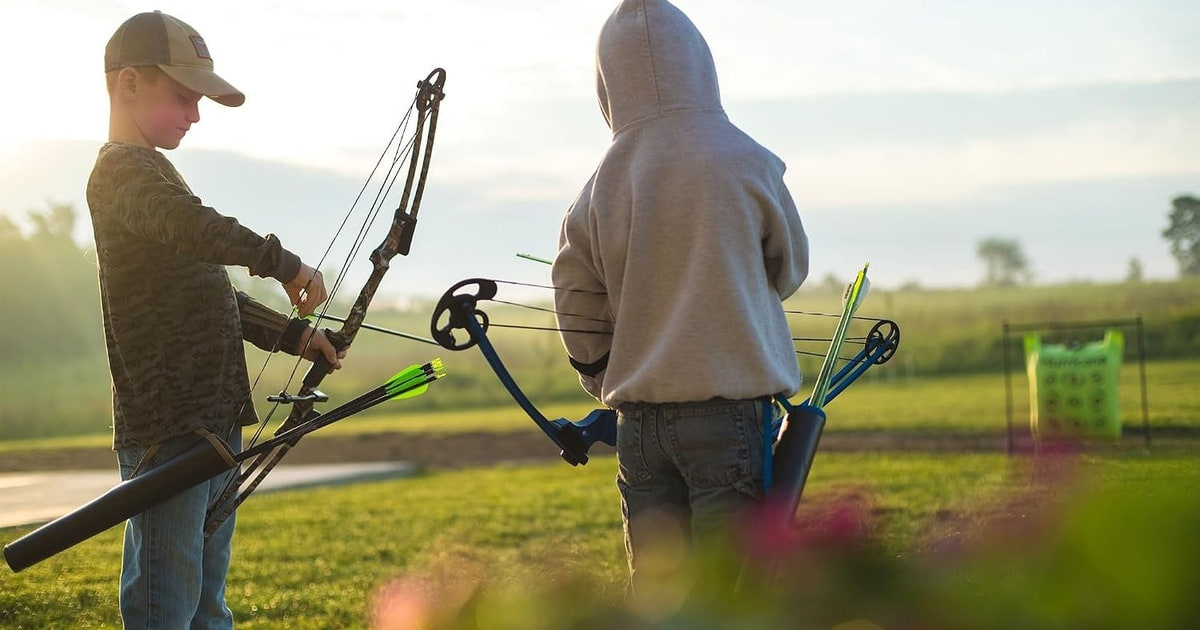
A first compound bow has one job: let you shoot enough arrows to find out whether you like archery. That means it has to fit you right now and still fit after a few months of practice, when your form tightens and your shoulders get stronger. Draw weight and draw length are the two numbers that decide this, and the beginner-friendly bows are the ones you can change without a bow press or a shop visit. Everything else — sight pins, rests, quivers — you can swap later.
Here's the honest part. Almost every bow in this range ships as a package, and the packages are where corners get cut. Owners across brands report the same things: strings and serving that don't hold up, peep sights that slide or fall out, rests that get replaced within a season. A bow that arrives needing a shop visit isn't unusual at this price level; it's closer to the norm. Budget for a string check and a proper setup before you count on any of these to hold a group.
If you want the fewest surprises, buy a bow that's simple enough to have very little to go wrong. We think that the Genesis Original is the best compound bow for beginners for most people, and that the SAS Outrage is the one to buy if you're heading toward hunting and need real draw weight.
Everything we recommend

Nearly nothing to tune, and everyone can shoot it

Real hunting weight, if you'll do the setup yourself

The widest fit range here, in a very light package

A wide adjustment range with almost nothing extra
At a glance
| Product | Draw Weight | Draw Length | Price | |
|---|---|---|---|---|
| Bear Archery Cruzer G4 Adjustable Compound BowAlso great | 10-70 lb | 14-30 in | $405.31On sale |
| Archery 2021 Diamond Infinite 305Budget pick | 7-70 lb | 19-31 in | $349.95 |
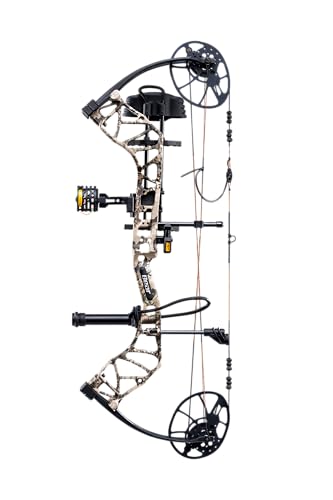 | Bear Archery Legit MAXX RTH Compound BowAlso in lineup | 10-70 lb | 14-30 in | $399.99 |
 | PSE Bow Stinger MAXAlso consider | 70 lb | — | $494.99 |
| Genesis Archery Original Compound BowTop pick | 10-20 lb | 15-30 in | $164.99On sale |
| SAS Southland Archery Supply Outrage 70 LbsRunner-up | 30-70 lb | 25-31 in | $129.99 |
How we picked
Adjustment range. We prioritized bows whose draw weight and draw length can be changed without a bow press, since beginners get stronger fast and rarely guess their fit right the first time. Anything locked to a narrow range got pushed down the list.
Forgiveness over speed. Longer axle-to-axle lengths and taller brace heights punish a shaky release less, so we favored those specs over arrow speed. A beginner gains nothing from a fast, twitchy bow.
What owners report breaking. We read through owner feedback looking for repeated failure modes rather than one-off complaints. Strings, servings and peep sights came up again and again, so we weighted those heavily.
What's in the box. Package bows vary from complete to nearly bare. We noted which ones need a peep sight, a rest or a sight before they're usable, because that changes what the purchase really involves.
Warranty and support. Stated warranty terms matter more in a category where early string failure is a known risk. We noted where a manufacturer publishes a longer term and where owners describe difficulty getting a claim honored.
Top pickOn sale
Nearly nothing to tune, and everyone can shoot it
Genesis Archery Original Compound Bow
The Genesis Original is a single-cam bow with no let-off, so there's no draw-length setting to get wrong and no wall to crash into. One bow fits an eight-year-old and a grown adult, which is why school archery programs run on them.
$164.99fromAmazonList priceThe reason this bow works for beginners is that it removes the decision you're least equipped to make. Most compound bows lock you into a draw length, and picking the wrong one is the single most common beginner mistake. The Genesis has no let-off, so it just draws farther the farther you pull. Anyone from about 15 to 30 inches of draw can shoot it without a single adjustment. You stop worrying about fit and start worrying about your form, which is where a beginner's attention belongs.
Draw weight runs from 10 to 20 pounds. That sounds light next to the 70-pound bows elsewhere in this guide, and it is. But 20 pounds is plenty for target work at 10 and 20 yards, and it's low enough that you can shoot a hundred arrows in an afternoon without your shoulder giving out. Volume is how you get better. A bow you can only draw a dozen times teaches you very little.
The single cam is the other quiet advantage. There's no timing to synchronize, no two cams to fall out of step, and far less that can go wrong between you and the target. Owner feedback here is unusually consistent for a product at this level — parents and scout leaders keep coming back to the same bow for a second and third kid. That kind of repeat buying is a better signal than any spec on the box.
It arrives assembled and ready to shoot, with an aluminum riser and composite limbs, and it weighs about three and a half pounds. Light matters more than beginners expect. Holding at full draw while you settle your pin is the part that shakes, and every ounce you're not supporting is one less thing making the sight wander.
Flaws but not dealbreakers
It tops out at 20 pounds, so it's a target bow, not a hunting bow. If you already know you want to take it into the woods, this isn't the one — most states set legal minimums well above what this draws, and you'd outgrow it before your first season anyway.
There's no let-off, which means you're holding the full weight at full draw. That's a real difference from every other bow here. It builds good habits, but if you like the idea of settling in behind a 70-percent let-off wall and taking your time, you won't get that here.
It ships bare. No sight, no rest beyond the basics, no quiver. Several owners also point out that a young archer with thin arms may struggle to hold even this bow up for long, so if you're buying for a small kid, plan on some patience.
Runner-up
Real hunting weight, if you'll do the setup yourself
SAS Southland Archery Supply Outrage 70 Lbs
The SAS Outrage covers 30 to 70 pounds and adjusts from 25 to 31 inches without a bow press. It's a plain aluminum-riser bow with a genuinely long warranty, and owners treat the included accessories as placeholders rather than the finished setup.
$129.99fromAmazonThis is the bow to buy if you're fairly sure archery is going the hunting direction. Thirty to 70 pounds covers a beginner's first year and the years after it, and the 25-to-31-inch draw range fits most adults. Best of all, you can make those changes without a press. That saves you a shop trip every time you get stronger, which in the first six months can be often.
The spec sheet is unusually honest for a budget bow. A 7.5-inch brace height is forgiving — it means small mistakes in your release cost you less on the target than they would on a tighter, faster bow. The 31-inch axle-to-axle length gives you a stable platform to aim from. It's not a fast bow at a claimed 275 fps IBO, and that's fine. Speed is the last thing a beginner needs.
SAS backs it with a three-year warranty, which is longer than what most of this category offers. That matters more than usual here, because the recurring complaint about budget bows is strings letting go early, and this one has a documented answer if that happens to you.
Owners who like it tend to describe the same arc: they buy the bow, replace the sight and rest with something better, and end up happy. If you're comfortable with that path — or you have a local shop you already trust — the underlying bow is solid for what it costs relative to the rest of the field.
Flaws but not dealbreakers
The included accessories are the weak link, and owners say so repeatedly. Plan on buying a peep sight, and likely a rest and sight you actually want, before this is a finished setup.
String failure shows up in owner feedback more than once, including breaks within the first handful of shots. It's not the majority experience, but it's common enough that we'd have a shop inspect and set up the bow before you shoot it seriously.
At about five and three-quarter pounds it's heavier than it looks, and more than one owner mentions the strain on the bow arm during a long session. It's a manageable trade for the stability, but you'll feel it.
SAS states a three-year warranty on the Outrage, with some restrictions.
Also greatOn sale
The widest fit range here, in a very light package
Bear Archery Cruzer G4 Adjustable Compound Bow
The Bear Cruzer G4 adjusts from 10 to 70 pounds and 14 to 30 inches, which is about as wide as adjustment ranges get. At 3.2 pounds it's the lightest full-size bow here, and it comes with a sight, rest, quiver and stabilizer.
$405.31fromAmazonList priceNo other bow here fits as many people. Ten to 70 pounds and 14 to 30 inches means a nine-year-old and a full-grown adult can share it, and neither has to compromise much. If you're buying one bow for a household with more than one archer, or for a kid who's about to grow six inches, this is the practical answer.
It's genuinely light — 3.2 pounds for the bare bow, which you feel most while you're holding at full draw waiting for your pin to settle. The 29-inch axle-to-axle length and 6.5-inch brace height put it in the same forgiving territory as the SAS, just in a more compact package that's easier to carry and easier for a smaller archer to manage.
The ready-to-hunt package covers the basics: a four-pin sight, an arrow rest, a five-arrow quiver, a stabilizer, a peep and a wrist sling. That's a complete setup out of the box, and for someone who doesn't yet know what they'd upgrade to, having everything mounted and roughly aligned is worth something.
Flaws but not dealbreakers
Quality control is the problem, and it's why this isn't the top pick. Owners report bows arriving with the draw length set wrong, peep sights and D-loops coming loose early, and in at least one case a derailment within the first dozen shots. Have it inspected before you shoot it — that's advice owners themselves keep giving.
The accessories in the box don't always match the listing. Several owners note getting a different arrow rest or a different color than what's pictured. Cosmetically minor, but it tells you something about how closely the packages are controlled.
The 14-inch minimum draw is a headline number more than a practical one. At the very short end of that range, you're shooting a bow that's built around a much longer draw, and the feel suffers.
Budget pick
A wide adjustment range with almost nothing extra
Archery 2021 Diamond Infinite 305
The Diamond Infinite 305 spans 7 to 70 pounds and 19 to 31 inches, which covers a beginner from the first week through a full hunting setup. It arrives as a bare-bones package that assumes you'll finish it yourself.
$349.95fromAmazonSeven pounds at the bottom end is remarkably low — low enough that a complete beginner can spend a first session on form alone, drawing and letting down without any weight fighting them. From there you climb to 70 without ever swapping bows. The 19-to-31-inch draw range covers nearly every adult and most teenagers.
Buy this one knowing it's a starting point, not a finished bow. The one owner account we have is a warning worth repeating: it showed up without a peep sight and without printed instructions, just a pointer to online video. If you expected a ready-to-hunt kit, that's a bad surprise. If you expected a bow to build on, it's fine.
The Infinite 305 has been around long enough that setup guidance is easy to find, and any archery shop will know it. That's a real advantage over more obscure budget bows. When you take it in for a peep and a proper tune, nobody has to figure it out from scratch.
Flaws but not dealbreakers
Very little owner feedback exists for this listing, so we're leaning harder on specifications than we'd like. Treat it as a reasonable bet rather than a known quantity.
You'll need to add a peep sight before you can aim consistently, and you should assume a shop visit is part of the purchase. Factor that into what you're actually spending.
Who this is for
This guide is for someone buying a first compound bow — for themselves, a kid, or a household that wants to try archery without committing to a custom shop build. If you're shooting for fun in the backyard or at a range, the top pick will keep you busy for a long time. If you already know you're hunting next season, skip straight to a bow that reaches legal draw weight in your state and plan on a shop setup.
It's not for experienced archers. If you already know your draw length to the half inch and have opinions about cam systems, you're shopping in a different tier, and nothing here will satisfy you. We also stick to compound bows: recurves, crossbows and traditional gear are their own categories with their own trade-offs, and none of them are covered here.
How we picked
We built this around what actually goes wrong for beginners. Adjustment range: the bow has to fit you today and after six months of practice, ideally without a bow press. Forgiveness: a longer axle-to-axle length and a taller brace height cost you speed you don't need and buy you accuracy you do. Known failure modes: we leaned on owner feedback to find what breaks, and strings, servings and peep sights kept surfacing. Completeness: we tracked which packages need a peep or a rest before they're shootable. Warranty: a published term matters when early string failure is a real risk.
Other compound bows for beginners worth considering
If you shoot left-handed: The PSE Bow Stinger MAX ($494.99) — Left-handed beginners have thin options, and the PSE Stinger MAX ready-to-shoot package is one of the few full kits built that way rather than adapted. It's a 70-pound bow with a 30-inch axle-to-axle length, so it's aimed at someone heading toward hunting rather than casual target practice. The catch is that there's essentially no owner feedback on this listing to check the specs against, and the listing itself is thin. If you're left-handed and want a complete package, it's worth a look. If you're right-handed, the picks above give you more to go on.
The competition
These are the bows our research surfaced alongside the picks, not a survey of everything sold. Beginner compound bows turn over constantly, and package contents change without the model name changing, so treat this as a snapshot of what's worth knowing about right now.
The Bear Archery Legit MAXX RTH Compound Bow ($399.99) — The Bear Legit MAXX RTH looks like the Cruzer's better-equipped sibling on paper: the same 10-to-70-pound and 14-to-30-inch adjustment range, a slightly taller 6.25-inch brace height, a 30-inch axle-to-axle length and a Picatinny-mounted sight. The problem is what owners describe after a few weeks. Strings breaking early — in one case on the first draw — peeps coming off, and serving that runs so far down the string that taller archers can't set the peep where they need it. Several owners also say the included rest isn't worth keeping. If you want this specific bow, buy it from a shop that will set it up and stand behind it, and don't count on the package accessories.
Setup and maintenance notes
Have a shop look at any bow in this range before you shoot it seriously. String and serving problems are the recurring theme in owner feedback across brands, and a five-minute inspection catches a bad serving or a cam that's out of alignment before it derails on you. Wax the string every few weeks — a dry string frays fast and frays where you can't see it. Check the peep sight and D-loop after your first fifty arrows, since both tend to shift while everything settles. Tighten the accessory screws too; vibration works them loose. And when you raise the draw weight, do it in small steps rather than jumping to the top, so your form doesn't fall apart chasing the poundage.
Questions we get
What draw weight should a beginner start with?
Lower than you think. Most adults do well starting somewhere in the 30-to-40-pound range, and kids should start lower still. You want to draw the bow smoothly without hunching or sky-drawing, and you want to repeat that fifty times in one session.
How do I figure out my draw length?
Measure your arm span in inches from fingertip to fingertip, then divide by 2.5. That gets you close enough to start. A shop can refine it, and bows with wide adjustment ranges let you correct the guess without buying anything new.
Do I need a bow press to adjust these?
Not for the bows we recommend. Draw weight on all of them changes with the limb bolts, and the SAS and Bear models adjust draw length without a press as well. That's a deliberate part of why we picked them.
Are these bows legal for hunting?
It depends on your state and the animal, but most states set a minimum draw weight in the 35-to-45-pound range. The SAS, Bear and Diamond models all reach well past that. The Genesis Original tops out at 20 pounds and is a target bow only.
What else do I need to buy?
Arrows cut to your draw length, a release aid, and a target. Some of these packages also need a peep sight added, which requires the string to be served — that's a shop job, not a driveway job. An arm guard and a bow case are cheap and worth having early.
Is a package bow good enough, or should I buy pieces separately?
A package gets you shooting immediately, which is the main thing. But owners consistently describe the included rests and sights as the first parts they replace. Start with the package, then upgrade the piece that annoys you most.
Why you should trust us
For this guide:
- We compared published specifications for every bow here — draw weight and draw length ranges, brace height, axle-to-axle length and package contents — against what manufacturers state on their own listings.
- We read owner feedback across all six listings, looking for failure modes that repeat rather than isolated complaints, and weighted strings, servings and peep sights accordingly.
- We did not shoot, install, tune or handle any of these bows, and nothing here is presented as a first-hand result.
- We read owner reviews on every listing, weighted toward the critical ones, because that is where the recurring failures show up.
- We have a systematic way of automatically fetching the latest prices, so the numbers on this page stay current.
- This is a research-focused guide, so the team may not own every product listed — though we often do own the top winners, which gives us extra context for the recommendations.
- We don't accept free products, and the retailer commission never changes which product we recommend.
Sources
Best Compound Bows for Beginners – Outdoor Life, Outdoor Life
Best Compound Bows for Beginners – Field & Stream, Field & Stream
Getting Started with Archery – Archery 360 (ATA Consumer Hub), Archery 360 / Archery Trade Association
National Archery in Schools Program – Official Site, National Archery in Schools Program (NASP)
How to Choose a Compound Bow – Lancaster Archery Supply, Lancaster Archery Supply
Bear Archery Cruzer G3 – Official Product Specs, Bear Archery
Diamond Archery Infinite Edge Pro – Official Product Page, Diamond Archery
USA Archery Coaching Resources – Equipment Selection, USA Archery
Archery Trade Association – Industry Participation Research, Archery Trade Association (ATA)
PSE Stinger Max – Official Product Page, PSE Archery
Compound Bow Buyer's Guide – Cabela's, Cabela's
Bowhunting Draw Weight by State – Bowhunter Magazine, Bowhunter Magazine
Amazon product listings and owner reviews for all 6 products
Manufacturer specification pages for each product
Some passages in this guide may be paraphrased with AI help. Prices are refreshed automatically.
More like this.
Continue exploring lifestyle reviews and recommendations.

The Best Archery Release Aids for Compound Bows
Your release aid is the last piece of gear touching the bowstring, and it decides how cleanly that string leaves your hand. Get it right and your groups…

The Best Garden Tools for Beginners
A first vegetable garden asks more of your hands than you'd expect. You'll dig planting holes, pry rocks loose, snip tomato suckers, scratch weeds out of…

The Best Fishing Gear for Beginners
Fishing asks less of you than almost any other outdoor hobby. You need something to cast with, something to tie on the end, and a place to stand. But the…

The Best Cookbooks for Kids and Beginner Cooks
A kids' cookbook has one job: get a child cooking something they're proud of, without you hovering over every step. The good ones explain why you fold…

A Beginner's Guide to POP MART: Everything You Need to Know About Blind Box Toys (2026)
Discover the captivating world of POP MART blind box collectibles. From understanding the thrill of the chase to choosing your first series, this complete guide helps newcomers navigate the exciting hobby of art toy collecting.

The Best Bird Feeders for Beginners
A bird feeder is one of the few purchases that pays you back within days. Hang one near a shrub in a suburban yard and you'll often see your first…