The Best RV Surge Protectors
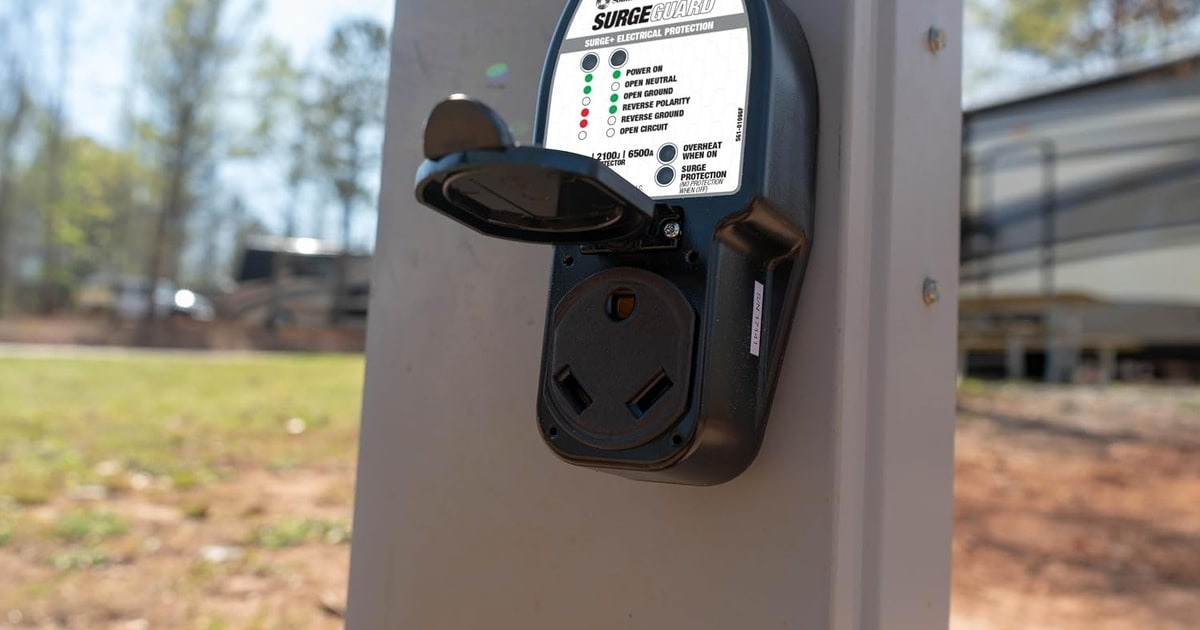
Shore power at a campground isn't the same thing as power at home. A pedestal sits outside for years, gets plugged and unplugged thousands of times, and often shares a transformer with fifty other rigs running air conditioning. What comes out of it can sag, spike, or be wired wrong from the day it went in the ground. Your RV doesn't care whose fault that is. It just loses a converter, a fridge board, or a whole inverter.
Here's the honest part: none of these devices makes bad power good. They watch, and when something's wrong they cut you off. So the better the protector, the more often you'll be the site with no lights while your neighbor runs a microwave off the same sketchy pedestal. Full electrical management units add a reconnect delay too, which means waiting after every blip. Protection and convenience pull against each other, and nothing here gets you both.
What you're really choosing is how much of the electrical picture your protector watches, and whether it can shut the door on its own. Basic units flag wiring faults and soak up spikes. Full Electrical Management Systems track voltage and frequency and disconnect before damage happens. We think that the Progressive Industries EMS-PT50X is the best RV surge protector for most people, and that the Southwire Surge Guard 30 Amp Portable is the one to buy if your rig runs on a 30-amp cord.
Everything we recommend

Full electrical management for 50-amp rigs, built to last

Solid 30-amp fault detection in a small, light package

Basic fault lights and light surge protection, barely any bulk

The same full protection, sized for a 30-amp trailer
Prices as of Oct 25, 6:48 AM PT · Details
At a glance
| Product | Amperage | Surge rating | Price | |
|---|---|---|---|---|
| Progressive Industries EMS-PT50X Portable RV Surge ProtectorTop pick | 50 amp | 3,580 joules | $207.87 |
| Progressive Industries EMS-PT30X Portable RV Surge ProtectorAlso great | 30 amp | 1,790 joules | $156.02 |
 | Hughes Autoformers PWD30-EPO-H Power Watchdog Smart BluetoothAlso consider | 30 amp | 3,000 joules | Check price |
| Camco Power Grip RV 30-Amp Circuit AnalyzerBudget pick | 30 amp | 1,050 joules | $54.99 |
| Southwire Surge Guard™ 30 Amp Portable RVRunner-up | 30 amp | 2,100 joules | $97.69 |
 | GAERGO 2026 𝐋𝐚𝐭𝐞𝐬𝐭 RV Surge Protector 50Also in lineup | 50 amp | 18,000 joules | $99.99 |
Prices as of Oct 25, 6:48 AM PT · Details
How we picked
EMS versus surge only. We separated full Electrical Management Systems from basic surge suppressors, because published guides and manufacturer spec sheets agree they catch different problems. A unit had to detect wiring faults, not just absorb spikes, to reach the picks.
Amperage match. We treated 30-amp and 50-amp units as separate recommendations rather than interchangeable ones. Good Sam's guidance is that an adapter never changes a protector's rated capacity, so we made sure both cord types have a good option here.
Fault diagnostics. We compared what each unit reports and how. A device that shows a specific fault code beats one that simply refuses to pass power, because it tells you whether to move sites or call the park.
Weather and theft. Every portable unit here sits outdoors on a pedestal all night. We looked for sealed or weather-shielded housings and a lock ring or padlock loop, which RV LIFE flags as standard on premium portables.
Shutoff and reconnect. We favored units with automatic shutoff and a timed reconnect delay. Camper Report notes that budget protectors often require a manual reset, which means a walk to the pedestal every time the park power hiccups.
Top pick
Full electrical management for 50-amp rigs, built to last
Progressive Industries EMS-PT50X Portable RV Surge Protector
This is a full Electrical Management System, not just a surge suppressor. It watches voltage, polarity and grounding at the pedestal, cuts power in milliseconds when something's wrong, and reconnects on its own once the pedestal settles down.
$207.87fromAmazonPrices as of Oct 25, 6:48 AM PT · Details
Most RV electrical damage doesn't come from lightning. It comes from a tired pedestal that sags to 100 volts on a hot afternoon while every air conditioner in the park is running. Progressive Industries says the PT50X monitors voltage, amperage and frequency, and disconnects within milliseconds if the line falls outside roughly 104 to 132 volts. Your residential fridge and inverter never see the bad power at all.
The fault list is what separates this from a basic protector. Open ground, reverse polarity, a miswired pedestal, over and under voltage — RV Travel reports that a real share of campground pedestals carry defects like these, and a surge-only unit sails right past them. The PT50X puts the fault on its display instead of just refusing to work, so you know whether to call the park office or move sites.
The reconnect delay is the part you'll appreciate in the middle of the night. After a fault clears, the unit waits before restoring power so your air conditioner compressor isn't slammed with a hard restart. Camper Report notes that cheaper surge-only units skip this and make you walk out to the pedestal and reset by hand. Here you sleep through the whole thing.
The build holds up outside. Lexan housing, an all-weather shield assembly and thermal protection are what you want in a case that sits in the rain on a gravel pad. It's rated for 50 amps at 120/240 volts and 12,000 watts, absorbing surges up to 3,580 joules. RV LIFE notes that premium portables like this include a locking loop, so you can padlock it to the pedestal overnight.
Flaws but not dealbreakers
It's big and heavy for something you unplug every time you move. At about 18 inches long and roughly five pounds, it won't tuck into a small basement bin, and the cord adds bulk. Portable protection is also portable theft. Do It Yourself RV points out that anything you can unplug can walk off at a public campground, which is exactly why the lock ring matters.
There's no phone app. You read the display at the pedestal, which means going outside in the rain to find out why your power dropped. If you want voltage readings from the couch, look at a Bluetooth unit instead. And this is the 50-amp model, so it won't help a 30-amp trailer, adapter or not.
Runner-up
Solid 30-amp fault detection in a small, light package
Southwire Surge Guard™ 30 Amp Portable RV
Southwire's 30-amp portable flags bad pedestal wiring and absorbs 2,100 joules of surge, in a unit that weighs about a pound and a half. It's the sensible pick for a pop-up or travel trailer when a full electrical management system is more than you need.
$97.69fromAmazonPrices as of Oct 25, 6:48 AM PT · Details
Southwire is the brand campground hosts and RV dealers tend to name first. Its hardwired Surge Guard units are factory-installed by several major RV manufacturers, which tells you something about how the design survives years of vibration down a highway. The portable 30-amp version brings that same reputation to a device you can carry between rigs, or hand to a friend who just bought a trailer.
It weighs about a pound and a half, and that changes how often you actually use it. A heavy protector is a protector you skip on a one-night stop. This one rides in a door pocket. The Easy-T-Pull handle with its integrated receptacle also makes it easier to work off a stiff pedestal outlet, which matters more than it sounds when your hands are cold and it's getting dark.
The diagnostics cover what really goes wrong at a pedestal: faulty park power, reversed polarity, a missing ground. Surge suppression is rated at 2,100 joules. Southwire also thickened the receptacle brass to cut heat at the connection, which sounds like a footnote but isn't. A hot outlet is how melted plugs and scorched cords start.
There's an anti-theft lock ring on the cord. Loop a padlock through it and around the pedestal frame and a casual thief moves along to the next site. That's the standard answer for any portable unit, and it works well enough that RV LIFE calls it out as a feature worth looking for.
Flaws but not dealbreakers
This is surge and fault detection, not full electrical management. It won't hold power off through a long brownout the way the Progressive units will, and it doesn't watch frequency. If you park at older campgrounds where voltage sags every hot afternoon, that gap is the entire argument for spending more.
It's 30-amp only, so a big fifth wheel with a 50-amp cord is out. And the readout is indicator lights rather than a voltage number. You learn that something's wrong, not how wrong.
Budget pick
Basic fault lights and light surge protection, barely any bulk
Camco Power Grip RV 30-Amp Circuit Analyzer
This is an 18-inch dogbone adapter with diagnostic LEDs and 1,050 joules of surge protection built in. It checks a 30-amp pedestal for reverse polarity and open neutral before you power up, and the whole thing weighs about two pounds.
$54.99fromAmazonPrices as of Oct 25, 6:48 AM PT · Details
Some protection beats none, and that's the honest case for this one. It's a short adapter with LEDs that flag reverse polarity and open neutral before you flip the pedestal breaker. If you camp a handful of weekends a year at the same well-maintained state park, that's a reasonable amount of insurance for a rig that spends most of its life in your driveway.
The size is the real selling point. At roughly two pounds it lives in the same bin as your water hose and never feels like a chore to pack. Compare that to a full electrical management system, which is a small brick you have to find a home for. The Power Grip handles also let you pull it off a tight receptacle without wrenching on the head.
Camco rates it for 125 volts and 3,750 watts on a 30-amp TT-30 connection, with 100 percent copper 10-gauge wire. It's ETL listed to UL and CSA standards and built to sit out in weather. Surge absorption is 1,050 joules, enough for the small transient spikes that are far and away the most common thing a pedestal throws at you.
Flaws but not dealbreakers
That joule number is the catch. It's a fraction of what the Progressive and Southwire units absorb, and one serious hit could use it up. There's no display, no voltage reading, no automatic shutoff and no reconnect delay. The lights tell you what's wrong, and everything after that is your job.
It also can't help with the fault that quietly ruins the most RVs: sustained low voltage. A pedestal that sags to 105 volts while your air conditioner runs will wear out a compressor, and this adapter passes that power straight through. Treat it as a wiring checker with a surge bonus, not as electrical management.
Also great
The same full protection, sized for a 30-amp trailer
Progressive Industries EMS-PT30X Portable RV Surge Protector
This is the 30-amp version of our top pick, with the same electrical management brain in the same rugged case. If your rig ends in a three-prong TT-30 shore cord, buy this one instead of the 50-amp model.
$156.02fromAmazonPrices as of Oct 25, 6:48 AM PT · Details
Match the protector to your cord, not to your ambitions. Good Sam's buying guide is blunt about it: a dogbone adapter doesn't turn a 30-amp protector into 50-amp protection, and it doesn't work in the other direction either. If your travel trailer, camper van or smaller motorhome uses a three-prong TT-30 plug, the PT30X is the right member of this family.
The fault list here is the longest in this guide. Over and under voltage, open ground, open neutral, reverse polarity, a miswired pedestal, accidental 240 volts and AC frequency problems all trigger a shutdown. It's rated for 3,600 watts with 1,790 joules of surge absorption, in the same Lexan case with the same all-weather shield and thermal protection as the 50-amp model.
Accidental 240 volts is the fault that ends trips. A miswired pedestal can put double voltage on a 30-amp leg, and everything downstream dies at once — converter, fridge board, television, the lot. The PT30X watches for exactly that and opens the circuit before your appliances notice anything happened. That one protection is worth more than every convenience feature in this category combined.
Flaws but not dealbreakers
It's the same large housing as the 50-amp unit, so you're hauling an 18-inch device around for a smaller rig. Storage in a compact trailer is already a fight. And like its bigger sibling, it reports on an onboard display, so checking voltage means putting shoes on.
Owners occasionally report that it trips more than they expect at older parks. That's usually the pedestal doing its job of being bad, not the protector misbehaving, but it feels like the device is the problem when you're the only dark site on the loop. Learning to read the codes takes a trip or two.
Who this is for
Buy one of these if you plug into campground pedestals you didn't wire yourself, which is nearly everybody. It matters most if you're full-timing, if your coach has a residential refrigerator or an inverter, or if you favor older parks with tired electrical service. Escapees RV Club describes damage from bad shore power as among the most preventable RV insurance claims, and a protector is the whole prevention. First-time owners should buy one before the first trip, not after the first fried converter.
You can skip this if your RV lives on a dedicated, recently inspected circuit at home and never travels. This guide covers portable and hardwired surge protectors and electrical management systems for 30-amp and 50-amp shore power. It doesn't cover autoformers or voltage boosters, which raise low voltage rather than shutting it off, and it doesn't cover extension cords, adapters without protection, or household power strips. NFPA 70 Article 551 governs RV electrical systems, which is why RV-specific gear is engineered differently from a desk surge strip.
How we picked
We started from published buying guides, manufacturer spec sheets and recurring themes in owner feedback, then judged each unit against five things. Protection type: a full Electrical Management System that watches voltage and frequency beats a surge-only device, because most pedestal problems aren't spikes. Amperage match: 30-amp and 50-amp units are different products, and an adapter doesn't bridge them. Diagnostics: we wanted a readout that names the fault, not just a dead outlet. Durability and security: weather-sealed housings and a padlock loop, since the thing lives outside all night. Shutoff and reconnect: automatic disconnect within milliseconds, and a timed reconnect so your compressor isn't restarted the instant power returns.
Other rv surge protectors worth considering
If you want to watch pedestal power from your phone: The Hughes Autoformers PWD30-EPO-H Power Watchdog Smart Bluetooth — The Hughes Autoformers Power Watchdog sends live voltage, amperage and wattage to a free app over Bluetooth, and Hughes says the link reaches roughly 100 feet — far enough to check the pedestal from bed. It carries 3,000 joules, runs a four-second analysis at power-on instead of the long wait some units take, and holds a 90-second delay after a fault clears. The surge module is replaceable, so a big hit means ordering a part rather than a whole new device. Two catches: this listing is the 30-amp hardwire version, so you're wiring it into the coach rather than plugging it in, and it's newer than the Progressive and Southwire lines with less of a long-term track record behind it.
The competition
This is what our research surfaced, not a census of every RV surge protector for sale. Plenty of capable units from smaller brands never turned up in the buying guides and owner discussions we read, and a few well-known models weren't available to write about here.
The GAERGO 2026 𝐋𝐚𝐭𝐞𝐬𝐭 RV Surge Protector 50 — The GEARGO 50-amp protector leads with an 18,000-joule surge rating, which is several times what anything else here claims, plus monitoring for reverse polarity, open ground, open neutral and voltage that runs too high or too low. It's backed by a three-year warranty. We didn't pick it because the listing contradicts itself on weatherproofing — the title says IP68 while the bullets say IP65 — and because the brand has no history with the RV clubs, dealers and buying guides that shaped this guide. Joule ratings are also easy to state and hard to verify, so a big number from an unfamiliar name earns less trust than a smaller one from Progressive Industries or Southwire. If you want maximum claimed suppression on a 50-amp rig and the warranty reassures you, it's a defensible choice.
Installation and setup notes
Plug the protector into the pedestal first, before you connect your shore cord, and let it finish its analysis. Progressive and Hughes units run a check that takes seconds, and the delay before power flows is the device working, not failing. Padlock the lock ring to the pedestal frame at public parks. Keep the housing off wet ground on a paver or a scrap of board so water doesn't pool around the connections. If a fault light stays on, don't bypass it with a plain adapter — that's the one habit that undoes the whole purchase. Hardwired units belong inside a weather-protected compartment near your shore cord entry, and unless you're confident with RV wiring, have a shop do it. Bad workmanship there can complicate a warranty claim.
Questions we get
Do I really need a surge protector for my RV?
If you plug into campground power, yes. Escapees RV Club describes appliance damage and electrical fires from bad shore power as among the most preventable RV insurance claims. A protector costs a fraction of one converter or fridge board, and it works every night without you thinking about it.
What's the difference between a surge protector and an EMS?
A surge protector absorbs voltage spikes and, on better models, flags wiring faults with lights. An Electrical Management System does that and keeps watching, disconnecting power when voltage drifts outside a safe band or when the pedestal is miswired. Technomadia notes that EMS units typically cut off below about 104 volts or above about 132 volts. Sustained low voltage does more real damage than spikes do.
Is a 30-amp or 50-amp surge protector right for my RV?
Look at your shore power cord. Three prongs means 30-amp and a TT-30 plug; four prongs means 50-amp. Buy the protector that matches. Good Sam's guidance is to match the rating exactly rather than bridging a mismatch with an adapter.
Can I use a 30-amp surge protector with a 50-amp RV using an adapter?
You can physically make the connection, but it doesn't give you 50-amp protection. The protector still handles only 30 amps, so you've capped your service and put the whole load through a device that wasn't rated for it. If your coach draws 50 amps, buy a 50-amp unit.
Should I get a portable or a hardwired unit?
Portable units move between rigs, work on a rental, and let you read the display right at the pedestal. Hardwired units can't be stolen and never get left behind, which is why Do It Yourself RV points to theft as the main weakness of portables at public campgrounds. If you full-time in one coach, hardwired is worth the installation. Otherwise stay portable and use the lock ring.
Do Bluetooth models work without cell signal at campgrounds?
Yes. Bluetooth is a direct link between the protector and your phone, so no cell tower or park Wi-Fi is involved. Hughes puts the useful range at roughly 100 feet, which covers a typical site. You just need the app installed before you go.
Why you should trust us
For this guide:
- We read manufacturer specifications for every unit here, along with buying guides from Good Sam, RV LIFE, Camper Report and Technomadia and electrical safety material from Escapees RV Club and RV Travel.
- We compared listed joule ratings, fault detection lists, voltage cutoff thresholds, housing materials and theft-deterrent hardware across the lineup.
- We looked at recurring themes in owner feedback for each model, especially complaints about size, nuisance trips and long-term durability.
- We read owner reviews on every listing, weighted toward the critical ones, because that is where the recurring failures show up.
- We have a systematic way of automatically fetching the latest prices, so the numbers on this page stay current.
- This is a research-focused guide, so the team may not own every product listed — though we often do own the top winners, which gives us extra context for the recommendations.
- We don't accept free products, and the retailer commission never changes which product we recommend.
Sources
Progressive Industries EMS-PT50X Product Specifications, Progressive Industries
Best RV Surge Protectors - RV LIFE, RV LIFE
How to Choose the Right RV Surge Protector - Good Sam, Good Sam
RV Electrical Management Systems Explained - Technomadia, Technomadia
Camco PowerDefender Product Line Specifications, Camco
Southwire Surge Guard Product Specifications, Southwire
Hughes Autoformers Power Watchdog Product Page, Hughes Autoformers
RV Surge Protector Reviews and Comparisons - Camper Report, Camper Report
Understanding Campground Pedestal Wiring Problems - RV Travel, RV Travel
National Electrical Code Article 551 - RV Electrical Systems, NFPA
Best Surge Protectors for RVs, Tested - Do It Yourself RV, Do It Yourself RV
RV Electrical Safety and Protection Guide - Escapees RV Club, Escapees RV Club
Amazon product listings and owner reviews for all 6 products
Manufacturer specification pages for each product
Some passages in this guide may be paraphrased with AI help.
Product prices and availability are accurate as of the date/time indicated and are subject to change. Any price and availability information displayed on Amazon.com at the time of purchase will apply to the purchase of this product.
More like this.
Continue exploring electronics reviews and recommendations.

The Best Whole-House Surge Protectors
Most of the damage a power surge does to your house isn't dramatic. A dishwasher control board quits. The garage door opener gets flaky. Your router needs…

The Best iPhone 17 Cases and Screen Protectors
A case is the accessory you touch more than any other. It decides how your phone feels in your hand, whether it slides off the arm of the couch, and…

The Best RV Accessories and Camper Upgrades
An RV is a house that shakes at 65 miles an hour, and most of the parts that make it livable didn't come from the factory. You add them. Power that lasts…

The Best RV Leveling Blocks
Pull into a campsite and the pad is never flat. One tire sits low, the trailer leans, and by dinner your soup slides to one side of the pot. Leveling…

The Best Outlet Covers and Plug Protectors
A crawling baby finds the outlet behind the couch faster than you'd think. Electrical outlets and cords sit near the top of the home hazard list for kids…

The Best Waterproof Mattress Protectors
A mattress protector is about the least expensive insurance you'll ever buy for a big purchase. One spilled glass of wine, one sick kid, one dog who…