The Best Filtered Shower Heads
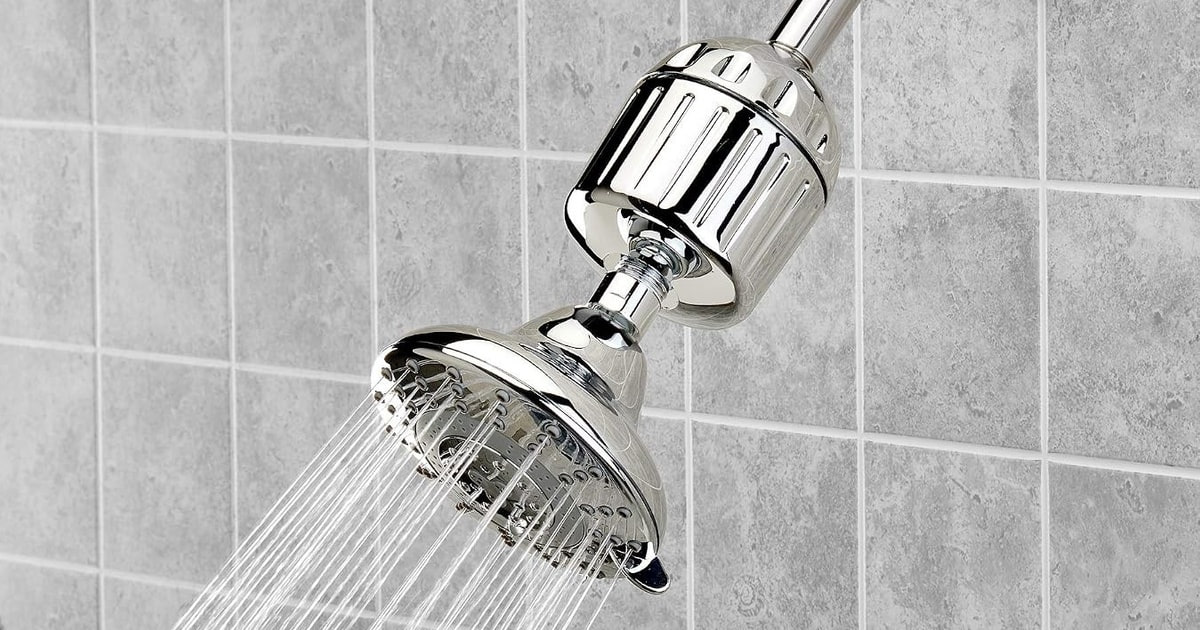
Your shower water carries whatever your city put in it to keep the pipes safe. That's usually chlorine or chloramine, plus whatever the pipes themselves shed on the way. You don't notice it most days. But if you have eczema, or you just spent money on color, or your skin feels tight and itchy ten minutes after you towel off, a shower filter is one of the few cheap things you can actually try. It threads onto the pipe in about two minutes. No plumber, no landlord conversation.
Here's the honest part: no shower filter does everything, and the category is full of claims nobody has verified. NSF/ANSI 177 — the only nationally recognized benchmark — only requires a 50% reduction in free chlorine. That's the bar. Most filters that clear it say nothing about chloramines, which more than 30% of U.S. utilities now use, and which KDF media largely doesn't touch. Contact time in a shower head is measured in fractions of a second. Expect less-irritating water, not purified water.
The good news is that the difference between a good filter and a bad one comes down to a few things you can actually check: what media is inside, whether the cartridge is rated in gallons, and how much the replacements cost you every year. We think that the Sprite HO2-CM-M is the best filtered shower head for most people, and that the Jolie Filtered Showerhead is the one to buy if you want an all-in-one head with no housing hanging off your shower arm.
Everything we recommend

Certified filtration, the longest cartridge life, no fuss

The clean-looking one, if the housing bothers you

Costs the least of the good ones, and it's fine

A capable filter and a decent head, sold together
At a glance
| Product | Filter Life | Flow Rate | Price | |
|---|---|---|---|---|
| Jolie Filtered ShowerheadUpgrade pick | — | — | $169 |
| Aquabliss High Output Revitalizing Shower Filter -Budget pick | 6 Months | — | $36.99 |
| Aquasana Shower Filter w/Shower HeadAlso great | 6 Mo/10k Gal | 2.5 GPM | $89.99 |
 | Culligan Wall-Mounted Showerhead with Anti-Clog Rubber SprayAlso consider | 140 Gal/6 Mo | 1.2 GPM | $59.80 |
 | T3 Source ShowerheadAlso in lineup | 6 Mo/10k Gal | — | $199.99 |
 | MakeFit Filtered Shower Head with Handheld ComboAlso in lineup | — | — | $39.99 |
| Sprite HO2-CM-M Authentic Universal High Output ShowerTop pick | 12 Mo/25k Gal | — | $28.19 |
 | Delta Faucet Clarifi Premium Shower Filter AttachmentAlso consider | 6 Months | — | $84.90 |
How we picked
Filter media and target. We looked at what's actually inside each cartridge — KDF-55, calcium sulfite, activated carbon, ascorbic acid — and matched it against what it's meant to remove. Media that only addresses free chlorine got weighed down, because more than 30% of U.S. utilities now disinfect with chloramines.
Third-party verification. NSF/ANSI 177 is the only nationally recognized benchmark for shower filtration, and it requires at least a 50% reduction in free chlorine under standardized conditions. We separated products certified to it from products merely tested to it, and treated uncertified performance claims as unverified.
Cartridge life and cost. We compared manufacturer gallon ratings and cross-checked them against owner feedback about when performance actually drops off. A filter rated for 25,000 gallons costs half as much per year to run as one rated for 10,000, and that gap outweighs most differences in upfront price.
Flow and pressure. Anything threaded into the line can choke the spray, so we tracked flow ratings from spec sheets and weighted owner reports of pressure loss heavily. Filters that consistently drew complaints about weak flow didn't make the picks.
Install and fit. We favored designs that thread onto a standard 1/2-inch NPT shower arm by hand, with no tools and no plumber. That matters most for renters, who can't touch whole-house filtration and need to take the thing with them when they move.
Top pick
Certified filtration, the longest cartridge life, no fuss
Sprite HO2-CM-M Authentic Universal High Output Shower
The Sprite is a plain inline housing that threads between your shower arm and whatever head you already own. It's certified to NSF/ANSI 177, its Chlorgon cartridge is rated for 25,000 gallons or 12 months, and it adds about four inches of length. That's the whole pitch.
$28.19fromAmazonThis is the only filter here that's actually certified, and it lasts twice as long as most. NSF/ANSI 177 certification means an independent lab confirmed the chlorine reduction claim under standardized flow and temperature. Plenty of filters say they're "tested to" the standard. Sprite says certified to it. The HOC cartridge is rated for 25,000 gallons or a year, roughly double the 10,000-gallon rating on most competitors. One replacement a year instead of two adds up.
Sprite has been making these since the 1980s, and the Chlorgon media is the reason to care. Per the company's technical data, it works across a pH range of 6.0 to 9.0 and from 35°F to 120°F. Standard KDF-55 needs water above 75°F to hit peak efficiency through its redox reaction. If your hot water runs lukewarm, or your municipal supply sits at an odd pH, that wider window matters more than it sounds.
Because it's an inline housing, you keep your current shower head. If you already spent money on a rain head or a handheld you like, that's the whole appeal — you're adding filtration, not replacing hardware. Installation is hand-tightening onto a standard 1/2-inch NPT arm with some plumber's tape. Owners consistently report no drop in pressure, which is the usual worry with anything you thread into the line.
It also handles sulfur smell. Owners on well water and older water heaters — the rotten-egg situation that comes from a corroding anode rod — report the odor drops noticeably. A three-setting massage head comes in the box if you don't have one you're attached to, though it's the least interesting part of the package.
Flaws but not dealbreakers
The housing is plastic finished to look like chrome, and it will crack if you attack it with a wrench. Hand-tighten it, add tape, and stop when it's snug. A few owners have cracked theirs on the first install by overtightening, and there's no fixing that.
It sticks out. Four inches of extra length below your shower arm is noticeable, and if you're tall it lowers the spray by that much. There's no way around it with an inline design — that's the trade you make for keeping your existing head.
Chlorgon is a copper-zinc blend, so like every KDF-style medium it does much better against free chlorine than chloramines. If your utility disinfects with chloramine, you'll get some benefit, but not the full neutralization that ascorbic acid delivers. Check your water utility's annual report before you assume.
Upgrade pick
The clean-looking one, if the housing bothers you
Jolie Filtered Showerhead
Jolie builds the filter into the shower head, so nothing hangs below your arm. It uses a blend of KDF-55 and calcium sulfite, and the company says the formulation exceeds NSF-177 requirements. It's the most expensive option here by a wide margin.
$169fromAmazonThe reason to buy this one is aesthetic, and that's a fine reason. Inline filters are ugly — a fat plastic cylinder dangling in your sightline every morning. Jolie puts the media inside the head itself, so what you see is a chrome shower head. If you've renovated a bathroom and can't stand the thought of a housing bolted into it, this solves the problem nothing else here solves.
The dual-media approach is genuinely better than KDF alone. Calcium sulfite handles chlorine at a wider range of water temperatures than copper-zinc media, and pairing the two covers more ground than either does by itself. Jolie says it packs more KDF-55 than anything else on the market and that third-party labs verified the performance. The company also cites its own clinical work on hair shedding, which is company-run research — worth knowing about, worth weighing accordingly.
Cartridge changes take seconds. You pop the front, swap the filter, close it. The manufacturer rates each cartridge at roughly 10,000 gallons, which works out to about six to nine months for two people taking two eight-minute showers a day at 1.8 GPM. If four people share the shower, plan on replacing it closer to every three or four months, and price the annual cartridges before you commit.
Pressure holds up well. Owners with weak plumbing report the spray feels strong rather than misty, which isn't a given — some all-in-one filtered heads restrict flow enough that you notice. This one doesn't seem to.
Flaws but not dealbreakers
It costs several times what a good inline filter costs, and the cartridges cost more too. You're paying for the industrial design and the brand. That's a legitimate thing to pay for, but be clear-eyed that the filtration itself isn't several times better than the Sprite's.
It won't fix hard water. Some owners report calcium building up on the head within weeks, which is exactly what should happen — no shower filter softens water or removes dissolved minerals. If limescale is your actual complaint, this isn't the product for it, and a chunk of the negative feedback here comes from people who bought it expecting a softener.
It's designed for standard 1/2-inch NPT pipes. If your plumbing is custom or the arm is unusual, it may not thread on, and the fit issues owners run into are hard to work around.
Budget pick
Costs the least of the good ones, and it's fine
Aquabliss High Output Revitalizing Shower Filter -
The AquaBliss SF100 is a multi-stage inline filter with sediment layers, redox media, and calcium sulfite stacked in one small housing. It threads onto a standard shower arm in under two minutes with no tools, and replacement cartridges are inexpensive to keep on hand.
$36.99fromAmazonThis is the one to buy if you want to find out whether a shower filter helps you without committing much. It's an inline housing, so your current head stays. It installs by hand. The cartridge runs about six months. If you try it and notice nothing, you've spent very little; if it helps, the replacements stay cheap.
The multi-stage stack is the real advantage over single-media filters. Sediment layers catch rust and grit, the redox media targets chlorine, and calcium sulfite extends the chlorine reduction across a broader temperature range. Owners on old iron plumbing report the water runs visibly cleaner. Good Housekeeping's lab evaluation of the related SF220 model found it reduced free chlorine by over 90% in standardized tap water tests.
Nothing else here is this widely bought, which matters more than it sounds. Tens of thousands of owners means the failure modes are well documented instead of theoretical. The recurring themes are consistent: easy install, no pressure loss, less itching within a few weeks. Filters that crack, leak, or choke the flow don't survive that kind of volume quietly.
AquaBliss ships spare washers and tape in the box, which sounds trivial until you're standing in the shower at 8 a.m. holding a filter and no plumber's tape. Small thing. It's the kind of small thing that decides whether install takes two minutes or two trips to the hardware store.
Flaws but not dealbreakers
There's no NSF/ANSI 177 certification on this one, so you're trusting the company's own testing and the volume of owner feedback rather than an independent lab. That's a real gap next to the Sprite.
Six months is the rated life, and that's optimistic for heavy households. If four people shower daily, expect performance to fade sooner. The cartridge gives no visual warning — you just start noticing your skin again.
Also great
A capable filter and a decent head, sold together
Aquasana Shower Filter w/Shower Head
The Aquasana AQ-4100 pairs coconut shell carbon with patented copper-zinc media in a two-stage housing, and it ships with a multi-setting shower head. Aquasana says it reduces over 90% of chlorine, tested to NSF-177 standards. Cartridges run about six months or 10,000 gallons.
$89.99fromAmazonTwo-stage filtration is the meaningful difference here. The copper-zinc media handles chlorine through redox, and the coconut shell carbon catches organic compounds and odors that metal media leaves behind. Most inline filters at this level use one approach or the other. Getting both in one housing is why this one shows up on so many published best-of lists.
You get a shower head in the box, so this is a complete swap-out if your current head is a builder-grade disc you never liked. The head has multiple spray settings and the filter mounts behind it. If you'd rather keep your own head, you can — the housing threads onto a standard 1/2-inch arm either way.
The carbon stage is why this is the pick for smell. Owners on well water, and people in buildings where the tap smells faintly like a pool, consistently report the odor disappears rather than fades. Carbon does that in a way copper-zinc alone doesn't. If your complaint is that your hair smells like chlorine hours after you shower, start here.
One install note that keeps coming up: run the water for a minute or two before your first shower. Carbon fines flush out as fine black grit, and it's alarming if you weren't expecting it. Aquasana says as much in the instructions, and it clears quickly.
Flaws but not dealbreakers
The cartridge life is the sticking point. Aquasana rates it at six months, but a recurring thread in owner feedback is that the effect drops off closer to the two- or three-month mark, even in two-person households. Budget for more frequent replacement than the box promises.
It's tested to NSF-177 standards rather than certified to them. That's a real distinction — Aquasana ran the protocol, but the product doesn't carry the certification mark the way the Sprite does.
At 2.5 GPM max flow, it's not a water-saving choice. If you're in a region with flow restrictions or you're trying to cut usage, the Culligan's 1.2 GPM head is a better fit.
Who this is for
Buy a shower filter if your skin feels tight and itchy after every shower, if you have eczema or contact dermatitis that flares in winter, or if you're paying for color that fades faster than it should. Dermatologists at the American Academy of Dermatology point to chlorinated water stripping the skin's lipid barrier and disrupting its acid mantle — normally around pH 4.5 to 5.5 — as a mechanism that worsens eczema and general dryness in people already prone to it. Renters especially: this is the only water treatment you can install, use for two years, and unscrew on your way out.
Skip it if your complaint is hard water. No shower filter here softens water or removes dissolved calcium and magnesium — those need an ion-exchange system plumbed into your house, and the limescale on your fixtures will keep coming. Skip it too if you want drinking-quality water; contact time in a shower head is a fraction of a second, nothing like a pitcher or under-sink system. This guide covers point-of-use shower filters only, both inline housings and all-in-one heads. It doesn't cover whole-house systems, water softeners, or drinking water filtration.
How we picked
Media: We read spec sheets to see what's actually in each cartridge and matched it to what it can remove — KDF-55 and copper-zinc handle free chlorine well, ascorbic acid is the only widely available medium that neutralizes chloramines. Certification: NSF/ANSI 177 is the only nationally recognized benchmark, and it sets a 50% free-chlorine reduction floor, so we separated certified products from those merely tested against the protocol. Cartridge life: We compared manufacturer gallon ratings against owner reports of when filtration fades, because annual replacement cost matters more than sticker price. Flow: Spec-sheet GPM plus owner feedback on pressure loss, since a filter that ruins your shower won't get used. Install: Standard 1/2-inch NPT fittings, hand-tight, no tools — because most people buying these are renters.
Other filtered shower heads worth considering
If you want a low-flow head from a name you recognize: The Culligan Wall-Mounted Showerhead with Anti-Clog Rubber Spray ($59.80) — The Culligan WSH-C125 meets the EPA WaterSense standard at 1.2 GPM, which is well under the 1.8 GPM ceiling, so it uses noticeably less water than most of these. The WHR-140 cartridge targets chlorine, scale, and sulfur odor for 10,000 gallons or six months, and the head has five spray settings with anti-clog rubber nozzles you can rub clean with a thumb. Culligan has been in household water treatment for decades and you can buy and return this at physical stores, which is worth something. The catch is the flow rate cuts both ways — if you like a hard, drenching spray, 1.2 GPM will feel thin, and that's the most common complaint.
If you want the filter hidden behind your shower head: The Delta Faucet Clarifi Premium Shower Filter Attachment ($84.90) — Delta's Clarifi is designed to tuck behind the head rather than dangle below it, so it barely intrudes into the shower space — the closest thing to Jolie's clean look at a fraction of the cost. It's third-party tested, reduces chlorine and sediment, and the cartridge swaps out in under two minutes without tools. Cartridge life is rated at 10,000 gallons, roughly six months at average shower length. Two caveats: owners report the flow drops more than with other inline filters, and the included nut and washer don't play well with every brand of shower head. It's happiest paired with a Delta head.
The competition
These are the products our research surfaced, not a survey of everything sold. The shower filter category is enormous and mostly unregulated, and new entries appear constantly with claims nobody has verified. What follows is what didn't make the picks, and why.
The T3 Source Showerhead ($199.99) — The T3 Source is a good-looking head with a mineral blend of calcium sulfide, zinc, and copper, seven spray settings, and a two-year manufacturer's warranty — the longest coverage here. It's popular with salons and people managing color-treated hair, and the cartridge runs six months or 10,000 gallons. But it costs like a premium product and a recurring theme in owner feedback is leaking from the top joint after a couple of months, sometimes with the head drooping and refusing to hold its angle. New plumber's tape doesn't always fix it. The warranty helps, but a filter you have to file a claim on isn't a filter you enjoy. Consider it if the seven settings and the styling matter to you more than the risk.
The MakeFit Filtered Shower Head with Handheld Combo ($39.99) — The MakeFit is a dual head-and-handheld combo with ten modes, a 79-inch hose, a jet setting for cleaning the tub, and a transparent filter cartridge so you can see when it's spent. That last touch is smarter than it sounds — every other filter here makes you guess. Owners love the pressure, and the price is low for how much hardware you get. The problem is filtration, which is the reason you're reading this. The listing describes a KDF-based system for hard water without a gallon rating, a cartridge life figure, or third-party testing, and no shower filter softens hard water regardless. Buy it as a good combo shower system that happens to filter a little, not as a filter.
Installation and upkeep
Hand-tighten only. The housings on nearly all of these are plastic under a chrome finish, and a wrench will crack them — that's the single most common way people ruin a new filter. Wrap two or three turns of plumber's tape clockwise around the shower arm threads, thread the filter on by hand until it's snug, then run the water and check for drips. If it weeps, back it off and add a turn of tape rather than muscling it tighter. Run any carbon-based filter for a minute or two before your first shower to flush out black carbon fines. Then write the install date somewhere you'll find it, because cartridges fade gradually and you won't notice until your skin starts complaining again. Most run six months; the Sprite goes a year. Set a reminder.
Questions we get
Do filtered shower heads actually work, or are they just marketing?
The good ones work, within limits. NSF/ANSI 177 certification requires at least a 50% reduction in free chlorine under standardized conditions, and certified filters clear that bar. What they don't do is purify your water — contact time in a shower head is a fraction of a second. Expect less-irritating water, not clean water, and treat any filter without third-party verification as an unproven claim.
What's the difference between a KDF filter and a Vitamin C filter?
KDF-55 is a copper-zinc alloy that removes free chlorine through an electrochemical redox reaction, and it works best in hot water above 75°F — which makes showers a good application. Vitamin C, or ascorbic acid, works by chemical reaction instead and is the only widely available medium that neutralizes chloramines as well as free chlorine. If your utility uses chloramine, KDF alone won't cut it. None of the filters in this guide use ascorbic acid as their primary medium.
Do shower filters remove chloramines or just free chlorine?
Most remove free chlorine and only partially address chloramines. That distinction matters more every year, since more than 30% of U.S. water utilities have moved to chloramine-based disinfection. Chloramine is a more stable compound and needs ascorbic acid or a mixed-media approach to fully neutralize. Check your utility's annual water quality report — it'll say which one they use, and it's free.
Can a shower filter help with eczema or dry skin?
It might, and it's a low-cost thing to try. Dermatologists at the American Academy of Dermatology describe chlorinated water stripping the skin's natural lipid barrier and disrupting its acid mantle, which sits around pH 4.5 to 5.5 — a mechanism that can worsen eczema and dryness in people already prone to them. Owners with sensitive skin often report improvement within two to four weeks. It's not a treatment, though, and it won't replace what your dermatologist prescribes.
Will a shower filter noticeably reduce my water pressure?
Usually not much, though it depends on the design. Inline housings like the Sprite and AquaBliss add very little restriction, and owners routinely report no change in spray strength. All-in-one heads and some behind-the-head designs restrict more. If you already have weak plumbing, favor an inline filter and keep the head you know works.
How long does a cartridge last before it needs replacing?
Most are rated for 10,000 gallons or six months, whichever comes first — roughly six to nine months for two people, less for a full household. The Sprite is the outlier at 25,000 gallons or twelve months. Manufacturer ratings are optimistic and performance fades gradually rather than stopping, so there's no obvious signal. Note your install date and replace on schedule instead of waiting to notice.
Why you should trust us
For this guide:
- We read manufacturer spec sheets and technical data for every filter here, comparing media type, gallon ratings, flow rates, and fitting standards side by side.
- We checked filtration claims against NSF/ANSI 177 requirements and published lab evaluations, and separated products certified to the standard from those only tested against it.
- We read through owner feedback across all eight products to find the recurring themes — cracked housings, leaking joints, cartridges fading early — that spec sheets never mention.
- We read owner reviews on every listing, weighted toward the critical ones, because that is where the recurring failures show up.
- We have a systematic way of automatically fetching the latest prices, so the numbers on this page stay current.
- This is a research-focused guide, so the team may not own every product listed — though we often do own the top winners, which gives us extra context for the recommendations.
- We don't accept free products, and the retailer commission never changes which product we recommend.
Sources
Best Shower Filters — Wirecutter, Wirecutter / NYT
Best Shower Filters of 2026 — Good Housekeeping, Good Housekeeping Institute
Best Shower Filters — Forbes Home, Forbes Home
Best Shower Filters — Bob Vila, Bob Vila
Best Shower Filters — CNET, CNET
NSF/ANSI 177: Shower Filtration Systems Standard, NSF International
Disinfection Byproducts Rule — Drinking Water Regulations, U.S. Environmental Protection Agency
Water Quality and Skin Health — American Academy of Dermatology, American Academy of Dermatology
KDF Process Media Technical Data — Water Quality Association, Water Quality Association
Chloramine Use in U.S. Water Utilities — American Water Works Association, American Water Works Association
Shower Filter Market Size & Growth Forecast — Grand View Research, Grand View Research
Amazon product listings and owner reviews for all 8 products
Manufacturer specification pages for each product
Some passages in this guide may be paraphrased with AI help. Prices are refreshed automatically.
More like this.
Continue exploring home reviews and recommendations.

The Best High-Pressure Shower Heads
A shower head is the fixture you touch every single morning, and a bad one sets the tone for the whole day. Weak pressure means standing under a lukewarm…

The Best Car Stereo Head Units
Your factory stereo is probably the oldest piece of technology you touch every day. Replace it and you get wireless Apple CarPlay or Android Auto, a…

The Best Shower Curtain Liners
A liner has one job: keep water in the tub and stay clean while it does. Most people don't think about it until the bottom edge turns pink and speckled.…

The Best Rust-Proof Shower Caddies
A shower caddy lives in the wettest spot in your house, and most of them aren't built for it. Chrome-plated wire looks great in the product photo and then…

The Best Shower Drain Hair Catchers
Hair is what clogs a shower drain. Not soap, not hard water, not old pipes - hair. It slips through the drain cover, tangles around whatever's already…

The Best Baby Shower Gifts
Baby shower gifts get judged twice. Once at the party, when the wrapping comes off and everyone says something nice. And again at 3 a.m. six weeks later,…