The Best Sonos Speakers
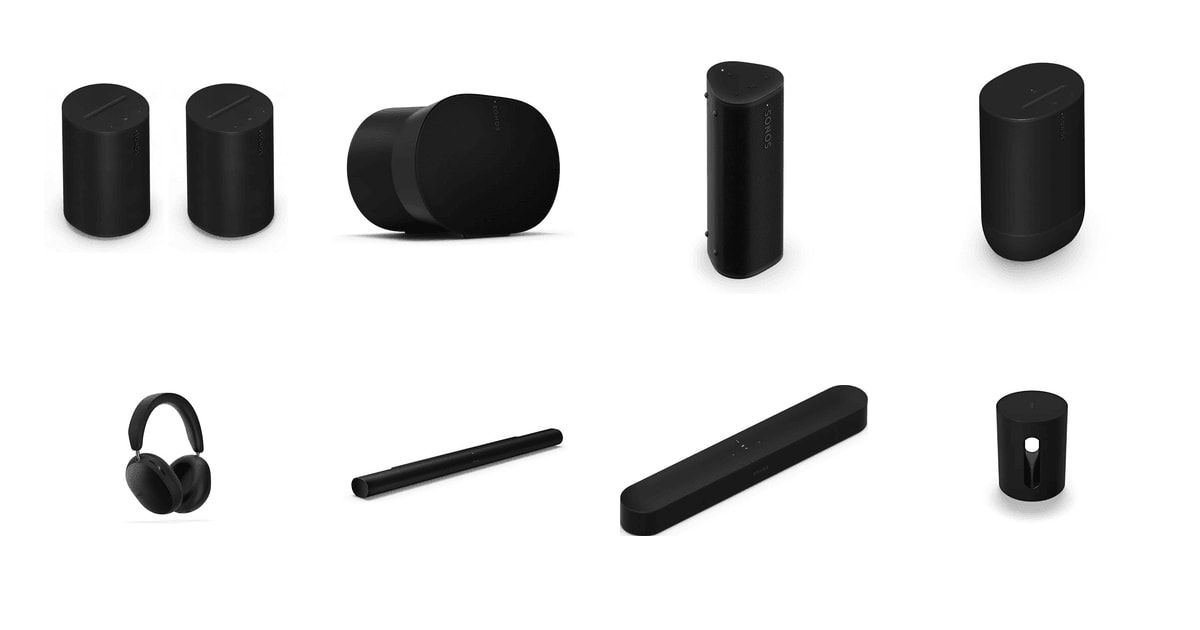
Most wireless speakers get used the same handful of ways: background music while you cook, a podcast in the shower, a movie on a Friday night. What makes Sonos different is that every speaker talks to every other one. You can start an album in the kitchen, walk out to the patio, and pull that speaker into the group with a tap. That's really what you're buying. The sound is good, but the system is the reason people keep adding boxes.
None of this is cheap, and the software is the honest weak spot. When Sonos rewrote its app, sleep timers and some accessibility options went missing, and the backlash from owners was loud. Sonos has been patching ever since, but you'll still find people whose speakers drop off the app or whose groups fall apart mid-song. Bluetooth helps on the newer models, though the multi-room part still runs on Wi-Fi and the Sonos app. If that worries you, start with one or two speakers rather than wiring a whole house at once.
We looked at the full current lineup, from a pocketable waterproof speaker to a soundbar that's nearly four feet wide, and sorted them by the job you actually need done. Most people want good music in one main room with the option to grow later, and that's the shape of our top recommendation. We think that the Sonos Era 100 SL two-pack is the best Sonos setup for most people, and that the Sonos Roam 2 is the one to buy if you mostly want Sonos sound outdoors or on the road.
Everything we recommend

Two speakers, real stereo separation, and an easy way in

The small waterproof one you can toss in a bag

Atmos music and deeper bass, if you can pay for it

Room-filling TV sound without adding a subwoofer
How we picked
Sound for the room. We compared published measurements and reviews from RTINGS, Tom's Guide, and What Hi-Fi? on soundstage width and bass extension. A speaker had to sound convincing in a normal living room, not just on paper.
Portability and durability. For anything meant to leave the house, we required a stated water and dust rating plus a manufacturer battery figure of at least 10 hours. We weighed owner reports about how those numbers hold up at higher volume.
How it grows. We favored models that stereo-pair, work as home theater surrounds, or accept a subwoofer. A Sonos speaker that can only ever do one job is a worse buy than one that changes roles later.
Setup and app friction. We read owner feedback for recurring complaints about the Sonos app, since the rewrite dropped features like sleep timers and drew heavy criticism in the tech press. Models with unusually persistent pairing complaints got flagged in their flaws.
Inputs and services. We checked spec sheets for Bluetooth, line-in, AirPlay 2, and voice support, because those decide whether a speaker works for a guest's phone or a turntable rather than only inside the Sonos app.
Top pickOn sale
Two speakers, real stereo separation, and an easy way in
Sonos Era 100 SL - Black
This two-pack of Era 100 SL speakers gives you a proper left-and-right stereo pair instead of one box doing both jobs. It's the most useful starting point in the Sonos lineup, and you can move the pair to a bedroom later and put something bigger in the living room.
$359.10fromAmazonList priceBuying two smaller speakers beats buying one bigger one. A single speaker has to fake stereo from a few inches of cabinet. Two of them, placed a few feet apart, don't have to fake anything. Tom's Guide reported that a stereo pair of Era 100s pulls the left and right channels noticeably further apart than even a single Era 300 manages. If you sit down and listen to music on purpose, that gap is obvious from the first track.
Each speaker uses two angled tweeters plus a midwoofer, and the angles matter. RTINGS found the Era 100 throws a wider soundstage than the older Sonos One it replaced, thanks to those tweeters bouncing sound outward instead of firing straight at your chest. Owners describe the sound as bigger than the cabinet suggests, which is the usual reaction to a speaker this size doing this much.
The SL part means no microphones. There's no Alexa and no Sonos Voice Control, which is a dealbreaker for some people and the whole point for others. If you'd rather not have a live mic in your bedroom, or you already talk to a phone or a HomePod for voice, you're giving up nothing. You still control everything from the Sonos app, AirPlay 2, or Spotify Connect.
Setup is genuinely quick. Plug in, open the app, follow the prompts, and run Trueplay so the speaker adjusts to your room's hard floors or heavy curtains. You can stream over Wi-Fi, switch to Bluetooth for a guest's phone, or run a turntable in through the line-in. Start with the pair in one room, and adding a soundbar or a sub later takes a few minutes.
Flaws but not dealbreakers
The line-in runs through a Sonos adapter rather than a plain RCA jack, and it's the part owners get stuck on most often. If a turntable is the main reason you're buying, budget some patience for cables and app settings.
There's no bass here that a subwoofer would recognize as bass. These speakers go loud and stay clean, but action movies and bass-heavy tracks will sound polite. A Sub Mini fixes that, and so does stepping up to the Era 300.
No microphones also means no voice control at all, and there's no way to add it later. Buy the standard Era 100 instead if you want to shout at the speaker across the kitchen.
Budget pick
The small waterproof one you can toss in a bag
Sonos Roam 2 - Black - Portable
The Roam 2 is the least demanding way into Sonos: it's about the size of a water bottle, it survives rain and pool splashes, and it runs on Wi-Fi at home and Bluetooth everywhere else. Sound is good for the size, not room-filling.
$175fromAmazonThis is the Sonos you take to the beach, the shower, and the hotel room. It's IP67 rated, so dust and a dunk aren't a problem, and it weighs less than a pound. Sonos rates the battery at up to 10 hours of playback, which covers a long afternoon outside. Owners who push the volume report getting less than that, so plan on charging overnight.
The Wi-Fi-to-Bluetooth handoff is the reason to pick this over a generic portable. CNET rated the Roam 2 highly for switching between the two on its own, and called it smoother than the first Roam. In practice that means it joins your house system when you walk in the door and falls back to Bluetooth when you leave, without you digging through menus.
Automatic Trueplay re-tunes the speaker whenever the room changes, which matters more for a speaker that lives on a kitchen counter one hour and a picnic table the next. On a patio it opens up; on a tiled bathroom wall it pulls back the harshness. You don't do anything to trigger it.
Flaws but not dealbreakers
Physics wins. Longtime Sonos owners are often let down when they bring the Roam 2 home expecting the sound they get from an Era or a Move, and the bass in particular is thin next to anything bigger. Judge it against other portables its size, not against the rest of the lineup.
It's also the model where owners report the most fussing with pairing and account setup, which is a shame on the one Sonos you're most likely to hand to a friend.
Upgrade pickOn sale
Atmos music and deeper bass, if you can pay for it
Sonos Era 300 Wireless Smart Speaker with
The Era 300 puts six drivers on the front, sides, and top of one odd-looking cabinet so Dolby Atmos music tracks come at you from more than one direction. It's also the best single-speaker option here for bass without adding a subwoofer.
$379fromAmazonList priceThe hourglass shape isn't styling. Those drivers fire left, right, forward, and up, and the waveguides spread that sound across the room instead of into your face. On Atmos mixes, instruments land in places a normal speaker can't put them. On ordinary stereo tracks, you mostly get a very wide, very large-sounding speaker, which is a fine consolation prize.
It's the only speaker in the lineup that solves the bass problem on its own. RTINGS measured the Era 300 as reaching meaningfully lower than the Era 100, thanks to dedicated dual bass drivers. In a medium living room that's the difference between hearing a kick drum and feeling it. You can skip the sub and still be happy, at least until you add a soundbar.
It doubles as home theater surrounds, and that's where a lot of owners end up. Pair two of them behind your seats with an Arc or a Beam (Gen 2) and the height channels in each speaker handle the overhead effects. Nothing gets wired to the TV. If you think you'll build toward a full system, buying Era 300s now means they earn a second job later.
Like the Era 100, it takes Bluetooth as well as Wi-Fi, plus a turntable through Sonos's line-in adapter. Owners routinely call it the speaker that made them stop shopping.
Flaws but not dealbreakers
One Era 300 is not the same as two of anything. For plain stereo listening, Tom's Guide found a stereo pair of Era 100s separates the channels better than a single Era 300 does, so if critical two-channel music is the goal, two smaller speakers are the smarter buy.
Atmos music is still a modest slice of any streaming catalog, and mixes vary a lot in quality. Some tracks are startling and some just sound diffuse. Buy this for how it sounds on everything, not for the spatial party trick.
It's big, heavy, and expensive by the standards of this lineup, and the shape doesn't disappear on a shelf the way the Era 100 does.
Also great
Room-filling TV sound without adding a subwoofer
Sonos Arc Ultra Soundbar with Dolby Atmos
The Arc Ultra is Sonos's flagship soundbar, with a new Sound Motion driver design meant to produce real low end from a slim cabinet. If your TV is the center of the living room and you don't want a rack of gear, this is the one.
$899fromAmazonSound Motion is the headline, and it's aimed squarely at the subwoofer you don't want to own. Sonos replaced the usual tweeter-and-woofer arrangement with a racetrack-shaped driver design and claims deeper bass without a separate box. Owners upgrading from other premium bars consistently describe the jump as large. Most report they're satisfied with the bass out of the bar alone.
It's a 9.1.4 Atmos layout, which in plain terms means a lot of separate channels including overhead ones. As Consumer Reports explains, bars like this bounce sound off your ceiling or simulate it rather than using in-ceiling speakers, so a flat ceiling and a normal-height room help. Explosions move overhead, and rain sounds like it's above you rather than in front.
Dialogue is the everyday win. The Speech Enhancement processing pulls voices forward when a whispered scene gets buried under a score, and it's the feature people who turn on subtitles tend to notice first. If you and a partner argue about the volume, this settles it.
Setup runs through a single HDMI eARC cable and the app walks you through the rest. From there you can add Era 300s as surrounds and a sub, control it with your TV remote, or leave it playing music with the TV off.
Flaws but not dealbreakers
It's over 46 inches wide. On a 55-inch TV it looks fine; on anything smaller it looks like furniture. Measure your console first.
Your TV needs an HDMI eARC port, and there's no optical fallback here. Owners also report occasional handshake trouble getting a TV and the bar to agree at first, usually solved with an HDMI cable swap or a settings change, but it's an annoying first evening.
Big rooms and bass-heavy tastes will still want a sub. Sound Motion narrows the gap; it doesn't erase it.
Who this is for
This guide is for anyone deciding where to start with Sonos or what to add next. If you want music in more than one room and you'd like it to be one tap rather than three apps, that's the case for the whole system. It's also for people upgrading TV audio who don't want a receiver, a rack, or speaker wire in the baseboards. If you already own Sonos gear, treat this as a map of which model plays which role.
It's not for everyone. If you only ever listen through headphones, or you want one cheap speaker for the garage and nothing more, a plain Bluetooth speaker will serve you better and cost far less. Serious two-channel listeners who want to pick their own amp and speakers should shop separately; Sonos trades that control for convenience. We've covered Sonos's current wireless speakers, soundbars, the compact subwoofer, and the Ace headphones, all sold as complete units. We haven't covered in-ceiling or architectural speakers, older discontinued models, or the wired amplifier products.
How we picked
We judged every model on the same handful of things. Sound for the room: published measurements and reviews on soundstage and bass extension, weighted toward how a speaker behaves in an ordinary living room. Portability and durability: a stated water and dust rating and at least 10 hours of manufacturer-quoted battery for anything meant to go outside. How it grows: whether it stereo-pairs, works as a surround, or takes a subwoofer, because a Sonos speaker that can change jobs is worth more over time. Setup and app friction: recurring owner complaints about the Sonos app and pairing, since the app rewrite dropped features and drew sustained criticism. Inputs and services: Bluetooth, line-in, AirPlay 2, and voice support, which decide whether a guest's phone or a turntable can get a note out of it.
Other sonos speakers worth considering
If you want a portable that can actually run a backyard: The Sonos Move 2 - Black - Wireless ($480) — The Move 2 is the Roam's big sibling, and the difference is not subtle. It has two tweeters instead of one for genuine stereo from a single cabinet, a tuned woofer for bass you can feel by the pool, and up to 24 hours of playback, double the original Move. There's a built-in handle and a wireless charging base, plus an IP56 rating that shrugs off rain and spilled drinks. What you give up is portability: at over six pounds it moves from room to room, not into a backpack, and it's rated for splashes rather than a dunk. Get it if the speaker lives on a patio and comes inside at night.
If you want more bass without replacing anything: The Sonos Sub Mini - Black - Compact ($399) — The Sub Mini is the add-on that makes a Beam or a pair of Era 100s sound like a much bigger system. Two woofers face inward inside a sealed cabinet, canceling each other's vibration so it doesn't buzz across the floor, and Trueplay tunes the bass for your room even if you shove it against a wall. What Hi-Fi? found it adds real low-end reach despite being roughly half the size of the full Sonos Sub. Owners pairing it with a Beam or a Five describe the jump as immediate. It's a luxury, not a fix, and setup can take a couple of tries in the app. If your speakers already sound full enough, skip it.
More from Sonos
Here's the rest of the current Sonos lineup we looked at, framed by who each one suits. This is what our research surfaced, not every product Sonos has ever sold, and it doesn't include older discontinued models or the in-wall and in-ceiling range.
The Sonos Beam Gen 2 - Black - ($399) — The Beam (Gen 2) is the soundbar for a normal-sized room. It's about 25 inches wide, so it fits under a 43- or 50-inch TV without looking absurd, and it still handles Dolby Atmos by virtualizing the height channels rather than firing them at the ceiling. Setup takes two cables. Dialogue clarity is the thing owners mention most after replacing a cheap bar or their TV's built-in speakers. Choose it for a bedroom, an apartment, or a den where the Arc Ultra would swallow the furniture, and add a Sub Mini later if the low end feels light.
The Sonos Ace Noise Cancelling Bluetooth Over-Ear Headphones ($299) — The Ace is Sonos's take on premium over-ear headphones, and it suits the person who already has a Sonos soundbar and a household that goes to bed early. The Verge singled out TV Audio Swap: one tap moves the sound from a compatible Sonos Arc into your ears, so you can finish the movie at full volume without waking anyone. You get Dolby Atmos with head tracking, lossless over USB-C, up to 30 hours of battery with noise cancelling on, and memory foam pads that owners rate as more comfortable than the obvious Sony and Bose rivals. Owner feedback is more mixed on sound than on comfort, and some buyers report a rough first pairing. If you're shopping for headphones alone, without a Sonos bar to swap from, the case is weaker.
Is Sonos worth it?
Sonos built its reputation on one idea: speakers that just work together, in every room, from one app. On the hardware side that reputation still holds. Published reviews and owner feedback line up closely here, praising build quality, room-filling sound from small cabinets, and setups that take minutes rather than an afternoon. The Ace headphones and the Arc Ultra both draw comparisons to Bose and Sony gear that costs about the same, and Sonos usually comes out well on comfort and clarity. The software is the asterisk. The app rewrite dropped features owners relied on, the tech press covered the backlash extensively, and complaints about dropouts and stubborn pairing haven't gone away. So the honest read is this: Sonos hardware is as good as its reputation, and Sonos software is a step behind it. If you want one great speaker and nothing more, cheaper brands compete well. If you want five rooms that behave like one system, nobody else makes it this easy.
Not set on Sonos?
If the Roam 2 or Move 2 is the only Sonos you actually want, this guide covers rugged portable speakers from other brands that cost far less and don't need an ecosystem. our waterproof outdoor speaker guide →
If you're shopping the Ace for a commute rather than for TV audio swap, this guide covers earbuds that block noise just as well and fit in a pocket. our noise-cancelling earbuds guide →
If Sonos prices are the sticking point, this guide walks through JBL's speakers and headphones, which trade multi-room polish for a much lower cost of entry. our JBL speakers and headphones guide →
Setup and placement notes
Give your speakers the best shot before you blame them. Put a stereo pair a few feet apart and roughly at ear height when you're sitting, not stacked on one shelf. Keep a few inches behind each speaker so the bass isn't fighting a wall, then run Trueplay from the app so the tuning matches your floors and curtains. Soundbars want a flat ceiling and clear space in front of the TV. On the network side, a strong 5 GHz signal in the room does more for reliability than anything else, and giving each speaker a reserved address in your router settings heads off the disappearing-speaker problem owners complain about. Update firmware when the app asks. Wipe the grilles with a dry cloth, and rinse and dry the Roam 2 after a beach trip.
Questions we get
What's the best Sonos speaker for most people?
For music in a main room, we'd buy two Era 100 SL speakers and run them as a stereo pair. You get real left and right channels, easy setup, and a pair you can relocate later when you add a soundbar. If you'd rather have one speaker and want the biggest sound from it, get the Era 300 instead.
Is the Era 300 worth it over the Era 100?
It depends on what you listen to. RTINGS measured meaningfully deeper bass from the Era 300, thanks to its dual bass drivers, and it's the only model that handles Dolby Atmos music. But Tom's Guide found a stereo pair of Era 100s separates the channels better than one Era 300, so for regular stereo music two smaller speakers win.
Which Sonos speaker is best outdoors?
The Move 2 for a patio or a pool deck, and the Roam 2 for anything you carry. The Move 2 gives you stereo from one cabinet and up to 24 hours of battery, but it's over six pounds and rated for splashes and rain, not immersion. The Roam 2 is IP67, so a dunk is survivable, and Sonos rates it at up to 10 hours.
Can you use Sonos speakers without Wi-Fi?
Partly. The Era 100, Era 300, Roam 2, and Move 2 all take a direct Bluetooth connection, so they work at a campsite or in a hotel room. The soundbars and the Sub Mini don't. And multi-room grouping, Trueplay, and most of the app's features still need Wi-Fi, so Bluetooth is a fallback rather than a way to skip the network.
Is the Sonos app still a problem?
It's better than it was, but it remains the weakest part of owning Sonos. The rewrite shipped without sleep timers and some accessibility options, and the tech press covered the fallout at length. Owner feedback still includes speakers dropping out of the app and setups that take several attempts. Buy one or two units first and confirm things are stable before you commit to a whole-home system.
Do I need a subwoofer with the Arc Ultra?
Probably not. Sonos's Sound Motion driver design is specifically meant to produce deep bass from the bar alone, and most owners report they're satisfied without a sub. If your room is large, or you want the kind of bass that rattles the couch during action movies, adding a sub still helps. Start with the bar and decide after a few weeks.
Why you should trust us
For this guide:
- We read published measurements and reviews from RTINGS, What Hi-Fi?, Tom's Guide, CNET, The Verge, and Consumer Reports covering soundstage, bass extension, and how Atmos is handled across these models.
- We compared Sonos's own specification sheets for battery life, water and dust ratings, driver counts, and connectivity on every product in this guide.
- We read through owner feedback for each model, looking for patterns in what goes wrong rather than one-off complaints, and carried the recurring themes into the flaws sections.
- We read owner reviews on every listing, weighted toward the critical ones, because that is where the recurring failures show up.
- We have a systematic way of automatically fetching the latest prices, so the numbers on this page stay current.
- This is a research-focused guide, so the team may not own every product listed — though we often do own the top winners, which gives us extra context for the recommendations.
- We don't accept free products, and the retailer commission never changes which product we recommend.
Sources
Sonos Era 300 Review, RTINGS.com
Sonos Era 100 Review, RTINGS.com
Sonos Arc Ultra Review, RTINGS.com
Best Sonos Speakers 2026, TechRadar
Sonos Ace Review: Comfortable Headphones With a Killer TV Trick, The Verge
Sonos Move 2 Review, Tom's Guide
Sonos Roam 2 Review, CNET
Sonos Speaker Comparison and Buying Guide, Sonos (Manufacturer)
Sonos App Controversy: How the Company Lost Consumer Trust, The Verge
Sonos Arc Ultra vs Arc: What's New, Sound & Vision
Best Soundbars 2026, Consumer Reports
Sonos Sub Mini Review, What Hi-Fi?
Amazon product listings and owner reviews for all 8 products
Manufacturer specification pages for each product
Some passages in this guide may be paraphrased with AI help. Prices are refreshed automatically.
More like this.
Continue exploring electronics reviews and recommendations.

The Best Gifts for Photographers
Photographers are among the easiest people to shop for and among the easiest to get wrong. The trick is knowing that the camera itself is almost never the…

The Best Gaming Chairs
A gaming chair is the one piece of your setup you touch for every second you use it. Mice and keyboards get swapped on a whim, but the chair is what…

The Best Bluetooth Trackers for Luggage and Keys
A Bluetooth tracker earns its keep in about four seconds - the moment you tap your phone, hear a chirp from under the couch cushion, and stop tearing the…

The Best Wireless CarPlay Adapters
Every trip starts the same way. You get in, dig out the cable, plug the phone in, and wait for the screen to catch up. A wireless adapter kills that…

The Best Car Cup Holder Expanders
Your car's cup holders were designed for a soda can. Your water bottle was not. Most factory cup holders measure between 2.5 and 3 inches across inside,…

The Best Gifts for Guitar Players
Guitar gifts are tricky in a specific way. The person on your list already owns the instrument, and probably a strap, a few picks and a cable that's seen…