The Best Transmission Fluid Additives and Stop Leaks
A transmission that slips a beat before it grabs, or leaves a red spot on the driveway every morning, is a genuinely stressful thing to own. Most of the time the problem isn't broken metal. It's rubber seals that have gone hard and shrunk after years of heat, or fluid that's picked up enough varnish to gum up the valve body. A bottle of additive can address both of those. It costs a fraction of what a shop charges for a rebuild, and you pour it in through the dipstick tube in about a minute.
Here's the honest part: none of these products fix mechanical damage. Worn clutch packs, a slipping torque converter, a cracked case, a dead solenoid — no additive touches any of that. If your transmission slips cold from a standstill, grinds, clunks under load, or throws a ratio or line-pressure code, you need a diagnosis, not a bottle. Additives also work slowly. You need 200 to 400 miles of normal driving before you can judge anything, and some seals take longer than that.
You also have to match the product to the problem, because these six work by different mechanisms and they don't substitute for each other. A seal conditioner won't clean varnish. A cleaner won't stop a drip. We think that the Lucas Oil 10009 Transmission Fix is the best transmission fluid additive for most people, and that the ATP Automotive AT-205 Re-Seal is the one to buy if you've traced the leak to a specific dried-out seal.
Everything we recommend

Broad help for slipping and seepage, no drain needed

The gentler seal fix, if you know which seal is leaking
For heat, shudder and shift quality rather than leaks

The cleaner to use when shifts are erratic, not leaky

Fluid and seal conditioner in one, if a change is due
At a glance
| Product | Fluid Volume | Purpose | Price | |
|---|---|---|---|---|
| Lucas Oil 10009 Transmission Fix - 24Top pick | 24 Fl Oz | — | $13.98 |
| ATP Automotive AT-205 Re-Seal Stops LeaksRunner-up | 8 Ounce | — | $19.75On sale |
 | Bar's Leaks 1420 Transmission Stop Leak -Also consider | 11 oz. | Stop Leak | $14.99 |
| Sea Foam Trans Tune Transmission TreatmentUpgrade pick | 16 oz | Trans Tune | $19.99 |
| Lubegard 60902 Automatic Transmission Fluid ProtectantAlso great | 10 oz | Protectant | $11.43On sale |
| Valvoline MaxLife Automatic Transmission Fluid with StopBudget pick | 32 oz | Stop Leak | $12.68 |
How we picked
Mechanism, not marketing. We sorted every product by how it actually works — seal conditioner, chemical stop leak, cleaner or fluid modifier — using manufacturer specifications and published comparisons. A product only earned a pick if its mechanism matches a problem people genuinely have.
Seal safety. We favored formulas that state they contain no solvents or petroleum distillates, because forced seal swelling can accelerate the failure you're trying to prevent. Published reporting on overdosed sulfonate-based products informed that threshold.
Fluid compatibility. We checked whether each label confirms synthetic ATF compatibility and which transmission types it covers. Anything vague about CVTs got flagged rather than assumed safe.
Treat ratio versus volume. We compared bottle size against the stated treat ratio and typical passenger-car fluid capacity. A product that needs two bottles for an ordinary transmission loses ground to one that needs one.
What owners report. We read owner feedback for recurring patterns — how long results took, whether leaks came back, which vehicles it worked on. Repeated themes carried more weight than any single enthusiastic account.
Top pick
Broad help for slipping and seepage, no drain needed
Lucas Oil 10009 Transmission Fix - 24
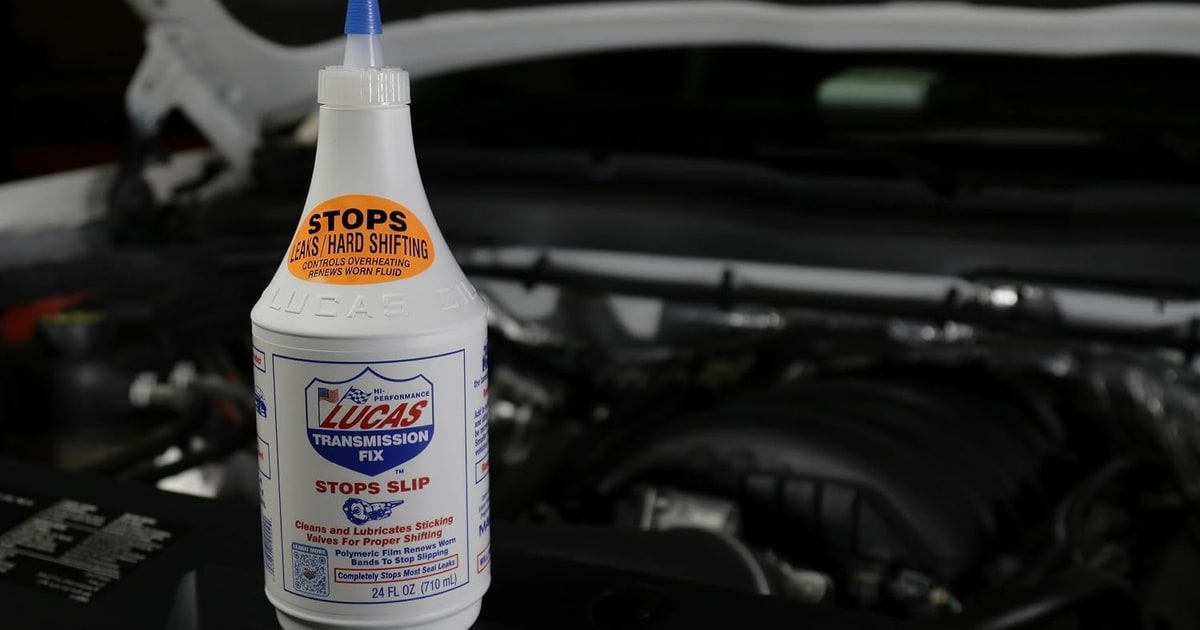
Lucas Transmission Fix is a thick, solvent-free additive you pour into your existing fluid. It targets the three problems high-mileage transmissions usually have at once — slipping, harsh shifts and minor seepage — which makes it the sensible first move when you're not sure what's wrong.
$13.98fromAmazonIt's the right first bottle when you don't know exactly what's wrong yet. Most people don't have a diagnosed leak. They have a transmission that hesitates on the 2-3 shift, or a faint burnt smell after a long highway run, or a spot on the garage floor they can't trace. Lucas covers all three angles at once. You get shift-quality help, seal help and heat help from one bottle, so you don't have to guess right on the first try.
The solvent-free formula is the part that matters most. Plenty of cheap stop leaks use petroleum sulfonates to chemically force seals to swell shut. That works until it doesn't — overdose it and you've traded a slow seep for a failed seal. Lucas skips that mechanism entirely and works by thickening and conditioning the fluid instead. If your seals are already marginal, that's a much safer bet than stressing them further.
No drain, no tools, no jack stands. You pour it down the dipstick tube on a warm engine and drive. That's the whole job. Compare that to the Valvoline, which needs a drain or exchange, and you can see why this is the low-commitment option. Owners with 140,000-mile minivans and 20-year-old SUVs consistently describe it the same way: cheap enough to try before booking shop time.
It works in manuals too, which is unusual here. Most of this category is automatic-only. Lucas is rated for both, so if you've got a leaky manual gearbox or a stick-shift that's getting notchy, you're not stuck. The 24-ounce bottle is also sized to treat a full passenger-car transmission in one go, so you're not doing math to figure out whether you need two.
Owner feedback lines up with the claims, with a realistic timeline. People who report success almost always mention driving several hundred miles first, sometimes combining it with a fluid exchange. Nobody describes an instant cure. That's consistent with how the product is supposed to circulate, and it's a good sanity check on your own expectations.
Flaws but not dealbreakers
It won't save a transmission that's mechanically failing. Owners are refreshingly blunt about this. One describes a car that forgot to downshift into first — a dying clutch pack — and the additive bought time, not a repair. If your slip is caused by worn friction material, damaged bands or a failing torque converter, this delays the inevitable at best. Check fluid level and color first; dark brown or burnt-smelling fluid needs changing before any additive can help.
CVT compatibility isn't confirmed. The formula is built around conventional automatic and manual fluid chemistry. CVTs depend on very specific friction characteristics between the belt and pulleys, and nothing on this label says it's safe there. If you drive a CVT, don't gamble — check with the manufacturer or use something explicitly rated for it.
You have to be patient. Give it 200 to 400 miles of real driving before you judge. If you're the type to check the driveway the next morning and declare it a failure, this will frustrate you.
Runner-upOn sale
The gentler seal fix, if you know which seal is leaking
ATP Automotive AT-205 Re-Seal Stops Leaks
AT-205 restores hardened rubber instead of chemically forcing it to swell, which is why professional technicians reach for it. One small bottle treats up to 12 quarts and works in engines, differentials and power steering too, not just transmissions.
$19.75fromAmazonList priceIt fixes the actual cause of most slow leaks. Transmission seals don't usually tear. They dry out — heat and oxidation cook the plasticizers out of the rubber, the seal shrinks away from the shaft, and fluid weeps past. AT-205 puts those plasticizers back so the seal returns to something near its original size. That's restoration, not compensation, and it's why the effect tends to hold better than a swelling agent.
The mechanism is the safe one. The label is explicit that it contains no petroleum distillates and won't over-swell or break down seals. That matters a lot on European transmissions with close-tolerance hydraulics, where a forced-swell product can upset pressure regulation. Published comparisons and technician recommendations both single it out for exactly this reason: it does its job without changing how the fluid behaves.
One bottle covers your whole car. It's rated for engine oil, ATF, gear oil, power steering fluid and hydraulic systems. Owners report using it on rear main seals, rack-and-pinion leaks, even RV leveling jacks. If you've got a weep in more than one place, or you're not certain which system is dropping fluid, that flexibility is genuinely useful.
It's compatible with synthetic fluid, stated plainly. Modern vehicles running OEM-spec full-synthetic ATF narrow your options fast, because a lot of older additive chemistry was never validated against them. This one says conventional and synthetic on the bottle, which takes the guesswork out.
Flaws but not dealbreakers
The results can fade. Some owners report a leak returning after a few months and needing another dose. That makes sense — it's conditioning rubber, not replacing it, and the rubber keeps aging. Think of it as buying time on an old vehicle rather than a permanent repair, and plan on re-treating.
Eight ounces isn't much for a big transmission. One bottle treats up to 12 quarts, which covers most passenger cars. Large trucks and some European transmissions will need two, and this is the most expensive product here per ounce, so that adds up quickly.
It only does one job. There's no meaningful friction modification, heat reduction or varnish cleaning here. If your complaint is harsh shifts or a transmission running hot rather than a drip, you're buying the wrong bottle.
Also greatOn sale
For heat, shudder and shift quality rather than leaks
Lubegard 60902 Automatic Transmission Fluid Protectant
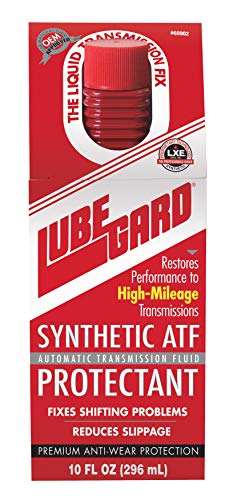
Lubegard's protectant tackles the things that wear a transmission out rather than the symptoms you can see. It lowers operating temperature, softens harsh shifts and quiets torque converter shudder, which makes it the one to add during a fluid change on a truck that tows.
$11.43fromAmazonList priceHeat is what actually kills transmissions, and this targets it directly. Fluid oxidizes faster when it runs hot. Friction modifiers break down, seals age, and the whole thing spirals. Lubegard's LXE chemistry is built to bring operating temperature down, which protects everything else in the system. If you tow a trailer, sit in summer traffic, or run a vehicle past 150,000 miles, that's the most valuable thing on this list.
It's the shudder fix in this lineup. Torque converter shudder — that faint vibration at light throttle around 40 mph — is a fluid problem more often than a mechanical one. Lubegard specifically claims to eliminate clutch chatter and converter shudder, and owner reports back that up across GM, Toyota and Honda transmissions. Several describe pairing it with a drain-and-fill and getting most of the shudder gone.
Dealerships use it as a service add-on, which tells you it plays nice with factory fluid. That's a meaningful signal. A shop putting a bottle into a customer's transmission during a warranty-adjacent service isn't going to use something that fights the OEM friction package.
It softens harsh shifts without making them lazy. The claim is that it modifies harsh shifts and makes them quicker in duration, which is the combination you want. A shift that's smooth but slow just means more clutch slip. Owners consistently describe the result as the transmission feeling more responsive rather than mushier.
Flaws but not dealbreakers
It does nothing for an active leak. This is a protectant, full stop. If fluid is hitting the driveway, fix that first with the Lucas or the ATP, then use this to slow down whatever caused the seal to harden in the first place.
It's for automatics only. Manual gearboxes and CVTs aren't in scope. Don't improvise here.
The benefit is hardest to see in easy driving. If you commute ten flat miles and never tow, the heat reduction is real but you won't feel it. This earns its keep under sustained load.
Upgrade pick
The cleaner to use when shifts are erratic, not leaky
Sea Foam Trans Tune Transmission Treatment
Trans Tune dissolves the gum and varnish that builds up in valve body passages and solenoid bores. If your transmission shifts harshly when cold, hesitates on engagement, or hunts between gears, deposits are a likely culprit and this is the targeted answer.
$19.99fromAmazonVarnish is the most overlooked cause of bad shifting. Old fluid leaves gummy deposits in the narrow passages of the valve body and around solenoid bores. Valves stick, pressure timing goes off, and the transmission starts shifting like it's annoyed with you. Trans Tune liquefies that buildup so the hydraulics can move freely again. Nothing else here does that.
It won't touch your seals, and that's deliberate. The label states it won't swell seals or harm gaskets, O-rings or clutch material. That's important, because a cleaner strong enough to dissolve varnish could easily be strong enough to attack rubber. You can use this without worrying that you're trading a shift problem for a leak.
It works in power steering and hydraulic systems too. Same deposits, same fix. Owners report using half a bottle to smooth out a notchy steering rack on an old Civic. If you've got a car with several tired fluid systems, one bottle covers more ground than the price suggests.
It's the best diagnostic step before you spend real money. If deposits are the problem, you'll know within a few hundred miles. If nothing changes, you've cheaply ruled out the easiest explanation and can move on to a fluid service or a shop visit with better information.
Owners describe it fixing things that sound expensive. Transmissions stuck in second, slipping between gears, converter shudder at red lights — recurring themes in the feedback, usually on high-mileage vehicles whose fluid hadn't been changed in a very long time. That's exactly the profile where varnish accumulates.
Flaws but not dealbreakers
It won't stop a leak. No seal-swelling chemistry, by design. If you're chasing a drip, this is the wrong bottle entirely.
It can loosen debris in a badly neglected transmission. Cleaning out passages is great, right up until the freed material parks itself somewhere inconvenient. On a transmission with fluid that's dark and never been serviced, plan on a filter change and a fluid exchange afterward rather than just pouring and hoping.
Availability is inconsistent. This one goes in and out of stock. If you find it and you know you need a cleaner, don't wait around.
Budget pick
Fluid and seal conditioner in one, if a change is due
Valvoline MaxLife Automatic Transmission Fluid with Stop
This is full ATF with seal-conditioning chemistry mixed in, not an additive. If your high-mileage vehicle is due for a drain-and-fill anyway, you get leak help built into the service instead of buying a separate bottle.
$12.68fromAmazonIt folds two jobs into one purchase. You were going to change the fluid. Old fluid is part of why your seals hardened in the first place. Using a MaxLife formula with seal conditioners already blended in means the fresh fluid arrives doing double duty, and you skip the separate additive.
The volume is the largest here by a wide margin. Thirty-two ounces versus eight or ten for the specialist products. For a partial exchange on a high-mileage car, that's a meaningful head start, and it's the least expensive way to get any seal chemistry into your transmission.
MaxLife is built around old transmissions specifically. The additive package targets wear, oxidation and seal deterioration — the exact trio that shows up past 100,000 miles. Owners of tired minivans and work trucks describe hard shifts easing and small puddles shrinking after topping off with it.
Flaws but not dealbreakers
It's not universal, despite how the listing reads. The critical detail is on the back label, not the front. Some transmissions require a very specific fluid spec, and putting a multi-vehicle formula in the wrong one causes real problems. Check your owner's manual against the compatibility list before you buy — owners have flagged this as the single most confusing thing about this product.
The stop-leak chemistry is diluted compared to a dedicated product. It's blended into a full quart of fluid rather than concentrated in a small bottle. For a genuine drip, the ATP or the Bar's Leaks will work harder.
It's the wrong move on recently serviced fluid. If your ATF is fresh, adding this just dilutes what you paid for. Use a targeted additive instead.
Who this is for
This guide is for people driving out-of-warranty vehicles with chemical problems: rubber seals that have hardened and started to weep, fluid that's picked up varnish and made shifts erratic, or a transmission running hotter than it should under towing loads. If that's you, a bottle costs a tiny fraction of a rebuild and it's a rational thing to try first. It's also for anyone doing a fluid service on a high-mileage car who wants to add some protection while they're in there.
It's not for you if your transmission is mechanically failing. Slipping cold from a standstill, grinding, clunking under load, a check-engine code for ratio or line pressure — those are shop problems, and every hour you spend pouring bottles is an hour the damage gets worse. Skip additives entirely if your vehicle is still under powertrain warranty, since a third-party product can complicate a claim even if it caused nothing. CVT owners should verify compatibility for anything on this list, because most of it was formulated for conventional automatics. We don't cover transmission flush machines, full fluid-exchange services or replacement seals here.
How we picked
Mechanism: We grouped the field by how each product works — restoring plasticizers in rubber, chemically swelling seals, dissolving varnish, or modifying the fluid — and matched each to a real failure mode instead of a marketing claim. Seal safety: Formulas that state they're free of solvents and petroleum distillates ranked higher, since forced swelling risks turning a slow seep into a failed seal. Fluid compatibility: We looked for explicit synthetic ATF confirmation and clear statements about automatic, manual and CVT coverage, and we flagged anything that stayed vague. Treat ratio: Bottle volume had to line up with the stated dose and a typical transmission's capacity, so one bottle does the job. Owner patterns: Recurring themes in customer feedback — how long results took, whether leaks returned — shaped the flaws more than any single account did.
Other transmission fluid additives and stop leaks worth considering
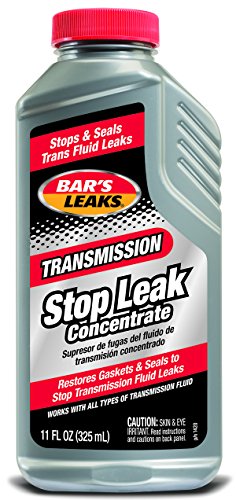
If you've already found the leaking gasket: The Bar's Leaks 1420 Transmission Stop Leak - ($14.99) — Bar's Leaks 1420 is the most narrowly aimed product here. It's built for pan gaskets and input and output shaft seals rather than functioning as a whole-system conditioner, and it's compatible with every transmission fluid type including synthetics. Owners describe the sweet spot precisely: a dime- or nickel-sized spot under the car overnight, not a spreading puddle. Two applications are sometimes needed for a leak that's been going a while. What you give up is breadth — there's no shift-quality help, no heat reduction, no cleaning action, and a handful of owners with shifter shaft seals on manual gearboxes report no improvement at all. Buy it when you know exactly which gasket is weeping. If you're guessing, the Lucas or the ATP covers more ground.
The competition
This is what our research surfaced across the transmission additive category, not a survey of every bottle on a parts store shelf. The six products here span the main mechanisms — solvent-free conditioners, professional seal restorers, dedicated stop leaks, varnish cleaners, thermal protectants and full fluid replacements. Every one of them earned a place, because in this category the losing product is usually just the one aimed at a different problem than yours.
How to use these without making things worse
Read the treat ratio on the bottle and follow it exactly. Doubling the dose doesn't speed anything up — with sulfonate-based products it causes seals to over-swell, which turns a seep into a real failure. Check your fluid level and condition before adding anything: if the ATF is dark brown or smells burnt, change it first, because no conditioner can fix chemistry that's already cooked. Add the product with the engine warm, through the dipstick tube, then drive normally for 200 to 400 miles and let the transmission go through full heat cycles. Don't judge results after one trip to the store. If nothing has improved after 500 miles, the seal is probably physically cracked rather than dried, and that's a repair, not a bottle.
Questions we get
Do transmission stop leak additives actually work, or are they a waste of money?
They work for what they're designed to do, which is reconditioning dried rubber and slowing minor seepage. Published comparison testing and surveys of transmission technicians both single out ATP AT-205 as the most consistent seal performer, and owner feedback broadly agrees. The catch is matching product to cause: additives succeed on chemical problems like hardened seals and degraded fluid, and fail completely on mechanical ones like worn clutch packs.
What's the best option for a slow drip on a high-mileage car?
Start with ATP AT-205 Re-Seal. It reconditions hardened rubber throughout the system without harsh chemistry, and seal shrinkage from years of heat is the usual cause of a slow high-mileage leak. Once the seepage stops, adding Lubegard 60902 at your next fluid service helps keep operating temperatures down so the seals harden more slowly from here.
Can I use a transmission additive in a CVT?
Verify before you pour anything. CVT fluid uses a friction chemistry built around belt-and-pulley grip, and additives formulated for conventional automatics can disrupt it. Sea Foam Trans Tune states it's safe in most automatic transmission fluid and hydraulic systems, but you should still check the label against your specific CVT fluid spec. When you're unsure, use only a product explicitly labeled CVT-safe or ask your dealer.
How long does it take to work?
Plan on 200 to 400 miles of normal driving. The product needs multiple heat cycles and full circulation to reach effective concentration where the seals actually contact metal. Seal conditioners working on badly dried rubber can take up to 500 miles. If you've driven that far with no change, the seal is likely torn or cracked rather than shrunken, and that needs replacing.
What's the difference between a seal conditioner and a chemical stop leak?
A seal conditioner like AT-205 replenishes the plasticizers that heat and oxidation cook out of rubber, letting the seal return to roughly its original size. A chemical stop leak uses reactive agents to force the seal to expand past its current state and close the gap. Conditioners are gentler and much more forgiving of a dosing mistake, which is why professionals prefer them. Chemical stop leaks can act faster but punish overdosing.
Can an additive void my warranty or damage the transmission?
If your vehicle is still under powertrain warranty, adding any third-party product can complicate a claim even if it had nothing to do with the failure. Ask your dealer first, or just wait. Out of warranty, quality products used at the correct dose carry low risk — particularly the solvent-free formulas like Lucas Transmission Fix and non-distillate ones like AT-205. Never exceed the treat ratio, regardless.
Why you should trust us
For this guide:
- We read the manufacturer specifications and label claims for all six products, paying particular attention to stated fluid compatibility and treat ratios.
- We compared published reviews and technician recommendations covering seal conditioners and stop-leak chemistry to understand which mechanisms hold up.
- We reviewed owner feedback across all six listings for recurring patterns in how long results took, which vehicles responded, and whether leaks returned.
- We read owner reviews on every listing, weighted toward the critical ones, because that is where the recurring failures show up.
- We have a systematic way of automatically fetching the latest prices, so the numbers on this page stay current.
- This is a research-focused guide, so the team may not own every product listed — though we often do own the top winners, which gives us extra context for the recommendations.
- We don't accept free products, and the retailer commission never changes which product we recommend.
Sources
Best Transmission Stop Leak Products – The Drive, The Drive
Best Transmission Additives – Popular Mechanics, Popular Mechanics
Project Farm Transmission Additive Head-to-Head Test, Project Farm
Transmission Repair Cost Estimates – RepairPal, RepairPal
ATP AT-205 Re-Seal Mechanic Survey – Bob Is The Oil Guy Forum, Bob Is The Oil Guy
Amazon product listings and owner reviews for all 6 products
Manufacturer specification pages for each product
Some passages in this guide may be paraphrased with AI help. Prices are refreshed automatically.
More like this.
Continue exploring lifestyle reviews and recommendations.

The Best Crampons For Ice Climbing And Mountaineering
Crampons are one of the few pieces of gear where the wrong choice isn't just annoying - it's dangerous. A good pair bites into hard blue ice, stays put on…

The Best Insulated Stainless Steel Water Bottles
A good insulated bottle is the rare thing you use every single day and barely think about. You fill it with ice water in the morning, forget it in a hot…

The Best Lawn Mowers
Mowing is a chore you repeat 25 or 30 times a season, so the small annoyances matter more than the spec sheet. How hard is it to start? Can you get up the…

The Best Romantasy Books
Romantasy is fantasy where the love story carries as much weight as the magic system, and that balance is exactly what makes buying one tricky. You're not…

The Best Thriller and Mystery Novels
A good thriller does one job: it keeps you turning pages long after you meant to sleep. But what you want out of one shifts with your mood. Some nights…

The Best Pergola Kits
A pergola changes how you use your yard. Without one, a patio in July is a place you walk across on the way to somewhere else. With one, it's where you…