The Best Wrist Braces for Carpal Tunnel
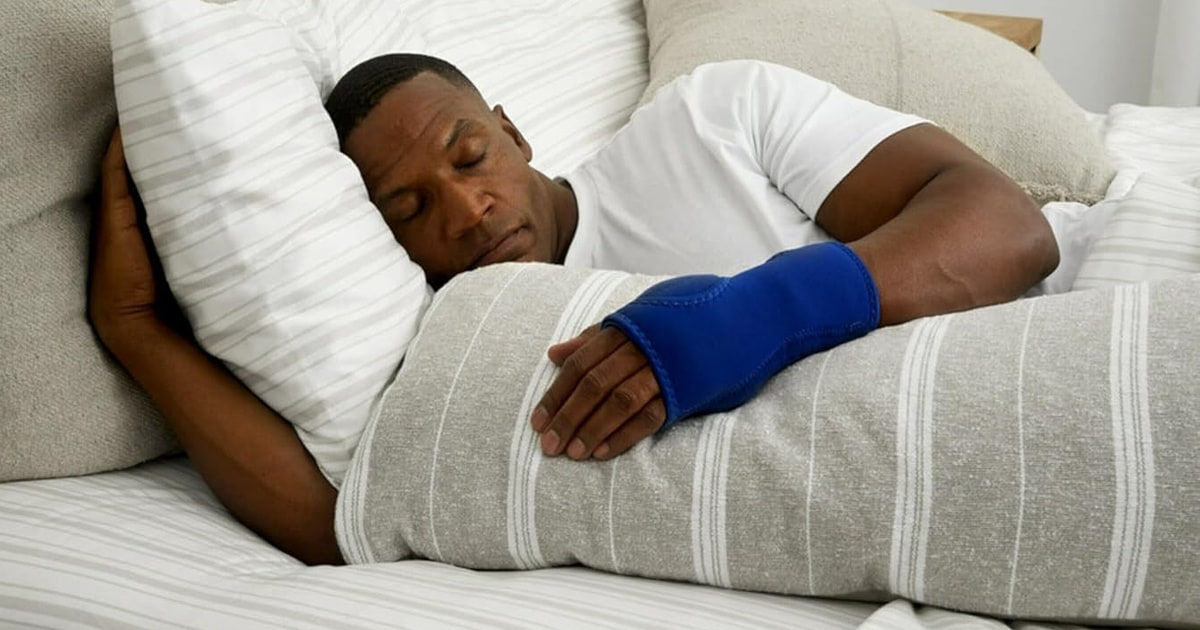
Carpal tunnel symptoms don't usually announce themselves at the office. They wake you up at 3 a.m. with a hand that feels like it fell asleep and won't come back. That's because most of us curl our wrists while we sleep, which squeezes the median nerve right where it runs through the wrist. A brace with a rigid stay holds the wrist flat so the nerve gets a break. It's a low-tech fix, and it's the one orthopaedic guidelines point to first for mild-to-moderate cases.
Here's the honest part: no brace treats carpal tunnel. It manages symptoms by keeping your wrist out of the positions that aggravate the nerve. If you've got real muscle weakness in the thumb, or numbness that hasn't budged after a couple of months of consistent nightly wear, a brace won't fix that — see a hand specialist. Braces also share the same annoyances across the board. They trap heat, the hook-and-loop straps wear out, and sizing is fussy enough that plenty of people order the wrong hand.
We also want to be clear about what this guide is. We read specifications, published reviews and owner feedback rather than wearing these braces ourselves, so treat this as a well-researched shortlist and not a clinical verdict. We think that the Futuro Night Wrist Sleep Support Brace is the best wrist brace for carpal tunnel for most people, and that the Copper Compression Advanced Wrist Brace is the one to buy if you need to keep typing all day while your wrist heals.
Everything we recommend

Comfortable enough that you'll actually keep it on all night

Real immobilization with your fingers left completely free

A proper metal-stay night splint without the padding
Clinic-grade fit and the most breathable liner here

The most rigid option here, for symptoms that need it
At a glance
| Product | Hand/Size | Splint Support | Price | |
|---|---|---|---|---|
 | MUELLER Sports Medicine Green Fitted Wrist BraceAlso consider | Small/Medium | — | $19.26 |
| Futuro Night Wrist Sleep Support BraceTop pick | 2 Pack | Removable Palmar Splint | $50.99On sale |
| Copper Compression Advanced Wrist Brace - CopperRunner-up | Right Hand Small/Medium | — | $27.95 |
 | ComfyBrace Copper Infused Wrist Brace/Hand Brace/Wrist SupportAlso in lineup | Large / Ex-Large | Flexible Upper Splint | $9.97On sale |
| FEATOL Wrist Brace Hand BraceBudget pick | Small/Medium | Removable Wrist Splint | $13.99 |
| BraceAbility Volar Wrist Splint - Right orAlso great | One Size | Metal Splint | $24.99 |
 | Dr. Arthritis Wrist BraceAlso consider | Fits Both Hands | — | $5.95 |
| Ossur Formfit Wrist Brace for Treatment ofUpgrade pick | Left, Medium | — | $21.99 |
How we picked
Neutral wrist position. We prioritized braces with a palmar stay that holds the wrist close to flat, since that's the position orthopaedic guidelines point to for carpal tunnel. Soft compression-only wraps without a rigid stay didn't make the picks.
Day or night fit. We separated braces built for sleep from ones you can work in, because the same brace rarely does both well. Daytime picks had to leave fingers and thumb free according to their specifications and owner accounts.
Stay and strap quality. We compared stay materials and strap counts across spec sheets, favoring aluminum or multi-stay designs and three-strap systems. Owner feedback about braces sliding out of position overnight weighed heavily here.
Breathability. We looked at liner materials, since neoprene traps heat and knit fabrics don't. Owner complaints about sweat and itching were a common theme and helped separate the comfortable braces from the merely supportive ones.
Sizing clarity. We checked whether listings give real wrist-circumference ranges and hand-specific variants. Owner feedback showed that wrong-size and wrong-hand orders are one of the most common sources of disappointment.
Top pickOn sale
Comfortable enough that you'll actually keep it on all night
Futuro Night Wrist Sleep Support Brace
A soft nighttime sleeve with a removable palmar splint and cushioned beads that spread out palm pressure. It holds your wrist near neutral while you sleep, and it comes two to a box, which matters because carpal tunnel often hits both hands.
$50.99fromAmazonList priceNighttime is when a brace earns its keep, and this one is built for exactly that. Most people sleep with their wrists curled, which raises pressure inside the carpal tunnel and leaves you with a numb, tingling hand by morning. The Futuro's removable palmar splint keeps the wrist close to flat through the night. That's the position orthopaedic guidelines point to for conservative treatment, and it's the whole reason night splinting works.
The cushioned beads solve the problem that makes rigid splints unbearable. A bare aluminum stay digs into the heel of your palm, and about an hour into sleep you notice it. Futuro pads the contact area with soft beads that spread the load. Owners who've abandoned harder splints tend to stick with this one, and comfort is the whole ballgame here. A brace that lives on your nightstand does nothing.
Three straps mean it stays where you put it. Single-strap night splints creep up toward your hand as you toss and turn, and by morning the stay isn't over your wrist anymore. Three independent straps let you snug the forearm, the wrist and the palm separately. You can also loosen just one if your fingers start tingling, instead of undoing the whole thing.
Two braces in one box is the right call for a condition that's usually bilateral. Carpal tunnel frequently shows up in both hands, often a few months apart. Buying a 2-pack means you're covered when the second wrist starts complaining, and it costs far less than two separate splints. If only one hand hurts, keep the spare for when the first one's in the wash.
Flaws but not dealbreakers
It's bulky, and you won't be typing in it. This is a sleep splint, full stop. The padded sleeve and palmar stay make fine motor work awkward, so plan on a separate daytime brace if you need coverage at your desk. Pairing it with the Mueller or Copper Compression is the usual approach.
Getting the splint in and out takes two working hands. If carpal tunnel has already sapped your grip strength, wrestling the stay out of its pocket is a small daily irritation. Most people just leave it in once they've set it, which sidesteps the issue but gives up the adjustability.
The listing doesn't state a warranty term for the Futuro.
Runner-up
Real immobilization with your fingers left completely free
Copper Compression Advanced Wrist Brace - Copper
An open-finger, open-thumb brace with a rigid stay that keeps your wrist from flexing while you type. It's shaped for a specific hand rather than being ambidextrous, so the fit is tighter than the one-size-fits-most crowd.
$27.95fromAmazonYou can keep working in it, which is the point. The stay runs along the palm side and stops before your knuckles, so every finger stays free. If your job is eight hours of keyboard and mouse, this is the brace that doesn't force you to choose between symptom control and your workday. Owners in desk jobs and gaming consistently report they forget it's on.
Being hand-specific makes a real difference in fit. The brace comes shaped for right or left in two sizes, so the stay follows your palm's curve instead of splitting the difference. Ambidextrous braces have to compromise, and you feel it as bunching or a stay that sits slightly off-center. Measure your wrist circumference before you order, since the S/M and L/XL ranges don't overlap.
The copper-infused nylon handles the sweat problem better than neoprene. Wear any brace for a full workday and it gets damp and, eventually, smelly. The copper is baked into the fibers rather than coated on, and the fabric wicks moisture instead of holding it. Owners report going several days between washes without it turning funky, which matters if you only own one.
It works overnight too, if you want one brace for both jobs. There's no hard edge digging into your palm, so it's tolerable in bed. It won't match the Futuro for sleep comfort, but if you'd rather buy one brace than two, this is the one that stretches across both use cases.
Flaws but not dealbreakers
It locks out side-to-side wrist motion, and that takes getting used to. The rigid stay stops you from angling your wrist, which feels strange for the first few days. Gamers who flick the mouse with their wrist will need to switch to arm movement and probably a bigger mousepad. Give it a few days before deciding the fit is wrong.
It costs more than several night splints here. If your symptoms are mostly nocturnal, you're paying for daytime dexterity you may not need. The value is in keeping your hands working at a desk, not in raw support per dollar.
Budget pick
A proper metal-stay night splint without the padding
FEATOL Wrist Brace Hand Brace
A removable metal splint plus two fixed plastic stays give this brace more resistance to wrist bending than most inexpensive night splints. The extended forearm wrap keeps it from riding up toward your hand while you sleep.
$13.99fromAmazonThree stays is unusual at this price, and it's not just marketing. One removable metal splint runs along the palm and two fixed plastic stays flank the sides. That combination resists the unconscious bending and twisting that happens in your sleep better than a single-stay brace. If your symptoms are mild to moderate and you mostly need a reminder not to curl your wrist, this does the job.
The long forearm wrap fixes a common budget-splint failure. Short night splints migrate toward your hand over seven or eight hours, and by morning the stay isn't supporting anything. This one extends further up the forearm and uses three hook-and-loop straps, which keeps it anchored. Owners specifically call out that it stays put through a full night.
It's not a single-purpose purchase. The same neutral-position support that helps carpal tunnel also works for tendonitis, arthritis flares and a sprained wrist. If you're not certain what's causing your hand pain yet, that flexibility is worth something. It's also a reasonable brace to hand to someone else in the house later.
Sizing is granular enough to actually fit. The size chart works in narrow wrist-circumference bands rather than lumping everyone into two buckets. Measure the widest part of your wrist with a flexible tape first. Getting this right is the difference between a brace that immobilizes and one that just squeezes.
Flaws but not dealbreakers
The plastic side stays feel harsh on narrow wrists. If you've got petite wrists, the rigid flanks press in rather than cradle. Some owners solve it with a thin sock liner, but you shouldn't have to.
The hook-and-loop fasteners wear faster than premium ones. Machine wash it a handful of times and the hook side starts losing grip. Wash it in a mesh bag with the straps fastened, and you'll stretch its life considerably.
There's no palm cushioning. Compared with the Futuro, you feel the stay against your palm. Still sleepers usually don't mind. If you thrash around or have sensitive hands, spend up.
Upgrade pick
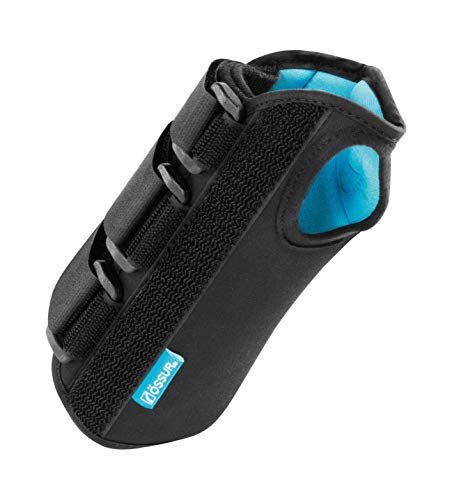
Clinic-grade fit and the most breathable liner here
Ossur Formfit Wrist Brace for Treatment of
A low-profile aluminum stay wrapped in a 3D-knit liner that runs cooler than the neoprene and terry linings on everything else here. It's sized and hand-specific, so the fit is closer to a fitted orthotic than a consumer wrap.
$21.99fromAmazonThe 3D-knit liner is the single biggest comfort upgrade in this guide. Neoprene traps heat, and after a few hours your skin is damp and itchy. Ossur's knit liner lets air through. If you're wearing a brace through a warm workday or you've had skin irritation from other braces, this is the one worth paying up for.
It's sized like a medical device, not a consumer wrap. Instead of one-size-fits-most, you pick a hand and a size. That precision means the aluminum stay sits where it should along your palm, and the brace doesn't rotate on your forearm. Ossur builds orthopaedic products used in rehab settings, and this is their consumer-accessible version.
The aluminum stay conforms to your wrist over time. Unlike molded plastic, a soft aluminum stay takes a slight set from repeated wear. Over a few weeks the brace ends up shaped a bit more like your hand. That's a real advantage if a generic brace has always felt like it was pressing in one spot.
It's the natural choice after carpal tunnel release surgery. This style of brace shows up in post-operative recovery and occupational therapy settings. If your surgeon or therapist has told you to keep the wrist supported while you heal, a precisely sized brace with a low-profile stay is a closer match to what they'd hand you than a one-size wrap.
Flaws but not dealbreakers
Ordering it is genuinely easy to get wrong. It's sold in hand-specific and size-specific variants, and the listing here is the left-hand, medium, 8-inch version. Measure your wrist, then check the hand and size in your cart before you buy. Returns are a hassle you don't need.
The 8-inch length may not cover enough forearm on larger wrists. If you have a big forearm, a shorter brace gives you less leverage against wrist flexion. Look at the longer version if that's you.
Also great
The most rigid option here, for symptoms that need it
BraceAbility Volar Wrist Splint - Right or
A heavy-duty volar splint that immobilizes the wrist more firmly than anything else in this guide, with the fingers left free. One size fits most adults and it works on either wrist, which is unusual for a brace this stiff.
$24.99fromAmazonWhen your symptoms are severe, more rigidity is the right answer. Soft compression braces just remind you not to bend your wrist. This one physically stops you. If you're dealing with moderate-to-severe symptoms, coming out of a cast, or recovering from a fracture, that firmness is what you want. It's the closest thing here to a prescription orthotic.
The volar design puts the stay where the pressure is. The splint runs along the palm side of your wrist, which is the orientation occupational therapy protocols use for carpal tunnel. Braces stayed on the back of the wrist don't block flexion as directly. It's a small distinction that shows up in how well the brace prevents the positions that pinch the nerve.
One size and either hand keeps the buying decision simple. No agonizing over left versus right or S/M versus L/XL. If both wrists give you trouble on different days, you can move it over. For anyone burned by a wrong-size return, that's a genuine relief.
Your fingers stay free, so it isn't just a sleep brace. The finger-free cut lets you write, type, cook and get through a normal day. And the same rigidity that helps during the day works overnight, since sleeping with a flexed wrist is what drives morning numbness. One brace, both shifts.
Flaws but not dealbreakers
It's bulky, and people will notice. It doesn't disappear under a dress shirt sleeve, and it's heavier than the daytime braces here. If you're self-conscious about it at work, the Mueller or Copper Compression is far more discreet.
Expect several days of it feeling wrong. Rigid braces need a break-in period before your hand stops fighting them. Owners who quit in the first couple of days usually quit too early. Give it about a week of consistent wear before you judge it.
Who this is for
This guide is for adults with mild-to-moderate carpal tunnel symptoms — the numbness, tingling and morning stiffness in the thumb, index and middle fingers that a brace can genuinely help with. It's also for people who've had carpal tunnel release surgery and want a well-made brace for recovery, and for anyone whose desk job keeps flaring things up. If you're not sure whether your wrist pain is nerve-related, get it looked at first. Tendon pain along one spot on the wrist is a different problem with a different brace.
We don't cover thumb spica splints, which is what you'd want for De Quervain's tenosynovitis, and we don't cover custom orthotics that a hand therapist molds to your arm. A brace also isn't a substitute for a diagnosis. If you've got thumb muscle weakness, numbness that doesn't improve after a couple of months of consistent nightly wear, or symptoms that keep waking you despite a brace, see an orthopaedic surgeon or hand specialist. Braces manage symptoms; they don't fix the compression underneath.
How we picked
We compared spec sheets, published reviews and owner feedback across every brace here against a few things that actually matter. Neutral position: we favored braces with a palmar stay that keeps the wrist close to flat rather than compression-only wraps. Day or night: sleep splints can be bulky and rigid, but a daytime brace has to leave your fingers free and slide under a keyboard rest. Stays and straps: aluminum or multi-stay designs with three straps hold position through a night better than a single plastic stay and one band. Breathability: knit and copper-nylon liners run cooler than neoprene, and heat is the reason people stop wearing braces. Sizing: listings with real wrist-circumference ranges and hand-specific variants beat one-size-fits-most, because a brace that rotates on your arm isn't immobilizing anything.
Other wrist braces for carpal tunnel worth considering
If you want the thinnest brace you can wear through a whole shift: The MUELLER Sports Medicine Green Fitted Wrist Brace ($19.26) — The Mueller Green Fitted Wrist Brace is the low-profile option here. It slides under a keyboard wrist rest and under work gloves without the telltale brace bulge, and the pre-curved palmar stay supports your wrist without shoving it into hyperextension. The one-handed cinching system is the real draw — you can tighten it yourself without asking anyone for help, which matters a lot if carpal tunnel has already cost you grip strength. The breathable mesh handles a warm office better than neoprene. What you give up is immobilization depth: it's firm, not rigid, so it's a daytime tool rather than a serious night splint. Sizes cover 5- to 8-inch and 8- to 10-inch wrists, and it's hand-specific.
If you want a doctor-developed wrap that fits either hand: The Dr. Arthritis Wrist Brace ($5.95) — The Dr. Arthritis Wrist Brace is the most thoughtfully designed of the inexpensive wraps here. The corner thumb hole is the standout detail — most cheap braces put the hole right on your thumb knuckle, which builds a pressure ridge after a couple of hours, and this one moves it out of the way. The 65% neoprene and 35% copper-infused nylon blend is light and wicks moisture, so it doesn't cook your hand by lunchtime. It fits both hands with one purchase, which is handy if your symptoms move around. The catch is that there's no rigid palmar stay, so it can't do the neutral-position work of a real night splint. Use it during the day and pair it with a stay-equipped brace for sleep. The strap hardware is also thinner than on the pricier braces and will show wear with daily use.
The competition
Here's what our research turned up, not everything on the market. The wrist brace category is enormous and mostly undifferentiated, so we focused on braces with a clear design rationale, transparent sizing and enough owner feedback to spot patterns. The one brace below didn't make the picks, but it isn't a bad product — it's just aimed at a narrower situation than the braces above.
The ComfyBrace Copper Infused Wrist Brace/Hand Brace/Wrist Support ($9.97) — The ComfyBrace Copper Infused Wrist Brace pairs a flexible upper splint with a stiffer palmar splint, which gives it more structure than the single-stay wraps that crowd this tier. Four sizing options, including a Large/Ex-Large, cover a wider range of wrists than most. It lost to our picks on two counts. The neoprene-style material holds heat, so an eight-hour day in a warm room gets clammy, and the immobilization is lighter than what the FEATOL or BraceAbility provide — fine as a nudge to avoid extreme wrist angles, not enough for moderate-to-severe symptoms or a serious night splint. The listing copy also misspells carpal tunnel, which isn't a functional issue but doesn't inspire confidence. Still, if you're trying a brace for the first time with mild symptoms, or you want a cheap spare to keep in a work bag, it's a reasonable buy.
Care and sizing
Measure the widest part of your wrist with a flexible tape before you order anything, then check both the size and the hand on the listing. Wrong-hand orders are the most common regret with these braces. Once it's on, tap each fingertip — if your fingers feel cold, look pale or go more numb than before, loosen one strap a notch. Snug is right; tight isn't. Wash the brace regularly, because a brace worn every night gets sweaty fast, and fasten the hook-and-loop straps closed before it goes in the wash so the hook side doesn't chew up the fabric. A mesh laundry bag helps. Air-dry it flat rather than tossing it in the dryer, since heat warps plastic stays and kills elastic. Owning two lets you rotate while one dries.
Questions we get
Should I wear a wrist brace at night or during the day?
Night, if you can only pick one. Most people sleep with their wrists curled, which raises pressure inside the carpal tunnel and leaves your hand numb by morning. Published research on conservative treatment points to consistent nightly splinting as the highest-value habit, with benefits building over about six to eight weeks. Adding daytime wear during flares helps on top of that.
Can wearing a wrist brace make carpal tunnel worse?
A correctly fitted brace worn at the right angle won't. But a brace cranked too tight can restrict circulation, and one that holds your wrist bent rather than flat can aggravate the nerve. Skin irritation and stiffness from wearing one around the clock are also real. If your symptoms get worse with a brace on, stop and have a hand specialist check that your wrist angle is right.
How many hours a day should I wear one?
For sleep, wear it the whole night — seven to nine hours. For daytime, most guidance suggests wearing it during the activities that set your symptoms off, like typing, driving or cooking, and taking it off for breaks. Four to eight hours of daytime wear is common. Don't wear a brace 24 hours a day for weeks on end without a doctor's say-so, since long immobilization gradually weakens the muscles around your wrist.
What's the difference between a wrist brace and a splint?
In stores the words get used interchangeably, but there's a technical difference. A splint contains a rigid or semi-rigid stay — metal or plastic — that physically holds the wrist in a fixed position. A brace may be compression-only with no stay at all. For carpal tunnel specifically, you want the stay, because it prevents the wrist positions that pinch the median nerve instead of just squeezing the area.
Do I need separate left and right braces?
For most rigid-stay braces, yes. The stay is curved to match one palm, so a right-hand brace won't sit correctly on your left wrist. A few designs, like the Futuro and the BraceAbility, work on either hand, though ambidextrous braces fit a little less precisely than hand-specific ones. Since carpal tunnel often affects both hands, a 2-pack or an either-hand design saves you money.
Is a brace enough to avoid surgery?
For mild-to-moderate cases it often is, especially combined with changing the activities that aggravate it and, if your doctor recommends one, a corticosteroid injection. Published reviews of conservative treatment document meaningful symptom improvement around the six-week mark for people who wear night splints consistently. Severe cases with documented nerve damage or persistent muscle weakness usually need surgical decompression. A brace manages symptoms; it doesn't change the underlying anatomy.
Why you should trust us
For this guide:
- We read the manufacturer specifications for every brace here, comparing stay materials, strap counts, liner fabrics and sizing ranges side by side.
- We reviewed published guidance on conservative carpal tunnel treatment, including the case for neutral-position night splinting, and used it to weigh which design choices actually matter.
- We read through owner feedback for each listing to identify recurring complaints — braces riding up overnight, heat buildup, strap wear and wrong-size orders — and let those patterns shape the flaws we call out.
- We read owner reviews on every listing, weighted toward the critical ones, because that is where the recurring failures show up.
- We have a systematic way of automatically fetching the latest prices, so the numbers on this page stay current.
- This is a research-focused guide, so the team may not own every product listed — though we often do own the top winners, which gives us extra context for the recommendations.
- We don't accept free products, and the retailer commission never changes which product we recommend.
Sources
Carpal Tunnel Syndrome Fact Sheet — CTS is the most common peripheral nerve entrapment syndrome, estimated to affect 3–6% of the general adult population., National Institute of Neurological Disorders and Stroke (NINDS)
Carpal Tunnel Syndrome Clinical Practice Guideline — AAOS endorses wrist splinting in a neutral position as a first-line conservative treatment option for CTS patients., American Academy of Orthopaedic Surgeons (AAOS)
Carpal Tunnel Syndrome — OrthoInfo AAOS Patient Education. About 3 of every 10,000 workers experience lost work time due to CTS; women are three times more likely than men to develop CTS., OrthoInfo (AAOS Patient Education)
Amazon product listings and owner reviews for all 8 products
Manufacturer specification pages for each product
Some passages in this guide may be paraphrased with AI help. Prices are refreshed automatically.
More like this.
Continue exploring health reviews and recommendations.

The Best Products for Wrist Pain Relief
Wrist pain sneaks up on you. It starts as a dull ache after a long day at the keyboard, then it's pins and needles at 3 a.m., and eventually you're…

The Best Knee Braces for Arthritis
Arthritic knees don't hurt on a schedule. They hurt on the third flight of stairs, an hour into a grocery run, or the morning after a weekend in the…

The Best Posture Correctors and Back Braces
Most of us slouch without noticing. You lean toward a monitor, your shoulders round forward, and by mid-afternoon your neck and upper back ache. A posture…

The Best Knee Braces for Running
Most running knee pain doesn't announce itself. It starts as a dull ache in the last mile, then shows up earlier each week, until stairs and long drives…

The Best Cold Therapy Knee Wraps
A knee that's just been operated on, twisted on a trail run, or flared up after a long day swells fast. Cold slows that down. But how you deliver the cold…

The Best Water Flossers for Gum Health
Your gums bleed a little when you brush, and your dentist keeps asking whether you floss. You've got plenty of company. The CDC reports that 47.2% of U.S.…