The Best Patio Heaters
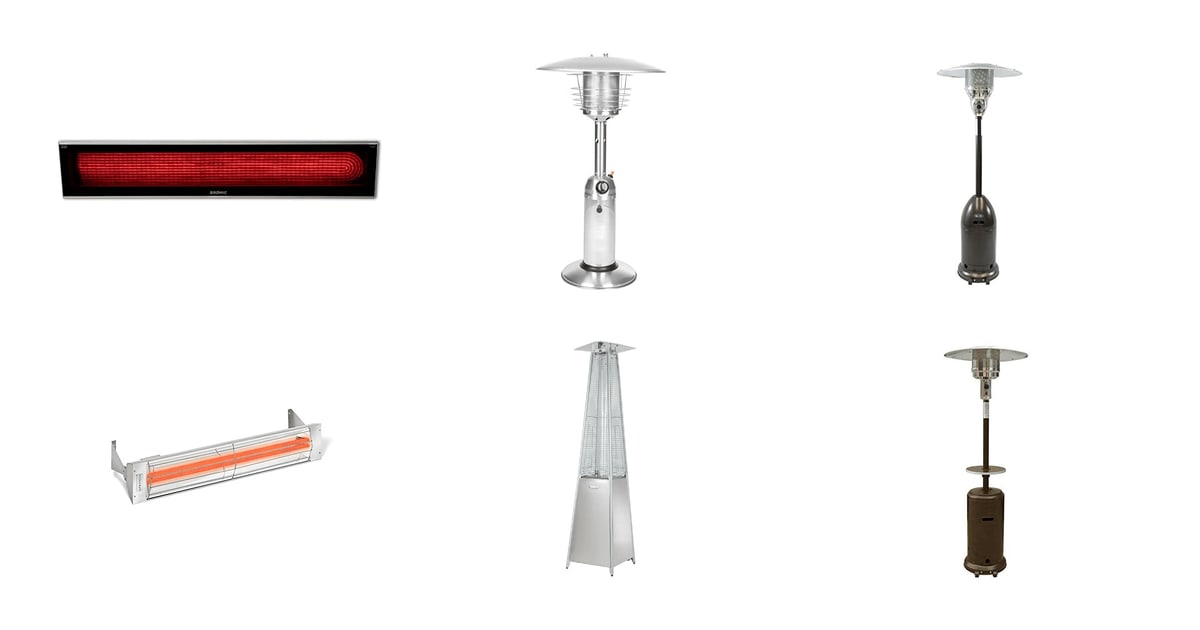
Fall evenings outside tend to end the same way. The sun drops, the temperature follows, and everyone drifts back indoors around eight o'clock. A patio heater buys you a few more hours. The good ones throw enough warmth that you stop thinking about the cold and go back to the conversation. The mediocre ones make you huddle within arm's reach of the burner. The difference usually comes down to output, how the heat is aimed, and whether the thing lights reliably on a cold night.
No patio heater beats wind. Propane towers warm the air around them, and a steady breeze carries that air off your deck about as fast as the burner makes it. Electric infrared holds up much better, because it heats people and objects directly — but it's directional, so step out of the beam and you're cold again. Propane is also thirsty. A 20 lb tank holds roughly 430,000 BTU, which works out to about ten hours at full blast on a 40,000 BTU heater. Plan on refills.
So think about your space before you think about specs. An open deck where six people spread out needs a tall tower with a wide reflector. A covered porch or pergola is better served by a wall-mounted electric unit that never needs a tank. A small balcony may only have room for something that sits on a table. We think that the Dyna-Glo DGPH201BR is the best patio heater for most people, and that the AZ Patio Pyramid Glass Tube heater is the one to buy if the look of the flame matters as much as the warmth.
Everything we recommend

Enough heat for a full table, but it drinks propane
More atmosphere than heat, and worth it for the flame
Warm enough for one table, and it fits on one

Silent, wind-proof warmth, if you can wire for it
Portable and porch-safe, but it's no looker
At a glance
| Product | Heat Output | Coverage Area | Price | |
|---|---|---|---|---|
| Bromic Platinum Smart Heat 2300W Electric PatioUpgrade pick | 2300W | 65 Sq Ft | $1,527 |
| Fire Sense 60262 Portable Patio Heater OutdoorBudget pick | 10,000 BTU | 100 Sq Ft | $145.39 |
| Dyna Glo DGPH201BR 48Top pick | 48,000 BTU | — | $136.87 |
 | Infratech WD-3024 SS Stainless Steel Fixture DualAlso consider | 3000 Watt | — | $803 |
| AZ Patio Pyramid Glass Tube Propane GasRunner-up | 40,000 BTU | — | $321.51On sale |
 | AZ Patio Heaters HLDS01-CG 87" 48000 BtuAlso in lineup | 48000 Btu | — | $315 |
| Mr. Heater 9Also great | 9,000 BTU | 225 Sq Ft | $89.97 |
How we picked
Heat you'll feel. We compared rated output against the coverage numbers major review outlets use — roughly 200 to 250 square feet for a 40,000 BTU propane heater, up to about 300 for 48,000 BTU. Anything that couldn't warm a table of four had to justify itself another way.
Fuel and runtime. We looked at what each heater burns and how long it lasts on a tank, then weighed that against owner reports, which often run shorter than the spec-sheet math. Heaters tied to disposable 1 lb cylinders had to earn their place on size or portability.
Safety certification. The CPSC flags tip-overs as a leading cause of outdoor heater injuries, so we prioritized CSA- or ETL-certified units with automatic shutoff that triggers past about 45 degrees of tilt. Low-oxygen shutoff was required for anything used in a semi-enclosed space.
Weather resistance. We read spec sheets for materials and ingress ratings, favoring 304 stainless in burner assemblies and IP-rated housings on electric fixtures. Published multi-season reviews consistently show stainless burner heads holding up better than powder-coated aluminum.
Setup and ignition. Freestanding propane heaters generally take 15 to 30 minutes to assemble, while hardwired electric units run 45 to 90 minutes plus an electrician. We also weighed owner feedback about ignition reliability in the second and third seasons, which is where most of these fail.
Top pick
Enough heat for a full table, but it drinks propane
Dyna Glo DGPH201BR 48
This is the standard tall propane tower done properly: 48,000 BTU, push-button ignition, a variable dial, and an anti-tilt shutoff. It's tall enough to clear a table of six and light enough on its wheels that one person can roll it back under cover.
$136.87fromAmazonOn an open deck, output is most of the game. At 48,000 BTU this Dyna-Glo sits at the top of what freestanding propane heaters produce, which puts it in the range reviewers generally peg at around 300 square feet on a calm night. That's a patio table plus the chairs pulled back from it. Owners who run it under a covered overhang say the reflector pushes heat down and out instead of letting it escape overhead.
The electronic ignition matters more than it sounds. Plenty of tower heaters still use a spark you have to hold and coax while the pilot decides whether to catch. This one lights at the push of a button, and the variable dial lets you back it off once your guests stop shivering. On a 40-degree night, being able to turn it down is a real feature, not a spec-sheet line.
It also looks better than it strictly needs to. The hammered bronze finish hides fingerprints and the water spotting that shows up fast on cheap stainless, and the steel housing is standard for this class. It stands about 87 inches tall and weighs a little over 35 pounds, so it's stable in place but still rolls. You can get it off the deck ahead of a storm without help.
Assembly is the sane end of the range. Owners typically describe an hour or less, clear instructions, and wheel hardware that often arrives partly installed. That's a much better afternoon than a pyramid heater, which means a long glass tube and a pile of small screws. If you're the person who ends up building everything at your house, this one won't wreck your Saturday.
Flaws but not dealbreakers
The ignition is the weak point over time. A recurring theme in owner feedback is a heater that works beautifully through one season and then refuses to light the next — usually a fouled igniter or a sticky thermocouple after a winter spent outdoors. Storing it covered, or better yet in the garage, seems to help a lot.
It also drinks propane. Some owners report closer to five hours from a 20 lb tank when they run it wide open, well short of the ten hours the math suggests. Keep a spare tank if you host often. And like every tall tower, it loses to wind: nothing shields the flame from a gust.
Runner-upOn sale
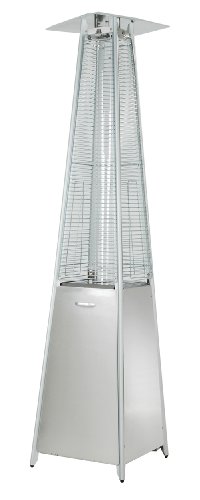
More atmosphere than heat, and worth it for the flame
AZ Patio Pyramid Glass Tube Propane Gas
A 90-inch stainless pyramid with a quartz glass tube that shows the flame from bottom to top. At 40,000 BTU it's a step down in raw heat from a mushroom-top tower, but it's the heater people actually gather around.
$321.51fromAmazonList priceSet this one at the corner of a patio at dusk and it reads as a fire feature, not an appliance. The flame runs the full height of the glass tube, so you get the pull of a fire pit without smoke, sparks, or hauling wood. Review panels that ask people to rank heaters on ambiance put pyramid designs at the top over and over. For fall entertaining, that counts.
The heat is real, but it's aimed high. At 40,000 BTU it's rated for roughly 200 to 250 square feet, and owners describe it as pleasant from three or four feet away rather than blazing. The tube concentrates warmth up the column, so you feel it most standing up. Seated guests get less than they would from a tower with a wide overhead reflector.
It's built better than a budget heater has to be. Stainless steel throughout, CSA certification, a tilt shutoff that cuts fuel if the unit leans past about 45 degrees, and wheels so you can move all 65 pounds of it alone. Owners who compared the internal parts against far pricier pyramid heaters came away thinking the real difference was mostly the badge on the front.
Assembly is the tax you pay for the look. Expect a couple of hours, a lot of small screws, and a glass tube you'd rather not drop. Owners who read the manual all the way through first say it goes fine; owners who wing it end up backing screws out and starting over. Do it on a soft surface, and get a second set of hands for the tube.
Flaws but not dealbreakers
If you want to be warm rather than cozy, this isn't your heater. Several owners describe pyramid models as largely for show — a modest amount of heat and a lot of atmosphere — and that's a fair summary. On a genuinely cold night with a few guests, a 48,000 BTU tower does more of the work.
It's also 90 inches tall and narrow, which makes it more sensitive to a breeze than the BTU number suggests. And the assembly complaints are consistent enough to take seriously: instructions that tell you to add screws without telling you which holes they go in.
Budget pick
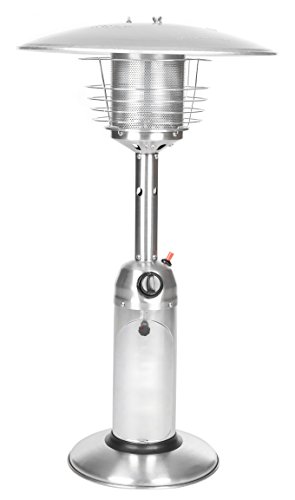
Warm enough for one table, and it fits on one
Fire Sense 60262 Portable Patio Heater Outdoor
A tabletop propane heater that runs on a 1 lb cylinder tucked inside its base, with an adjustable 10,000 BTU output over roughly 100 square feet. It's the right call for a balcony or a four-person bistro table where a full-size tower won't fit.
$145.39fromAmazonScale is the whole point here. Ten thousand BTU sounds small next to a tower, and it is, but it's aimed at a much smaller area: a table for four, a six-by-ten upper deck, a balcony where anything taller would be a hazard. Owners in that situation are consistently happy with it. Owners who expected it to warm a whole patio are consistently not.
It's easier to live with than a tank-fed heater. The 1 lb cylinder screws in inside the housing, so there's no hose, no regulator, and nothing to trip over in the dark. A one-step piezo ignition lights it, and a shutoff valve kills the gas if it tips. Fire Sense rates a full cylinder at about three hours, which covers an evening but not a long one.
Fair warning on the name: this thing is bigger than it photographs. At about 35 inches tall it's a substantial object that happens to sit on a table, and more than a few owners say they pictured something nearly handheld. Measure your table first. The upside is that it's light enough to carry inside when you're done, which you should do.
Flaws but not dealbreakers
Quality control is the recurring complaint. Owners report dented heat shields from thin packaging, a burner bracket spot-welded on crooked, and the occasional unit that arrives dead. Fire Sense tends to ship replacements quickly, but a fair number of buyers have to ask for one, and that's a bad first evening.
Three hours per cylinder also adds up. Disposable 1 lb cylinders go fast and they're a waste stream. If you'll be out there twice a week all fall, a heater that takes a refillable 20 lb tank makes more sense over a season.
Upgrade pick
Silent, wind-proof warmth, if you can wire for it
Bromic Platinum Smart Heat 2300W Electric Patio
A wall- or ceiling-mounted electric infrared heater that aims a 2,300-watt beam straight down at your seating area. There's no tank, no flame, and no noise — just tinted ceramic glass and a fixture you'll mostly forget is up there.
$1,527fromAmazonInfrared is the answer to wind. Propane warms the air, and air blows away. Radiant electric heat travels to whatever it hits — you, your chair, the table — so a gust that would gut a tower barely dents it. On a breezy fall night under a covered deck, that's the entire experience. The Department of Energy puts electric radiant conversion at close to 100 percent of the electricity you pay for.
It also disappears into a patio in a way freestanding heaters can't. The fixture is 33 inches long and a little over 16 pounds, and it mounts to a wall or ceiling on an adjustable bracket, so nothing eats floor space or blocks the view. The tinted ceramic fascia spreads heat evenly and cuts the orange glare, which you'll appreciate if you're eating underneath it.
Bromic rates it for about 65 square feet, and that number is worth reading carefully. This isn't a heater for a sprawling deck. It's a heater for a defined zone: a dining table, a conversation set, an outdoor kitchen counter. Design-minded owners usually install two or more and aim them at the spots where people actually sit, which is the honest way to use it.
Smart control is what earns the upgrade label. With a compatible controller, sold separately, you get remote on/off and dimming, so you can ease the output down instead of cycling the unit off and on. It's the closest thing here to set-and-forget outdoor comfort. It's also wind-resistant with an IPX4 water rating, so it stays mounted all season.
Flaws but not dealbreakers
It runs on 208 volts and pulls around 11 amps, which means a dedicated circuit and, in most places, a licensed electrician. Factor that in, along with a mounting height of at least 72 inches on a wall or 96 inches on a ceiling. If your patio isn't covered and isn't wired, this heater simply isn't an option.
Coverage is narrow. Sixty-five square feet is a table, not a yard, and the beam is directional — sit outside it and you're back to a cold night. One unit rarely handles a whole patio, so plan on a pair.
Also great
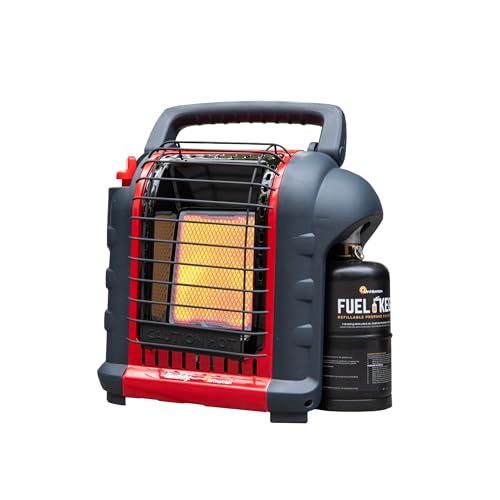
Portable and porch-safe, but it's no looker
Mr. Heater 9
A 9,000 BTU radiant propane heater about the size of a toolbox, running on a 1 lb cylinder with a low-oxygen shutoff and a tip-over switch. It's approved for indoor and outdoor use, which makes it a rare option for a screened porch.
$89.97fromAmazonMost propane heaters have no business in an enclosed space. This one does. The Buddy is designed and approved for indoor and outdoor use, with a low-oxygen safety system that shuts the burner down before the air gets dangerous. If your fall evenings happen on a screened porch, in a three-season room, or under a canopy, that approval is the reason to buy it.
It's radiant rather than convective, which changes how you use it. The ceramic head throws infrared straight ahead, and owners compare the feeling to sitting in a patch of sun. Point it at people, not at the room. Two settings, 4,000 and 9,000 BTU, cover most small spaces, and the high setting is rated for roughly 225 square feet.
At about 15 inches tall and seven pounds, it goes wherever the evening goes. Owners take these camping, into RVs, out to garages and greenhouses, and keep one on hand for outages. A 1 lb cylinder runs about 5.4 hours on low and 2.4 on high, and an adapter hose lets you feed it from a 20 lb tank when you want a longer night.
Flaws but not dealbreakers
It's a heater, not a patio object. Red plastic, a wire guard, a squat stance — it looks like something from a job site, because that's where it usually lives. Next to a glass pyramid tower on a nicely staged deck, it's an eyesore.
There's no reflector to spread warmth wide, so heat falls off quickly to the sides. And out on a fully open deck in a breeze, 9,000 BTU won't accomplish much. Think of it as a personal heater that two people can share, not a party heater.
Who this is for
This guide is for anyone who wants to keep using an outdoor space after the temperature drops — a deck, a balcony, a covered porch, a pergola. If you host in the fall and everyone migrates inside by eight, a heater is a simple way to reclaim those hours. Buy a tall propane tower if your space is open and you want warmth for a group. Buy a mounted electric fixture if your patio is covered, wired, and you'd rather not deal with tanks.
It's not for everyone. If you want a gathering point more than warmth, a fire pit does that better and we cover those separately — patio heaters aim heat at people, while fire pits radiate it in every direction. If you're in an apartment, check your local ordinances first, since many cities ban open-flame devices on multi-unit balconies. And we've stuck to freestanding propane and mounted electric units here. Natural-gas heaters, which need a permanent gas line, are outside the scope.
How we picked
We started from the specs and worked outward. Heat output: enough BTUs or watts to cover your actual space, judged against the coverage benchmarks published reviews use rather than the marketing claim. Fuel and runtime: what it burns, how long a tank lasts, and whether owners see the runtime the math promises. Safety: CSA or ETL certification, tip-over shutoff past about 45 degrees, and low-oxygen protection on anything you'd use in a semi-enclosed space. Weather resistance: stainless burner assemblies and IP-rated electric housings, since these live outside in the rain. Setup: honest assembly time, reliable ignition, and no surprise electrician bill unless the design clearly requires one.
Other patio heaters worth considering
If you want a permanent electric heater for a pergola or outdoor kitchen: The Infratech WD-3024 SS Stainless Steel Fixture Dual ($803) — The Infratech WD-3024 is the fixture you install once and stop thinking about. It's a dual-element 3,000-watt unit in a 304 stainless housing, rated up to 93 percent efficient with zero emissions, and it's built for recessed mounts and eight- to twelve-foot ceilings — higher than most competitors handle. It runs silently, works with a range of Infratech controls including thermostats, and the WD series carries an IP55 rating, so sustained spray from any direction isn't a concern. What you give up is flexibility and simplicity. It's 240 volts, hardwired, and a genuine installation job. The Bromic ranks ahead of it here because the tinted fascia and smart dimming suit a residential patio better, but if you're heating a large covered area and want the hardware to disappear, this is the stronger fixture.
The competition
This is what our research surfaced, not a map of everything for sale. Patio heaters turn over constantly, and plenty of capable units — natural-gas models in particular — never made the shortlist. Here's the one we looked at closely and didn't pick.
The AZ Patio Heaters HLDS01-CG 87" 48000 Btu ($315) — The AZ Patio Heaters HLDS01-CG is the familiar 87-inch mushroom-top tower in hammered bronze, 48,000 BTU, with a built-in table ring — genuinely handy if there's nowhere to set a drink on your deck. On paper it matches our top pick almost exactly. In practice, owner feedback keeps landing on quality control rather than heat: missing hardware in the box, a propane door latch that falls off, and units that ignite, run for five minutes, and shut themselves down. Buyers who got a good one like it fine. We'd rather point you to the Dyna-Glo, which puts out the same 48,000 BTU with fewer reports of the same headaches. If you specifically want that drink ledge, it's a reasonable gamble.
Care and maintenance
Two habits keep a patio heater alive past its first season: cover it, and store it dry. Most of the failures owners describe — an igniter that won't spark, a burner that lights and then dies — trace back to a heater left uncovered through a wet winter, which lets moisture and spiders into the burner tube and corrodes the thermocouple. Before the first cold night, pull the reflector, check the burner ports for nests, and wipe the tilt switch clean. On propane units, brush soapy water over the hose and regulator connection to check for leaks, and replace a hose that's cracked or stiff. Electric fixtures need less: keep the fascia clean and the mounting hardware tight. On a wood deck, always set the heater on a level base and keep clearance overhead.
Questions we get
Are electric or propane patio heaters better for fall evenings?
It depends on whether your space is covered. Propane puts out far more heat and needs no wiring, which makes it the better pick for an open deck. Electric infrared warms people and objects directly instead of heating the air, so it holds up much better in wind and works well under a roof or pergola. Electric also converts nearly all the energy it uses into heat, while propane loses 15 to 20 percent to combustion.
How many BTUs do I need for a 200-square-foot patio?
Around 40,000 BTU is the usual benchmark for 200 to 250 square feet on a calm night. Step up to about 48,000 BTU if your space runs closer to 300 square feet or if you're regularly dealing with wind. Those figures assume a freestanding heater with an overhead reflector — a pyramid design or a directional electric fixture won't cover the same footprint at the same rating.
Can I use a propane patio heater on an apartment balcony?
Check your local ordinances and your lease before you buy anything. Many municipalities restrict open-flame devices on multi-unit residential balconies, and building rules are often stricter than city code. If propane is off the table, a mounted electric infrared heater is usually allowed, since there's no flame and no fuel storage.
How long does a 20 lb propane tank last on a patio heater?
A full 20 lb tank holds roughly 430,000 BTU, which works out to about 10.75 hours at full output on a 40,000 BTU heater. Real-world runtime is often shorter — owners of high-output towers frequently report closer to five or six hours when running wide open. Turning the dial down stretches it considerably, and a spare tank is worth having if you host often.
What's the best patio heater for a covered or screened-in porch?
For a covered porch with power available, a mounted electric infrared fixture is the cleanest answer: no tank, no flame, no floor space used. For a screened porch, most propane heaters are off-limits, which is where the Mr. Heater Buddy stands out — it's approved for indoor and outdoor use and includes a low-oxygen shutoff. Always confirm the clearance requirements for whatever you install.
Are patio heaters safe to use on a wood deck?
Yes, with basic precautions. Set the heater on a level surface so the base sits flat, keep it well away from railings and furniture, and check the overhead clearance the manual specifies — most tall towers need several feet. Choose a CSA- or ETL-certified unit, since certification requires an automatic shutoff that triggers if the heater tilts past about 45 degrees. Never leave one running unattended around kids or pets.
Why you should trust us
For this guide:
- We read manufacturer specification sheets and Amazon listing details for every heater here, comparing rated output, coverage claims, materials, safety certifications and ingress ratings side by side.
- We drew on published reviews and buying guides from outlets including Good Housekeeping, This Old House, Bob Vila and Wirecutter, plus safety guidance from the CPSC and energy data from the EIA and Department of Energy.
- We read through owner feedback for each product to find the patterns that specs don't capture — second-season ignition failures, assembly headaches, packaging damage and real-world runtime.
- We read owner reviews on every listing, weighted toward the critical ones, because that is where the recurring failures show up.
- We have a systematic way of automatically fetching the latest prices, so the numbers on this page stay current.
- This is a research-focused guide, so the team may not own every product listed — though we often do own the top winners, which gives us extra context for the recommendations.
- We don't accept free products, and the retailer commission never changes which product we recommend.
Sources
Best Patio Heaters of 2026 – Wirecutter (NYT), Wirecutter
Patio Heater Ratings and Buying Guide – Consumer Reports, Consumer Reports
Best Patio Heaters Tested by the Good Housekeeping Institute, Good Housekeeping
Best Patio Heaters, Tested and Reviewed – This Old House, This Old House
Best Patio Heaters of 2026 – Bob Vila, Bob Vila
Best Patio Heaters – Popular Mechanics, Popular Mechanics
Best Patio Heaters for Every Budget – Forbes Home, Forbes Home
Bromic Platinum Smart-Heat Electric Heater Product Specifications, Bromic Heating
Infratech WD-Series Heater Technical Specifications and IP Ratings, Infratech USA
Radiant and Infrared Heating Efficiency – U.S. Department of Energy, U.S. Department of Energy
Portable Outdoor Heater Safety – Consumer Product Safety Commission, U.S. CPSC
Propane Retail Prices and Seasonal Outlook – U.S. Energy Information Administration, U.S. EIA
Amazon product listings and owner reviews for all 7 products
Manufacturer specification pages for each product
Some passages in this guide may be paraphrased with AI help. Prices are refreshed automatically.
More like this.
Continue exploring home reviews and recommendations.

The Best Patio String Lights
String lights turn a patio into a room for very little effort. Hang a strand over the table and dinner stretches an hour longer. But the ones that look…

The Best Interlocking Patio Tiles and Rubber Pavers
A patio you actually use comes down to what's underfoot. Cracked concrete, a splintery porch, a balcony slab that turns into a puddle after every storm - …

The Best Patio Furniture and Grills
A patio only gets used if sitting on it is easy. That means seating you don't have to drag inside before a thunderstorm, cushions that don't go blotchy…

The Best Wind-Resistant Patio Umbrellas
Wind is what kills patio umbrellas. Sun fades a canopy slowly, over seasons, and rain mostly just beads up and rolls off. But one gust under an open…

The Best Mosquito Net Gazebos for Patios
A patio you can't sit on after sundown isn't much of a patio. Mosquitoes show up right when the evening gets good - dinner outside, a drink, the kids…

The Best Heat Cables for Gutters and Roofs
An ice dam starts quietly. Snow melts on the warm part of your roof, runs down to the cold overhang, and freezes into a ridge at the eave. Water then…