The Best 4K OLED TVs
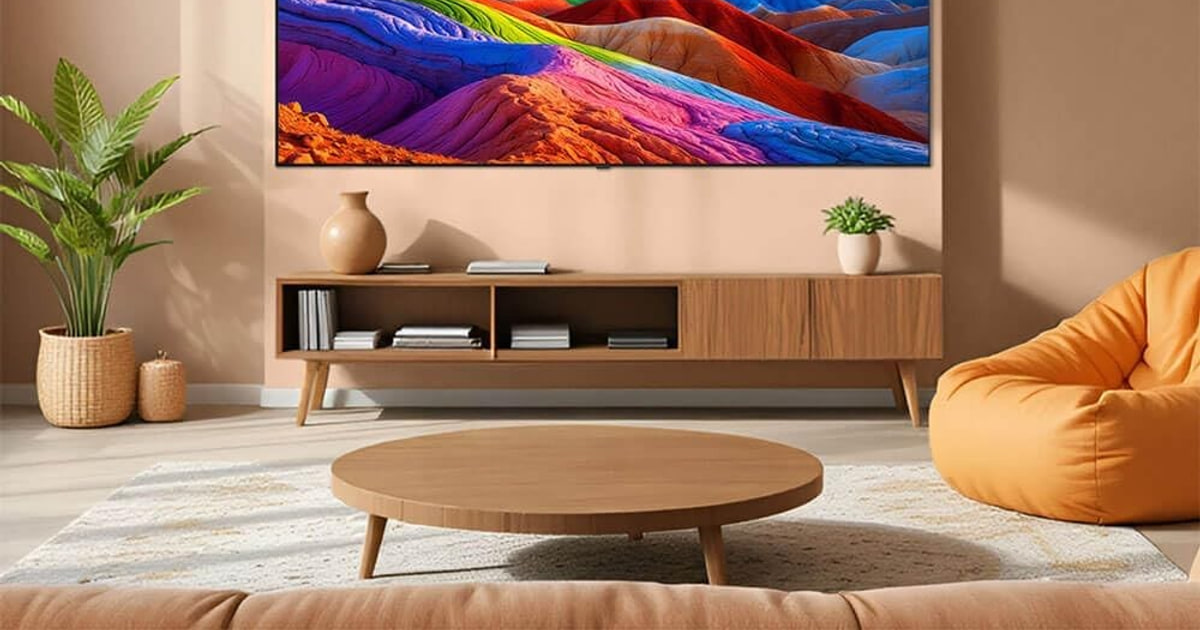
An OLED TV earns its keep in the dark. Every pixel makes its own light, so a starfield looks like actual stars instead of gray smudges on a lit panel. There's no halo around subtitles, no blooming around a flashlight in a horror movie. Motion is the other half of it: pixels switch in about 0.1ms, which is roughly 20 to 100 times faster than a premium LCD, so a hockey puck stays a puck instead of turning into a comet. You notice both things within an hour of setup.
Here's the honest catch. No OLED wins a fight with a sunny window the way a good mini-LED does, because OLED brightness is limited by how hard you can push a self-emissive pixel. Even the brightest sets here trade some of that headroom for perfect blacks. Built-in speakers are the other shared weakness — these panels are thin, and thin leaves nowhere for a woofer to live. Dialogue is fine. Anything with weight isn't. Plan on a soundbar, and plan on some control over your curtains.
We think that the LG C6 is the best 4K OLED TV for most people, and that the Samsung S95F is the one to buy if your main viewing room gets a lot of daylight.
Everything we recommend

Nearly flagship picture without the flagship ask

The one that survives a room full of daylight

Real OLED blacks at the lowest entry point

The brightest white-OLED here, at 77 inches
At a glance
| Product | Screen Size | Refresh Rate | Price | |
|---|---|---|---|---|
| LG 77-Inch Class OLED evo AI SuperUpgrade pick | 77 in | 120Hz | $3,144.99 |
| Samsung 77-Inch Class OLED S95F 4K GlareAlso great | 65 in | 164Hz | $3,327.95On sale |
| LG 65 inch OLED evo AI C6Top pick | 65 in | 165Hz | $1,499.99On sale |
 | Sony QD-OLED 77 inch BRAVIA XR A95LAlso in lineup | 77 in | 120Hz | $3,499.99 |
 | Samsung 65-Inch Class OLED S90F 4K SmartAlso consider | 65 in | 144Hz | $1,447.95 |
| LG 65" B6 OLED AI 4K SmartBudget pick | 65 in | 120Hz | $1,299.99 |
 | LG 83-Inch OLED evo AI 4K C6Also consider | 83 in | 165Hz | $3,499.99On sale |
How we picked
Brightness and room fit. We compared published peak-brightness figures in a 10% window and manufacturer panel claims, since that number decides whether HDR lands or falls flat. Anything meant for a daylit room had to clear the standard-OLED baseline by a real margin.
Panel technology. We looked at how QD-OLED and white-OLED Evo panels differ on color volume, using Samsung Display's gamut coverage figures and reviewer comparisons. The gap shows up most in saturated highlights, so we weighed it heavily for sports and animation.
Gaming spec sheet. We required HDMI 2.1 with 4K at 120Hz or better, VRR in both G-Sync and FreeSync flavors, and ALLM. We also checked how many of the ports actually carry the full bandwidth, because two is a real constraint with three devices.
HDR format support. We checked each set against Dolby Vision, HDR10+, HDR10 and HLG, and noted where a brand omits one. Missing formats matter more for physical media collections than for streaming.
Owner-reported reliability. We read through owner feedback for recurring complaints about software, remotes and hardware faults rather than one-off problems. Patterns that showed up across many buyers became flaws in the writeups.
Top pickOn sale
Nearly flagship picture without the flagship ask
LG 65 inch OLED evo AI C6
The C6 gets you the same self-lit panel behavior, the same four HDMI 2.1 ports, and a 165Hz refresh ceiling that no console can currently max out. You give up the very top of the brightness range, and that's about it.
$1,499.99fromAmazonList priceFor most rooms and most people, the C6 is the OLED to buy. It lands at roughly 85 to 90% of what LG's flagship G-series does, for a fraction of the outlay. In a room with normal evening lighting, you'd have to put the two side by side to see where the money went. The C-series has been LG's sweet spot for years, and this generation doesn't break the pattern.
Gaming is where it stops being a compromise at all. You get 0.1ms response, G-Sync compatibility, AMD FreeSync Premium, VRR and ALLM across all four HDMI ports — not two, which matters if you're juggling a PS5, an Xbox and a PC. RTINGS measures input lag on premium OLEDs in Game Mode at roughly 1.0 to 1.5ms at 4K/120Hz, five to ten times lower than most LCDs. You will not lose a match to this TV.
The Brightness Booster panel and α11 AI Processor Gen3 handle the everyday stuff well. Dolby Vision, Dolby Atmos, HDR10 and HLG are all here, plus Filmmaker Mode if you want the director's grade instead of the store-demo look. LG rates its OLED evo panel at 100,000 hours to half brightness — about 27 years at ten hours a day. That's a spec, not a promise, but it tells you where the engineering target sits.
Size selection is the quiet advantage. The C-series spans from small bedroom panels up to 83 inches, so you can match the screen to the room rather than the other way around. Most competing OLED lines start at 55 and stop at 77.
Flaws but not dealbreakers
This particular listing is a bundle — the TV plus an HDMI cable, a third-party protection plan and a printed guide. If you already own decent cables or you'd rather buy a warranty from the manufacturer, you're paying for things you don't need. Check the bundle contents against what's actually in your cabinet.
It's not as bright as the G-series or the Samsung QD-OLEDs, and in a room with two big south-facing windows you'll notice. Owners of LG sets also grumble about the Magic Remote's pointer, which swoops around the screen and rarely lands where you aimed it. You can switch to the directional pad, but the pointer is what the interface expects.
Also greatOn sale
The one that survives a room full of daylight
Samsung 77-Inch Class OLED S95F 4K Glare
Samsung's QD-OLED panel adds a quantum dot layer that holds color saturation at peak brightness, and the matte finish kills reflections that would wash out a glossy screen. It's the OLED that works in a living room you can't darken.
$3,327.95fromAmazonList priceThe matte screen is the headline, and it's genuinely divisive. Instead of mirroring your lamp back at you, it scatters that light — reflections turn into a faint gray haze rather than a bright spot sitting on someone's face. Owners with west-facing rooms and glass doors consistently call it the reason they picked this set. If you watch mostly at night in a dark room, you may prefer a glossy panel's deeper punch.
QD-OLED is the widest-color panel type in production. Samsung Display puts it at roughly 99.5% DCI-P3 and over 90% BT.2020. The practical upshot: where a white-OLED panel desaturates toward white as it brightens, this one holds its color. A neon sign in a night scene stays neon. A soccer pitch under stadium lights stays green instead of drifting pale.
For sports and gaming it's a strong argument. Motion Xcelerator handles VRR up to 4K/165Hz, the NQ4 AI Gen3 processor smooths fast-moving balls and ticker text, and the same near-instant pixel response applies here as on any OLED. Pair it with a Samsung soundbar and Q-Symphony uses the TV speakers alongside the bar instead of muting them.
Tizen is competent and fast, and Alexa is built in. It's a different feel from webOS or Google TV — more tile-driven, more insistent about Samsung's own content rows. Nothing here is a reason to buy or avoid the set, but it's worth clicking through in a store if you're particular about interfaces.
Flaws but not dealbreakers
Samsung's software is the recurring complaint. Owners report casting and screensaver bugs that linger through firmware cycles, and the tiny stick remote takes some getting used to. The picture is not the problem; the layer on top of it sometimes is.
Samsung still doesn't support Dolby Vision on its TVs. You get HDR10+ and HDR10 instead. Most streaming services carry both formats, so in practice you rarely lose anything — but if you own a Dolby Vision disc collection, that's a real gap.
The matte coating that saves you in a bright room slightly lifts black level in a pitch-dark one. Cinephiles with blackout curtains tend to go the other direction.
Budget pick
Real OLED blacks at the lowest entry point
LG 65" B6 OLED AI 4K Smart
The B6 gives you the same self-lit pixels and 0.1ms response as its pricier siblings, with a 120Hz panel and Dolby Vision. Brightness is where the savings come from, so it wants a room you can dim.
$1,299.99fromAmazonThe B-series exists to answer one question: what's the least you can pay for genuine OLED? Tom's Guide puts the 55-inch B-series roughly 35 to 40% below the equivalent C-series, which is the widest gap in LG's lineup. You still get 8.3 million self-lit pixels, still get a measured black level of 0.0000 nits, still get contrast that no mini-LED can match in a dark room.
Gaming holds up better than the price suggests. It's a native 120Hz panel with NVIDIA G-Sync compatibility, AMD FreeSync Premium and the same 0.1ms response time. For a PS5 or an Xbox Series X, 120Hz is the ceiling anyway — the 144 and 165Hz numbers on pricier sets only matter to PC players.
The α8 AI Processor Gen3 is a step down from the α11 in the C6, and you'll see it most in upscaling older cable and DVD content, where the C6 cleans up noise more convincingly. With native 4K streaming, the difference narrows to something you'd need a side-by-side to catch.
Dolby Vision, HDR10 and HLG are all supported, along with Filmmaker Mode and Ambient Light Technology, which adjusts the picture to your room's lighting. The built-in 2.0-channel setup puts out 20W with Dolby Atmos decoding — enough for the news, not enough for a movie night.
Flaws but not dealbreakers
Peak brightness trails the C6 by roughly 30 to 35%. In HDR that means specular highlights — sun on chrome, a lightsaber, a muzzle flash — have less pop. In a bright room it means the whole image looks a bit flat. This is a set for a den, a bedroom, or a living room with decent shades.
This listing is also a bundle with a cable and a third-party protection plan, and it's new enough that there isn't much owner feedback to lean on yet. If you want a track record before spending, the C6 has one.
Upgrade pick
The brightest white-OLED here, at 77 inches
LG 77-Inch Class OLED evo AI Super
LG's Gallery-series panel with Brightness Booster Max pushes well past what a standard OLED manages, and it's certified glare-free by UL. It's the pick if you want a huge screen that still holds up with the lights on.
$3,144.99fromAmazonBrightness is the whole reason this set costs what it does. LG's second-generation Micro Lens Array approach yields up to 30% higher peak output than a non-MLA OLED, and TechRadar reports the G-series clearing 1,800 nits in a 10% highlight window. That's the range where HDR highlights stop looking like bright screen and start looking like actual reflected sunlight.
At 77 inches, the size does as much work as the panel. For a 10-foot viewing distance, this is roughly where the screen fills enough of your vision that a movie stops being something you're watching across a room. The Gallery design sits nearly flush against a wall, so the scale doesn't come with a slab of TV jutting into the space.
The Alpha 11 AI Processor Gen2 drives AI Picture Pro and AI Super Upscaling, and it's paired with Dolby Vision, Dolby Atmos and Filmmaker Mode. Gaming gets 0.1ms response with G-Sync, FreeSync Premium and VRR. Owners upgrading from older LG OLEDs report seeing color shades they hadn't noticed on the previous panel.
The UL Discomfort Glare Free certification is worth taking seriously if your room has awkward lighting. It's not the same trick as Samsung's matte coating, but it addresses the same problem from a different angle.
Flaws but not dealbreakers
It's the most expensive set here by a comfortable margin, and the jump from the C6 buys you brightness and size rather than a categorically different picture. In a dim room, that gap shrinks to almost nothing.
The Magic Remote draws real irritation from owners. The motion pointer drifts and overshoots, and since the interface is built around it, you can't fully escape it. Some people adapt in a week; others end up controlling everything through an Apple TV or a universal remote.
No wall mount is included, which surprises buyers of a wall-oriented Gallery-series set. Budget for a VESA mount separately.
Who this is for
Buy an OLED if you care most about contrast, if you watch a lot of movies or prestige TV with dark cinematography, or if you game seriously. The near-instant pixel response and low input lag are a genuine advantage over LCD, and modern burn-in protection has made image retention a non-issue for normal mixed viewing — RTINGS ran over 9,000 hours of varied content and found no permanent retention on current panels. Consumer Reports also finds OLED owners rate picture quality higher than owners of any other display technology.
Skip OLED if your TV lives in a room with wall-to-wall windows and no shades, or if the set will show the same news channel with a static logo for eight hours a day. Mini-LED goes brighter for less money and shrugs off both scenarios. This guide covers 4K OLED televisions only — no mini-LED, no QLED-without-OLED, no projectors — and every set here is a large-format living room panel rather than a monitor.
How we picked
We built the shortlist from spec sheets, published measurements and owner feedback, weighing five things. Brightness: peak output in a 10% window, because that's what decides whether HDR highlights land or look muted, and whether the set survives an afternoon. Panel type: QD-OLED versus white-OLED Evo, which sets the ceiling on color volume and how well saturation holds as the image brightens. Gaming: HDMI 2.1 at full bandwidth, 4K at 120Hz or higher, VRR in both G-Sync and FreeSync forms, ALLM, and how many ports actually support it all. HDR formats: Dolby Vision, HDR10+, HDR10 and HLG, with a note wherever a brand leaves one out. Reliability: recurring themes in owner reports — software bugs, remote frustration, hardware faults — rather than isolated bad luck.
Other 4k oled tvs worth considering
If you want QD-OLED color for less: The Samsung 65-Inch Class OLED S90F 4K Smart ($1,447.95) — The S90F runs the same quantum dot OLED panel family as the S95F, with the same 128-neural-network NQ4 AI Gen3 processor and VRR gaming up to 4K/144Hz. What you give up is the matte anti-glare finish and some peak brightness, which makes it a worse fit for a sun-drenched room and a perfectly good one for a normal living room. It's the most popular set in this lineup by a wide margin, and owners upgrading from older LCDs describe the blacks in the same terms they use for the flagship. The same Samsung caveats apply: no Dolby Vision, and a setup process that occasionally fights you.
If you want the C6 at 83 inches: The LG 83-Inch OLED evo AI 4K C6 ($3,499.99) — This is the same TV as our top pick, scaled up to a size where you should measure your wall before ordering. It adds Hyper Radiant Color and Brightness Booster Pro on top of the standard C6 package, plus the α11 AI Processor Gen3 and the same 165Hz, 0.1ms gaming spec. At 83 inches the seating distance math changes — you want roughly 10 feet or more, or the screen starts to overwhelm the room. It's also a bundle listing with a protection plan and guidebook, so check what you're actually paying for.
The competition
These are the sets our research surfaced alongside the picks, not a complete map of the OLED market. Global OLED shipments passed 8 million units and DSCC projects over 10 million as panel costs fall and more brands get in, so the field keeps widening. A TV landing here usually lost on one specific thing rather than being bad.
The Sony QD-OLED 77 inch BRAVIA XR A95L ($3,499.99) — The Sony A95L is a QD-OLED with Sony's Cognitive Processor XR and XR Triluminos Max, and its color handling is about as film-accurate as consumer TVs get. Owners describe the picture as almost three-dimensional, and Sony's upscaling of older content is the best in this group by reputation. Two things keep it out of the picks: it's a previous-generation flagship, so newer panels have caught up on brightness, and owners report a main board failure that can take the set down without warning — an expensive repair outside the warranty window. If you're a dedicated home theater buyer with a dark room and you find one in stock, the picture still holds up.
Care and burn-in prevention
You mostly don't need to worry about burn-in, but a few habits make it a non-question. Leave the pixel refresher and screen shift settings on — they run automatically, usually when the TV goes idle, and they're the reason RTINGS saw no permanent retention after 9,000-plus hours of mixed content. Turn on logo luminance adjustment if your set has it, which dims static channel bugs. Vary what you watch; the risk comes from the same bright static element sitting in the same spot for hundreds of hours, not from normal viewing. Don't leave a paused game HUD on screen while you make dinner, and set a screensaver timeout. Clean the panel with a dry microfiber cloth only — no glass cleaner, no pressure. And use Filmmaker Mode or a calibrated picture mode rather than the vivid store setting, which runs the panel harder than it needs to.
Questions we get
Is an OLED TV still worth buying?
Yes, if contrast matters to you. OLED pixels shut off completely in dark scenes, producing a measured black level of 0.0000 nits, while even excellent mini-LED sets sit around 0.001 to 0.005 nits in their darkest zones. Tom's Guide's lab evaluations found OLED outscoring mini-LED by more than 20 percentage points on contrast uniformity and shadow detail in dark-room HDR. The main reason to pass is a permanently bright room.
Do OLED TVs still burn in?
In practice, not for normal viewing. RTINGS ran a multi-year study with over 9,000 hours of mixed content and found no permanent image retention on modern panels with typical varied habits. Current sets ship with pixel refresh cycles, screen shift and logo dimming running in the background. The remaining risk is the extreme case: the same static image, in the same place, for many hours a day, for years.
How long will an OLED TV last?
LG rates the OLED evo panel in its C and G series at 100,000 hours to 50% brightness. At ten hours a day, that's roughly 27 years. You'll almost certainly replace the set for feature reasons long before the panel dims noticeably. Note that the panel rating and the warranty are separate things.
Is QD-OLED better than WOLED for everyday watching?
It's better at holding color when the image gets bright. Samsung Display puts QD-OLED at about 99.5% DCI-P3 and over 90% BT.2020, and where a white-OLED panel drifts toward white at peak output, QD-OLED stays saturated. You'll see it most in animation, sports and neon-heavy HDR. For a movie in a dark room, the two are much closer than the spec gap suggests.
Which OLED is best for a PS5 or Xbox Series X?
Any of our picks will do the job, and the LG C6 does it with the fewest compromises because all four of its HDMI ports carry full 2.1 bandwidth. Consoles top out at 4K/120Hz, so the 144 and 165Hz ceilings only matter for PC gaming. Input lag on premium OLEDs in Game Mode measures around 1.0 to 1.5ms at 4K/120Hz — five to ten times lower than most LCDs, and low enough that the display stops being a factor.
Do I need a soundbar?
Probably. These panels are too thin to house speakers with any real low end, so dialogue comes through fine and everything else sounds small. The LG B6, for example, runs a 2.0-channel system at 20W. All of these sets decode Dolby Atmos and pass audio through eARC, so a soundbar connects with a single HDMI cable.
Why you should trust us
For this guide:
- We read manufacturer spec sheets for every set here, along with published measurements and reviews from RTINGS, Tom's Guide, TechRadar, CNET and Consumer Reports.
- We compared panel specifications side by side — peak brightness, color gamut coverage, refresh rates and HDMI port bandwidth — rather than relying on marketing claims.
- We read owner feedback across all of these listings looking for repeated complaints about software, remotes and hardware reliability, and we reflected those patterns in the flaws sections.
- We read owner reviews on every listing, weighted toward the critical ones, because that is where the recurring failures show up.
- We have a systematic way of automatically fetching the latest prices, so the numbers on this page stay current.
- This is a research-focused guide, so the team may not own every product listed — though we often do own the top winners, which gives us extra context for the recommendations.
- We don't accept free products, and the retailer commission never changes which product we recommend.
Sources
Best OLED TVs 2026 — RTINGS.com, RTINGS.com
Best OLED TVs 2026 — Tom's Guide, Tom's Guide
Best OLED TV 2026 — CNET, CNET
Best OLED TVs to Buy in 2026 — TechRadar, TechRadar
The Best OLED TVs — Wirecutter (NYT), Wirecutter
Best OLED TVs 2026 — Digital Trends, Digital Trends
Best OLED TVs 2026 — PCMag, PCMag
Real-Life OLED Burn-In Long-Term Test — RTINGS.com, RTINGS.com
TV Response Time and Input Lag Tests — RTINGS.com, RTINGS.com
Best TVs of the Year — Consumer Reports, Consumer Reports
OLED vs Mini-LED: Which TV Technology Is Better? — What Hi-Fi, What Hi-Fi?
LG OLED TV Lineup 2026 — LG Electronics, LG Electronics
Amazon product listings and owner reviews for all 7 products
Manufacturer specification pages for each product
Some passages in this guide may be paraphrased with AI help. Prices are refreshed automatically.
More like this.
Continue exploring electronics reviews and recommendations.

The Best TVs
A TV is the one piece of electronics your whole household stares at every day. And most of the specs on the box don't tell you much about how it'll…

The Best TV Stands and Media Consoles
A TV stand is furniture you stop noticing about a week after you buy it, which is exactly the problem. You notice it again when the cable box runs hot…

The Best Truck Bed Tool Boxes
A truck bed is a rough place to keep tools. Everything slides around, gets rained on, and sits in plain view at every red light. A crossbed tool box fixes…

The Best Turntables for Beginners
A turntable is one of the few gadgets you still operate with your hands. You choose a record, set it down, drop the needle, and then you're committed to…

The Best E-Bike Accessories and Upgrades
An e-bike changes what you ask of your gear. The bike is heavier, faster, and worth more than the commuter you probably owned before, and that shifts what…

The Best Car Seat Gap Fillers
The gap between your seat and the center console is where phones go to die. You drop one at a red light, and now you're either driving distracted or…