The Best Automatic Pet Feeders
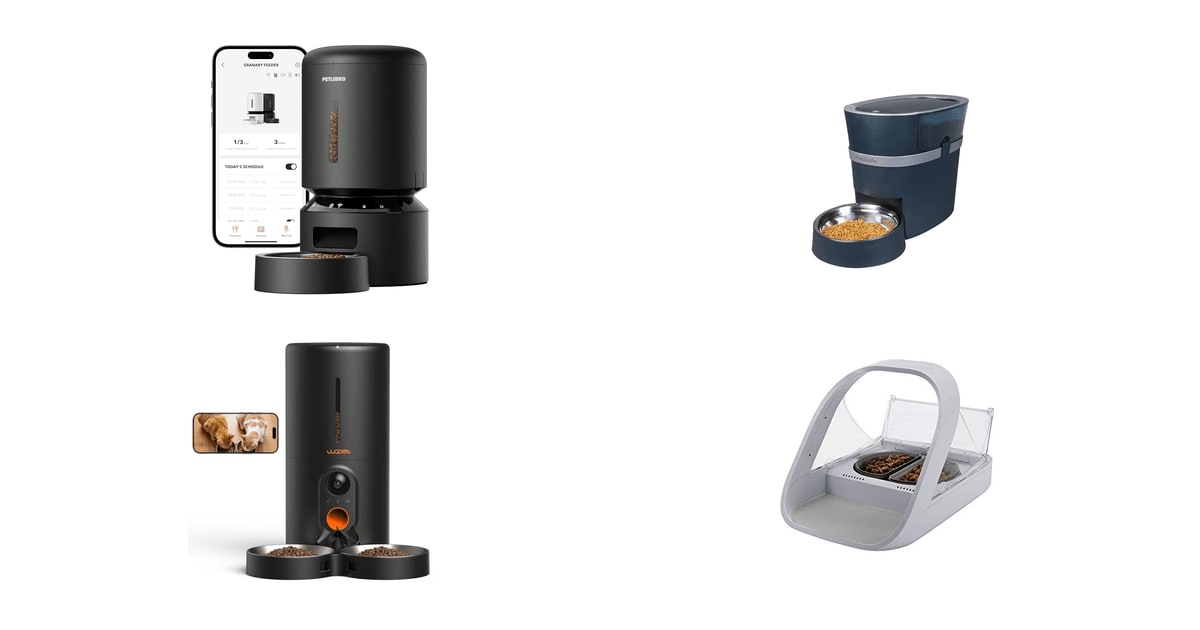
Feeding on a schedule sounds like a small thing until you're the one doing it. A cat who wakes you at five. A dog who needs a midday meal you're never home for. A vet who says the portions have to shrink, starting now. Those are the problems an automatic feeder actually solves. The good ones drop the same amount of kibble at the same time whether you're at work or three states away. Everything else — cameras, voice clips, phone alerts — is nice, but it isn't the job.
Here's the part nobody puts on the box. Every feeder in this guide is a motor pushing dry kibble down a chute, and motors wear out. Owners across all these brands describe the same arc: months of flawless meals, then a unit that resets its clock, scatters food on the floor, or quietly stops. None of them handle raw or semi-moist diets. The app-connected ones can lose your router and need re-pairing. Plan on a backup, whether that's a neighbor with a key or a second feeder in the closet.
So buy for the failure modes, not the feature list. Battery backup matters more than a camera. A jam sensor matters more than an extra scheduling slot. And if you can, run the thing at home for a couple of weeks before you lean on it for a trip, because that's when a shy cat decides a motor is terrifying. We think that the PETLIBRO Automatic Cat Feeder is the best automatic pet feeder for most people, and that the PetSafe Smart Feed is the one to buy if your pet needs many small meals a day or eats too fast.
Everything we recommend

Reliable app scheduling and battery backup, but no camera

More meals a day and a slow-feed mode for fast eaters

No app, no account, just a timer that keeps working

Locks other pets out of a prescription bowl, at a cost
At a glance
| Product | Capacity | Meals/Day | Price | |
|---|---|---|---|---|
| PETLIBRO Automatic Cat FeederTop pick | 5L | 10 Meals/Day | $71.99On sale |
| PetSafe Smart Feed Automatic Dog & CatRunner-up | — | 12 Meals/Day | $120.99On sale |
 | WOPET Automatic Cat Feeder with Camera forAlso consider | 6L | — | $90.38 |
| SureFeed Microchip Pet Feeder Connect - RequiresAlso great | 13.5 fl oz | — | $216.51On sale |
| Arf Pets Automatic Pet Feeder Food DispenserBudget pick | — | 4 Meals/Day | $82.99 |
How we picked
Power backup. A feeder that stops with the lights isn't automatic. We weighted spec sheets that list battery operation or a reserve pack, and owner accounts of meals firing through a storm outage.
Scheduling range. We compared how many meals a day each unit allows and how finely portions step. A vet plan can call for six small servings rather than two big ones, and most feeders can't do it.
Jam and low-food alerts. Kibble bridging the chute is the quiet way a meal gets skipped. Models with an infrared sensor and a phone alert ranked above ones that leave you to find out at the bowl.
Cleaning and sealing. We looked for dishwasher-safe bowls, removable hoppers and lids that genuinely seal, since stale kibble and a cat who lets herself in are both common owner complaints.
Long-run reliability. We read owner feedback well past the first few weeks, looking for patterns in how these units fail after months and what the company does about it when they do.
Top pickOn sale
Reliable app scheduling and battery backup, but no camera
PETLIBRO Automatic Cat Feeder
A five-liter hopper, up to ten meals a day, and portions that step in twelfths of a cup cover almost any dry-food routine. It runs on wall power with AA cells standing by, so a blackout while you're away doesn't turn into a skipped breakfast.
$71.99fromAmazonList priceIt gets the boring parts right, which is the whole point. The app schedules up to ten meals a day, and portions step in twelfths of a cup, so you can follow a diet without doing math at the bowl. It joins both 2.4 and 5 GHz networks, which helps when your router sits a couple of rooms from the kitchen. Owners who've kept one a while mostly describe a routine they stopped thinking about.
The five-liter hopper is the practical bit. Filled with ordinary adult-cat kibble, it covers one cat for weeks of twice-daily meals, so refilling becomes a monthly chore instead of a weekly one. A twist-lock lid, a sealing strip and a desiccant pouch keep the kibble at the bottom from going stale and soft. They also keep a determined cat from letting herself in for seconds.
The power backup is why it's the top pick. An adapter runs it day to day, and six AA cells sit in reserve. If the power drops while you're gone overnight, breakfast still happens. That's the feature owners bring up first after a storm, and it's what separates a feeder you can travel with from one you have to worry about from the road.
There's some nice behavioral engineering here too. You can record ten seconds of your own voice to play at each meal, and pets learn the cue fast — owners describe dogs sprinting to the bowl at the sound. An infrared sensor watches the chute and cuts the motor if kibble bridges the opening, and the app pings you when the hopper runs low or something gets stuck.
Flaws but not dealbreakers
There's no camera. If you want to confirm your cat actually ate, you'll need a separate one pointed at the bowl. The hopper is opaque with no window, so checking the level means lifting the lid or trusting the low-food alert.
This is an account-and-cloud product, not a local one. You'll create a login, and owners report some extras sitting behind a paid tier. The lid has to seat squarely or the seal doesn't do its job. And here's the failure worth knowing about: a real minority of owners describe units dying after a few months, with support slow to answer.
Runner-upOn sale
More meals a day and a slow-feed mode for fast eaters
PetSafe Smart Feed Automatic Dog & Cat
A stainless bowl, dishwasher-safe parts and up to a dozen meals a day, which is more scheduling room than most pets will ever need. The slow-feed mode is why dog owners pick it — food trickles out instead of dropping all at once, so a gulper can't inhale dinner.
$120.99fromAmazonList pricePetSafe is the brand your vet's office probably recognizes, and this feeder has been around long enough that owners talk about it in years rather than weeks. Several describe the same unit surviving a move or two and still hitting a morning-and-evening schedule without fuss. That track record is most of what you're paying for. The hardware itself isn't exotic.
The scheduling ceiling is the real reason to choose it. You can set up to a dozen meals a day with adjustable portions, which is what a diabetic cat or a pet on a vet-set grazing plan actually needs. Most feeders top out well below that. If the instructions from your clinic read like a medication schedule, this is the one that can follow them.
The slow-feed mode is the other standout, and it's aimed squarely at dogs. Rather than dumping the whole portion, it releases kibble gradually so a fast eater has to pace himself. Owners of big dogs who used to make themselves sick at dinner notice the difference right away. For deep-chested breeds, slowing a meal down isn't a comfort feature — it's a bloat precaution.
The bowl is stainless, the removable parts go in the dishwasher, and the lid locks so a clever pet can't pry it open. The app handles remote feeding, refill reminders and low-food alerts. Setup wants a 2.4 GHz network, so if your router hides that band under one combined name, you may have to split it before pairing.
Flaws but not dealbreakers
The bowls don't lock down. Owners describe a pet nudging one out of position and coming home to kibble scattered across the floor — an especially annoying thing to discover remotely. The hopper is also smaller than what the budget end of this lineup gives you.
Connectivity is the other recurring gripe. A router change or firmware update can drop the pairing, and you'll run setup again. Plenty of these last for years, but owners whose units quit describe a frustrating time getting help. The backup batteries aren't in the box, either.
Budget pick
No app, no account, just a timer that keeps working
Arf Pets Automatic Pet Feeder Food Dispenser
Program it on the backlit LCD and it just goes — four meals a day, portions in small steps, and a ten-second recording of your voice calling the pet to the bowl. It runs on D cells or a cord, with no app, account or network involved anywhere.
$82.99fromAmazonNo app. No account. No firmware update at the worst possible moment. You set the meal times and portion sizes on a backlit panel, hit confirm, and walk away. For a parent's house, a cabin, or anyone who'd rather not add one more login to their life, that isn't a compromise. It's the feature.
Portions come in units of roughly 24 ml, one to ten per meal, up to four meals a day. That covers the standard breakfast-and-dinner routine with room to split lunch in. The lid locks magnetically, and it runs off three D cells or the DC cable, so it doesn't have to live next to an outlet.
It's the one people keep buying again. Owners describe units running for years — some of them outdoors, against manufacturer advice, raccoons and all. A full hopper can carry a single cat for around ten days, which is plenty to bridge a long weekend without a sitter, and the whole thing is programmed in under ten minutes.
The voice recording earns its keep here more than anywhere else. Ten seconds of you calling the cat plays at each meal, and pets link the sound to food within days. That matters on a feeder with no app, because nothing is going to tell you the meal fired. The pet showing up is your confirmation.
Flaws but not dealbreakers
There's no jam sensor. If irregular kibble bridges the chute, nothing tells you, and you won't know until you look in the bowl. There's no remote anything, either — changing tomorrow's schedule means standing in front of it.
Four meals a day is the hard ceiling, which rules it out for high-frequency vet plans. The display washes out in bright light, the build feels lighter than the pricier units here, and some owners describe the clock resetting itself after a few months, which means missed meals until somebody notices.
Also greatOn sale
Locks other pets out of a prescription bowl, at a cost
SureFeed Microchip Pet Feeder Connect - Requires
It reads your pet's microchip and opens the lid only for the animal you enrolled, so the cat on a prescription diet keeps her food to herself. The bowl takes wet or dry, weighs to the gram, and reports each pet's intake to the app once you add the hub.
$216.51fromAmazonList priceThis is the only one that decides who gets to eat. It reads the ISO microchip your vet already implanted, or an RFID collar tag, and the lid opens for that animal alone. Every other feeder here drops food into an open bowl any pet in the house can raid. If one cat is on a prescription diet and another one wants it, that difference is the entire ballgame.
It also holds wet food, which nothing else in this guide will do. The bowl takes about 13.5 fluid ounces of wet or dry, and a neoprene lip seals against the lid to slow it drying out between visits. Built-in scales weigh what's in the bowl to within a gram, and LEDs walk you through filling to the portion you set in the app.
Paired with the hub, the app logs how much each enrolled pet eats and how long they linger at the bowl. That's genuinely useful for an older cat, since a slow decline in intake often shows up in the numbers before it shows up in the animal. Owners managing kidney diets, allergies and post-surgical feeding are the ones who talk about this feeder in relieved terms.
Flaws but not dealbreakers
It isn't a scheduler. You fill the bowl; the feeder controls access, not timing. If what you want is meals appearing while you're at work, this is the wrong tool. The hub you need for app features is a separate purchase, so the real cost lands higher than the listing suggests.
The access control isn't airtight. Owners describe a determined second cat timing the lid, or the lid not closing fast enough once the enrolled pet steps away. Setup takes patience, the open back of the housing is a long-standing complaint, and the four AA cells drain faster the more the lid cycles.
Who this is for
Get one of these if your pet eats dry kibble on a schedule and you're not always home to serve it. They're at their best for portion control — a cat who'd eat until she's sick, a dog on a weight plan — and for covering a long workday or a weekend away. If you free-feed and your pet self-regulates, you don't need one. And if your animal is a determined problem-solver, budget for the fact that some of them learn to defeat a lid.
A few limits worth knowing. Everything here except the SureFeed is a dry-kibble machine, so raw, wet and semi-moist diets are out. None of these replace a sitter past a couple of days, because water, litter and company still need a human. This guide covers food only — water fountains are a separate product with a much heavier cleaning burden, and we haven't ranked them here.
How we picked
Power: a feeder that dies with the lights isn't automatic, so battery operation or a reserve pack counted heavily. Scheduling: we compared meals per day and how finely each portion steps, because a vet plan can ask for six small servings instead of two. Jams: kibble bridging the chute is the quiet way a meal gets skipped, so infrared sensors and phone alerts moved units up the list. Cleaning: dishwasher-safe bowls, removable hoppers, and lids that seal against both air and a determined cat. Longevity: we read owner feedback well past the honeymoon period, looking for how these break after months and what support does about it.
Other automatic pet feeders worth considering
If you want to watch your pet eat: The WOPET Automatic Cat Feeder with Camera for ($90.38) — The WOPET is the only feeder here with a camera built in — 1080p, night vision, a wide lens that tilts so you can frame a cat's head instead of the ceiling, plus two-way audio and local SD storage. Its six-liter hopper is the biggest in this lineup, and the dual chute splits food into two bowls, which cuts down the shoving in a two-cat house. What you give up is track record. It's a newer listing with far less owner history than the picks, and what exists skews toward setup friction: confirmation codes that don't arrive, units that won't join Wi-Fi until you pull the batteries, connections that drop. Owners also describe portioning that wanders at the smallest sizes, so it's not the one for a strict calorie target.
The competition
A word on what's here and what isn't. This guide covers the feeders that came up repeatedly in published roundups and that have enough owner history behind them to say something honest about — not the whole aisle. Every one of them earned a spot above, which is partly a sign of a small, well-sorted field and partly a warning. There are dozens of near-identical hopper feeders sold under names you've never heard, often from the same factory, and we'd rather point you at the ones people have actually lived with than pad out a list.
Setup and everyday care
Run any new feeder at home for two full weeks before you leave it in charge. Watch a few meals land, check that the portions match what you set — a kitchen scale settles it in a minute — and give a nervous cat time to decide the motor isn't a threat. Finding out on day one of a trip that your cat won't go near it is a miserable way to learn. After that, keep it simple: wipe the bowl daily, pull and wash the hopper every few weeks, and let everything dry completely before refilling, because damp kibble is what jams these things. Buy kibble inside the size range your feeder lists, and keep spare batteries in the drawer.
Questions we get
Which automatic feeder should most people buy?
The PETLIBRO. It covers the ordinary case well — up to ten meals a day, fine portion steps, a sealed hopper and battery backup — without asking you to buy accessories to unlock it. If someone in your house is on a prescription diet and another pet keeps stealing it, the SureFeed is the only model here that solves that problem.
Can these dispense wet food?
Only the SureFeed, and it isn't really dispensing — it covers a bowl you filled yourself and opens for the right pet. Hopper-and-auger feeders are built for dry kibble in a fairly narrow size range. Wet food spoils at room temperature inside the chute and clumps badly enough to jam the mechanism.
Is it safe to leave a pet alone for a weekend with one?
With a few precautions, yes. Choose a model with battery backup so an outage doesn't cancel meals, load the hopper well past what the trip needs, and run the feeder for a couple of weeks beforehand. Past two or three days, still arrange for someone to check in — water, litter and company aren't things a feeder handles.
What's best for a big dog that eats too fast?
The PetSafe, because of its slow-feed mode. It releases the portion gradually instead of dropping it all at once, and owners of large dogs say that ends the gulp-and-vomit routine at dinner. Slowing meals down also reduces bloat risk in deep-chested breeds. Very large dogs eating several cups a day will outgrow every hopper in this guide, though.
Do I actually need Wi-Fi?
No. The Arf Pets runs entirely from its own panel with no app, account or network, and owners keep them going for years that way. What you lose is remote schedule changes, feeding logs, and any warning when something jams. If you travel and want to confirm a meal fired, get a connected one.
Does this guide cover water fountains?
No, this one's about food. Hydration does matter for cats, and a circulating fountain encourages many of them to drink more than a standing bowl does. But fountains carry a real maintenance load: a rinse and refill every few days, a full strip-down wash weekly, and filter changes on the manufacturer's schedule. Skip that and you're growing biofilm in your cat's water.
Why you should trust us
For this guide:
- We read the manufacturer spec sheets and listing details for every feeder here, lining up hopper size, meal limits, portion steps and power options side by side.
- We went through published roundups and long-run owner feedback for each model, weighting what people say after several months over first impressions.
- We read owner reviews on every listing, weighted toward the critical ones, because that is where the recurring failures show up.
- We have a systematic way of automatically fetching the latest prices, so the numbers on this page stay current.
- This is a research-focused guide, so the team may not own every product listed — though we often do own the top winners, which gives us extra context for the recommendations.
- We don't accept free products, and the retailer commission never changes which product we recommend.
Sources
Best Automatic Cat Feeders — Wirecutter / The New York Times, Wirecutter / NYT
Best Automatic Pet Feeders — Forbes Vetted, Forbes Vetted
Best Pet Water Fountains — Wirecutter / The New York Times, Wirecutter / NYT
Automatic Pet Feeder Reviews — Consumer Reports, Consumer Reports
Best Automatic Cat Feeders Tested by Vets — PetMD, PetMD
Feline Lower Urinary Tract Disease and Water Intake — Cornell Feline Health Center, Cornell Feline Health Center
Best Pet Water Fountains — CNET, CNET
Best Automatic Dog Feeders — Dog Food Advisor, Dog Food Advisor
Amazon product listings and owner reviews for all 5 products
Manufacturer specification pages for each product
Some passages in this guide may be paraphrased with AI help. Prices are refreshed automatically.
More like this.
Continue exploring pet reviews and recommendations.

The Best Automatic Pet Feeders
An automatic feeder earns its spot on the kitchen floor the first morning you don't get woken at 5 a.m. It also helps if you work long shifts, your cat's…

The Best Automatic Pet Feeders
Feeding a pet on a schedule sounds simple until your life stops cooperating. You get stuck in traffic, a meeting runs long, or you're gone for two nights.…

The Best Automatic Dog Feeders
Your dog knows when dinner is late. A feeder that runs on a schedule takes that pressure off you - the meeting that runs long, the flight that boards at…

The Best Automatic Cat Feeders
An automatic feeder solves a small problem you deal with every single day. Your cat wants breakfast at 5 a.m. You want to sleep. A feeder handles the…

The Best Automatic Chicken Coop Doors
The riskiest twenty minutes of your chickens' day happen right at dusk. That's the gap between when your hens have settled onto the roost and when you…

The Best Automatic Water Shutoff Valves
A burst supply line doesn't wait for you to get home. Water runs at whatever pressure your main delivers, and it keeps running until somebody turns it off…