The Best Bookshelf Speakers
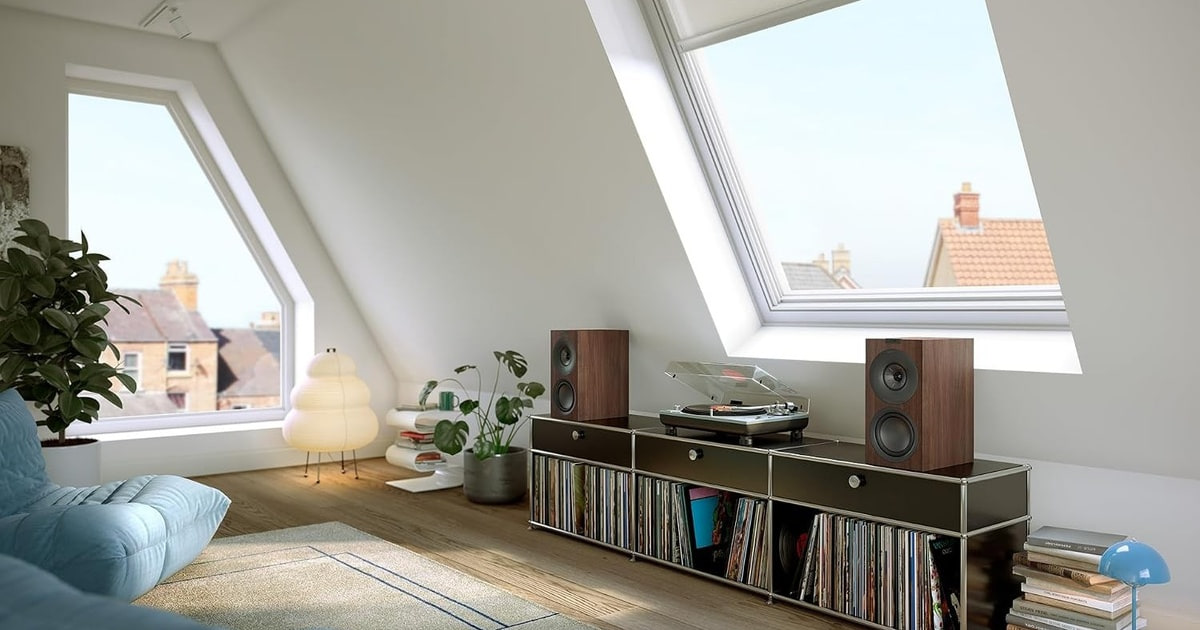
A good pair of bookshelf speakers changes how music sounds in your home more than almost any other upgrade. Two boxes, spaced a few feet apart, can put a singer in the middle of your room and the guitar player off to the left. A soundbar can't do that, and neither can a smart speaker. You don't need a big room either. A desk, a credenza behind the couch, or a pair of stands in an apartment living room all work. What you do need is a little thought about placement and, for most models, something to power them.
Here's the honest part. No bookshelf speaker makes real bass. Physics gets in the way: a 5-inch woofer in a small box can't move enough air to give you the bottom octave, and the ones that dig deepest do it by being big, heavy, and expensive. Most of these roll off somewhere between 45 and 60 Hz, so kick drums sound tight rather than powerful and movie explosions land as thumps. If you want chest-punch bass, you'll add a subwoofer eventually. Plan for it and you won't be disappointed.
The other thing nobody tells you is that half the sound is the room. Shove a ported speaker against a wall and the bass turns boomy and vague. Pull it out 6 to 12 inches and it tightens up, per Consumer Reports. Get the tweeters near ear height and the imaging snaps into focus. We think that the Klipsch Reference Premiere RP-600M II is the best bookshelf speaker for most people, and that the ELAC Debut ConneX DCB41 is the one to buy if you don't want to own an amplifier at all.
Everything we recommend

Lively, efficient, and easy on a modest amplifier

A whole stereo system in two boxes, no receiver needed
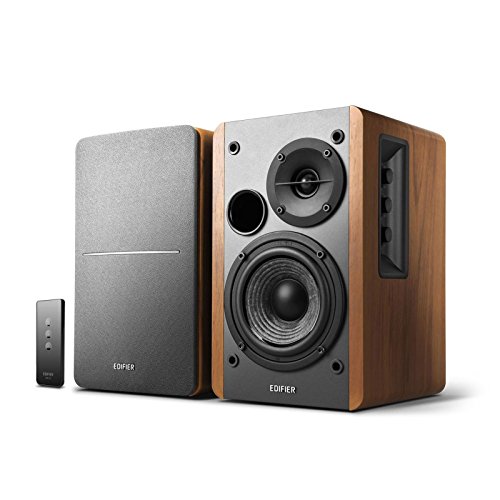
Real stereo on a desk for very little money

Three-way sound and a huge sweet spot from a stand-mount

A three-driver design for the price of a two-way
Prices as of Oct 24, 6:27 AM PT · Details
At a glance
| Product | Woofer size | Powered or passive | Price | |
|---|---|---|---|---|
| Edifier R1280T Powered Bookshelf Speakers -2.0 NearBudget pick | 4 in. full range | Powered | $117.99On sale |
| Sony SS-CS5M2 3-Way 3-Driver Hi-Res Compact BookshelfRunner-up | 5.12 in. | Passive, 3-way | $208 |
| ELAC DCB41-OR - Debut ConneX 4.5" PoweredAlso great | 4.5 in. | Powered | $524 |
 | Q Acoustics 3020c Bookshelf Speakers Pair PinAlso consider | 4.75 in. | Passive, 2-way | $639 |
| KEF Q Concerto Meta Bookshelf SpeakersUpgrade pick | 6.5 in. | Passive, 3-way | $1,399.99 |
| Klipsch Reference Premiere RP-600M II Ebony BookshelfTop pick | Cerametallic | — | $449.99 |
 | Bowers & Wilkins 606 S2 Anniversary EditionAlso in lineup | 6.5 in. Continuum | Passive, 2-way | $899.99 |
 | SVS Ultra Evolution Bookshelf Speakers - PairAlso consider | Dual opposing | Passive, 3-way | $1,199 |
Prices as of Oct 24, 6:27 AM PT · Details
How we picked
Sound and tuning. We read published measurements and reviews from outlets like RTINGS.com, What Hi-Fi, Stereophile, and Sound & Vision, prioritizing speakers with reasonably flat response and controlled off-axis behavior. A speaker that measures within a few dB across the midrange is far more likely to sound right in a real room.
Amplifier match. We compared published sensitivity and impedance specs against what a typical receiver can actually deliver. Anything that demands an exotic amplifier to sound its best got marked down, since most buyers pair these with gear they already own.
Bass extension. We looked at manufacturer frequency-response figures and third-party in-room measurements to see how low each design really goes. We favored speakers that reach into the 40s without resorting to a bloated port tuning that muddies the midbass.
Cabinet and build. Spec sheets and reviews told us about bracing, cabinet weight, and finish quality, all of which correlate with how little the box adds to the sound. Weight per speaker turned out to be a useful proxy for how seriously a maker treated the enclosure.
Connections and setup. For powered models we compared input lists against what people actually connect: a TV, a turntable, a laptop, a phone. For passive models we checked binding-post quality, grille hardware, and whether port bungs or feet come included.
Top pick
Lively, efficient, and easy on a modest amplifier
Klipsch Reference Premiere RP-600M II Ebony Bookshelf
The RP-600M II pairs a horn-loaded titanium tweeter with a 6.5-inch Cerametallic woofer, and its high sensitivity means a cheap receiver can drive it loud. It's the rare speaker that works as well for movies as it does for records.
$449.99fromAmazonPrices as of Oct 24, 6:27 AM PT · Details
If you're buying one pair of speakers and a modest receiver, this is the pair to buy. Sound & Vision lists the RP-600M II at 96dB sensitivity. That number matters more than most shoppers realize. Crutchfield notes that every 3dB of sensitivity you give up requires double the amplifier power to hit the same volume. So a 50-watt receiver driving these plays about as loud as a 200-watt amp driving a typical 90dB speaker. You get headroom without spending it on watts.
The Tractrix horn is the other half of the story. Klipsch widened it to a 90-by-90-degree pattern on this generation, and a horn does something a plain dome tweeter doesn't: it aims the treble at you and keeps it off your ceiling and side walls. In a live room with hardwood floors and not much furniture, that's a real advantage. You hear the recording instead of the reflections.
These speakers lean bright and forward, and whether that's a plus depends on you. Rock, hip-hop, and action movies come alive. The snare has crack, the horn section has bite. If your listening skews toward acoustic jazz and solo piano at low volume, you might find the presentation a bit hot. That's a taste question, not a flaw, and owners on both sides of it are consistent about what they hear.
The cabinet is a genuinely nice piece of furniture. It's a 15.75-inch-tall box with dual binding posts for bi-wiring or bi-amping, and Klipsch's Tractrix port geometry on the back. You probably won't bi-wire. But the dual posts also mean better contact and a heavier terminal block, which is the kind of build detail that separates this from an entry-level speaker.
For home theater, this is the easy call. Klipsch sells matching center and surround speakers in the same Reference Premiere line, so you can start with a stereo pair and grow into 5.1 without a timbre mismatch. The high sensitivity helps here too, since an AV receiver splitting power across five or seven channels has less to give each one.
Flaws but not dealbreakers
The forward treble is the main thing to know. On poorly recorded or heavily compressed tracks, the RP-600M II won't hide the problem the way a softer speaker does. Some owners solve this with a warmer amplifier or a slight EQ cut in the presence region, and that works fine.
At 18 pounds each and nearly 16 inches tall, these aren't small. They need real stands or a deep shelf, and the rear port means you can't jam them against a wall without the bass going soft and thick.
Also great
A whole stereo system in two boxes, no receiver needed
ELAC DCB41-OR - Debut ConneX 4.5" Powered
The Debut ConneX DCB41 has 160 watts of amplification built in, plus HDMI eARC, USB audio, Bluetooth aptX, optical, and a phono preamp. Plug in a turntable and a TV and you're done, with no rack of gear.
$524fromAmazonPrices as of Oct 24, 6:27 AM PT · Details
This is the pick if the idea of shopping for an amplifier makes you want to give up. ELAC put 160 watts of total power inside these, per Sound & Vision, along with a DAC and a phono stage. Your turntable connects directly. So does your TV, over HDMI eARC, which also means your TV remote controls the volume. Wirecutter specifically recommends powered speakers like these for buyers who don't want a separate receiver, and that logic holds up.
The input list is the real feature. USB audio for a laptop, optical for a game console, Bluetooth aptX for a phone, analog RCA for anything else, and a switchable phono input for a moving-magnet cartridge. Most powered speakers give you two of those. Having all of them means the DCB41 can be the only audio device in a small living room, and you can rearrange your setup later without buying an adapter.
The drivers are modest by design. A 4.5-inch long-throw woofer with a wide-rolled surround does what it can, and ELAC's XBass enhancer nudges the low end up when you want it. Bass reflex porting fires out the back. On a desk or a small shelf, this is plenty. In a big open room, it isn't, and you should look at the passive picks instead.
A custom waveguide sits around the tweeter to control how the treble spreads out. In practice that helps if you're sitting off to one side, which on a desk you often are. The DCB41 also comes in colors that aren't black, including the orange finish here, which is a small thing until you have to look at speakers on your desk every day.
Flaws but not dealbreakers
Owner feedback on this listing is thin and mixed, which is worth knowing before you commit. Reports of connectivity quirks with certain HDMI sources come up, and there's no clean way to work around a handshake problem other than switching inputs.
You're buying the amplifier and the speaker together, permanently. If the electronics fail out of warranty, you've lost the whole system, not one component. Passive speakers don't have that failure mode.
The 4.5-inch woofer sets a hard ceiling on bass and on how loud these get before they strain. If you host parties or watch movies at reference volume, this isn't the right tool.
Budget pickOn sale
Real stereo on a desk for very little money
Edifier R1280T Powered Bookshelf Speakers -2.0 Near
The R1280T has a 42-watt-per-channel amplifier inside, two RCA inputs, a remote, and bass and treble knobs on the side. It's a simple, honest way to get real stereo separation instead of sound from a single Bluetooth box.
$117.99fromAmazonList pricePrices as of Oct 24, 6:27 AM PT · Details
Nearly 20,000 people have rated these, and the enthusiasm is remarkably consistent. TechHive notes the built-in 42-watt-per-channel Class AB amplifier, which makes the R1280T a complete desktop stereo system on its own. Plug in your computer, plug in a turntable through a preamp, and you have music. No receiver, no speaker wire runs, no research required.
For a desk, the small drivers are an advantage. A 4-inch full-range unit and a 13mm silk dome tweeter, sitting two feet from your face, put a clean and surprisingly wide image between the two boxes. Big woofers on a desk mostly excite the desk. These don't. If you've been listening to a laptop or a single smart speaker, the jump is dramatic.
The controls are on the side of the powered speaker rather than buried in an app. Bass, treble, and volume, all physical knobs, plus a small remote. That sounds quaint. But you'll actually use them, because desktop listening changes constantly between video calls, YouTube, and music, and reaching over to turn the bass down takes two seconds.
Two RCA inputs mean two sources connected at once with no switching. A computer on one, a turntable or a TV on the other. The MDF cabinets with wood-effect vinyl aren't fooling anyone up close, but from across a desk they look considerably better than plastic.
Flaws but not dealbreakers
There's no Bluetooth on this model. Everything connects by cable, which is fine on a desk and annoying anywhere else.
Bass is limited in the way a 4-inch driver always is. These don't so much roll off as simply stop, and if you want low end you'll need a subwoofer with a line-level input.
The amplifier and speaker are one unit, so a failure takes out both. At this price that's a reasonable trade, but it's still a trade.
Upgrade pick
Three-way sound and a huge sweet spot from a stand-mount
KEF Q Concerto Meta Bookshelf Speakers
The Q Concerto Meta is the first three-way bookshelf in KEF's Q line, combining a 6.5-inch aluminum bass driver with a 12th-generation Uni-Q array. It reaches 40Hz and holds its imaging even when you're not sitting dead center.
$1,399.99fromAmazonPrices as of Oct 24, 6:27 AM PT · Details
The Uni-Q array is the reason to want these. KEF mounts the tweeter in the throat of the midrange cone, so both come from the same point in space. What Hi-Fi describes the coincident layout as producing a wider and more consistent off-axis sweet spot than side-by-side drivers. In practice that means the stereo image doesn't collapse when you slide down the couch. If more than one person listens at a time, that's worth real money.
Going three-way solves a problem two-way speakers live with. The 6.5-inch aluminum bass driver handles only bass, so it never has to reproduce a voice while it's also moving a lot of air. Vocals stay clean at volume. The listing rates the frequency range at 40Hz to 20kHz at -6dB, with typical in-room extension to 36Hz, which is genuinely low for a box this size.
KEF's Metamaterial Absorption Technology sits behind the tweeter and absorbs 99% of the sound radiating backward, and Shadow Flare geometry smooths the cabinet edge around the driver. Both address the same problem: energy that arrives at your ear slightly late and smears detail. The audible result is treble that sounds calm rather than etched, even when you turn it up.
These are a 4-ohm load and want an amplifier rated between 15 and 180 watts. That's not exotic, but a bargain-bin receiver may struggle with the low impedance. Budget for a decent integrated amp alongside them. Grilles, port bungs, and rubber feet come in the box, and the port bungs matter if you end up placing these closer to a wall than you'd like.
Flaws but not dealbreakers
At 20.9 pounds and 16.3 inches tall, these are only nominally bookshelf speakers. They need sturdy stands and a room with some space, and they'll look oversized on a small shelf.
The 4-ohm rating narrows your amplifier options. Cheap AV receivers often specify 6 or 8 ohms, and while most will drive these at moderate volume, you're leaving performance on the table.
This is one of the more expensive pairs here, and the amplifier it deserves adds to that. If you're not going to feed it properly, the Klipsch gets you closer to its potential for less.
Runner-up
A three-driver design for the price of a two-way
Sony SS-CS5M2 3-Way 3-Driver Hi-Res Compact Bookshelf
The SS-CS5M2 gives you a 5.12-inch woofer, a tweeter, and a separate super tweeter in a compact cabinet. CNET has long noted how unusual a real 3-way layout is at this price, and that hasn't changed.
$208fromAmazonPrices as of Oct 24, 6:27 AM PT · Details
Sony has been making a version of this speaker for years, and it keeps showing up on shortlists for one reason: you get three drivers where competitors give you two. A 5.12-inch woofer covers the bottom, a high-precision tweeter handles the treble, and a wide-dispersion super tweeter extends the top end. Splitting the work that way keeps the woofer out of the vocal range.
If you're stepping up from a soundbar, this is the least risky place to start. These are passive, so you'll need a receiver or an integrated amp, and a basic one is fine. Nothing here is hard to drive or fussy about placement. The bass reflex enclosure gives you more low end than the cabinet size suggests, though it also means keeping some distance from the wall behind.
The super tweeter gives these an airy, open quality on cymbals and strings that budget two-ways often flatten out. It's the kind of difference you notice when you switch back. Sony aims this at hi-res sources, and while the marketing around that gets overstated, the audible effect is real enough.
At 13.2 inches tall and narrow, they fit places the Klipsch and the KEF won't. A real bookshelf, a wide TV stand, a pair of small stands in a bedroom. If space is the constraint and you still want passive speakers, this is the practical answer.
Flaws but not dealbreakers
The cabinet is where Sony saved money. It's lighter and less braced than the pricier picks here, and at high volume you can hear the box contributing.
Dynamics are modest. These sound composed at moderate levels and get congested when pushed, so a large or loud room isn't their environment.
The finish is plain black vinyl with no alternatives. Functional, not attractive.
Who this is for
Buy a pair of bookshelf speakers if you're tired of everything sounding like it comes from one place. That's the single biggest change, and it applies whether you're upgrading from a soundbar, a Bluetooth speaker, or laptop speakers. Vinyl listeners building a first system belong here too, since a turntable into an amp into two good speakers is still the most satisfying way to spend a moderate audio budget. So do desktop listeners, who get more from near-field stereo than from anything else at the same cost.
Skip these if you mainly want bass, or if you can't put speakers anywhere except pressed against a wall or crammed in a bookcase. Both situations undercut what these do well. This guide covers stand-mount and desktop speakers only. Floorstanders, in-wall speakers, subwoofers, soundbars, and full home-theater packages are out of scope, and so are portable Bluetooth speakers. If you're building a surround system, start with a stereo pair from a line that also sells a matching center channel.
How we picked
We started from published measurements, manufacturer spec sheets, and owner feedback themes rather than marketing copy. Sound and tuning: we favored flat, predictable response and controlled dispersion, since a speaker that behaves off-axis works in a real room with real furniture. Amplifier match: sensitivity and impedance had to make sense for a mainstream receiver, because a speaker you can't properly drive is a speaker you won't enjoy. Bass extension: we wanted honest low-end reach into the 40s rather than a boomy port tuning that fakes it. Cabinet and build: bracing, weight, and finish quality separate speakers that sound like music from ones that sound like a box. Connections and setup: for powered models the input list decides whether you'll need extra gear, and for passive models the small stuff like binding posts and port bungs matters more than it should.
Other bookshelf speakers worth considering
If you want warm, forgiving sound from a small amp: The Q Acoustics 3020c Bookshelf Speakers Pair Pin — Q Acoustics built its reputation on speakers that make ordinary equipment sound good, and the 3020c continues that. What Hi-Fi gave the earlier 3020i its Best Budget Stereo Speakers award and singled out how balanced it stayed even with sub-50W amplifiers, which is exactly the situation most first-time buyers are in. The C3 continuous curved cone and point-to-point bracing keep the cabinet quiet, and the 4.75-inch driver and 0.9-inch tweeter are tuned to smooth over harsh recordings rather than expose them. You give up the dynamic punch of the Klipsch and the bass reach of the KEF. What you get is a speaker that's pleasant for hours and never picks a fight with your source.
If you want the deepest bass a stand-mount can manage: The SVS Ultra Evolution Bookshelf Speakers - Pair — The SVS Ultra Evolution Bookshelf uses dual opposing woofers on the top and bottom of the cabinet in a force-balanced array, which cancels cabinet vibration and spreads bass more evenly through the room. Audioholics measured the previous SVS Ultra Bookshelf reaching roughly 48Hz in-room, deeper than a two-way stand-mount usually manages, and this three-way design pushes further. A diamond-coated aluminum dome tweeter and time-aligned cabinet architecture round out an unusually ambitious package, and the piano gloss finish looks the part. The catch is cost and size. It's the most expensive speaker here by a wide margin, it needs a serious amplifier, and it wants stands and space to do what it does.
The competition
This is what our research surfaced, not a survey of every bookshelf speaker sold. Plenty of good models from other brands didn't make the shortlist simply because they weren't part of this lineup. The speaker below is a legitimate choice that lost out to a pick for specific reasons.
The Bowers & Wilkins 606 S2 Anniversary Edition — The Bowers & Wilkins 606 S2 Anniversary Edition is a genuinely excellent speaker and the most detailed-sounding option here after the KEF. Its 6.5-inch Continuum cone was developed to resist the harsh breakup distortion that stiffer cone materials produce at volume, per Stereophile, and the 1-inch decoupled double dome aluminum tweeter is mounted in a gel-damped assembly to keep cabinet vibration out of the treble. The Flowport with its dimpled surface and included foam plug gives you some control over bass in tight placements. It lost to the KEF Q Concerto Meta on two counts: it's a two-way rather than a three-way, so the woofer handles vocals as well as bass, and the Uni-Q array gives the KEF a wider usable listening area. Owner feedback on this listing also runs less enthusiastic than for the other premium options. Still, if you sit in one seat and value midrange refinement above all, this is a fine speaker and the S2 Anniversary tuning has a following for good reason.
Placement and setup
Get placement right and you'll gain more than you would by spending more. Pull ported speakers 6 to 12 inches off the wall behind them, which Consumer Reports notes meaningfully reduces boomy bass buildup in small and medium rooms. Get the tweeters roughly at ear height when you're seated, which usually means stands rather than a shelf, and angle them slightly toward your listening position. Space the pair about as far apart as you sit from them. Isolation pads or spikes help on a desk or a resonant surface, since a speaker that shakes the furniture is adding sound you didn't ask for. If you have to place them close to a wall, use the port bungs or foam plugs if your speakers include them. Give new speakers some hours of normal playing before you judge the bass, since surrounds loosen a bit with use.
Questions we get
Are bookshelf speakers better than a soundbar?
For music, yes, and it isn't close. Two separated speakers create real stereo imaging that a single bar can only simulate. Soundbars win on convenience and on fitting under a TV without cables running across the room. If you mostly watch TV and want one box, get a soundbar; if you listen to music, get speakers.
Do bookshelf speakers need a subwoofer?
Most people eventually add one. Bookshelf speakers typically roll off in the 40s or 50s of hertz, so you lose the bottom octave that gives movies weight and electronic music its foundation. For acoustic music at moderate volume, a good pair alone is satisfying. If you're building a home theater, plan on a subwoofer from the start.
What's the difference between active and passive bookshelf speakers?
Active or powered speakers have the amplifier built in, so you connect a source directly and you're done. Passive speakers need a separate amplifier or receiver plus speaker wire. Passive designs generally sound better per dollar because you're not paying for electronics inside the box, but they cost more overall once you buy the amp. Powered models like the ELAC DCB41 and the Edifier R1280T exist precisely to skip that step.
What amplifier wattage do I need?
Less than you'd think, and sensitivity matters more than watts. Crutchfield's rule is that a 3dB difference in sensitivity requires double the amplifier power for the same perceived loudness. A 96dB speaker like the Klipsch RP-600M II plays plenty loud on 30 or 40 watts, while a less sensitive 4-ohm design like the KEF wants a sturdier amp. Check the manufacturer's recommended power range and stay within it.
Do bookshelf speakers need stands, or can they sit on a shelf?
Stands are noticeably better. They get the tweeters to ear height, keep the cabinet from coupling to furniture, and give rear ports room to breathe. Isolation pads help when stands aren't an option. A speaker crammed into a bookcase with the port two inches from the back panel will sound thick and vague no matter how good it is.
What's the best bookshelf speaker for a small apartment?
For a desk or a small room where you don't want a receiver, the ELAC Debut ConneX DCB41 handles a TV, a turntable, and a laptop on its own. If you have an amplifier already and space is tight, the compact Sony SS-CS5M2 fits shelves the larger picks won't. Either way, keep some distance from the wall behind and expect to listen at lower volumes than a big room allows.
Why you should trust us
For this guide:
- We read published measurements and reviews from RTINGS.com, What Hi-Fi, Stereophile, Sound & Vision, Audioholics, CNET, TechHive, Consumer Reports, and Crutchfield alongside each manufacturer's own specifications.
- We compared sensitivity, impedance, frequency-response figures, driver configurations, and cabinet construction across every model in this lineup.
- We reviewed recurring themes in owner feedback for each speaker, particularly around amplifier matching, placement, and long-term reliability.
- We read owner reviews on every listing, weighted toward the critical ones, because that is where the recurring failures show up.
- We have a systematic way of automatically fetching the latest prices, so the numbers on this page stay current.
- This is a research-focused guide, so the team may not own every product listed — though we often do own the top winners, which gives us extra context for the recommendations.
- We don't accept free products, and the retailer commission never changes which product we recommend.
Sources
Best Bookshelf Speakers of 2026 - Wirecutter, Wirecutter
Klipsch RP-600M II Bookshelf Speaker Review, Sound & Vision
KEF Q150 Review, What Hi-Fi
Q Acoustics 3020i Review, What Hi-Fi
Bowers & Wilkins 606 S3 Review, Stereophile
SVS Ultra Bookshelf Speaker Review, Audioholics
Best Bookshelf Speakers Tested - RTINGS.com, RTINGS.com
Sony SS-CS5 Review, CNET
Edifier R1280T Review, TechHive
How to Match Speaker Sensitivity to Amplifier Power, Crutchfield
Consumer Reports: Home Audio Speaker Buying Guide, Consumer Reports
ELAC Debut ConneX DCB41 Review, Sound & Vision
Amazon product listings and owner reviews for all 8 products
Manufacturer specification pages for each product
Some passages in this guide may be paraphrased with AI help.
Product prices and availability are accurate as of the date/time indicated and are subject to change. Any price and availability information displayed on Amazon.com at the time of purchase will apply to the purchase of this product.
More like this.
Continue exploring electronics reviews and recommendations.

The Best Car Speakers and Stereo Systems
A car stereo is the one piece of gear in your car you touch every single day. You reach for it before you've backed out of the driveway, and you're still…

The Best Waterproof Outdoor Bluetooth Speakers
A speaker that lives outdoors leads a rough life. It gets set down in wet sand, splashed by a cannonball, knocked off a picnic table, and left in a hot…

The Best Smart Humidifiers
Dry indoor air shows up in small ways first. Your lips crack, the hardwood gaps open, and you shock yourself on the doorknob every time you reach for it.…

The Best Backup Cameras for Car Safety
Backing out of a driveway is one of the few things you do in a car with almost no information. Mirrors miss the ground directly behind your bumper, and…

The Best Webcams for Streaming and Video Calls
Most of us are on camera more than we'd like to admit. A morning standup, a client call, a Sunday-night stream - and the laptop's built-in camera makes…

The Best MagSafe Accessories for iPhone
Magnets changed how you use your phone, and most people don't notice until the magnets are bad. A good MagSafe accessory snaps into place on the first…