The Best Bullet Journals
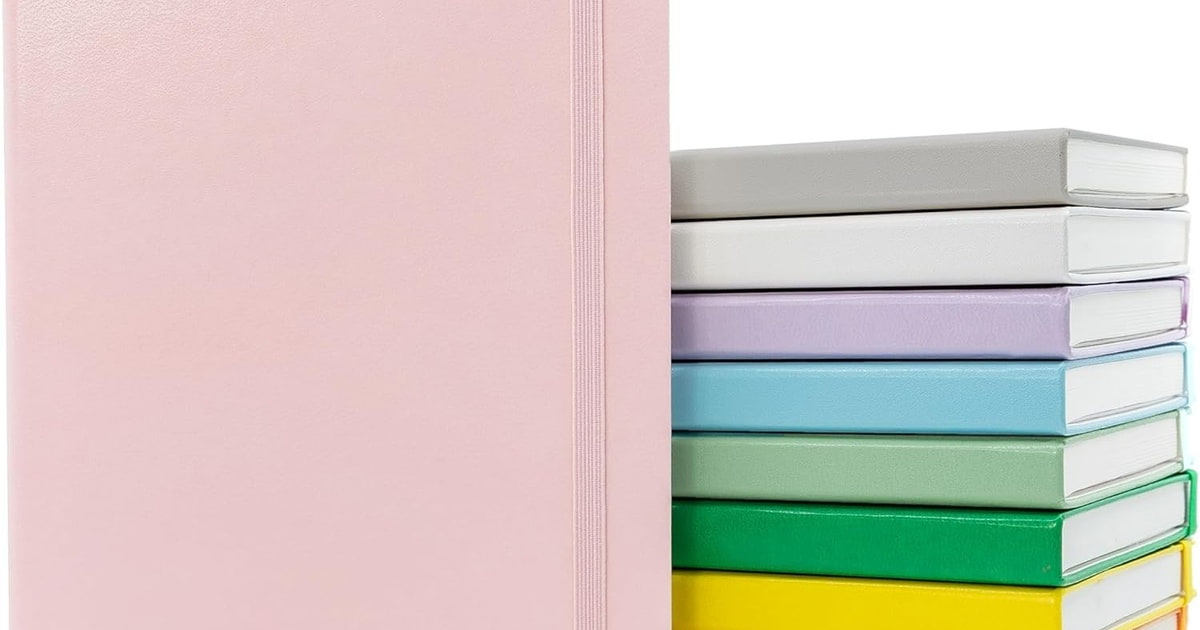
A bullet journal is just a notebook you bring your own system to. But the notebook still matters, because you'll open it several times a day for months. The paper decides whether your pens ghost through to the next page. The binding decides whether the book lies flat or fights you at the gutter. And the small stuff — an index, numbered pages, a pocket in the back, a band that holds it shut in a bag — is the difference between a journal you keep up with and one you abandon by March.
Here's the honest part: no notebook does everything. Thick paper that stops fountain pen bleed makes the book heavier and thicker for the same page count. Thin paper keeps it slim and pocketable, but a wet gel pen will show through. Cream pages are easy on the eyes and terrible for photographing spreads. Dot grids that are dark enough to follow are also dark enough to see under your finished layout. You're picking which compromise you can live with, not finding a notebook without one.
So the right choice depends mostly on what you write with. Heavy-ink people — fountain pens, brush pens, markers — should pay for thick paper and accept the bulk. Everyone else can get a lovely book for a lot less. We think that the LEUCHTTURM1917 120G Special Edition is the best bullet journal for most people, and that the PAPERAGE Dotted Journal is the one to buy if you want the same core layout without spending much.
Everything we recommend
Thick paper and every organizing feature, in one book

The nicest paper of the bunch, with fewer built-in guides

Most of what you need, for a fraction of the money

Built-in bullet journal structure with a conservation angle
Prices as of Oct 22, 7:36 AM PT · Details
At a glance
| Product | Page Count | Paper Weight | Price | |
|---|---|---|---|---|
| LEUCHTTURM1917 - 120G Special Edition - MediumTop pick | 203 Pages | 120 GSM | $28.95 |
| Rhodia A5 WebnotebookRunner-up | 96 Sheets | 90 GSM | $30.66 |
 | Scribbles That Matter Lined Journal Notebook forAlso consider | 150 Pages | 120 GSM | $12.97 |
 | Moleskine Classic NotebookAlso consider | — | — | $15.71On sale |
| Dingbats* Earth Dotted Writing Journal Notebook A5Also great | 192 Pages | 100 GSM | Check price |
| PAPERAGE Dotted Journal NotebookBudget pick | 160 Pages | 100 GSM | $11.99 |
 | nuuna Notebook A5+Also in lineup | 256 Pages | 120 GSM | Check price |
Prices as of Oct 22, 7:36 AM PT · Details
How we picked
Paper weight and bleed. We compared stated paper weights across every notebook, from 70gsm up to 120gsm, and read owner feedback about which pens ghost or bleed on each. Anything under 90gsm had to earn its place on other merits.
Binding and lay-flat. We looked for thread-sewn bindings that open flat across a double page, since bullet journal spreads routinely cross the gutter. Owner reports about spines cracking or pages fighting back mattered more than marketing claims.
Built-in structure. The bullet journal method depends on numbered pages and an index. We noted which notebooks print these and which leave the work to you, and weighted printed structure heavily for beginners.
Everyday hardware. Elastic closures, ribbon markers, rear pockets and pen loops are the features owners mention months later. We checked which notebooks include them rather than treating them as extras.
Durability in a bag. We read owner feedback about corners, covers and bindings after months of daily carry. Notebooks with repeated reports of covers peeling or ribbons detaching lost ground.
Top pick
Thick paper and every organizing feature, in one book
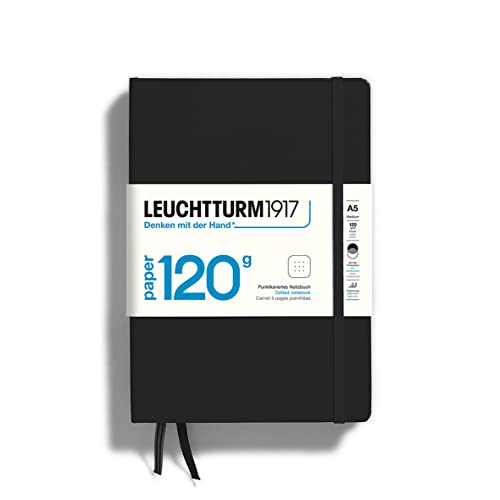
LEUCHTTURM1917 - 120G Special Edition - Medium
The LEUCHTTURM1917 120G pairs heavyweight German paper with the numbered pages, index and back pocket that make the bullet journal method work. It's the notebook most bullet journal tutorials assume you're holding, and the 120gsm version fixes the ghosting complaint people had about the standard edition.
$28.95fromAmazonPrices as of Oct 22, 7:36 AM PT · Details
This is the notebook the method was built around. Open it and the first few pages are a blank table of contents, then 203 pages numbered for you. If you've watched a single bullet journal video, that structure is already familiar. You don't have to hand-number anything or improvise an index, which sounds trivial until you've done it once and quit.
The paper is the reason to pick this version over the cheaper standard one. At 120gsm it's noticeably thicker than the 80gsm edition, and owners who moved between the two consistently say the ghosting problem largely goes away. Gel pens, fineliners and most fountain pens sit on the surface. You can use both sides of a page without your Tuesday log showing through Wednesday.
Small details add up here. There are two ribbon markers, so you can hold your index and your current spread at once. There's an elastic band, a gusseted pocket in the back for loose receipts and cards, and a sheet of stickers for labeling the spine when the book goes on a shelf. Nothing revolutionary — just the stuff you'd end up wanting.
It's an A5 hardcover at just under a pound, which is about as much notebook as most people want to carry daily. It fits in a tote or a backpack sleeve without feeling like a textbook. The hardcover keeps the corners from getting chewed up when it rattles around in a bag for a year.
Flaws but not dealbreakers
It's the most expensive notebook here, and the 120gsm version costs meaningfully more than the standard LEUCHTTURM1917. If you write with a ballpoint and never use markers, you're paying for paper you don't need.
Thick paper isn't bulletproof paper. Owners with wet fountain pen inks still report bleed-through on some combinations — heavy, saturated inks can push right to the other side. And the hardcover doesn't lie perfectly flat in the first and last twenty pages or so, which is a small annoyance if you like writing right up against the spine.
Runner-up
The nicest paper of the bunch, with fewer built-in guides
Rhodia A5 Webnotebook
The Rhodia Webnotebook uses ivory brushed vellum paper that fountain pen users repeatedly single out as the smoothest they've written on. It skips the numbered pages and index, so you're building the bullet journal structure yourself.
$30.66fromAmazonPrices as of Oct 22, 7:36 AM PT · Details
If you write with a fountain pen, this is probably the paper you want. Rhodia's 90gsm brushed vellum is unusually smooth and it handles ink flow in a way that makes shading and color variation show up well. Owners who switched from Moleskine or LEUCHTTURM1917 specifically for fountain pen work tend to describe this as the end of the search.
The trade-off is that Rhodia gives you a notebook, not a system. There's no index, no page numbers, no future log template. For a lot of people that's a feature — you're not paying for pages someone else designed. But it means the first hour with this book is setup work, and if you want the structure handed to you, the LEUCHTTURM1917 is the easier start.
The build is quietly good. It's a hardcover with a soft-touch leatherette finish that feels different from Moleskine's harder shell, plus an elastic strap, a ribbon and an expanding rear pocket. At 96 sheets it's a slimmer book than our top pick, which some people prefer for carrying and others find limiting.
The ivory paper is worth thinking about before you buy. It's warmer than white, easier on the eyes under a lamp, and it flatters most ink colors. It also washes out in photos, so if you post spreads, you'll be fighting your camera's white balance.
Flaws but not dealbreakers
Ninety grams is lighter than the 120gsm paper in our top pick, and while the surface quality partly makes up for it, very wet nibs and alcohol markers can still show through. Most owners report no bleed at all with normal pens, but it's not a marker notebook.
No numbered pages and no index means more work up front and more discipline later. If you've abandoned bullet journals before because the setup felt like a chore, start somewhere else.
Budget pick
Most of what you need, for a fraction of the money
PAPERAGE Dotted Journal Notebook
The PAPERAGE Dotted Journal has 100gsm paper, a thread-bound spine that lies flat, a rear pocket and an elastic band. It's missing the printed index and page numbers, but for a first bullet journal it covers nearly everything that matters.
$11.99fromAmazonPrices as of Oct 22, 7:36 AM PT · Details
You give up surprisingly little by going cheap here. The paper is 100gsm — thicker than a Moleskine, thinner than our top pick — and owners writing with gel pens, markers and even Sharpies mostly report no bleed-through. The thread binding lies flat across a double page, which is genuinely useful when you're drawing a monthly grid that spans the gutter.
It's a good place to start if you're not sure bullet journaling will stick. Buying an expensive notebook can make you precious about it — people report leaving pricey journals blank because they didn't want to ruin them. This one costs little enough that you'll actually write in it, and if the habit takes, you'll know what to upgrade to.
The vegan leather cover is water-resistant with rounded corners, and it comes in a lot of colors and four page styles. Several owners say it looks and feels close to notebooks they'd seen for far more in a bookstore. That's not nothing when the book lives on your desk.
At 5.6 by 8 inches it's slightly smaller than a true A5, and 160 pages makes it a fairly slim book. It disappears into a bag easily. If you write large, look at the size carefully before ordering.
Flaws but not dealbreakers
There's no index and no page numbers, so the core bullet journal indexing system is on you to build and maintain by hand.
It's a hair smaller than A5, which owners do notice — a few have said they wished they'd sized up. And at 160 pages it fills faster than the 200-plus-page books here, so a daily journaler may go through two a year.
Also great
Built-in bullet journal structure with a conservation angle
Dingbats* Earth Dotted Writing Journal Notebook A5
The Dingbats* Earth journal ships with an index, numbered pages, a future log and 16 tear-out sheets, plus a pen loop that most notebooks here skip. It's FSC-certified and vegan-certified, and the company donates to WWF-UK per notebook.
Check priceatAmazonPrices as of Oct 22, 7:36 AM PT · Details
This is the most bullet-journal-ready book in the lineup after our top pick. You get an index, numbered pages, a printed future log and side tabs down the page edges for marking sections. Owners coming from the official Bullet Journal notebook often say they prefer this one, partly because the page numbers are printed small and stay out of the way.
The pen loop is a small thing that changes daily use. Most notebooks here make you find a pen every time. This one carries it. Combine that with the elastic closure, two bookmarks and an inner pocket and it works well as a bag-carried catch-all rather than a desk book.
The paper is 100gsm, cream, acid-free and fountain-pen friendly, with 16 micro-perforated pages you can tear out cleanly for shopping lists or notes you hand someone. The cover is a hardcover PU vegan leather with an embossed design, and the Earth line's animal motifs are more decorative than most black rectangles.
If sourcing matters to you, this is the pick. The paper is FSC certified, the materials are recyclable, the whole thing is vegan certified, and the company donates a set amount per notebook to WWF-UK. That's a stated commitment, not a vague eco claim.
Flaws but not dealbreakers
A hundred grams of paper handles ordinary pens fine, but owners report felt-tip pens showing on the reverse side. If you use brush pens or heavy markers, our top pick's thicker stock is the safer call.
Quality control has some inconsistency. Several owners describe bookmark ribbons coming loose from the binding — not a functional disaster, but irritating on a notebook at this price.
Who this is for
This guide is for anyone starting or continuing a bullet journal — the analog planning method built on numbered pages, an index, and short logged entries. It's also useful if you just want a good dot-grid notebook for notes, sketching or a daily diary, since the same qualities apply. If you write with a fountain pen, brush pen or marker, pay close attention to paper weight; it's the single spec that will determine whether you're happy in six months.
This isn't the guide for you if you want a dated planner with pre-printed months, a spiral-bound notebook that folds all the way back, or a pocket-size book for a jacket. Everything here is roughly A5 and bound to open as a spread. We also stuck to dot grid and lined formats, which is what bullet journaling actually uses — blank and graph versions of several of these exist, but we didn't evaluate them separately.
How we picked
Paper: We compared stated gsm across the lineup and read owner feedback about which pens ghost or bleed, treating 90gsm as roughly the floor for anything beyond a ballpoint. Binding: Thread-sewn spines that open flat across a double page, since spreads cross the gutter constantly. Structure: Printed page numbers, an index and a future log matter enormously for beginners, so we noted which notebooks include them and which leave it to you. Hardware: Elastic bands, ribbon markers, rear pockets and pen loops are what owners still mention months later. Durability: We weighted repeated owner reports of peeling covers, cracked spines and detached ribbons against the marketing copy.
Other bullet journals worth considering
If you want a bigger page and every accessory in the box: The Scribbles That Matter Lined Journal Notebook for — The Scribbles That Matter journal comes loaded — sticky notes, a pen loop, two bookmarks, storage box, catalog stickers, front and back pockets. It's a lined notebook rather than dotted, which rules it out as a pure bullet journal for grid-drawing purists, but plenty of people log fine on lines. Owners consistently note it runs large, which is either the selling point or the dealbreaker depending on your handwriting. The paper is 120gsm and FSC certified, and reports of bleed-through are rare. The catch is that at this size it's less pleasant to carry every day, and the presentation-box packaging is charming once and then it's a box.
If you want the classic look and use a light pen: The Moleskine Classic Notebook — The Moleskine Classic is the notebook everyone pictures, and it earns some of that reputation: it's slim, the cover is sturdy, and the proportions are hard to beat for carrying. The dot grid version is available in this large size with an elastic band and an inner folder. But the paper is the weak link for bullet journaling. Owners repeatedly say it's thin — pencil can show through, medium fountain pen nibs are too much, and gel pens leave visible shadows. If you write with a fine ballpoint and don't mind ghosting, it's still a lovely book. If you're picking a notebook because of the paper, look elsewhere.
The competition
This is what our research turned up, not a survey of every notebook sold. The bullet journal world is enormous, with dozens of small brands and one-off Etsy sellers we didn't cover. What follows is the remaining product from the lineup we looked at, and why it didn't make the cut.
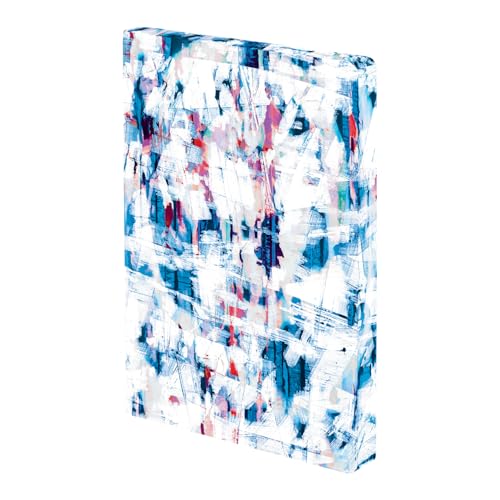
The nuuna Notebook A5+ — The nuuna Composition L is the most interesting book here on paper: 256 numbered pages, 120gsm premium stock, a 3.5mm dot grid, a lay-flat thread binding, and a cover made from the same material as jeans labels with a design that wraps around all the edges. It's produced in Germany with cradle-to-cradle certified paper. The problem is that we have very little owner feedback to go on, and what exists skews poorly — enough negative reports in a small sample that we can't recommend it with confidence. The specs suggest it should compete directly with our top pick. Choose it if the design genuinely appeals to you and you're comfortable being an early adopter, but the LEUCHTTURM1917 is the safer bet at similar quality.
Getting started and keeping it going
Before you commit to a spread, use the last page as a pen test sheet — write a line with every pen you own, wait a minute, then flip it over. You'll learn immediately which ones ghost and which ones bleed, and you'll save yourself from ruining page forty. If your notebook has an index, fill it in as you go rather than promising to do it later; nobody goes back. Keep the elastic band off the fore edge when the book sits on a shelf, since a permanently stretched band stops holding. And don't be precious about it. A journal with crossed-out entries and a coffee ring is a journal you're using, which beats a pristine one you're scared to open.
Questions we get
What paper weight do I actually need?
It depends entirely on your pens. Ballpoints and pencil are fine on almost anything, including 70gsm. Gel pens and fineliners are comfortable at 90 to 100gsm, and fountain pens, brush pens or markers want 100gsm minimum with 120gsm being safer. Heavier paper also means a thicker, heavier book for the same page count.
Do I need dot grid, or will lined work?
Dot grid is the standard for bullet journaling because it gives you alignment cues for drawing tables and trackers without printing lines through your layout. Lined works fine if you mostly write lists and log entries rather than building visual spreads. Grid is a middle ground, though the printed lines are more visible under your writing.
Is ghosting the same as bleed-through?
No, and the difference matters. Ghosting means you can faintly see writing from the other side of the page, which is cosmetic and bothers some people more than others. Bleed-through means ink physically soaks through and makes the reverse side unusable. Thicker paper reduces both, but surface quality affects how much ink sits on top in the first place.
Do I need numbered pages and a printed index?
The bullet journal method depends on being able to find things, which means an index keyed to page numbers. You can absolutely number pages yourself with a pen, and plenty of people do. But if you're new to the method, having it printed removes a step that otherwise becomes an excuse to stop.
How long will one notebook last?
A daily journaler with a moderate hand typically fills a 200-page A5 book in six to nine months, so most people go through one or two a year. Heavy spread-builders who draw elaborate monthly layouts burn pages faster. A 160-page book will fill noticeably sooner than a 250-page one, which is worth factoring in when you compare cost.
Does the cover material matter?
Mostly for durability and feel. Hardcovers protect corners in a bag and give you a firm writing surface when you're standing up. Vegan leather and leatherette covers resist scuffs and light water better than cloth. Softcovers lie flat more easily but take a beating in a backpack.
Why you should trust us
For this guide:
- We compared manufacturer specifications for every notebook in this guide, focusing on paper weight, page count, binding type and included hardware.
- We read published reviews and owner feedback across the lineup, paying particular attention to recurring reports of ghosting, bleed-through, binding failure and detached ribbons.
- We weighted patterns that showed up repeatedly across many owners more heavily than any single account.
- We read owner reviews on every listing, weighted toward the critical ones, because that is where the recurring failures show up.
- We have a systematic way of automatically fetching the latest prices, so the numbers on this page stay current.
- This is a research-focused guide, so the team may not own every product listed — though we often do own the top winners, which gives us extra context for the recommendations.
- We don't accept free products, and the retailer commission never changes which product we recommend.
Sources
Bullet Journal Official Method — Core system documentation by creator Ryder Carroll, BulletJournal.com
Best Bullet Journals — The Strategist, New York Magazine, New York Magazine / The Strategist
Best Bullet Journals Tested by Editors — Good Housekeeping, Good Housekeeping
The Pen Addict Podcast and Notebook Reviews, The Pen Addict
r/bulletjournal Community — Reddit, Reddit r/bulletjournal
The Pen Note: Paper Bleed and Feathering Tests, The Pen Note
The Laptop vs. Longhand Study — Psychological Science, Psychological Science (Mueller & Oppenheimer, 2014)
Global Stationery Products Market Report, Grand View Research
Leuchtturm1917 Official Product Specifications, Leuchtturm1917
Best Bullet Journals Reviewed — Forbes, Forbes
Amazon product listings and owner reviews for all 7 products
Manufacturer specification pages for each product
Some passages in this guide may be paraphrased with AI help.
Product prices and availability are accurate as of the date/time indicated and are subject to change. Any price and availability information displayed on Amazon.com at the time of purchase will apply to the purchase of this product.
More like this.
Continue exploring lifestyle reviews and recommendations.

The Best Journal Notebooks for Daily Writing
A journal notebook only earns its place if you actually reach for it. That sounds obvious, but it's where most notebooks fail. The paper feathers your…

The Best DIY Windshield Repair Kits
A rock kicks off the back of a gravel truck, and a second later there's a small white star in your glass. It looks harmless. Then a cold morning and a…

The Best Outdoor Grills
A grill gets used more than almost anything else you keep outside. On a Tuesday you want it hot in ten minutes so the chicken is done before the kids melt…

The Best Off-Road Recovery Boards
Getting stuck isn't really an if. Drop a tire into a sand wash, sink into spring mud on a forest road, or spin out on a snowed-in trailhead approach, and…

The Best Outdoor Dining Sets
A patio dining set gets used in ways indoor furniture never does. It sits in July sun, gets rained on, holds a wobbling stack of plates, and then waits…

The Best Outdoor Grills and BBQ Smokers
Most of the cooking you'll do on a grill isn't brisket. It's burgers on a Tuesday, chicken thighs before the kids melt down, a couple of steaks when…