The Best Outdoor Grills and BBQ Smokers
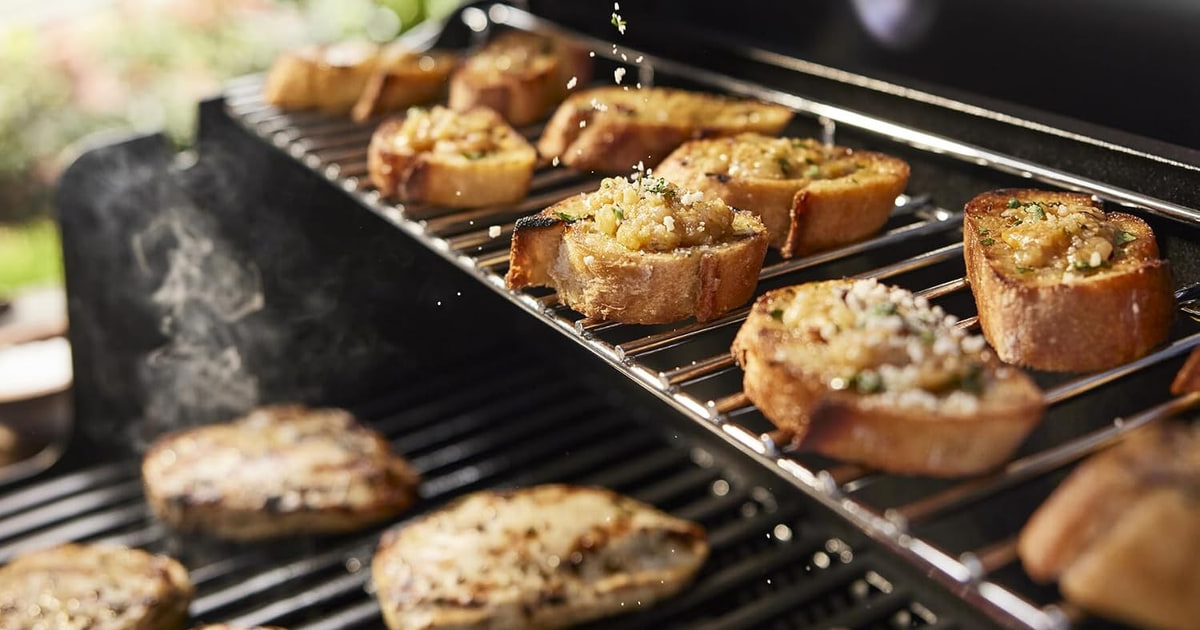
Most of the cooking you'll do on a grill isn't brisket. It's burgers on a Tuesday, chicken thighs before the kids melt down, a couple of steaks when someone's visiting. So the things that matter most are the boring ones: how fast it gets hot, whether the back corner cooks like the front, and how much of your Saturday the cleanup eats. Roughly two-thirds of American adults own a grill or smoker, according to the Hearth, Patio & Barbecue Association, and most of them cook outside year-round.
No grill does everything well. Gas gets hot in ten minutes and gives you almost no smoke flavor. Charcoal and ceramic give you the flavor, and they ask for an hour of attention plus a bag of fuel. Manufacturers don't help either. The cooking-area number on the box usually folds in the warming rack and the side burner, so a grill advertised at over a thousand square inches might give you half that on the grate you actually use. Check the primary grate size instead.
We looked at what's actually available here, which means gas grills, a charcoal water smoker, an offset, and one ceramic kamado. No pellet grill made this lineup. We leaned on published testing from Wirecutter, AmazingRibs.com, Consumer Reports and Smoked BBQ Source, on manufacturer spec sheets, and on the complaints that show up over and over in owner feedback: warped fireboxes, missing hardware, barrels rusted through. We think that the Weber Genesis E-325 is the best outdoor grill for most people, and that the Weber Spirit E-325 is the one to buy if your patio is small.
Everything we recommend

Even heat, easy cleanup, and parts you can still buy in a decade

Nearly the same cooking, in a footprint that fits a small patio
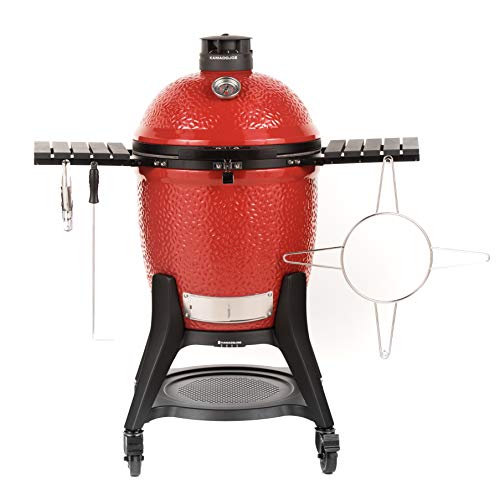
One ceramic cooker that sears at 750 and smokes all day at 225

Serious low-and-slow barbecue without the fuss or the footprint
At a glance
| Product | Cooking Area | Fuel Type | Price | |
|---|---|---|---|---|
| Weber® Genesis E-325 Gas GrillTop pick | — | Propane | $949 |
| Weber® Smokey Mountain Cooker SmokerAlso great | 22" Diameter | Charcoal | $549 |
 | Char-Griller®Smokin Pro Charcoal Grill and Offset SmokerAlso in lineup | 1,130 sq in | Charcoal | $239.99On sale |
 | Napoleon P500RSIBPSS-3 Prestige 500 RSIB Propane GasAlso consider | 500 sq in | Propane | $1,879 |
| Kamado Joe® Classic Joe™ Series III 18-inchUpgrade pick | 18" Diameter | Charcoal | $1,799.98On sale |
| Weber® Spirit® E-325 Gas GrillBudget pick | — | — | $499On sale |
How we picked
Even heat. We weighted published temperature-variance testing heavily, because a grill that runs hot on one side turns every cook into a guessing game. Wirecutter's finding of roughly 22°F of spread across the Genesis grate set the bar the rest of the lineup had to clear.
Real cooking area. We compared primary grate size from spec sheets instead of the headline number on the box, which typically folds in warming racks and side burners. A grill sold as 1,130 square inches can offer a good deal less usable space.
Materials and rust. Porcelain-enameled cast iron and stainless steel hold up to humid summers and coastal air far better than thin painted steel. Owner reports about how many seasons a barrel lasted mattered here as much as the spec sheet did.
Fuel and cleanup. For charcoal cookers we looked for published efficiency figures, meaning hours held per load. For gas, we wanted a grease system you can empty without taking anything apart.
Parts and warranty. We checked stated warranty length and how realistic it is to buy a replacement burner, grate or gasket a few years from now. A grill you can repair beats a grill you replace.
Top pick
Even heat, easy cleanup, and parts you can still buy in a decade
Weber® Genesis E-325 Gas Grill
This is the gas grill to buy if you'd rather stop thinking about your grill. Three tapered burners heat the grate evenly enough that the back corner cooks like the front, the grease tray slides out in one motion, and Weber still sells parts for grills much older than this one.
$949fromAmazonEven heat is the whole ballgame, and it's where the Genesis wins. Wirecutter's gas grill testing found only about 22°F of variance across the entire cooking grate on Weber's Genesis, the tightest spread in its group. What that buys you is simple: lay eight burgers across the grill and pull them all at the same time. On a cheaper grill, the two at the back are still pink while the front two are gone.
The burners are tapered, which sounds like marketing until you look at why. A narrowing tube keeps gas pressure up at the far end, so the flame doesn't thin out where the burner runs out. The raised flame openings help too, since drippings fall past the ports instead of into them. Clogged ports are the most common reason an aging gas grill starts cooking unevenly.
Cleanup is genuinely easy. The porcelain-enameled cast-iron grates hold heat well enough to sear, and once they've carbonized a few fatty meals they brush clean in seconds. Below them, Flavorizer bars catch drippings, vaporize some of it back into the food, and funnel the rest into a tray that pulls out from under the cookbox. You empty it standing up, not on your knees.
Owners keep these grills a long time, and that's the real argument. People replacing a Weber usually describe one that ran a decade or more, often on original parts, which is why so much of the feedback here is from repeat buyers stepping up from an old Spirit. Weber isn't flawless, and support complaints exist. But the burners, grates and cookbox you'd eventually need are still on the shelf.
Flaws but not dealbreakers
Assembly takes a while. Owners commonly describe an hour and a half to two hours, and a second person makes the heavy panels much less annoying. A few report misdrilled frame pieces or hardware missing from the box, which turns a free Saturday into a phone call with a support line that's hard to get a human on.
It's also a gas grill, so smoke flavor isn't really on the menu. A foil packet of chips over a burner gets you a hint of it. If barbecue is the goal, pair this with one of the charcoal picks below and keep the Genesis for weeknights.
Budget pickOn sale
Nearly the same cooking, in a footprint that fits a small patio
Weber® Spirit® E-325 Gas Grill
The Spirit is the Genesis's smaller sibling, and for a family of four it gives up very little. You get the same porcelain-enameled cast-iron grates and a hot sear zone in a grill that's about ninety pounds lighter and takes up noticeably less deck.
$499fromAmazonList priceIf your grilling space is a deck corner or a townhouse patio, the Genesis is just too much grill. The Spirit is about four feet wide with the tables out and roughly half the weight, so you can actually roll it aside to sweep behind it. Owners cooking for four consistently describe it as the right size rather than a compromise, which is not what people usually say about a smaller grill.
The ten-year limited warranty is what makes this an easy call. It covers the parts most likely to fail — burners, grates, the cookbox — for longer than a lot of cheap grills survive at all. And the feedback backs it up: a common story here is someone retiring a fifteen-year-old Spirit and buying this one. That's about as good a durability signal as you'll get without waiting fifteen years yourself.
The sear zone runs hot. Weber's Boost Burners push about 40% more power into it than the standard burners, so you can put a crust on a ribeye without turning the whole grill into a furnace. Snap-Jet ignition lights each burner individually with one hand, which matters more than it sounds like when you're balancing a platter in the other.
Flaws but not dealbreakers
The main grate fills up fast. More than one owner says they wish it were a few inches wider, and if you regularly feed eight or more people, you'll be cooking in shifts. Assembly is detailed too — plan on a couple of hours — and at least one buyer reports a box that showed up with no hardware in it at all.
Weber covers the Spirit E-325 with a ten-year limited warranty.
Upgrade pickOn sale
One ceramic cooker that sears at 750 and smokes all day at 225
Kamado Joe® Classic Joe™ Series III 18-inch
A ceramic kamado does the work of a grill and a smoker in one heavy, egg-shaped body. AmazingRibs.com found the Classic III reached 750°F at the grate in under twenty minutes and held 225°F for more than twelve hours on a single load of charcoal.
$1,799.98fromAmazonList priceCeramic is the reason a kamado sips fuel. Thick walls hold heat instead of throwing it into your backyard, so one basket of lump charcoal carries a very long cook. Smoked BBQ Source found that offset smokers burn two to three times more fuel per hour of cooking than a ceramic kamado does. Across a season of weekend cooks, that's a real difference in what you haul home from the store.
The SloRoller is a baffle that sits under the grate and pushes smoke around in rolling waves instead of letting it shoot straight up past the meat. Kamado Joe developed it with Harvard researchers. The practical claim is more even smoke exposure at low temperatures, which is exactly where a plain ceramic cooker has historically been weakest compared with a dedicated smoker.
Then there's the rack system. Half-moon grates sit at three different heights, so you can hold vegetables up high while chicken skin crisps low over the coals. The Kontrol Tower vent keeps its setting when you open the dome, so you're not re-dialing airflow every time you peek. And the air-lift hinge makes a very heavy ceramic lid feel like nothing.
This is the most versatile cooker here and the hardest to learn. Airflow is your only temperature control, and overshooting is easy, because a kamado climbs fast and comes down slowly. You dial the vents early and then wait. Give it a few cooks before you invite people over. Owners coming from gas tend to describe the first month as humbling and everything after that as a hobby.
Flaws but not dealbreakers
It weighs 286 pounds. You need two people to lift the ceramic body into the cart, and once it's parked, it's parked. Ceramic also cracks under thermal shock, so no cold water on a hot grill, ever.
Fit and finish complaints do show up. A handful of owners describe damaged parts or poorly seated gaskets out of the box, and sorting it out stretched over weeks. That's a frustrating start on the most expensive cooker here.
Also great
Serious low-and-slow barbecue without the fuss or the footprint
Weber® Smokey Mountain Cooker Smoker
If what you actually want is brisket and ribs, buy a dedicated smoker instead of a grill that claims to smoke. This is a simple charcoal water smoker with two big grates and porcelain-enameled steel that won't rust or peel, and it's been a competition-circuit staple for years.
$549fromAmazonThe design is almost stupidly simple: a charcoal ring at the bottom, a water pan above it, two cooking grates above that, and a lid. The water pan is the trick. It soaks up heat and gives it back slowly, which is why the temperature curve stays flat here while a thin barrel smoker swings every time the wind shifts direction.
Fuel efficiency is what makes this thing easy to live with. AmazingRibs.com rates it among the most efficient charcoal smokers going, holding 225 to 250°F for eight to twelve hours without a refill. That covers a pork shoulder start to finish. You light it, set the dampers, check on it a couple of times, and otherwise go live your day.
Two grates mean two large cuts at once — two racks of spare ribs up top, a pork butt below. The aluminum fuel door is large and comes off entirely, so adding charcoal partway through doesn't mean lifting a hot, fully loaded center section. A silicone grommet lets you run a probe wire inside without pinching it in the lid.
Nothing here is powered, connected or automatic, and that's the appeal. Three bottom dampers and one on top are your controls. Once you learn where yours likes to sit, it holds there. Owners who've run these for ten years describe the same short routine every single cook, which is exactly why people who compete keep buying them.
Flaws but not dealbreakers
You'll babysit this more than a pellet grill. There's no app, no auger, no thermostat, so if the fire drifts you fix it by hand — and wind or real cold makes that harder. Most owners end up adding a digital probe thermometer, since the lid gauge reads the dome rather than the grate where the meat sits.
It's a smoker and only a smoker. You can't sear a steak on it. Unless you already own a grill, plan on buying one of the gas picks to sit next to it.
Who this is for
This guide is for someone buying a grill they'll keep, not a seasonal one. If you cook outside most weekends and you're tired of a rusting box with two working burners, any of the picks here is a real step up. If you're cooking on a balcony where open flame isn't allowed, or you need something you can carry to a campsite, none of these will work — they're all full-size, and the lightest one still weighs sixty-eight pounds.
We covered gas grills, charcoal smokers, an offset and a ceramic kamado, because that's what the research surfaced. Pellet grills aren't represented, which is worth knowing if set-and-forget smoking with an app is your priority. They've grown to roughly a tenth of the U.S. market, up from under 5% a few years back, and good ones hold within about five degrees of the set point while budget models swing fifteen to twenty-five. If that's what you're after, this isn't the guide for you.
How we picked
Even heat: we weighted published temperature-variance testing above raw BTU numbers, since a grill that runs hot on one side ruins every cook. Real cooking area: we compared primary grate size from spec sheets rather than the box number, which usually includes the warming rack. Materials and rust: porcelain-enameled cast iron and stainless steel survive humid air far better than thin painted steel, and owner reports on rust-through timelines counted. Fuel and cleanup: we looked for published hours-per-load figures on charcoal cookers and a grease system you can empty in one motion on gas. Parts and warranty: we favored brands that still sell burners and grates years later.
Other outdoor grills and bbq smokers worth considering
If you want a steakhouse sear burner and a rotisserie in the box: The Napoleon P500RSIBPSS-3 Prestige 500 RSIB Propane Gas ($1,879) — The Napoleon Prestige 500 RSIB is the grill for someone who cares about a hard crust. Consumer Reports rates it among the top three gas grills for searing, crediting the infrared side burner that hits about 1,800°F in half a minute. Four stainless burners put out 48,000 BTU across 500 square inches of main grate, with another 260 on the warming rack, and an 18,000 BTU infrared rear burner runs the rotisserie kit that comes with it. What you give up is simplicity and a little peace of mind — it's nearly 200 pounds, there's more to learn and more to fail, and while owners rave about the cookbox and the customer service, several describe a cabinet and cart that feel cheaper than the rest of the grill.
The competition
This is what our research turned up, not a survey of every grill on the market. The lineup skews toward gas and charcoal, and there's no pellet grill in it, so treat the section below as the one product that came close rather than a ranking of the whole category.
The Char-Griller®Smokin Pro Charcoal Grill and Offset Smoker ($239.99) — The Char-Griller Smokin' Pro is a charcoal barrel grill with a side firebox bolted on, giving you 1,130 total square inches and a genuine Texas-style offset for not much money. Dual dampers let you tune airflow, and it's about 115 pounds, which is light enough to reposition without a friend. It lost to our picks on build quality, and the owner feedback is blunt about why: misaligned firebox mounting holes, thin grates, a barrel warped enough that the grates don't seat, and rust-through in a handful of years even under a cover. Long-time buyers say the current version isn't the grill they bought two decades ago. Still, if you want to learn fire and smoke management on real wood and you don't mind sealing the gaps with gasket tape and running a few 500°F burn-offs first, it's a legitimate way in.
Care and maintenance
Most grills die of neglect, not use. Run the burners on high for ten minutes after you cook, then brush the grates while they're still hot — carbonized fat comes off in seconds and turns to cement if you wait a week. Empty the grease tray before it overflows, since a grease fire is the fastest way a good grill becomes scrap metal. On charcoal cookers, clear the ash every couple of cooks, because ash traps moisture against the steel and that's where rust starts. Check gaskets, dampers and burner ports each spring, and clear any blocked ports with a wire before the season. If the grill lives outside, use a cover, especially anywhere humid or near salt air.
Questions we get
What's the best outdoor grill for a beginner?
A three-burner gas grill, almost always. You get heat in ten minutes, a knob for each zone, and nothing to learn beyond where the hot spot is. The Weber Spirit E-325 is the easiest entry point here, and if you decide later that you want smoke, add a dedicated charcoal smoker rather than replacing the gas grill.
Gas or charcoal — which one actually tastes better?
Charcoal, if flavor is the only thing you're weighing. Burning wood and lump charcoal puts compounds on your food that a gas flame can't. But gas still accounts for around 60% of U.S. grill sales versus roughly 30% for charcoal, and that's because convenience wins on weeknights. Most people who care about both end up owning one of each.
Are kamado grills worth it?
They are if you want one cooker to do everything and you'll actually use it. A ceramic kamado sears above 700°F and smokes at 225°F on the same charcoal load, and it burns two to three times less fuel per hour than an offset smoker. But it's heavy, expensive, and takes a handful of cooks before you can hold a temperature confidently.
How many BTUs do I really need in a gas grill?
Fewer than the marketing implies. BTU output tells you how much gas a grill can burn, not how evenly it spreads the heat, and a poorly designed grill can waste a big number. The Napoleon here puts out 48,000 BTU across four burners, but the more useful spec is temperature variance across the grate. Look for even heat first and BTU second.
What grill works on a small patio?
Look at footprint and weight before anything else. The Weber Spirit E-325 is about four feet wide and just under a hundred pounds, so you can move it to clean behind it. Check your building or HOA rules too, since many places ban charcoal and open flame on balconies entirely.
How often should I replace my grill grates?
When they're flaking, pitted, or the coating has chipped away enough to expose bare metal that rusts between cooks. Porcelain-enameled cast iron lasts a long time if you don't scrape it with anything harsh, and stainless holds up best in humid or coastal air. Good grates are a cheap repair compared with a new grill, so replace them and keep the cooker.
Why you should trust us
For this guide:
- We read published grill testing and reporting from Wirecutter, AmazingRibs.com, Consumer Reports, Serious Eats and Smoked BBQ Source, along with market data from the Hearth, Patio & Barbecue Association.
- We compared manufacturer spec sheets for every grill here on primary grate size, burner output, materials and stated warranty terms.
- We read through owner feedback looking for repeated themes — warped fireboxes, missing hardware, rust-through timelines, support headaches — rather than isolated complaints.
- We read owner reviews on every listing, weighted toward the critical ones, because that is where the recurring failures show up.
- We have a systematic way of automatically fetching the latest prices, so the numbers on this page stay current.
- This is a research-focused guide, so the team may not own every product listed — though we often do own the top winners, which gives us extra context for the recommendations.
- We don't accept free products, and the retailer commission never changes which product we recommend.
Sources
Best Gas Grills of 2026 — Wirecutter, Wirecutter
Best Pellet Grills and Smokers — Serious Eats, Serious Eats
Grill and Smoker Ratings & Reviews — Consumer Reports, Consumer Reports
Best Grills of 2026 — Good Housekeeping, Good Housekeeping
Best BBQ Smokers Reviewed — Smoke & Spice Lab, Smoked BBQ Source
Kamado Joe Classic III Full Review — Amazing Ribs, AmazingRibs.com
Traeger Ironwood XL Review — Food Network Kitchen, Food Network
Napoleon Prestige 500 Full Review — Grillseeker, Grillseeker
Weber Genesis E-325s Review — The BBQ Beat, The BBQ Beat
U.S. Outdoor Cooking Market Report 2025 — HPBA, Hearth, Patio & Barbecue Association (HPBA)
Pellet Grill Temperature Accuracy Testing — All Things Barbecue, All Things Barbecue
Amazon product listings and owner reviews for all 6 products
Manufacturer specification pages for each product
Some passages in this guide may be paraphrased with AI help. Prices are refreshed automatically.
More like this.
Continue exploring lifestyle reviews and recommendations.

The Best Electric Smokers for Backyard BBQ
Smoking meat used to mean babysitting a fire for twelve hours. An electric smoker takes that job away. You set a temperature, load some wood chips, and…

The Best Pellet Grills and Smokers
A pellet grill is really a wood-fired convection oven with an auger in it. You dump hardwood pellets in a hopper, set a number on a controller, and the…

The Best Gas Grills for Outdoor Entertaining
A grill that's fine for two pork chops on a Tuesday falls apart when twelve people show up. You need enough grate space to get everything off at once,…

The Best Outdoor Grills
A grill gets used more than almost anything else you keep outside. On a Tuesday you want it hot in ten minutes so the chicken is done before the kids melt…

The Best Cocktail Smoker Kits
Smoked cocktails are a parlor trick that happens to taste good. You set a few wood chips on fire, trap the smoke over a glass of bourbon, and the drink…

The Best Pellet Grills
A pellet grill runs on compressed hardwood and a small electric brain. An auger feeds pellets into a firepot, a fan pushes the heat around, and a…