The Best Cuisinart Kitchen Tools and Appliances
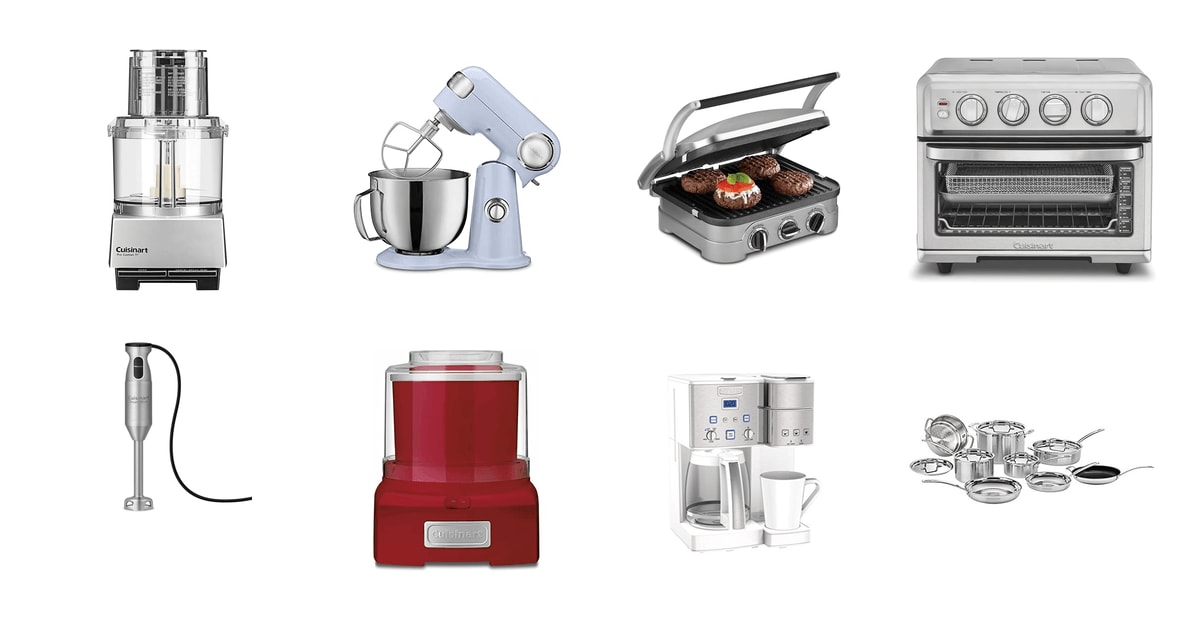
Cuisinart sits in a useful spot. The brand isn't the bare-bones stuff at the bottom of the shelf, and it isn't the aspirational stand mixer your friend keeps on the counter like a trophy. It's the middle. You get metal where metal matters, motors sized for real cooking, and a three-year warranty on most small appliances. For a first apartment, a wedding registry, or a kitchen you're slowly upgrading one piece at a time, that's usually the right trade. You're buying a machine that works, not a color story.
The catch is that the badge doesn't guarantee much on its own. Cuisinart is owned by Conair, manufacturing is largely overseas, and quality varies model by model rather than across the whole catalog. Consumer Reports puts the brand in the mid-tier for toaster oven and coffee maker reliability — average to above average, not top of the class. Owners of the smaller motors report failures after months of daily heavy use. So judge each machine, not the name on it. A great Cuisinart food processor doesn't tell you anything about the coffee maker.
We looked at published lab results, manufacturer specifications and the themes running through owner feedback to sort this lineup. Some of these are genuinely excellent buys. A couple are fine but flawed, and one has a reputation for leaks that we can't ignore. We think that the Cuisinart Pro Custom 11 Food Processor is the best Cuisinart appliance for most people, and that the Precision Master 5.5-Quart Stand Mixer is the one to buy if you bake more than you chop.
Everything we recommend

The one appliance that changes how you cook on a weeknight

More motor than the obvious alternative, for noticeably less

Five appliances' worth of cooking on one square foot of counter
The countertop oven that replaces three gadgets, if you have room

A 300-watt stick blender that costs a fraction of the big machines
How we picked
Motor and power. We compared manufacturer wattage specs across each category and weighed them against what published reviews said about real workloads. A motor had to be at least competitive with same-priced rivals, not just adequate on paper.
Materials that last. We favored stainless steel bowls, die-cast housings and tri-ply construction over plastic wherever the category offered a choice. Owner feedback about cracked plastic after years of use shaped this more than any spec sheet did.
Counter footprint. We noted dimensions for every appliance and gave weight to machines that do several jobs in one space. In a small kitchen, a multi-function unit earns its spot; a single-use gadget usually doesn't.
Cleaning burden. We checked which parts are dishwasher-safe and read owner feedback for the machines people quietly stop using. Anything that requires scrubbing after every meal loses to something that doesn't.
Warranty and support. Most Cuisinart small appliances carry a limited three-year warranty, which is standard for the mid-range category. We looked for owner reports about whether the company actually honors it.
Top pick
The one appliance that changes how you cook on a weeknight
Cuisinart Food Processor
An 11-cup processor with slicing and shredding discs, a dishwasher-safe bowl, and a motor that handles dough without stalling. It does the prep work that makes you skip cooking on a Tuesday — shredding cheese, slicing onions, chopping a pound of vegetables in seconds.
$219.95fromAmazonThe food processor is Cuisinart's best product, and it's not close. America's Test Kitchen has repeatedly named a Cuisinart full-size processor a Best Buy in its category, citing the combination of performance and price. This 11-cup Pro Custom is the compact sibling of that 14-cup workhorse. You give up some bowl volume. You keep the build, the disc set, and the motor that made the line worth recommending in the first place.
Eleven cups is the right size for most households. It's enough to shred a block of cheese, slice a head of cabbage for slaw, or pulse a batch of pie dough. It's also small enough that you'll actually pull it out. Owners upgrading from 12- and 14-cup machines routinely say the smaller footprint is a feature, not a compromise — the thing lives on the counter instead of in a cabinet you never open.
Longevity is the quiet argument here. The recurring theme in owner feedback isn't that the machine is fast — it's that the last one lasted fifteen or twenty years before anything cracked. That's an unusual thing to hear about a small appliance. If you buy one processor for your kitchen and never think about it again, this is the category where that actually happens.
Cleanup is straightforward. The bowl, lid and discs all go in the dishwasher, which matters more than it sounds — a processor you have to hand-wash is a processor you stop using. The chrome housing wipes down with a cloth.
Flaws but not dealbreakers
There are a lot of parts. The bowl, lid, pusher, blade and two discs all need somewhere to live, and owners with limited cabinet space mention the storage juggle regularly. If you have a small kitchen, budget a drawer for it.
The instruction manual is genuinely bad. More than one owner has given up on it entirely and gone looking for a video. The machine isn't hard to use once you've done it twice, but expect the first session to involve some guessing about which disc goes on which stem.
It's the 11-cup, not the 14-cup. If you cook for a crowd, batch-prep on Sundays, or knead bread dough regularly, the larger model has more headroom and a stronger motor.
Runner-up
More motor than the obvious alternative, for noticeably less
Cuisinart SM-50BLU Precision Master 5.5-Quart Stand Mixer
A 5.5-quart stainless bowl, a 500-watt motor and 12 speeds, in a die-cast body heavy enough to stay put. It's the mixer to buy if you want KitchenAid capability without KitchenAid pricing, and it comes with the whisk, hook and paddle in the box.
$299.95fromAmazonThis is the strongest argument in the Cuisinart catalog for skipping the premium brand. The Precision Master has 500 watts and 12 speeds in a die-cast metal body, and it costs meaningfully less than the comparable KitchenAid. CNET found that the weighted base kept it from walking across the counter during heavy dough mixing, which is exactly where lighter mixers embarrass themselves. A mixer that migrates toward the edge while you're kneading isn't a mixer you trust.
Twelve speeds sounds like marketing until you use the low end. The slowest settings are gentle enough to fold flour in without a cloud, which is the specific thing a hand mixer can't do. You get a chef's whisk, dough hook, flat paddle and a splash guard with a pour spout, so there's nothing else to buy on day one.
The bowl is 5.5 quarts of polished stainless — deep enough for a double batch of cookies or a full loaf's worth of dough. There's a power outlet on the head for optional attachments, including a pasta roller, meat grinder and spiralizer. That's a real path to expanding what the machine does later, though the attachment ecosystem isn't as deep as KitchenAid's.
If your hands hurt, this matters. Owners with arthritis mention that bread dough became manageable again once the mixer took over the kneading. That's a small thing on a spec sheet and a large thing in a kitchen.
Flaws but not dealbreakers
It doesn't like being loaded all at once. Owners report that dumping dry and wet ingredients in together leaves a pocket of unmixed flour at the bottom of the bowl. Add liquids first, then bring the solids in gradually — a habit worth building anyway, but a real annoyance if you expected to just dump and walk away.
The tilt-head design and the attachment lineup are both a step behind KitchenAid's. If you already own KitchenAid attachments, or you want the widest possible range of add-ons down the road, that's a legitimate reason to pay more elsewhere.
The frosted blue finish is nice-looking but it's a painted die-cast surface. Expect it to show scuffs on a busy counter.
The Precision Master carries a limited three-year warranty.
Also great
Five appliances' worth of cooking on one square foot of counter
Cuisinart Panini Press and Grill
A 1500-watt press with reversible nonstick plates that works as a contact grill, panini press, full grill, full griddle, or half of each. The plates and drip tray go in the dishwasher, which is the reason people keep using it instead of shoving it in a closet.
$99.95fromAmazonIf your kitchen is small, this is the highest-value square foot in the lineup. The Griddler covers burgers, steaks, pancakes, sausages, grilled cheese and paninis in one machine. The Good Housekeeping Institute's kitchen appliance lab gave it top marks for even browning on burgers and paninis in side-by-side testing. For a college apartment or a place without outdoor grill access, that's most of your cooking surface right there.
The half-grill, half-griddle mode is the one people underrate. You can cook eggs and bacon at the same time on the same machine, at two different temperatures, because the two sides have separate controls. Grill and panini modes run from warm to sear; griddle mode runs 200°F to 425°F on a dial.
Cleaning is why it survives. The nonstick plates lift out and go in the dishwasher, along with the drip tray and the included scraping tool. Owners who abandoned older clamshell grills almost always name cleanup as the reason — burnt-on grease in a fixed plate is what kills those machines. This one avoids it. The plates are also PFAS-free.
It heats fast and stores upright, so it's plausible as a daily machine rather than a weekend one.
Flaws but not dealbreakers
The heating is a little uneven across the plate. Owners consistently point to a hotter zone rather than a perfectly uniform surface, so rotating burgers partway through is a reasonable habit. It's not a dealbreaker, but it's not a real grill either.
Nonstick plates are consumable. They'll wear over years of use, and there's no perfect fix for that in this format.
It costs more than a basic clamshell grill, and if all you want is a panini once a month, that's hard to justify.
The Griddler carries a limited three-year warranty.
Upgrade pickOn sale
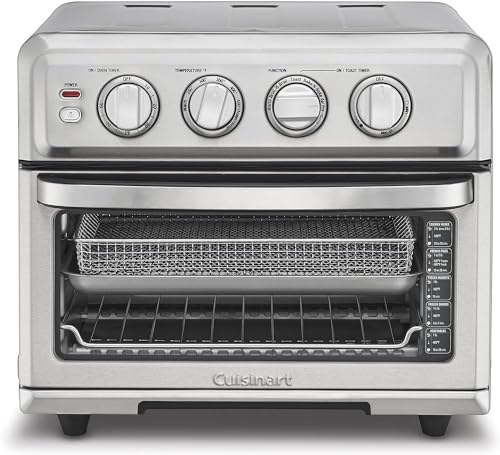
The countertop oven that replaces three gadgets, if you have room
Cuisinart Air Fryer Toaster Oven
An 1800-watt oven with eight functions — air fry, toast, bake, convection bake, broil, convection broil, grill and warm — in a 0.6-cubic-foot cavity. It fits a 12-inch pizza, a four-pound chicken, or six slices of toast, with a stainless interior and a 60-minute timer.
$158.40fromAmazonList priceThis is the appliance that clears your counter of everything else. Eight functions in one box means the standalone air fryer, the toaster and the small convection oven all become redundant. Owners describe roasting a spatchcocked chicken in under 40 minutes and air frying wings without a nonstick coating anywhere in the food path — a real draw if you've been avoiding coated baskets.
In summer, the case for it gets stronger. Baking a tray of vegetables here doesn't heat your kitchen the way the full oven does. If you live somewhere that gets ugly in July, or in an apartment where the oven and the sofa share a room, that's not a minor benefit.
The controls are analog: a temperature dial, a 60-minute timer with auto-shutoff, and a toast shade selector. No touchscreen, no menus. Owners who specifically wanted a simple machine like it for that reason, though it means you're trusting a dial rather than a digital readout for exact temperature.
It comes fully equipped — oven rack, baking pan and drip tray, air fry basket, and a reversible ceramic grill/griddle insert. You're not shopping for accessories after it arrives.
Flaws but not dealbreakers
It's big and heavy, over 25 pounds and nearly 16 inches wide. On a small counter it dominates. Measure before you commit, especially the vertical clearance under your cabinets.
Cleaning is the most common owner complaint. The stainless interior is easy enough, but the air fry basket and the pans take real scrubbing after a greasy batch of wings. Plan on hand-washing.
The analog dial isn't precise. Several owners note the temperature reading is approximate, so a separate oven thermometer is worth having if you bake anything fussy.
Budget pick
A 300-watt stick blender that costs a fraction of the big machines
Cuisinart Smart Stick Two-Speed Corded Hand Blender
A two-speed immersion blender with a 300-watt motor, an eight-inch stainless shaft, and a chopper, whisk and 24-ounce cup in the box. It purees soup directly in the pot, which means one less blender carafe to wash and no hot liquid to transfer.
$56.66fromAmazonFor blending soup, this beats a countertop blender on the only metric that counts: you'll actually do it. Ladling scalding butternut squash into a pitcher, blending in batches, then washing the pitcher is why people skip pureed soups. Drop the shaft in the pot and it's done in thirty seconds. The eight-inch stainless shaft reaches into a deep stockpot without you tipping it.
Three hundred watts is more than the older Smart Stick's 200-watt motor, which Serious Eats characterized as an entry-level option next to premium immersion blenders. This version closes some of that gap. It's still not a heavy-duty machine, but it's enough for smoothies, dressings, baby food and sauces.
The accessory set does real work. You get a chopper/grinder attachment, a chef's whisk and a 24-ounce mixing cup — enough to handle a small onion, whipped cream, or a single smoothie without dragging out anything larger. For a first kitchen, that covers a lot of ground.
It's the least expensive way into the brand, and it stores in a drawer.
Flaws but not dealbreakers
It's not built for daily heavy-duty work. The clearest owner complaint pattern is exactly that: people who used it every day for pureeing shredded meats and dense food report performance dropping off within months. Use it for soups and smoothies, not as a food processor substitute.
It splatters in shallow pans. There's enough power to fling soup out of a wide skillet, so keep the blade submerged and start slow.
The cord is a limitation if your outlets are awkwardly placed. This is a corded model.
The Smart Stick carries a limited three-year warranty.
Who this is for
This guide is for anyone furnishing a kitchen on a real budget — new homeowners, registry shoppers, first-apartment cooks, and people replacing a machine that finally died. Cuisinart's pitch is professional-adjacent build at roughly 60 to 70 percent of what KitchenAid, Breville or Vitamix charge, and for most home cooking that trade holds up. If you cook a few times a week and want equipment that lasts a decade without a hobbyist's budget, you're the reader here.
You should look elsewhere if you're a serious baker who runs a mixer daily, or if you want the deepest attachment ecosystem — KitchenAid still wins on both. Same if you need a blender that pulverizes ice and frozen fruit into silk; a stick blender won't get you there. This guide covers Cuisinart's small kitchen appliances and cookware only. We're not comparing across brands here, and we're not covering grills, vacuums or anything Conair sells under other names.
How we picked
We started from manufacturer specifications, published lab results and the themes running through owner feedback, then weighed each machine on five things. Motor and power: wattage had to be at least competitive with same-priced rivals, and published reviews had to back it up on real workloads. Materials: stainless bowls, die-cast housings and tri-ply pans beat plastic every time, and owner reports of cracked plastic after a decade shaped this more than any spec did. Footprint: we tracked dimensions and gave credit to machines that do several jobs in one space, because counter room is the scarcest thing in most kitchens. Cleaning: dishwasher-safe parts decide whether an appliance stays in use or moves to a closet. Warranty: most of these carry a limited three-year term, and we looked for evidence that the company honors it.
Other cuisinart kitchen tools and appliances worth considering
If you want cookware that outlasts your kitchen: The Cuisinart MCP-13 MultiClad Pro Stainless-Steel Cookware 13-Piece ($359.95) — The MultiClad Pro 13-piece set is the step-up buy for cooks graduating from a nonstick starter kit. Cook's Illustrated points to its tri-ply construction — an aluminum core bonded between two stainless layers — for more even heat than single-layer stainless. It's oven-safe to 550°F, induction-compatible, dishwasher-safe, and owners routinely report sets still going strong after fifteen years. The set covers almost everything: two saucepans, a sauté pan, an 8-quart stockpot, three skillets and a steamer insert. What you give up is nonstick convenience — stainless requires preheating and a little fat, and it will discolor over time. Some owners also report minor cosmetic flaws out of the box, like a slightly askew handle. It's not All-Clad, but the gap is smaller than the price gap.
If you want homemade ice cream without the hassle: The Cuisinart Ice Cream Maker Machine ($69.95) — The ICE-21 is the machine that made home ice cream normal. Its 1.5-quart double-insulated bowl goes in the freezer overnight — no ice, no rock salt, no mess. Pour in chilled base, flip one switch, and you have soft-serve consistency in about 20 minutes, per The Spruce Eats. There's exactly one control, which is part of the appeal. The trade-off is the bowl: it has to be frozen solid before every batch, so a second batch means waiting until tomorrow unless you buy a spare. It also takes up permanent freezer real estate, and the bowl must never go in the dishwasher — that kills it. As a single-use appliance it's hard to justify as a first purchase, but as a gift or a summer habit it's the best-selling machine in its category for good reason.
The competition
This is what our research surfaced across Cuisinart's current small-appliance lineup, not a survey of everything the brand sells. One machine here didn't make the cut, and it's worth explaining why.
The Cuisinart SS-15W Maker Coffee Center 12-Cup Coffeemaker ($284.95) — The Coffee Center SS-15 solves a genuine household problem: one person wants a pod, the other wants a full pot, and this brews both from a single machine. The carafe side holds 12 cups with brew-strength control and a gold-tone filter; the single-serve side takes K-Cup pods or the included reusable filter cup, in 6, 8 and 10-ounce sizes. It's also fully programmable with a 24-hour brew start and self-clean. So why isn't it a pick? Owner feedback splits harder here than on anything else in the lineup, and the recurring complaint is leaking from the single-serve side. Consumer Reports puts Cuisinart in the mid-tier for coffee maker reliability, which matches what owners describe — plenty of machines running fine after eight years, plenty of others that disappointed early. If you want the two-in-one format and you're comfortable with that spread, it's the most convenient coffee maker here. If you just want reliable drip coffee, a simpler machine has fewer things to go wrong.
Care and maintenance
A few habits keep these machines alive. Never put a food processor motor base or an ice cream maker's freezer bowl in the dishwasher — the bowl in particular is ruined by it, and owners learn that the expensive way. Wash processor and blender parts soon after use, since dried-on garlic and dough are far harder to remove once set. On the Griddler and the toaster oven, pull the plates and drip tray while they're still warm but safe to touch; grease lifts off easily then and bakes hard later. For MultiClad Pro stainless, heat the pan before adding oil, and treat discoloration as cosmetic — a little Bar Keepers Friend brings it back. Descale the coffee maker on the schedule in the manual. And keep the manuals, because the three-year warranty is only useful if you can reach support with a model number in hand.
Questions we get
Is Cuisinart a good brand for kitchen appliances?
It's a solid mid-tier brand, and the food processor line is genuinely excellent — America's Test Kitchen has repeatedly named a Cuisinart processor a Best Buy. But quality varies by model. Consumer Reports rates the brand average to above average for toaster oven and coffee maker reliability, so judge each machine on its own rather than trusting the badge.
What's the difference between Cuisinart and KitchenAid stand mixers?
The Precision Master gives you more motor for less money — 500 watts and 12 speeds against KitchenAid's comparable tilt-head models, at a lower price. KitchenAid wins on attachment ecosystem, resale value and the sheer breadth of its accessory lineup. If you're buying one mixer for home baking, the Cuisinart is the better deal; if you want a platform to build on for years, KitchenAid still has the edge.
Is Cuisinart made in the USA?
Mostly no. Cuisinart was founded in 1971 by Carl Sontheimer and is now owned by Conair Corporation, which also owns Waring. Manufacturing is largely overseas. That's not a knock on the products, but it does mean you should evaluate build quality model by model instead of assuming it from the name.
Does Cuisinart offer a lifetime warranty?
Not on small appliances. Most Cuisinart countertop machines ship with a limited three-year warranty, which is standard for the mid-range category. Cookware terms differ from small appliances, so check the paperwork that comes with your specific set. Owners generally report that customer support handles claims reasonably when you have your model number.
Is a Cuisinart air fryer toaster oven worth it versus a standalone air fryer?
If counter space is tight, yes. The TOA-70 does eight jobs — air fry, toast, bake, convection bake, broil, convection broil, grill and warm — in the footprint one dedicated air fryer would take. A basket-style air fryer will crisp slightly better and clean up a bit easier, but you'd still need a toaster and a small oven next to it.
What's the best Cuisinart appliance for a small apartment kitchen?
The Griddler. It covers grilling, griddling and pressing in one unit that stores upright, and its 1500-watt element handles burgers, pancakes and paninis without an outdoor grill. If you'd rather have baking and roasting than searing, the air fryer toaster oven is the alternative — but it takes considerably more counter room.
Why you should trust us
For this guide:
- We read Cuisinart's published specifications for every machine in this guide and compared wattage, capacity and materials across the lineup.
- We reviewed published assessments from America's Test Kitchen, CNET, Good Housekeeping Institute, Consumer Reports, Serious Eats, The Spruce Eats and Cook's Illustrated for the categories they cover.
- We read owner feedback for recurring themes — which parts fail, which machines get abandoned, and which ones people replace with the same model years later.
- We read owner reviews on every listing, weighted toward the critical ones, because that is where the recurring failures show up.
- We have a systematic way of automatically fetching the latest prices, so the numbers on this page stay current.
- This is a research-focused guide, so the team may not own every product listed — though we often do own the top winners, which gives us extra context for the recommendations.
- We don't accept free products, and the retailer commission never changes which product we recommend.
Sources
Best Food Processors of 2026, Tested, Good Housekeeping Institute
Cuisinart Custom 14-Cup Food Processor Review, America's Test Kitchen
The Best Stand Mixers We've Tested, Wirecutter (NYT)
Cuisinart Precision Master Stand Mixer Review, CNET
Best Panini Presses and Grills, Tested, Good Housekeeping Institute
The Best Toaster Ovens We've Tested, Wirecutter (NYT)
Cuisinart Air Fryer Toaster Oven Review, Consumer Reports
Best Immersion Blenders of 2026, Serious Eats
Best Ice Cream Makers, Tested, The Spruce Eats
Coffee Maker Reliability and Owner Satisfaction Ratings, Consumer Reports
Best Cookware Sets, Tested by Chefs, Food Network Kitchen
Cuisinart MultiClad Pro Cookware Review, Cook's Illustrated
Amazon product listings and owner reviews for all 8 products
Manufacturer specification pages for each product
Some passages in this guide may be paraphrased with AI help. Prices are refreshed automatically.
More like this.
Continue exploring appliances reviews and recommendations.

The Best Range Hoods
A range hood earns its keep three times a day, and you barely notice it when it's doing the job. It pulls steam off a pot of pasta before your windows…

The Best Electric Fondue Sets
Fondue is one of the few dinners that runs itself. You set a pot in the middle of the table, put out bread, apples and cured meat, and everyone feeds…

The Best Silicone Kitchen Utensil Sets
You touch these tools more than almost anything else in your kitchen. A turner that flexes just enough to slide under a fried egg, a spoon that won't…

The Best Baking Sheets and Cookie Pans
A baking sheet is the pan you reach for more than any other. Cookies on Sunday, salmon on Tuesday, a tray of potatoes and onions on a weeknight when…

The Best Gifts for Pizza Lovers
Pizza is the rare food almost everyone on your list already loves, which makes it a safe theme and a tricky one. The person you're shopping for has…

The Best Cast Iron Skillets
A cast iron skillet is the rare pan you buy once. It doesn't peel, it doesn't warp under a hot burner, and it doesn't need replacing every three years…