The Best Dog Food Brands
You buy dog food more often than almost anything else you own a decision about. Twice a day, every day, for ten or fifteen years. That repetition is what makes the choice matter — not any single bowl, but the sum of them. The good news is that the bar for a safe, complete food is clear and printed right on the bag: the AAFCO nutritional adequacy statement. If a bag doesn't carry one for your dog's life stage, nothing else on the label can make up for it.
Here's the part the marketing won't tell you. No brand can prove it's better for your particular dog, and the labels that sound most impressive are often the least substantiated. Consumer Reports found no meaningful link between what a dog food costs and how nutritionally complete it is. A Tufts analysis found that 93% of foods sold as ancestral, raw-inspired or biologically appropriate had never completed an actual feeding trial. Protein percentage, the number owners fixate on, tells you almost nothing about digestibility.
So we leaned on the evidence that exists: vet survey data, published research, ingredient panels and what owners consistently report after months of feeding. We think that the Hill's Science Diet Adult 1-6 Dry Dog Food is the best dog food for most people, and that the Purina Pro Plan Small Breed Shredded Blend is the one to buy if your dog is small, picky, or has a stomach that complains.
Everything we recommend

The research-backed default for most healthy adult dogs
Small-dog nutrition with a texture picky eaters finish

A big bag of solid grain-inclusive food you can find anywhere

Gently cooked fresh meals, if you can spare the freezer space

Precisely portioned kibble sized for a small dog's mouth
At a glance
| Product | Bag Weight | First Ingredient | Price | |
|---|---|---|---|---|
| Royal Canin Size Health Nutrition Small BreedAlso great | 14 lb | — | $59.99 |
| Hill's Science Diet Adult 1-6 Dry DogTop pick | 5 lb | — | $20.99 |
| Purina Pro Plan Small Breed Dry DogRunner-up | 6 lb | Chicken | $20.68 |
 | ORIJEN Grain Free WHOLEPREY Dry Dog FoodAlso in lineup | 23.5 lb | Chicken | $106.99 |
 | Merrick Lil’ Plates Premium Grain Free SeniorAlso consider | 12 lb | Chicken | $49.98 |
 | Taste of the Wild High Prairie AdultAlso consider | 28 lb | Bison | $58.99 |
| The Farmer's Dog Human-Grade Dog Food PlanUpgrade pick | — | Beef | Check price |
| Blue Buffalo Life Protection Formula Chicken AdultBudget pick | 30 lb | Chicken | $67.97 |
How we picked
AAFCO adequacy. Every food here carries an AAFCO nutritional adequacy statement for a defined life stage. We gave extra weight to foods validated by actual feeding trials rather than nutrient calculation alone.
Research behind it. We favored brands with published, peer-reviewed nutrition research and staff veterinary nutritionists. WSAVA notes that fewer than 15% of brands employ a board-certified nutritionist full time, so this separates the field quickly.
Ingredients and grain. We looked for a named animal protein first and a clear ingredient panel. Given the FDA reports linking legume-heavy grain-free diets to DCM, we treated grain-inclusive recipes as the default for healthy dogs.
Life stage fit. Size and age formulas only earn their keep if the kibble, calories and mineral balance actually change. We checked spec sheets to confirm they do, not just that the bag says small breed or senior.
Recall history. We reviewed the FDA pet food recall database for each manufacturer. A clean recent record mattered more to us than any single marketing claim on the front of the bag.
Top pick
The research-backed default for most healthy adult dogs
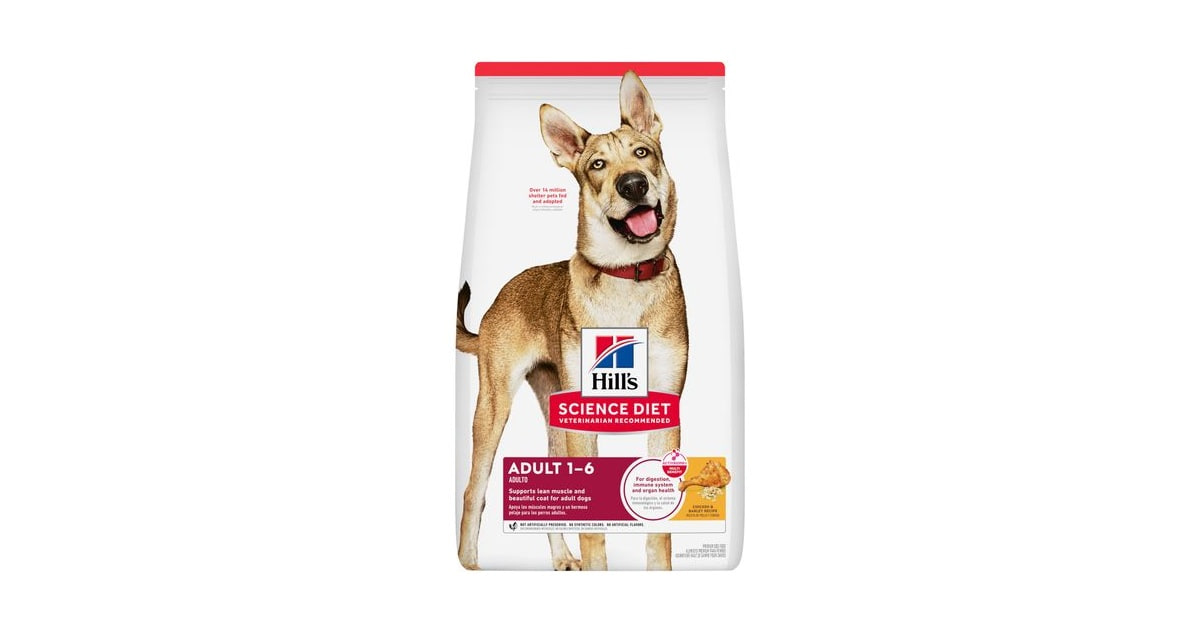
Hill's Science Diet Adult 1-6 Dry Dog
Hill's is the brand vets name most often, and the reason is boring in the best way: decades of published research, tightly controlled nutrient levels, and a grain-inclusive recipe that suits ordinary adult dogs. It's the safe answer when you don't know where to start.
$20.99fromAmazonThis is the food most vets would put their own dog on. In a Veterinary Practice News survey of more than 1,500 veterinarians, Hill's landed in the top three alongside Purina Pro Plan and Royal Canin — the same three that have topped that list every year for the better part of a decade. That consistency isn't marketing spend. It reflects how much clinical research sits behind the formulas, and how few surprises vets see from them.
The company employs more than 220 scientists, vets and nutritionists, and has published over 700 peer-reviewed studies — more than any other commercial pet food maker. For you, that matters in an unglamorous way. The nutrient levels in the bag are the ones a nutritionist chose on purpose, and they don't swing from batch to batch. Boring consistency is exactly what you want in something your dog eats twice a day.
The recipe itself is plain, and that's the point. High-quality protein for lean muscle, omega-6 fatty acids and vitamin E for skin and coat, and grains for steady digestion. Owners who switch report the same small things over and over — a softer coat, a calmer stomach, no drama at the bowl. There's no novel protein, no superfood blend, nothing to talk about at the dog park.
Grain-inclusive matters more than it used to. The FDA collected more than 1,100 reports linking grain-free diets to canine dilated cardiomyopathy, with peas, lentils and chickpeas turning up repeatedly in the foods involved. That investigation pushed a lot of vets to steer healthy dogs back toward grain unless there's a documented sensitivity. Hill's never went the other direction, so you don't have to think about it.
Flaws but not dealbreakers
The bag runs small. Five pounds is a trial run or a week's food for a spaniel, not a supply for a lab. Check that the size you add to your cart matches the dog you actually own, because reordering every few days gets old fast.
Chicken is the main protein, so this is out if your dog has a chicken sensitivity. Some owners also don't love the smell of the kibble, and a handful report worse breath after switching. That's common with chicken-based dry food and usually not a health issue, but it's the sort of thing you notice from the couch.
Runner-up
Small-dog nutrition with a texture picky eaters finish
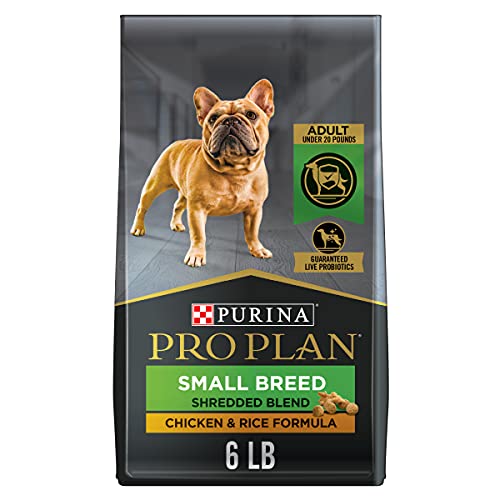
Purina Pro Plan Small Breed Dry Dog
Pro Plan mixes crunchy kibble with soft shredded pieces, and small dogs that stall at the bowl tend to clean it. Real chicken leads the ingredient list, live probiotics support digestion, and Purina's research record is as deep as anyone's in the category.
$20.68fromAmazonThe shredded blend is a texture trick, and it works. Each serving mixes bite-sized crunchy kibble with soft shredded pieces, which gives a fussy small dog something to sort through instead of walk away from. Owners of pugs, teacup poodles and chihuahuas — the classic dinner-table holdouts — report the same result again and again. The bowl gets emptied without a negotiation.
Purina has the longest-running evidence in the category. Its 14-year restricted-feeding study found that dogs kept at an ideal body condition lived a median of 1.8 years longer than dogs fed to excess. That's a finding about portion control rather than about any one bag. But it tells you what kind of company is setting your dog's nutrient levels, and it's the kind of study almost nobody else funds.
Real chicken is the first ingredient, protein is set high for active small dogs, and every bag includes guaranteed live probiotics for digestive and immune support. If your dog's stools have been soft on a supermarket food, this is a sensible thing to try before you escalate to a prescription diet. Owners with sensitive-stomach dogs are the ones who stick with it longest.
This used to be sold as SAVOR Shredded Blend Chicken and Rice, so if you fed that and lost the thread when the name changed, this is the same food. It's grain-inclusive with rice, which keeps it clear of the grain-free questions the FDA raised. For most small dogs, that's the right side of the line to be on.
Flaws but not dealbreakers
This is a small-breed formula. If your dog is much over twenty pounds, you want a different Pro Plan bag — and Purina's lineup is sprawling enough that grabbing the wrong one is genuinely easy. Read the front panel twice.
The kibble is dense and nutrient-packed, which means the correct scoop is smaller than it looks. Free-feed by eye and you'll overfeed a small dog quickly. Measure it, and remember that treats count toward the daily total.
Budget pick
A big bag of solid grain-inclusive food you can find anywhere
Blue Buffalo Life Protection Formula Chicken Adult
Blue Buffalo hits the same AAFCO adequacy bar as pricier bags, with real chicken first and wholesome grains for steady digestion. The 30-pound bag and near-universal availability make it the practical choice when you just need good food, reliably.
$67.97fromAmazonThis is the one you can actually find. Grocery stores, big-box retailers, pharmacies, every pet chain — Blue Buffalo is stocked nearly everywhere, and the 30-pound bag feeds a medium dog for weeks. When you run out on a Sunday night, availability beats theory. A very good food you can't buy is worse than a good food you can.
The recipe is straightforward and grain-inclusive. Real chicken comes first, then brown rice, barley and oatmeal for steady energy, plus natural prebiotic fiber for stool quality. The LifeSource Bits — those darker pieces scattered through the kibble — are an antioxidant, vitamin and mineral blend formed at a lower temperature so the nutrients survive processing.
Consumer Reports found no statistically significant relationship between what a dog food costs and how complete it is by AAFCO standards, and this bag is a decent illustration. It clears the same adequacy bar as foods that cost several times as much per serving. Dogs like it, owners report firm stools and good coats, and nothing about it demands a spreadsheet.
Blue Buffalo also leans hard on what isn't in the bag: no chicken by-product meals, no corn, wheat or soy. Whether those exclusions matter for a healthy dog is genuinely debatable, and we'd rather you check the AAFCO statement than the negative claims. But if avoiding those ingredients matters to you, this is the least complicated way to do it.
Flaws but not dealbreakers
Blue Buffalo doesn't have the research operation that Hill's, Purina and Royal Canin do, and it doesn't appear in the vet survey's top three. WSAVA notes that fewer than 15% of commercial pet food brands keep a board-certified veterinary nutritionist on staff full time — a question worth asking of any brand, this one included.
Some dogs pick around the LifeSource Bits and leave them in the bowl, which means skipping the part of the food doing the antioxidant work. And a 30-pound bag goes stale if a ten-pound dog takes half a year to finish it. Roll the bag down tight, or keep it inside a sealed bin.
Upgrade pick
Gently cooked fresh meals, if you can spare the freezer space
The Farmer's Dog Human-Grade Dog Food Plan
The Farmer's Dog sends portioned, human-grade meals of real meat and vegetables, gently cooked and frozen. It's formulated by board-certified veterinary nutritionists and backed by full AAFCO feeding trials, which almost no fresh service can claim.
Check priceatAmazonOpen a pack and it looks like something you'd cook yourself: real meat and vegetables, gently cooked, then frozen to hold the nutrients. Dogs that have quietly gone off kibble usually come back for this. That's the honest first appeal of fresh food — palatability. If you've got a senior who's started grazing and walking away, it's the most reliable fix here.
Almost no fresh service has actual feeding trials behind it. This one does. Most brands, premium ones included, meet AAFCO standards by formulation alone — the Tufts analysis found that 93% of foods marketed as ancestral, raw-inspired or biologically appropriate had never completed a trial. The Farmer's Dog completed full AAFCO feeding trials. That's a meaningfully higher standard of proof than a nutrient calculation on paper.
Recipes are formulated by board-certified veterinary nutritionists on staff, which puts the company in the small minority WSAVA describes. Your plan gets portioned from a short quiz covering breed, weight and activity level, so you're not guessing at a scoop. If your dog is carrying extra weight, that portioning alone may do more good than any change of brand.
It works across life stages too, from puppies to seniors, with essential vitamins and minerals built into every recipe. So you're not re-shopping the category when your dog turns eight. For a household with one dog and a real interest in what goes in the bowl, that simplicity is part of what you're paying for.
Flaws but not dealbreakers
It costs many times what kibble does per meal, and that gap is the entire trade-off. For a large or giant breed it gets steep fast, because you're shipping refrigerated food by weight. If money is a constraint, put it toward a vet visit before you put it toward fresh food.
The logistics are real. It arrives frozen on dry ice, it needs sustained freezer space, and once thawed each pack keeps about four days in the fridge. If you travel often, board your dog, or share a freezer with roommates, that's friction every single week.
It's a subscription. You can pause, skip or cancel anytime with support available around the clock, but you're committing to a delivery rhythm rather than grabbing a bag when you think of it.
Also great
Precisely portioned kibble sized for a small dog's mouth
Royal Canin Size Health Nutrition Small Breed
Royal Canin builds formulas around a narrow slice of dog — here, adults between nine and twenty-two pounds. The kibble is small, the calories are tuned to a small dog's needs, and the fiber blend targets digestion.
$59.99fromAmazonNobody slices this category as finely as Royal Canin. The brand offers more than 400 breed- and condition-specific formulas worldwide, built on decades of research into how breeds differ in shape and metabolism. This particular bag is aimed narrowly: small dogs, roughly nine to twenty-two pounds, from about ten months to eight years old. If your dog fits that window, the precision is genuinely useful.
You'll notice it in small ways. The kibble is sized for a shih tzu to chew without working at it — a real issue for flat-faced breeds and dogs with worn teeth. Calorie density is matched to a small dog's energy needs, which helps with a body type that puts on weight quickly. Calcium and phosphorus are balanced for small-dog bone structure rather than averaged across every size.
Digestion is the other focus. The formula uses easy-to-digest proteins plus a mix of fibers, including prebiotics, to support a healthy gut microbiome. Owners of small breeds with touchy stomachs tend to settle here and stay for years. And it's one of the three brands vets name most often, so your vet almost certainly knows it.
It also pairs cleanly with wet food if your dog needs more moisture or more encouragement. Royal Canin designs its wet and dry lines to be mixed, which is a small convenience that matters for older dogs whose interest in dinner comes and goes.
Flaws but not dealbreakers
The fit is narrow on purpose. If your dog is twenty-five pounds, or turns nine, you're meant to move to a different bag — and the lineup is dense enough that finding the right replacement takes a few minutes of squinting at labels.
The kibble has a noticeably oily feel. Plenty of owners mention it when they scoop. It doesn't appear to bother the dogs and it isn't a defect, but if greasy hands bother you, keep a scoop in the bin.
Who this is for
This guide is for anyone feeding a healthy adult dog and trying to pick a bag without a nutrition degree. If you're a first-time owner, start with the top pick and stop researching — it's a genuinely good answer. If your dog has soft stools, an itchy coat, or a habit of ignoring dinner, the runner-up and the small-breed picks are the ones to try next. And if you've been curious about fresh food, the upgrade pick is the one fresh service with feeding trials behind it.
This isn't the guide for a dog with a diagnosed medical condition. Kidney disease, pancreatitis, confirmed food allergies and severe joint disease all call for a therapeutic diet chosen with your vet, not a bag from a shortlist. We also don't cover raw diets, home-cooked recipes or prescription formulas. And if your dog is thriving on what it eats now, the strongest evidence in this whole category — Purina's 14-year study — says portion size probably matters more than the brand you switch to.
How we picked
AAFCO adequacy: every food carries a complete-and-balanced statement for a defined life stage, and we favored the rare ones validated by feeding trials rather than formulation alone. Research behind it: we looked for published peer-reviewed nutrition work and staff veterinary nutritionists, a bar fewer than 15% of brands clear. Ingredients and grain: a named animal protein first, a readable panel, and grain-inclusive as the default given the FDA's DCM reports. Life stage fit: size and age formulas had to actually change the kibble, calories and mineral balance, not just the bag art. Recall history: we checked the FDA recall database for every manufacturer and weighted a clean record heavily.
Other dog food brands worth considering
If you want a novel protein for a dog with food sensitivities: The Taste of the Wild High Prairie Adult ($58.99) — Taste of the Wild High Prairie builds its formula around roasted bison and venison instead of chicken or beef, which is exactly what you want if your dog reacts to the usual proteins. Owners dealing with chronic itching and belly rashes often report real improvement within a few weeks of switching. Protein runs 32%, real meat is the first ingredient, and each serving includes species-specific probiotics. The manufacturer, Diamond Pet Foods, had a serious Salmonella recall more than a decade ago, but the brand has kept a clean Class I record since. The catch is that it's grain-free, so it sits inside the category the FDA flagged. Reasonable choice for a dog with a documented sensitivity, not our first pick for a healthy one.
If you have a small senior dog with stiff hips: The Merrick Lil’ Plates Premium Grain Free Senior ($49.98) — Merrick Lil' Plates senior formula is built for exactly one dog: a small breed past middle age. Deboned chicken comes first, the kibble is scaled down for a chihuahua or a cavalier with bad teeth, and it carries high levels of glucosamine and chondroitin for joints plus omega-3 and omega-6 for coat. Probiotics are added for digestion. Owners of very picky old dogs — the ones who reject a food they loved last month — keep coming back to this one. What you give up is grain: it's grain-free, so the DCM caveat applies. It also comes in a smaller bag than the big-box options, and it's harder to find in stores than the picks above.
The competition
This is what our research surfaced, not a survey of everything sold. The dog food aisle is enormous, and a bag missing from this list isn't automatically bad. Here's the one remaining product we looked at closely and what kept it out of the picks.
The ORIJEN Grain Free WHOLEPREY Dry Dog Food ($106.99) — Orijen Original is the highest-protein kibble here by a wide margin — 38% crude protein and 85% animal ingredients, with chicken, turkey, salmon, whole herring and chicken liver as the first five ingredients. The WholePrey approach includes organs and bone rather than just muscle meat, and it's built for all life stages. Owners of hard-working and very active dogs swear by it, and some report it settled digestive problems nothing else touched. Two things kept it out of the picks. It's grain-free and it's marketed as biologically appropriate, which puts it squarely in the group the Tufts analysis found rarely completes feeding trials. And it's rich enough that some dogs can't handle the transition. If you have an athletic dog, no legume concerns and a vet who's on board, it's a defensible choice.
Switching foods without the mess
Change food slowly or you'll be cleaning the rug. Give it seven to ten days: start at about a quarter new food, move to half, then three quarters, then all of it, and hold at each step until stools look normal. If they go loose, back up a step and wait longer. Store dry food in its original bag — the liner is built to slow the fats going rancid — and put the whole bag inside a sealed bin rather than dumping the kibble in loose. Keep it somewhere cool and dry, and try to finish a bag within about six weeks of opening. Measure meals with a real cup, and count treats toward the daily total; they add up faster than anyone expects.
Questions we get
What does AAFCO 'complete and balanced' actually mean?
It means the food supplies every nutrient a dog needs, in the right proportions, for a specific life stage — growth, adult maintenance, or all life stages. It's the single most important line on the bag. Look for whether adequacy was established by a feeding trial or by formulation, since trials are the stronger evidence and far less common.
Is grain-free dog food bad for dogs?
Not automatically, but the caution is real. The FDA received over 1,100 reports linking grain-free diets to dilated cardiomyopathy, with peas, lentils and chickpeas showing up repeatedly in the foods involved. Most vets now recommend grain-inclusive food for healthy dogs unless there's a documented sensitivity. If you're feeding grain-free by choice, talk to your vet about it.
What's best for a dog with allergies or a sensitive stomach?
True grain allergies are rare; protein allergies are more common, and chicken and beef are the usual suspects. A novel protein like the bison and venison in Taste of the Wild is a reasonable place to start. Foods with added probiotics, like Pro Plan, help some dogs with loose stools. If the itching or diarrhea is persistent, get a proper elimination diet from your vet instead of guessing through bags.
How much should I feed my dog each day?
Start with the feeding chart on the bag for your dog's weight, then adjust based on what you see. You should be able to feel ribs without pressing hard and see a waist from above. Purina's 14-year study found dogs kept at an ideal body condition lived a median of 1.8 years longer than dogs fed to excess — portion control is the highest-leverage thing you control.
Is fresh food like The Farmer's Dog worth it over kibble?
It depends on what you want from it. Fresh food costs several times more per meal than kibble and demands freezer space and a weekly rhythm. What you get is high palatability, portions calculated for your dog, and — unusually for the segment — full AAFCO feeding trials. A good kibble is not nutritionally inadequate, so this is a preference upgrade rather than a health necessity for most dogs.
Can I mix dry kibble with wet food?
Yes, and it's common. Wet food adds moisture and makes meals more appealing for older or picky dogs. Just count both toward the daily calorie total, or you'll quietly overfeed. Some brands, Royal Canin among them, design their wet and dry lines to be combined.
Why you should trust us
For this guide:
- We read the AAFCO adequacy statements, guaranteed analysis panels and full ingredient lists for every food in this guide.
- We compared them against published veterinary nutrition research, the FDA's reports on grain-free diets and DCM, WSAVA's guidance on manufacturer standards, and the FDA pet food recall database.
- We also reviewed recurring themes in owner feedback — palatability, stool quality, kibble size and coat condition — to identify flaws that spec sheets don't show.
- We read owner reviews on every listing, weighted toward the critical ones, because that is where the recurring failures show up.
- We have a systematic way of automatically fetching the latest prices, so the numbers on this page stay current.
- This is a research-focused guide, so the team may not own every product listed — though we often do own the top winners, which gives us extra context for the recommendations.
- We don't accept free products, and the retailer commission never changes which product we recommend.
Sources
World Small Animal Veterinary Association (WSAVA) Dog Food Recommendations, WSAVA
FDA Investigation into Potential Link Between Certain Diets and Canine Dilated Cardiomyopathy, U.S. Food & Drug Administration
Dog Food Advisor – Best Dry Dog Foods 2026, Dog Food Advisor
Wirecutter – The Best Dog Foods, Wirecutter / The New York Times
Consumer Reports – Dog Food Safety & Ratings, Consumer Reports
American Kennel Club – How to Choose Dog Food, American Kennel Club (AKC)
Tufts Veterinary School – Petfoodology Blog, Cummings School of Veterinary Medicine, Tufts University
The Farmer's Dog Independent Feeding Trial Data, The Farmer's Dog
Hill's Pet Nutrition Research Publications, Hill's Pet Nutrition
ASPCA Animal Poison Control – Common Food Hazards, ASPCA
Purina Institute – Nutritional Research in Dogs, Purina Institute
Orijen / Champion Petfoods Ingredient Sourcing, Champion Petfoods / Orijen
Amazon product listings and owner reviews for all 8 products
Manufacturer specification pages for each product
Some passages in this guide may be paraphrased with AI help. Prices are refreshed automatically.
More like this.
Continue exploring pet reviews and recommendations.

The Best Dry Dog Food
Dog food is the one purchase you make over and over, and your dog eats nothing else. So the small stuff compounds. A bag that's a little too rich can mean…

The Best Dry Dog Food
Your dog eats the same thing twice a day, every day, for years. That makes dry food one of the few purchases where consistency matters more than novelty.…

The Best Food Dehydrators
A dehydrator is a slow appliance that quietly saves you money. It pulls 80 to 95 percent of the moisture out of food, which drops water activity below the…

The Best Probiotics and Fermented Foods for Gut Health
Your gut doesn't care much about marketing. It responds to what you feed it, most days, over months. So the useful question isn't which probiotic is…

The Best Food Processors
A food processor pays for its counter space in ten-minute chunks. It shreds a block of cheddar before your pan is hot. It turns a pile of onions, carrots…

The Best Baby Food Makers
Making your own baby food sounds ambitious until you do it once. You steam a sweet potato, blend it smooth, spoon it into a tray, and freeze it. That's…