The Best Dry Dog Food
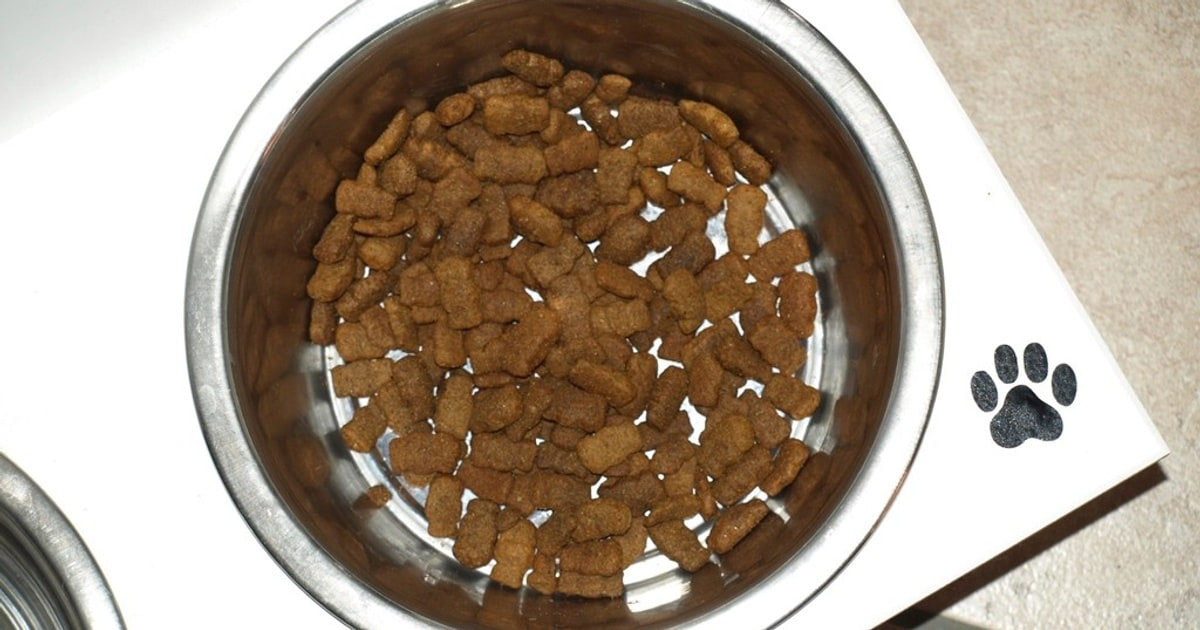
Dog food is the one purchase you make over and over, and your dog eats nothing else. So the small stuff compounds. A bag that's a little too rich can mean a week of loose stools. A kibble that's too big for a small mouth gets pushed around the bowl and left there. The things that actually matter day to day are pretty boring: a named meat at the top of the ingredient list, a complete-and-balanced statement on the bag, a texture your dog will eat, and a price you can pay every month.
Here's the honest part. No bag of kibble has been proven better for your particular dog. Pet food labels are marketing documents, and the research behind most premium claims is thinner than the packaging implies. The categories even fight each other. Grain-free food is still tangled up in the FDA's unresolved look at legume-heavy diets and heart disease, while grain-inclusive food gets dismissed as filler by people selling something else. The best you can do is pick a carefully formulated food and then watch your dog.
So we read ingredient panels, guaranteed-analysis numbers and published reviews, and we sorted through what owners say after months of feeding. We looked for real protein first, an adequacy statement that means something, and a formula matched to a dog's size rather than to a story. We also gave weight to the dull stuff: kibble shape, bag size, how easily dogs switch onto it. We think that the ORIJEN Original is the best dry dog food for most people, and that the Diamond Naturals Large Breed Adult is the one to buy if you're feeding a big dog and want to keep the monthly bill down.
Everything we recommend

The densest, meatiest kibble here, if your budget can take it

Enough food for a big dog, at a fraction of the cost

Kibble engineered for a small mouth and a fast metabolism
At a glance
| Product | Protein Content % | Life Stage | Price | |
|---|---|---|---|---|
| ORIJEN Grain Free High Protein Dry DogTop pick | — | All Life Stages | $106.99 |
 | Purina Pro Plan Adult Indoor Chicken andAlso in lineup | — | Adult | $32.59 |
| Diamond Naturals Large Breed Adult Dry DogBudget pick | — | Adult | $43.99 |
| Royal Canin Size Health Nutrition Small AdultAlso great | — | Adult | $59.99 |
 | Taste of the WildAlso consider | 32% | — | $19.99 |
How we picked
Real protein first. We wanted a named meat or named meat meal at the top of each maker's published ingredient list. A vague 'meat meal' with no species attached ruled a food out.
Complete and balanced. Every food here carries an AAFCO nutritional adequacy statement for the life stage it's sold for. Anything labeled for supplemental or intermittent feeding didn't qualify.
Matched to a body. Published specs had to show a food designed for a specific size class or for all life stages, not just vaguely for dogs. Kibble size and calorie density matter more than the front of the bag suggests.
Owners who stayed. We weighted feedback from people who'd fed a food for months or years over first-impression reactions. Repeated reports of refusal, loose stool or batch inconsistency counted against a food.
Cost you can sustain. Cost per day matters more than cost per bag, because denser food means smaller servings. A food you'd quietly abandon in three months isn't a real recommendation.
Top pick
The densest, meatiest kibble here, if your budget can take it
ORIJEN Grain Free High Protein Dry Dog
This is about as much animal protein as you'll find in a bag of kibble, with chicken, turkey, salmon and herring leading the list. It costs a lot, and dogs that turn their noses up at everything else tend to eat it anyway.
$106.99fromAmazonAlmost everything in this bag came off an animal. ORIJEN builds the recipe around whole prey — muscle meat, organs, cartilage — so the first five ingredients are chicken, turkey, salmon, whole herring and chicken liver. That matters because protein from meat carries a fuller amino acid profile than protein padded out with plant concentrates. The listed crude protein sits near the top of the dry-food category, around 38 percent.
Picky dogs are the real test, and this is where ORIJEN keeps showing up. Owners who've cycled through five or six bags describe the same thing: the dog that ignored everything else finally cleans the bowl. Champion coats the kibble with freeze-dried liver, which is a blunt but effective trick. If you've been bribing a dog to eat dinner, that aroma does a lot of work for you.
It's also less of a long-term commitment than it looks, because it's formulated for all life stages. You don't have to swap formulas when your puppy grows up or your dog turns seven. And the food is dense enough that you feed less per meal than you would a cheaper, carb-heavier kibble, which narrows the cost gap. Not all the way. But a little.
Digestion is the quiet upside. Owners whose dogs have struggled on other foods — chronic soft stool, gas that clears a room — often report things settle down on this one. The kibble is softer than most, which helps older dogs and dogs missing a few teeth. That's not a guarantee, and rich food can cut both ways. But it's a pattern worth knowing if you've been rotating through sensitive-stomach formulas.
Flaws but not dealbreakers
It's the most expensive food in this guide by a wide margin, and that's the central drawback. For a large dog, the bag disappears fast, and the biggest size sold here is smaller than what the budget brands offer. You'll reorder more often and pay more each time.
The protein load isn't right for every dog. If yours has kidney disease or another condition where protein gets restricted, this is a conversation for your vet rather than a default choice. It's also grain-free and leans on legumes, which puts it inside the FDA's open questions about legume-heavy diets and canine heart disease. And it's rich enough that switching over quickly tends to backfire, so give it a week or two.
Budget pick
Enough food for a big dog, at a fraction of the cost
Diamond Naturals Large Breed Adult Dry Dog
Cage-free chicken leads the ingredient list, with glucosamine, chondroitin and a probiotic blend aimed squarely at large dogs. It comes in a 40-pound bag from a family-owned maker, and it costs a fraction of what the premium brands charge per pound.
$43.99fromAmazonIf you own a Great Dane or a Pyrenees, you already know the math. A big dog goes through a bag in a couple of weeks, and premium kibble turns into a real monthly line item. Diamond Naturals keeps the fundamentals — real chicken first, added glucosamine and chondroitin, probiotics — while cutting the cost per pound down to something you can actually sustain for years.
The joint additives aren't decoration. Large and giant breeds put more load on their hips and elbows than the joints were built for, which is why glucosamine and chondroitin show up in most large-breed formulas. This one also uses chelated minerals, bound to amino acids so the body absorbs them more easily. That's a formulation detail you don't always get at this tier, and it's the kind of thing that separates a cheap food from a merely inexpensive one.
Owners who've fed it for years — through picky phases, through injuries, through multiple dogs — tend to describe the same unglamorous outcome. The dog looks good, the coat holds up, stool stays firm. Several mention it's easy on digestion during the switch, which isn't nothing when you're moving a hundred-pound dog onto something new.
It's a large-breed formula, not a universal one. The kibble size and calorie density are set for a big adult dog. Feeding it to a terrier isn't dangerous, but you'd be fighting the kibble size for no good reason. If you have a small dog, the Royal Canin pick below is built for that mouth instead.
Flaws but not dealbreakers
The protein percentage sits lower than the premium foods here, and Diamond publishes far less nutrition research than Purina or Royal Canin do. If you want a company with a large in-house science staff and a long feeding-trial record behind the exact bag you're buying, this isn't it. Diamond Pet Foods has also had recalls in its past, which is worth knowing even though the company overhauled its testing afterward.
Palatability is a coin flip. Plenty of dogs inhale it, but some owners find their dog simply won't touch the stuff and end up handing the bag to a neighbor. Kibble size and texture can vary a little between batches, too. Buy one bag before you set up a standing order.
Also great
Kibble engineered for a small mouth and a fast metabolism
Royal Canin Size Health Nutrition Small Adult
Royal Canin designs backward from the dog: small kibble a 12-pound adult can actually crunch, calories tuned to a quick metabolism, and a fiber blend aimed at digestion. If your dog weighs somewhere between nine and 22 pounds, this was built for them specifically.
$59.99fromAmazonSmall dogs aren't just scaled-down big dogs. They burn calories faster per pound, they have crowded little jaws, and they're prone to dental trouble. This formula is built for that body — a denser calorie load so a small stomach gets enough, and a small, crunchy piece shaped to be chewed rather than swallowed whole. Owners of Shih Tzus and minis keep saying the same thing: the kibble is finally the right size.
The digestion story is what owners bring up most. Royal Canin uses easy-to-digest proteins and a specific fiber blend that includes prebiotics, and the practical result is smaller, firmer stools. If you live in an apartment and walk your dog on a sidewalk, you'll notice that. It's also part of why vets keep recommending the brand for dogs with mild but stubborn stomach trouble.
It's an age-bracketed food, meant for dogs from about ten months to eight years. That's a narrower window than ORIJEN's all-life-stages formula, so you'll be switching at some point. Royal Canin sells a Small 8+ version for the back half of a dog's life, which makes that switch easy enough. It's just one more thing to keep track of.
Flaws but not dealbreakers
The ingredient panel is the sticking point. Royal Canin formulates toward nutrient targets rather than toward a pretty ingredient list, so you'll find by-product meal and corn gluten meal in there. Those are legitimate, concentrated protein sources rather than junk. But if you choose food by reading the first five ingredients, this one reads badly.
The bag is small, and the price per pound isn't gentle for what's inside — you're paying for the formulation work, not the ingredient tier. Some owners also find the kibble noticeably oily to handle. It doesn't seem to bother the dogs, but it leaves a film on your hands and the bowl.
Who this is for
This guide is for owners of healthy adult dogs buying dry food off the shelf. If that's you, any of the picks here will feed your dog well, and the choice comes down to your dog's size, your dog's stomach and your budget. Switch now if your current bag is causing problems — itching, chronic soft stool, a dog that sniffs the bowl and walks away — or if you're feeding a big dog something with no joint support in it at all.
Don't buy from this guide if your vet has your dog on a therapeutic diet. Hydrolyzed protein foods, renal formulas and prescription weight-management diets do things ordinary kibble can't, and swapping on your own can undo months of careful work. Puppies under a year, plus pregnant and nursing dogs, need formulas labeled for those stages; of the picks here, only ORIJEN covers all life stages. We're also not covering wet food, fresh subscription services or raw diets.
How we picked
Real protein first: a named meat or meat meal at the top of the panel, never an anonymous 'meat meal.' Complete and balanced: an AAFCO adequacy statement for the life stage printed on the bag, ideally backed by feeding trials rather than a formulation calculation. Matched to a body: kibble size, calorie density and joint support that suit the dog you actually own, because a giant breed and a nine-pound terrier need different things from the same bowl. Owners who stayed: feedback from people months or years in, weighted toward repeated reports of refusal, loose stool or batch-to-batch inconsistency. Cost you can sustain: what it takes to feed your dog every day, not what the bag rings up as once.
Other dry dog food worth considering
If your dog itches on chicken: The Taste of the Wild ($19.99) — Taste of the Wild High Prairie is built on roasted bison and venison — proteins most dogs have never eaten, which is the whole point for a dog with a suspected chicken or beef sensitivity. Owners of itchy dogs describe skin calming down within a few weeks of the switch, and it's one of the more reliably devoured foods in this group. Two caveats, though. It's grain-free and legume-heavy, so it sits inside the FDA's open questions about diet and canine heart disease; talk to your vet before you commit long term. And it comes from Diamond Pet Foods, so it carries the same corporate recall history as our budget pick. The bag sold here is a small one, too, so a big dog will empty it quickly.
The competition
This is what our research surfaced, not the whole wall at the pet store. Dog food is a category with hundreds of credible options, and the foods above are the ones that came through this lineup with a clear job to do. If your vet has your dog on a therapeutic diet — hydrolyzed protein, renal support, prescription weight management — nothing here replaces it, and you shouldn't treat a good commercial kibble as an equivalent.
Switching foods without a mess
Change food slowly. The standard advice is a week to ten days: about a quarter new food for the first few days, half through the middle, three-quarters after that, all new by the end. Gut bacteria need time to catch up, and rushing is the most common cause of the diarrhea owners then blame on the new bag. If your dog has a sensitive stomach, stretch it to two weeks and consider a probiotic during the switch. Store kibble in its original bag, since the liner is built to keep the fats from going rancid, and set the whole bag inside a bin rather than pouring it in. Roll the top down after each scoop, and try to finish an opened bag within about six weeks.
Questions we get
What should I actually look for on a dog food label?
Start with the nutritional adequacy statement. You want the words complete and balanced, and ideally a note that the claim is backed by feeding trials rather than a formulation calculation. Then check that the first ingredient is a named meat or named meat meal, not an anonymous 'meat meal' or 'poultry by-product' with no species attached. Confirm the life stage matches your dog, and treat the rest of the front of the bag as advertising.
Is grain-free dog food safe?
The FDA's investigation into a possible link between legume-heavy grain-free diets and canine dilated cardiomyopathy is still open and still unresolved. No causal mechanism has been established, but veterinary nutrition groups suggest that owners of breeds not already prone to heart disease talk it through with a vet before feeding grain-free long term. If your dog has a grain allergy confirmed by an elimination trial, the benefit may well outweigh the uncertainty. If you picked grain-free because it sounded healthier, a good grain-inclusive food is the simpler call.
What's the best food for a large breed dog?
Look for two things: joint support and controlled calorie density. Big dogs carry more load on their hips and elbows, and extra weight makes that worse, so glucosamine and chondroitin plus a formula that doesn't overfeed are the priorities. Our budget pick, Diamond Naturals Large Breed Adult, covers both and comes in a bag sized for a dog that eats a lot. ORIJEN works too if you want maximum protein for lean muscle, but you'll need to watch total daily calories.
How do I compare wet food to kibble fairly?
Convert both to a dry matter basis, because wet food is mostly water and the percentages on the can look artificially low. Subtract the moisture percentage from 100, then divide the nutrient percentage by that number. A wet food showing 10 percent protein and 78 percent moisture works out to 10 ÷ 22, or about 45 percent protein on a dry matter basis — higher than most premium kibble. Without that conversion, you're comparing nothing to nothing.
My dog has a sensitive stomach. What should I try?
First rule out a real food allergy with your vet, since a diagnosed allergy calls for a hydrolyzed protein elimination diet rather than anything off the shelf. For garden-variety sensitivity, a single named protein, no corn or wheat, and live probiotic cultures cover most cases. A novel protein like the bison and venison in Taste of the Wild High Prairie helps if chicken or beef seems to be the trigger. Whatever you pick, transition over two weeks instead of one.
Why you should trust us
For this guide:
- We read the ingredient panels, guaranteed-analysis numbers and manufacturer formulation claims for every food in this guide.
- We compared those against published reviews and veterinary nutrition guidance, including the FDA's open advisory on legume-heavy grain-free diets.
- We read through owner feedback for each bag, looking for repeated themes around palatability, digestion and batch consistency rather than one-off complaints.
- We read owner reviews on every listing, weighted toward the critical ones, because that is where the recurring failures show up.
- We have a systematic way of automatically fetching the latest prices, so the numbers on this page stay current.
- This is a research-focused guide, so the team may not own every product listed — though we often do own the top winners, which gives us extra context for the recommendations.
- We don't accept free products, and the retailer commission never changes which product we recommend.
Sources
Dog Food Reviews and Ratings 2026 — Consumer Reports, Consumer Reports
Best Dog Food 2026: Vet-Approved Picks — Forbes Vetted, Forbes Vetted
Best Dog Food of 2026 — Wirecutter / New York Times, Wirecutter / New York Times
FDA Investigation into Potential Link Between DCM and Certain Diets in Dogs, U.S. Food and Drug Administration
AAFCO Dog and Cat Food Labeling Requirements — Official Guidelines, Association of American Feed Control Officials (AAFCO)
Grain-Free Pet Foods and Dilated Cardiomyopathy: An Update — Tufts University Clinical Nutrition Service, Tufts University Cummings School of Veterinary Medicine
Pet Food Industry Data and Trends 2025–2026 — American Pet Products Association (APPA), American Pet Products Association
Evaluating Dog Food Ingredients and Labels — PetMD Veterinary Review, PetMD
Amazon product listings and owner reviews for all 5 products
Manufacturer specification pages for each product
Some passages in this guide may be paraphrased with AI help. Prices are refreshed automatically.
More like this.
Continue exploring pet reviews and recommendations.

The Best Dry Dog Food
Your dog eats the same thing twice a day, every day, for years. That makes dry food one of the few purchases where consistency matters more than novelty.…

The Best Dog Food Brands
You buy dog food more often than almost anything else you own a decision about. Twice a day, every day, for ten or fifteen years. That repetition is what…

The Best Baby Food Makers
Making your own baby food sounds ambitious until you do it once. You steam a sweet potato, blend it smooth, spoon it into a tray, and freeze it. That's…

The Best Food Dehydrators
A dehydrator is a slow appliance that quietly saves you money. It pulls 80 to 95 percent of the moisture out of food, which drops water activity below the…

The Best Probiotics and Fermented Foods for Gut Health
Your gut doesn't care much about marketing. It responds to what you feed it, most days, over months. So the useful question isn't which probiotic is…

The Best Food Processors
A food processor pays for its counter space in ten-minute chunks. It shreds a block of cheddar before your pan is hot. It turns a pile of onions, carrots…