The Best Dog Harnesses and Leashes
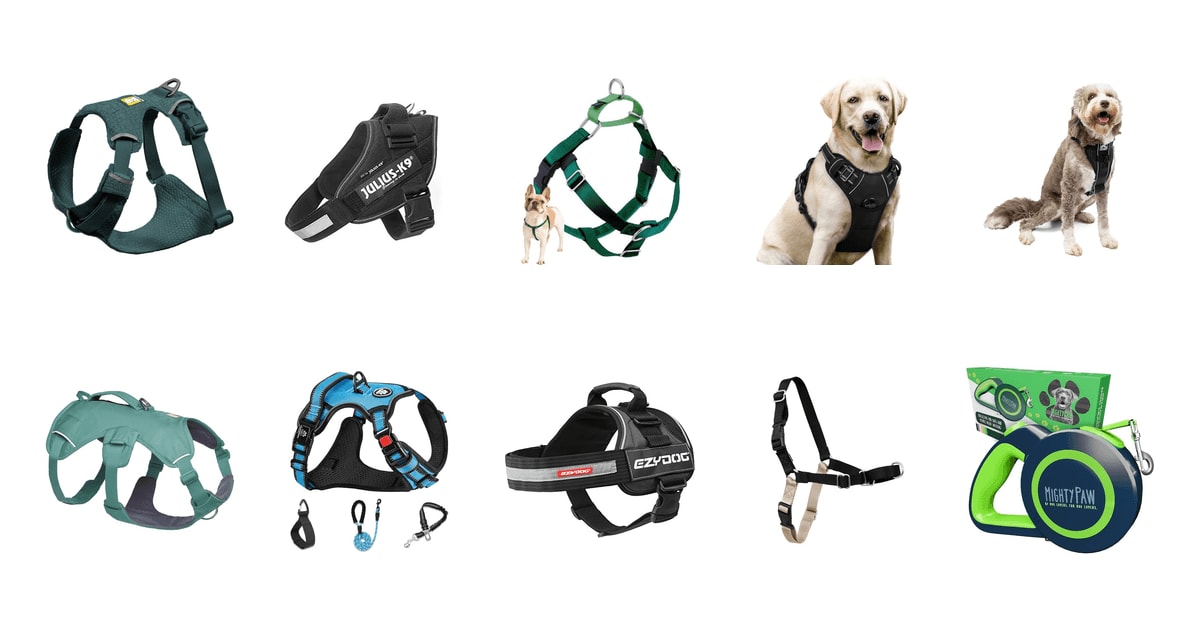
You clip a harness onto your dog more often than you use almost anything else you own for them. That's why the small annoyances matter so much. A strap that rubs behind the front legs, a buckle you can't work with cold hands, a chest panel that slides sideways every block — those turn into daily friction. The right harness disappears. Your dog stops noticing it, you stop fiddling with it, and the walk becomes about the walk instead of the gear.
Here's the honest part: no harness trains your dog for you. A front clip gives you steering, and it takes real leverage away from a dog who leans into a collar. But it doesn't teach loose-leash walking on its own, and plenty of owners find their dog still pulls, just less effectively. Sizing is the other universal weak spot. Nearly every brand's chart is approximate, dogs of the same weight come in wildly different shapes, and you should plan on at least one exchange.
So buy for your dog's body and your actual walks, not for a feature list. A calm ten-pound dog needs almost nothing. A ninety-pound rescue who bolts at squirrels needs hardware you can trust and a handle you can grab. We think that the Ruffwear Front Range Flex Dog Harness is the best dog harness for most people, and that the 2 Hounds Design Freedom No Pull Dog Harness is the one to buy if your dog pulls hard enough to make walks miserable.
Everything we recommend
Comfortable enough for all day, tough enough for the trail

Front-loop steering that settles a hard puller

Nearly everything the pricier harnesses do, for far less

Escape-proof and liftable, if you'll pay for the build

Handle-first control for big, strong, wiggly dogs
Prices as of Oct 23, 7:21 AM PT · Details
At a glance
| Product | Fit Size | Leash Clips | Price | |
|---|---|---|---|---|
| RuffwearTop pick | Small | Dual Leash Clips | $69.99 |
| Julius-K9Also great | Size 1 | — | $59.99 |
| 2 Hounds Design Freedom No Pull DogRunner-up | LG | Two Connection Points | $34.97 |
| rabbitgoo Dog Harness No Pull with 2Budget pick | Large | 2 Metal Leash Rings | $15.96On sale |
 | Kurgo Tru-Fit Smart Dog Walking Harness -Also consider | Large | Front And Back | $24.95 |
| RuffwearUpgrade pick | Medium | Triple Leash Clip | $79.99 |
 | NESTROAD No Pull Dog Vest Harness withAlso in lineup | — | Front And Rear Clip | Check priceOn sale |
 | EzyDog Convert Dog HarnessAlso consider | Large | Welded D-Ring | $79 |
 | PetSafe Easy Walk Harness for Dogs -Also consider | Large | Front Chest Leash | $22.99 |
 | Mighty Paw Retractable Dog Leash 2.0Also in lineup | 0 - 50 lbs | Swivel Clip | $13.99 |
Prices as of Oct 23, 7:21 AM PT · Details
How we picked
Fit and adjustability. We looked for at least four independent adjustment points, since that's what lets you fit a narrow neck and a deep chest on the same dog. Owner feedback about sizing charts mattered as much as the charts themselves.
Leash clip placement. Front rings give you steering for a dog who pulls; back rings keep pressure off the chest for a dog who doesn't. We favored harnesses that offer both, and flagged the ones that only do one.
Hardware and stitching. For dogs past about forty pounds, we wanted metal rings and buckles rated for the load, plus reinforced stitching where the leash attaches. Published reviews and owner reports of buckle and ring failures pushed several listings down.
Escape resistance. The common failure is a dog ducking its head and reversing out. We gave weight to designs with a second belly strap or a martingale loop, and to owner accounts of dogs who'd escaped everything else.
Visibility and extras. Reflective trim, a usable handle and a seat-belt loop are cheap to add and genuinely useful. We treated them as tiebreakers, not as reasons to buy.
Top pick
Comfortable enough for all day, tough enough for the trail
Ruffwear
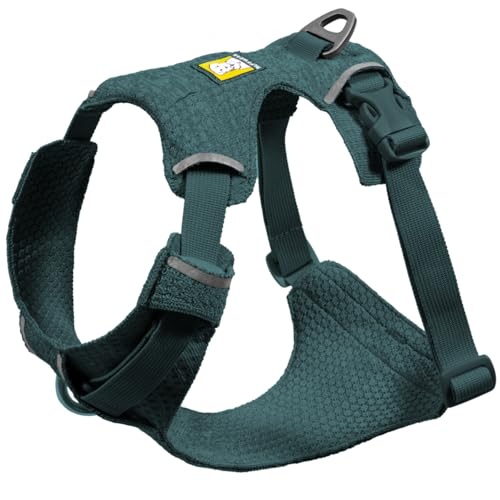
This is the harness we'd put on almost any dog. The knit chest panel flexes with the shoulders instead of digging in, four adjustment points sort out odd body shapes, and the two leash clips mean you won't need a second harness once training finally clicks.
$69.99fromAmazonPrices as of Oct 23, 7:21 AM PT · Details
The knit chest panel is the reason to pick this one. Instead of a stiff nylon strap lying across the shoulders, the fabric is knit to a shape and gives as your dog moves. Owners of deep-chested and awkwardly proportioned dogs — Scotties, doodles, long-bodied mixes — say it's the first harness that didn't gap or rub. If your dog has quit on everything else you've bought, this is the shape to try next.
Four adjustment points sound like marketing copy until you own a dog who lands between sizes. You can let out the chest without loosening the neck, which is how you stop a harness from sliding sideways on a narrow dog. Owners also mention there's room left to grow, so a puppy won't age out of it in a couple of months.
Both leash clips are here, and you'll use both. Clip to the front ring while your dog is still learning, and a lunge turns them toward you rather than forward. Clip to the back once walks settle down, and nothing presses on the chest at all. That's two harnesses' worth of use out of one purchase, which softens the sting of the price.
Getting it on is easier than it sounds, and that matters daily. Side-release buckles and a wide neck opening mean you're not shoving fabric over a nervous dog's head. Head-shy dogs and stiff seniors put up far less of a fight. The reflective trim isn't full-body coverage, but it's enough to make a dark dog readable to a driver at dusk.
Flaws but not dealbreakers
The sizing chart is the weak spot. Owners repeatedly say it doesn't line up with this version of the harness, and that the chest adjusts a good two inches larger than the numbers suggest. Measure your dog, read the overlap between sizes carefully, and be ready to swap. Very barrel-chested dogs like English Bulldogs tend to find this cut narrow.
The knit fabric collects burrs, sand and mud, so it needs washing more often than plain webbing does. And the front clip alone won't fix a committed puller — owners of small, determined terriers report it barely slowed things down. The ring gives you steering, not brakes.
Runner-up
Front-loop steering that settles a hard puller
2 Hounds Design Freedom No Pull Dog
The front of this harness carries a martingale loop that takes up slack and turns your dog sideways mid-lunge. It's the design trainers point people toward, it's built from stainless hardware and heavy webbing, and it holds dogs who back out of everything else.
$34.97fromAmazonPrices as of Oct 23, 7:21 AM PT · Details
The martingale loop is a short cinch across the chest that tightens a little when your dog drives forward, pivoting the shoulders instead of letting them pull straight ahead. It works on leverage, not discomfort. Owners of serious pullers — Labs, hounds, one very large St. Bernard — describe walks going from a wrestling match to something pleasant. Trainers and behaviorists recommend this style for the same reason.
This is the harness we'd hand someone who has already tried everything. Escape artists get out of single-band harnesses by ducking their head and backing up. The Freedom's geometry and four adjustment points make that much harder, and owners with collie mixes and other practiced backers-out say it finally held. Stainless hardware and USA-made webbing mean the parts under load aren't the parts that fail.
The lining is a soft velvet-style fabric right where the strap crosses behind the front legs — exactly the spot where cheap harnesses chafe. You get front and back rings, so it's as flexible as our top pick day to day. And the size run is genuinely wide, so a small dog and a giant breed can wear the same design.
Flaws but not dealbreakers
Setup takes patience. Expect to spend a quarter of an hour on the first fitting, working four straps while your dog wanders off, and the front loop takes a walk or two before you're using it well. Fitted sloppily, it's just a harness.
It won't cure every dog. Some owners say theirs still pulls, only with less leverage — a real improvement, not a fix. The fabric also isn't made for swimming or repeated soakings, so skip it if your dog is in the lake most weekends.
2 Hounds Design backs the Freedom harness with a thirty-day satisfaction guarantee, plus a chewing warranty on webbing your dog decides to sample.
Budget pickOn sale
Nearly everything the pricier harnesses do, for far less
rabbitgoo Dog Harness No Pull with 2
For a first dog, a growing puppy, or a household that needs three harnesses at once, this one covers the basics without drama. You get two metal leash rings, four adjustment straps, a padded and mesh-lined chest panel, and a top handle.
$15.96fromAmazonList pricePrices as of Oct 23, 7:21 AM PT · Details
You give up less than you'd expect. Two metal leash rings, four adjusting straps, a padded chest panel, breathable mesh, reflective strips and a grab handle — that's the same feature list as harnesses costing several times more. It's the harness we'd suggest for a puppy who'll change shape every few weeks, or for a first-time owner who isn't sure yet what their dog needs.
It goes on over the head and buckles behind the front legs, so you're never lifting paws through loops. Owners of arthritic seniors and skittish rescues say that alone changed the mood of getting ready. Owners of oddly built dogs — a long, skinny mix with a deep chest, a corgi puppy — also report getting a real fit out of the four straps.
Against our top pick, the gap shows up in the materials rather than the design. The oxford shell is stiffer than knit fabric, the buckles are plastic, and the whole thing feels more generic. But it does the job, and if your dog destroys or outgrows it, replacing it doesn't hurt.
Flaws but not dealbreakers
Plastic side buckles are the limit here. They hold fine for normal walking, but for a large dog who throws their weight into the leash, metal hardware is worth paying for. Expect to replace this harness sooner than a premium one under that kind of daily strain.
Sizing overlaps awkwardly. Several owners found their dog's measurements fell into two sizes at once and had to order twice to sort it out. Colors also fade with heavy sun exposure, which is cosmetic but noticeable on a black harness.
Upgrade pick
Escape-proof and liftable, if you'll pay for the build
Ruffwear
If your dog reverses out of harnesses or needs a hand getting into the car, this is the one. A padded belly panel and multiple adjustment points close off the escape route, and the reinforced handle is rated to take your dog's full weight.
$79.99fromAmazonPrices as of Oct 23, 7:21 AM PT · Details
Nothing else here holds a determined escape artist like this does. The wraparound geometry and padded belly panel remove the slack a dog needs to duck and reverse. Owners of bull terrier mixes, beagles and heeler crosses — the dogs who've slipped every other harness in the house — consistently report this is the one that finally worked. That's the whole reason to spend up.
The lift handle is built into the frame rather than sewn onto the top, so it pulls against the chest and belly panels together. That's what makes it usable for real support: helping an arthritic dog into a truck bed, steadying a recovering dog on stairs, or hoisting a dog over a boulder on a scramble. Owners with senior dogs treat it as mobility equipment as much as walking gear.
You also get a front clip and an aluminum back V-ring, so it walks like a normal harness on a normal Tuesday. Materials are the rugged, breathable stuff you'd find on human outdoor gear, and there's reflective trim for early and late walks. It's the most overbuilt harness here, in the good sense.
Flaws but not dealbreakers
It's overkill for a dog whose big adventure is the mailbox. There's more webbing, more padding and more weight than a calm house dog needs, and more straps to get right the first few times you put it on.
The current version doesn't suit every narrow, deep-chested dog. Owners of whippets and similar sighthounds say the redesigned chest piece sits differently than the older one did and cuts into the shoulders. Sizing is fussy generally — measure carefully and check the belly strap range, not just the chest.
Also great
Handle-first control for big, strong, wiggly dogs
Julius-K9
This is working-dog equipment, and it feels like it. A wide hook-and-loop chest strap, heavy buckles and a solid top handle give you the kind of instant control you want on a crowded sidewalk with a large, strong dog on the other end.
$59.99fromAmazonPrices as of Oct 23, 7:21 AM PT · Details
It's the harness you see on handlers who can't afford a gear failure, and the construction shows why. The webbing is thick, the buckles are chunky, and the inner liner is soft enough that a dog can wear it for hours. Owners of Shar-Peis, Dogo Argentinos and Anatolians — dogs that shred normal harnesses — report years of use out of one.
The chest strap closure is the trick. Instead of threading a strap through a buckle, you set the width once with a wide hook-and-loop panel, then clip the whole thing on. It's fast, it holds, and it lets you dial the chest independently of the shell. Owners whose dogs wiggled out of everything else say this is where the escapes stopped.
The top handle sits over the shoulders where it's actually useful, so you can steady or redirect a big dog without hauling on the leash. Interchangeable patches let you label a dog who's blind, deaf, or in training, which is a genuine convenience rather than decoration.
Flaws but not dealbreakers
There's no front leash ring, so this is a control harness, not a pull-correction tool. If your dog's main problem is leaning into the leash, the Freedom or the Easy Walk will do more for you.
The hook-and-loop chest panel grabs hair, bedding and car upholstery, and it needs picking clean now and then to keep its grip. The numbered sizing also confuses people — owners regularly report a size running large for a chunky young dog, so go by chest girth rather than weight and check with the brand if you're between numbers.
Who this is for
Buy a harness now if your dog pulls, backs out of collars, or has a build that standard gear fights — a deep chest, a skinny neck, a long back. It's also the obvious move for flat-faced breeds and for any dog past about forty pounds who leans into a collar, because that pressure lands on the throat. If your dog walks politely on a flat collar and always has, you don't need to be talked into anything here.
This guide covers everyday walking harnesses across the size range, plus one retractable leash for open-space walks. It doesn't cover head halters, prong or slip collars, flat collars, sled and weight-pull rigs, GPS trackers, or crates and car seats. And it doesn't cover custom or made-to-measure harnesses, which are worth a look if your dog is shaped in a way that nothing off the shelf fits.
How we picked
We compared these harnesses on the things that decide whether one gets used or shoved in a drawer. Fit: at least four adjustment points, so the neck and chest can be set independently on an unusually shaped dog. Clip placement: a front ring for steering a puller, a back ring for relaxed walking, and ideally both. Hardware: metal rings and reinforced stitching where the leash pulls, especially on anything meant for a large dog. Escape resistance: a second belly strap or a martingale loop for dogs who duck and reverse. Visibility: reflective trim or fabric that a driver can pick up at dusk. Handling: a top handle you can actually grab, and buckles you can work in the dark with cold hands.
Other dog harnesses and leashes worth considering
If you want the simplest front-clip harness to start with: The PetSafe Easy Walk Harness for Dogs - — The PetSafe Easy Walk is the harness most vets and trainers name first, and it's the least complicated way to find out whether front-clip steering helps your dog. It's light, barely covers the body, and the quick-snap shoulder buckles plus color-coded straps make it genuinely fast to fit. What you give up is versatility — there's no back ring, so a dog who's graduated to polite walking has outgrown it. Fit is also unforgiving on very narrow chests or pronounced sternums, and a badly placed front strap can sit across the shoulder and restrict movement. Check the placement before your first real walk.
If you want one harness for walks and car rides: The Kurgo Tru-Fit Smart Dog Walking Harness - — Kurgo lists the Tru-Fit as crash-tested to federal motor vehicle safety standards, and it includes the seat-belt loop, so it does double duty as walking gear and a restraint on road trips. Five adjustment points and steel nesting buckles put it ahead of most budget harnesses on hardware, and Kurgo backs it with a lifetime warranty. Owners who buy them repeatedly do note wear at the metal ring after about a year of front clipping, and warranty service gets mixed reports. It's also thinner on padding than the outdoor harnesses here, and the chest plate can shift on a very narrow dog. You'll still need a crash-rated tether.
If you want a harness your dog can carry gear in: The EzyDog Convert Dog Harness — The EzyDog Convert takes saddlebags, so a medium or large dog can haul their own water and bowl on a long day out. The cotton lining and shaped chest plate spread pressure well over hours, the magnetic traffic handle is genuinely quick to grab on a steep section, and owners of arthritic and blind dogs single out that handle for helping in and out of the car. The catches: the packs and badges cost extra, the front leash attachment is a separate purchase rather than a built-in ring, and it's stiff out of the box until it breaks in. Sizing runs by girth, so measure rather than guess.
The competition
The harness aisle is enormous, and what follows is what our research surfaced rather than a full census of the category. These are products we read up on and compared but wouldn't put ahead of the picks above.
The NESTROAD No Pull Dog Vest Harness with — The NESTROAD vest harness comes with a leash and a seat-belt tether in the box, and the reflective oxford covers the whole body rather than a strip of piping, so a small dog reads clearly to drivers on a dark street. Three quick-release buckles mean nothing goes over the head, which nervous dogs appreciate. It loses to our picks on durability: the plastic buckles aren't the hardware you want on a strong dog, and owners walking a mid-size dog several times a day report the vest coming apart after months rather than years. The oxford also runs warm in summer next to a mesh harness. For a small, gentle dog and dusk walks, it's still a lot of coverage in one box.
The Mighty Paw Retractable Dog Leash 2.0 — The Mighty Paw Retractable Dog Leash 2.0 is the only leash here, and it's a good version of a divisive tool. The sixteen feet of reflective nylon tape, the tangle-free swivel and the one-touch lock all work better than the rattly retractables sold near the checkout, and the grippy handle helps on long walks. It isn't a pick because a retractable is the wrong tool most places most people walk. The tape can burn your hand if you grab it mid-extension, the lag before the brake bites is real on a busy sidewalk, and it teaches a dog that pulling extends their range. If you walk in open fields with a dog who recalls reliably, and your dog is under the rated weight, it's a fine way to give them room.
Fit and sizing
Fit the harness indoors before the first real walk. Put it on, adjust all four straps, and walk your dog a few laps around the house while you watch how it sits. Use the two-finger rule at the neck, chest and belly: two fingers should slide under every strap without forcing. If the harness slides sideways as your dog moves, the chest is too loose. If the front strap rides up toward the throat or pins the shoulder, it's misplaced, not just tight. Re-check the fit every month or so. A few pounds either way shifts everything, and that happens fast with a growing puppy and quietly with a senior. Take the harness off indoors, too — long stretches of wear mat fur and trap moisture against the skin.
Questions we get
What's the best dog harness for a dog that pulls?
Start with a front-clip design. The 2 Hounds Design Freedom and the PetSafe Easy Walk both use a martingale loop at the chest that turns your dog sideways when they lunge, which takes away their leverage without hurting them. For a very large or powerful dog, the Julius-K9 adds structure and a top handle so you have something solid to hold. None of these replaces training — they buy you the control to do it.
Are harnesses better than collars?
For most dogs, yes — especially pullers and flat-faced breeds like Bulldogs and Pugs. Collar pressure concentrates force on the trachea and the neck, and repeated pulling against it carries real injury risk. A harness spreads that load across the chest and shoulders instead. Keep the collar for ID tags and clip the leash to the harness.
How do I know if a harness fits correctly?
Slide two fingers under every strap — neck, chest and belly. They should fit snugly without you forcing them. The harness shouldn't rock side to side as your dog walks, and a front ring should sit centered on the breastbone rather than up near the throat. Too loose and your dog can back out of it; too tight and you're restricting the shoulder.
Can my dog wear a harness all day?
Take it off when your dog is unsupervised or lounging at home. Continuous wear mats the coat, traps moisture under the straps and can create pressure sores. Some harnesses, like the Ruffwear Front Range Flex, are built for extended wear on a long day out. Even then, removing it after the walk is the better habit.
What's the safest way to restrain a dog in a car?
A crash-tested harness clipped to a rated seat-belt tether is the standard advice for a dog riding on a seat. The Kurgo Tru-Fit is listed as crash-tested to federal motor vehicle safety standards and includes the seat-belt loop, though you'll want a proper tether rather than a stretchy strap. A secured crate is equally safe if you have the cargo room. An unrestrained dog is a hazard to everyone in the car.
Are retractable leashes dangerous?
They carry real, documented risks: friction burns when you grab the tape, sudden-jerk injuries when it snaps taut, and slow reaction time when you need your dog back right now. The ASPCA advises using them only in open, low-traffic areas with a dog who has solid recall. Never use one for leash training, and keep your hands off the tape while it's running.
Why you should trust us
For this guide:
- We read manufacturer spec sheets, sizing charts and fit instructions for every harness here, then compared them against how owners describe the fit on real dogs.
- We drew on published veterinary and trainer guidance about collar pressure and about front-clip versus back-clip designs to decide which features actually matter.
- We looked for repeated patterns in owner feedback — buckles giving way, straps chafing behind the front legs, dogs backing out — rather than isolated complaints.
- We read owner reviews on every listing, weighted toward the critical ones, because that is where the recurring failures show up.
- We have a systematic way of automatically fetching the latest prices, so the numbers on this page stay current.
- This is a research-focused guide, so the team may not own every product listed — though we often do own the top winners, which gives us extra context for the recommendations.
- We don't accept free products, and the retailer commission never changes which product we recommend.
Sources
The Best Dog Harness — Wirecutter, New York Times, Wirecutter / NYT
Best Dog Harnesses of 2026 — DogLab, DogLab
Dog Harness vs. Collar: What Vets Recommend — American Kennel Club, American Kennel Club
Retractable Dog Leash Safety Warnings — ASPCA, ASPCA
Injuries Associated with Retractable Dog Leashes — U.S. Consumer Product Safety Commission, CPSC
Effects of Dog Harness Design on Biomechanics and Shoulder Movement — Veterinary Record, Veterinary Record
Cervical and Tracheal Injury Risk from Dog Collars — Journal of Veterinary Behavior, Journal of Veterinary Behavior
Best Dog Leashes of 2026 — Rover.com Editorial, Rover.com
Amazon product listings and owner reviews for all 10 products
Manufacturer specification pages for each product
Some passages in this guide may be paraphrased with AI help.
Product prices and availability are accurate as of the date/time indicated and are subject to change. Any price and availability information displayed on Amazon.com at the time of purchase will apply to the purchase of this product.
More like this.
Continue exploring pet reviews and recommendations.

The Best Dog Car Harnesses and Seat Belts
Most of us drive with our dogs loose. An AAA survey found that 84% of dog owners bring their dogs along, but only 16% use any restraint at all. That's a…

The Best No-Pull Dog Harnesses
A dog that pulls turns a walk into a workout. You brace, they lean, and by the third block your shoulder aches and nobody's having fun. A good no-pull…

The Best Rock Climbing Harnesses
A harness is the piece of gear you notice least when it's right and constantly when it's wrong. You hang in it at the anchor. You sit in it while your…

The Best Dog Gates
A dog gate does one small job over and over. It keeps the puppy out of the kitchen while you cook. It keeps the older dog off the stairs at night. It…

The Best Flea and Tick Prevention for Dogs
Fleas and ticks aren't a summer problem anymore. Flea pupae can sit dormant in your carpet for months, then hatch when a warm foot walks past. Deer ticks…

The Best Dog Snow Boots
Winter walks get complicated fast. Road salt and chemical deicers sit on every sidewalk and parking lot, and calcium chloride can burn an unprotected paw…