The Best No-Pull Dog Harnesses
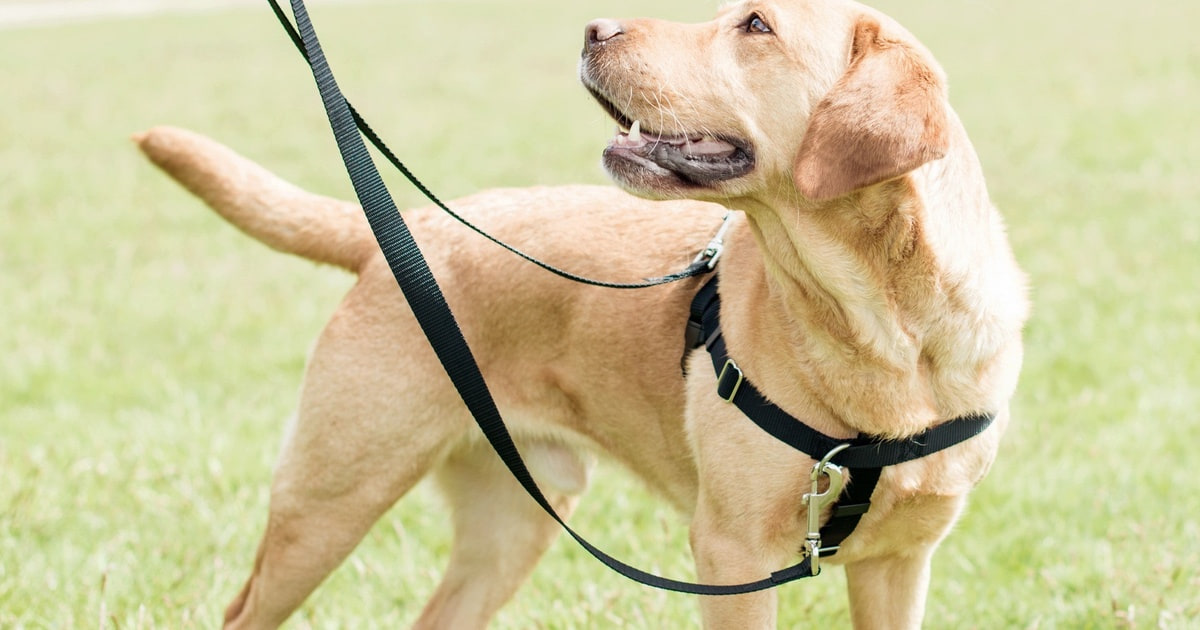
A dog that pulls turns a walk into a workout. You brace, they lean, and by the third block your shoulder aches and nobody's having fun. A good no-pull harness changes the physics of that. Instead of loading everything onto a narrow collar around your dog's throat, it spreads leash pressure across the chest and ribs, where a dog is built to take it. And it gives you steering — a way to redirect a lunge without yanking. For most dogs, that's the whole difference.
Here's the honest part: no harness teaches your dog anything. The good ones make pulling less rewarding, and you'll usually feel a difference on the first walk. But they're management, not a cure. Take the harness off and the habit is still there. Fit is the other catch. Every harness here can slip, chafe, or ride up if you guess at the size, and none of them suit every body shape. A Greyhound and a Bulldog of the same weight need completely different straps.
Think about what you actually need. If your dog leans into the leash with real force, you want a harness engineered around that problem, with two attachment points and enough adjustment for a deep chest. If your dog only forgets themselves near squirrels, something simple is fine. We think that the 2 Hounds Design Freedom No Pull Harness is the best no-pull dog harness for most people, and that the PetSafe Easy Walk Harness is the one to buy if you want the simplest front-clip option for a dog that's just learning leash manners.
Everything we recommend

Real pulling control, if you don't mind a fussier fit

The simplest way to slow a puller, with few extras
A stretchier, lighter build for dogs that cover miles
At a glance
| Product | Chest Size | Leash Points | Price | |
|---|---|---|---|---|
 | Julius-K9Also consider | 26-33. 5 in | — | $59.99 |
| RuffwearUpgrade pick | Medium | — | $69.99 |
| PetSafe Easy Walk Harness for Dogs -Budget pick | Large | Front | $22.99 |
| 2 Hounds Design Freedom No Pull DogTop pick | 24"-28" | 2 Points | $34.98 |
 | Kurgo Tru-Fit Smart Dog Walking Harness -Also in lineup | Large | — | $24.95 |
How we picked
Pulling mechanics. We looked at how each harness actually interrupts a pull — front clip, martingale tightening, torso pressure, or nothing at all. Spec sheets and published trainer guidance point the same direction: geometry does more for control than padding does.
Fit and adjustment. We counted adjustment points and read how each brand sizes its harnesses. Four points was our floor, because deep-chested and barrel-chested dogs fall between sizes on anything simpler.
Hardware quality. We compared buckle and ring materials from the listings, favoring stainless steel and aluminum over plastic. Owner feedback on failures lines up with that — plastic hardware is where cheap harnesses give out first.
Comfort over hours. We weighed lining, padding, and breathability against how each harness is likely to be used. A harness that chafes at the armpit after two miles fails, no matter how well it controls pulling.
Everyday hassle. We read owner feedback on getting harnesses onto squirmy dogs and on washing them afterward. Anything you dread using ends up in a drawer.
Top pick
Real pulling control, if you don't mind a fussier fit
2 Hounds Design Freedom No Pull Dog
This is the harness built specifically around the pulling problem, and the mechanics show. A velvet-lined loop snugs across the ribs when your dog leans into the leash, and the included bungee coupler clips to the chest and the back at once, so no single point takes the full hit.
$34.98fromAmazonThe torso loop is what separates this from a generic front-clip harness. When your dog leans into the leash, the strap around the ribcage snugs up and your dog feels it — not as pain, but as clear feedback about where their body is. The Swiss velvet lining is the reason it works without chafing. It grips enough to register through a normal coat, and it lets go the moment the leash goes slack.
The included bungee coupler is the part most owners underrate. It clips to the chest ring and the back ring at the same time, so a sudden lunge gets split between two points instead of landing on one. You feel less of it in your wrist, and your dog feels less of it in one spot. Use a plain leash on the front ring alone and you're leaving most of the design on the table.
Four adjustment points mean it actually fits odd-shaped dogs. Deep-chested breeds like Greyhounds and Whippets fall between sizes on simpler harnesses, and barrel-chested dogs push the straps up into the armpits. Here you set the chest, the girth, and both shoulder straps independently. 2 Hounds sizes by chest measurement rather than weight, which is the right way to do it, so get a tape measure out before you order.
The hardware is built for the dog that's genuinely pulling. The rings and buckles are stainless steel, so they won't rust after a wet month or a swim, and the webbing is heavy nylon rather than the thin stuff on discount harnesses. It's machine washable too, which matters more than it sounds. A harness that lives on a muddy dog gets grim fast, and this one goes in with the towels.
Flaws but not dealbreakers
The velvet lining collects everything. Hair, grit, pond water — it all works into the pile, and a harness that never gets washed starts to feel gritty against the skin. If your dog swims or rolls in mud, plan on washing it often. Owners of short-coated and hairless dogs also report friction where the lining sits, so watch that contact zone over the first few walks.
Getting the fit right takes a first-timer longer than it should. There are more straps here than on a simple step-in harness, and the instructions matter. A loose torso loop won't give the feedback the whole design depends on, and a too-tight one is uncomfortable. Read the fitting guide, use the two-finger check, and expect to fiddle with it over the first couple of walks.
2 Hounds Design lists a chewing warranty on the Freedom Harness, covering webbing that a dog gnaws through.
Budget pick
The simplest way to slow a puller, with few extras
PetSafe Easy Walk Harness for Dogs -
The Easy Walk clips at the chest and turns your dog sideways when they surge ahead, which most dogs give up on quickly. It's the least complicated harness here, the fastest to get on a wriggling dog, and the one trainers tend to hand to first-time owners.
$22.99fromAmazonThe front clip does something you can feel on walk one. Clip the leash at your dog's breastbone and pulling forward stops producing forward movement. Your dog's own momentum swings them back toward you instead. There's no correction involved and nothing for you to do — the geometry handles it, which is why positive-reinforcement trainers reach for this style first.
The martingale loop adds a nudge that generic front-clips don't have. When your dog lunges, the chest strap draws in gently, then releases the second the leash slackens. It's about as firm as a hug. That on-and-off pattern is easy for a dog to connect to the lunging itself, and it's a big part of why this design has stuck around so long.
It's the easiest harness here to live with. Color-coded straps and quick-snap shoulder buckles mean you can have it on a squirming dog in seconds. It weighs almost nothing, the coverage is minimal so it doesn't cook a dog in hot weather, and it's stocked at most pet stores if you'd rather size it in person before you commit.
For small dogs, it's the safer default over a collar. Vets steer owners of Yorkies, Chihuahuas, and Pomeranians away from neck pressure, and this harness moves all of it to the chest and sternum. The size range stretches from very small dogs to very large ones. Just check the chest measurement, since barrel-chested breeds like Bulldogs and Pugs take care to get the front strap sitting right.
Flaws but not dealbreakers
The nylon is basic, and it shows over years. The webbing is thinner than what's on the Julius-K9 or the Freedom Harness, the padding is minimal, and owners walking hard-pulling dogs daily report the straps softening and the fit going sloppy sooner than they'd like. For a big dog that pulls with real force, this is the wrong tool.
There's no handle and no back clip. When you need to shorten up fast — an off-leash dog rounding the corner, a curb, a crowd — there's nothing to grab. And some dogs stumble for the first few walks after switching from a back-clip harness, because the sideways redirect catches them off guard. That settles down, but it's startling the first time.
Upgrade pick
A stretchier, lighter build for dogs that cover miles
Ruffwear
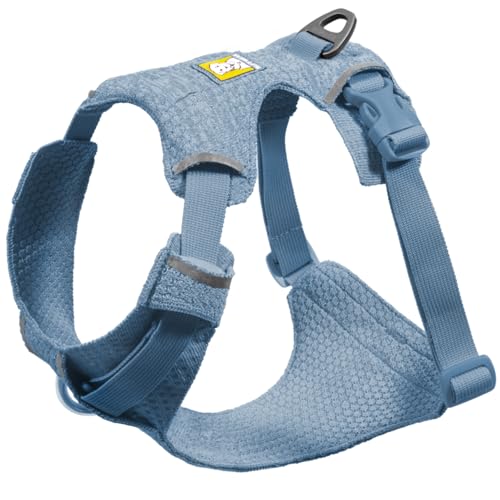
The Front Range Flex uses a knit shell that moves with your dog's shoulders instead of pinning them, so it stays comfortable over hours rather than blocks. Dual leash points and aluminum hardware make it the one to get if your walks regularly turn into hikes.
$69.99fromAmazonThe knit shell is the whole point. Most harnesses are cut-and-sewn webbing that holds one shape while your dog's shoulder blades swing underneath. This one is knit to contour, so the fabric gives where the shoulder moves and stays put everywhere else. If your dog runs, scrambles, or covers real distance, that's the difference between a harness they tolerate and one they forget they're wearing.
Two leash points cover both kinds of walk. The front ring gives you the sideways redirect for training days, and the aluminum V-ring on the back is reinforced to take load, so it handles a relaxed walk or a trail lead. Aluminum instead of plastic matters on gear that gets wet, dropped, and dragged over rock. It doesn't go brittle in the cold.
Four-point adjustment and a wide neck opening make it easy on fussy dogs. Head-shy and senior dogs often hate gear time, and the side-release buckles let you get this on without dragging anything over the face. Once it's on, the four adjusters let you lock in a fit that stays put, which matters if your dog has ever backed out of a harness on you.
Pick it if comfort over hours is the priority. The knit is breathable and light, the contoured panels sit where straps would otherwise dig in, and the reflective trim wraps the whole harness for early or late walks. For a dog that's in gear all day outside, those small things add up to a dog that isn't sore at the end.
Flaws but not dealbreakers
It's the most expensive harness here, and you're paying for the fabric. If your walks are two laps around the block, the knit shell isn't buying you much that a simpler harness doesn't already do. Save it for dogs that genuinely log miles, and put the difference toward something with a grab handle otherwise.
The knit picks up burs and debris on brushy trails. Anything with a hook works its way into the fabric, and you'll be picking seeds out after a walk through tall grass. Sizing also runs a touch small by owner accounts, so measure your dog's chest rather than going by weight, and size up when you land between two.
The front clip is less decisive than a martingale design. It redirects, but it doesn't tighten, so a determined puller can lean through it more easily than through the Freedom Harness. This is a comfort-first harness that also does no-pull, not the other way around.
Who this is for
This guide is for anyone walking a dog on a leash who's tired of being towed. That covers the 12-pound terrier who can still nearly pull you off a curb and the 80-pound Lab who treats every walk as a sprint. If your dog already walks on a loose leash, you don't need any of this — a plain back-clip harness or a well-fitted collar is fine, and you'll spend less. If your dog has a diagnosed airway problem or a shoulder injury, talk to your vet before choosing, since some conditions rule out specific strap positions.
We stuck to everyday walking harnesses. That leaves out head halters, prong and choke collars, weight-pulling and sledding rigs, service-dog vests, and leashes sold on their own. One harness here is also a certified car restraint, and we say so, but this isn't a guide to crash-tested travel gear. Sizes shown on a listing are one size in a wider range for most of these brands, so buy off the chest measurement rather than the size name.
How we picked
We started from what these harnesses claim and what owners say actually happens. Pulling mechanics: we favored designs that interrupt a pull on their own — front-clip redirection, a martingale that tightens, or torso pressure — over harnesses that just sit there. Fit and adjustment: four independent adjustment points was the floor, since dogs shaped like Greyhounds and dogs shaped like Bulldogs both break simpler sizing. Hardware: stainless steel and aluminum over plastic, because plastic is where a harness fails after a hard year. Comfort: lining, padding, and breathability, judged against how long the harness stays on. Everyday hassle: how fast it goes on a wriggling dog, and whether you can throw it in the wash.
Other no-pull dog harnesses worth considering
If you want a grab handle and a build that outlasts everything else here: The Julius-K9 ($59.99) — The Julius-K9 IDC Powerharness comes out of the European working-dog world, and it feels like it. The webbing is heavier than anything else in this guide, the belly strap makes backing out of it very hard, and the top handle gives you instant close control when a cyclist appears or you're crossing traffic. Reflective edging and chest strap help on dark mornings, the hook-and-loop side patches let you label your dog, and a single buckle gets it on fast. The catch for a no-pull guide is real, though: the standard configuration is back-clip only, so it manages a dog rather than discouraging the pull. It's stiff out of the box, too. Pick it if control, durability, and visibility matter more to you than mechanical pull correction, and pair it with leash training.
The competition
These are the harnesses our research kept surfacing, not a survey of everything on the shelf. There are dozens of no-pull designs out there and plenty of them are perfectly good. Here's the one that didn't make the picks, and why someone might still want it.
The Kurgo Tru-Fit Smart Dog Walking Harness - ($24.95) — The Kurgo Tru-Fit Smart Harness is the dual-purpose option: front and back leash points for walks, plus a built-in seat belt loop and crash testing rated to the forces of a 75 mph frontal collision. Its five adjustment points are the most configurable set here, which helps on narrow-waisted or oddly proportioned dogs, and steel nesting buckles hold up where plastic would deform. It lost on the walking side. The front clip redirects but doesn't tighten, so it's less convincing on a committed puller than the martingale on the Easy Walk, and the padding is thinner than the Ruffwear or the Julius-K9 for long days out. The steel adds noticeable weight, which is a lot to hang on a dog under about 15 pounds. Still, if you drive your dog to the trailhead, the vet, and class every week and want one piece of gear for all of it, this is the only harness here that's certified for the car.
Fit and sizing
Size off chest girth, not weight. Wrap a soft tape around the widest part of the ribcage, just behind the front legs, then read the manufacturer's chart — a 40-pound Greyhound and a 40-pound Bulldog need different harnesses entirely. When you land between two sizes, take the larger one and adjust down. You can always tighten a harness; you can't make it bigger. Once it's on, you should be able to slide two fingers under any strap, and no more than two. Check that the front strap crosses the breastbone rather than riding up on the throat. Then take it off after the walk. Harnesses aren't for sleeping, crating, or all-day wear — left on, they cause pressure sores at the armpit and turn into a chewing or snagging hazard.
Questions we get
Do no-pull harnesses actually work, or do you still have to train the dog?
They work, but as a brake rather than a fix. A front-clip or dual-clip harness takes the reward out of pulling, and most owners feel the difference on the first walk. It doesn't teach loose-leash walking, though. Pair it with something simple like stopping every time the leash goes tight and moving again only when it slackens.
What's the difference between a front-clip and a back-clip harness?
A back clip sits on the upper back and lets your dog drive forward with their shoulders and chest, which is comfortable but can make pulling worse. A front clip sits at the breastbone, so a pull rotates your dog sideways and stalls the forward momentum without any effort from you. Front-clip geometry is what trainers usually recommend while a dog is learning. Dual-clip harnesses give you both, so you can train on the front and stroll on the back.
Are no-pull harnesses safe for puppies?
Generally yes, and safer than a collar, since a puppy's neck and trachea are easy to injure with a sudden jerk. The problem is growth: a harness that fits at 12 weeks can be tight a month later, so check the fit weekly and buy something with at least four adjustment points. For very young puppies still sorting out their coordination, a padded back-clip harness is the gentler starting point, since the front-clip redirect can trip them up.
What's the best harness for a small dog prone to tracheal collapse?
Any well-fitted harness beats a collar for these dogs, because it keeps pressure off the throat entirely. The PetSafe Easy Walk is the one vets most often name for Yorkies, Chihuahuas, Pomeranians, and Pugs, and it's light enough not to weigh a small dog down. Make sure the front strap sits across the breastbone, not up on the neck. If your vet has actually diagnosed tracheal collapse, ask them or a canine rehab specialist before you buy — some cases do better with a wrap style that avoids the neck region completely.
Can my dog sleep or stay crated in a no-pull harness?
No. Every harness here is meant for supervised walks and nothing else. Worn for hours, a harness rubs pressure sores into the armpits, can restrict circulation at the shoulder, and gives a bored dog something to chew or snag on crate bars and furniture. Take it off when the walk ends, and ask your vet about safer options if you need a management tool for unsupervised time.
How do I measure my dog for a harness?
Use a soft tape and measure chest girth — the circumference at the widest point of the ribcage, right behind the front legs. Some brands also want neck girth and back length, but chest is the number that decides the size. Never size by weight, since two dogs of the same weight can be shaped completely differently. If you're between sizes, go up and tighten the straps until you can fit exactly two fingers underneath.
Why you should trust us
For this guide:
- We read the manufacturer spec sheets and sizing charts for every harness here, comparing adjustment points, hardware materials, lining, and stated chest ranges.
- We compared published expert reviews and trainer guidance on front-clip, back-clip, and dual-clip geometry to judge which designs genuinely interrupt a pull.
- We read owner feedback for recurring themes — escape attempts, armpit chafing, hardware that gives out, and sizing surprises — and let those patterns shape the flaws we call out.
- We read owner reviews on every listing, weighted toward the critical ones, because that is where the recurring failures show up.
- We have a systematic way of automatically fetching the latest prices, so the numbers on this page stay current.
- This is a research-focused guide, so the team may not own every product listed — though we often do own the top winners, which gives us extra context for the recommendations.
- We don't accept free products, and the retailer commission never changes which product we recommend.
Sources
Best Dog Harnesses — Wirecutter / New York Times, Wirecutter / New York Times
Best No-Pull Dog Harnesses Reviewed — American Kennel Club, American Kennel Club
Best Dog Harnesses of 2026 — Forbes Vetted, Forbes Vetted
No-Pull Dog Harness Reviews & Buying Guide — Rover, Rover
Best Dog Harnesses — Good Housekeeping, Good Housekeeping
Best Dog Harnesses Tested by Pet Experts — People Pets, People Pets
Harness vs. Collar: Veterinary Perspective on Tracheal Stress — PetMD, PetMD
Effects of Collar vs. Harness on Intraocular Pressure and Tracheal Stress — Veterinary Record, Veterinary Record
Amazon product listings and owner reviews for all 5 products
Manufacturer specification pages for each product
Some passages in this guide may be paraphrased with AI help. Prices are refreshed automatically.
More like this.
Continue exploring pet reviews and recommendations.

The Best Dog Harnesses and Leashes
You clip a harness onto your dog more often than you use almost anything else you own for them. That's why the small annoyances matter so much. A strap…

The Best Dog Car Harnesses and Seat Belts
Most of us drive with our dogs loose. An AAA survey found that 84% of dog owners bring their dogs along, but only 16% use any restraint at all. That's a…

The Best Pull-Down Kitchen Faucets
A kitchen faucet is the thing you touch most and think about least. You grab it with wet hands, greasy hands, a stockpot hooked in one arm. A pull-down…

The Best Doorframe Pull-Up Bars
A pull-up bar is one of the simplest ways to build real upper-body strength at home. It hooks over your door molding, comes down in seconds, and doesn't…

The Best Pull-Out Cabinet Organizers
A base cabinet is mostly dead space. You've got 22 inches of depth, and you can comfortably reach maybe 14 of them. Everything past that turns into a…

The Best Rock Climbing Harnesses
A harness is the piece of gear you notice least when it's right and constantly when it's wrong. You hang in it at the anchor. You sit in it while your…