The Best Dog Toothbrushes and Dental Chews
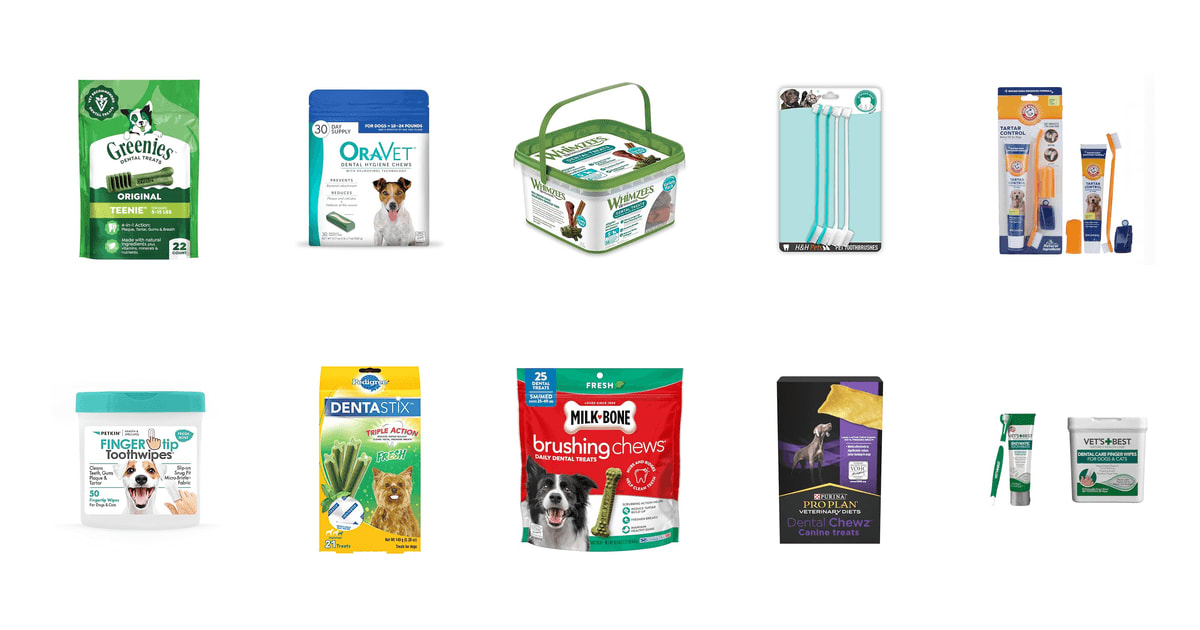
Dental disease sneaks up on dogs. It starts as a film you can't see, hardens into tartar along the gumline, and by the time your dog's breath makes you turn your head, there's usually real inflammation underneath. Most of us know we should brush. Most of us don't, or we do it for a week and quit. So the products that matter here are the ones you'll actually use every day: a brush you can get to the back teeth with, a paste your dog doesn't hate, and a chew your dog looks forward to.
Here's the honest part. Nothing in this guide replaces a professional cleaning under anesthesia, and no chew reaches below the gumline where periodontal disease actually does its damage. Chews work by scraping the outer surfaces while your dog gnaws, which means a dog who swallows treats whole gets almost nothing out of them. Brushing is still the gold standard, and every product here depends entirely on you being consistent with it. A great chew used twice a week beats nothing, but not by much.
The one filter worth trusting is the Veterinary Oral Health Council seal, which requires controlled trial data rather than marketing copy. We leaned on it hard, then sorted by ingredients, size fit, calories and whether dogs will reliably finish the thing. We think that the Greenies Original dental treats are the best dental chew for most people, and that the Whimzees Wellness Variety Pack is the one to buy if your dog reacts to grain or poultry.
Everything we recommend

A daily chew with real clinical backing that dogs actually eat

Grain-free, low in fat, and firm enough to slow down a gulper

A simple daily stick you can find in almost any store

Protection that keeps working after the chew is gone

Everything you need to start brushing, in one box
Prices as of Oct 22, 7:36 AM PT · Details
At a glance
| Product | Dog Weight | Pack Size | Price | |
|---|---|---|---|---|
| Greenies Veterinarian-Recommended Adult Natural Dental Dog TreatsTop pick | 5-15 lbs | 22 Count | $7.48 |
| ORAVET Dental Chews for DogsUpgrade pick | 10-24 lbs | 30 Count | $37.99 |
| Whimzees Wellness Variety Pack Dog Dental TreatRunner-up | 15-25 lbs | 56 Count | $34.45 |
 | H&H Pets Dog Toothbrush Dual Headed DesignAlso consider | — | 4 Count | $7.99 |
| Arm & Hammer for Pets Tartar ControlAlso great | — | 3-Piece Kit | $12.99 |
 | Petkin Fingertip Tooth Wipes for Dogs andAlso consider | — | 50 Wipes | $11.97 |
| Pedigree Dentastix Oral Care Treats for DogsBudget pick | — | — | $14.48 |
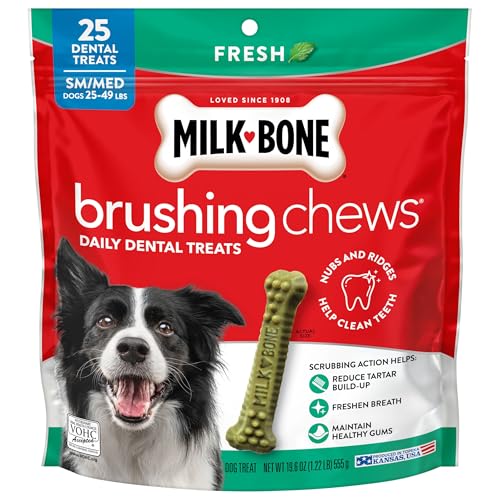 | Milk-Bone Brushing Chews Original Chicken Flavor DailyAlso in lineup | 25-49 lbs | 25 Count | $13.47 |
 | Purina Pro Plan Veterinary Diets Dental ChewzAlso in lineup | — | — | $11.49 |
 | Bundle of Vet’s Best Dog Toothbrush andAlso in lineup | — | 50 Wipes | $32.12 |
Prices as of Oct 22, 7:36 AM PT · Details
How we picked
VOHC acceptance. We checked every chew against the Veterinary Oral Health Council's list of accepted products, since that's the only seal in this category backed by independently reviewed clinical trials. Products without it had to earn their place some other way.
Size and safety. We compared each manufacturer's weight guidance against the chew's actual dimensions, because an oversized chew is a documented choking and tooth-fracture risk. Anything without clear size tiers lost ground.
Ingredients and calories. We read the ingredient panels for grain, poultry protein, artificial colorants and added sweeteners, and we weighed calorie load for dogs on a weight plan. Shorter, cleaner labels scored better.
Whether dogs eat it. Owner feedback is the best evidence available for palatability, and a refused chew has no dental benefit at all. We looked for recurring patterns of refusal rather than one-off complaints.
Brush and paste quality. For the brushing products, we compared head geometry, bristle softness and what's included in the box against published reviews and owner reports of bristles flattening early.
Top pick
A daily chew with real clinical backing that dogs actually eat
Greenies Veterinarian-Recommended Adult Natural Dental Dog Treats
Greenies are chewy, ridged sticks that most dogs treat as the highlight of the evening. They carry Veterinary Oral Health Council acceptance for both plaque and tartar, they come in six size tiers, and the Teenie size is built for dogs in the five-to-fifteen-pound range.
$7.48fromAmazonPrices as of Oct 22, 7:36 AM PT · Details
The dual seal is the whole argument. Most accepted chews clear the bar for tartar only. Greenies clear it for plaque and tartar, and plaque is the part that turns into gum disease if you leave it alone. Mars publishes its own figures too — roughly 47 percent less tartar and 40 percent less plaque over a four-week routine, on data held at the company. Treat the seal as the independent number and the rest as the manufacturer's.
Six size tiers sounds like a marketing detail until you've watched a small dog try to work through a chew meant for a Lab. Size matters for safety, not just efficacy. A chew that's too big gets swallowed in chunks, and a chew that's too small disappears before it scrubs anything. Check your dog's weight against the bag, and go down a tier rather than up if you're between sizes.
Palatability is the quiet reason this one wins. Owners describe dogs who learn the sound of the bag and start showing up at the same time every evening, which is exactly the behavior that keeps a dental routine alive past week two. A chew your dog refuses has an efficacy of zero, no matter what the trial data says.
One thing to be clear about: this isn't a substitute for a brush. The chew scrapes the outer faces of the teeth as your dog works it, and it does nothing for the inner surfaces or the gumline pocket. Pair it with brushing a few times a week and you're doing more than most owners manage.
Flaws but not dealbreakers
These are calorie-dense for their size. If your dog is heavy, senior or on a weight plan, you need to subtract the chew from dinner rather than adding it on top. That's easy to forget when the chew is the fun part of the day.
They contain grain, so they're off the table for dogs on an elimination diet or with a known sensitivity. And dogs who inhale food rather than chew it get very little dental benefit — if your dog finishes one in under thirty seconds, the mechanical scrubbing never really happens.
Runner-up
Grain-free, low in fat, and firm enough to slow down a gulper
Whimzees Wellness Variety Pack Dog Dental Treat
Whimzees are vegetable-starch chews with a short ingredient list, no meat and no grain. The variety box mixes several shapes in a size aimed at dogs around fifteen to twenty-five pounds, and the firm texture makes fast eaters slow down and actually chew.
$34.45fromAmazonPrices as of Oct 22, 7:36 AM PT · Details
If your dog reacts to chicken, beef or wheat, most of the dental aisle is closed to you. Whimzees is the rare exception that still holds VOHC acceptance. It's vegetarian, grain-free, free of artificial colors and preservatives, and short enough on the label that you can read the whole thing in one breath.
The texture is the point. This is a dense, rubbery starch that resists teeth instead of crumbling, and owners who've watched their dog demolish softer chews in seconds consistently report that these take real work. That extra chewing time is what does the scraping. It also makes Whimzees one of the better options for a dog who treats every treat as a swallowing contest.
The variety box helps with a problem nobody warns you about: dogs get bored. Rotating shapes keeps the evening chew interesting, and the low-fat, fiber-rich formula means you're not blowing the calorie budget to do it. For a dog on a restricted diet, that combination is genuinely hard to find elsewhere.
Flaws but not dealbreakers
The firmness cuts both ways. If your dog has a cracked tooth, a history of slab fractures or an aging mouth, a hard vegetable chew is the wrong tool — ask your vet before you start. Softer options exist for a reason.
Some dogs pick favorites out of the variety box and leave the rest, so you can end up with a box of shapes nobody wants. Owners also report that the box arrives cracked fairly often, which is cosmetic but annoying when it's a large box you're storing for weeks.
Budget pick
A simple daily stick you can find in almost any store
Pedigree Dentastix Oral Care Treats for Dogs
Dentastix are thin X-shaped sticks accepted by the VOHC for tartar control. The Mini bag suits small dogs, they're softer than most chews here, and you can pick them up at a grocery store when you run out on a Sunday night.
$14.48fromAmazonPrices as of Oct 22, 7:36 AM PT · Details
The X-shaped cross-section isn't just branding. It gives the stick more edges that catch tooth faces as your dog bites down, and Pedigree's clinical claim of up to 80 percent less tartar buildup rests on that geometry used as part of a daily routine. The VOHC accepted it for tartar, not plaque, so treat it as the narrower claim.
Availability is an underrated dental feature. The best chew is the one that's in your cupboard. These turn up in grocery stores, drugstores and gas-station pet aisles, which means no subscription, no specialty order and no three-day gap in the routine because you forgot to reorder. For a habit that only works when it's daily, that matters more than it sounds.
Owners with senior dogs keep mentioning the same thing: these are softer than the competition, so an older mouth can manage them. That softness is a real trade-off against scrubbing power, but a chew a fifteen-year-old terrier can finish beats one she abandons.
Flaws but not dealbreakers
The ingredient list includes cereals and added colorants, which rules these out for grain-sensitive dogs and will bother anyone who reads labels closely. The VOHC acceptance covers tartar only — this is a step down from the dual coverage on our top pick.
The Mini bag is small. If you have more than one dog, you'll be buying it constantly, and a few owners find the size-to-cost ratio irritating enough to mention.
Upgrade pick
Protection that keeps working after the chew is gone
ORAVET Dental Chews for Dogs
OraVet is the only accepted chew built around delmopinol, a compound borrowed from human mouthwash that coats teeth and gums so bacteria have a harder time sticking. It's the option vets reach for when a dog already has periodontal problems.
$37.99fromAmazonPrices as of Oct 22, 7:36 AM PT · Details
Every other chew here stops working the moment it's swallowed. OraVet doesn't. The delmopinol leaves a barrier on the tooth and gum surfaces that interferes with bacteria adhering in the first place, so you get the mechanical scrubbing while the dog chews and a chemical assist for hours afterward. That two-part mechanism is why veterinary dentists single it out.
The chews come individually wrapped, one per day, with a month's supply per pouch. Boehringer Ingelheim specifies dogs six months and older weighing at least three and a half pounds, and the small-dog version is sized for roughly ten to twenty-four pounds. The wrapping is fussy but it does keep the chews from drying out.
This is the most expensive option in the guide by a wide margin, and for a healthy young dog with clean teeth it's overkill. If your vet has flagged gingivitis, or your dog has already had a cleaning and you're trying not to repeat it, the math changes. Owners in that situation are the ones who report the clearest results.
One practical note that comes up repeatedly from owners of long-coated dogs: these are softer and stickier than a starch chew, and bits can end up in the fur around the muzzle. It's a wipe-down, not a dealbreaker.
Flaws but not dealbreakers
The soft texture works against fast chewers. A dog who bolts food will swallow one in a few bites and lose most of the mechanical benefit, though the delmopinol coating still does its job.
Palatability is less consistent here than with the sweeter, meatier chews. A noticeable minority of dogs simply won't eat them — some owners describe dogs who bat them around like a toy and walk away. Given what a month's supply costs, that's an expensive way to find out.
Also great
Everything you need to start brushing, in one box
Arm & Hammer for Pets Tartar Control
This kit bundles a double-sided toothbrush, a finger brush and a baking-soda toothpaste in banana mint. It's the least complicated way to start a brushing habit, and the finger brush is the piece that makes the first few weeks bearable for a nervous dog.
$12.99fromAmazonPrices as of Oct 22, 7:36 AM PT · Details
Chews are the easy half of dental care. Brushing is the half people quit, usually because they bought a brush, discovered their dog objects strongly, and gave up. This kit hands you both tools at once, so you can start with the finger brush during the acclimation phase and move to the angled brush once your dog stops flinching.
Flavor decides everything with paste, and owners are unusually vocal about this one. The banana mint version gets described as the flavor dogs actually cooperate for, while the same brand's beef version draws a lot of complaints. If you've tried a meat-flavored paste and hit a wall, the flavor may be the problem rather than your dog.
Baking soda does gentle mechanical cleaning and helps with odor, and the paste is formulated for dogs — which is the important part. Never use human toothpaste on a dog. Fluoride and xylitol are both dangerous for them, and a dog swallows everything you put in their mouth.
Flaws but not dealbreakers
The bristles are entry-level. They flatten faster than a dedicated veterinary brush, and if your dog chews on the brush while you work, expect to replace it sooner than you'd like.
Plenty of dogs still hate the process regardless of flavor. Owners describe wrestling matches, and there's no product fix for that — only patience and short sessions. The paste tube also tends to run out before the brush is worn out, so you'll be buying refills separately.
Who this is for
This guide is for anyone who's realized their dog's breath has gotten worse, or whose vet mentioned tartar at the last checkup. It covers at-home maintenance: brushes, pastes, wipes and daily dental chews. If you're starting from scratch, the honest answer is to buy a chew your dog will eat and a brush you'll actually pick up, then build from there. Even three brushing sessions a week paired with a daily accepted chew does more than either one alone.
This is not the guide for a dog already in trouble. If there's visible tartar buildup, receding gums, bleeding, a broken tooth or a smell that's gotten genuinely bad, you need a veterinary cleaning under anesthesia first — no chew reverses established periodontal disease. We've also left out water additives, dental sprays and raw bones, which are a different conversation with different risks. Puppies under six months shouldn't get most of these chews at all; wipes and a finger brush are the right starting point.
How we picked
We started with one filter and worked down from there. VOHC acceptance: the only pet dental seal that requires independently reviewed clinical trial data, so anything carrying it starts ahead. Size fit: a chew has to match your dog's weight class, because too large is a choking risk and too small does nothing. Ingredients: we read for grain, poultry protein, artificial colorants and sweeteners, and flagged anything a dog on an elimination diet couldn't have. Calories: every chew comes out of the daily budget, which matters most for senior, diabetic and weight-managed dogs. Palatability: owner feedback is the best available evidence for whether a dog will finish the thing, and a refused chew cleans nothing. Brush design: head shape, bristle softness and whether the bristles hold up past the first few sessions.
Other dog toothbrushes and dental chews worth considering
If you want a brush and already have paste: The H&H Pets Dog Toothbrush Dual Headed Design — The H&H Pets dual-headed brush puts a small head and a large head on opposite ends of one long handle, which sounds like a gimmick until you own two dogs of very different sizes and stop juggling brushes. The handle is long enough to reach back molars, the bristles are soft enough for inflamed gums, and it ships as a multipack so you can replace one the moment it flattens. It comes with a sixty-day money-back guarantee from the seller. Durability is the trade-off — owners whose dogs chew the brush report bristles splaying quickly, sometimes within a few sessions.
If your dog won't tolerate a brush at all: The Petkin Fingertip Tooth Wipes for Dogs and — Petkin's fingertip wipes slip over your index finger and let you clean teeth and gums with your own hand, which gives you far more control and feels far less alarming to a suspicious dog. They're pre-moistened with aloe and mint, they're safe for puppies and kittens over six weeks, and owners of stubborn seniors describe them as the first thing their dogs would sit still for. They can't reach into the gumline groove the way bristles do, and they aren't VOHC-evaluated, so treat them as a bridge to brushing rather than a permanent substitute.
The competition
These are the products our research turned up alongside the picks, not a survey of everything sold. A few are perfectly good chews that lost on a specific point; one is a capable kit that simply lacks the independent backing the others have.
The Milk-Bone Brushing Chews Original Chicken Flavor Daily — Milk-Bone Brushing Chews are VOHC-accepted for tartar, and the twisted shape with nubs and ridges does give teeth something to work against. Dogs love them — this is one of the most reliably eaten chews in the category, and it's sized for dogs roughly twenty-five to forty-nine pounds. Two things kept it out of the picks. The chicken flavor rules it out for poultry-sensitive dogs, and owners frequently mention that their dog finishes one in a couple of minutes, which limits how much scrubbing actually happens. If your dog has rejected everything else, try these next.
The Purina Pro Plan Veterinary Diets Dental Chewz — Purina Pro Plan Veterinary Diets Dental Chewz is VOHC-accepted for tartar control and built around a porous texture that traps bacteria in the chew material rather than only scraping surfaces. It's long-lasting, which is a genuine advantage over the softer sticks, and it's sold through vet clinics as well as online. The sponge-like texture is polarizing — some dogs find it unappealing in a way they don't with a meaty chew. The box is also small, so you'll reorder often. Worth a look if your vet suggests it specifically.
The Bundle of Vet’s Best Dog Toothbrush and — The Vet's Best bundle pairs a triple-sided toothbrush with an enzymatic toothpaste and a tub of fifty finger wipes, so you get the brush, the paste and the low-effort backup in one purchase. The triple head is the interesting part: it cleans three surfaces at once, which cuts the time your dog has to hold still. What it lacks is VOHC acceptance, so the efficacy claims aren't independently verified the way the accepted chews are. The natural flavoring is also divisive, and three components is more than most single-dog households need at once. Fine if you want one box that covers everything.
Getting started and daily care
Go slower than you think you need to. For the first week, don't brush at all — just put a dab of paste on your finger and let your dog lick it off, so the flavor becomes the good part. Then move to a finger brush or a wipe, then to bristles, adding one step every few days. Keep sessions under a minute and stop before your dog gets fidgety, not after. Focus on the outer surfaces of the upper teeth, especially the big ones toward the back, since that's where tartar builds first. Replace the brush when the bristles splay. And check your chew size against your dog's weight every time you buy a new bag, because size tiers vary between brands.
Questions we get
Can dental chews replace brushing my dog's teeth?
No. Accepted chews meaningfully reduce plaque and tartar, but veterinary guidance is consistent that brushing is still the most effective thing you can do at home. Chews scrape outer tooth surfaces; a brush reaches the gumline where disease actually starts. Use a chew as a daily complement, not a swap.
How often should I brush my dog's teeth?
Daily is the standard, and it's where the clinical benefits max out. If that's not realistic, three times a week still gives most healthy adult dogs real plaque control. Consistency beats intensity — a short session every evening does more than a thorough scrub once a month.
What is the VOHC seal and why does it matter?
The Veterinary Oral Health Council awards its Seal of Acceptance only to products that submit controlled clinical trial data showing a statistically significant reduction in plaque or tartar, reviewed independently. It's the only third-party efficacy standard in pet dental care. Products without it aren't necessarily bad, but their claims haven't been checked by anyone outside the company selling them.
Which chews work for dogs with chicken or grain allergies?
Whimzees is the clearest choice — vegetarian, grain-free, no meat protein, short ingredient list, and still VOHC-accepted. OraVet is free of grain but carries a poultry flavor, so it's not an option for chicken-sensitive dogs. Always read the current panel before you buy, since formulations change between production runs.
At what age can puppies start dental chews?
Most brands set a minimum of six months, once the adult teeth have fully come in. OraVet states six months and at least three and a half pounds. Before that, use finger wipes or a soft finger brush — the goal at that age is teaching your puppy that having their mouth handled is normal, which pays off for the next decade.
Can I use my own toothpaste on my dog?
No, and this one matters. Human toothpaste contains fluoride, and many varieties contain xylitol, which is seriously toxic to dogs. Your dog will swallow everything you put in their mouth, so use a paste formulated for pets.
Why you should trust us
For this guide:
- We checked every chew in this guide against the Veterinary Oral Health Council's published list of accepted products and noted whether each acceptance covers plaque, tartar or both.
- We compared manufacturer specifications, ingredient panels and weight-class guidance across all ten listings, and read published veterinary guidance on brushing frequency and puppy desensitization.
- We read through owner feedback for recurring patterns — which chews get refused, which brushes shed bristles early, and which flavors cause dogs to shut down a brushing session.
- We read owner reviews on every listing, weighted toward the critical ones, because that is where the recurring failures show up.
- We have a systematic way of automatically fetching the latest prices, so the numbers on this page stay current.
- This is a research-focused guide, so the team may not own every product listed — though we often do own the top winners, which gives us extra context for the recommendations.
- We don't accept free products, and the retailer commission never changes which product we recommend.
Sources
Veterinary Oral Health Council — Accepted Products List, VOHC
Dental Disease in Dogs — VCA Animal Hospitals, VCA Animal Hospitals
2019 AAHA Dental Care Guidelines for Dogs and Cats, American Animal Hospital Association
Dog Dental Care — AKC Health & Nutrition, American Kennel Club
Oral and Dental Diseases in Dogs — Merck Veterinary Manual, Merck Veterinary Manual
Cornell University College of Veterinary Medicine — Dental Disease in Pets, Cornell University CVM
Greenies VOHC Clinical Trial Summary, Greenies / Mars Petcare
OraVet Chews — Delmopinol Mode of Action (Boehringer Ingelheim Animal Health), Boehringer Ingelheim
Amazon product listings and owner reviews for all 10 products
Manufacturer specification pages for each product
Some passages in this guide may be paraphrased with AI help.
Product prices and availability are accurate as of the date/time indicated and are subject to change. Any price and availability information displayed on Amazon.com at the time of purchase will apply to the purchase of this product.
More like this.
Continue exploring pet reviews and recommendations.

The Best Dog Dental Chews
Most dogs don't get their teeth brushed. That's just the reality of living with a dog who'd rather do almost anything than sit still while you poke around…

The Best Indestructible Dog Toys for Aggressive Chewers
If your dog treats a new toy like a five-minute snack, you know the drill. Stuffing on the carpet, a squeaker in pieces, and a nagging worry about what…

The Best Dentist-Recommended Electric Toothbrushes
Brushing is the one health habit you repeat twice a day for your whole life, and most people do it badly. Survey data from the ADA Health Policy Institute…

The Best Electric Toothbrushes for Sensitive Teeth
If your gums bleed when you brush, or a sip of cold water makes you wince, the problem often isn't the toothbrush - it's how hard you're pushing it.…

The Best Electric Toothbrushes for Whitening
Coffee in the morning, tea in the afternoon, a glass of red with dinner. The color those leave behind builds up slowly on the outside of your enamel, and…

The Best Heavy-Duty Dog Crates for Large Breeds
A crate for a 90-pound dog has a different job than one built for a beagle. It has to hold when your dog throws a shoulder into the door at six in the…