The Best Eco-Friendly Reusable Bags
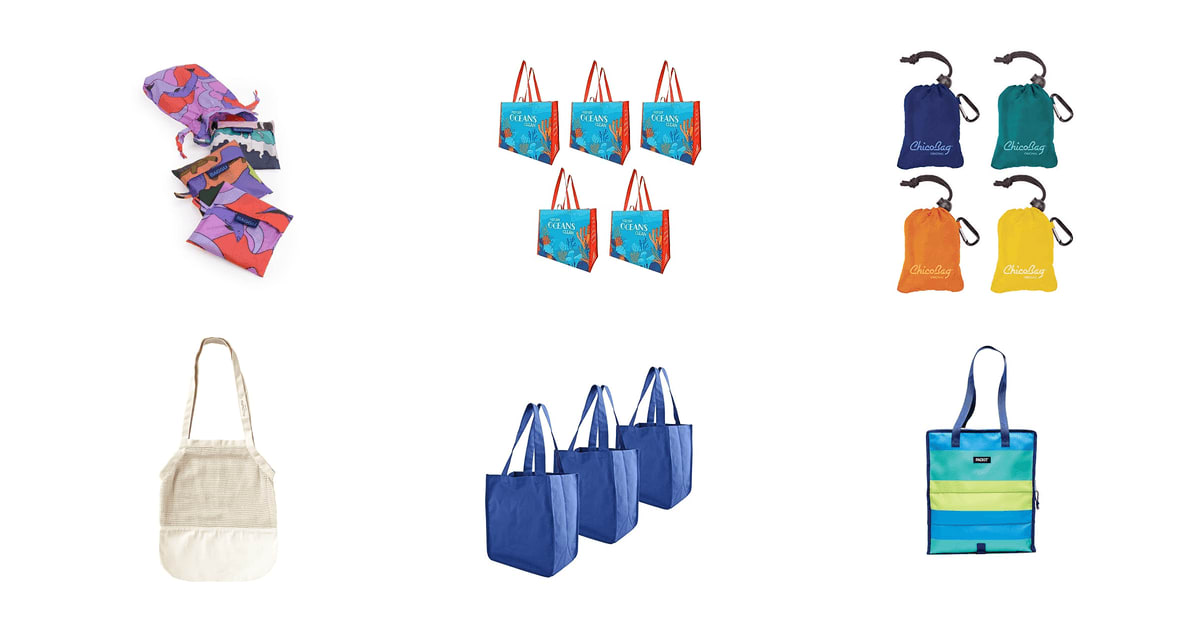
Reusable bags only work if you actually have one with you. That's the whole game. A beautiful organic cotton tote sitting on your kitchen counter does nothing for the planet while you're standing at the register buying another plastic bag. The best reusable bag is the one that lives in your purse, clips to your keys, or stays folded in your car door. Americans throw out roughly 100 billion plastic shopping bags a year, and fewer than 10% get recycled, according to the EPA. Fixing that starts with a bag you'll remember.
Here's the uncomfortable part: the materials marketing doesn't always match the math. A Danish EPA lifecycle study — still the most-cited work on this — found that a conventional cotton tote has to be reused about 7,100 times before it beats a single-use plastic bag on climate impact. Organic cotton does much better, needing only 20 to 50 uses. Recycled polyester does better still, since RPET production uses roughly 59% less energy than virgin polyester, per Textile Exchange. No bag here is a clean win on every axis. Use whichever one you'll use constantly.
So we looked for bags that earn their keep through sheer frequency of use, plus enough structure to survive a full cart of groceries. We also wanted bags that wash, because a bag you're afraid to clean is a bag you'll eventually throw away. We think that the BAGGU Standard Set of 3 is the best eco-friendly reusable bag for most people, and that the ChicoBag Original Compact is the one to buy if you want something that clips to your keychain and never gets left behind.
Everything we recommend
Folds to pocket size, still swallows a cart of groceries
Clips to your keys, so you genuinely always have it

A rigid bottom and bottle sleeves, if you shop big

The bag is the ice pack, so cold groceries stay cold
At a glance
| Product | Capacity | Material | Price | |
|---|---|---|---|---|
| BAGGU Standard Set of 3 - VacationTop pick | 50 lbs | — | $48 |
 | Earthwise Reusable Grocery BagsAlso consider | 25 lbs | Polypropylene | $16.99 |
| ChicoBag Original Compact Reusable Grocery Bag w/AttachedRunner-up | 25 lbs | Durable Fabric | $39.99 |
 | PILLOWPIA French 100% Organic Cotton Reusable GroceryAlso consider | — | 100% Organic Cotton | $16 |
| Simple Ecology Organic Cotton Deluxe Reusable GroceryUpgrade pick | — | 11-oz Canvas | $31.95 |
| PackIt Freezable Grocery Tote 13 L CapacityAlso great | 13 L | — | $39.99 |
How we picked
Real material claims. We looked for verifiable material sourcing — organic cotton, documented RPET content, or coastal-recovered plastics — rather than vague sustainability language on the listing. Certifications like GOTS and OEKO-TEX carry more weight than a green logo.
Load and stitching. We compared stated load ratings against construction details in the specs: double-stitched hems, X-stitched handle attachments, reinforced gussets, and bottom support. Consumer Reports' durability findings on reinforced versus flat-bottom designs guided what we treated as meaningful.
How small it packs. A bag that packs into a pouch or clips to a keyring gets used far more often than one that lives in a closet. We favored designs with attached pouches so there's nothing separate to lose.
Washability. We prioritized bags that survive machine washing or wipe clean, since raw meat leaks and produce dirt are the two things that retire a reusable bag early. Care instructions came from manufacturer specs.
Owner longevity reports. We read owner feedback looking for multi-year use patterns and the specific failure modes people describe — seam blowouts, shrinkage, handle stretch — rather than first-impression reactions.
Top pick
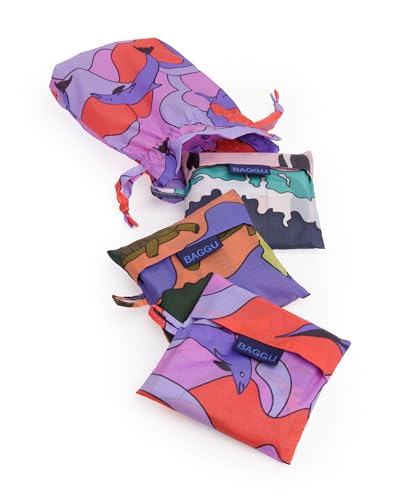
Folds to pocket size, still swallows a cart of groceries
BAGGU Standard Set of 3 - Vacation
Each BAGGU holds up to 50 pounds but folds into a flat pouch about the size of a deck of cards. You get three, so you can stash one in a purse, one in a jacket, and one in the car and stop forgetting them.
$48fromAmazonThe strength-to-weight ratio here is the whole argument. Each bag is rated for 50 pounds and weighs almost nothing — the whole set of three comes in under half a pound. Good Housekeeping's lab evaluations flagged that same ratio as one of the best in the category. In practice that means you can hang two of these off one shoulder with a gallon of milk in each and the handles won't dig in.
The fold is what makes it stick. Each bag collapses into its own flat 5-by-5-inch pouch, which is small enough to disappear into a coat pocket or the bottom of a tote. Owners describe the same arc over and over: they carried one around barely thinking about it, then a local bag ban hit, and now they own six. The bag you don't notice carrying is the bag you actually have at checkout.
Capacity is genuinely large. Each one measures about 25½ by 15½ by 6 inches and swallows what owners describe as two to three plastic grocery bags' worth. Handles are long enough to go over a shoulder, which matters more than it sounds when you're carrying groceries up stairs. And the whole thing goes in the washing machine, so a leaking rotisserie chicken isn't a crisis.
Buying three at once is the sneaky part of the value. Most reusable-bag failures aren't durability failures — they're logistics failures. One bag lives in one place. Three bags cover the purse, the car, and the coat closet, which is roughly the coverage you need to stop reaching for plastic. Per the Danish EPA math, the break-even point comes down to uses, and this is how you rack them up.
Flaws but not dealbreakers
The nylon is thin and unstructured, so the bag slumps into a puddle when you set it down. Loading it one-handed in a checkout line is awkward — it doesn't stand up on its own the way a stiff-bottomed canvas tote does. If you like packing groceries upright like a paper sack, look elsewhere.
There's no insulation and no interior organization. Wine bottles roll around, and frozen items sweat. Also, the ripstop nylon is a synthetic, so if your goal is a bag that biodegrades at the end of its life, this isn't it — its case rests on durability and constant use, not on material.
The prints are playful, which is fun for some people and not for others. This particular set comes in a vacation-animals pattern, not a neutral.
Runner-up
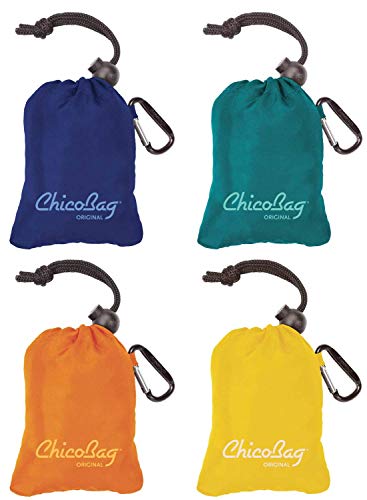
Clips to your keys, so you genuinely always have it
ChicoBag Original Compact Reusable Grocery Bag w/Attached
The ChicoBag stuffs into an attached pouch with a carabiner clip, letting you hang it off a keyring, backpack strap, or purse handle. It's smaller than our top pick, but it's the one you'll never be caught without.
$39.99fromAmazonThe carabiner is the entire idea, and it works. The pouch stays attached to the bag, so there's no loose sack to lose, and the clip means the bag rides on your keys or your backpack strap instead of living somewhere you'll forget. Owners who've used these for a decade or more describe them the same way: the bag they stopped having to remember. That's the behavior change that makes a reusable bag actually reusable.
These last an unusual amount of time for how little they weigh. Long-term owners report going eight, ten, even twelve years on the same bags before seams finally gave out. The fabric is RPET, and Textile Exchange puts recycled polyester production at roughly 59% less energy than virgin polyester — so the material is doing well on both the front end and the back end. A bag that survives a decade of weekly grocery runs is a bag that's paid off its footprint many times over.
This set gives you four bags in four colors, which spreads the coverage problem the same way our top pick does. Each opens to about 14 by 17 inches and handles up to 25 pounds. They're hand or machine washable in cold water — hang to dry, and skip the fabric softener, which can gum up the fibers and make the bag harder to stuff back into its pouch.
Stuffing them back in is genuinely easy, which sounds trivial until you've fought with a bag that only refolds along exact creases. There's no origami here. You cram it in, cinch it, clip it, and move on.
Flaws but not dealbreakers
It's smaller than most reusable totes, and buyers regularly get surprised by that. Read the dimensions before you order. For a quick run — a few produce items, a carton of eggs, some bread — it's fine. For a full weekly shop you'd want two or three, and the 25-pound limit is real.
Like our top pick, it collapses when you put it down and has no bottom support. Bottles tip. Nothing about it holds a shape.
The clip that makes it convenient also makes it visible. If you'd rather not have a small nylon pouch hanging off your bag or keys, the appeal drops quickly.
Upgrade pick
A rigid bottom and bottle sleeves, if you shop big
Simple Ecology Organic Cotton Deluxe Reusable Grocery
This organic cotton canvas tote has a removable rigid bottom insert and six pop-out sleeves for bottles and baguettes. It's the one to buy if your weekly shop involves wine, tall jars, and a car trunk that takes corners hard.
$31.95fromAmazonIf your groceries keep tipping over in the trunk, this is the fix. A recycled waste-board insert sits in the base and keeps the bag standing upright on the counter, in the cart, or in the back of your car. Consumer Reports' durability work found that reinforced construction — gussets and double-stitched handles — outperformed flat-bottom designs by about 35% on load distribution across 500 fill-and-carry cycles. This bag has that construction, and the difference shows up as bags that don't collapse mid-load.
The six pop-out bottle sleeves are the feature owners keep coming back to. They now extend all the way to the bottom, so wine bottles, olive oil, tall veggies, and stacked cans stay put instead of clanking into each other. If you buy wine regularly, this is the one bag here that transports it without you thinking about it.
Materials matter more on this one than on the synthetics. It's organic cotton canvas at 11 ounces — heavy, structured fabric with a double-stitched top hem, X-stitched handles, and piping around the exterior. Per the Danish EPA analysis, organic cotton needs only 20 to 50 uses to break even against single-use plastic, versus 7,100 for conventional cotton. At a bag a week, you clear that in a year.
The handles are extra wide, 1.5 inches by 24 inches, which makes a real difference when the bag is heavy. You can carry it in hand or throw it over a shoulder. Owners loading roughly 20 pounds per bag report the handles holding fine, and several report using the same bags for eight or nine years.
Flaws but not dealbreakers
Canvas shrinks. The bags come pre-washed, but owners still report some shrinkage after the first machine wash — wash cold, and pull the fabric back into shape while it's damp, then line or flat dry. The bottom insert sleeve comes out for washing, which helps.
This is the bulkiest bag here. It doesn't fold small, it weighs well over a pound for the set of three, and it isn't going in your purse. It's a car-and-kitchen bag, not an always-with-you bag.
Cotton absorbs spills in a way that laminated or nylon bags don't. A leaking package means a wash, not a wipe.
Also great
The bag is the ice pack, so cold groceries stay cold
PackIt Freezable Grocery Tote 13 L Capacity
PackIt's walls have freezable gel built right in, so you chill the whole bag overnight and skip loose ice packs entirely. It's the answer for a long drive home or a hot parking lot with ice cream in the cart.
$39.99fromAmazonThe bag itself is the cooler. PackIt's EcoFreeze lining is nontoxic gel sealed into the walls — you fold the empty tote, put it in your freezer overnight, and it comes out ready. Per PackIt's own testing, that keeps the interior below 40°F for up to two hours in a 70°F room, which lines up with USDA guidance for safely transporting cold food. That covers the long way home from a warehouse store.
What you're really buying is the end of loose ice packs. No gel bricks rattling around, no disposable insulated pouches from grocery delivery piling up in your recycling. The 13-liter tote folds flat to about 2¼ inches when you're done, so it lives in the freezer instead of eating shelf space. Owners routinely use it for breast milk on flights, ice cream in summer, and commissary runs 15 miles from home.
It works better than people expect, and that's the running theme in owner feedback — items don't just stay cool, they stay genuinely cold. Ice cream survives. The interior wipes clean and the exterior spot-cleans, so a leaking meat package doesn't mean a laundry cycle.
The materials are worth noting if you're careful about what touches food. It's made PVC free, BPA free, phthalate free, and lead free, and the gel is nontoxic. That's a reasonable bar for a bag you're putting raw chicken and dairy into every week.
Flaws but not dealbreakers
It's cold enough to be a problem sometimes. Owners report eggs and delicate produce freezing when packed against the walls — this behaves more like a freezer than a cooler bag, so pack accordingly.
It needs freezer space and planning. If you didn't freeze it the night before, it's just a mildly insulated tote. And at 13 liters it's not a full grocery run; it's the cold-items bag you carry alongside your regular ones.
It's the heaviest bag in this guide at about 1.6 pounds empty, and it doesn't compress into anything pocketable.
Who this is for
Buy one of these if you're replacing single-use plastic at checkout, especially if you live in one of the 12 states the National Conference of State Legislatures tracks as having a statewide bag ban or checkout fee. These are also worth it if you're already using reusable bags but keep forgetting them, or if your current bags are the flimsy branded ones the store sells at the register — those tend to blow out at the handles within a year. And if you're buying a gift, a compact set is a genuinely useful one.
Skip these if you already own bags you use consistently. Buying more reusable bags to feel greener is counterproductive; the Danish EPA lifecycle math is driven almost entirely by how many times each bag gets used, so a new bag you use twice is worse than an old one you use weekly. This guide covers grocery and market totes — foldable, structured, mesh, and insulated. It doesn't cover backpacks, rolling carts, hard coolers, or reusable produce bags sold as small drawstring sets.
How we picked
We weighed five things. Material: organic cotton, documented RPET content, or recovered ocean plastics, with GOTS and OEKO-TEX treated as the two certifications that actually mean something. Construction: stated load ratings backed by double-stitched hems, X-stitched handles, reinforced gussets, or a rigid base, since Consumer Reports found reinforced designs outperformed flat-bottom ones by roughly 35% on load distribution. Packability: an attached pouch or clip, because the bag you have with you is the only bag that counts. Washability: machine-washable or wipe-clean, since leaks and dirt retire bags early. Longevity: owner reports describing years of use and the specific ways bags eventually fail.
Other eco-friendly reusable bags worth considering
If you want bags that stand up on their own while you load them: The Earthwise Reusable Grocery Bags ($16.99) — These Earthwise totes use a laminated, water-resistant polypropylene made from plastics collected in at-risk coastal communities, and they're shaped wide rather than tall — closer to a paper grocery sack. That shape is the point. They stay open and upright in a cart or trunk, so you can drop items in one-handed instead of wrestling a slumping bag. Each carries up to 25 pounds, and the laminated surface wipes clean in seconds rather than needing a wash cycle. You get five, and they fold flat. What you give up is compactness — they don't stuff into a pouch, so they're car bags, not purse bags — and the laminated surface, while easy to clean, means this isn't a bag that breaks down at end of life.
If you shop the farmers market and want produce to breathe: The PILLOWPIA French 100% Organic Cotton Reusable Grocery ($16) — This PILLOWPIA net tote is handwoven 100% organic cotton in the classic French market style, and the open weave is the feature. Berries, greens, and stone fruit don't sweat inside a mesh bag the way they do in laminated nylon, and dirt and sand shake right out. It stretches well past its 12-by-15-inch flat dimensions when you fill it, and the adjustable wide strap sits comfortably on a shoulder. There's a matching drawstring pouch for storage. The trade-off is real, though: small items fall through the net, nothing is protected from the sun or from getting squashed, and this is a light-duty bag. Owner feedback on it is still thin, so treat it as the specialty pick it is.
The competition
This is what our research surfaced, not a survey of every reusable bag sold. The category is enormous and much of it is unbranded, so we focused on bags with enough specification detail and owner history to say something useful. Every product in this guide earned a spot somewhere — nothing here is a bag we'd steer you away from outright.
Care and cleaning
Wash your grocery bags more often than you think you need to. Raw meat and poultry packages leak, and a bag that carries chicken one week and lettuce the next is a straightforward cross-contamination risk. The easy rule: keep one bag for raw meat only and wash it after every use. For cotton and nylon bags, machine wash cold, skip fabric softener, and line or flat dry — heat is what shrinks canvas and warps laminated panels. If your bag has a removable bottom insert, take it out first. Laminated and insulated bags don't go in the washer at all; wipe the interior with soap and water and let it air out completely before folding, since a damp folded bag will smell within a day. Check handle stitching every few months. Fraying at the attachment point is where these bags usually fail first.
Questions we get
What's the most eco-friendly material for a reusable bag?
There's no single answer, and the honest one is unsatisfying: the material matters less than how many times you use the bag. Recycled polyester, or RPET, has a strong case because its production uses roughly 59% less energy than virgin polyester, per Textile Exchange. Organic cotton is the better choice if you want something that breaks down at end of life. Conventional cotton is the one to avoid on climate grounds.
How many times do I need to reuse a bag before it beats plastic?
It depends entirely on the material. The Danish EPA's lifecycle assessment — the most widely cited study on this — put organic cotton at 20 to 50 uses to break even against a single-use plastic bag. Conventional cotton needs about 7,100 uses, which is why it's hard to recommend. Synthetics like recycled polyester land far below the cotton numbers.
Which certifications actually mean something?
GOTS and OEKO-TEX Standard 100 are the two worth looking for. GOTS requires at least 70% organically grown fiber and bans toxic synthetic dyes, heavy metals, and formaldehyde at every processing stage. OEKO-TEX Standard 100 certifies that the finished fabric has been tested for harmful substances. Anything else on a listing is usually marketing.
Are reusable bags safe for raw meat and produce?
They are, as long as you separate and wash. Designate one bag for raw meat and poultry and don't use it for anything else, then wash it after each trip. Bacteria transfer from leaking packages is the main risk, not the bag material itself. Cotton and nylon bags go in a cold machine wash; insulated and laminated bags get wiped down with soap and water instead.
How long should a reusable grocery bag last?
A well-built one should last years, not months. Owners of the ChicoBag and Simple Ecology bags routinely describe eight to twelve years of regular use before seams finally give out. Handle attachment points are the usual failure spot, so check that stitching periodically. The flimsy branded bags stores sell at the register are the ones that tend to blow out fast.
Do plastic bag bans mean I'm required to bring my own bags?
No. The National Conference of State Legislatures tracks 12 states with statewide plastic bag bans or mandatory checkout fees, but those laws restrict what retailers can hand out — they don't obligate you personally. In practice you'll either bring a bag, buy a paper one, or pay a fee. That's the nudge these laws are designed to create.
Why you should trust us
For this guide:
- We compared manufacturer specifications, listed materials, and stated load ratings across every bag in this guide.
- We read published lifecycle research from the Danish EPA, Textile Exchange, and the U.S. EPA, plus durability findings from Consumer Reports and Good Housekeeping, to understand what separates a genuinely lower-impact bag from a marketing claim.
- We reviewed owner feedback themes for each product, paying particular attention to reports of multi-year use and the specific ways these bags eventually wear out.
- We read owner reviews on every listing, weighted toward the critical ones, because that is where the recurring failures show up.
- We have a systematic way of automatically fetching the latest prices, so the numbers on this page stay current.
- This is a research-focused guide, so the team may not own every product listed — though we often do own the top winners, which gives us extra context for the recommendations.
- We don't accept free products, and the retailer commission never changes which product we recommend.
Sources
Best Reusable Bags — Wirecutter (The New York Times), Wirecutter
Life Cycle Assessment of Grocery Carrier Bags — Danish Environmental Protection Agency (2018), Danish EPA
Plastics: Material-Specific Data — U.S. Environmental Protection Agency, U.S. EPA
Best Reusable Grocery Bags of 2026 — Good Housekeeping, Good Housekeeping
Best Reusable Grocery Bags, Tested — Consumer Reports, Consumer Reports
OEKO-TEX Standard 100 Certification Overview, OEKO-TEX
Global Organic Textile Standard (GOTS) — What It Covers, Global Organic Textile Standard
Preferred Fiber & Materials Report 2023 — Textile Exchange, Textile Exchange
Plastic Bag Bans and Fees by State — National Conference of State Legislatures, NCSL
The Plastics Problem — National Geographic, National Geographic
Microplastics in Consumer Products — Environmental Working Group, Environmental Working Group
Reusable Bags Market Size & Growth Forecast to 2030 — Grand View Research, Grand View Research
Amazon product listings and owner reviews for all 6 products
Manufacturer specification pages for each product
Some passages in this guide may be paraphrased with AI help. Prices are refreshed automatically.
More like this.
Continue exploring lifestyle reviews and recommendations.

The Best Eco-Friendly Cleaning Products
Cleaning products are one of the few things you buy that you also breathe. You spray them on the counter where your kid eats breakfast, and you wipe them…

The Best Reusable Water Bottles and Coffee Cups
A reusable bottle only helps if you actually carry it. That comes down to small things: a lid you can open one-handed at a red light, a base that drops…

The Best Reusable Kitchen Swaps for Cutting Plastic Waste
Kitchen plastic doesn't leave your house in one big pile. It leaves a sandwich bag at a time, a sheet of cling film at a time, a produce bag at a time.…

The Best Insulated Lunch Bags for Work
A lunch bag has one job: keep your food at a safe temperature until you actually get to eat it. Everything else - pockets, straps, a clip that hooks onto…

The Best Cold Weather Camping Sleeping Bags
A cold night in a tent isn't dangerous so much as it's miserable. You wake at 2 a.m. with cold feet, pull the drawcord tighter, and then lie there doing…

The Best Bug Out Bags
A bug out bag is the thing you hope stays in the closet. But when a hurricane knocks out power for a week, or a wildfire gives you twenty minutes to…