The Best Eco-Friendly Cleaning Products
Cleaning products are one of the few things you buy that you also breathe. You spray them on the counter where your kid eats breakfast, and you wipe them onto floors the dog naps on. Research published in Environmental Health Perspectives found that conventional cleaning products are the second-largest source of urban VOC emissions after motor vehicles. The American Lung Association flags ammonia, chlorine bleach, and synthetic fragrances as respiratory irritants that can trigger asthma attacks. So the case for switching isn't just about the planet. It's about the air in your kitchen.
Here's the honest caveat: almost none of these clean the way bleach does. Cleaning and disinfecting are different jobs, and very few green formulas carry EPA registration as disinfectants. If someone in your house has norovirus, you'll still want a registered disinfectant for the bathroom. Green cleaners also can't fix a labeling problem — "natural," "green," and "non-toxic" have no legal definition, and Consumer Reports has found products marketed as plant-based that quietly contained methylisothiazolinone, a preservative linked to skin sensitization.
We looked at certifications, published lab results, ingredient disclosure, packaging, and what owners say after months of use. The gap between the good ones and the marketing-only ones is wide, and the certifications are the fastest way to tell them apart. We think that the BLUELAND Multi-surface Spray Cleaner Starter Set is the best eco-friendly cleaning product for most people, and that the Seventh Generation All Purpose Cleaning Spray is the one to buy if you'd rather grab a ready-to-use bottle at the grocery store.
Everything we recommend

Real cleaning power with almost no plastic, if you plan ahead

Certified and effective, in a bottle you can grab anywhere

Gentle enough for a nursery, without a premium-brand markup

One fragrance-free concentrate that replaces the whole cabinet

Laundry without the jug, and gentle on sensitive skin
At a glance
| Product | Format | Pack Size | Price | |
|---|---|---|---|---|
| BLUELAND Multi-surface Spray CleanerTop pick | Tablet | 18 Count (Pack of 4) | $21.99 |
| Seventh Generation All Purpose Cleaning Spray SurfaceRunner-up | Spray | 23 Fl Oz (Pack of 4) | $18.72 |
 | Method All-Purpose Cleaner SprayAlso consider | Spray | 28 Fl Oz (Pack of 2) | $5.30 |
| Branch Basics Premium Starter Kit in Glass:Upgrade pick | Concentrate | 33.8 fl oz | $125 |
 | MRS. MEYER'S CLEAN DAY Multi-Surface CleanerAlso in lineup | Spray | 16 Fl Oz (Pack of 1) | $4.89On sale |
| Tru Earth Dry Laundry Detergent SheetsAlso great | Sheets | 32 Count (Pack of 1) | $14.99 |
| Better Life All Purpose Cleaner - MultipurposeBudget pick | Spray | 24 Fl Oz (Pack of 2) | $19.99 |
How we picked
Verified certifications. We prioritized EPA Safer Choice, EWG A or B ratings, USDA Biobased, and Leaping Bunny, because "natural" and "non-toxic" carry no legal definition. Safer Choice mattered most, since it requires proof of cleaning performance and not just ingredient safety.
Documented performance. We looked for published lab comparisons against conventional benchmarks, such as the Good Housekeeping Institute soap scum and hard water tests. Where lab data didn't exist, we weighed recurring themes in owner feedback about grease, streaking, and residue.
Ingredient transparency. We favored brands that publish every ingredient and its function, since EWG rates fewer than a quarter of household cleaners A or B and most failures come from undisclosed ingredients. Consumer Reports has found undisclosed preservatives in products marketed as plant-based.
Packaging and refills. We gave weight to concentrates, tablets, and strips that cut plastic and shipping weight, and to bottles made from recycled content. Refill systems generally cut both cost per use and plastic waste substantially over a year.
Sensitivity and safety. We checked for a fragrance-free option, septic and greywater safety, and the absence of ingredients that concern households with pets or asthma. Roughly 25 million Americans have asthma, and cleaning fragrances are a documented trigger.
Top pick
Real cleaning power with almost no plastic, if you plan ahead
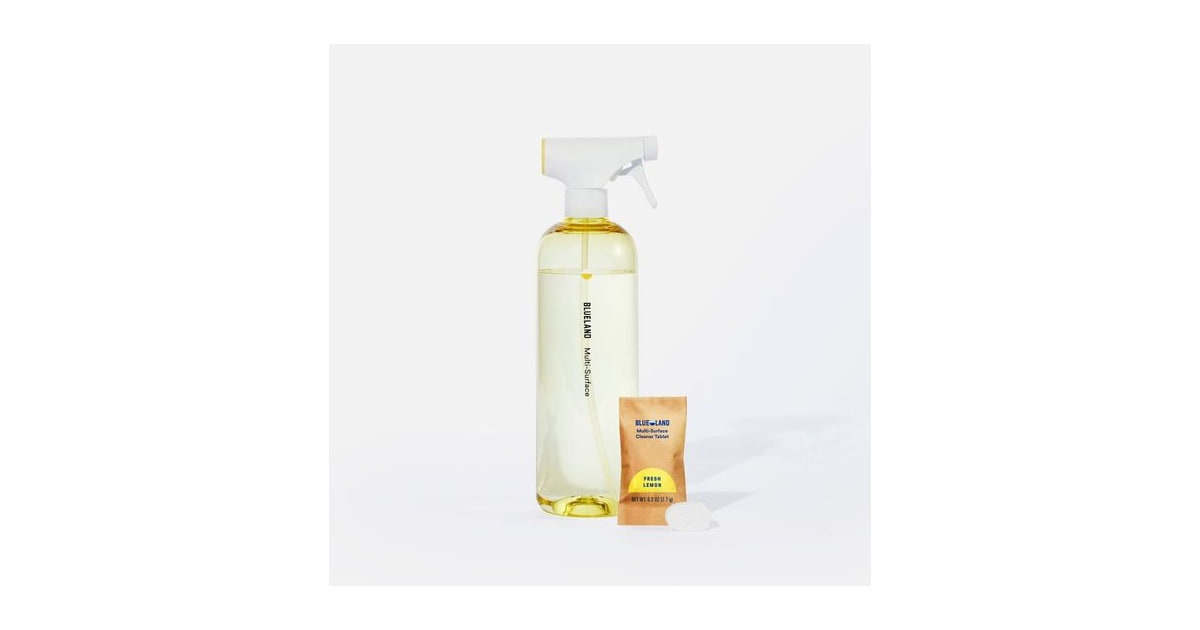
BLUELAND Multi-surface Spray Cleaner
You drop a tablet into a reusable bottle of water and get 24 ounces of multi-surface spray. It carries EPA Safer Choice certification, cleans countertops and stovetops as well as the sprays most people already buy, and it ships in a box you can recycle.
$21.99fromAmazonThis is the rare green cleaner with a certification that actually means something. EPA Safer Choice requires manufacturers to evaluate every chemical ingredient for both safety and efficacy — the program won't certify a product that's harmless but useless. Fewer than 5% of the cleaning products on U.S. shelves carry the label. Blueland stacks Leaping Bunny, B Corp, Climate Neutral, and USDA BioPreferred on top of it. That's a lot of independent verification for a lemon-scented spray.
The performance holds up too. Good Housekeeping Institute lab tests found Blueland's dissolvable tablet spray came within five percentage points of leading conventional sprays on standardized soap scum and hard water removal. Owners back that up on quartz, stainless steel, and sealed stone, and they consistently note it doesn't leave a hazy residue the way some plant-based sprays do. A greasy oven hood still needs a dedicated degreaser and a second pass.
The waste math is the other reason to buy it. Blueland's lifecycle analysis puts the reduction in single-use plastic at up to 90% and the cost per clean at roughly half that of pre-diluted bottles over a year. That tracks with how the product works — you're buying cleaning ingredients instead of shipping water around the country. If you're a renter with one cabinet under the sink, a strip of tablets takes up about as much room as a deck of cards.
It's also genuinely simple to live with. Fill the bottle to the marked line, drop in a tablet, walk away. There's no measuring cap to rinse and no concentrate to dilute wrong. If you've bounced off refill systems before because they felt fussy, this one asks less of you than most.
Flaws but not dealbreakers
The bottle is the weak link. Owners report the sprayer failing after several months and the plastic feeling thinner than they expected from a product built around durability. That's a real problem when the whole pitch is reuse. If yours gives out, the tablets work fine in any sturdy 24-ounce spray bottle you already own — but you shouldn't have to think about that.
Tablets take longer to dissolve than the instructions suggest, so plan on making your next bottle before you need it, not while you're standing over a spill. A handful of owners also report throat and lung irritation from the spray, and at least one reports damage to bathroom fixtures. "Plant-based" isn't the same as inert. Ventilate, and don't assume it's safe on every finish in your house.
Runner-up
Certified and effective, in a bottle you can grab anywhere
Seventh Generation All Purpose Cleaning Spray Surface
Seventh Generation is EPA Safer Choice territory in a ready-to-use spray, with USDA Certified Biobased content at 95% and a recycled plastic bottle. It cuts kitchen grease well, and you can restock it at nearly any grocery store without waiting on shipping.
$18.72fromAmazonConvenience is the whole argument here, and it's a good one. The best eco-friendly cleaner is the one you'll actually keep buying. Seventh Generation sits on shelves in most supermarkets and drugstores, so there's no subscription to manage and no gap where you run out and reach for the old stuff. For a lot of households, that reliability beats a marginally greener system you abandon in three months.
On ingredient transparency, Seventh Generation set the bar before anyone required it. The brand has disclosed 100% of its cleaning product ingredients since 2010 — more than a decade ahead of California's Cleaning Product Right to Know Act. That matters because EWG's database has rated over 2,000 household cleaners and fewer than a quarter earn an A or B, with most failures traced to undisclosed ingredients. Knowing what's in the bottle is not a small thing.
The formula is biodegradable and septic safe, which is worth checking if you're on a septic system or care where your greywater ends up. The lemon chamomile scent comes from essential oils rather than synthetic fragrance, and owners describe it as light and quick to fade — a plus if strong cleaning smells give you a headache. It handles everyday kitchen grease without needing a rinse afterward.
Flaws but not dealbreakers
It's still a pre-diluted spray in a plastic bottle, so you're paying to ship water and generating packaging every time you restock. The recycled-plastic bottle softens that, but a concentrate beats it on both counts.
Owners have noted a recent change to the bottle and trigger that sprays unevenly and generally annoys people who've used the product for years. It's a design gripe, not a formula problem, but it's the kind of thing you notice every single time you clean.
Budget pick
Gentle enough for a nursery, without a premium-brand markup
Better Life All Purpose Cleaner - Multipurpose
Better Life leaves out petroleum solvents, chlorine, added alcohols, parabens, and SLS, which makes it a sensible default in a house with a crawling baby or a cat. It cleans baked-on stovetop messes better than its gentle ingredient list suggests.
$19.99fromAmazonIf your reason for going green is a small human or a small animal, this is the straightforward pick. The formula skips the ingredient categories that worry parents most — petroleum solvents, chlorine, bleach, added alcohols, parabens, SLS and SLES. Owners with infants and cats describe using it on counters, floors, and mirrors without a second thought. It's the cleaner you can spray while the baby's in the room.
It also punches above its ingredient list on actual messes. Owners report it lifting dried food off casserole dishes with a short soak, and cutting the splatter on baked enamel stovetops where dish soap left a film. That's not lab data, but it's a consistent theme, and it's the kind of task where gentle cleaners usually disappoint.
For anyone with chemical sensitivities, the low-scent formulation is the real feature. People who describe themselves as sensitive to fragrance report being able to clean a bathroom without the closed-in feeling most sprays produce. That matters more than it sounds: a 2024 study in Environmental Science & Technology found fragrance compounds in cleaning sprays can react with indoor ozone to form secondary formaldehyde above EPA indoor air thresholds in poorly ventilated rooms.
Flaws but not dealbreakers
This is a clean, not a disinfect. There's no EPA disinfectant registration here, so for a cutting board that touched raw chicken you'll want something registered for the job.
Owners have flagged that the bottle shrank from 32 ounces to 24 while getting more expensive per ounce. You're also buying a plastic spray bottle every time, which undercuts the sustainability case compared with a tablet or concentrate system.
Upgrade pick
One fragrance-free concentrate that replaces the whole cabinet
Branch Basics Premium Starter Kit in Glass:
Branch Basics is a single concentrate with an EWG A rating and six plant- and mineral-derived ingredients, diluted at different strengths into labeled glass bottles for surfaces, glass, bathrooms, hand wash, and laundry. It's the most transparent formula here.
$125fromAmazonSix ingredients is an unusually short list for a product that claims to do everything. Branch Basics has earned an EWG A rating, and one bottle of concentrate replaces up to six separate conventional cleaners. There are no preservatives, fragrances, dyes, bleach, or ammonia. If you've been reading labels and coming away frustrated by vague "fragrance" entries and proprietary blends, this is the formula that ends that particular argument.
The kit is built around dilution, which is where the sustainability and cost math actually works. You get labeled glass bottles for all-purpose, bathroom, streak-free, foaming hand wash, and laundry, each filled to a marked line with water and a different amount of concentrate. Owners consistently mention how much space this frees under the sink. For a small apartment, replacing six bottles with one concentrate and a set of refillables is a genuine storage win.
Fragrance-free is the default here, not an option you hunt for. That makes it the pick for anyone with asthma, chemical sensitivities, or a pregnancy where you'd rather not think about what you're breathing. Owners on that path repeatedly describe cleaning a whole house without the headache that usually follows. An Oxygen Boost powder comes along for grout, tough laundry stains, and the jobs a neutral cleaner can't finish alone.
Flaws but not dealbreakers
It costs several times what a grocery-store spray does up front, and the concentrate needs to last a long while before the math turns in your favor. It will, but you have to commit.
The glass laundry bottle draws complaints — owners report the lid fitting loosely enough that pouring can dump half a bottle. The spray bottles get much better marks. Also, the review base for this kit is small compared with the mass-market picks, so there's less long-term feedback to lean on.
Also great
Laundry without the jug, and gentle on sensitive skin
Tru Earth Dry Laundry Detergent Sheets
Tru Earth strips are dissolvable, fragrance-free detergent sheets that arrive in a cardboard envelope — one strip per load, no measuring, no cap to rinse. They're the easiest single swap that removes a large plastic container from your house.
$14.99fromAmazonLaundry detergent is the biggest plastic jug most households buy, and it's mostly water. Tru Earth strips weigh three grams each and ship flat, which is why the company reports 94% less plastic packaging waste per load and over 90% lower shipping emissions versus liquid detergent. Switching your all-purpose spray and your laundry detergent knocks out the two highest-volume sources of household cleaning plastic. This is half of that in one move.
The unscented version is genuinely unscented, and it's vegan and paraben-free. Owners with sensitive skin report no reaction and no residue, including in cold water — which is where a lot of powder and sheet detergents fall down. Clothes come out smelling like nothing, which some people love and others find disconcerting after years of detergent perfume.
The practical stuff adds up. One strip per load means no measuring cup, no drips down the side of a jug, and no heavy container to lift onto a shelf. Owners with arthritis specifically call that out. If you use a laundromat or live in an RV, a whole month of detergent fits in an envelope.
Flaws but not dealbreakers
On heavily soiled loads — mud, grease, serious stains — a strip alone won't match a dosed liquid with enzymes and a pre-treat. Owners who moved to eco detergents describe trying several before landing here, and even then, pre-treating matters more than it used to.
There's no fabric softener effect and no lingering scent, so towels can feel a little flat if you're used to a scented liquid. Some owners also find the strips slow to dissolve in very cold, very short cycles.
Who this is for
Buy now if you're pregnant, have a crawling baby, live with a cat or dog, or have asthma in the house — those are the situations where what you spray genuinely matters, and the switch pays off immediately. It's also worth it if you're tired of hauling plastic jugs, or if you're a renter working with one cabinet of storage. Concentrates and tablets solve a space problem as much as an environmental one.
Don't switch on the assumption you're getting a disinfectant. This guide covers everyday cleaning — counters, floors, glass, bathrooms, and laundry — not products EPA-registered to kill viruses and bacteria. If you need that, verify the registration separately and keep something registered on hand for the jobs that call for it. We also don't cover dish detergent, dishwasher tablets, or specialty products like oven or drain cleaner.
How we picked
Certifications: we weighted EPA Safer Choice most heavily, because it's the only common seal that requires a product to prove it cleans as well as that it's safe, and we treated EWG A/B ratings, USDA Biobased content, and Leaping Bunny as supporting evidence. Performance: we looked for published lab comparisons against conventional benchmarks, then filled gaps with recurring owner themes about grease, streaking, and residue. Transparency: full ingredient disclosure was close to a requirement, since most EWG failures trace back to what brands leave off the label. Packaging: concentrates, tablets, and strips scored higher than pre-diluted bottles on plastic and shipping weight, and recycled-content bottles beat virgin plastic. Sensitivity: a fragrance-free option, septic and greywater safety, and pet-safe ingredients decided several close calls.
Other eco-friendly cleaning products worth considering
If you want the easiest possible first step: The Method All-Purpose Cleaner Spray ($5.30) — Method is the least intimidating way into green cleaning. It's on the shelf at Target and Walmart, it's Leaping Bunny certified, it's made without parabens, phthalates, sulfates or phosphates, and the bottle body is 100% recycled plastic. Owners praise the streak-free finish and the French lavender scent, which is light rather than chemical. What you give up is the certification depth of our picks — there's no EPA Safer Choice seal or published efficacy testing here, and the scent means it isn't the pick for a fragrance-sensitive household. But if the alternative is doing nothing, this is a good place to start.
The competition
This is what our research surfaced, not a survey of everything sold. The green cleaning market is growing fast — Grand View Research projects 6.8% annual growth through 2030 — and new brands appear constantly. The product below is a legitimate option that lost to a pick on specific grounds.
The MRS. MEYER'S CLEAN DAY Multi-Surface Cleaner ($4.89) — Mrs. Meyer's Clean Day Multi-Surface Cleaner is the most beloved cleaner here on scent alone, and it's plant-derived, Leaping Bunny certified, and made without parabens, phthalates, glycol solvents, phosphates, or artificial colors. It's also everywhere, and owners describe the lemon verbena as their favorite cleaning smell, full stop. It lost to our picks on two counts. The certifications are thinner — no EPA Safer Choice, no published lab efficacy data — and some owners say they reach for something stronger when a mess is serious. The fragrance that makes it a joy to use also rules it out for anyone with asthma or chemical sensitivities. If you love a scented house and want a greener bottle than the supermarket default, it's an easy buy.
Getting the most out of green cleaners
Give these cleaners time. Plant-based surfactants work as well as petrochemical ones on everyday grime, but they generally need a minute of dwell time on baked-on messes instead of dissolving them on contact. Spray, walk away, come back. For tablets and concentrates, mix your next bottle before you run out — tablets take longer to dissolve than the box implies. Ventilate while you clean regardless of how gentle the label sounds; a cracked window does more for your indoor air than any ingredient list. Never mix a green cleaner with bleach or ammonia, and test on an inconspicuous spot before using anything on brass, unsealed stone, or specialty finishes. Store concentrates away from heat, and keep them out of reach of kids even when they're fragrance-free.
Questions we get
Are eco-friendly cleaning products as effective as conventional cleaners?
For everyday cleaning, yes. Plant-based surfactants from coconut or corn perform comparably to petrochemical surfactants on ordinary grime in independent comparisons, and Good Housekeeping Institute lab tests put Blueland's tablet spray within five percentage points of leading conventional sprays on soap scum and hard water. The gap shows up on heavy grease and on disinfecting, where conventional products still win. EPA Safer Choice certification is your best shortcut, since the program requires proof of efficacy.
Do eco-friendly cleaning products actually kill germs and viruses?
Mostly no, and this is the most important distinction to understand. Cleaning removes dirt and lifts germs off a surface; disinfecting kills them, and that requires an EPA registration that very few green products carry. None of the products in this guide are registered disinfectants. Keep something registered for raw-meat prep areas and sick-household bathrooms, and use the green cleaner for everything else.
What certifications should I look for?
EPA Safer Choice first — it's the only common seal requiring manufacturers to evaluate every ingredient for both safety and cleaning performance, and fewer than 5% of cleaning products on U.S. shelves carry it. An EWG A or B rating is the next best signal; fewer than a quarter of the 2,000-plus products in EWG's database earn one. USDA Biobased, EU Ecolabel, and Leaping Bunny for cruelty-free round it out.
What's the difference between "natural," "non-toxic," and "eco-friendly" on a label?
Legally, nothing — none of those terms are defined or enforced, so any brand can print them. Consumer Reports has found products marketed as natural or plant-based that contained methylisothiazolinone, a preservative linked to skin sensitization and respiratory distress, without prominent disclosure. Treat the words as marketing and the seals as evidence. Look for EPA Safer Choice or an EWG A/B rating instead.
Are eco-friendly products more expensive?
Pre-diluted green sprays usually cost a bit more per bottle than conventional ones. Concentrates flip that: tablets, strips, and dilutable formulas typically run 40 to 60% less per use than pre-diluted bottles, because you stop paying to ship water. If cost is the main obstacle, a tablet or concentrate system is the way in, not the ready-to-use bottle.
How should I switch my whole home over?
Don't replace everything at once. Swap your all-purpose spray and your laundry detergent first — together they're the two highest-volume sources of household plastic cleaning waste, so you get most of the benefit from two purchases. Choose concentrated formats for both. Then replace other products as they run out rather than throwing away what you already own.
Why you should trust us
For this guide:
- We compared manufacturer specifications, ingredient disclosures, and certification records for every product here, checking EPA Safer Choice, EWG, USDA Biobased, and Leaping Bunny claims against the certifying programs.
- We read published lab findings from the Good Housekeeping Institute and reporting from Consumer Reports, along with research from the EPA, EWG, the American Lung Association, and peer-reviewed work in Environmental Science & Technology and Environmental Health Perspectives.
- We reviewed recurring themes in owner feedback across all seven products, weighing repeated complaints about sprayers, dissolve times, and irritation more heavily than one-off reports.
- We read owner reviews on every listing, weighted toward the critical ones, because that is where the recurring failures show up.
- We have a systematic way of automatically fetching the latest prices, so the numbers on this page stay current.
- This is a research-focused guide, so the team may not own every product listed — though we often do own the top winners, which gives us extra context for the recommendations.
- We don't accept free products, and the retailer commission never changes which product we recommend.
Sources
EWG Guide to Healthy Cleaning, Environmental Working Group
EPA Safer Choice Program Overview, U.S. Environmental Protection Agency
Best Natural and Eco-Friendly Cleaning Products, Wirecutter / The New York Times
Green Cleaning Products Lab Tests, Good Housekeeping Institute
Cleaning Product Safety Investigation, Consumer Reports
Volatile Organic Compounds from Cleaning Products, Environmental Health Perspectives (NIH/NIEHS)
Green Cleaning Products Market Size & Forecast 2025–2030, Grand View Research
California Cleaning Product Right to Know Act, California Department of Toxic Substances Control
Cleaning Supplies and Your Health, American Lung Association
Indoor Air Quality and Cleaning Product Emissions, Environmental Science & Technology (ACS Publications)
Amazon product listings and owner reviews for all 7 products
Manufacturer specification pages for each product
Some passages in this guide may be paraphrased with AI help. Prices are refreshed automatically.
More like this.
Continue exploring home reviews and recommendations.

The Best Eco-Friendly Reusable Bags
Reusable bags only work if you actually have one with you. That's the whole game. A beautiful organic cotton tote sitting on your kitchen counter does…

The Best Pressure Washer Surface Cleaners
A surface cleaner is the attachment that makes a pressure washer worth owning. Instead of one jet carving stripes into your driveway, two nozzles spin…

The Best Dryer Vent Cleaning Kits
Your dryer vent is easy to forget. It sits behind the machine, out of sight, and it fills with lint a little more every time you dry a load. Then one day…

The Best Bissell Carpet Cleaners
Carpet holds onto more than you think. Every muddy shoe, dropped bowl of spaghetti and cat hairball works its way down into the fibers, where a vacuum…

The Best Tineco Floor Cleaners
If you have hard floors and anything that makes a mess - a dog, a toddler, a partner who cooks - you already know the routine. You vacuum, then you mop,…

The Best Siding Cleaners
Siding gets dirty in a way you don't notice until you do. Green streaks creep down the shaded north wall, black speckles collect under the eaves, and one…