The Best Dryer Vent Cleaning Kits
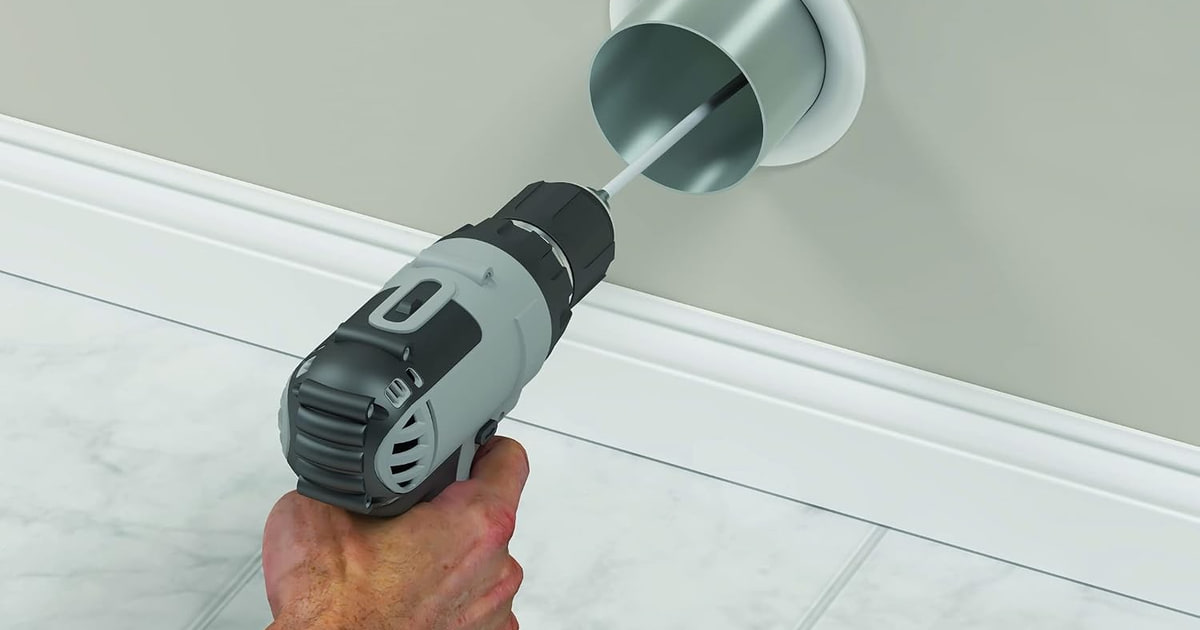
Your dryer vent is easy to forget. It sits behind the machine, out of sight, and it fills with lint a little more every time you dry a load. Then one day a load of towels needs two cycles instead of one. That's the duct telling you it's choked. A cleaning kit is just a brush on a set of flexible rods, but it's the difference between a dryer that runs hot and slow and one that doesn't. Clothes dryers are tied to roughly 15,970 home structure fires a year, and failure to clean the vent is the leading contributing cause.
Here's what no kit does well: none of them show you the inside of your duct. A pro runs a camera. You're working blind, feeling for resistance and judging the job by how much lint comes out the other end. Mess is the other honest problem. A spinning brush has to push lint somewhere, and unless you've rigged up a vacuum or a collection bag, some of it ends up on the laundry room floor. Every kit here is also sized for a standard 4-inch round duct, so measure yours first.
So the choice comes down to two numbers: how long your duct run is, and how much you care about containing the debris. Walk the path from the dryer's exhaust port to the exterior cap, add up the straight sections, then add five feet for every 90-degree elbow. Buy something with room to spare. We think that the Holikme Dryer Vent Cleaner Kit - 35Ft is the best dryer vent cleaning kit for most people, and that the Sealegend 58-Pieces 35-Feet kit is the one to buy if you want the lint captured instead of scattered.
Everything we recommend

Long reach and a drill attachment, without the extras
Same reach, plus a way to catch the lint you knock loose

Pro-grade rotary cleaning for long or roof-exit ducts
At a glance
| Product | Rod Reach (ft) | Drill-Powered vs Manual | Price | |
|---|---|---|---|---|
| Holikme Dryer Vent Cleaner Kit - 35FtTop pick | 35 Ft | Drill Connector | $20.99On sale |
 | Dryer Vent Duct Cleaning Kit - GardusAlso consider | 12 Ft | Cordless Drill | $29.99On sale |
 | Deflecto DVBRUSH12K/6 Dryer Duct Cleaning KitAlso in lineup | 12 Ft | — | $24.80 |
| Sealegend 58-Pieces 35-Feet Dryer Vent Cleaner KitRunner-up | 35 Ft | — | $28.99On sale |
 | Sealegend 15-Piece 25-Feet Dryer Vent Cleaner KitAlso consider | 25 Ft | — | $26.99On sale |
 | Cen-Tec Systems 93136 Ventilation Ductwork Vacuum CleaningAlso in lineup | — | — | $68.75 |
| Gardus RLE30 LintEater Rotary Dryer Vent CleaningUpgrade pick | 30 Ft | Cordless Drill | $47.99 |
How we picked
Reach and rod count. We compared each kit's stated reach against residential duct-length limits, which cap a straight run at 25 feet and deduct five feet per 90-degree elbow. Anything under 12 feet was only worth considering for apartments and back-wall installs.
Drill compatibility. Published reviews and manufacturer instructions agree that rotary brushing clears compacted lint that hand-pushing slides past. We favored kits with a proper drill connector, and noted which ones also work by hand.
Lint containment. Owner feedback across this category keeps circling back to mess. We gave credit to kits that ship a vacuum adapter, a dryer adapter or collection bags rather than leaving cleanup entirely to you.
Rods and bristles. Bristle shed and rods unscrewing mid-duct are the two failure modes that come up most in published reviews. We looked for synthetic brush heads and secure screw-connect joints from manufacturers with a history in HVAC parts.
What's in the box. Spec sheets let us count the reusable tools separately from consumables like collection bags. A kit that also includes a lint trap brush and gloves saves you a second purchase.
Top pickOn sale
Long reach and a drill attachment, without the extras
Holikme Dryer Vent Cleaner Kit - 35Ft
The Holikme kit gives you a 4-inch brush, 35 feet of flexible nylon rod, a drill connector, a lint brush and gloves in one box. For a normal run from the laundry room to an exterior wall, it's everything the job needs and nothing you'll never touch.
$20.99fromAmazonList priceThirty-five feet of rod covers just about any duct run in an American home. Residential code caps a straight dryer duct at 25 feet, and every 90-degree elbow knocks another five feet off that allowance. So even a bend-heavy route in a two-story house lands well inside 35 feet. You get slack instead of coming up short, which matters because the lint packed nearest the exterior cap is always the worst of it.
The drill connector is the reason to buy a kit like this instead of a single brush. Screw the connector onto any cordless drill and the brush spins as you push it in. That scouring action breaks up the compacted layer stuck to the duct wall. A brush you shove back and forth by hand mostly slides past it. If your vent hasn't been cleaned in a couple of years, that difference is the whole job.
Nothing else is missing from the box. You get the 4-inch brush head for standard vents, the nylon rod set, a long skinny lint brush for the trap slot and the gap behind the machine, the drill attachment and a pair of anti-slip gloves. That covers the two places lint actually collects. No second order, no trip to the hardware store halfway through a Saturday.
The flexible nylon rods bend without fighting you. Most laundry rooms don't have a straight shot to the outside. There's a drop, a turn, maybe a run through a joist bay. These rods flex through gradual bends and screw together end to end. Turn them clockwise the whole time, going in and coming out, and the connections stay tight instead of unscrewing mid-duct and leaving a rod behind.
Flaws but not dealbreakers
There's no vacuum adapter, so plan on cleaning up after the cleaning. The lint you knock loose has to go somewhere, and without suction or a bag on the exterior cap, some of it drifts back into the room. Lay down an old towel, keep a shop vac running nearby, and expect to sweep. If a tidy workflow matters more to you than saving a little money, the Sealegend 58-piece kit handles that part.
It's a newer listing without much of a track record. The feature set is solid and the parts are the same nylon-rod-and-auger-brush design everyone uses, but there isn't years of published owner feedback behind it the way there is for the Gardus and Deflecto kits. If brand history is what makes you comfortable, that's a fair reason to look at one of those instead.
Runner-upOn sale
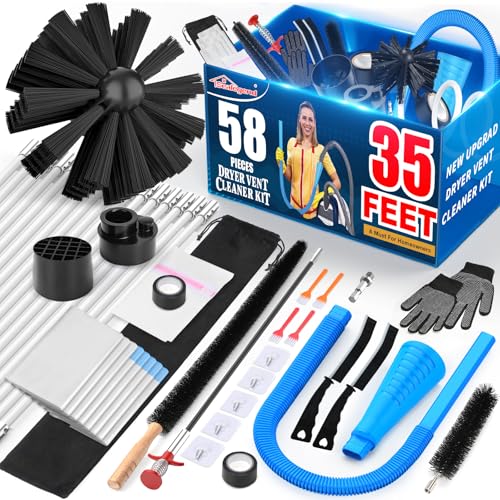
Same reach, plus a way to catch the lint you knock loose
Sealegend 58-Pieces 35-Feet Dryer Vent Cleaner Kit
This Sealegend kit matches the 35-foot reach of our top pick and adds the part most kits skip: a vacuum adapter, a dryer adapter and collection bags that trap debris as it comes out. If you'd rather not vacuum the whole laundry room afterward, buy this one.
$28.99fromAmazonList priceThe vacuum adapter is what you're paying extra for, and it's worth it. It connects the rod assembly to most shop vacs and household vacuums, so you're pulling lint out at the same time you're breaking it loose. The dryer adapter does the same job a different way, using the machine's own exhaust to blow debris out the exterior cap. Two ways to finish the job clean, depending on what you own.
The lint collection bags catch what comes out the far end. You tape a bag over the outside vent cap before you start, and the lint that blows through lands in the bag instead of your flowerbed or your neighbor's driveway. It's a small thing that makes the difference between a contained job and a job that spreads a gray cloud across the side of your house.
Eighteen nylon rods reach 35 feet, so long and complicated runs are fine. Same coverage as our top pick, which means roof exits, central laundry closets and long horizontal stretches through finished walls are all within range. The rods screw together quickly and the flexible nylon takes gradual bends. As with any screw-connect system, keep rotating clockwise going in and coming back out.
The kit reaches the spots a rod never gets to. There's an omnidirectional lint vacuum attachment with a flexible hose for the inside of the machine, an extra-long trap brush for the lint filter slot, a gap brush for the seam between the dryer and the wall, and a blockage removal tool. Years of packed lint sits behind the drum, and duct cleaning alone leaves all of it there.
Flaws but not dealbreakers
The 58-piece headline is mostly bags. Thirty-three of those pieces are single-use lint collection bags, so the reusable toolkit is closer to ten real components. That's still more tools than our top pick includes, but don't read the piece count as a measure of what you're getting. And once the bags run out, the mess-free workflow costs you something to keep up.
It costs more than our top pick for the same reach. The premium buys you the adapters and the bag system, nothing else. If you're happy to sweep up afterward, that money isn't doing anything for you. There's also a compatibility catch worth checking: the vacuum attachment works with most vacuums, but Sealegend calls out some Dyson and Shark models as exceptions.
Upgrade pick
Pro-grade rotary cleaning for long or roof-exit ducts
Gardus RLE30 LintEater Rotary Dryer Vent Cleaning
The RLE30 is the long version of the LintEater system, with ten three-foot rods, a self-feeding auger brush and both vacuum and dryer adapters. It's built for the runs cheaper kits can't finish: roof exits, central laundry rooms, long stretches buried in finished walls.
$47.99fromAmazonGardus has been making this system for years, and the rod hardware shows it. The screw-connect rods, the auger brush and the adapters are the same platform HVAC folks reach for on service calls. That track record is the main argument for spending more here. You're not buying more reach than the Sealegend kit offers — you're buying a design that's been through a lot of ducts.
The self-feeding auger brush pulls itself through the duct. Spin it with a cordless drill and the head works forward on its own while the bristles scour the duct wall. That's the same scouring technique a pro uses, and it's the only reliable way to break up lint that's been compacting for years. On a badly neglected vent, one pass usually restores full airflow.
Thirty feet of rod handles the layouts that stump everything else. If your dryer sits in the middle of the house, or the duct runs up through the ceiling and out the roof, a 12-foot kit physically cannot reach the far end. It leaves the densest lint exactly where it does the most harm. Ten three-foot rods get you to the cap and back.
You get both adapters, so the lint doesn't stay in the house. The vacuum adapter connects to a shop vac for suction while you work. The dryer adapter uses the machine's own airflow to push loosened lint out through the exterior cap. Either one works; pick based on whether you'd rather run a vacuum or run the dryer while you clean.
A blockage removal tool and a trap brush come in the box. The 2.5-inch lint trap brush clears the filter housing, where a surprising amount of lint hides. The blockage tool is for the times you hit something the auger won't chew through — a bird nest at the cap is more common than you'd think, especially if your exterior flap is broken.
Flaws but not dealbreakers
It's more kit than most homes need. If your duct run is under 15 feet, the extra rods just sit in the box and you paid for reach you'll never unroll. Measure first. A short run behind a back-wall dryer is served perfectly well by our top pick or by the shorter LintEater.
Stock on this one has been thin. It's an established product, but availability comes and goes, and that's worth knowing if you're planning around a specific weekend. There's also no vacuum in the box, obviously — the adapter assumes you already own a shop vac or a household vacuum with a compatible hose.
Who this is for
This guide is for anyone with a clothes dryer venting through a standard 4-inch round duct, which is nearly every house and apartment in the country. If your drying times have crept up, if clothes come out hot but still damp, or if you simply can't remember the last time anyone cleaned the duct, buy a kit. Cleaning it once a year is the recommendation, and more often if you run five or more loads a week or live with a shedding pet.
Skip the DIY route in a few cases. If your vent exits through the roof of a multi-story house with several elbows, a pro with a camera can confirm the duct is actually clear, and you can't. Same if the run is longer than any kit here reaches, or if the dryer is shutting itself down mid-cycle, which can mean a tripped thermal fuse and a duct that's fully blocked. This guide also doesn't cover large-diameter commercial ventilation or kitchen range hood ducts, which need bigger brushes than any of these kits include.
How we picked
We read manufacturer specifications and published reviews for every kit in this guide and compared them on the things that decide whether a cleaning actually works. Reach: the rods have to get from the dryer's exhaust port all the way to the exterior cap, with a margin for the five feet each elbow effectively adds. Drill compatibility: a spinning brush scours compacted lint off the duct wall, and a hand-pushed brush mostly doesn't. Containment: vacuum adapters, dryer adapters and collection bags decide whether the lint ends up in a bag or on your floor. Rods and bristles: synthetic heads that don't shed, and screw joints that don't come apart mid-duct. Contents: we counted reusable tools separately from consumables, since a high piece count often just means a stack of disposable bags.
Other dryer vent cleaning kits worth considering
If you want to clean inside the dryer, not just the duct: The Sealegend 15-Piece 25-Feet Dryer Vent Cleaner Kit ($26.99) — This 15-piece Sealegend kit reaches 25 feet on 18 nylon rods, which covers most single-story homes with a side-wall or back-wall vent. The standout piece is the omnidirectional lint vacuum attachment, with a long flexible hose that snakes into the drum housing and pulls out the packed lint sitting behind the machine. No rod-based system reaches that, and it's where a lot of buildup hides. You also get universal vacuum and dryer adapters and a dust collector bag. The trade-off is reach: 25 feet isn't enough for a roof exit or a long run through finished walls, and it costs more than our 35-foot top pick. Measure before you commit.
If your run is short and badly overdue for a cleaning: The Dryer Vent Duct Cleaning Kit - Gardus ($29.99) — The Gardus RLE202 is the compact LintEater, with four three-foot rods reaching 12 feet. That's plenty for an apartment, a condo or any dryer that backs straight onto an exterior wall. You get the same self-feeding auger brush and the same rotary action as our upgrade pick, plus the vacuum and dryer adapters and a blockage removal tool, for considerably less money. If nobody has touched your vent in several years, that spinning auger is the right tool. The hard limit is the 12-foot ceiling, and there's no extending it. Stock also tends to be scarce, so don't count on it being there next month.
The competition
This is what our research turned up, not a census of everything sold. Dryer vent kits are a crowded, largely undifferentiated category, and plenty of listings are the same nylon rods and auger brush under a different name.
The Deflecto DVBRUSH12K/6 Dryer Duct Cleaning Kit ($24.80) — The Deflecto DVBRUSH12K/6 is a well-made kit from an established HVAC accessory manufacturer, with a synthetic brush head and six rods reaching 12 feet. Its real strength is rod stiffness: it holds scrubbing pressure through 90-degree elbows where floppier rods lose torque, and it works with or without a power drill, which is genuinely useful if you don't own one or rent and can't be bothered. It lost to our picks on two counts. Twelve feet rules out most houses, and there's no vacuum adapter, so you still handle cleanup yourself. If your dryer exhausts straight through a back wall with a couple of tight bends and you want a brand with a long parts-quality reputation, it's a reasonable pick.
Measuring your duct run
Buying a kit that's too short is the single most common mistake here, and it's the one that costs you the whole job. Walk the duct path from the dryer's exhaust port to the exterior cap and measure every straight stretch, including vertical rises you can't see. Then count the 90-degree elbows and add five feet of equivalent length for each one. Add another 20 percent as a buffer and buy a kit that clears that number. A brush that stops ten feet short leaves the densest, most compacted lint sitting right where the duct meets the outside wall. While you're at it, check the exterior flap: if it doesn't swing freely, it traps lint no matter how clean the run is.
Questions we get
How often should I clean my dryer vent?
At least once a year is the standard recommendation, and that holds even if the dryer seems fine. Clean it every six months if you run more than five or six loads a week or live with a pet that sheds. Don't wait for a performance problem, because by the time drying times double you've already been running a fire risk for a while.
How do I know my vent is clogged?
The clearest sign is time: a load that used to dry in 45 minutes now takes an hour and a half. Watch for clothes that come out hot but still damp, a dryer cabinet that's uncomfortably hot to touch, a faint burning smell, or lint piling up around the outside vent cap. A quick check is to hold your hand near the exterior cap while the dryer runs — strong warm airflow is good, weak or no airflow means you've got a problem.
Do I need a drill, or can I do this by hand?
You can do it by hand. The Deflecto kit is designed for it, and the Holikme rods are stiff enough to push through without one. But rotary cleaning with a drill is meaningfully better at breaking up lint that's compacted onto the duct wall. If it's been two or more years, make the first pass with a drill, then hand cleaning is fine for annual upkeep.
Can I use these with flexible foil duct?
Yes. The Holikme, Gardus, Deflecto and Sealegend kits all work with rigid galvanized pipe and flexible aluminum foil duct. That said, code guidance discourages foil for dryer venting, because the ridges catch lint far faster than smooth rigid pipe. If your whole run is foil, consider replacing it with rigid metal the next time you have the dryer pulled out.
Should I just hire a pro?
For most homes, no — a kit pays for itself the first time you use it, and the work is one afternoon of effort. Hire someone if your vent exits through the roof of a two-story house, if the run has several elbows you can't trace, or if you want a camera inspection to confirm the duct is genuinely clear. That last part is the one thing no DIY kit can do.
What brush size do I need?
Standard U.S. residential dryer vents are 4 inches in diameter, and every kit in this guide includes a 4-inch head. If you're in a multi-unit building where the dryer feeds a larger shared duct, measure the actual diameter before ordering. Don't force a 4-inch brush into a bigger duct — it'll ride along one wall and miss most of the lint.
Why you should trust us
For this guide:
- We read manufacturer specifications, instruction materials and published reviews for all seven listings in this guide.
- We compared reach, rod count, brush diameter and included adapters across every kit, and checked those stated reaches against residential duct-length limits.
- We drew on recurring themes in owner feedback for this category, particularly complaints about scattered lint, bristle shed and rods separating inside the duct.
- We read owner reviews on every listing, weighted toward the critical ones, because that is where the recurring failures show up.
- We have a systematic way of automatically fetching the latest prices, so the numbers on this page stay current.
- This is a research-focused guide, so the team may not own every product listed — though we often do own the top winners, which gives us extra context for the recommendations.
- We don't accept free products, and the retailer commission never changes which product we recommend.
Sources
Clothes Dryer Fires in Residential Buildings — NFPA Report, National Fire Protection Association (NFPA)
Dryer Safety — U.S. Fire Administration, U.S. Fire Administration (USFA/FEMA)
Clothes Dryer Safety Publication 5022, U.S. Consumer Product Safety Commission (CPSC)
Tips for Energy-Efficient Dryers, U.S. Department of Energy
IRC Section M1502 — Dryer Exhaust Duct Specifications, International Residential Code (IRC)
Amazon product listings and owner reviews for all 7 products
Manufacturer specification pages for each product
Some passages in this guide may be paraphrased with AI help. Prices are refreshed automatically.
More like this.
Continue exploring home reviews and recommendations.

The Best Car Window Rain Guards and Vent Visors
Cracking a window is the simplest air conditioning there is. The problem shows up the moment it rains, or the moment you park in a lot and don't want an…

The Best Eco-Friendly Cleaning Products
Cleaning products are one of the few things you buy that you also breathe. You spray them on the counter where your kid eats breakfast, and you wipe them…

The Best Siding Cleaners
Siding gets dirty in a way you don't notice until you do. Green streaks creep down the shaded north wall, black speckles collect under the eaves, and one…

The Best Bissell Carpet Cleaners
Carpet holds onto more than you think. Every muddy shoe, dropped bowl of spaghetti and cat hairball works its way down into the fibers, where a vacuum…

The Best Tineco Floor Cleaners
If you have hard floors and anything that makes a mess - a dog, a toddler, a partner who cooks - you already know the routine. You vacuum, then you mop,…

The Best Pressure Washer Surface Cleaners
A surface cleaner is the attachment that makes a pressure washer worth owning. Instead of one jet carving stripes into your driveway, two nozzles spin…