The Best Reusable Kitchen Swaps for Cutting Plastic Waste
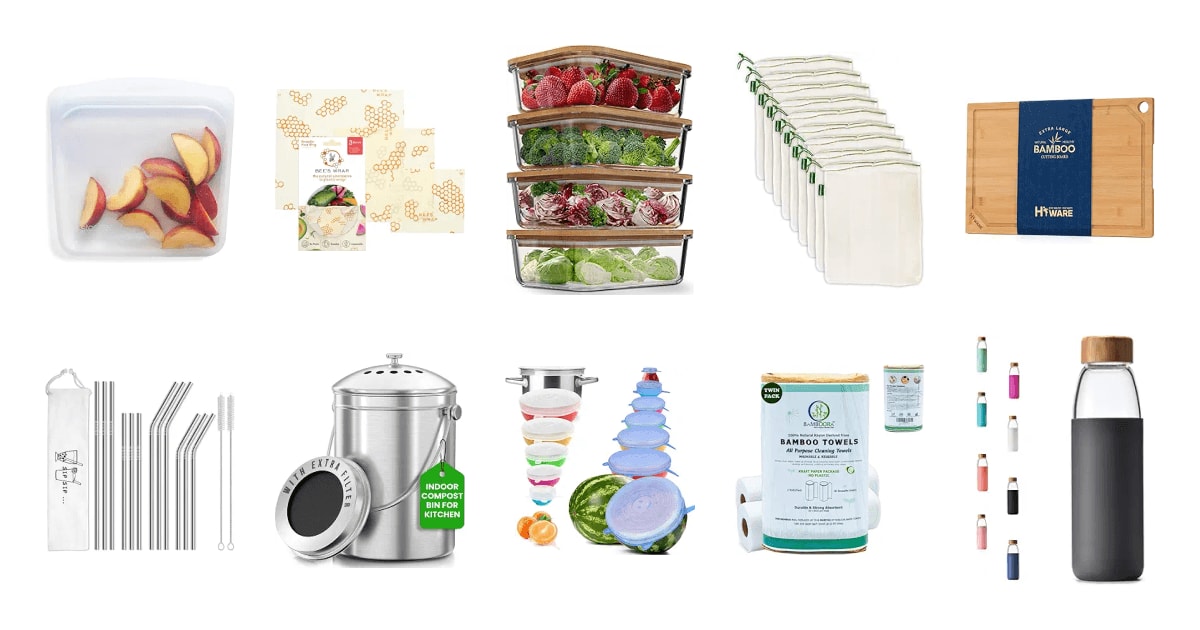
Kitchen plastic doesn't leave your house in one big pile. It leaves a sandwich bag at a time, a sheet of cling film at a time, a produce bag at a time. That's what makes it hard to see and easy to keep buying. A good reusable swap has to survive that same grind — daily use, a hot dishwasher, a freezer, a toddler, a distracted week where nothing gets washed. If it can't, it ends up in a drawer and you go back to the box under the sink.
Here's the honest part: nothing in this category is a straight upgrade. Every reusable asks something of you. Silicone bags cost far more up front than a box of zip-tops. Beeswax wraps can't touch heat or raw chicken. Glass is heavy and breaks. Mesh produce bags don't hold moisture, so your cilantro wilts faster than it would in plastic. You're trading a small, constant convenience for a bigger one-time cost and a bit of maintenance. That trade is worth it, but it's still a trade.
So we focused on swaps that hold up to ordinary kitchen abuse and don't need a system to work. We read manufacturer specs, published reviews and a lot of owner feedback, and we leaned toward products people are still using a year or two in. We think that the Stasher Silicone Reusable Storage Bag is the best reusable kitchen swap for most people, and that the Bee's Wrap Beeswax Wraps are the ones to buy if plastic wrap, not zip-top bags, is what you burn through.
Everything we recommend

The swap that stands in for a whole box of zip-top bags

Breathable cover for cheese and bread, if you skip the heat

The easiest swap to start with, and the least fussy

Keeps a week of scraps on the counter without the smell
At a glance
| Product | Material | Capacity/Size | Price | |
|---|---|---|---|---|
| Stasher Silicone Reusable Storage BagTop pick | Silicone | 28 Fluid Ounces | $11.99On sale |
| Bee's Wrap Beeswax Wraps for Food -Runner-up | Beeswax | Small, Medium, Large | $19On sale |
 | Glass Food Storage Containers with Bamboo LidsAlso in lineup | — | 36 Fluid Ounces | $34.97On sale |
| Earthwise Reusable Mesh Produce Bags - WashableBudget pick | Mesh | 9 Bags | $14.99 |
 | Hiware Extra Large Bamboo Cutting Board forAlso consider | Bamboo | 18" x 12" | $12.98On sale |
 | Hiware 12-Pack Reusable Stainless Steel Metal StrawsAlso consider | Stainless Steel | 12-Pack | $6.99 |
| Utopia Kitchen Indoor Compost Bin KitchenAlso great | Stainless Steel | 1.3 Gallon | $22.22On sale |
 | YXYL 14 PCS Reusable Silicone Stretch andAlso in lineup | Silicone | 14 Pcs, 7 Sizes | $9.97 |
 | Reusable Bamboo Rayon Towels - Pack ofAlso consider | 100% Natural Rayon | 2 Rolls, 40 Sheets | $16.95 |
 | veegoal 18 Oz Borosilicate Glass Water BottlesAlso in lineup | Borosilicate Glass | 18 Oz | $18.59 |
How we picked
Replaces something real. We favored swaps that stand in for a specific disposable you're already buying, rather than adding a new object to the kitchen. If a product couldn't cleanly take over a job from plastic wrap, zip-top bags, produce bags or paper towels, it lost ground.
Survives daily use. We read owner feedback with an eye for reports from a year or more in, since almost everything looks good in month one. Seals that stop sealing, wax that wears off and lids that crack were the failure modes we weighted most heavily.
Easy to clean. We checked spec sheets for dishwasher and temperature ratings, and we treated hand-wash-only parts as a real cost. A swap that needs oiling, cool-water-only washing or careful drying will lose to one you can throw in a machine.
Honest materials. We looked for platinum or food-grade silicone, borosilicate glass, 18/8 stainless and FSC-style sustainably sourced bamboo, and we noted where a product still contains plastic despite the marketing. Vague eco claims without a material spec didn't count for anything.
Low friction. We preferred products that work with the routine you already have — bags you toss in the laundry, straws that fit the tumbler in your cupboard. Anything requiring a new habit to function had to be clearly better to justify it.
Top pickOn sale
The swap that stands in for a whole box of zip-top bags
Stasher Silicone Reusable Storage Bag
A thick platinum-silicone bag with a pinch-close seal that handles the freezer, the microwave, the oven and a sous vide bath. It's the rare reusable that does everything the disposable did, which is why it actually stays in rotation instead of in a drawer.
$11.99fromAmazonList priceMost reusables approximate a plastic bag. This one replaces it. You can freeze soup in it, thaw it in the microwave, cook in it at up to 425°F, and run it through the dishwasher afterward. Stasher rates the silicone from -40°F to 425°F, so there's no moment where you think "this one needs a real container." That range is the whole argument for the price.
The seal is the part people notice first. You press it closed and it stays closed, which matters when a bag of marinating chicken is lying flat in the fridge next to your lunch. Owners who've had them for a year or more consistently report the closure still works — that's the failure point on cheaper silicone bags, and it's the one thing you can't fix once it goes.
It also doesn't hold onto smells. Plastic containers pick up chili and garlic and never let go; the silicone here comes out of the dishwasher neutral, and it stays clear enough to see what's inside. Stasher's own math is that one bag stands in for 260 single-use bags over a year. Even if you're skeptical of that number, one bag lasting years is the point.
Buy one first, not six. It's the most expensive thing here per unit, and there's no reason to commit before you know whether you'll actually wash it. If you use zip-tops daily for lunches or prepped vegetables, you'll know within a week. If it lives on the counter unwashed, you've learned something cheaply.
Flaws but not dealbreakers
The sandwich size is honestly a little tight for a sandwich. Owners report having to squish bread in and fish it back out, which gets old if you're packing lunches every morning. Think of it as a bag for snacks, cut vegetables and leftovers first, and a sandwich bag second.
Wet silicone is slippery, and opening the seal with soapy hands takes more grip than you'd expect. Stasher also tells you not to turn the bag inside out to clean it, because that's how they tear — so scrubbing the corners means working blind with a bottle brush. And it's heavy compared with plastic, which you'll feel in a kid's lunchbox.
Stasher covers its bags for life against damage from normal use, and will replace a failed bag with the same product or one of equal value.
Runner-upOn sale
Breathable cover for cheese and bread, if you skip the heat
Bee's Wrap Beeswax Wraps for Food -
Three cotton sheets coated in beeswax, plant oils and tree resin that soften with the warmth of your hands and cling to a bowl rim or a hunk of cheddar. They breathe, which is exactly what bread and hard cheese want and what plastic wrap never gives them.
$19fromAmazonList priceThis is the swap for people whose problem is cling film, not bags. You press a sheet over a bowl, around a wedge of cheese, or over the cut end of a loaf, and it holds. Because the cotton breathes, cheese doesn't sweat and bread doesn't go gummy the way it does under plastic. Owners who bake bread at home tend to be the ones who get evangelical about these.
The three sizes cover most of what you'd reach for a roll of wrap to do. The small works as a snack pouch, the medium wraps a sandwich or a block of cheese, and the large covers a mixing bowl. You can cut a sheet down if you want a size that isn't in the box, which is a nice thing to be able to do with a food wrap.
Care is simple as long as you respect the one rule: cool water only. Rinse, mild soap if needed, air dry over a dish rack. Hot water melts the wax off and takes the grip with it. When a sheet finally gives up, it's cotton and beeswax — it goes in the compost rather than the bin.
Flaws but not dealbreakers
Heat is a hard no across the board. No microwave, no dishwasher, no hot food, and no raw meat for food-safety reasons. That rules out a meaningful chunk of what you'd otherwise use plastic wrap for.
The large sheet is smaller than most people picture. Owners regularly note it won't fully cover a standard loaf of bread, so plan on the wraps doing partial coverage rather than parcel-wrapping. Cleaning is also fussier than rinsing plastic — anything oily or sticky takes patience with cool water, and the wax coating thins out over months of use until it stops gripping and needs replacing.
Budget pick
The easiest swap to start with, and the least fussy
Earthwise Reusable Mesh Produce Bags - Washable
Nine see-through mesh bags in three sizes with drawstring tops, light enough that the tare weight barely registers at checkout. They're the least demanding reusable here: you throw them in the wash with the towels and they come out ready to go again.
$14.99fromAmazonIf you only change one habit, change the produce aisle. Those thin plastic bags get used for the twelve minutes between the scale and your crisper drawer, and there's no version of that transaction worth a new piece of plastic. These weigh under a third of an ounce each, so a cashier ringing you up isn't charging you for the bag.
The mesh is sheer enough that barcodes scan straight through it, which removes the one bit of friction that makes people give up on reusable produce bags. Cashiers don't have to open anything or guess at what's inside. Owners who work checkouts say these are the ones they'd rather see come down the belt.
They're stronger than the mesh suggests. Owners load them with apples and potatoes without the seams giving out, and the three sizes mean a head of lettuce and a handful of shallots each get something that fits. Nine bags is enough that you can leave a set in the car and still have some at home.
Maintenance is the whole appeal. There's no oiling, no hand washing, no temperature limit. They go in with your regular laundry and hang dry. That's why these tend to survive in households where the fancier swaps quietly stop getting used.
Flaws but not dealbreakers
Mesh breathes, which is great for potatoes and onions and bad for anything leafy. Scallions, cilantro and salad greens wilt faster in these than they would in a sealed bag, so plan on prepping greens when you get home rather than leaving them bagged in the crisper.
Very fine items poke through — think bean sprouts or loose herbs. Bulk bin goods like rice or flour are out entirely. And some self-checkout systems don't handle a tare weight gracefully, so you may end up flagging down an attendant the first few times.
Also greatOn sale
Keeps a week of scraps on the counter without the smell
Utopia Kitchen Indoor Compost Bin Kitchen
A 1.3-gallon stainless bin with charcoal filters in the lid, sized to sit on a counter or tuck under the sink. It's the piece that makes composting realistic in an apartment, because it handles the part people actually dread — the smell.
$22.22fromAmazonList priceComposting fails at the collection step, not the composting step. If scraps stink after two days, the bin stops getting used and the coffee grounds go back in the trash. The charcoal filters here are the reason owners report going three, four, five days between trips to an outdoor pile or a municipal drop-off without noticing anything.
Stainless was the right call over plastic. Plastic bins absorb the smell of what's been in them, so eventually the bin itself is the problem no matter how often you empty it. Steel doesn't stain, scratch or hold odor, and it wipes out with warm soapy water. Owners report bins in daily use for the better part of a year with no rust and no loosening hinges.
The 1.3-gallon size is a deliberate compromise. It's big enough to swallow a night of vegetable trimmings, eggshells and coffee grounds, and small enough that it doesn't dominate a counter or block the space under a sink. There's a handle, so carrying it out isn't a two-hand operation.
Flaws but not dealbreakers
The lid isn't airtight, and several owners describe it as a touch loose compared with bins they've had before. Odor control still holds up in practice thanks to the filters, but you shouldn't expect a seal.
Filters are a consumable. They need soaking or replacing every few months, and a set that's gone past its useful life is usually the real cause when a bin starts to smell. In warm weather, fruit flies will find it if you let scraps sit too long — emptying every few days solves that. If you cook for a large family, expect to empty it daily.
Who this is for
This guide is for anyone who's looked at their kitchen trash and noticed how much of it is packaging they bought on purpose. You don't need to overhaul anything. Pick the one disposable you go through fastest — bags, wrap, produce bags, paper towels — and replace just that. The savings argument is real over a few years, but the habit argument is stronger: a swap only works if it's easier to reach for than the box under the sink.
If you're already deep into a zero-waste setup, most of this will be familiar and you're mainly here for which specific model holds up. And we've kept the scope to everyday storage, prep and cleanup gear. We're not covering countertop composters that actually break down food, water filtration, bulk-buy dispensers or cookware. A few of these products also aren't great for packed lunches or travel — glass and silicone are heavy, and we say so where it matters.
How we picked
We weighted five things. Replaces something real: the swap has to take over a job from a disposable you already buy, not add a new object to the drawer. Survives daily use: we read owner feedback looking for reports a year or more in, and we watched for seals that quit, wax that wears off and lids that crack. Easy to clean: dishwasher and temperature ratings came from spec sheets, and hand-wash-only parts counted against a product. Honest materials: platinum silicone, borosilicate glass, 18/8 stainless and sustainably sourced bamboo, with a note wherever plastic is still in the mix. Low friction: if a swap needs a whole new routine to work, it has to be clearly better to earn it.
Other reusable kitchen swaps for cutting plastic waste worth considering
If you want to stop buying plastic straws: The Hiware 12-Pack Reusable Stainless Steel Metal Straws ($6.99) — This twelve-pack of 18/8 stainless straws is the most broadly liked product in the whole lineup, and it's easy to see why. You get straight and bent versions in two lengths — 10.5 inches for a 30-ounce tumbler, 8.5 inches for a 20-ounce one — plus two nylon brushes and a carrying case. They're dishwasher safe and don't leave a metallic aftertaste. The catch is temperature: metal conducts, so a hot drink can catch your lip and an iced coffee makes the straw uncomfortably cold. They're also a bad idea for small kids, who can chip a tooth on one. If you have a very tall tumbler, check the length before you buy.
If paper towels are your biggest waste stream: The Reusable Bamboo Rayon Towels - Pack of ($16.95) — These two rolls of bamboo-rayon towels tear off like paper towels but rinse under the tap and go back to work, or go through the washing machine. The manufacturer says a single roll stands in for about 85 ordinary rolls, and each sheet is rated for dozens of wash cycles. They're strong when wet, which is the main thing regular paper towels aren't — you can actually scrub with one. Two caveats. They start out stiff and only get soft after a few washes, and you need somewhere to put damp used sheets until laundry day. They're also thicker than paper, so they don't fit a standard towel holder well. And for genuinely disgusting messes, you'll still want something disposable.
If you want a big prep surface that isn't plastic: The Hiware Extra Large Bamboo Cutting Board for ($12.98) — This 18-by-12-inch bamboo board gives you room to break down a chicken or fan out a whole mise en place, and the juice groove genuinely keeps liquid off the counter. It arrives pre-oiled, it's gentler on knife edges than glass or stone, and the recessed handles don't eat into the cutting surface. It's the biggest surface here for the money. But bamboo is demanding: hand wash only, dry it standing up, and oil it about monthly or it will crack. Owners who put it in the dishwasher report it delaminating, and a few report splintering along the edges after heavy fruit prep. It also slides on a bare counter — put a damp towel underneath.
The competition
This is what our research surfaced in this category, not a survey of everything sold. These three are all reasonable products with real fans, and each lost to a pick for a specific reason rather than a general one.
The Glass Food Storage Containers with Bamboo Lids ($34.97) — The Verel four-pack pairs 36-ounce borosilicate glass containers with bamboo lids that double as small cutting boards, and the glass side of the equation is strong — rated to 520°F, oven and freezer safe, completely nonporous. The lids are the problem. Owner feedback returns to them again and again: cracking and warping within months, and lids that seal so tightly to the glass that separating them takes real force. The bamboo needs hand washing and occasional oiling, and it's the part that fails first. Each container also weighs over a pound empty, which rules them out for a bag commute. Worth it if you want glass with no plastic anywhere and you're willing to baby the lids.
The YXYL 14 PCS Reusable Silicone Stretch and ($9.97) — This fourteen-piece set of silicone stretch lids covers seven diameters from 2.6 inches up to 9.8 inches, and it's a tidy idea: pull one over any smooth round rim and you've replaced a sheet of cling film. The big one fits a six-quart mixing bowl. But the silicone here is thinner than the premium versions, and owner reports split sharply — some find them stretchy and durable, others say they don't stretch far enough to grip properly or that they tear and degrade quickly. They also only work on smooth, round rims, so square containers and textured edges are out, and steam prevents a seal on anything hot. Fine as a low-commitment way to try the concept, not something to build a kitchen around.
The veegoal 18 Oz Borosilicate Glass Water Bottles ($18.59) — The veegoal 18-ounce bottle is borosilicate glass in a non-slip silicone sleeve, and it comes with both a bamboo lid and a spare stainless one, each with a silicone O-ring. Water tastes clean, nothing leaches, the wide mouth takes ice cubes, and it fits a car cup holder. It just isn't a swap in the same sense as the picks — it's a nice water bottle rather than a replacement for something disposable you buy weekly. It's also heavy, uninsulated, and glass: the sleeve absorbs a knock, not a real drop. The bamboo lid is hand wash only. Choose it if you dislike the taste of plastic and metal bottles and you're mostly drinking at a desk.
Care and maintenance
Almost every one of these fails the same way — someone cleans it wrong. Silicone bags and stretch lids are dishwasher safe on the top rack, but don't turn a Stasher inside out to scrub it, because that's how the seams tear; use a bottle brush instead. Beeswax wraps get cool water and mild soap only, since hot water melts the wax straight off. Bamboo — the cutting board, the container lids, the bottle cap — is hand wash only, dried standing on edge, and oiled with food-safe mineral oil about once a month. Clean metal straws right after use with the included brush, before anything dries inside. Soak or swap the compost bin's charcoal filters every few months; a spent filter is almost always the reason a bin starts to smell.
Questions we get
Which swap should I start with if I'm only buying one?
Start with whatever disposable you go through fastest. If that's zip-top bags, get a single Stasher bag and see whether you actually wash it. If it's plastic wrap, get the Bee's Wrap set instead. The mesh produce bags are the lowest-commitment entry point of all, because they need no special care and you'll use them every grocery trip.
How do I clean silicone bags and lids properly?
Both go on the top rack of the dishwasher. For a deep clean, scrub with a baking soda paste and a soft brush, and soak in a diluted vinegar solution to pull out lingering smells. Keep knives and forks away from them — a puncture ends the bag. Don't invert a Stasher to clean it, since the manufacturer warns that stresses the seams.
Are beeswax wraps actually sanitary?
For the right foods, yes. Beeswax and tree resin have natural antibacterial properties, and the breathability means less trapped moisture than under plastic — which is why cheese and bread do so well in them. But wash with cool water only, never hot, and keep them away from raw meat entirely. Replace a wrap once the coating thins and it stops gripping.
Does glass really keep food fresher than plastic?
Fresher isn't quite the right word — cleaner is. Glass is nonporous, so it doesn't absorb the oils, colors and smells that make an old plastic container taste like last week's curry. It also doesn't stain or leach. Where glass loses is weight and fragility, which is why we'd send you to silicone for anything that leaves the house.
Is a countertop compost bin worth it in an apartment?
Yes, if you have somewhere for the scraps to go. Plenty of cities now run compost pickup or neighborhood drop-off, and a filtered stainless bin makes the collection step odorless enough to keep on a counter. Even without a garden, pulling wet food waste out of your trash cuts down on smell and how often you need a new bag.
Will a bamboo cutting board dull my knives?
Bamboo is harder than plastic and softer than glass or stone, so it sits in a reasonable middle. You'll hone a little more often than you would on end-grain maple, but not dramatically so. The bigger factor is board care: a dry, cracked, unoiled board is rougher on an edge than a well-maintained one.
Why you should trust us
For this guide:
- We read manufacturer spec sheets for every product here, checking temperature ratings, materials and what's actually dishwasher safe rather than what the marketing implies.
- We compared published reviews and roundups of reusable kitchen gear to see which products keep showing up and which quietly disappear.
- We read through owner feedback for each listing, weighting reports from long-term use and looking for repeated failure modes — cracked lids, worn wax, seals that stop sealing — over one-off complaints.
- We read owner reviews on every listing, weighted toward the critical ones, because that is where the recurring failures show up.
- We have a systematic way of automatically fetching the latest prices, so the numbers on this page stay current.
- This is a research-focused guide, so the team may not own every product listed — though we often do own the top winners, which gives us extra context for the recommendations.
- We don't accept free products, and the retailer commission never changes which product we recommend.
Sources
Amazon product listings and owner reviews for all 10 products
Manufacturer specification pages for each product
Some passages in this guide may be paraphrased with AI help. Prices are refreshed automatically.
More like this.
Continue exploring home reviews and recommendations.

The Best Smart Bird Feeders With Cameras
A smart bird feeder turns a window chore into something you actually look forward to. Instead of catching a blur of wings while you refill the coffee, you…

The Best DIY Smart Home Security Systems
A home security system earns its keep on the days nothing happens. You leave for a long weekend, glance at your phone in an airport line, and see every…

The Best Dust-Free Drywall Sanders
Sanding drywall is the part of a remodel nobody warns you about. The mudding goes fine, the taping goes fine, and then you spend an afternoon filling your…

The Best Waterproof Mattress Protectors
A mattress protector is about the least expensive insurance you'll ever buy for a big purchase. One spilled glass of wine, one sick kid, one dog who…

The Best Indoor Air Quality Monitors
You can't see most of what you breathe at home. Cooking throws fine particles across the kitchen. A closed bedroom door pushes CO2 past the point where…

The Best Garage Workbenches
A workbench is the thing your whole garage organizes itself around. Once you have a flat, solid surface at the right height, you stop working on the…