The Best Log Splitters for Home Firewood
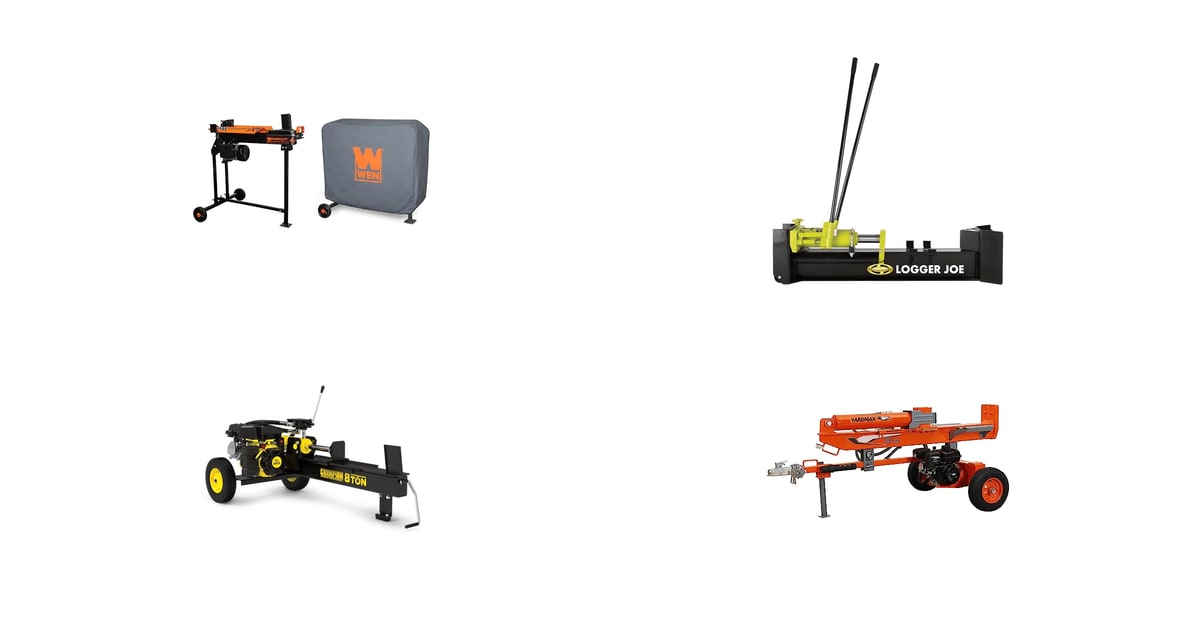
Splitting firewood by hand is fine for the first ten rounds. After that your shoulders start voting against it. A powered splitter turns a Saturday of maul swinging into a couple of hours of feeding rounds onto a beam, and for the one or two cords most people burn in a season, that's the whole job. Plug-in and hand-pump splitters make the most sense for that kind of work: they're quiet, there's no fuel to store, and they tuck into a corner of the garage the other ten months of the year.
None of them are fast, though. A hydraulic splitter takes roughly 18 to 22 seconds to push through a round and reset, so published testing generally puts a full cord at half a day of steady feeding. You still do all the lifting, since every round goes onto the beam by hand. And most home machines cap out around 10 inches across and 20 inches long. A knotty oak crotch can stall a small splitter no matter what the tonnage on the box says.
Wood species matters more than brand here. Seasoned pine, poplar and straight-grained maple give up easily, while a twisted elm round will fight a machine three times the size. So the smart approach is to match force and log capacity to what's actually stacked in your yard, then judge the rest on how easy the thing is to move, store and power. We think that the WEN 6.5-Ton Electric Log Splitter is the best log splitter for home firewood for most people, and that the PowerSmart 6.5-Ton Electric Log Splitter is the one to buy if you'd rather have a two-year warranty behind the purchase.
Everything we recommend

Enough force for a cord or two, and it stores against a wall

Same force, lower stance, and a two-year warranty behind it
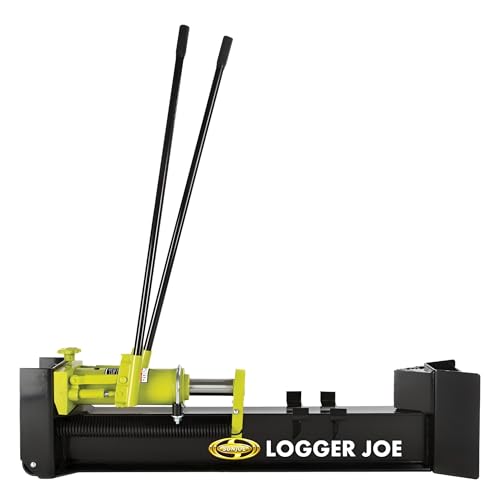
Ten tons of force with no cord, no motor and nothing to plug in
At a glance
| Product | Force (Tons) | Max Log Length | Price | |
|---|---|---|---|---|
| WEN 6.5-Ton Electric Log Splitter with StandTop pick | 6.5-Ton | 20.5 in | $367.98 |
| Sun Joe LJ10M Logger Joe 10 TonAlso great | 10 Tons | 18 in | $249.99 |
 | Champion Power Equipment 8-Ton Compact Horizontal GasAlso consider | 8-Ton | — | $789 |
 | Yardmax Gas Log Splitter 35 Ton 2-WayAlso in lineup | 35 Ton | 26.5 in | $1,739.99 |
| PowerSmart Electric Log SplitterRunner-up | 6.5-Ton | 20 in | $319.99 |
How we picked
Force and wood type. We matched rated tonnage against what published testing says real firewood demands: about 7 tons covers roughly 85% of residential splitting, and only large knotty oak or elm consistently needs 20 tons or more. Anything under 5 tons we treated as a kindling tool.
Log capacity. Spec sheets list a maximum length and diameter, and those numbers are hard limits. We favored machines that take the 18- to 20-inch rounds most people cut for a stove or fireplace.
Cycle time. Hydraulic splitters take about 18 to 22 seconds per split according to published testing, while kinetic flywheel models reset in under two seconds. Since nearly every home electric is hydraulic, we compared cycle times within that band rather than across types.
Power requirements. Most residential electric splitters draw 12 to 15 amps and need their own 15-amp circuit. Buying guides point to shared circuits as the leading cause of nuisance breaker trips, so we noted motor draw for every model.
Handling and storage. Electric splitters generally weigh 60 to 110 pounds against 200 to 500 for gas machines of similar force. We looked for real wheels, a usable handle, and a working height that doesn't have you stooping over every round.
Top pick
Enough force for a cord or two, and it stores against a wall
WEN 6.5-Ton Electric Log Splitter with Stand
The WEN takes the seasoned rounds most people actually burn — up to 10 inches across and 20.5 inches long — using a 15-amp motor and more than 13,000 pounds of pressure. The included stand puts the beam at working height, so you're not bending over for every log.
$367.98fromAmazonPicture the pile after a storm drops a maple in the yard. Most of those rounds run 6 to 10 inches across, and that's exactly the band this splitter is built for. The 15-amp motor drives over 13,000 pounds of force into a fixed wedge, which is plenty for seasoned softwood and straight-grained hardwood. Published reviews of WEN's 6.5-ton splitters describe big oak rounds popping on the first pass.
The stand is what separates this from the rest of the entry-level pack. Most inexpensive splitters sit a few inches off the ground, so you stoop for every round you load and again for every half you pick up. Do that eighty times and your lower back keeps score. The 34-inch stand puts the beam near waist height instead. If you'd rather work low, or set it on your own bench, the splitter lifts right off.
Moving it is a one-person job. There's a pull handle and 5.5-inch never-flat wheels, so you tip it back and walk it out to the woodpile like a hand truck. The weatherproof cover means it can live beside the shed rather than eating bench space, though a dry garage is still kinder to the hydraulics over a wet winter.
Nothing needs servicing between seasons. There's no carburetor to gum up, no oil to change and no fuel can in the garage. It's quieter, too: published measurements put electric splitters around 82 to 91 decibels against 96 to 107 for comparable gas machines, which is roughly half as loud to your ear and your neighbor's. Running one also costs an estimated 60 to 75 percent less per season than a gas equivalent.
Flaws but not dealbreakers
It's slow, and there's no getting around that. Figure about 20 seconds from wedge-out to wedge-back, which means a cord is an afternoon of work rather than an hour. The 10-inch diameter limit is real too. Anything fatter has to be noodled with a chainsaw or halved some other way before it reaches the beam.
Power is the other catch. Splitters in this class pull 12 to 15 amps, so sharing a circuit with a freezer or a shop vac is the usual reason people think their new splitter is broken. Give it a dedicated 15-amp circuit and use a short, heavy-gauge extension cord.
It also splits in one plane, at one height, with one wedge. There's no vertical mode for rolling a heavy round into position, so the biggest pieces you can lift are the biggest pieces you can split.
Runner-up
Same force, lower stance, and a two-year warranty behind it
PowerSmart Electric Log Splitter
The PowerSmart matches the WEN's 6.5 tons and 15-amp motor, and its full-beam frame takes logs up to 20 inches long and 10 inches across. A 20-second cycle and a two-year warranty make it an easy swap if the stand isn't what you're after.
$319.99fromAmazonOn paper this is the WEN's twin, and in practice it splits the same wood. A 15-amp induction motor spinning at 3,450 rpm feeds a 6.5-ton hydraulic ram down a full steel beam, and the cycle resets in about 20 seconds. Owners regularly report it going through dense hardwood they expected it to bounce off, which tracks with how far a wedge gets on seasoned, straight-grained wood.
The warranty is the real reason to choose it. Two years of coverage on a hydraulic tool isn't nothing, since seals and pumps are the parts that fail first and the parts you can't fix in the driveway. PowerSmart also says it answers support questions within a day. If you burn wood every winter and plan to keep this machine for a decade, that matters more than a few tenths of a ton.
The safety setup is sensible. Both hands stay busy the whole time the ram is moving, which keeps them well clear of the wedge, and the ram returns on its own so you're not fighting a lever between logs. Dual-hand activation is now standard on listed splitters, and the Consumer Product Safety Commission credits it with a measurable drop in splitter injuries.
It's compact for what it does: a bit over three feet long, well under a foot wide, so it slides along a garage wall behind the car. The wide rear wheels roll fine on a lawn. At close to 100 pounds, though, it's a two-person lift into a truck bed.
Flaws but not dealbreakers
It sits very low to the ground. Plenty of owners end up setting it on blocks or a low bench to save their back, which is exactly the problem the WEN's stand solves out of the box. If you've got knee or back trouble, budget for a sturdy platform.
Shipping damage shows up more often here than we'd like. A recurring theme in owner feedback is units arriving with the hydraulic oil drained out, or with an arm that won't move at all. Check the fluid level and run a few dry cycles the day it lands, not the weekend the wood pile is waiting.
Like every splitter in this class, it wants a dedicated circuit and a short, thick cord. Owners who run it off a long, thin extension find it bogs down or trips the breaker.
PowerSmart backs this splitter with a two-year warranty.
Also great
Ten tons of force with no cord, no motor and nothing to plug in
Sun Joe LJ10M Logger Joe 10 Ton
The Logger Joe is a hand-pumped hydraulic splitter: a two-speed pump, a heavy steel I-beam and 10 tons of force, with no motor anywhere on it. It handles logs up to 18 inches long and 8 inches across, and it works anywhere you can drag it.
$249.99fromAmazonYou work a lever, the ram creeps forward, and the log opens. The two-speed pump closes the gap quickly and then shifts to the slow, strong stage where the actual splitting happens. There's no outlet to find, no cord to trip over and no breaker to worry about. Published testing had it clearing 20 softwood rounds in under 12 minutes, which is quicker than the hand-cranked look of it suggests.
Buy this one if your woodpile is nowhere near an outlet. A back corner of the property, a hunting camp, the far side of a barn — those are places where a plug-in splitter means running two hundred feet of cord and hoping. This one only needs flat ground. It's also the quietest option here by a wide margin, since the only noise is the wood letting go.
The build is straightforward and hard to break. It's a welded steel frame with a hydraulic jack on one end and a braced wedge on the other, and the log cradle catches the halves so they don't roll into the dirt. A return spring resets the ram fast enough that you can settle into a rhythm. At 87 pounds it's heavy enough to stay planted while you pump.
Flaws but not dealbreakers
Your arms are the motor. That's fine for an evening's worth of kindling or a face cord of pine, but it gets old fast if you're processing real volume. This is a supplement to a maul, not a replacement for a powered machine when the pile is big.
The 8-inch diameter limit is the tightest of anything here, so fat rounds need quartering with a chainsaw first. And the wheels are best understood as a way to reposition it in the garage — owners consistently find it awkward to move across a lawn or gravel, and most end up strapping it to a hand truck.
Who this is for
This guide is for people who burn one to three cords a season and are tired of the maul. If you're on a suburban lot, in a neighborhood where a gas engine running all Saturday would make you unpopular, or you just don't want fuel and oil in the garage, a plug-in splitter fits your life well. It's also a sensible choice if lifting and swinging have gotten harder, since the machine supplies the force and you only supply the loading.
It's not for everyone. If you process five or more cords a year, or your wood is 24-inch oak rounds full of knots, you want a towable gas machine with a vertical mode and you'll be happier for it. We've focused on splitters sized for home firewood, so commercial processors, kindling-only gadgets and accessories like stands and covers aren't part of the comparison.
How we picked
We built the shortlist around the things that decide whether a splitter earns its garage space. Force: enough tonnage for the wood you actually burn, which for most people means 6 to 10 tons, not 25. Log capacity: listed length and diameter limits that cover the 18- to 20-inch rounds a stove takes. Cycle time: how long the ram takes to split and reset, since that number sets your pace for the whole afternoon. Power: motor amperage and the circuit it needs, because a tripping breaker ruins the day. Handling: weight, wheels, and working height, all of which matter more after the fortieth log than the first.
Other log splitters for home firewood worth considering
If the woodpile is out of reach of any outlet: The Champion Power Equipment 8-Ton Compact Horizontal Gas ($789) — Champion's 8-ton compact splitter runs on a 79cc gas engine, so it goes wherever you can wheel it. The 20-second cycle and auto-return valve add up to as many as 180 cycles an hour, and the low-profile beam with an integrated cradle means heavy rounds only have to come up about knee height. Never-flat tires and a real handle keep it movable. What you give up is everything people like about electric: it's loud, it puts out exhaust so it can't run in a closed garage, and there's oil, fuel and a carburetor to look after. Champion covers it for two years and offers lifetime technical support.
The competition
These are the machines our research surfaced alongside the picks, not a survey of everything for sale. A splitter can be well built and still be the wrong tool for a suburban woodpile, which is mostly what's going on below.
The Yardmax Gas Log Splitter 35 Ton 2-Way ($1,739.99) — The Yardmax 35-ton is a serious piece of equipment: a Briggs & Stratton engine, a patent-pending U-beam frame that's stiffer than the usual I-beam, oversized hydraulics for a quick cycle, a pair of adjustable log cradles and room for 26.5-inch logs. It'll go through oak, maple and walnut without complaint. It loses to our picks on nothing except suitability — at over 540 pounds it's a towed machine, it burns gas, and it's far more splitter than a two-cord household needs. Owners are happy with the power but find the cradles fiddly and slow to actually hold wood in place. If you process many cords of big, gnarly hardwood every year, this is the right kind of machine and our electric picks aren't.
Setup, power and storage
Give an electric splitter its own 15-amp circuit and use the shortest, heaviest-gauge extension cord you can. A long thin cord starves the motor, and that's what most bogging and breaker-tripping comes down to. Split seasoned wood whenever you can, since green rounds are stringy and stall a small ram. Keep an eye on the hydraulic fluid level — top it off per the manual and look for weeping around the cylinder, because a leaking seal is the failure that ends these machines. Store it indoors if you have room, or under a fitted cover if you don't; standing water and freeze-thaw cycles are hard on hydraulics. And set the machine at a comfortable height, on a stand or a stable bench, before you start on a big pile.
Questions we get
How many tons do I need to split oak?
For seasoned, straight-grained oak in rounds under about 10 inches, 6 to 7 tons usually gets it done. Big rounds and anything with knots or a crotch in it can need 20 tons or more. Research suggests a 7-ton machine covers roughly 85% of typical residential firewood, with only the gnarliest hardwood demanding a bigger splitter.
Do electric log splitters need a special outlet or circuit?
They use a standard 120-volt outlet, but most draw 12 to 15 amps and want that circuit to themselves. Sharing one with a refrigerator, freezer or shop vac is the most common cause of nuisance tripping. Use a short, heavy-gauge extension cord too, since a long thin one drops enough voltage to make a healthy splitter act weak.
What's the difference between a kinetic and a hydraulic splitter?
Hydraulic splitters push a ram with fluid pressure, which is strong but slow — roughly 18 to 22 seconds per cycle. Kinetic splitters store energy in a spinning flywheel and release it all at once, cycling in well under two seconds. That's 12 to 15 times the throughput per hour, but kinetic machines generally offer less raw force and cost more. Nearly every home electric splitter, including all of our picks, is hydraulic.
How loud is an electric splitter in a neighborhood?
Published measurements put electric splitters at about 82 to 91 decibels during use, against 96 to 107 for comparable gas machines. That 10 to 15 decibel gap cuts perceived loudness roughly in half. It's still loud enough for hearing protection, but it's a motor humming rather than a small engine running all afternoon, and it stops the moment you stop splitting.
How long does it take to split a cord?
A cord is 128 cubic feet — a stack four feet high, four feet deep and eight feet long. With a mid-range hydraulic splitter, someone who's done it before can process about half a cord to a full cord in a day. Loading and stacking take as long as the splitting does, so plan for a full Saturday rather than an hour.
Is a vertical or horizontal splitter better for home use?
Horizontal is fine for anything you can comfortably lift onto the beam, which covers most home firewood. Vertical mode lets you roll a heavy round into position instead of picking it up, which spares your back on big pieces. If your rounds are consistently over about 16 inches across, look for a dual-position machine — all of our picks are horizontal-only.
Why you should trust us
For this guide:
- We read published testing and reviews of home log splitters, along with buying guides covering force, cycle time, noise and circuit requirements.
- We compared manufacturer spec sheets for every machine here on rated tonnage, log capacity, motor draw, weight and warranty terms.
- We looked for repeated themes in owner feedback — hydraulic seal life, working height, shipping condition and how well the wheels actually work on grass.
- We read owner reviews on every listing, weighted toward the critical ones, because that is where the recurring failures show up.
- We have a systematic way of automatically fetching the latest prices, so the numbers on this page stay current.
- This is a research-focused guide, so the team may not own every product listed — though we often do own the top winners, which gives us extra context for the recommendations.
- We don't accept free products, and the retailer commission never changes which product we recommend.
Sources
Best Log Splitters — Popular Mechanics 2025 Testing, Popular Mechanics
Best Log Splitters 2026 — This Old House Reviews, This Old House
Electric vs. Gas Log Splitters — Bob Vila, Bob Vila
Best Log Splitters — Family Handyman 2025, Family Handyman
Log Splitter Buying Guide — Lowe's, Lowe's
Log Splitter Reviews — Consumer Reports, Consumer Reports
Best Electric Log Splitters — Forbes Home 2025, Forbes Home
Sun Joe LJ10M Review — Wirecutter, Wirecutter
Electric Log Splitter Noise Testing — Chainsaw Journal, Chainsaw Journal
Log Splitter Safety Statistics — CPSC, U.S. Consumer Product Safety Commission
WEN 56207 Review — Tool Tally, Tool Tally
Yardmax YU2566 Long-Term Review — Outdoor Power Equipment Forum, ArboristSite Forum
Amazon product listings and owner reviews for all 5 products
Manufacturer specification pages for each product
Some passages in this guide may be paraphrased with AI help. Prices are refreshed automatically.
More like this.
Continue exploring home reviews and recommendations.

The Best Firewood Rack Covers
A firewood cover has one job: keep rain and snow off the wood you already paid for. Seasoned wood that stays dry burns hot and clean. Wood that soaks…

The Best Pill Splitters
Splitting a tablet sounds simple until you try it with a kitchen knife and end up with a third, a quarter, and a small pile of dust on the counter. A good…

The Best Bedside Sleepers for Babies
For the first few months, your baby sleeps in short bursts and wakes up hungry. The American Academy of Pediatrics recommends room-sharing without…

The Best Memory Foam and Hybrid Mattresses
You spend a third of your life on a mattress, and you notice a bad one within a week. The wrong firmness leaves your lower back sore by morning. A foam…

The Best Fuzzy Logic Rice Cookers
Rice is easy to cook badly. A cheap on/off cooker heats until a thermostat trips, which works fine for plain white rice on a good day and leaves you with…

The Best Carbon Monoxide Detectors
Carbon monoxide doesn't announce itself. It has no color, no smell, and no taste, and the CPSC warns that by the time you notice the headache and the…