The Best Carbon Monoxide Detectors
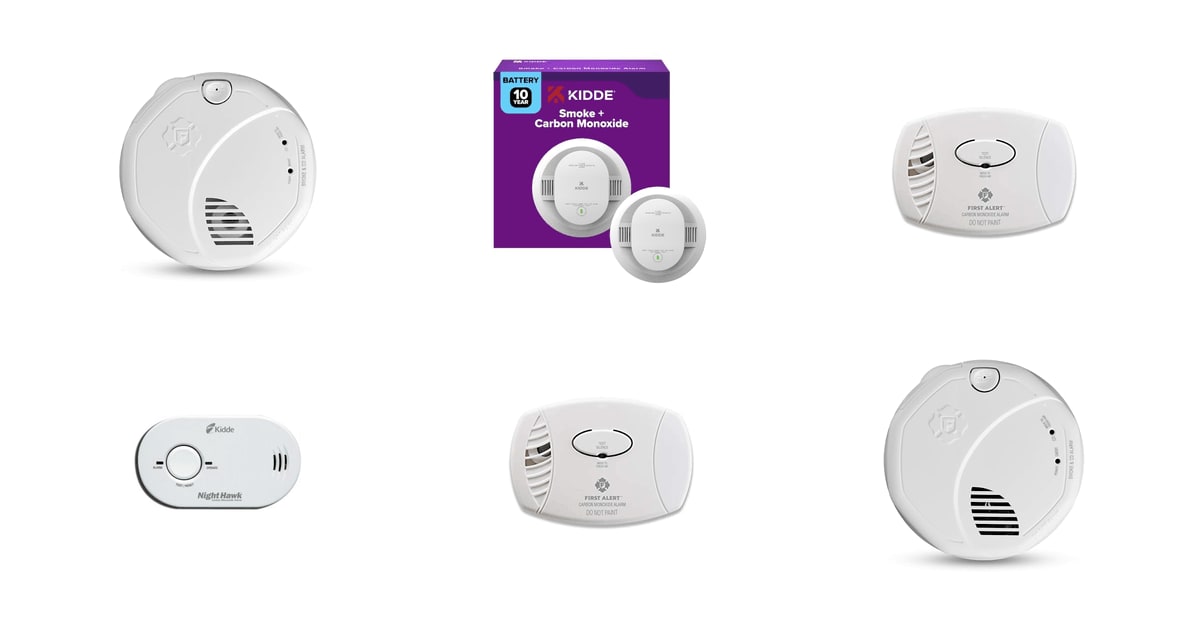
Carbon monoxide doesn't announce itself. It has no color, no smell, and no taste, and the CPSC warns that by the time you notice the headache and the dizziness, the air around you may already be dangerous enough to knock you down. That's why an alarm isn't optional in a home with a gas furnace, a water heater, a stove, a fireplace, or an attached garage. The CDC estimates about 400 Americans die each year from unintentional CO poisoning unrelated to fires. A detector is quiet insurance against a hazard your senses simply can't catch.
Here's the part nobody prints on the box: every CO alarm expires. The electrochemical sensor inside degrades whether or not it ever meets any carbon monoxide, so these units carry a hard life span — usually five to ten years from the manufacture date stamped on the back. No model escapes that. Published testing has also found alarm response times at low concentrations varying by as much as 45 minutes between brands, which tells you certification and sensor type matter more than a feature list. Plan on replacing every alarm you own, on schedule.
You'll also need more than one. NFPA guidance puts an alarm on every floor, including the basement, and within 10 feet of each sleeping room — three to five units in a typical single-family house. So think about a set rather than a single purchase, and think about which of those rooms need smoke coverage too. We think that the Kidde 30CUD10 is the best carbon monoxide detector for most people, and that the First Alert Battery Combination Smoke & Carbon Monoxide Alarm with Voice is the one to buy if you want linked alarms that call out which room is in trouble.
Everything we recommend

A sealed decade of smoke and CO coverage, with no chirps

Talking, linked alarms for a house with stairs
Tool-free CO coverage for renters, with backup power
Phone alerts for the alarm you're not home to hear
At a glance
| Product | Detection Type | Power Source | Price | |
|---|---|---|---|---|
 | First Alert Battery Combination Smoke & CarbonAlso in lineup | Smoke & Carbon Monoxide | Battery-Operated | $40.09 |
| Kidde Smoke & Carbon Monoxide DetectorTop pick | Smoke & Carbon Monoxide | 10-Year Battery | $92.73 |
| First Alert Battery Carbon Monoxide AlarmAlso consider | Carbon Monoxide | Battery Operated | $21.99 |
 | Kidde KN-COB-B-LP Nighthawk Carbon Monoxide AlarmAlso in lineup | Carbon Monoxide | Battery Operated | $29.99On sale |
| FIRST ALERT CO605 Plug-in Carbon Monoxide DetectorBudget pick | Carbon Monoxide | Battery Backup | $23.99 |
| First Alert Battery Combination Smoke & CarbonRunner-up | Smoke & Carbon Monoxide | Battery-Operated | $50.99 |
| Kidde Smart Smoke & CO Detector withUpgrade pick | Smoke & CO | 2-AA Alkaline Batteries | $69.97 |
How we picked
Sensor and certification. We checked spec sheets to confirm each alarm uses an electrochemical CO sensor and carries a UL 2034 listing, which is the residential minimum and the line we wouldn't cross. Combination units also had to be listed for smoke.
A battery you forget. Fire safety data ties roughly half of home alarm failures to dead or missing batteries. Sealed 10-year cells earned a real advantage here, and replaceable-battery models had to bring something else to stay in the running.
Alarms you'll hear. Every pick meets the 85-decibel minimum at 10 feet. We gave extra weight to voice announcements and wireless interconnect, since those put the warning in the room where somebody is actually sleeping.
Coverage while you're out. Published guidance keeps circling the same blind spot: an alarm nobody is home to hear. We looked for app notifications that work without paying for monitoring.
Nuisance-alarm behavior. Owner feedback across every brand is dominated by false alarms from cooking and steam. We favored models listed to the newer sensing standards written specifically to cut those down.
Top pick
A sealed decade of smoke and CO coverage, with no chirps
Kidde Smoke & Carbon Monoxide Detector
This combination alarm covers smoke and carbon monoxide on a sealed 10-year battery, so there's nothing to replace and no 3 a.m. low-battery chirp. It's listed to both the current smoke and CO standards, and its sensing is tuned to ignore a smoky skillet.
$92.73fromAmazonThe sealed battery is the whole argument. Fire officials point out that dead or missing batteries are behind roughly half of home smoke alarm failures, and the same habit kills CO alarms. This one has no battery door. You never buy a 9-volt for it, you never hear a chirp at 3 a.m., and you never pull it off the ceiling at midnight to make the noise stop. It runs for a decade, then tells you it's finished.
Kidde lists this model to UL 217 10th Edition for smoke and UL 2034 5th Edition for CO. That matters more than it sounds. The newer smoke standard requires an alarm to tell a real fire from burnt toast and shower steam, which is why so many older alarms ended up taped over or pulled down near kitchens. If your last detector went off every time you seared a steak, this is the fix.
One unit here does the job of two, which keeps your ceilings from looking like a control panel. Place it with some thought, though. Smoke rises, so smoke alarms want the ceiling, while CO mixes through the air and is usually recommended closer to breathing level. Any combination alarm is a compromise on that point. Most codes accept it, and in a hallway outside bedrooms it's a sensible trade.
It's the easiest alarm here to buy in quantity. NFPA guidance calls for one on every floor plus coverage near every bedroom, so you're probably buying three to five. With no wiring and no batteries to source, you can cover a basement, a hallway, and a spare bedroom in an afternoon with a screwdriver. Kidde says its sensing is over 25 percent faster on smoke than a leading competitor, based on the company's own testing.
Flaws but not dealbreakers
There's no live PPM display and no app. When it alarms, you know something's wrong, but you can't watch a number creep up over a week and decide whether the furnace needs a look before things get serious. None of the alarms in this guide shows a number, so it isn't a knock unique to this one — but if you're chasing a suspect appliance, a display model outside this lineup would tell you more.
It's also not connected to anything. If it goes off in an empty house while you're away for the weekend, nobody hears it. Landlords and anyone with a second property should look at the Ring-connected Kidde instead.
And the sealed cell cuts both ways. When it's done, it's done — you replace the entire alarm, not a battery.
Kidde backs the 30CUD10 with a 10-year limited warranty from the date of purchase.
Runner-up
Talking, linked alarms for a house with stairs
First Alert Battery Combination Smoke & Carbon
This battery combination alarm links wirelessly to other compatible First Alert units, so one detection sets off every alarm in the house. It also speaks: instead of a bare beep, you hear what the hazard is and which room it's coming from.
$50.99fromAmazonIn a two-story house, interconnection is the upgrade that matters most. A basement alarm going off behind a closed door at 2 a.m. does very little for someone asleep upstairs. These link wirelessly to compatible First Alert units, so when the basement one detects CO, the alarm outside your bedroom sounds too. You get the warning where you actually are, which is the entire point.
The voice alerts are more useful than they look on paper. Waking to a shrieking alarm is disorienting, and disoriented people waste time. Waking to a voice that names the hazard and the room gives you something to act on immediately. If it says carbon monoxide, you get everyone outside and call for help from there. If it says smoke in the kitchen, you know which way not to walk.
First Alert's Precision Detection sensing targets the same problem Kidde does: nuisance alarms. It complies with the newer industry standard for telling a real fire from a hot skillet or a steamy bathroom. That sounds like a minor spec. It isn't. An alarm that cries wolf near the kitchen is an alarm somebody eventually disables, and a disabled alarm protects nobody.
It runs on batteries and mounts without an electrician, which makes the interconnect feature unusually accessible. Wireless linking is normally something you get with a hardwired system, and pulling three-conductor cable through finished walls is a real project with real drywall repair at the end. Here you can build a linked, talking set of alarms across three floors with a drill and an afternoon.
Flaws but not dealbreakers
The interconnect only works with compatible First Alert alarms, so mixing brands around the house breaks the chain. If half your detectors are Kidde, you're either committing to one ecosystem or running two islands that don't talk to each other.
One of these on its own gets you very little of what makes it good. The linking and the location callouts only pay off once you've bought several, so the real cost is a multiple of what the listing suggests.
It's a combination unit, so placement is a compromise between where smoke alarms belong and where CO alarms are usually recommended. And a talking alarm still has to be loud enough to reach a heavy sleeper through a closed door.
Budget pick
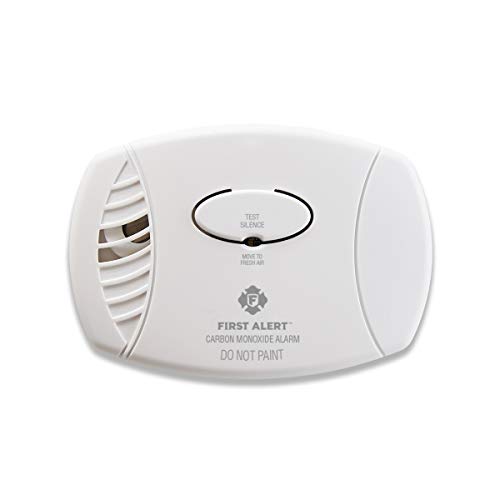
Tool-free CO coverage for renters, with backup power
FIRST ALERT CO605 Plug-in Carbon Monoxide Detector
This plug-in CO alarm goes into any outlet, no drill and no landlord conversation required. An electrochemical sensor does the detecting, a 9-volt backup keeps it awake through a power cut, and one button handles testing and silencing.
$23.99fromAmazonYou're renting, the lease frowns on holes in the walls, and the kitchen has a gas range. This is the answer. It plugs into a standard outlet and starts working, which quietly removes every excuse people use to put off buying a CO alarm. No drill, no anchors, no ladder, no conversation with a landlord.
A plug-in alarm isn't a lesser class of protection. The sensing element is the same electrochemical type used in the pricier units here, and First Alert lists it to the same UL standard. The horn hits the 85-decibel minimum. What you give up is placement, not detection — and for a hallway outlet or a kitchen wall, that's a trade most renters should take.
The 9-volt backup matters more than it sounds. Power failures and carbon monoxide tend to show up together: a storm takes down the grid, somebody runs a generator in the garage or a kerosene heater in the den, and that's exactly the scenario that fills emergency rooms. CPSC estimates CO poisoning sends more than 20,000 people to emergency rooms a year. A plug-in with no backup would be dead precisely when it's needed.
It's also the easiest alarm here to move. Take it to a rental cabin with an old furnace, a college apartment, or a hotel room if you're the cautious type. Nothing to mount, nothing to patch when you leave. It chirps an end-of-life signal when the sensor is spent, so it won't sit in an outlet for years quietly doing nothing.
Flaws but not dealbreakers
Outlet placement is the real limitation. You're stuck wherever the receptacles happen to be, which usually means near the floor and often behind furniture, while CO guidance generally favors something closer to breathing level. In a bedroom whose only free outlet sits behind the headboard, this isn't ideal.
It's CO-only, so it doesn't replace a smoke alarm, and it doesn't talk to anything else in the house. An alarm that lives at knee height is also easy to forget about when it's time to press the test button.
First Alert gives the CO605 a seven-year limited warranty.
Upgrade pick
Phone alerts for the alarm you're not home to hear
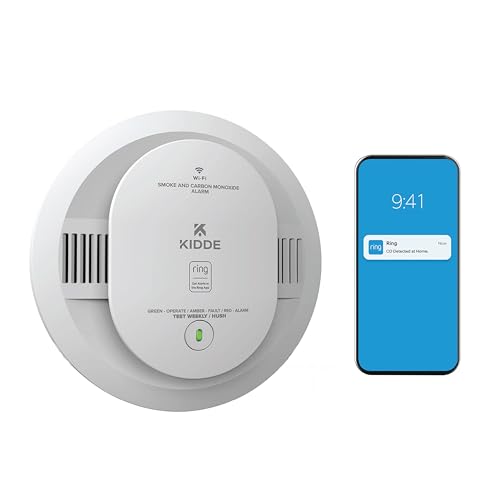
Kidde Smart Smoke & CO Detector with
This Kidde combination alarm sends smoke, CO, and low-battery alerts to the Ring app without a subscription, and it links wirelessly to other Kidde smart alarms so they all sound together. It runs on AA batteries, so there's no wiring.
$69.97fromAmazonAn 85-decibel alarm in an empty house is just noise. That's the gap this one fills. If carbon monoxide builds while you're at work or away for a week, a phone notification is the only way you learn about it before walking back through the door. For a rental unit, a vacation place, or a parent living alone, that's the entire reason to spend more.
The app alerts don't require a subscription, which isn't how this usually goes. Smoke, CO, and low-battery notifications come through the Ring app once the alarm is on your WiFi. Ring sells optional round-the-clock professional monitoring on top of that, but the part that actually matters — knowing something happened while you were out — is included.
It interconnects wirelessly with other Kidde smart alarms, so a detection in the basement sounds the unit in the upstairs hallway. That's the same logic as our runner-up, with your phone added to the chain. And since it runs on AA batteries, you can build that network in a house with no alarm wiring anywhere, which describes plenty of older homes.
If you already own Ring hardware, this is close to a non-event to set up. It lands in the same app as the doorbell and the cameras, with event history in one place. If you own nothing from Ring, understand what you're signing up for: an account, an app, and a company sitting in the notification path between your basement and your phone.
Flaws but not dealbreakers
The AA batteries are the catch. You get the convenience of no wiring, but you also get the chirp — and unlike the sealed Kidde, battery discipline is back on you. Across four or five alarms, that's a chore you'll repeat for years.
It leans on your WiFi and your router. The alarm still sounds locally when the internet is down, but the notifications that justify buying it don't arrive. If your connection drops often, you're paying for a feature you can't count on.
Who this is for
Buy now if your home burns anything — a gas furnace, water heater, stove, dryer, fireplace, or wood stove — or if you have an attached garage where a car idles even briefly. Buy now, too, if you can't remember when your current alarms went up, because they may already be past their sensor life and there's no outward sign of that. If your house is all-electric with no attached garage and no fuel-burning appliance at all, your risk is genuinely low, though a portable alarm still makes sense if you travel to places that aren't.
This guide covers residential CO alarms and combination smoke/CO alarms sold as standalone units. It doesn't cover hardwired-only systems that need an electrician, monitored panels sold through security dealers, or the digital-display and explosive-gas models a broader search would surface — none of those made this lineup. It also isn't a substitute for annual furnace and flue service, which is what keeps the CO from being produced in the first place.
How we picked
Sensor and certification: every alarm here uses an electrochemical CO sensor and carries a UL 2034 listing, and combination units are listed for smoke as well. Battery: sealed 10-year cells scored highest, because dead and missing batteries are behind roughly half of home alarm failures. Loudness and reach: all our picks hit the 85-decibel minimum, and we favored voice alerts and wireless interconnect that carry the warning into the bedroom. Remote alerts: app notifications matter for anyone with an empty house, a rental, or a second property, and we preferred alerts that don't require a subscription. Nuisance alarms: we leaned toward models built to the newer sensing standards, since an alarm that goes off over dinner is an alarm somebody eventually disables.
Other carbon monoxide detectors worth considering
If you want CO-only coverage in rooms that already have smoke alarms: The First Alert Battery Carbon Monoxide Alarm ($21.99) — This is the plain, battery-powered version of the job. An electrochemical sensor, an 85-decibel horn, a test button, and continuous monitoring through a power outage — nothing else. Because it mounts rather than plugs in, you can put it at the height you want instead of wherever the outlets landed, and it leaves your existing smoke alarms alone. What you give up is the sealed decade: you'll be swapping batteries and hearing the chirp, and First Alert covers it for five years rather than ten. Buy it when your smoke coverage is already sorted and you just need CO on another floor.
The competition
Here's what our research surfaced, not everything on the market. CO alarms are a crowded, slow-moving category, and plenty of capable units — hardwired models, digital-display detectors, combination gas sensors — never entered this lineup. These two did, and they're worth knowing about.
The First Alert Battery Combination Smoke & Carbon ($40.09) — The First Alert Battery Combination Smoke & Carbon Monoxide Alarm is our runner-up with the talking parts removed. It uses the same Precision Detection sensing aimed at cooking nuisance alarms, offers the same two-in-one coverage, installs on batteries just as easily, and warns you when it reaches end of life. It's a perfectly good alarm. But it doesn't link to other units and it doesn't announce the location, so you lose the two things that make the runner-up worth buying in sets. Get it if you need one combination alarm for one room and nothing more.
The Kidde KN-COB-B-LP Nighthawk Carbon Monoxide Alarm ($29.99) — The Kidde Nighthawk KN-COB-B-LP is a CO-only alarm that runs on three AA batteries, includes them, and keeps monitoring through an outage. Kidde claims 40 percent longer life than other CO alarms and gives it a seven-year end-of-life warning, so it outlasts the typical five-year unit, and it meets UL requirements with a simple test-reset button. It loses to our picks on two counts: no sealed 10-year cell, and no smoke detection. Still, if you want dedicated CO coverage at a basement stairwell or a garage entry and you'd rather swap AAs than replace the whole alarm, it's reasonable.
Placement and replacement
Put an alarm on every floor, including the basement, and within 10 feet of each bedroom door — for most three-bedroom houses that's three to five units. Keep them out of the direct exhaust path of a furnace or stove, and away from steamy bathrooms, where humidity causes needless alarms. Then flip over every detector you already own and read the manufacture date. These expire in five to ten years depending on the model, and an aged sensor looks and sounds perfectly healthy right up until it fails to catch anything. Press the test button monthly, write the replacement year on the back with a marker, and swap the whole unit when the end-of-life chirp starts. That chirp is not a battery warning.
Questions we get
Where should I put carbon monoxide detectors in my house?
NFPA guidance calls for one on every floor, including the basement, and one within 10 feet of each sleeping room. In a standard single-family home that usually works out to three to five alarms. Keep them out of the direct exhaust path of fuel-burning appliances and away from bathrooms, where steam triggers false alarms.
How long do carbon monoxide detectors last before I need to replace them?
Manufacturers generally say five to seven years, and models built around a sealed 10-year battery are rated for a full decade because the sensor and the cell are matched. The clock runs from the manufacture date stamped on the back, not from the day you installed it. Check that date on every alarm you own right now. An expired sensor gives you no outward sign it has stopped working.
Do I need both a smoke alarm and a CO alarm?
Yes — they detect completely different things, and one can't stand in for the other. A combination unit satisfies both requirements in most jurisdictions and cuts your hardware in half, which is why two of our picks are combination alarms. The catch is placement: smoke rises toward the ceiling while CO mixes through the air and is often recommended closer to breathing level, so a combo alarm is a compromise on height.
What CO level is dangerous, and when does an alarm actually sound?
UL 2034, the mandatory standard for residential alarms, requires a unit to trigger within 189 minutes at 70 ppm, within 50 minutes at 150 ppm, and within 15 minutes at 400 ppm. The tiered timing is deliberate: low concentrations take hours to hurt you, high ones take minutes. If an alarm sounds, get everyone outside into fresh air first, then call the fire department or your gas utility.
Do CO detectors have to be hardwired, or is battery power fine?
Battery and plug-in alarms are held to the same UL 2034 standard as hardwired ones, so detection quality doesn't hinge on how they're powered. Hardwired units win on never needing a battery and on easy whole-house linking; battery and plug-in units win on placement freedom and on working through an outage. A sealed 10-year battery model gets you most of the reliability of hardwiring without an electrician. Whichever you choose, make sure a plug-in has a battery backup.
What does it mean when my detector beeps four times?
On most alarms, four quick beeps repeating is the carbon monoxide alarm pattern — treat it as real, get outside, and call for help. A single chirp every 30 to 60 seconds means something different: usually a low battery, or the end-of-life signal telling you the sensor is finished. Patterns vary slightly by manufacturer, so check the label on the back or the manual before you assume.
Why you should trust us
For this guide:
- We compared manufacturer spec sheets and UL listings for every alarm here, confirming sensor type, certification, stated life span, and alarm loudness.
- We read published safety guidance from the CPSC, the CDC, and the NFPA, along with independent reviews covering how CO alarms fail and how much their response times differ at low concentrations.
- We weighed recurring themes in owner feedback — nuisance alarms from cooking, low-battery chirps, and confusion over end-of-life signals — against what each listing claims.
- We read owner reviews on every listing, weighted toward the critical ones, because that is where the recurring failures show up.
- We have a systematic way of automatically fetching the latest prices, so the numbers on this page stay current.
- This is a research-focused guide, so the team may not own every product listed — though we often do own the top winners, which gives us extra context for the recommendations.
- We don't accept free products, and the retailer commission never changes which product we recommend.
Sources
Best Carbon Monoxide Detectors — Wirecutter / NY Times, Wirecutter
Carbon Monoxide Detector Ratings & Reviews — Consumer Reports, Consumer Reports
Best Carbon Monoxide Detectors of 2026 — CNET, CNET
Carbon Monoxide Poisoning Prevention — CDC, Centers for Disease Control and Prevention
Carbon Monoxide — NFPA Overview and State Requirements, National Fire Protection Association
NFPA 720: Standard for the Installation of Carbon Monoxide Detection and Warning Equipment, NFPA
UL 2034: Single and Multiple Station Carbon Monoxide Alarms — Standard Overview, UL (Underwriters Laboratories)
Carbon Monoxide Safety — CPSC, U.S. Consumer Product Safety Commission
Best Carbon Monoxide Detectors 2026 — SafeHome.org, SafeHome.org
Best Carbon Monoxide Detectors — This Old House Reviews, This Old House
Carbon Monoxide Detector Buying Guide — Bob Vila, Bob Vila
Amazon product listings and owner reviews for all 7 products
Manufacturer specification pages for each product
Some passages in this guide may be paraphrased with AI help. Prices are refreshed automatically.
More like this.
Continue exploring home reviews and recommendations.

The Best Carbon Steel Woks
A carbon steel wok is the rare pan that gets better the longer you own it. It's thin enough to heat fast, heavy enough to hold that heat when you dump in…

The Best Adjustable Carbon SUP Paddles
Your paddle is the one piece of SUP gear you hold the entire time you're out. You'll lift it a few thousand times on a two-hour cruise, so weight you…

The Best Radon Detectors and Test Kits
Radon is a gas you can't see, smell or taste, and it seeps up through foundation cracks, sump openings and construction joints in homes of every age. The…

The Best Smart Water Leak Detectors
A burst washing machine hose can put hundreds of gallons on your floor before you get home from work. That's the whole problem with water damage - it's…

The Best Interconnected Smoke Detectors
A smoke alarm does you no good if it's the one in the basement and you're asleep two floors up. That's the case for interconnection in a sentence: when…

The Best Radar Detectors
A radar detector earns its keep in the few seconds before you spot the patrol car. On a long interstate run, a good one gives you a mile or more of…