The Best Radar Detectors
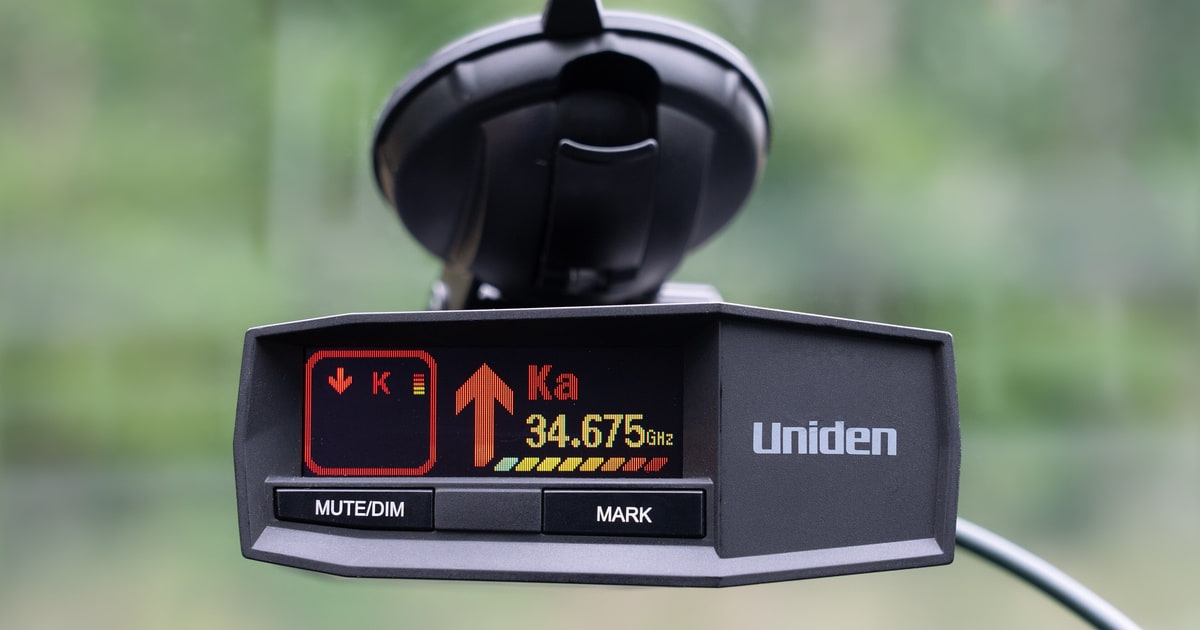
A radar detector earns its keep in the few seconds before you spot the patrol car. On a long interstate run, a good one gives you a mile or more of warning, which is enough time to glance down and settle your speed without any drama. A bad one just yells. Modern cars are packed with blind-spot radar and collision sensors, and cheap detectors alert on every one of them. So the real job isn't detecting a signal. It's telling you which signals deserve your attention.
Here's the honest part: nothing on this list will save you from a laser gun. LIDAR aims a narrow beam straight at your car, and by the time the unit chirps, your speed is already on the screen. Every detector here also needs a break-in period. The first week on your usual routes will be noisy while GPS lockout learns which grocery-store door opener keeps setting it off. And none of them are legal in a commercial truck over ten thousand pounds, or on a military base.
Detectors sort into rough tiers, and the gap between them is real. Entry-level units from non-specialist brands tend to be loud and short-sighted, which is the worst possible combination. The specialist brands all build hardware worth owning, so your choice really comes down to how much filtering, rear coverage and app support you want. We read spec sheets, published range comparisons and owner feedback across the five units here. We think that the Escort Redline 360c is the best radar detector for most people, and that the Uniden R8W is the one to buy if you want the longest raw reach.
Everything we recommend

The longest warning and the quietest cabin, if you can stretch

Comparable reach and full coverage, with clunkier menus
Most of the protection, none of the rear coverage

The full connected toolkit, with a shorter reach
At a glance
| Product | Range | 360° Detection | Price | |
|---|---|---|---|---|
| Uniden R8WRunner-up | Extreme Long Range | 360° Awareness | $799.99 |
| Escort Redline 360c Plug and Play RadarTop pick | Extreme Range | 360 Degree Awareness | $799.95 |
 | Valentine One V1 Gen 2 Radar DetectorAlso consider | — | 360° Protection | $686 |
| Escort MAX 360c MKII Laser Radar DetectorAlso great | 50% Improved Range | 360° Directional Arrows | $529.95On sale |
| Radenso DS1 Extreme Range Radar Detector -Budget pick | Extreme Range | — | $349.99 |
How we picked
Ka-band range. Ka-band is what nearly every US patrol agency runs, so we weighted published range comparisons heavily. We looked for units that reliably alert around a mile or more on open highway.
False-alert filtering. We favored detectors with GPS lockout and dedicated filtering for blind-spot and in-vehicle radar, since owner feedback shows this is what determines whether a detector stays switched on. A unit you tune out is worthless.
Directional coverage. We preferred dual-antenna units that show whether a signal is ahead, behind or beside you. Front-only detectors are cheaper but leave a real gap on busy freeways.
Updates and GPS. We checked spec sheets for a preloaded camera database, speed-based muting and a clear update path, whether that's Wi-Fi or a phone app. Detectors without any connectivity fall behind fast.
Everyday usability. We looked at display type, menu depth and mounting hardware, plus how much configuration owners say they needed before the unit behaved. A bright color screen and a sane menu matter every single drive.
Top pick
The longest warning and the quietest cabin, if you can stretch
Escort Redline 360c Plug and Play Radar
The Redline 360c pairs a dual-antenna front end with Escort's GPS lockout, so it sees a long way down the road and still stays quiet on your commute. Built-in Wi-Fi pulls firmware and database updates overnight while the car sits in the driveway.
$799.95fromAmazonIt spots Ka-band radar farther out than almost anything else you can stick on a windshield. Escort rates it at twice the range of the older Redline EX, running on a processor that's 25 times faster. Published range comparisons back that up and put it at the top of the sensitivity pile. On open interstate that's a mile or more of warning, and at seventy that's roughly a minute to react calmly.
The 360-degree arrows tell you where a signal is, not just that one exists. Dual antennas cover front and rear at the same time, and the display points at the source. That matters more than it sounds. In rolling hills, a cruiser often shows up in your mirror before it shows up ahead of you, and a front-only detector leaves you guessing about which direction to worry about.
GPS AutoLearn is the reason you'll actually leave it switched on. The unit tags stationary K-band sources by location, and after it sees the same signal at the same spot a couple of times, it stops crying wolf there. Owners consistently report the noise falls off sharply once the first week on familiar roads is behind them. An updateable IVT filter handles the interference your own car generates.
Wi-Fi and phone integration make it easy to live with. Updates arrive over the air overnight, so you never plug in a cable or remember to sync anything. It works with Apple CarPlay and Android Auto, which puts alerts on the screen you're already looking at, and it ties into the Drive Smarter network for reports from other drivers. Escort also includes a travel case, a SmartCord USB with AutoMute and a magnetic suction mount.
Flaws but not dealbreakers
It's the most expensive detector here, and you'll feel that. For a weekend driver who takes one highway trip a month, that's hard to justify. The gap over our other picks buys real range and better filtering, but those gains pay off mostly if you're logging serious interstate miles every week.
Dense city centers still slip through the filter. Even with filtering cranked up, owners report occasional K-band chirps in heavy downtown traffic, where dozens of driver-assist systems are transmitting at once. It's not a dealbreaker, just a reminder that no detector fully solves this. Getting the richest version of the shared-alert network also means paying for a subscription.
It's a big thing to hang on your glass. At more than five inches long it's noticeably more visible from outside the car than a slim, low-profile unit, and it eats a chunk of windshield. If a discreet install matters to you, that's worth weighing.
Runner-up
Comparable reach and full coverage, with clunkier menus
Uniden R8W
The R8W matches our top pick's reach using dual antennas and two Blackfin processors, and it calls out the band, direction and strength out loud so you keep your eyes up. Its community alert network and menu design are the weaker parts of the package.
$799.99fromAmazonUniden's flagship is built around raw sensitivity, and it shows. Two digital signal processors work the incoming signal, and published comparisons regularly put the R8W at or near the front of the field on Ka-band distance. That's the band virtually every state patrol agency uses. If your driving is mostly wide-open highway where range is the whole ballgame, this is the unit to beat.
Dual antennas cover all four directions, and the voice alerts do the explaining. Instead of making you decode a screen at speed, it tells you the band, the direction and the signal strength out loud. You can program which alerts speak up. It's a genuinely good idea on a dark road, when looking down at a small display is exactly what you don't want to do.
The built-in GPS quietly cleans up your regular routes. Auto-mute memory remembers the false alerts along roads you drive often, so the same automatic door at the same shopping center only annoys you once. Red-light and speed-camera locations come preloaded, and Uniden provides free database and firmware updates rather than charging for the privilege.
Wi-Fi and Bluetooth keep it current without much effort from you. The R/TACH companion app handles mapping, configuration and community-reported alerts from your phone, and updates don't require hunting for a cable. That's the kind of thing that decides whether a detector stays useful in three years or slowly falls behind the enforcement gear it's supposed to catch.
Flaws but not dealbreakers
The community alert network is thinner than Escort's. Uniden's crowd-sourced reports keep growing, but coverage is patchier in big metro areas, which is exactly where shared alerts do the most good. If you drive mostly rural highway, you'll barely notice. City commuters will.
The menus take real patience. Settings sit several levels deep, and the layout isn't as obvious as Escort's. Plan on sitting in the driveway with the manual for a bit. Once it's dialed in you rarely touch it again, but the first hour isn't fun.
Filtering in heavy traffic isn't as refined as the Escorts. In stop-and-go surrounded by cars running blind-spot monitoring, owners report more nuisance alerts than the Redline 360c produces in the same conditions.
Budget pick
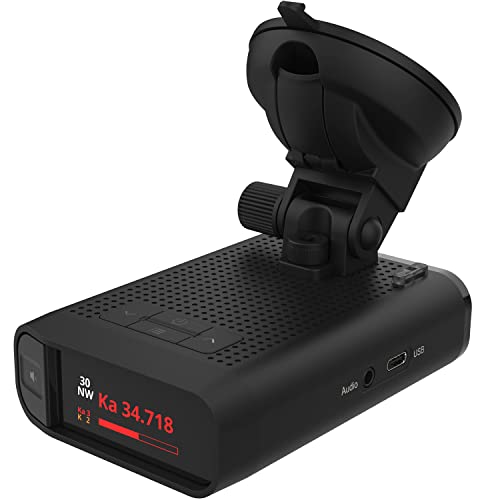
Most of the protection, none of the rear coverage
Radenso DS1 Extreme Range Radar Detector -
The DS1 costs a fraction of the flagships and still reaches a long way down an open road, with automatic GPS lockouts and a color screen you can actually read at noon. The catch is a single forward-facing antenna, so nothing warns you about a cruiser closing from behind.
$349.99fromAmazonIt reaches far enough that most drivers won't feel shortchanged. Published comparisons put the DS1 well above what its price tier normally delivers, with open-highway detection past the one-mile mark. That's plenty of runway at legal speeds. You're not getting flagship distance, but you're getting the kind of warning that actually changes what happens next.
The filtering works well straight out of the box. Automatic GPS lockouts learn the stationary false alerts on your regular roads without you configuring anything, and the unit handles blind-spot and in-vehicle interference sensibly by default. This is where cheap detectors usually fall apart. A detector you've learned to ignore protects you from nothing.
The color OLED stays readable with the sun straight in your face. Cheaper units use dim segment displays that wash out on a west-facing afternoon commute. This one doesn't, so a glance is enough and your eyes go straight back to the road.
The magnet mount makes it a five-second job. You can pull it off the glass at a rest stop, drop it in the console, and stick it back up without wrestling a suction cup. That's genuinely handy if you swap between cars, drive rentals, or would rather not leave an obvious detector on display in a parking garage. Radenso also offers US-based technical support, which is not a given at this price.
Flaws but not dealbreakers
There's no rear antenna, and that's the real compromise. A patrol car coming up behind you in the left lane with instant-on radar will get much closer before you hear anything. If you drive fast on busy freeways, that's the single best reason to spend more on one of our other picks.
Range falls meaningfully short of the flagships. Independent comparisons put it roughly twenty to thirty percent behind the top units on Ka-band distance. On a wide-open rural interstate that's a chunk of seconds you don't get back.
Updates run through your phone. There's no Wi-Fi, so firmware and database refreshes happen over Bluetooth with the app rather than quietly overnight. The community alert pool is smaller too.
Also greatOn sale
The full connected toolkit, with a shorter reach
Escort MAX 360c MKII Laser Radar Detector
The MAX 360c MKII runs the same GPS AutoLearn, Drive Smarter network and over-the-air updates as our top pick, in a lighter body with the friendliest menus of the bunch. You trade away some Ka-band distance to get there.
$529.95fromAmazonList priceYou get the whole Escort ecosystem without paying flagship money. Dual-band Wi-Fi handles over-the-air updates, the Drive Smarter app feeds you alerts from other drivers, and Apple CarPlay and Android Auto put everything on your dash screen. Nothing here is a stripped-down version of what the Redline gets. The database and the software are the same.
Dual antennas and arrows still tell you which way to look. Escort rates the MKII at 50 percent more range than the original MAX 360c, thanks to a revamped platform and a second antenna, and a Blackfin processor turns signals into alerts fast. Threats from all four directions get their own arrow, so you're not swiveling your head trying to guess.
AutoLearn keeps the daily drive quiet. The GPS chip and the detector software work together to reject alerts from specific locations after you've passed them a few times, and the filtering is tuned to shrug off collision-avoidance and blind-spot radar in surrounding traffic. If your commute has a stretch that sets off every detector you've owned, this is the feature that fixes it.
It's the easiest one here to learn. The menu system is the most straightforward in Escort's lineup, and at just over half a pound it's lighter and less imposing on the glass than the Redline. If you've never owned a detector and don't want a project, start here.
Flaws but not dealbreakers
It doesn't see as far as the Redline 360c. Published side-by-side comparisons put the gap at a few tenths of a mile on the same Ka-band source, which works out to something like fifteen to twenty-five seconds of lost warning at highway speed. For most driving that's fine. In a worst-case encounter it's the difference that matters.
Raw sensitivity trails the Uniden and the Valentine too. If your priority is pure distance rather than a polished experience, you're paying for software you could skip. And the deepest version of the shared-alert network still wants a subscription.
Crowded K-band environments trip it up more than the Redline. In dense traffic full of driver-assist radar, its signal discrimination isn't quite as sharp, so expect a few more alerts you'd rather not hear.
Who this is for
Buy one of these if you spend real time on interstates and want a heads-up before you crest a hill into a speed trap. The value scales with your mileage: a daily highway commuter gets far more out of a flagship than someone who mostly drives four miles to work and back. If your driving is all city surface streets, a detector will spend most of its life reacting to other people's blind-spot sensors, and you'd be better served by simply watching your speedometer.
This guide covers windshield-mount detectors for private passenger cars. We don't cover laser jammers, which are a separate category with their own state-by-state legal rules, and we don't cover custom-installed remote systems, which need a professional and a wiring harness. Detectors are also federally prohibited in commercial vehicles over ten thousand pounds and banned outright on military installations, so check your situation before you buy.
How we picked
We compared spec sheets, published range comparisons and owner feedback across every unit here, and weighted five things. Ka-band range: the band nearly all US enforcement uses, with a mile of open-road warning as the bar. False-alert filtering: GPS lockout and dedicated rejection of blind-spot and in-vehicle radar, because a noisy detector gets ignored. Directional coverage: dual antennas and arrows that tell you where a signal is coming from, not just that it exists. Updates and GPS: a preloaded camera database, speed-based muting and a painless way to keep both current. Everyday usability: a screen you can read in direct sun, menus you don't dread, and a mount you can live with.
Other radar detectors worth considering
If you want the most detailed picture of what's around you: The Valentine One V1 Gen 2 Radar Detector ($686) — The Valentine One V1 Gen 2 has a following for a reason. Front and rear antennas feed a display that shows direction arrows plus a count of how many separate transmitters are active around you, which is a level of situational detail nothing else here matches. It covers X, K, Ka, Super Wideband Ka and Ku, and it handles laser from all directions. What you give up is convenience. GPS lockout and community alerts come from third-party apps rather than the hardware itself, the alphanumeric display is plain next to Escort's color screens, and reading arrow combinations at speed takes practice. It costs near flagship money without the flagship's built-in software polish. Experienced users won't mind. First-time buyers probably will.
The competition
This is the field our research surfaced, not every detector on the market. Radar detectors are a small, specialist category, and the four brands here account for most of what's worth recommending. Plenty of generic units sell for far less, but they tend to combine weak Ka-band sensitivity with constant false alerts, which is the pairing that leaves you both annoyed and unprotected. Every unit above is a real contender for someone.
Installation notes
Mount the detector high and centered on the windshield, with a clear view forward and nothing blocking it. If your car has a shaded band at the top of the glass or an embedded heating element, mount below it, because both can cut your range. Route the power cord along the headliner and down the A-pillar trim so it isn't hanging in front of you. Then be patient. The first week on your usual roads will be loud while GPS lockout learns which door openers and traffic sensors to ignore. Resist the urge to turn sensitivity down or switch off K-band. Give it five to seven full drives on familiar routes and most of the noise sorts itself out.
Questions we get
Are radar detectors legal where I live?
In private passenger vehicles they're legal in 49 US states. Washington, D.C. is the exception and prohibits them outright. Virginia's long-standing ban on windshield-mounted detectors has since been repealed, so they're legal there now. Some Canadian provinces ban possession even in a private car, so check before you cross the border.
Do radar detectors work against laser or LIDAR?
All five units here detect laser, but physics limits how much that helps. LIDAR sends a narrow beam aimed at one specific car, so by the time your detector alerts, your speed is already recorded. The value is informational: a laser alert tells you an officer is working nearby, which is a good reason to be careful for the next few miles. Active laser jammers are the actual countermeasure, and they're a separate product with their own legal rules.
What's the difference between a radar detector and a jammer?
A detector is a passive receiver. It listens for radar signals and warns you, and it transmits nothing. A jammer actively broadcasts interference to blind a police radar gun, which is a federal crime and carries steep fines plus possible charges. Every product in this guide is a passive detector, and none of them interfere with police equipment.
Can police tell I'm using a detector?
Sometimes. Radar-detector detectors pick up the faint signal that leaks from a detector's internal oscillator, and they get used mostly where detectors are restricted for certain vehicle classes. Premium units like the Redline 360c and the R8W are engineered to reduce that leakage. No consumer detector is genuinely invisible to an actively scanning device, so don't treat stealth features as a guarantee.
Do I really need 360-degree coverage?
It depends on where a patrol car is likely to be. If enforcement in your area usually sits ahead of traffic on rural highways, a front-only unit like the DS1 covers you well. If you drive busy freeways where cruisers overtake in the left lane and trigger instant-on radar from behind, a rear antenna buys you meaningful warning time. That's the main reason to step up from our budget pick.
Which detector is best for pure highway driving?
The Escort Redline 360c. Its Ka-band range is at the top of the field, the arrows tell you exactly where a signal is coming from, and the shared-alert network flags known enforcement zones before you reach them. The Uniden R8W is the alternative if you want comparable reach and care less about Escort's software.
Why you should trust us
For this guide:
- We read manufacturer specifications and listing details for all five detectors, then compared them against published independent range comparisons for Ka-band performance.
- We reviewed owner feedback themes across the lineup, paying particular attention to false-alert behavior in traffic, display legibility and how much configuration each unit needed.
- We did not install, drive with or measure any of these detectors ourselves.
- We read owner reviews on every listing, weighted toward the critical ones, because that is where the recurring failures show up.
- We have a systematic way of automatically fetching the latest prices, so the numbers on this page stay current.
- This is a research-focused guide, so the team may not own every product listed — though we often do own the top winners, which gives us extra context for the recommendations.
- We don't accept free products, and the retailer commission never changes which product we recommend.
Sources
Best Radar Detectors 2026 – Vortex Radar, Vortex Radar
Radar Detector Reviews & Comparisons – RadarBusters, RadarBusters
Best Radar Detectors – Road & Track 2025/2026, Road & Track
Best Radar Detectors – Car and Driver 2026, Car and Driver
Radar Detector Buyer's Guide – Crutchfield, Crutchfield
Uniden R9 Long-Range Test Review – Vortex Radar, Vortex Radar
Escort Redline 360c Review – The Drive, The Drive
Valentine One Gen2 Review – Motor Trend, Motor Trend
Amazon product listings and owner reviews for all 5 products
Manufacturer specification pages for each product
Some passages in this guide may be paraphrased with AI help. Prices are refreshed automatically.
More like this.
Continue exploring electronics reviews and recommendations.

The Best Smart Smoke Detectors
A smoke alarm sits quietly for years, then gets about ninety seconds that matter. Smart models don't sense fire any better than good ordinary ones. What…

The Best Metal Detector Pinpointers for Gold Prospecting
A pinpointer is the small probe you pull out after your main detector says there's something down there. Without one, you widen the hole, sift the pile,…

The Best Radon Detectors and Test Kits
Radon is a gas you can't see, smell or taste, and it seeps up through foundation cracks, sump openings and construction joints in homes of every age. The…

The Best Carbon Monoxide Detectors
Carbon monoxide doesn't announce itself. It has no color, no smell, and no taste, and the CPSC warns that by the time you notice the headache and the…

The Best Metal Detectors for Finding Gold
Gold hides in ground that fights you. The dirt in most active goldfields is loaded with iron, and that iron talks back to a detector all day long - …

The Best Smart Water Leak Detectors
A burst washing machine hose can put hundreds of gallons on your floor before you get home from work. That's the whole problem with water damage - it's…